
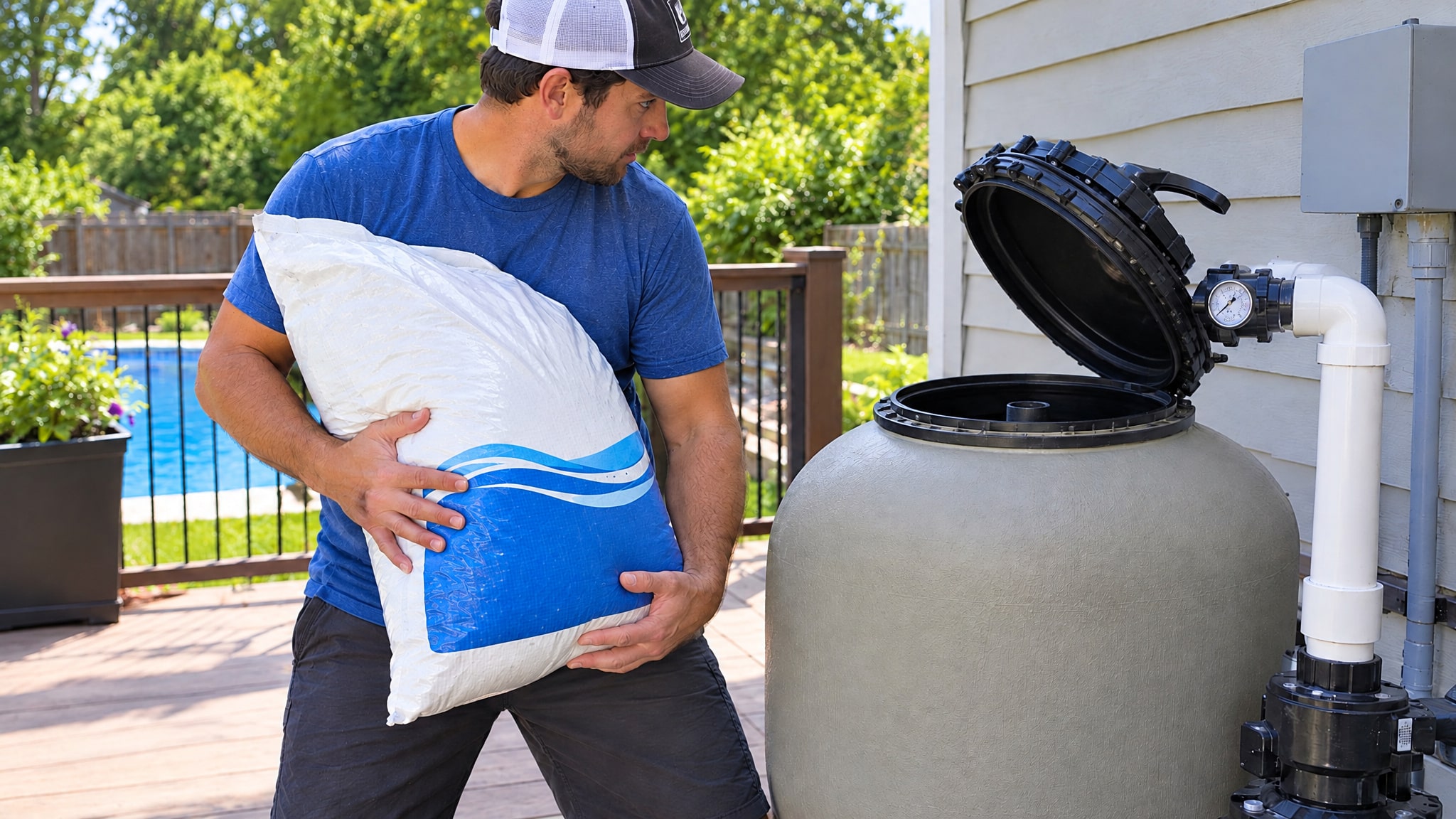
Your pool filter needs 100 to 350 lb of #20 silica sand, and your tank’s diameter sets the exact amount. A 16-inch tank takes about 100 lb, an 18-inch runs 150 lb, a 21-inch needs 200 lb, and a 24-inch requires close to 300 lb. Larger 27-inch tanks jump to 350 lb. Always check your manufacturer’s manual to confirm. Below, you’ll find the full chart, grade specs, and fill-level tips.
Key Takeaways
- Most residential pool filters require 100 to 350 lb of #20 silica sand, depending on tank diameter.
- Use the sizing chart: 16 in needs ~100 lb, 18 in ~150 lb, 21 in ~200 lb, 24 in ~300 lb.
- Larger tanks scale quickly: 27 in ~350 lb, 30 in 500, 600 lb, and 36 in 700 lb or more.
- Convert pounds to 50 lb bags by dividing by 50, rounding up and keeping any extra sand.
- Fill the tank about 2/3 full and always check the manufacturer manual for exact quantities.
How Much Sand Do You Need for Your Pool Filter
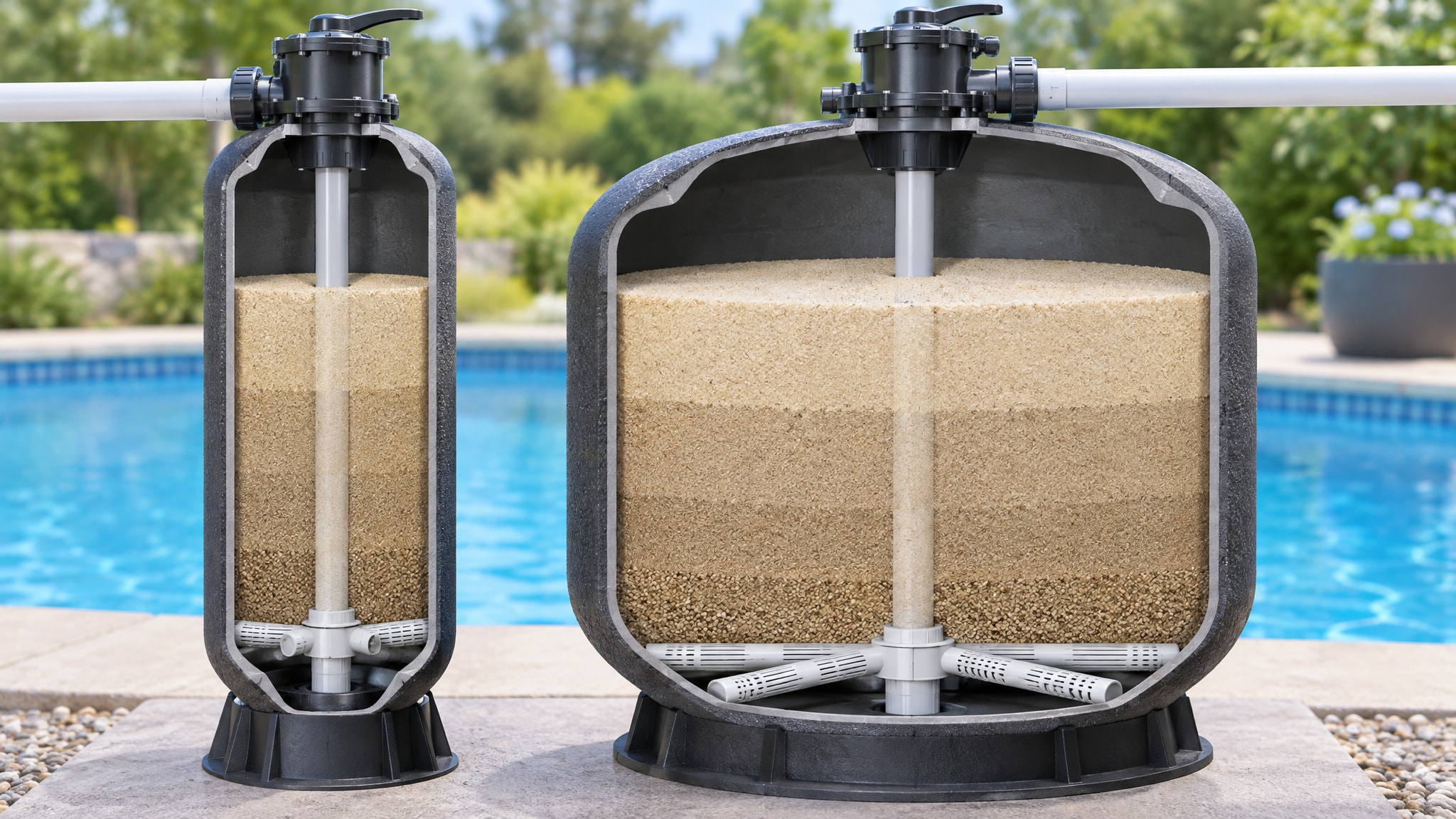
Most residential pool filters need 100 to 350 lb of #20 silica sand, depending on the tank diameter. Measure your tank, then match that filter size to a proven quantity: 16 in takes about 100 lb, 18 in needs 150 lb, 21 in requires 200 lb, 24 in calls for 300 lb, and 27 in reaches 350 lb. Your sand quantity tracks directly with tank capacity.
Larger systems scale up fast, 30 in tanks often demand 500 to 600 lb, and 36 in models can hit 700 lb or more. Since brands like Hayward and Pentair vary at identical diameters, always confirm your exact figure against the manufacturer’s manual.
How Do You Find Your Filter’s Sand Capacity
Your filter’s sand capacity is determined mainly by the filter tank’s diameter. Measure the tank, then match it against a sizing chart: a 16-inch tank takes about 100 pounds, 18-inch runs around 150 pounds, 21-inch needs roughly 200 pounds, and 24-inch requires close to 300 pounds. Larger 30-inch tanks often demand 500 to 600 pounds, while 36-inch units can reach 700 pounds or more.
Don’t stop at the chart, though. Brands like Hayward and Pentair specify different amounts at the same diameter, so check your model’s manual for the exact figure. If the chart and manual disagree, trust the manual. Also factor in your flow rate, since capacity must align with your pump’s output.
How Does Filter Size Determine the Amount of Sand
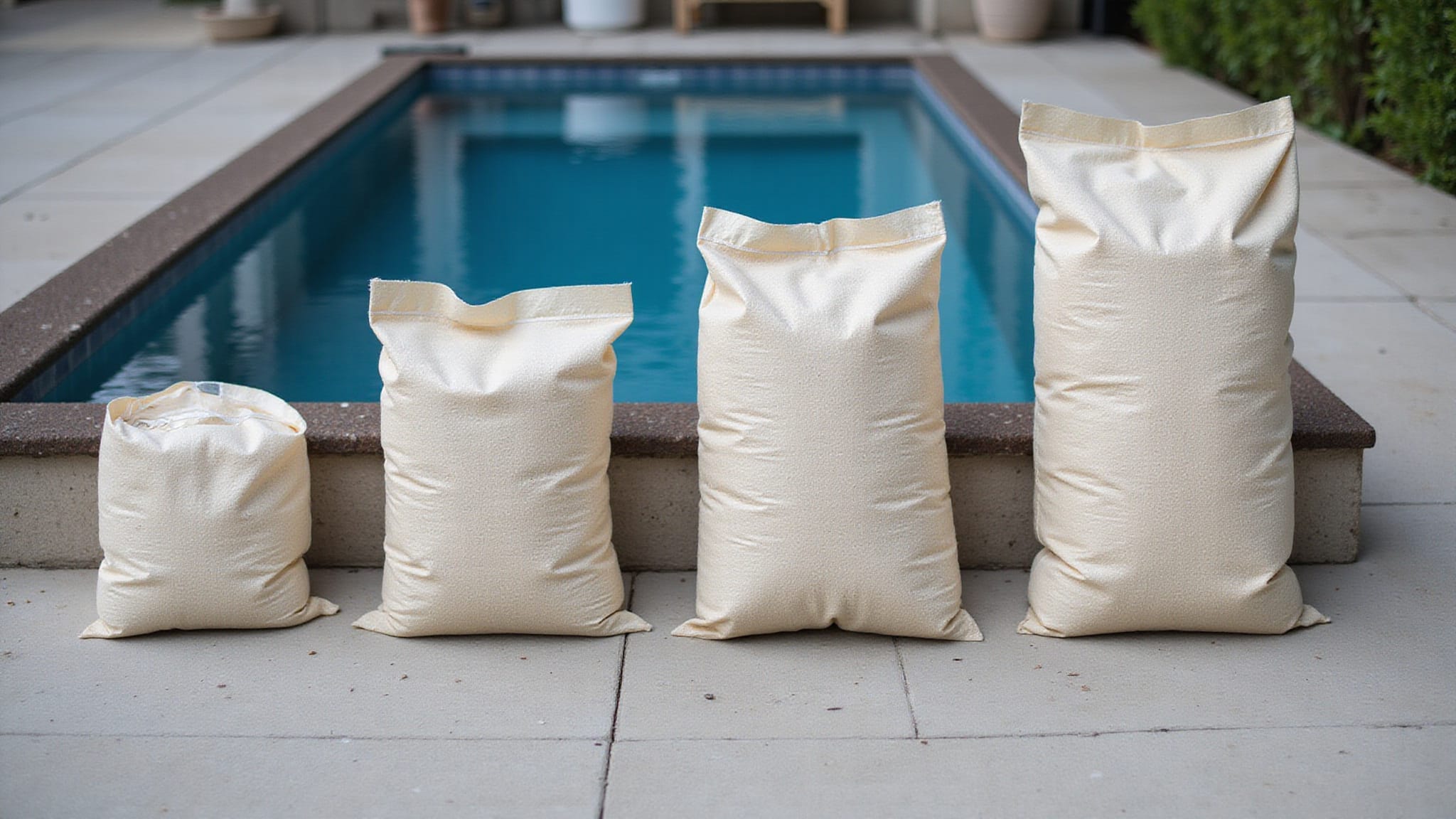
Filter size determines the amount of sand by setting the tank’s internal bed capacity. A wider tank holds a larger sand bed across its cross-section. A 16-inch tank needs roughly 100 lb, while a 24-inch tank jumps to about 300 lb. That’s why you can’t rely on pool water volume alone, the tank’s internal geometry dictates how much #20 silica sand fits correctly.
| Tank Diameter | Sand Amount |
|---|---|
| 16 in | 100 lb |
| 18 in | 150 lb |
| 21 in | 200 lb |
| 24 in | 300 lb |
These sand quantities are general estimates based on filter tank diameter. The exact amount varies by manufacturer and model, even for filters of the same size. Always check your filter’s label or owner’s manual for the recommended sand capacity before purchasing or adding new media.
What Grade of Sand Should You Buy
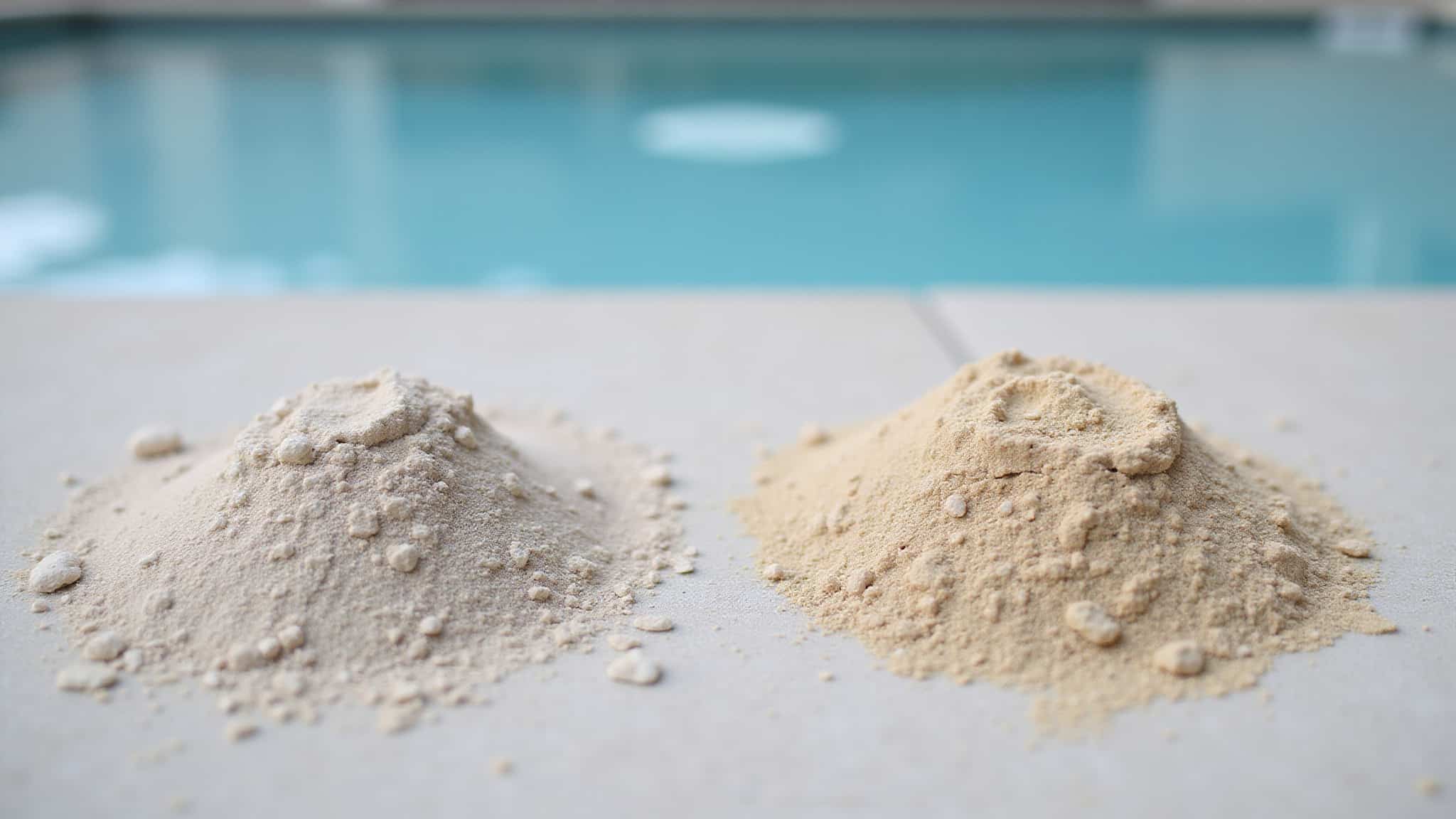
Buy #20 silica sand for any residential sand filter, since it’s the industry standard grade every chart in this guide assumes. This grade features a 0.45 to 0.55 mm particle size, which traps debris effectively while maintaining proper flow through your filter bed. Every quantity we’ve listed, whether it’s 100 lb for a 16-inch tank or 350 lb for a 27-inch model, assumes you’re using #20 silica.
Don’t substitute play sand or other fine grades, since they’ll compact, clog, and pass through your laterals into the pool. If your manual specifies an alternative media, like glass or a different silica grade, follow it, since particle size affects both filtration and flow rate. When in doubt, match your manufacturer’s exact media specification for best performance.
How Do You Convert Pounds of Sand Into Bags
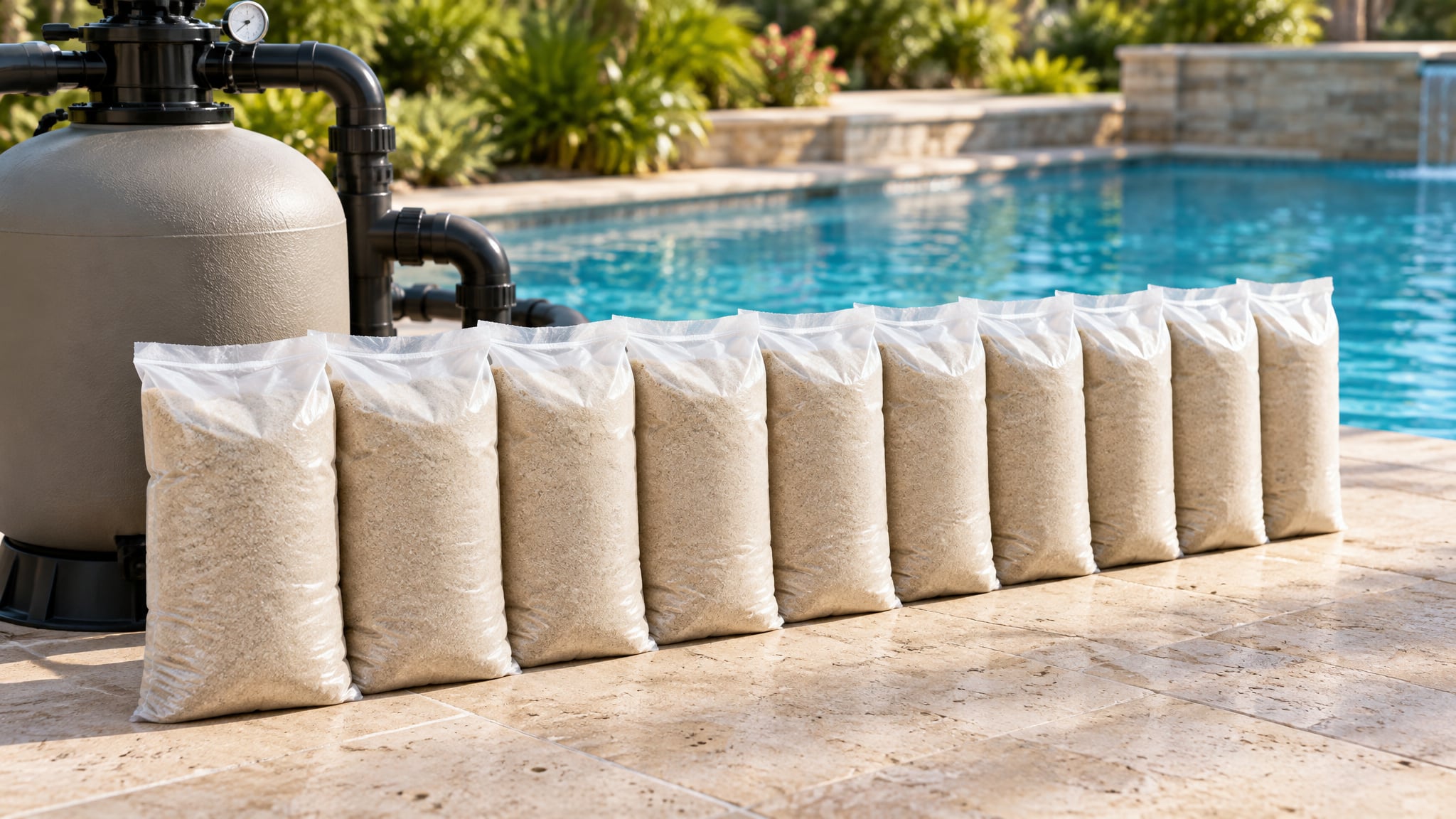
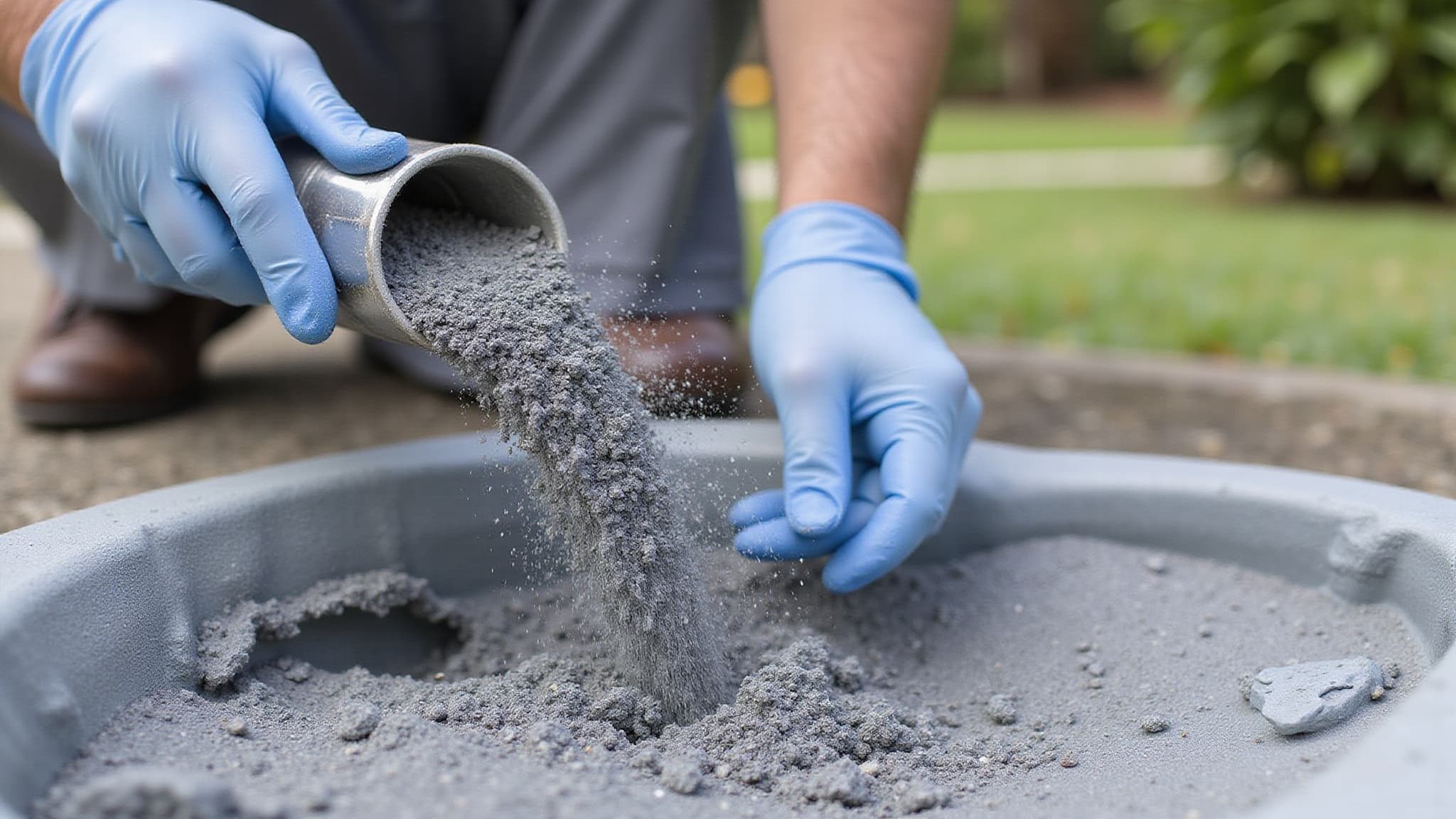
Divide the total pounds of sand your filter needs by 50 to convert it into 50 lb bags. If your 16-inch filter takes 100 lb, that’s two bags. A 21-inch tank needing 200 lb requires four bags, while a 24-inch tank at 300 lb calls for six.
If your total doesn’t divide evenly, round up and keep the extra. A model needing 150 lb works out to exactly three bags, but a 175 lb requirement means you’ll grab four and have some left over.
Always confirm your filter’s exact poundage against the manufacturer’s manual before buying, since brand and model variations at the same diameter can shift your bag count.
Why Does Filling to the Right Level Matter
Filling your sand filter to the right level matters because it protects both performance and lifespan. Most sand filters should be filled only about 2/3 full, leaving freeboard above the sand bed. That empty space gives water room to circulate and lets the sand shift during backwashing. Overfill the tank, and you’ll restrict that movement, reduce filtration efficiency, and risk sand escaping into your pool. Underfill it, and water bypasses the media, leaving your pool cloudy and unfiltered.
Your filter’s diameter and internal design determine the correct fill level, not just total tank size. Always check your model’s manual for the exact quantity, since brands vary. Hitting the right level keeps your pump pressure balanced, extends media life, and delivers consistently clean water.
How Do You Avoid Overfilling or Underfilling
Avoid overfilling or underfilling by measuring your tank’s diameter, checking your model’s manual, and filling the tank only about two-thirds full. Match the measurement against your model’s manual, not just a generic chart. Remember that brands vary: a 24 in Hayward Swim Pro takes 200 lb, while other 24 in tanks need 300 lb. That gap alone can throw you off by a full bag.
Leave proper freeboard above the sand bed. If you overfill, you’ll crowd that space and risk sand blowing into your pool; underfill, and you’ll lose filtration efficiency. When your chart and manual disagree, trust the manual. Measure, verify the model, and pour deliberately to hit the right level.
Choose a Fiberglass Pool With the Right Filtration System
Choosing the correct filter size and media capacity helps maintain clear water and reliable circulation. At Schiller Pools, we install fiberglass pools with filtration equipment suited to each pool’s size and maintenance requirements.
If you’re planning a new pool in Stuart, explore our fiberglass pool installation services or contact our team to discuss your project.
Frequently Asked Questions
How Often Should I Replace the Sand in My Filter?
You’ll typically replace your filter sand every 5 to 7 years, though heavy use or hard water can shorten that window. Watch for warning signs like shortened cycles between backwashes, cloudy water that won’t clear, or reduced flow even after cleaning. When those symptoms persist, your #20 silica sand’s edges have worn smooth and can’t trap debris effectively. Check your manufacturer’s specs, since some models recommend replacement intervals that differ slightly.
Can I Reuse Old Sand After Cleaning It?
You can’t effectively reuse old filter sand, even after cleaning it. Over time, the sand’s sharp edges wear smooth, reducing its ability to trap debris. Rinsing won’t restore that filtration quality or remove deeply embedded oils, minerals, and contaminants. You’ll just recirculate degraded media that clogs faster and strains your pump. Instead, replace it with fresh #20 silica sand sized to your tank, which is cheaper than risking poor water quality.
Are There Alternatives to Silica Sand for Filters?
Yes, you’ve got solid alternatives to #20 silica sand. Glass filter media works great, offering finer filtration and lasting longer than sand. Zeolite, a natural mineral, traps smaller particles and even captures ammonia. Filter balls or polyester media weigh far less and boost flow. Keep in mind, these alternatives often use different fill amounts than sand, so you’ll want to check your filter’s manual for the correct quantity before switching.
How Do I Safely Dispose of Used Filter Sand?
Bag your used filter sand in sealed, heavy-duty plastic bags and dispose of it with your regular household trash, since it’s typically inert and landfill-safe. Don’t dump it in your yard or storm drains, as trapped contaminants can pollute soil and groundwater. Check your local waste regulations first, because some municipalities require specific disposal methods. If you’ve filtered pools with heavy chemical treatments, confirm there aren’t hazardous-waste restrictions before you toss it.
Does Dirty or Old Sand Affect Water Clarity?
Yes, dirty or old sand definitely affects your water clarity. Over time, sand grains develop smooth edges and channels form, letting debris pass straight through instead of trapping it. You’ll notice cloudy water, longer clearing times, and rising pressure on your gauge. Most sand lasts 5-7 years before losing filtration efficiency. If backwashing no longer restores clarity, it’s time to replace your media and match the correct amount to your tank’s diameter.