
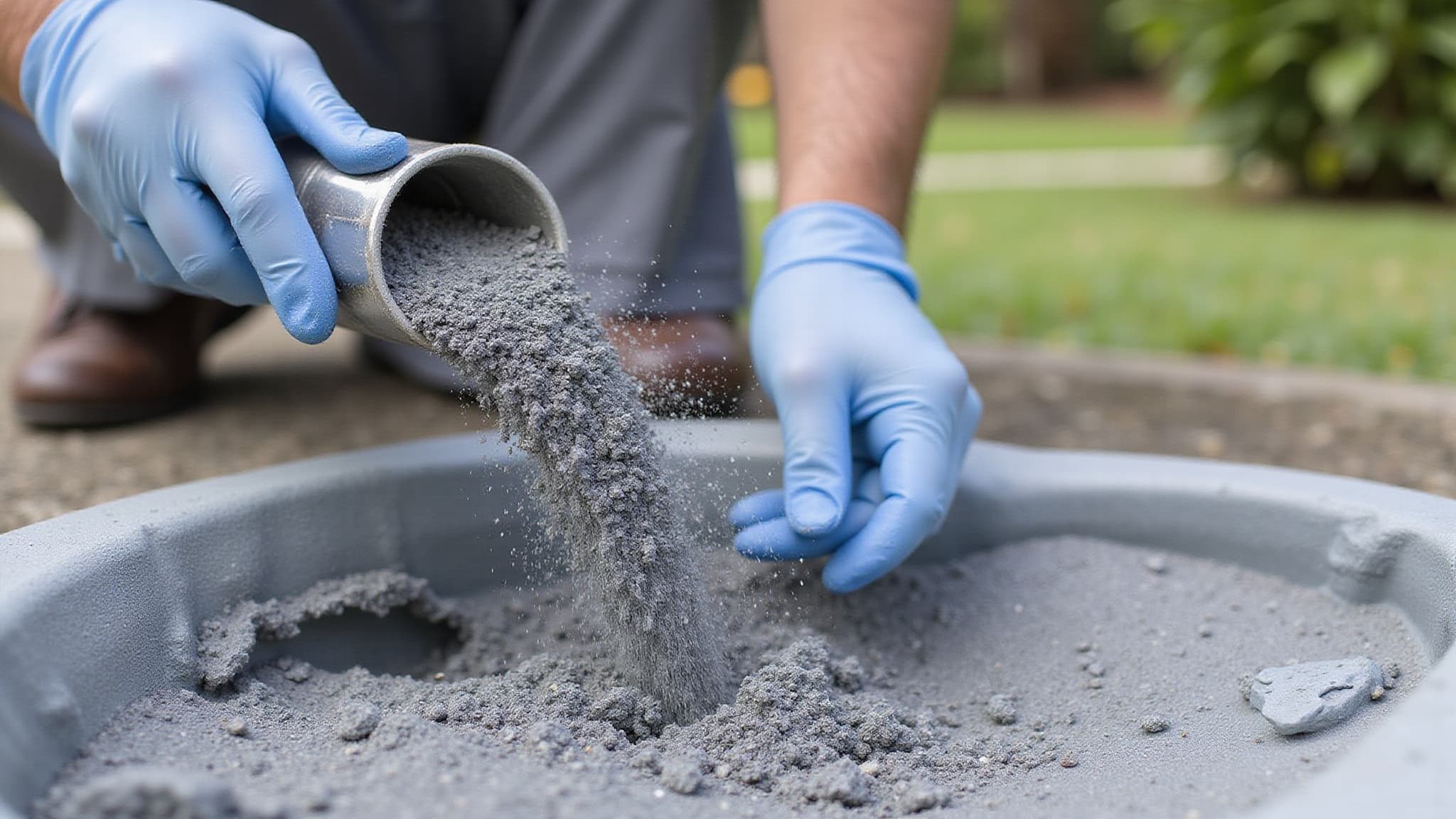
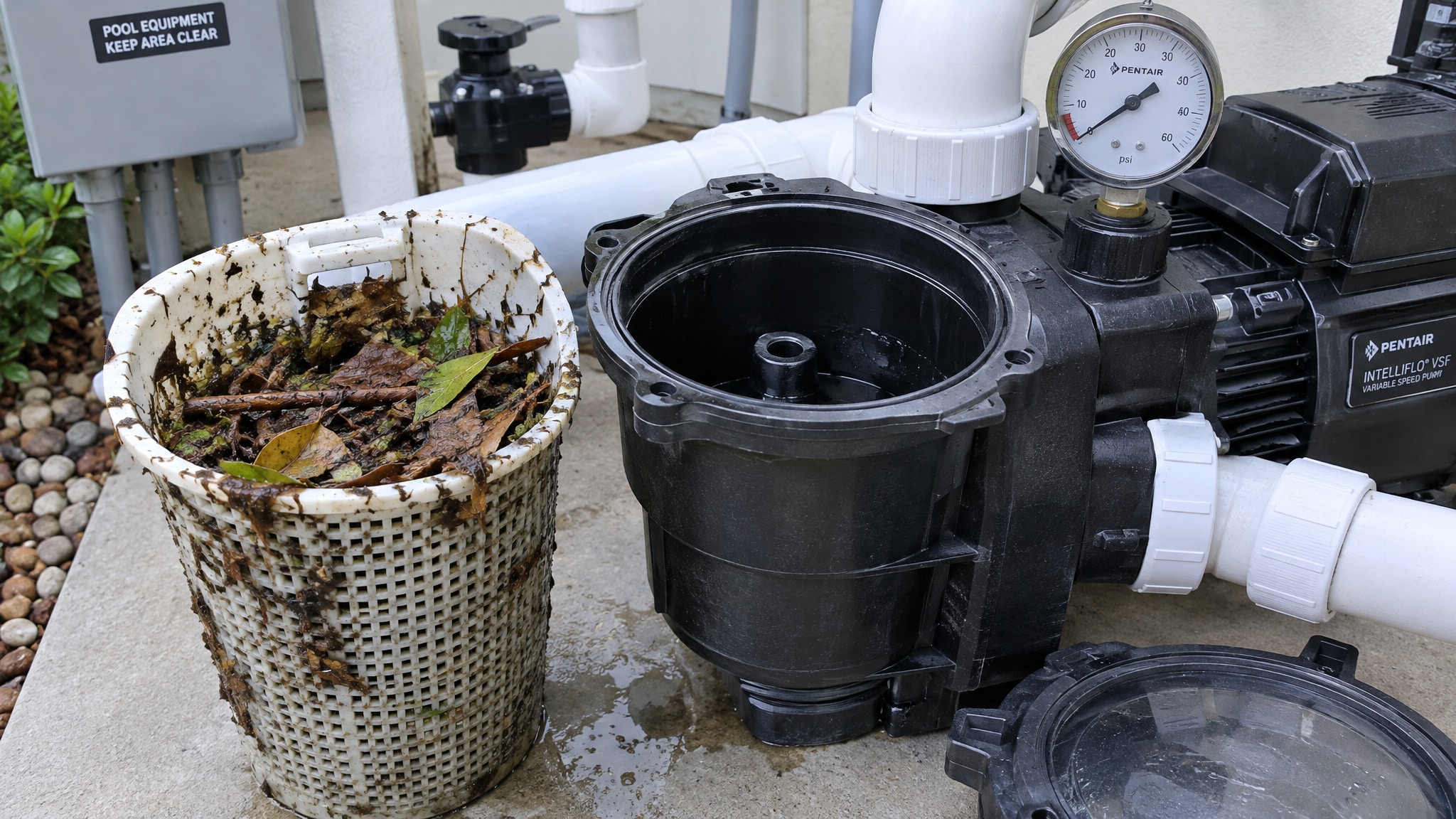
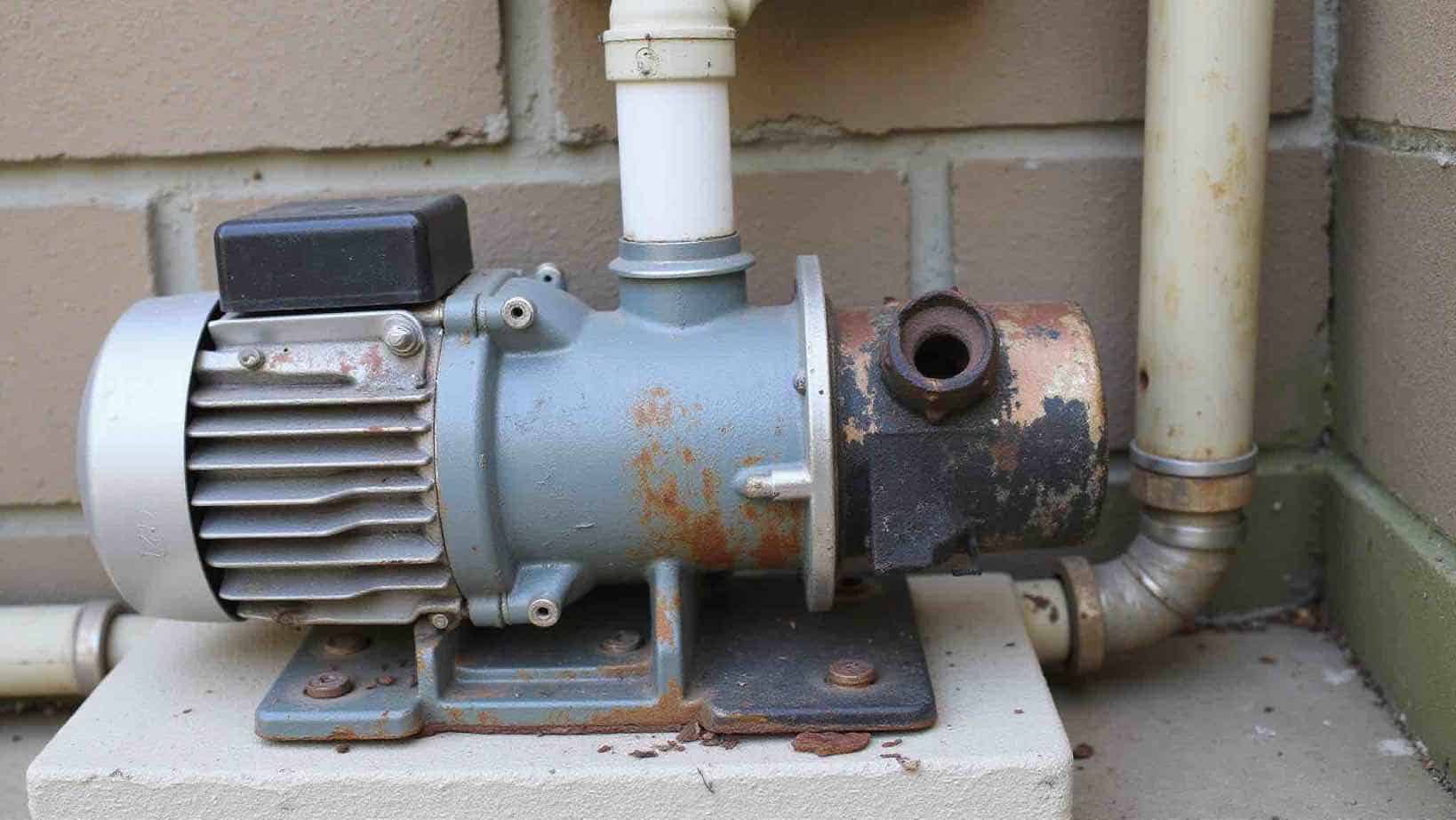
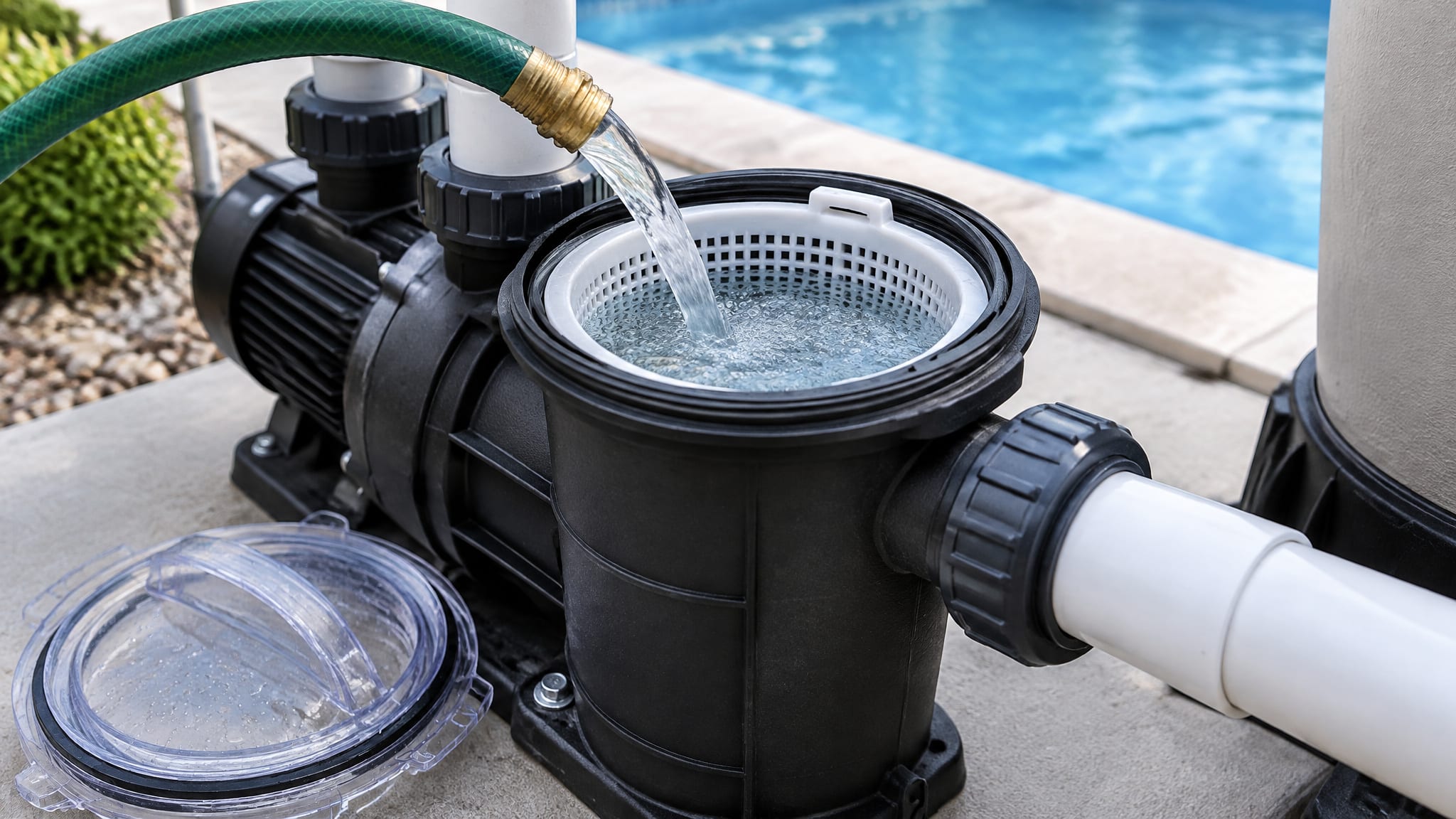
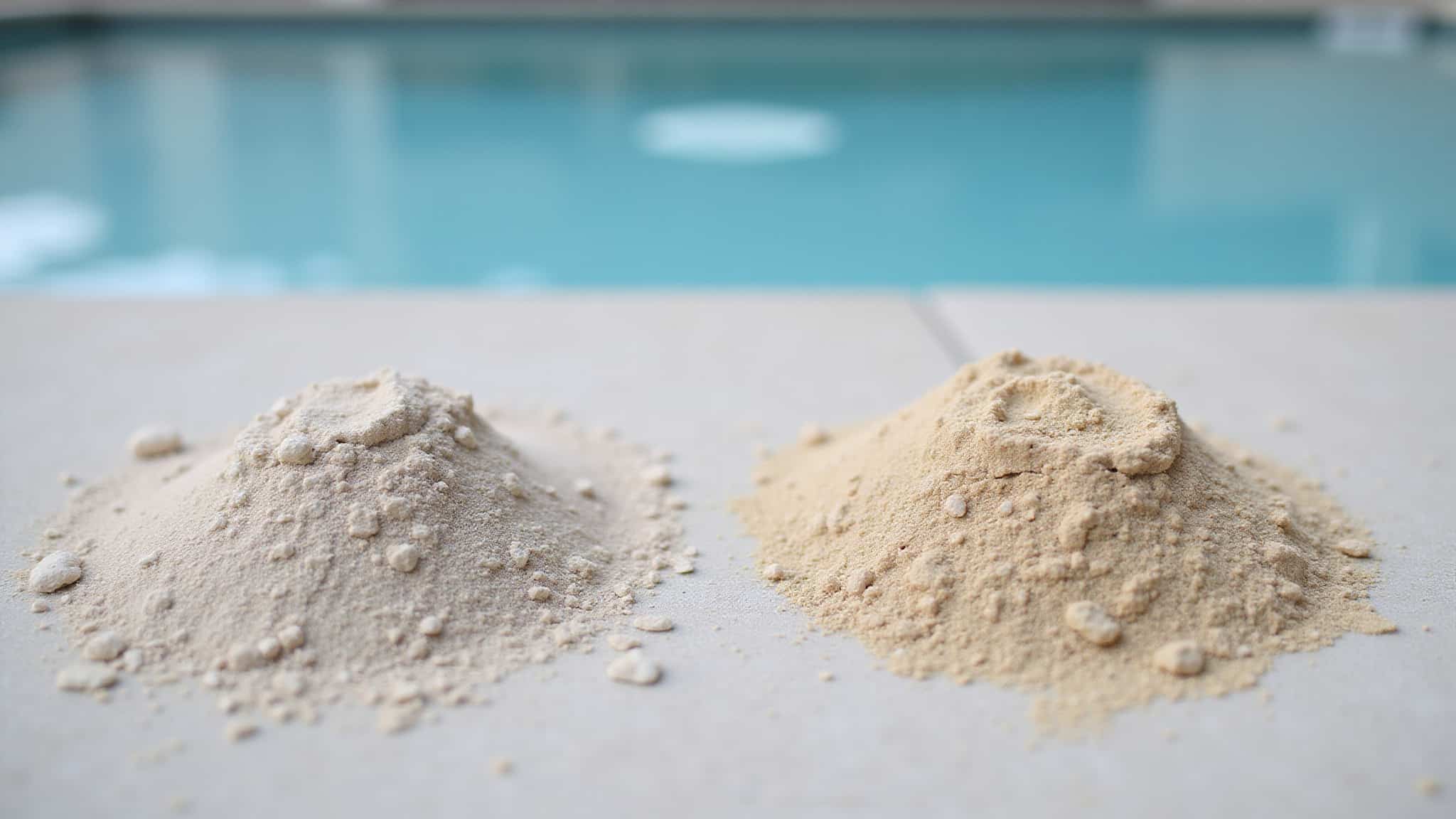
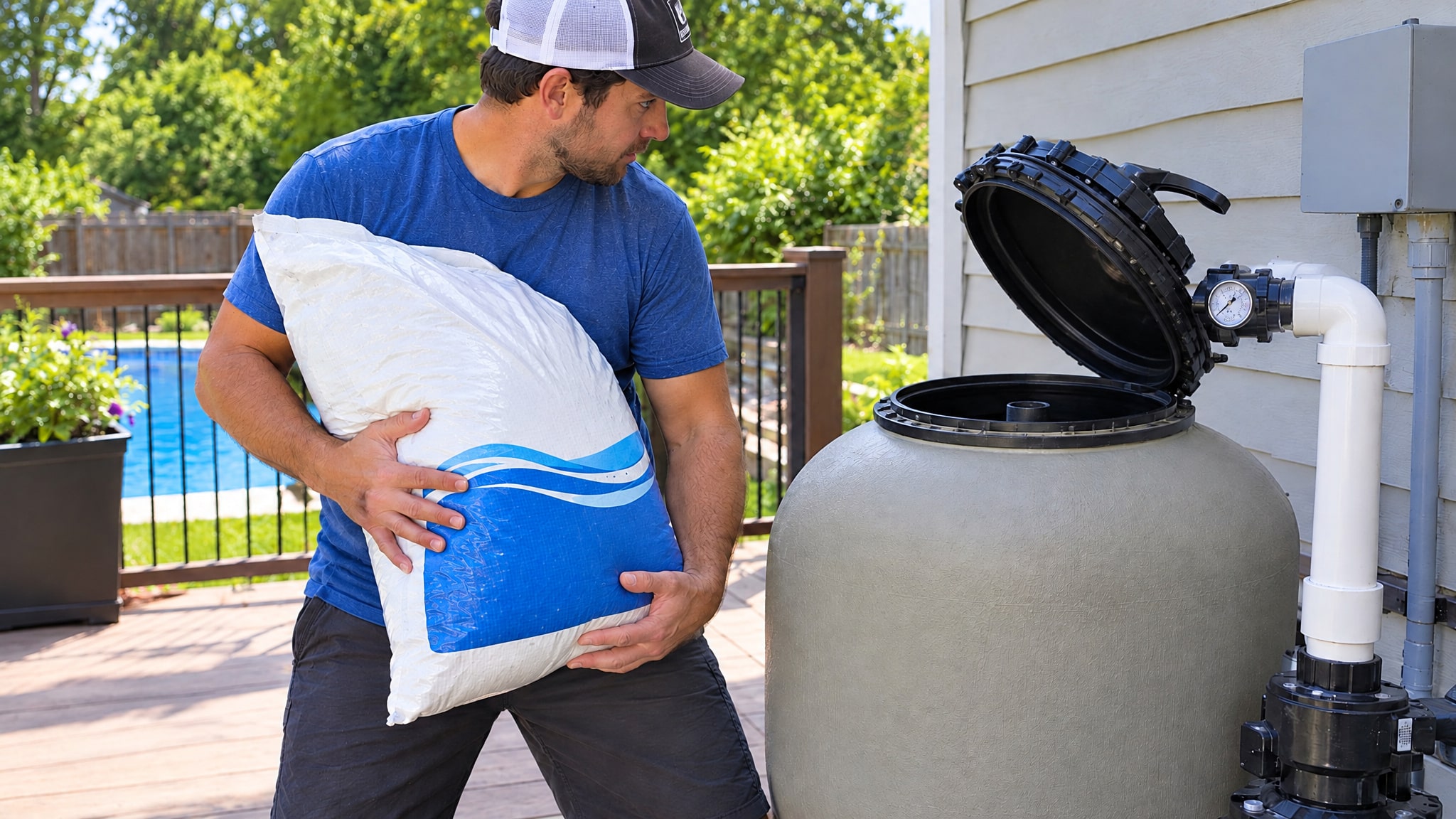
No, you shouldn’t load ordinary play sand into your pool filter tank. It’s not filter-grade media. Play sand’s inconsistent grain size packs down, restricts flow, and lets debris bypass the bed, clouding your water. Its fine particles can migrate through laterals, crack them, and strain your plumbing. It also carries silt, clay, and organics that spike your chemical demand. Stick with approved media like #20 silica sand. Here’s what sets them apart.
Key Takeaways
- Play sand should not be used in a pool filter tank, as filters are designed for filter-grade media.
- Play sand has inconsistent grain sizes, causing clumping, debris bypass, clogging, and cloudy water.
- Play sand can carry silt, clay, or organics that increase chemical demand and sanitizer burden.
- Fine grains can migrate through laterals, crack plumbing, raise pressure, and strain the pump over time.
- Use approved media instead, such as #20 silica pool filter sand, glass media, or zeolite.
Can You Use Play Sand in a Pool Filter
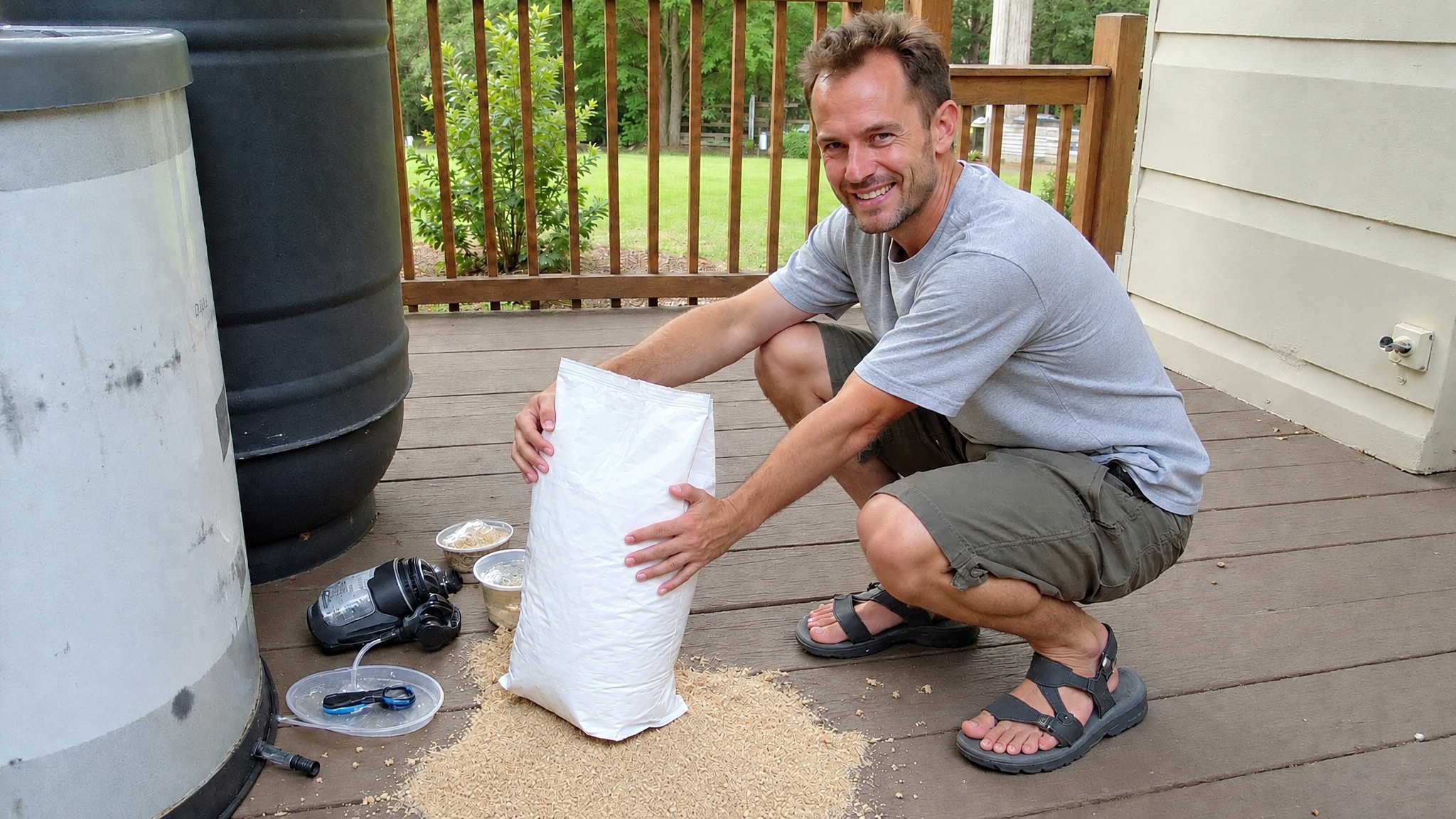
You shouldn’t use play sand in a pool filter tank. Your filter’s designed for filter-grade media, not sandbox or playground material. Pool grade sand, typically #20 silica with a grain size around 0.45, 0.55 mm, delivers the uniform, controlled particles that proper filtration requires.
Play sand fails on grain size. Its particles are too varied, often too fine, so they pack down, restrict flow, and clog the bed quickly. In other cases, grains run too coarse, letting debris pass straight through. Either way, you’ll get cloudy water and poor clarity.
Play sand can also carry silt, clay, or organics that aren’t processed out. Stick with pool grade sand labeled for filtration.
What’s the Difference Between Play Sand and Pool Filter Sand
Pool filter sand is manufactured and graded for filtration, while play sand is not. Pool filter sand is typically #20 silica, processed to a uniform grain size around 0.45, 0.55 mm, so it supports consistent filtration. Play sand isn’t graded for this purpose, its grains are too varied, sometimes too fine or too coarse, and it may carry silt, clay, or organics.
| Property | Pool Filter Sand | Play Sand |
|---|---|---|
| Grain Size | 0.45, 0.55 mm | Varied, inconsistent |
| Material | Graded silica | Ungraded, mixed |
| Filtration | Efficient capture | Debris passes through |
You’ll notice pool filter sand traps debris while letting water flow. Play sand packs down, clogs, and lets contaminants bypass, so you shouldn’t substitute it.
Why Play Sand Damages Your Filter and Clouds the Water
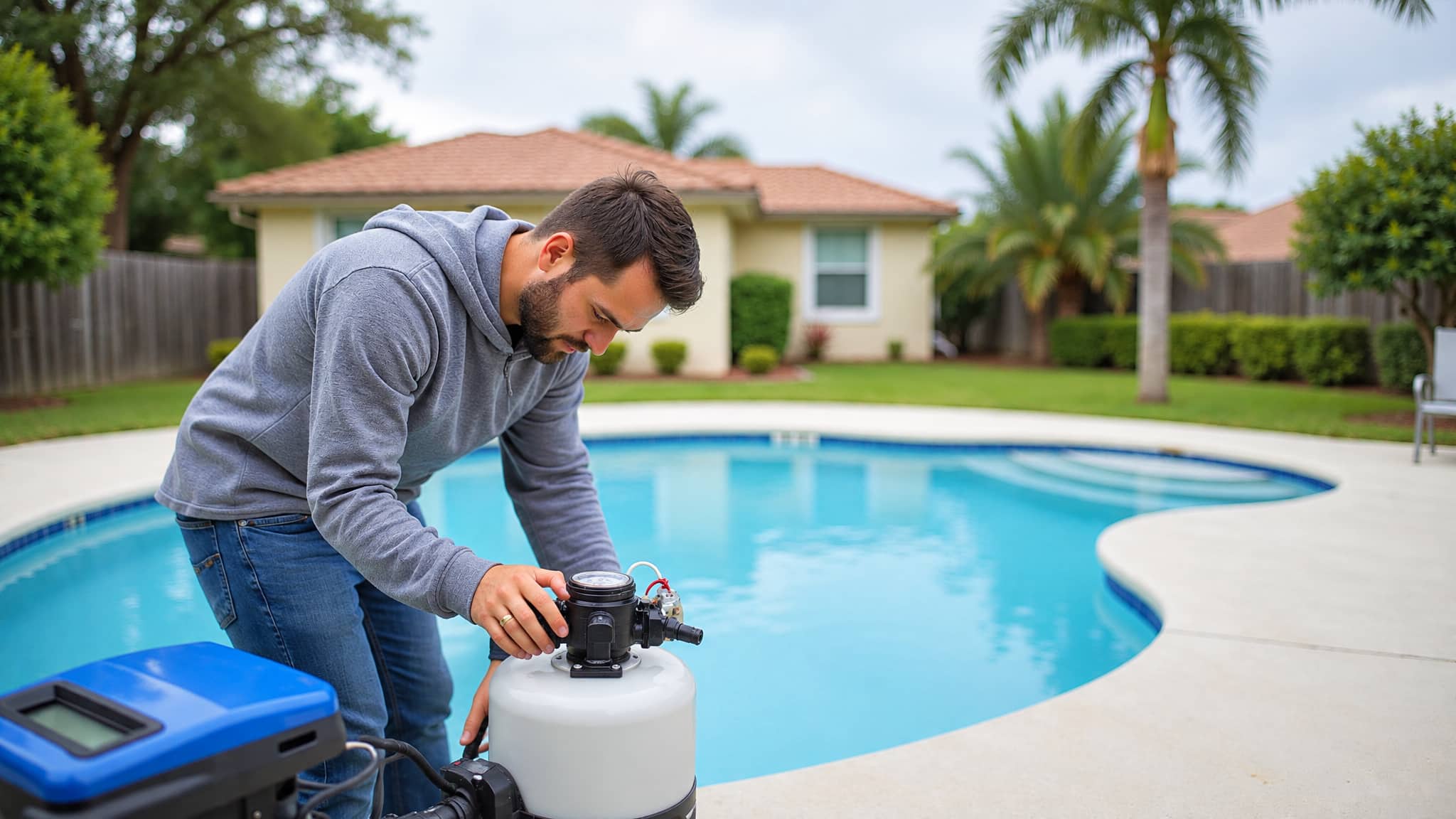
Play sand isn’t graded for filtration, so its grains run too fine or too coarse and the bed never forms the uniform structure a filter needs. Fine particles slip through instead of being trapped, leaving water cloudy that chemicals can’t fix, while the same grains pack down, channel, and let debris bypass the media even when the tank looks full. That clogging restricts flow, raises pressure, and forces the pump to work harder, which invites expensive repairs. Undersized grains also migrate through the laterals, crack plumbing, and wash straight back into the pool, and the silt, clay, and organics in play sand add to your chemical demand. The result is more time, more money, and water that stays cloudy despite constant treatment.
What Are the Best Alternatives to Filter Sand
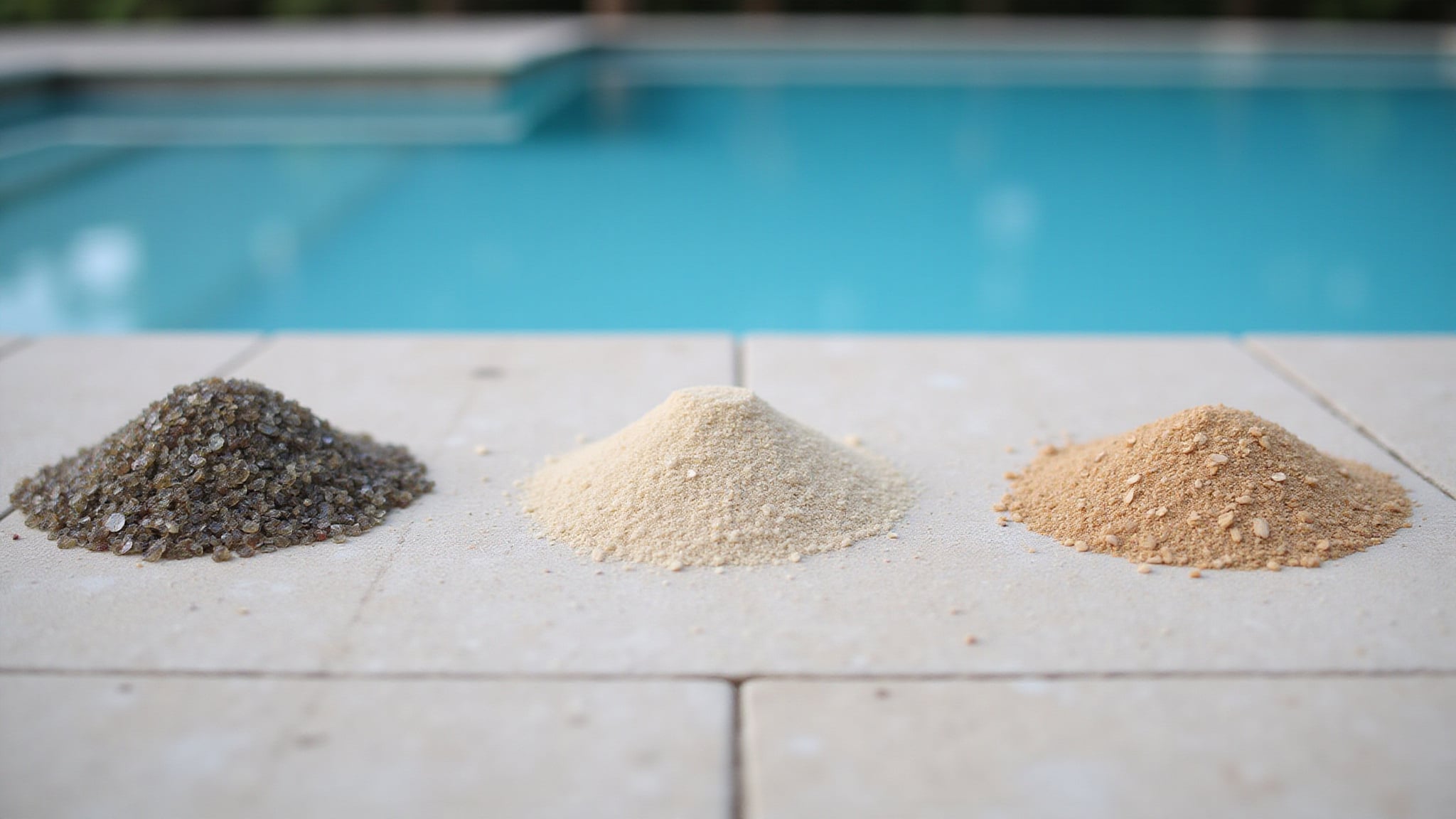
The best alternatives to filter sand are glass media and zeolite. Both are engineered for filtration, so they won’t allow the debris passage, channeling, or clogging you’d get from play sand.
- Glass media, recycled, uniform grains that trap fine debris and resist channeling for clearer water.
- Zeolite, a porous mineral that captures smaller particles and can absorb some contaminants, reducing chemical demand.
- #20 silica pool filter sand, the standard 0.45, 0.55 mm media, labeled for the purpose.
- Manufacturer-approved media only, match your filter’s specs to protect laterals and plumbing.
Never mix media types; you’ll compromise consistent filtration.
How Do You Choose the Right Media for Your Filter
Choose the right media by following your filter manufacturer’s specifications for grade and volume. Most residential sand filters call for #20 silica pool filter sand, with a grain size around 0.45, 0.55 mm, uniform enough to trap debris while maintaining proper flow.
Never substitute play sand, masonry sand, beach sand, construction sand, or river sand. These have inconsistent grain sizes that either clog the bed or let debris channel through, and they can carry silt, clay, or organics that compromise water quality.
If you want an alternative, verify it’s pool-rated. Glass media and zeolite work in many systems, but confirm compatibility first. Matching your media to your filter’s design protects your laterals, plumbing, and long-term filtration performance.
Choose a Fiberglass Pool With Reliable Filtration
Using the right filter media helps maintain clear water, but proper equipment selection and installation are just as important. At Schiller Pools, we install fiberglass pools with filtration systems suited to each pool’s size and circulation needs.
If you’re planning a new pool in Stuart, explore our San Juan fiberglass pool options or contact our team to discuss your project.
Frequently Asked Questions
How Often Should You Replace the Sand in Your Pool Filter?
You should replace your pool filter sand every 3 to 5 years under typical use, though heavy bather loads or frequent debris can shorten that window. Watch for warning signs like cloudy water, reduced flow, shortened cycles between cleanings, or channeling in the bed. When you notice these, don’t wait, and inspect and swap the media promptly. Always use #20 silica pool filter sand to protect your laterals and maintain proper filtration.
How Much Sand Does a Typical Pool Filter Tank Need?
You’ll typically need between 100 and 350 pounds of #20 silica pool filter sand, depending on your tank’s size. Always check your filter’s label or manual for the exact amount, since overfilling or underfilling hurts performance. Smaller tanks often need around 100, 150 pounds, while larger residential units can require 300 pounds or more. Load only filter-grade sand to protect your laterals and keep filtration working as it’s designed to.
What Happens if You Put Play Sand in a Pool Filter?
Play sand can cause poor filtration because its grain sizes are not consistently graded for pool filters. Fine particles may pass through the laterals and enter the pool, while unsuitable grains can restrict water flow. Using manufacturer-approved filter media helps prevent these problems.
Can You Mix Play Sand With Pool Filter Sand?
Mixing play sand with pool filter sand is not recommended. Play sand contains particles of different sizes that may affect water flow and filtration performance. Use the filter-grade media specified by your manufacturer rather than combining it with ordinary play sand.
What Should You Do if You Already Used Play Sand in Your Pool Filter?
Turn off the pump, disconnect power, and release the filter’s pressure before opening the tank according to the manufacturer’s instructions. Remove the unsuitable sand, inspect the internal components, and refill with the correct type and amount of filter media. Backwash and rinse as directed before returning to normal filtration.