
First, turn off the pump’s power at the breaker and confirm it can’t restart from a timer or chlorinator. Remove the lid, inspect the O-ring, and clear debris from the strainer basket. Fill the housing completely with water to eliminate the air lock, then reinstall the basket and lid. Open the air-bleed valve, start the pump, and wait for steady flow. There’s more you’ll want to know before you start.
Key Takeaways
- Turn off pump power at the breaker and prevent restart from timers or chlorinators before starting.
- Remove the lid, inspect the O-ring, clear basket debris, and fill the housing completely with water.
- Open the filter air-bleed valve partway and open suction valves before starting the pump.
- Expect air to escape through the returns first, then wait for a steady water flow.
- Close the air-bleed valve once a solid water stream appears, typically within 30 to 90 seconds.
How Do You Prime a Swimming Pool Pump
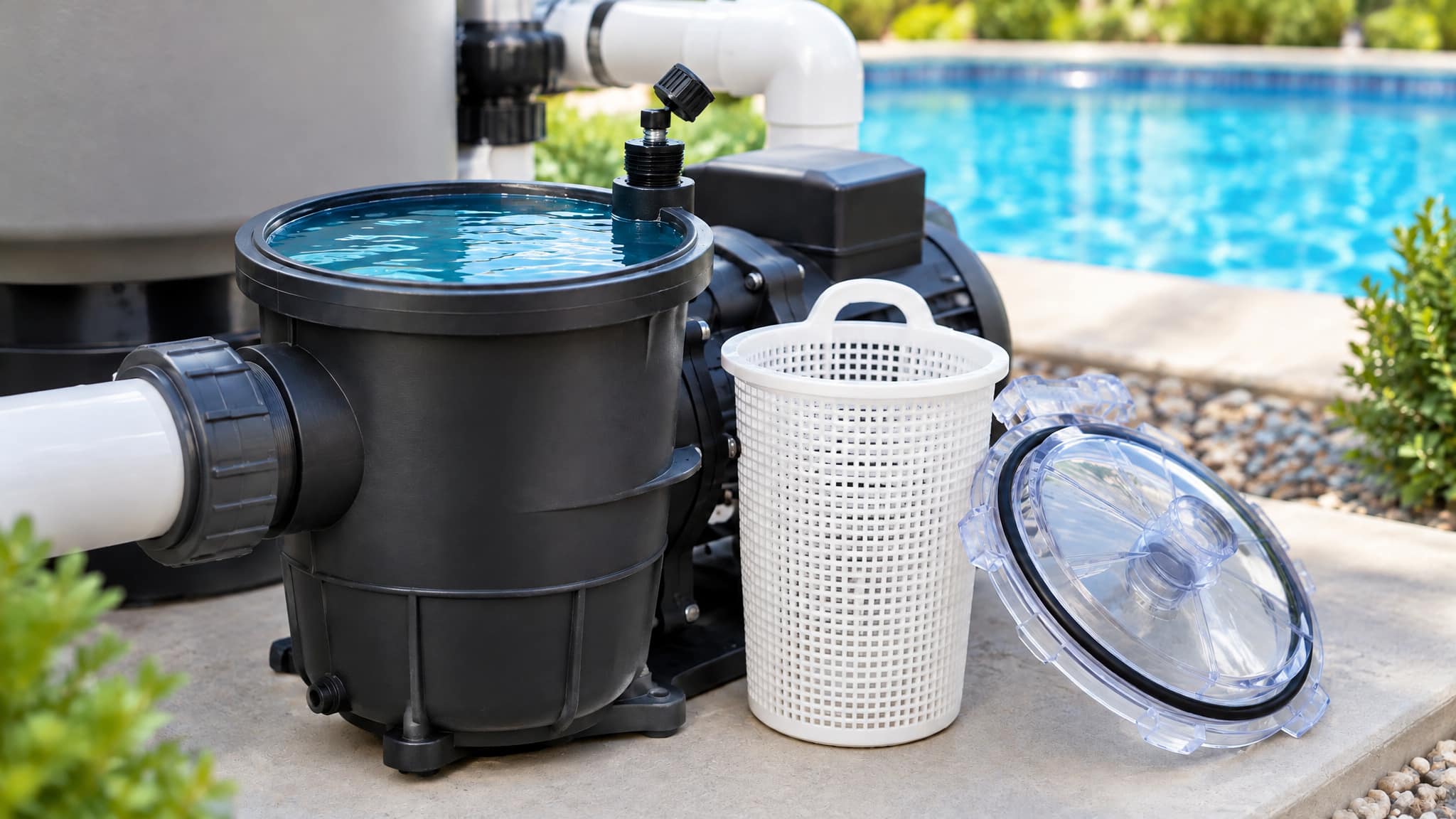
To prime a swimming pool pump, turn the pump power off at the breaker or wall switch, and confirm it can’t restart from a timer or chlorinator. Remove the lid, inspect the O-ring, and clear debris from the strainer basket. Fill the housing completely with water to eliminate any air lock inside the chamber. Reinstall the basket and lid, tighten by hand, and open the filter’s air-bleed valve partway. Open your suction valves, then start the pump. Air escapes through the returns first, followed by steady flow. Once a solid water stream appears, close the air-bleed valve. You’ve restored suction and completed priming.
Why Does a Pool Pump Lose Its Prime
A pool pump loses its prime because air is getting into the suction side of the system. Rather than a failing motor, small leaks and low water levels typically disrupt water flow and break suction, so air in the suction side, not the motor, is usually to blame. The most common culprits are:
- A worn or poorly lubricated lid O-ring, or a cracked pump lid that lets air seep in.
- Loose suction-side fittings, unions, or valves that allow air entry.
- A low pool water level or clogged pump basket that starves the intake.
As air enters, the pump can’t maintain steady water flow, so it draws in more air and loses prime. Address these suction-side issues first, since they’re the most frequent cause.
What Should You Check Before Priming
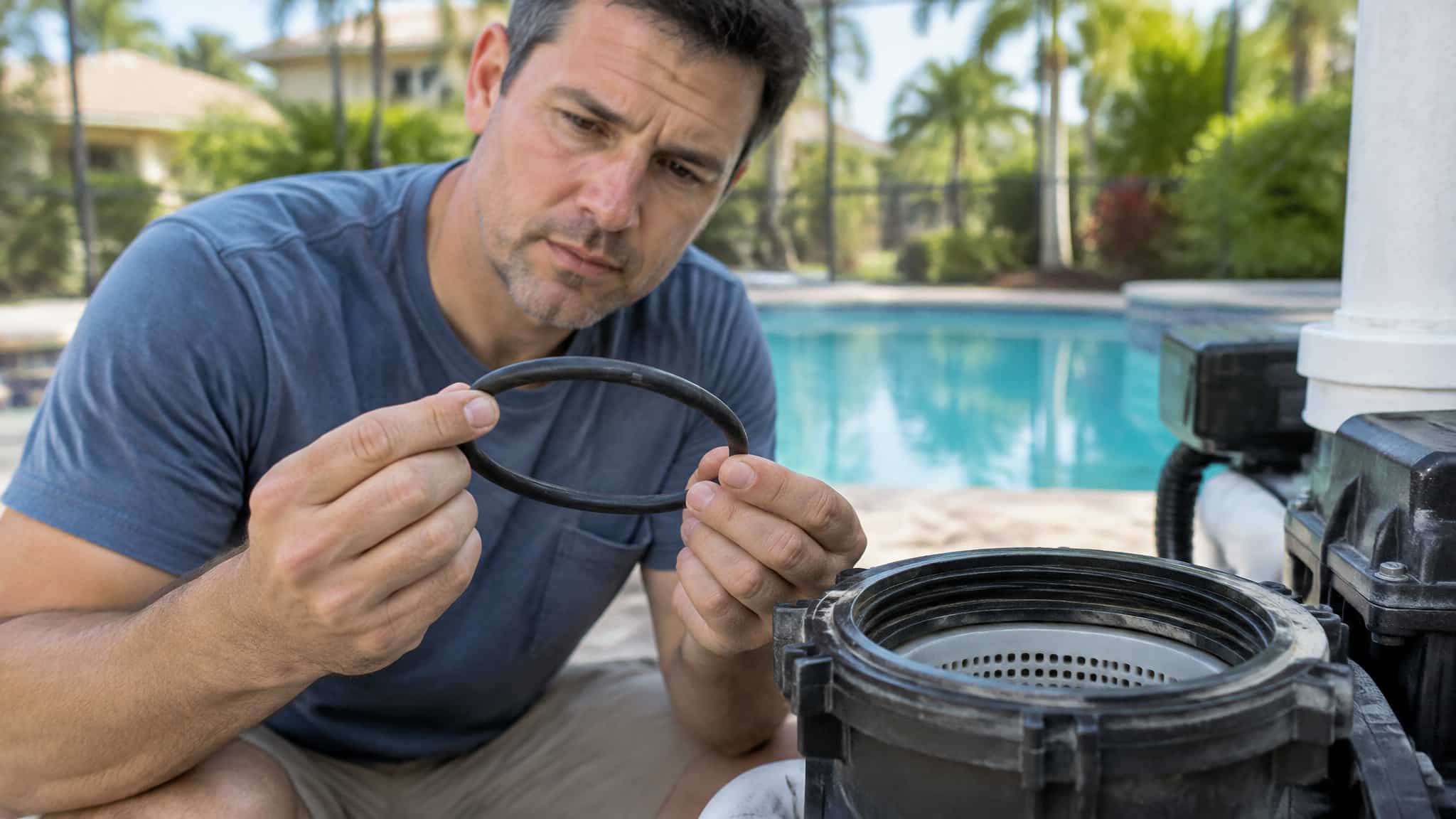
Check pump power, pressure, air-entry points, and debris before priming. Turn the pump power off at the breaker or wall switch, then confirm the pump can’t start from a timer or chlorinator. If your system uses a cartridge or similar filter, release pressure through the filter’s air-bleed valve. Keep hands and tools clear of energized equipment.
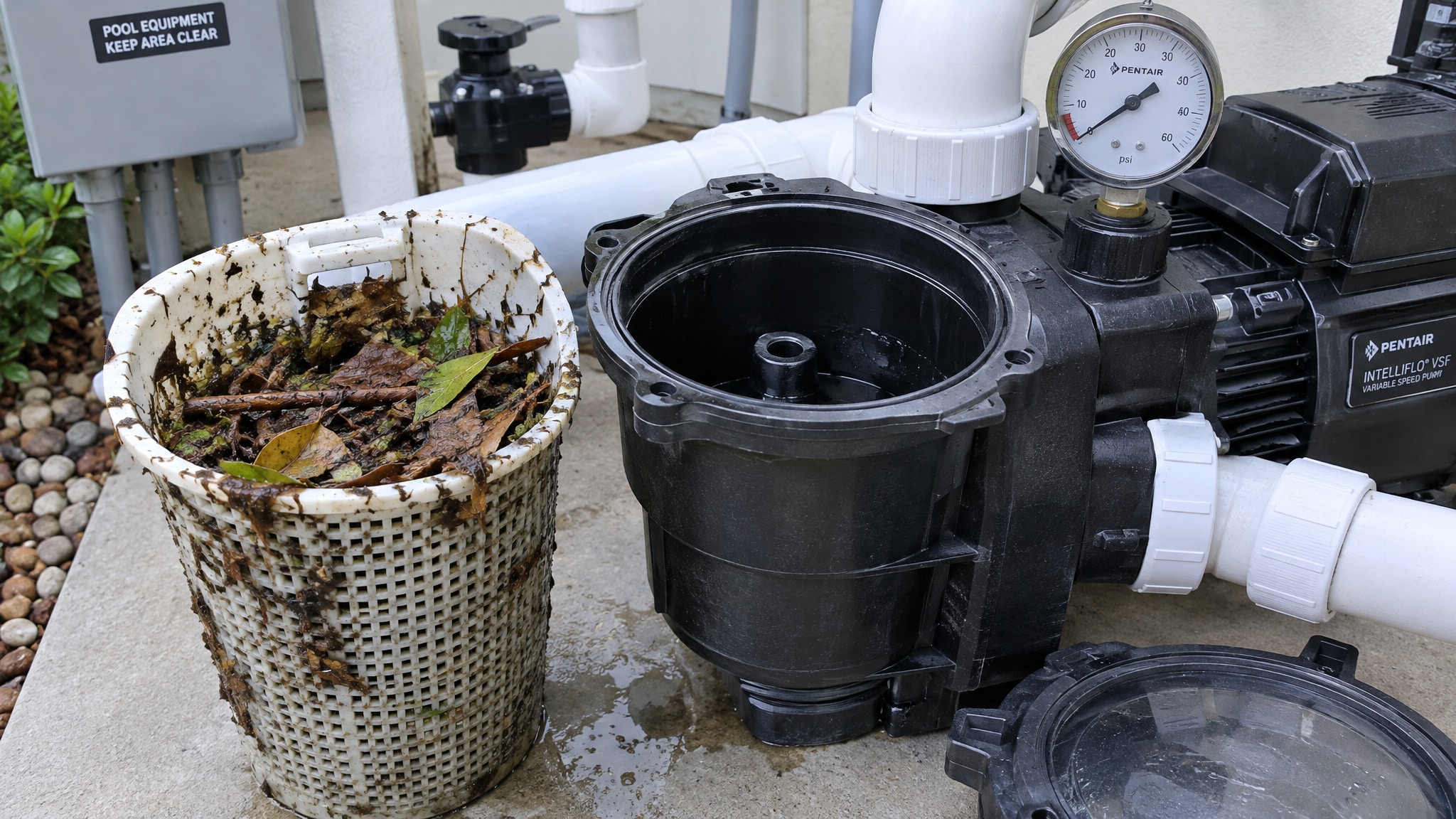
Remove the pump lid and inspect the strainer housing. Check the lid O-ring for wear, cracks, dirt, or poor lubrication. Look for cracks in the pump lid, wet end, or suction-side plumbing. Inspect suction valves, fittings, and pipe connections for loose joints. Clear debris from the pump and skimmer baskets before restarting.
What Are the Step-by-Step Priming Instructions
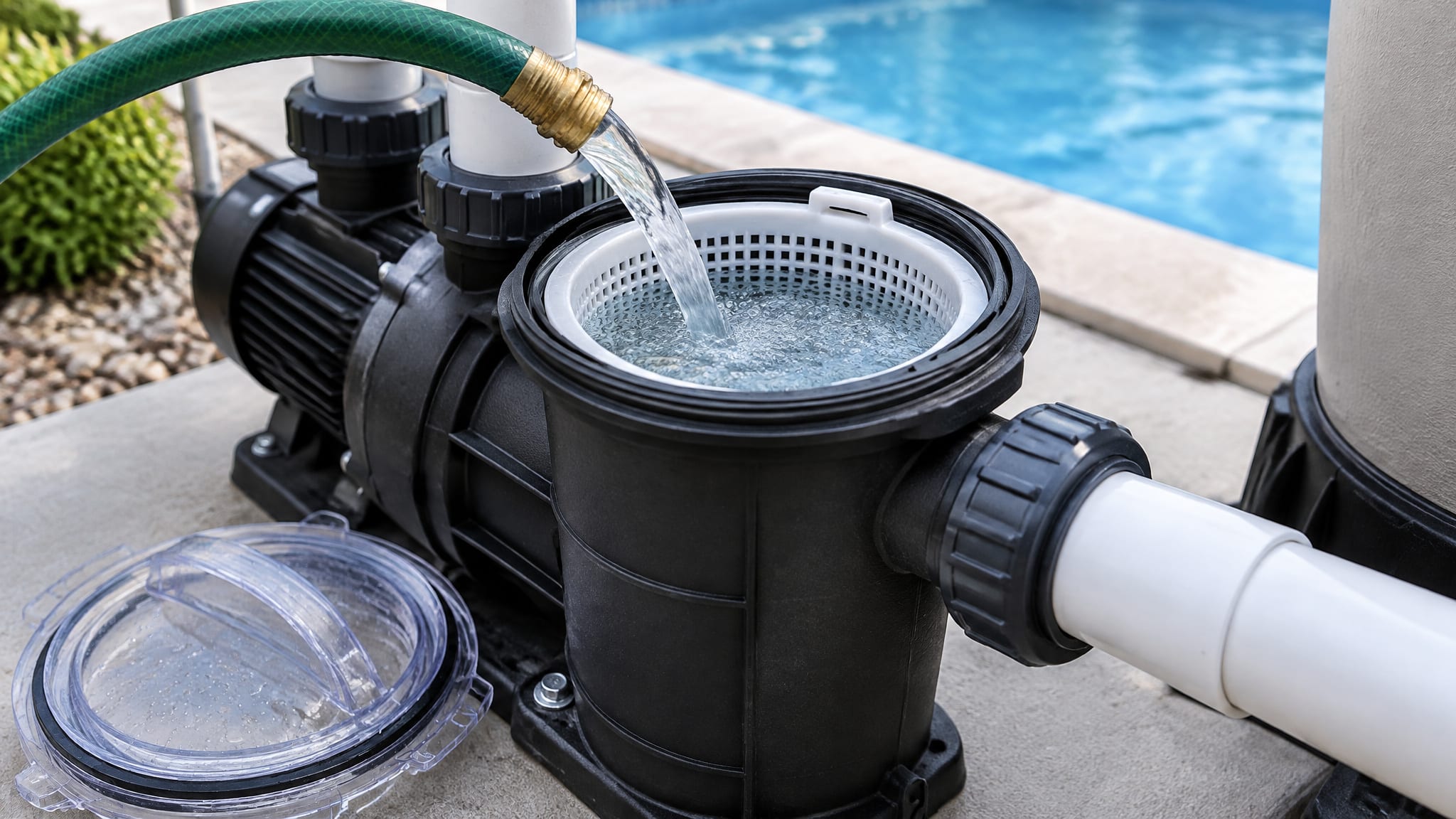
Prime the pump by refilling the strainer housing completely with pool water using a hose or bucket, working out any visible air pockets inside the chamber. On systems with multiple suction lines, open one line at a time to help the pump draw water. Then reassemble and set valves for priming:
Fill the strainer housing completely with pool water, clearing air pockets, then reassemble and set valves for priming.
- Reinstall the basket, lid, and O-ring, tightening the lid firmly by hand, never use pliers.
- Open the filter’s air-bleed valve partway and set a multiport valve to recirculate or filter.
- Open suction valves fully, or leave only one line open on harder-to-prime systems.
Turn the pump on. Expect air to escape through the returns first, then steady water flow within about 30–90 seconds. Close the air-bleed valve once a solid stream appears.
How Long Should It Take a Pump to Prime
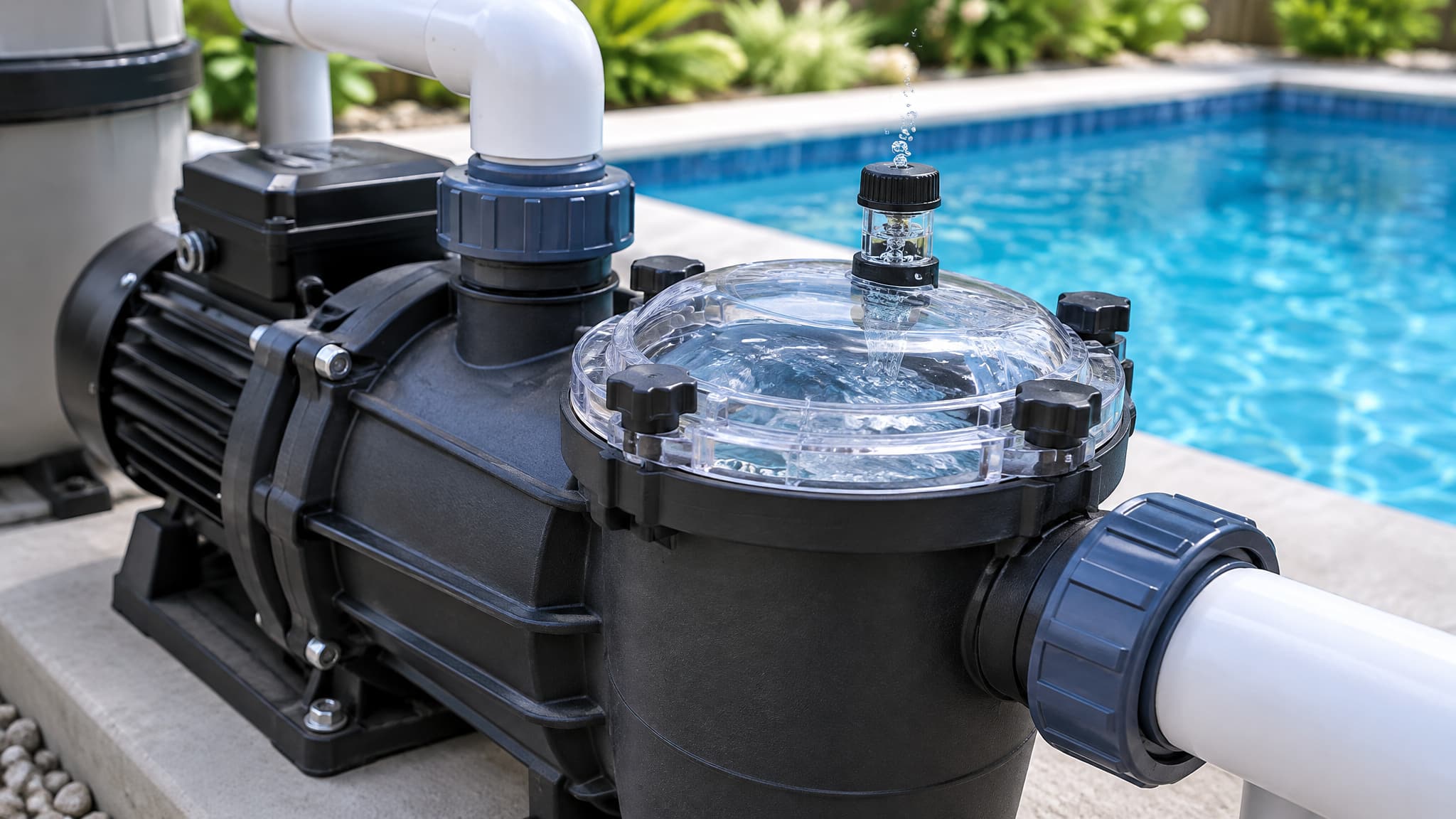
A pump should typically take about 30 to 90 seconds to prime. Air escapes through the returns first, then a steady stream of water follows. Once you see that solid stream, close the air-bleed valve. If the pump doesn’t prime within about 3 minutes, shut it down and inspect the suction side for air leaks or blockages. Don’t run the pump dry beyond safe limits while waiting.
| Timing Benchmark | Action |
|---|---|
| 30–90 seconds | Normal prime; close air-bleed valve |
| Up to 3 minutes | Continue monitoring for water flow |
| Over 3 minutes | Shut down; check suction-side leaks |
Track these intervals closely, since prolonged dry running risks damaging the pump’s seals and motor components.
Why Won’t Your Pool Pump Hold Prime
Your pool pump usually won’t hold prime because of an air leak on the suction side rather than a problem with the pump motor itself. Start by confirming your pool water level sits at least midway up the skimmer opening, since a low level lets air feed into the line.
Then work through these checks:
- Recheck the pump lid seal, O-ring condition, and hand-tightness, avoid over-torquing.
- Reinspect the skimmer baskets, pump basket, and suction plumbing for debris or damage.
- Look for cracked lids, broken fittings, or loose unions that can break suction.
If prime still won’t hold, trace the suction-side plumbing carefully for hairline cracks and loose joints. These small openings draw air continuously, defeating every priming attempt you make.
How Do You Stop Priming Problems From Coming Back
You stop priming problems from coming back by preventing air leaks, maintaining proper water level, and keeping water flow unrestricted. Keep your pool water at least to the middle of the skimmer opening so the pump always has water to draw. Inspect the lid O-ring regularly for wear, cracks, and dirt, and keep it clean and lightly lubricated. Tighten the lid firmly by hand every time, and never over-torque with pliers. Check suction valves, fittings, and unions periodically for loose joints that let air in. Clear the pump and skimmer baskets before debris restricts flow. Address any cracked lid or fitting promptly rather than tolerating a minor leak. These simple, routine checks stop small air-entry problems from becoming repeated prime failures.
Build a Pool With a Reliable Pump System
A properly installed pump and plumbing system helps maintain steady water circulation and reduces recurring priming problems. At Schiller Pools, we build fiberglass pools with equipment selected for reliable performance and easier maintenance.
If you’re planning a new pool in Stuart, explore our pool construction services or contact our team to discuss your project.
Frequently Asked Questions
Can Running a Pool Pump Dry Permanently Damage the Motor?
Yes, running your pump dry can cause lasting damage, though the risk targets the seals and wet end more than the motor itself. Don’t let it run dry for more than a few minutes; some sources warn against exceeding 30 seconds to 5 minutes, depending on your equipment’s condition. When you’re priming, fill the housing completely first, then watch closely and shut down immediately if water flow doesn’t establish.
What Type of Lubricant Should You Use on the O-Ring?
Use a silicone-based O-ring lubricant, since it’s compatible with rubber seals and won’t degrade them over time. Don’t use petroleum-based products like Vaseline or grease, which cause the O-ring to swell, crack, and fail prematurely. Before applying, wipe the O-ring clean of dirt and debris. Apply a thin, even coat to keep the seal supple and airtight. This helps prevent suction-side air leaks that break your pump’s prime.
Do Variable-Speed Pumps Prime Differently Than Single-Speed Pumps?
The priming steps stay the same, but you’ll want to run a variable-speed pump at a high speed during priming to maximize suction. Don’t try to prime on a low, energy-saving setting, since it won’t pull water fast enough. Fill the housing, seal the lid hand-tight, and set the pump to full or near-full RPM. Once you’ve got a solid water stream, drop it back to your normal operating speed.
Is It Safe to Prime a Pool Pump in Cold Weather?
Yes, you can prime safely in cold weather, but take extra care. Turn the pump power off at the breaker first, and confirm it can’t restart from a timer or chlorinator. Watch your run-dry time closely, since cold, brittle plumbing and stiff O-rings raise crack risk. Don’t run the pump dry more than a few minutes. Inspect the lid, O-ring, and suction fittings for cold-related cracks before you start.
How Often Should You Replace the Pump Lid O-Ring?
Replace your pump lid O-ring whenever you spot wear, cracks, dirt buildup, or poor sealing during inspection, rather than on a fixed schedule. Check it each time you open the pump, and lubricate it regularly to extend its life. If your pump keeps losing prime, inspect the O-ring first, since a degraded seal lets air into the suction side. Don’t wait for failure; replace it promptly once you notice damage.