You can dramatically reduce pool water evaporation by implementing five proven strategies. Install a high-quality pool cover to decrease water loss by up to 95%. Create strategic windbreaks using trees, shrubs, or fencing to cut wind speed by 70%. Apply liquid pool cover technology to form a protective molecular barrier. Maintain ideal water chemistry with precise pH levels of 7.4-7.6. Design smart environmental controls with automated systems. These methods offer substantial cost savings when properly executed.
Install a High-Quality Pool Cover
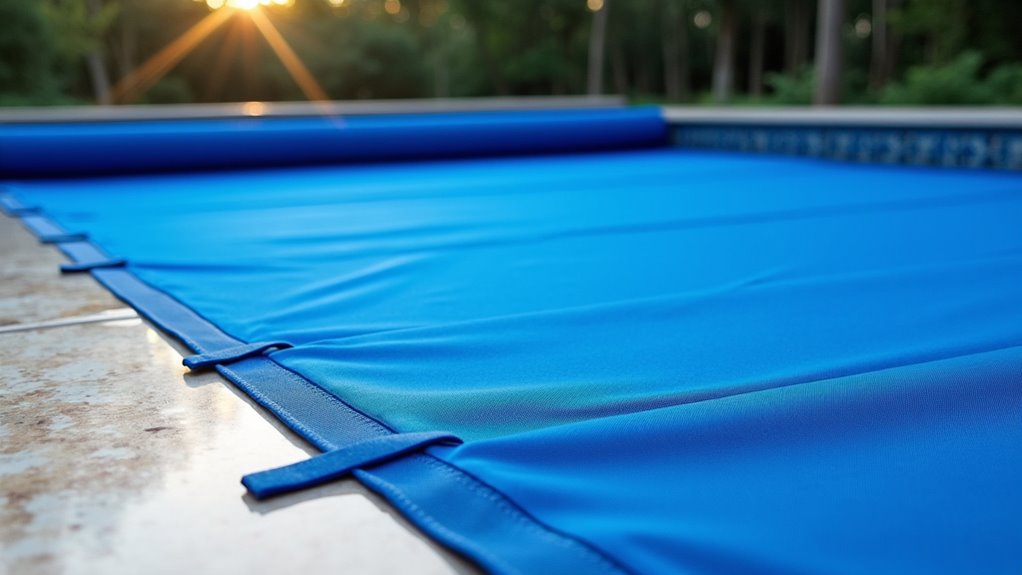
Regarding reducing pool water evaporation, installing a high-quality pool cover stands as the most effective solution, with the potential to reduce water loss by up to 95%.
When you invest in proper cover customization, you’ll protect your pool while achieving substantial cost savings. Solar bubble covers provide efficient heat capture through thermal design. A well-fitted cover reduces heating expenses by 50-70% through improved insulation and minimizes chemical consumption. Smart technology integration allows for precise temperature control throughout the year. You’ll also benefit from heightened safety features, as ASTM F1346-rated covers can reduce drowning risks by up to 80%. Leading manufacturers work with independent testing services to ensure covers meet rigorous safety standards.
Regular cover upkeep guarantees optimal performance and longevity. UV-resistant materials shield your pool from debris and environmental damage, extending equipment lifespan and reducing filtration demands. This investment aligns with eco-friendly practices by decreasing chemical runoff and supporting sustainable water management in both residential and commercial settings.
Create Strategic Windbreaks Around Your Pool
Three key factors make strategic windbreaks essential for minimizing pool water evaporation: density, placement, and design.
For paramount protection, you’ll want to maintain a windbreak density between 40-60%, which creates the largest protected area and optimizes wind reduction. Position your windbreaks at right angles to prevailing winds, ensuring coverage extends upwind 2-5 times the barrier’s height and downwind up to 30 times its height.
Smart plant species selection plays a pivotal role in windbreak density optimization. Choose evergreen trees and shrubs for year-round effectiveness, or combine them with slatted fencing (75-80% solid) for controlled airflow. By incorporating multiple rows or staggered planting, you’ll amplify the wind shadow area and achieve up to 70% reduction in wind speed, dramatically decreasing water evaporation from your pool’s surface.
Apply Liquid Pool Cover Technology
While traditional pool covers offer maximum evaporation protection, liquid pool covers present a sophisticated technological solution that can reduce water loss by 15-50% through the formation of a monomolecular film. To augment application methods, add the product directly to your skimmer or dispense manually, allowing it to spread across the surface automatically. Monitor product performance by tracking water consumption and maintaining weekly reapplication schedules. Chemical films and liquid suppressants demonstrate 20-40% effectiveness in controlling evaporation rates. Products like Heatsavr are NSF approved and provide consistent performance across various pool types. Indoor facilities have experienced reduced humidity levels when implementing liquid pool covers. Your pool’s efficiency will improve while maintaining unrestricted access for swimmers, though effectiveness may decrease during high winds or heavy use.
| Feature | Benefit |
|---|---|
| Monomolecular Film | Blocks vapor escape while remaining safe |
| Auto-Reforming | Continues protection after swimming |
| Energy Savings | $0.47 per sq ft annually for heated pools |
| Water Conservation | 225-600 gallons saved monthly (15,000-gal pool) |
| Cost-Effective | $2.50-$3.50 weekly for average pools |
Maintain Optimal Water Levels and Chemistry
Proper water chemistry and level maintenance serve as critical foundations for minimizing pool water evaporation. You’ll need to maintain water levels between one-third and one-half up the skimmer opening to guarantee efficient filtration and prevent pump damage. Keep pH between 7.4-7.6 and total alkalinity at 90-120 ppm to stabilize water chemistry and lessen unnecessary water loss. If you experience access issues, Cloudflare security may temporarily restrict your pool maintenance software usage.
To optimize your pool’s chemistry, schedule professional pool maintenance regularly and monitor mineral content, especially calcium hardness. Using a reliable water testing kit helps ensure accurate chemical readings for proper adjustments. Test chemicals weekly to catch imbalances early, and shock your pool every 1-2 weeks during nighttime hours. Operating your filter system for 10-12 hours daily ensures optimal water circulation and chemical distribution. Remember to clean skimmer baskets twice weekly, vacuum regularly, and maintain proper circulation by angling jets for circular water movement. These practices will drastically reduce evaporation rates while preserving your pool’s equipment and surfaces.
Design Smart Environmental Controls
Modern environmental control systems revolutionize pool water conservation through intelligent automation and monitoring. You’ll dramatically reduce evaporation by leveraging variable speed circulation that adjusts based on real-time conditions. Smart systems integrate weather-based controls to ideal operations during different climate conditions, while automated chemical dispensers maintain perfect water balance without waste. The ability to monitor pH and chlorine levels continuously ensures optimal water quality with minimal chemical usage. Smart water quality monitors deliver step-by-step guidance for precise chemical adjustments to maintain perfect balance. Automated backwashing schedules optimize filtration while minimizing water consumption during cleaning cycles.
- Wi-Fi-enabled controllers let you monitor and adjust settings remotely through mobile apps, ensuring immediate response to water conservation issues
- Variable-speed pumps automatically modify flow rates based on demand, reducing unnecessary water movement and evaporation
- Integrated sensors continuously track water levels and chemistry, triggering automated adjustments to maintain excellent conditions
- Smart automation synchronizes covers, pumps, and heating systems to maximize efficiency while minimizing water loss through evaporation
Frequently Asked Questions
How Long Do Pool Covers Typically Last Before Needing Replacement?
You’ll typically need to replace your pool cover every 5-10 years, depending on the type you’ve chosen and your proper maintenance schedule. The average lifespan of pool covers varies: solid vinyl covers last 6-10 years, mesh safety covers endure 7-10 years, and automatic covers typically serve about 7 years. You can optimize your cover’s longevity through regular cleaning, proper storage when not in use, and prompt repairs of minor damage.
Can Multiple Evaporation Control Methods Be Used Simultaneously?
Yes, you can effectively use multiple evaporation control methods together. By stacking pool covers with liquid evaporation suppressants, you’ll achieve maximum water retention. When you combine physical barriers like Hexprotect® SLIM or Hexoshield® with chemical treatments, you’ll get up to 30% supplementary water savings in areas where covers can’t reach. This approach is particularly effective since chemical barriers fill coverage gaps while physical covers provide the primary 90-97% evaporation reduction.
Do Liquid Pool Covers Affect Swimmer Safety or Water Clarity?
You won’t face significant safety concerns with properly dosed liquid pool covers, as they’re biodegradable and non-toxic. The solution temporarily separates when you’re swimming, maintaining swimmer accessibility, and reforms once motion stops. You’ll notice no impact on water clarity or water temperature impact during normal use. While some sensitive individuals might experience minor eye irritation (similar to chlorine), the covers have passed extensive toxicology testing for safe pool use.
What Percentage of Pool Water Loss Is Due to Evaporation Versus Leaks?
In a well-maintained pool, you’ll find that evaporation accounts for 70-95% of your total water loss. You can verify this through evaporation rate measurement techniques, like the bucket test, which helps distinguish natural loss from potential leaks. If you’re losing more than 1/4-1/2 inch daily in summer, you’ll want to employ leak detection techniques, as this suggests problems beyond normal evaporation. Consider that seasonal variations drastically affect these percentages.
How Do Different Climate Zones Impact the Effectiveness of Evaporation Controls?
Climate variability effects profoundly alter how well your evaporation controls work. In arid zones, you’ll need constant cover use as evaporation rates exceed 50 inches yearly, while humid regions see less dramatic benefits due to naturally lower water loss. Seasonal evaporation patterns in temperate zones require you to adjust your control strategies throughout the year. You’ll find covers are most effective during dry, windy periods and less important during humid, still conditions.