Regular pool filter cleaning can be straightforward with the right approach. You’ll need basic supplies like a filter brush, pressure gauge, and cleaning solutions. Start by monitoring pressure readings weekly, cleaning when levels rise 8-10 psi above baseline. For cartridge filters, shut down the system, remove components, and soak in appropriate cleaners. Sand filters require backwashing, while DE filters need grid cleaning. Proper maintenance techniques will help you master professional-level filter care.
Essential Tools and Supplies for Filter Cleaning
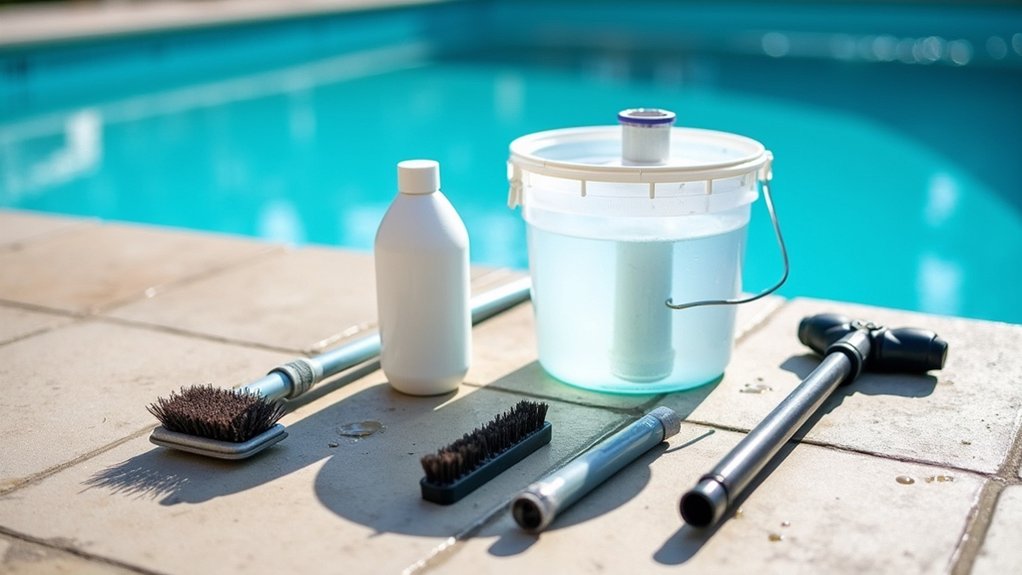
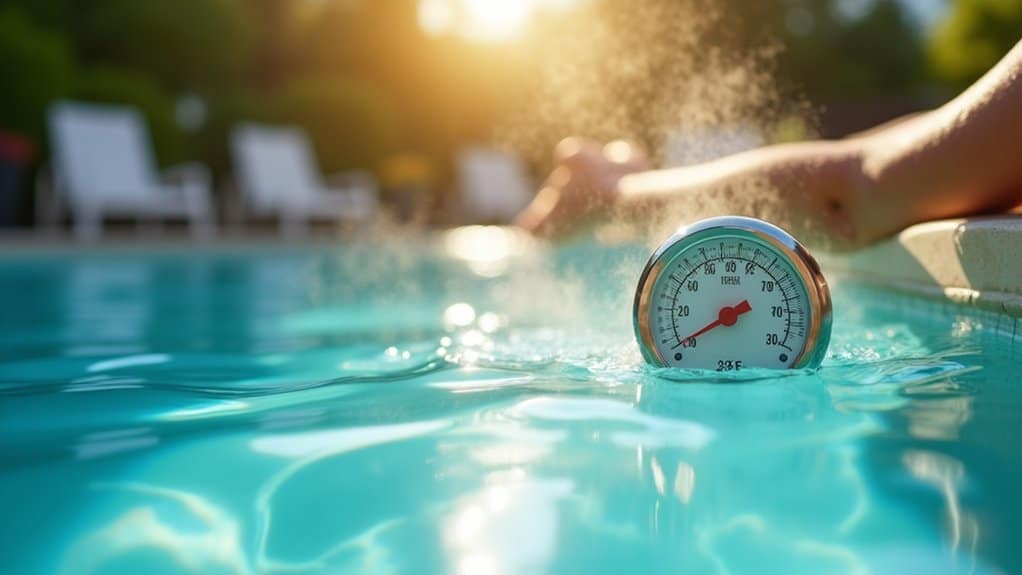
Before tackling any pool filter cleaning project, gathering the right tools and supplies will guarantee a thorough and efficient maintenance process. For fast pool filter care, you’ll need essential cleaning tools like a filter brush, flosser wand, and high-pressure spray nozzle for your garden hose. These specialized tools are designed to gently remove debris while preserving your filter’s integrity. A functioning pressure gauge helps indicate when cleaning is needed by showing pressure build-up in the system.
Among convenient cleaning tips, keep protective gear handy – including safety goggles and chemical-resistant gloves. You’ll also want a reliable socket set and dead-blow hammer for disassembling filter components. Always remember to turn off power before starting any filter maintenance work. For DIY maintenance tricks, stock both commercial cleaners and natural solutions like vinegar and baking soda. Don’t forget crucial accessories like a pressure gauge, O-ring lubricant, and replacement gaskets. Having a filter inspection mirror helps you spot potential issues before reassembly, ensuring your cleaning efforts result in ideal filter performance.
Step-by-Step Cartridge Filter Cleaning Guide
Four key phases comprise a thorough cartridge filter cleaning process: system preparation, disassembly, cleaning, and reassembly. You’ll need to shut down power, release pressure through the air relief valve, and drain residual water before starting. Once prepared, remove the housing clamp, lift the lid, and extract the cartridges, noting their orientation. For tough mineral deposits and algae buildup, a soak in muriatic acid solution will provide deep cleaning. Regular maintenance of your filter system through monthly cleaning helps extend its lifespan and maintain optimal performance. After cleaning the cartridges, make sure to inspect them for any signs of wear or damage, as this could affect filtration efficiency. Consult a detailed pool filter cleaning guide to ensure you’re following best practices for your specific filter model. Finally, once everything is reassembled, restart the system and check for any leaks, ensuring that your pool is ready for use.
| Phase | Critical Steps | Safety Notes |
|---|---|---|
| Prep | Power off, drain water | Wear protective gear |
| Disassemble | Remove clamp, lift lid | Note cartridge position |
| Clean | Hose rinse, TSP soak | Avoid pressure washers |
| Reassemble | Check O-ring, secure lid | Follow torque specs |
For effective cleaning, spray cartridges at a 45-degree angle with a garden hose, then soak in TSP solution overnight. After thorough rinsing, inspect for damage, reinstall in the correct orientation, and gradually repressurize the system.
Proper Sand Filter Maintenance Techniques
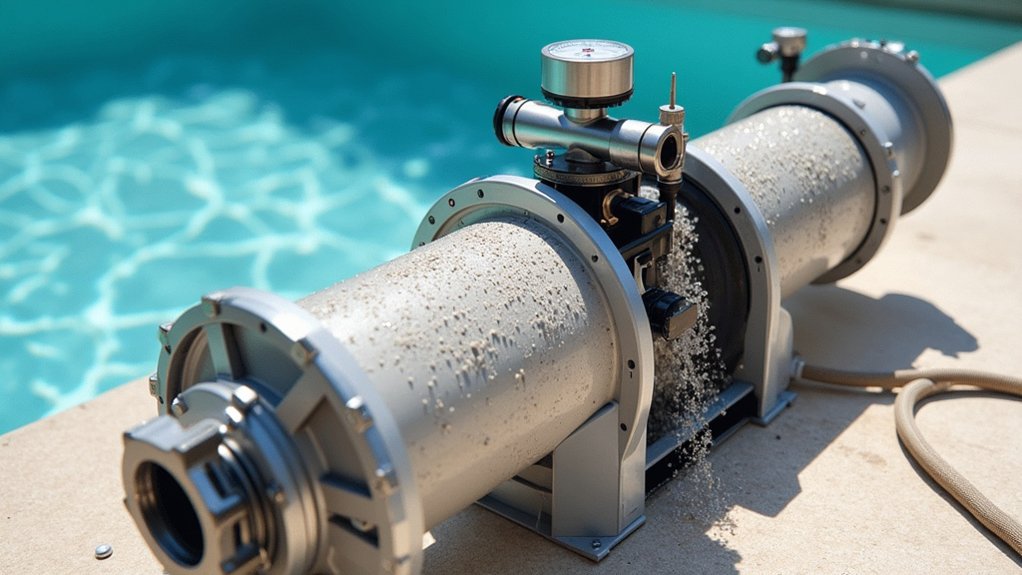
Effective sand filter maintenance relies on three core procedures: routine backwashing, annual deep cleaning, and strategic component care.
You’ll need to backwash your filter when pressure rises 10 psi above baseline, running it for 3-5 minutes followed by a 30-second rinse cycle. Clean pool water ensures the pool water is sparkling clean and safe to enjoy. A proper tank size will optimize filtration performance and reduce maintenance frequency. Regular maintenance significantly extends equipment life by preventing strain on the pump system. Don’t exceed manufacturer-specified durations to prevent damage. For annual deep cleaning, apply filter cleaner through the pump strainer, let it soak for 8 hours, then backwash thoroughly.
Replace your sand every spring to maintain sharp edges for ideal filtration. Keep the system running efficiently by lubricating o-rings with silicone-based products and regularly cleaning the pump strainer. Watch for warning signs like pressure spikes, cloudy water, or sand in the pool; these indicate potential issues requiring immediate attention.
Deep Cleaning Methods for DE Filters
While maintaining a DE filter requires regular attention, deep cleaning is essential for ideal performance and longevity. To begin, drain your filter tank and carefully remove the grid assembly. You’ll need to thoroughly spray the grids with a high-pressure garden hose to dislodge debris and DE powder. A regular bump handle operation and tank flush is recommended for Perflex Flex Tubes specifically. Always wear protective equipment when handling cleaning chemicals to ensure safety during maintenance.
For stubborn buildup, soak your grids overnight in either a TSP solution (½ lb per 5 gallons of hot water) or a muriatic acid mixture (1:20 ratio with water) for mineral deposits. After cleaning, inspect grids for damage and replace any worn components. When reassembling, guarantee proper alignment and lubricate all o-rings. Finally, recharge your filter with fresh DE powder, using 1 pound per 10 square feet of filtration area. Remember to monitor pressure readings and perform this deep clean every six months.
Time-Saving Tips for Regular Filter Care
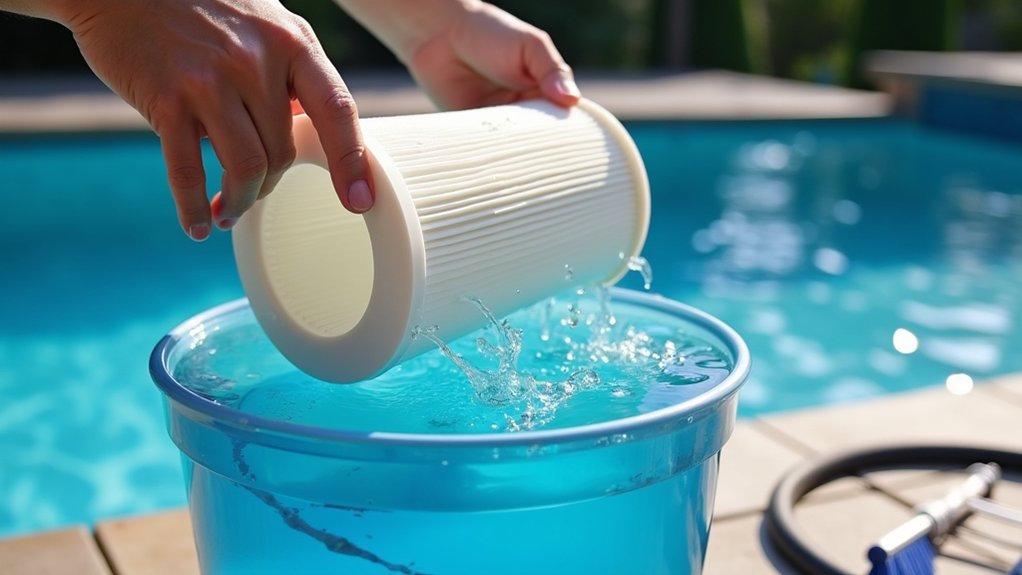
Regular filter maintenance becomes vastly more manageable when you implement smart time-saving strategies into your pool care routine. By establishing a consistent schedule and using the right tools, you’ll streamline your maintenance process profoundly. For sand filters, backwashing the system helps maintain optimal filtration performance while extending the life of the filter media. Performing DE filter recharging monthly helps achieve the highest level of water clarity available in pool filtration.
| Time-Saving Strategy | Implementation | Benefit |
|---|---|---|
| Pressure Monitoring | Check gauge weekly | Prevents emergency cleanings |
| Pre-cleaning Setup | Gather tools in advance | Reduces maintenance time |
| Quick-clean Method | Use focused hose spray | Effective debris removal |
| Safety Preparation | Release pressure first | Prevents work delays |
You’ll maximize efficiency by monitoring your pressure gauge regularly; when it rises 8-10 psi above baseline, it’s time to clean. Keep your cleaning supplies organized and readily available, and always wear proper safety gear. For cartridge filters, use a high-pressure garden hose spray between the pleats to quickly remove debris while maintaining filter integrity. Using a pool cover during off-hours can significantly reduce the amount of time you spend on filter maintenance by preventing excess debris from entering the pool. Set a schedule and follow hasslefree filter maintenance tricks to save time, extend equipment life, and enjoy a cleaner pool with less effort.
Frequently Asked Questions
Can I Clean My Pool Filter With Vinegar Instead of Chemicals?
Yes, you can use vinegar to clean your cartridge pool filter as a natural alternative to chemicals. Create a 50:50 vinegar-water solution and soak your filter for at least 3 hours to remove mineral buildup and stains. However, don’t use vinegar on sand or DE filters, as it can damage them. You’ll need to thoroughly rinse the filter before reinstalling it, and heavily soiled filters may still require chemical cleaning.
How Do I Know if My Filter Needs Replacement Versus Cleaning?
You’ll need to replace your filter if you notice persistent water cloudiness even after cleaning, physical damage like tears or cracked end caps, or if pressure remains high post-cleaning. Key indicators include requiring cleanings twice as often as normal, pressure gauge rising 8+ PSI above clean levels, or reaching 12-15 total cleanings for cartridge filters. If your filter’s 2-5 year lifespan is exceeded, replacement’s typically necessary.
Should I Run My Pool Pump During Filter Cleaning?
No, you shouldn’t run your pump while cleaning most filter types – always turn it off first. However, there are two key exceptions: backwashing sand filters and rinse cycles require the pump to be ON. Before any filter maintenance, disconnect power and close valves to prevent accidents. When you’re done cleaning, restart your pump at full speed to guarantee proper water flow and system function.
Can Pool Filter Cleaning Chemicals Damage My Landscaping or Lawn?
Yes, pool filter cleaning chemicals can severely damage your landscaping and lawn. TSP and muriatic acid are particularly harmful; they’ll alter soil chemistry, burn grass, and kill root systems on contact. You’ll need to prevent any chemical runoff from reaching plant areas. Always neutralize solutions before disposal, use designated containers for soaking filters, and rinse thoroughly away from vegetation on impervious surfaces like your driveway.
Is It Safe to Store Used Filter Cleaning Solution for Future Use?
No, you shouldn’t store used filter cleaning solution for future use. While it may seem economical, reused solutions can become unstable, create toxic fumes, or cause dangerous chemical reactions over time. Even in sealed containers, the solutions can degrade and accumulate harmful residues. You’ll need to dispose of used cleaning solutions according to local regulations and always use fresh product for each cleaning cycle to guarantee safety and effectiveness.