To convert your chlorine pool to a saltwater system, you’ll need to install a salt chlorine generator sized for your pool’s gallon capacity. First, balance your water chemistry and guarantee equipment compatibility. Mount the control panel near your filtration system and install the salt cell inline on the return plumbing. Add pool-grade salt to reach 2,500-5,000 ppm concentration. The steps below cover everything from proper cell placement to ongoing maintenance requirements. To convert your chlorine pool to a saltwater system, you’ll need to install a salt chlorine generator sized for your pool’s gallon capacity, as part of a proper saltwater pool conversion process. First, balance your water chemistry and ensure equipment compatibility, then mount the control panel near your filtration system and install the salt cell inline on the return plumbing. Add pool-grade salt to reach 2,500, 5,000 ppm concentration, with the following steps covering everything from proper cell placement to ongoing maintenance requirements. To convert your chlorine pool to a saltwater system, you’ll need to install a salt chlorine generator sized for your pool’s gallon capacity, a process similar to how to convert above ground pool to salt water setups with proper equipment selection. First, balance your water chemistry and ensure equipment compatibility, then mount the control panel near your filtration system and install the salt cell inline on the return plumbing. Add pool-grade salt to reach 2,500, 5,000 ppm concentration, with the remaining steps covering everything from correct cell placement to ongoing maintenance requirements.
Prepare Your Pool Equipment and Water Chemistry
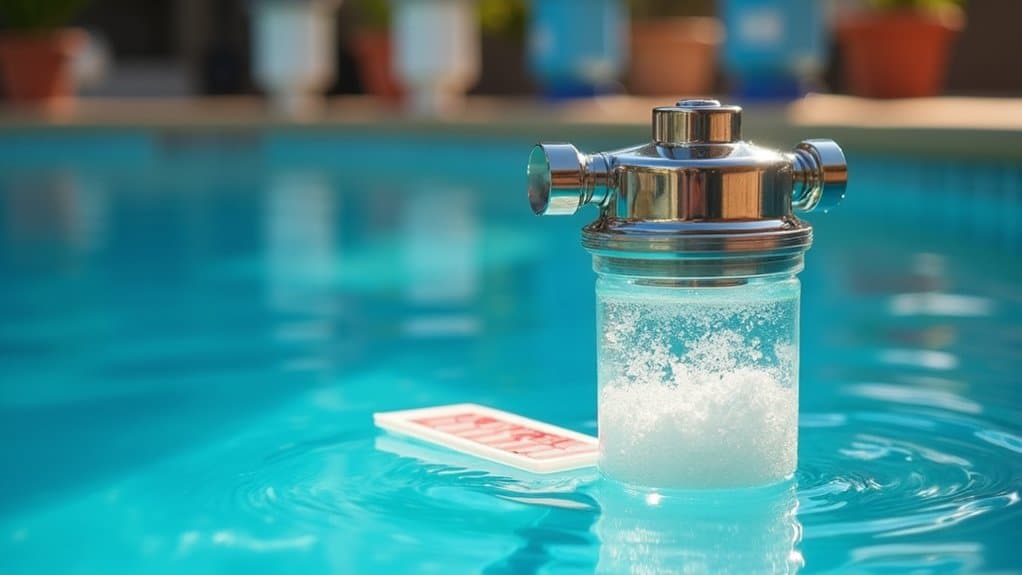
Before you plunge into the conversion process, you’ll need to dial in your water chemistry and verify equipment compatibility. Test your water using a reliable pool test kit, then balance pH and alkalinity to ideal ranges. Guarantee cyanuric acid levels hit 30, 50 ppm to protect chlorine from UV degradation.
Next, inspect your existing pumps, filters, and plumbing for saltwater compatibility. Your pool chlorinator system requires seamless integration into current infrastructure. Assess PVC couplers, adapters, and pipe sections you’ll need for installation. Salt’s corrosive properties demand compatible equipment to prevent premature failure. Saltwater systems are gentler on pool surfaces, reducing corrosion over time compared to traditional chlorine pools. Pay special attention to any metal pool parts that could corrode when exposed to saltwater over time.
Calculate your pool’s volume in gallons to determine precise salt requirements. Most manufacturers specify salinity between 2,500, 5,000 ppm. Use the standard ratio of 50 pounds per 2,000 gallons for accurate measurement.
Choose the Right Salt Chlorinator for Your Pool Size
Once you’ve confirmed equipment compatibility and balanced your water chemistry, selecting the correct salt chlorinator becomes your next critical step. Calculate your pool volume using the appropriate formula, for rectangular pools, multiply length by width by average depth by 7.5.
When switching from chlorine to salt water pool systems, match your chlorinator capacity to your gallonage. The Pentair IntelliChlor IC20 handles 20,000 gallons, while the IC40 services pools up to 40,000 gallons. AquaRite offers 25K and 40K options for mid-range volumes. Oversizing your salt chlorinator is recommended because operating at a fraction of full capacity extends the cell’s typical 3-5 year lifespan. Before sizing your system, use a digital chemistry tester like the Solaxx SafeDip to determine your current salt levels accurately.
Factor in your geographic location. Manufacturer ratings standardize to New Jersey latitude, a 40,000-gallon rated cell drops to 25,000-gallon capacity in North Carolina due to increased UV exposure. Southern Florida installations require even larger cells. Higher sun exposure accelerates chlorine breakdown, demanding greater cell output for adequate sanitation.
Install the Salt Cell and Connect the Electrical
Proper positioning of your salt cell and control panel directly impacts system performance and long-term serviceability. Mount the control panel where technicians can access it for maintenance, ensuring proximity to your filtration system for seamless integration. When you convert pool to saltwater, the salt cell installs inline on the return plumbing after the filter, allowing water to flow through the charged titanium plates. The system then converts dissolved salt into chlorine through electrolysis, producing a steady, controlled sanitization level. This process generates hypochlorous acid, which sanitizes the pool while maintaining consistent water quality.
All electrical work requires a licensed technician to maintain code compliance. The controller connects directly to the salt cell, with power routed from your home’s breaker box. Proper grounding and circuit protection are non-negotiable safeguards against electrical hazards. Weatherproof all wiring connections and verify accessibility for future maintenance checks before restoring power to the system. Once installation is complete, operate the pool pump for several hours to properly circulate the water and ensure the salt fully dissolves throughout the pool.
Add Salt and Start Your Saltwater System
With your salt cell mounted and electrical connections verified, you’re ready to add salt and bring your chlorination system online. Understanding how to convert a chlorine pool to saltwater requires precise salt calculations based on your pool’s volume and manufacturer specifications. To ensure optimal performance, consider investing in a saltwater conversion kit for inground pools that meets your specific needs. These kits often come with detailed instructions and all necessary components, making the conversion process straightforward.
| Parameter | Target Range | Testing Method |
|---|---|---|
| Salt Concentration | 2,500-5,000 ppm | Electronic tester |
| Cyanuric Acid | 30-50 ppm | Test strips |
| TDS | Below 2,500 ppm | Digital meter |
Broadcast high-purity pool salt around the perimeter while circulation runs continuously. Brush walls and floors to accelerate dissolution. After 24 hours, test salinity levels, undersalting beats oversalting. Once readings hit target ppm, activate your chlorinator. The electrolysis process converts salt into consistent, stable chlorine output. This stable chlorine production eliminates the harmful chloramines that cause eye, skin, and lung irritation in traditional chlorine pools. Beyond the improved swimming comfort, this conversion also reduces chemical runoff and environmental pollution compared to traditional chlorine pools.
Test, Troubleshoot, and Maintain Your Saltwater Pool
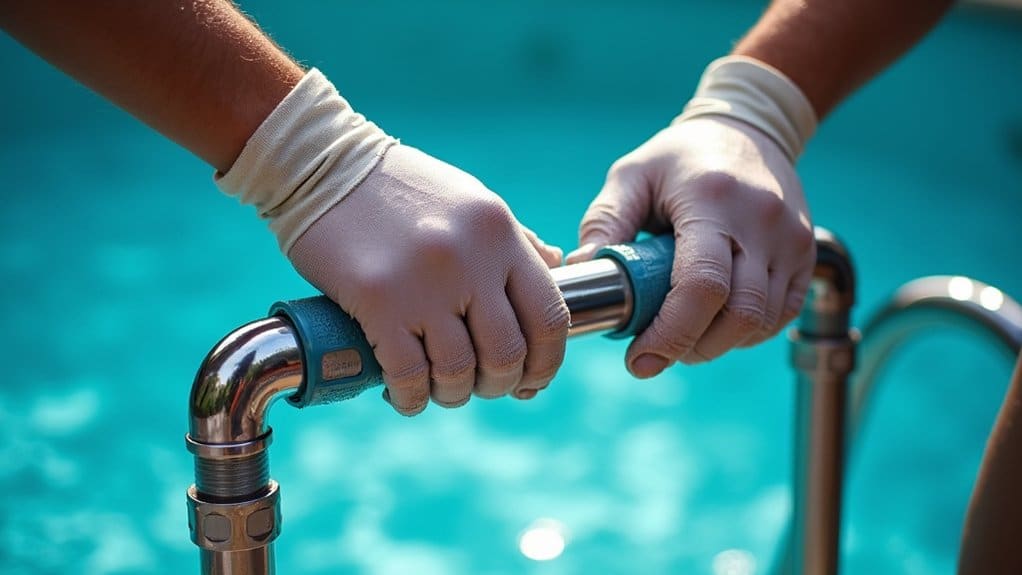
After your salt chlorinator reaches operational status, ongoing water chemistry management becomes critical to system longevity and swimmer comfort. Test pH weekly, maintaining 7.2-7.6 levels, and verify free chlorine stays at 1-3 ppm. Monitor salinity in multiple pool zones to catch imbalances early. White flakes in your pool indicate a buildup of calcium carbonate, which can be prevented by avoiding calcium-based chlorine shocks.
Your saltwater conversion process doesn’t end at installation, it requires consistent maintenance protocols:
- You’ll protect your investment by inspecting the salt cell every three months for calcium scaling.
- You’ll prevent costly repairs by cleaning cell plates with diluted muriatic acid when deposits form.
- You’ll guarantee crystal-clear water by brushing walls weekly and running your pump 6-10 hours daily.
Address low salinity by adding salt incrementally and retesting. Combat cloudy water through increased shocking and improved circulation.
Ready to Transform Your Backyard?
Your dream pool is closer than you think. At Schiller Pools, our experienced team brings over 40 years of expertise to every project, delivering stunning fiberglass pool installations and custom pool construction that turn ordinary backyards into extraordinary outdoor retreats. With flexible financing options and lifetime warranty backing, there has never been a better time to get started. Call (561) 475-5997 today for your free estimate.
Frequently Asked Questions
Will Converting to Saltwater Damage My Pool Liner or Concrete Surfaces?
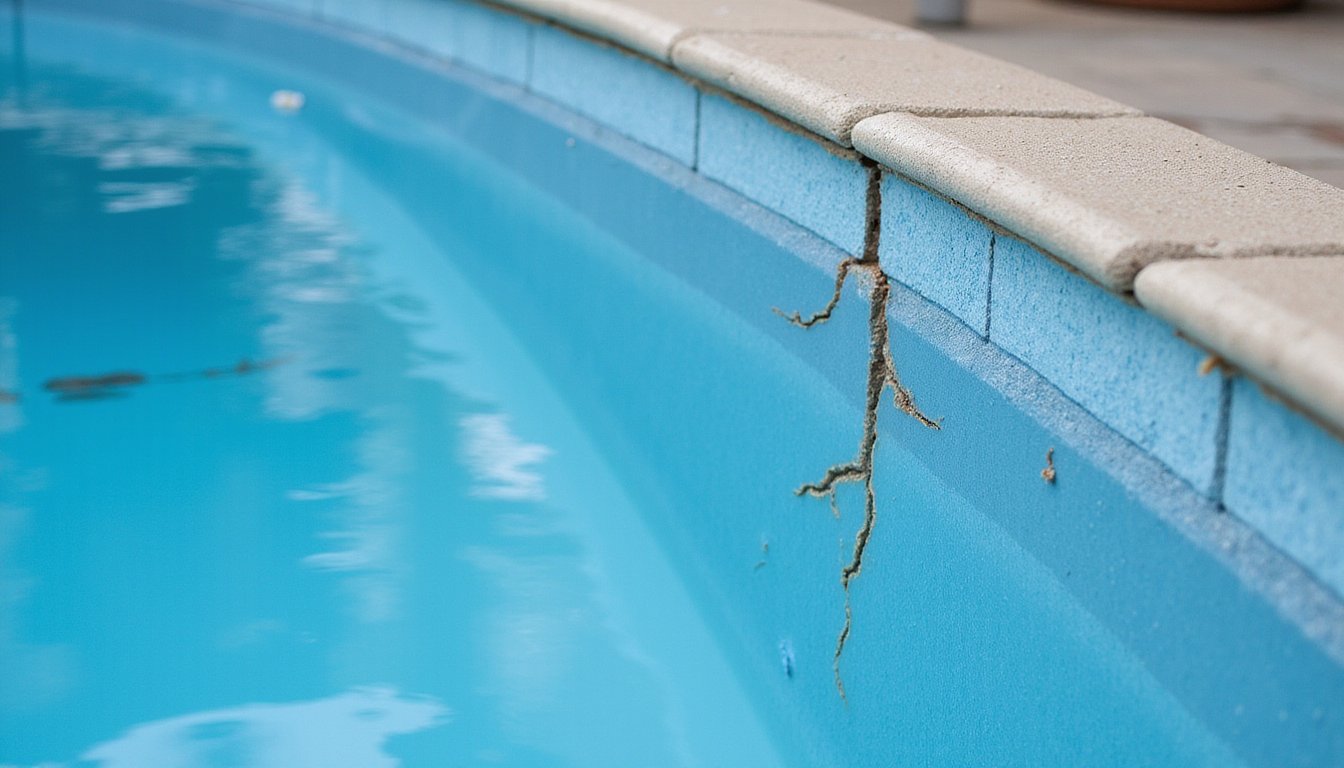
Salt water won’t damage your vinyl liner directly, it actually reduces fading and brittleness compared to traditional chlorination. However, if salt water infiltrates through cracks, it’ll corrode underlying metal wall panels. For concrete pools, you’re facing accelerated plaster erosion, up to five times faster than chlorine systems. You’ll need shorter resurfacing intervals and must dissolve salt completely to prevent staining. Install sacrificial anodes and guarantee proper bonding to mitigate galvanic corrosion on metal components.
Can I Switch Back to a Traditional Chlorine Pool After Converting?
Yes, you can revert to traditional chlorination without permanent modifications. You’ll disconnect the salt chlorine generator from the return line, then drain or dilute pool water until salinity drops below 2,500 PPM. Your existing pumps and filtration remain fully compatible post-reversion. After refilling, you’ll rebalance pH, alkalinity, and cyanuric acid levels manually, then resume standard liquid or tablet chlorine dosing. The entire process typically completes within 1-2 days.
How Does Saltwater Affect Swimmers With Sensitive Skin or Allergies?
You’ll find saltwater pools gentler on sensitive skin since they generate lower chlorine concentrations than traditional dosing methods. The reduced chloramine formation minimizes irritant contact dermatitis and respiratory triggers common in conventional systems. However, salt residue can dehydrate skin post-swim, potentially exacerbating eczema or rosacea. You should rinse thoroughly with fresh water immediately after exiting and apply emollient-based moisturizers to restore your skin’s lipid barrier and prevent dryness-related flare-ups.
Will the Salt Corrode My Pool Ladder, Handrails, or Nearby Metal Fixtures?
Salt can accelerate corrosion on metal components, but you’ll minimize risk by using high-grade stainless steel or powder-coated fixtures. Install zinc sacrificial anodes in your plumbing to provide cathodic protection and maintain proper bonding across all metal equipment. Rinse handrails and ladders with fresh water 1-2 times weekly to prevent salt buildup. Keep salinity between 2,500-3,500 ppm and replace any rusting components immediately with corrosion-resistant alternatives.
Is a Saltwater Pool Safe for Pets That Drink the Water?
Saltwater pools pose moderate risks if your pets ingest the water. Small amounts typically cause mild gastrointestinal upset, but excessive consumption can trigger saltwater toxicosis, a potentially fatal condition causing vomiting, diarrhea, muscle tremors, and seizures. You’ll need to provide fresh drinking water poolside and rinse your dog thoroughly post-swim. Monitor for symptoms after exposure and contact your veterinarian immediately if odd behaviors or persistent GI distress develop.