The ideal pool temperature for comfortable swimming sits between 78-82°F, with 80°F hitting the sweet spot for most swimmers. You’ll avoid shivering when you exit while steering clear of that sluggish, bathlike sensation warmer water creates. If you’re swimming with young children or seniors, you’ll want to aim for the higher end of this range around 84-88°F. Your specific age group and activity level will determine the precise temperature that works best. The ideal pool temperature for comfortable swimming sits between 78, 82°F, with 80°F hitting the sweet spot for most swimmers, a range closely aligned with pool temperature competition standards used for performance and training. You’ll avoid shivering when you exit while steering clear of that sluggish, bathlike sensation warmer water creates, though if you’re swimming with young children or seniors, you’ll want to aim for the higher end around 84, 88°F, as your age group and activity level ultimately determine the precise temperature that works best. The ideal pool temperature for comfortable swimming sits between 78, 82°F, with 80°F hitting the sweet spot for most swimmers, defining a balanced swimming pool temperature for both comfort and performance. You’ll avoid shivering when you exit while steering clear of that sluggish, bathlike sensation warmer water creates, though if you’re swimming with young children or seniors, you’ll want to aim for the higher end around 84, 88°F, as your age group and activity level ultimately determine the precise temperature that works best.
What’s the Ideal Pool Temperature for Most Swimmers?
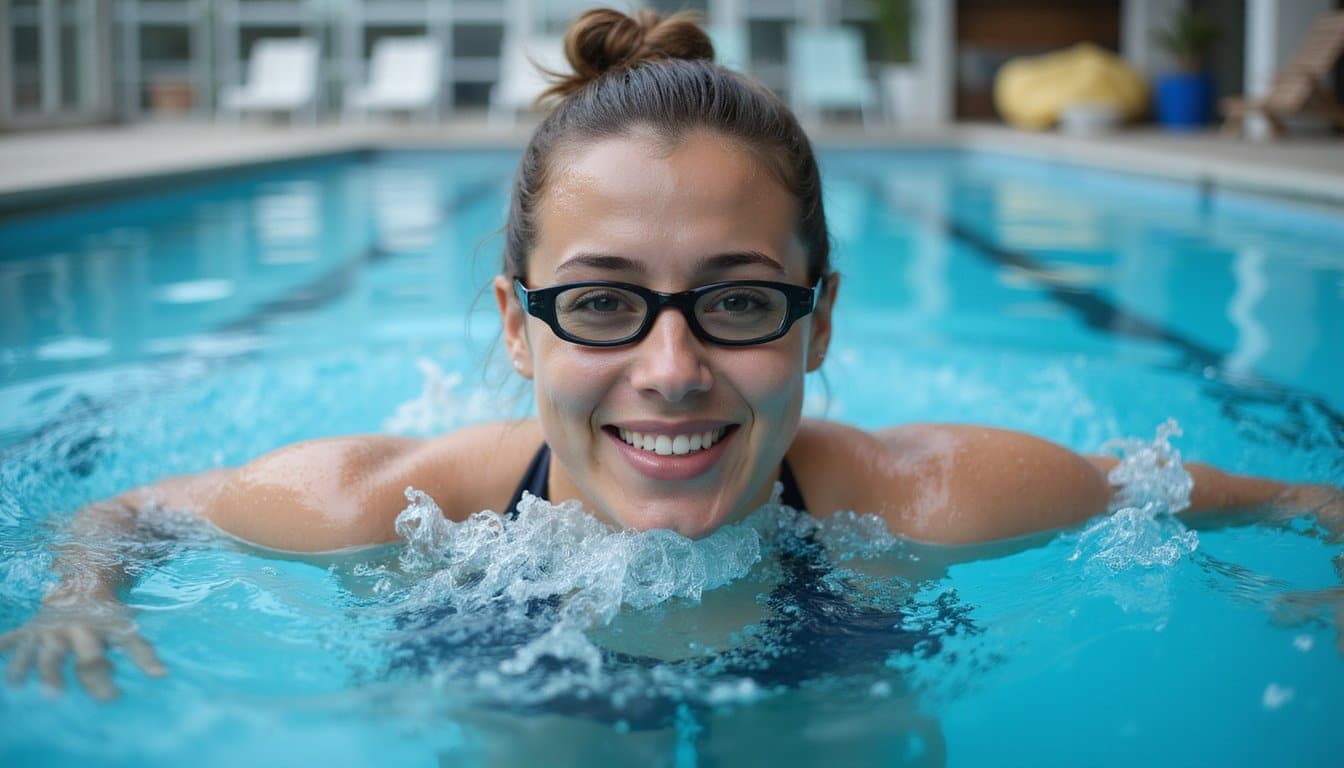
When you’re setting your pool temperature, aim for the widely accepted comfort zone of 78-82°F. This range represents the best swimming pool temperature endorsed by major health organizations, including the American Red Cross and World Health Organization.
At 80°F, you’ll find the ideal pool temperature for swimming that accommodates both children and seniors while remaining refreshing. Temperatures below 78°F typically cause shivering, while exceeding 82°F creates an uncomfortable bathlike sensation. Those requiring warmer water, such as young children or seniors, may benefit from therapeutic temperatures of 84-88°F. At 80°F, you’ll find the ideal pool temperature for swimming that accommodates both children and seniors while remaining refreshing, fitting well within safe pool temperatures for general use. Temperatures below 78°F typically cause shivering, while exceeding 82°F creates an uncomfortable bathlike sensation, though those requiring warmer water, such as young children or seniors, may benefit from therapeutic temperatures of 84, 88°F.
For a comfortable swimming pool temperature, you’ll want to take into account your activity level. The American Red Cross establishes 78°F as the minimum baseline for safe recreational swimming. U.S. Masters Swimming maintains stricter standards of 77-82°F for competition pools, reflecting suitable conditions for athletic performance. Keep in mind that frequently adjusting your pool temperature can disturb water chemistry and increase energy costs. Maintaining the recommended temperature range also helps control algae and bacteria growth, as warmer water allows these organisms to thrive more easily.
Best Pool Temperatures by Activity Type
Your ideal pool temperature depends on what you’re doing in the water. For recreational swimming with family and friends, you’ll want to maintain temperatures between 78-84°F (26-29°C), which provides comfortable conditions for extended play without causing chills. If you’re training competitively, you should keep your pool cooler at 77-82°F (25-28°C) to prevent overheating during intense workouts and optimize your performance. For relaxation and therapeutic purposes, warmer temperatures of 88, 92°F (31, 33°C) provide optimal conditions for soothing muscles and promoting healing. Young children and seniors benefit most from water temperatures between 84-88°F, as warmer water prevents rapid cooling and ensures their comfort and safety.
Recreational Swimming Temperatures
When selecting your pool temp for swimming, consider that temperatures below 78°F may cause shivering upon exiting. Each degree increase raises heating costs proportionally and accelerates algae growth, requiring additional chemical maintenance to guarantee safe conditions. For optimal comfort during casual pool use, aim for a temperature range of 25°C to 28°C (77°F to 82°F), which provides the ideal balance between refreshment and warmth. This range is particularly important as 80 degrees is generally warm enough for children and seniors to enjoy the pool comfortably.
Competitive Training Requirements
Most competitive swimmers require precise water temperatures to maximize performance and prevent physiological stress during intense training sessions. You’ll find the perfect pool water temperature for competitive training falls between 77°F and 82°F, allowing your body to dissipate heat efficiently while maintaining ideal muscle function. Water that is too hot can cause swimmers to overheat, while excessively cold temperatures can damage muscles.
Key temperature standards you should follow:
- Olympic pools must maintain 25°C to 28°C per World Aquatics regulations
- NCAA facilities require temperatures between 79°F and 81°F
- Water polo demands exactly 26°C with only ±1°C variation permitted
- Diving pools operate at 26°C to prevent thermal shock and muscle damage
When you train in water exceeding 28°C, you risk dehydration and cardiovascular strain. Temperatures below 25°C create hypothermia concerns that compromise your safety and performance. Research shows that even dehydration of 2% can significantly impair your swimming performance during endurance events. The American Red Cross specifically recommends 78°F as the ideal temperature for competitive swimming, balancing performance optimization with energy efficiency.
Recommended Pool Temperatures by Age Group
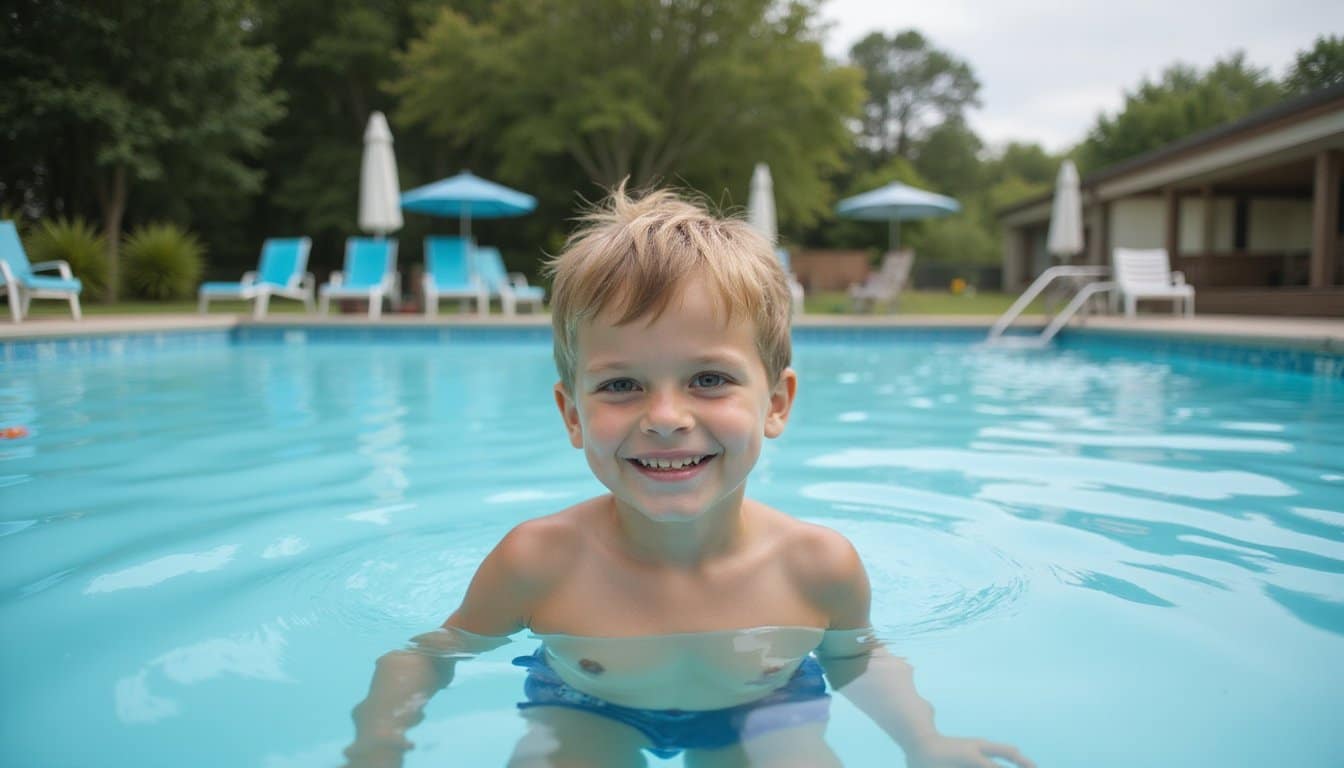
Different age groups require distinct pool temperature ranges to guarantee safety and comfort during swimming activities. For infants aged 6 months to 1 year, you’ll need temperatures between 86°F-92°F (30°C-33°C) to prevent chills in their delicate bodies. Toddlers from 1-5 years thrive in 84°F-90°F (29°C-32°C) water, which keeps muscles loose during swim lessons.
Children aged 6-12 perform most effectively in 84°F-88°F (29°C-31°C) pools, accommodating both play and low-intensity training. If you’re a teen or adult, target 78°F-84°F (25.5°C-29°C) for fitness swimming, though recreational swimmers often prefer 83°F-86°F.
Seniors require warmer conditions due to increased cold sensitivity. You should maintain 86°F-90°F (30°C-32°C) for older adults engaged in low-intensity aquatic activities. The CMAHC specifically recommends 86°F-88°F for this demographic’s leisure swimming. Warmer water temperatures help seniors with relaxation and mobility during their swimming sessions.
Pool Temperatures for Arthritis and Joint Relief
For swimmers managing arthritis or chronic joint conditions, water temperature becomes a critical therapeutic variable rather than simply a comfort preference. You’ll find ideal relief in therapy pools heated between 92°F and 96°F, where warmth penetrates deep tissues and improves blood flow to affected joints.
Key benefits you’ll experience at therapeutic temperatures:
- Buoyancy reduces joint pressure to just 10% of your body weight in chest-high water
- Heat relaxes muscles, eliminating stiffness and protective tension
- Enhanced circulation delivers nutrients while flushing inflammatory waste
- Pain-free range of motion allows stretching you can’t achieve on land
- Hydrostatic pressure helps drain inflammatory fluids and chemicals from around your joints
For lap swimming with arthritis concerns, maintain temperatures between 84°F and 88°F. Cooler water below 84°F may aggravate arthritic joints and increase discomfort during your workout. Limit spa soaking at 98°F to 104°F to 10-15 minutes to prevent overheating. If you experience pain lasting more than one to two hours after your water exercise session, this may indicate you’ve overdone your workout and should reduce intensity.
Why Pool Temperatures Above 82°F Need More Care
When you heat your pool above 82°F, you’re creating conditions that demand considerably more attention to water quality and maintenance. Warmer water accelerates bacteria and algae growth while simultaneously increasing chemical evaporation rates, which means your sanitizer levels can drop faster than you’d expect. You’ll need to test your water more frequently and be prepared for higher chemical consumption to keep the pool safe and properly balanced. Additionally, shocking the pool may become necessary more often to effectively combat the increased contaminant growth that thrives in warmer conditions.
Bacteria Growth Increases
Although maintaining your pool at a comfortable temperature enhances the swimming experience, temperatures above 82°F create conditions where bacteria thrive despite regular chemical treatments. Warmer water compromises chlorine’s effectiveness, allowing harmful microorganisms to proliferate rapidly. You’ll need to monitor your pool chemistry more diligently when temperatures rise.
Critical bacteria risks at heightened temperatures:
- Chlorine degrades faster, leaving your pool vulnerable to pathogen colonization
- Bacterial colonies establish themselves within 24-48 hours in warm, undertreated water
- Swimmers face increased exposure to waterborne illnesses and skin infections
- Standard chemical treatments become insufficient without frequent adjustments
You must maintain chlorine levels above 1 ppm and test water chemistry daily when temperatures exceed 82°F. Implementing proper filtration schedules and shock treatments protects your family from dangerous bacterial contamination.
Higher Chemical Evaporation
Because pool water above 82°F evaporates at substantially higher rates, you’ll face accelerated chemical concentration changes that demand closer monitoring. At 82°F with moderate humidity and light wind, a standard 30×15 ft pool loses approximately 22 pounds of water hourly. This vapor loss leaves behind concentrated chemicals in the remaining water volume.
You’ll need to test water chemistry more frequently when maintaining temperatures above the 78-82°F range. As evaporation removes pure water, chlorine, pH stabilizers, and other treatment chemicals become increasingly concentrated. This imbalance can irritate skin, damage pool surfaces, and reduce sanitizer effectiveness.
Environmental factors compound the problem. Low humidity accelerates moisture absorption from your pool’s surface, while wind speeds carry vapor away faster. Maintain proper water levels and adjust chemical dosing to compensate for these losses.
Algae Thrives Faster
Chemical concentration isn’t the only consequence of heightened pool temperatures, algae growth accelerates dramatically once water rises above 82°F. You’ll notice chlorine depleting faster as algae consumes available sanitizer, forcing more frequent shocking and chemical adjustments.
When your pool exceeds this threshold, you’re creating prime breeding conditions for rapid algae blooms. The warmer water simultaneously disrupts pH balance and increases alkalinity, compounding the problem.
Critical temperature-related algae risks you must monitor:
- Algae thrives aggressively at 85°F or above, overwhelming standard chlorine levels
- Your sanitizer effectiveness drops markedly as temperatures climb past 82°F
- Scale formation and cloudy water develop from heat-induced chemical imbalances
- Maintaining pH between 7.2-7.8 becomes essential for chlorine efficacy
Keeping your pool within the 78-82°F range greatly reduces algae proliferation while preserving comfortable swimming conditions.
How Pool Temperature Affects Your Heating Bill
When you raise your pool’s temperature even a few degrees, you’ll notice a significant impact on your energy costs. Evaporation accounts for the largest share of heat loss, with rates calculated using room air speed, saturation pressures, and activity factors. Your heater’s BTU output requirement equals pool area multiplied by temperature rise multiplied by 12, based on achieving a 1-1.25°F rise per hour.
Heated pools consume substantially more energy than unheated alternatives. Indoor facilities face annual heating demands around 800 MWh for pool water alone, with evaporative losses requiring approximately 530 cubic meters of fresh water monthly. Your pump adds to costs too, consuming between 0.5274 kW and 0.9612 kW hourly depending on time of day. Convection losses compound when pool water temperature exceeds air temperature, making proper thermostat settings essential for managing expenses.
Ready to Transform Your Backyard?
Your dream pool is closer than you think. At Schiller Pools, our experienced team brings over 40 years of expertise to every project, delivering stunning fiberglass pool installations and custom pool construction that turn ordinary backyards into extraordinary outdoor retreats. With flexible financing options and lifetime warranty backing, there has never been a better time to get started. Call (561) 475-5997 today for your free estimate.
Frequently Asked Questions
How Long Does It Take for a Pool to Warm up One Degree?
You can expect your pool to warm up one degree in about 30 minutes to 2 hours, depending on your heater type and pool size. With a 24kW heater on a 40,000-litre pool, you’ll achieve roughly 0.5°C per hour. Gas heaters work faster, while heat pumps operate more slowly. For accurate heating times, you should calculate based on your specific heater’s kilowatt output and your pool’s total volume.
Can Pool Temperature Affect How Well Chlorine Works?
Yes, pool temperature directly affects chlorine effectiveness. Your salt chlorinator needs water above 60°F (15.5°C) to produce chlorine efficiently. You’ll see excellent performance between 70-85°F (21-29°C). When temperatures exceed 85°F, you’ll face accelerated chlorine loss, increased bacterial growth, and faster hypochlorous acid decomposition. You should shock your pool twice weekly during hot periods and maintain CYA levels at 30-100 ppm to stabilize chlorine.
What Time of Day Is Pool Water Typically Warmest?
Your pool water typically reaches its warmest temperature between 2 PM and 5 PM. Solar radiation peaks from 12 PM to 4 PM, but water temperature lags about 1-2 hours behind peak air heat. You’ll find surface temperatures can rise 3-5°F above morning levels during this window. When monitoring, you should take readings at midday and mid-afternoon, avoiding inlet jets and walls for accurate measurements.
Does a Pool Cover Help Maintain Consistent Water Temperature Overnight?
Yes, a pool cover greatly helps you maintain consistent water temperature overnight. You’ll reduce heat loss by up to 95% when you fully cover your pool’s surface. Covers create an insulating barrier that prevents evaporative cooling, the primary cause of overnight temperature drops. You should use thermal or foam covers for maximum insulation during cooler nights. By covering your pool consistently, you’ll retain daytime-generated warmth and guarantee comfortable swimming conditions each morning.
How Does Wind Speed Impact How Cold a Pool Feels?
Wind speed dramatically increases how cold your pool feels by accelerating evaporation from the water’s surface. You’ll experience faster heat loss because evaporation accounts for up to 70% of your pool’s energy loss. Higher wind speeds draw heat directly from the water, creating a noticeable chill effect. To protect yourself and maintain comfortable temperatures, you should install windbreaks like fences or hedges and use solar covers to minimize exposure.