You’ll find the most comfortable and efficient swimming pool temperature falls between 78°F and 82°F for general recreational use. This range prevents shivering while inhibiting harmful bacteria growth and keeping energy costs manageable. However, your ideal setting depends on who’s swimming, infants need 86°F-92°F, while competitive swimmers perform best at 77°F-80°F. Each degree above 78°F increases heating costs by 10-30%, so understanding the specific requirements for your household will help you optimize both comfort and efficiency. You’ll find the most comfortable and efficient swimming pool temperature falls between 78°F and 82°F for general recreational use, which is widely considered the comfortable temperature for swimming pool water. This range prevents shivering while inhibiting harmful bacteria growth and keeping energy costs manageable. However, your ideal setting depends on who’s swimming, infants need 86°F, 92°F, while competitive swimmers perform best at 77°F, 80°F, and each degree above 78°F increases heating costs by 10, 30%, making it important to balance comfort with efficiency.
The Ideal Pool Temperature for Most Owners: 78, 82°F
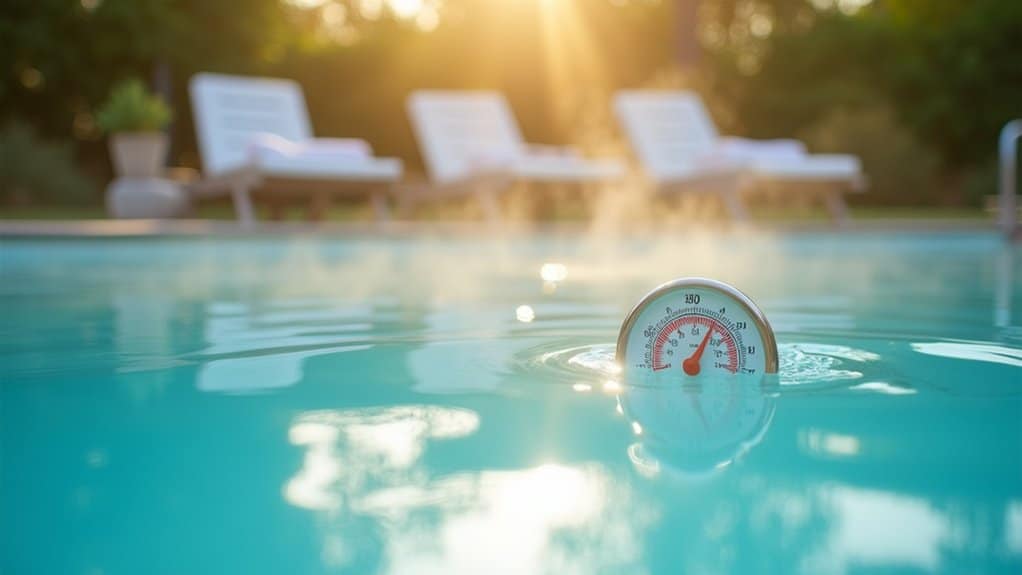
Temperature control stands as one of the most critical specifications you’ll manage for your swimming pool. The ideal pool temperature falls between 78 degrees and 82 degrees Fahrenheit, representing the industry-standard comfortable swimming temperature range.
At 78 degrees, you’ve reached the minimum swimming pool temperature that prevents shivering when exiting. This normal pool temperature provides invigorating conditions while maintaining safe bacterial control. The perfect pool temp of 80°F accommodates both children and seniors effectively. This temperature range also inhibits growth of harmful bacteria while providing optimal swimming conditions. Competitive swimmers often prefer cooler water around 77°F for peak athletic performance.
Pool water temperatures shouldn’t exceed 82 degrees, as higher settings increase energy costs proportionally per degree. The best pool temperature balances comfort with operational efficiency. Multiple authorities, including the American Red Cross and World Aquatics, confirm this comfortable pool temperature range meets safety specifications for residential use.
Lap Swimming and Exercise: Why Cooler Water Works Better
Serious swimmers and athletes require cooler water temperatures than casual pool users to achieve ideal performance. While recreational swimmers prefer warmer water, competitive training demands you lower your pool heater to 75-80°F. This range prevents overheating during intense efforts and optimizes muscle function. Recent studies confirm that competitive swimmers perform best in water between 77-82°F.
Your body generates significant heat during lap swimming, making cooler water essential for efficient heat dissipation. Water above 82°F increases dehydration and elevates heart rate unnecessarily. Unlike children or senior citizens who need warmer conditions, athletes benefit when you don’t raise the temperature beyond training specifications. Since body heat absorbs twenty-five times faster in water than in air when temperatures fall below 70°F, cooler pool water provides an efficient cooling mechanism during vigorous exercise. Cooler water temperatures can also boost your immune system and provide an endorphin high that enhances your training experience.
The right temperature balances how it feels on your skin with physiological demands. No universal outdoor swimming pool temperature guideline exists, personal preference matters, but competitive swimmers consistently perform better when water stays warm enough without compromising endurance.
Safe Pool Temperatures for Babies and Young Children
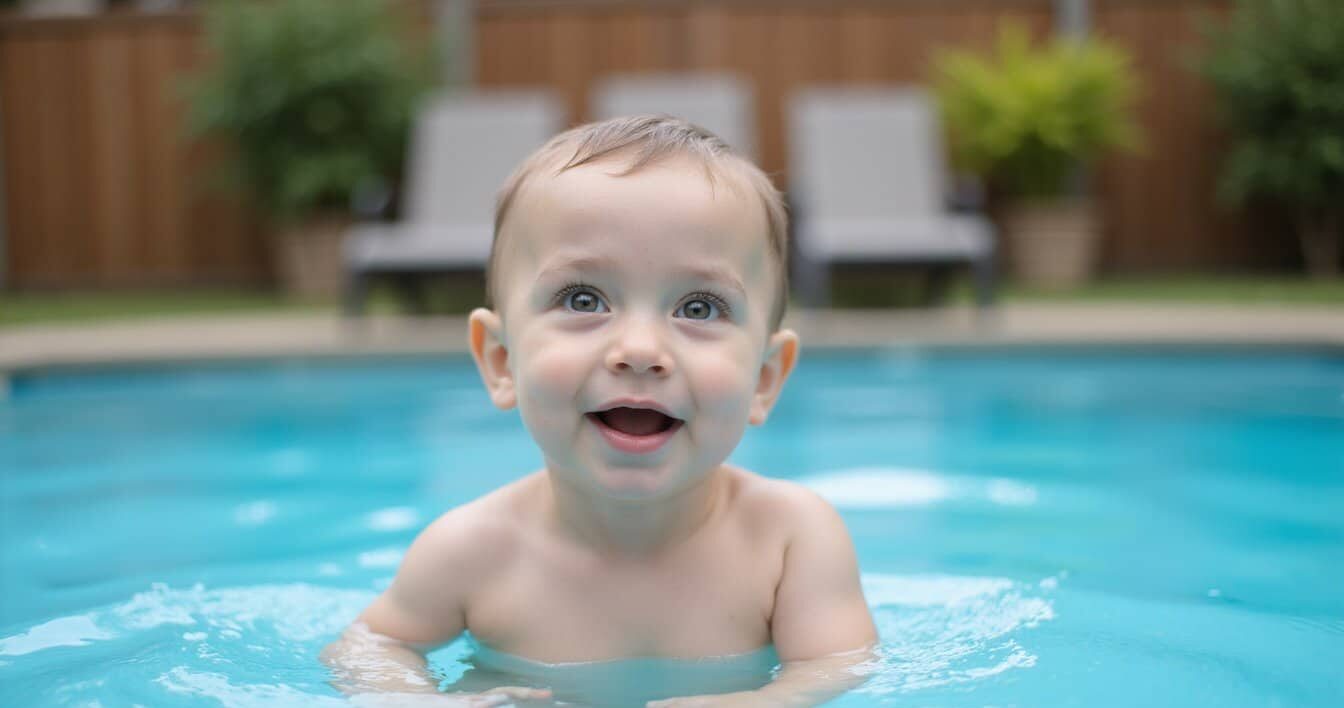
When introducing babies and young children to swimming, water temperature becomes a critical safety factor that demands precise attention. Unlike adults who enjoy a refreshing, invigorating dip at 80 degrees, infants require significantly warmer water, between 86°F and 92°F, closer to taking a soothing, comforting bath than typical pool conditions. This heightened sensitivity occurs because children’s greater body surface area relative to their size causes them to lose heat much faster than adults. While maintaining these temperatures isn’t energy-efficient and costs will proportionally increase, your child’s safety outweighs how it feels on your wallet. Before bringing your baby to the pool, consult your pediatrician to ensure they’re developmentally ready for water exposure. Physicians recommend waiting until at least 6 months of age before introducing your baby to swimming activities.
Infant swimming demands warmer water, 86°F to 92°F, because your child’s safety always outweighs energy costs.
To keep your pool warm while keeping your costs down, follow these specifications:
- Maintain 90-93°F for infant swim lessons (under 6 months)
- Set 86-90°F for children ages 3-5 years
- Keep sessions under 30 minutes to prevent heat loss
- Watch for shivering, blue lips, or cramps as distress signals
- Avoid water below 70°F, which dangerously elevates heart rate in young children
What Pool Temperature Helps Seniors and Arthritis?
Just as young children need warmer water for safe swimming, seniors and those with arthritis also require increased pool temperatures, though for different physiological reasons. You’ll find ideal comfort between 84°F and 88°F, which promotes blood flow and reduces stiffness in affected joints.
Warm water between 86°F and 90°F benefits those with limited mobility by loosening tight muscles and easing joint pain. The buoyancy reduces impact on your knees, hips, and spine during movement. For dedicated hydrotherapy sessions, temperatures reaching 92°F to 96°F provide maximum therapeutic relief. This temperature range is ideal for gentle stretching and aquatic therapy exercises that help maintain joint flexibility.
Seniors specifically benefit from water maintained at 82°F to 88°F, which supports circulation and prevents cold shock. This range enables safe water aerobics and gentle exercise while maintaining comfort throughout your session. Maintaining a steady temperature is particularly important for seniors, as fluctuations in water temperature can throw off the chemical balance and affect overall comfort. For personalized recommendations on the best water temperature for your specific condition, consider consulting a licensed physical therapist who can provide guidance based on your individual needs.
Pool Temperature Cheat Sheet by Age and Activity
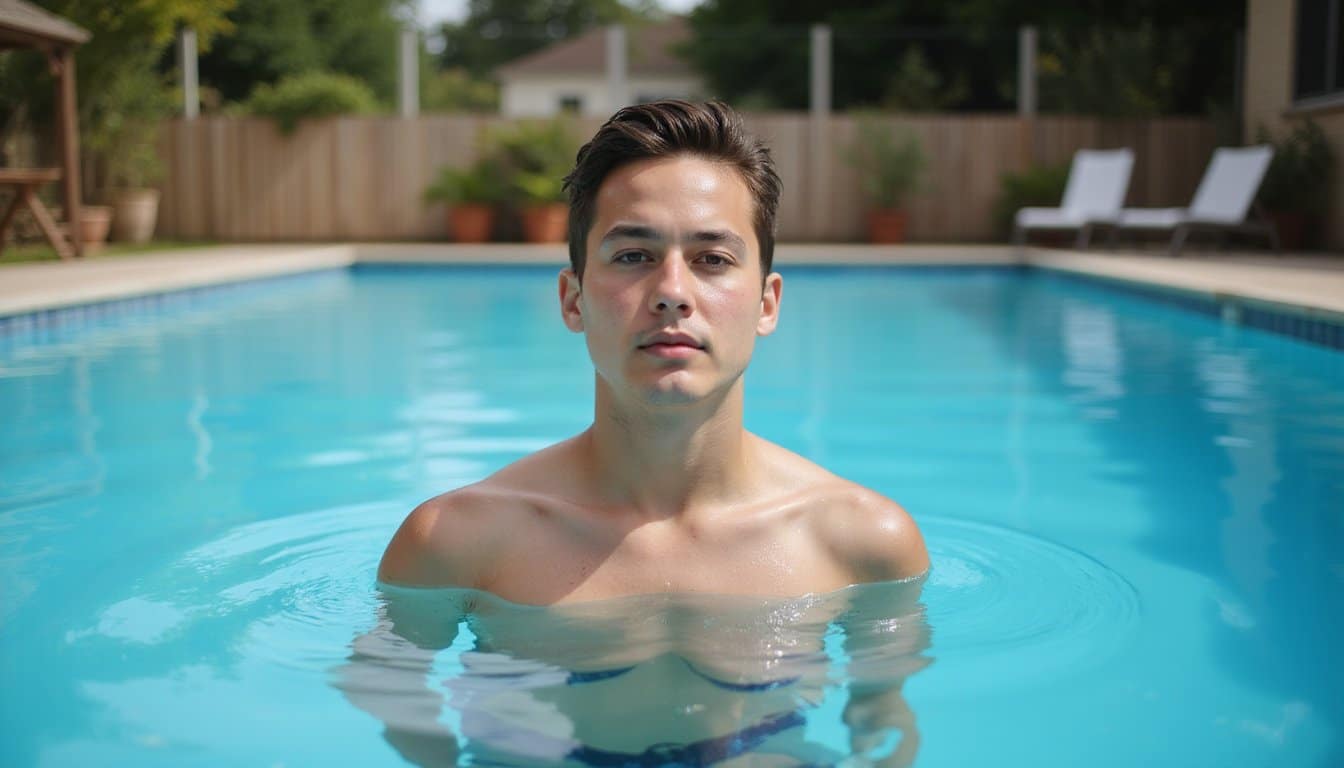
You’ll need to adjust your pool’s temperature based on who’s swimming and what they’re doing to guarantee both safety and comfort. Infants require the warmest water at 86°F-92°F, while children thrive in 84°F-88°F ranges, and most adults prefer cooler temperatures between 78°F-84°F. Activity level also dictates ideal settings, lap swimmers perform best in cooler water around 78°F-82°F, whereas water aerobics and learn-to-swim programs demand warmer conditions of 84°F-88°F. Warmer water for swimming lessons keeps muscles loose and helps prevent breathing issues that young swimmers may experience in cold water. Seniors are more sensitive to cold and typically require water temperatures between 86°F-90°F for optimal relaxation and mobility. During winter months, pools should be kept toward the higher end of the range, around 86°F to 88°F, to prevent shivering and support healthy circulation in cooler weather.
Age-Based Temperature Guidelines
The ideal swimming pool temperature varies greatly based on a swimmer’s age, with infants and seniors requiring warmer water than adolescents and competitive athletes.
To maintain these precise temperatures efficiently, you’ll need proper equipment and heat retention strategies. A high-efficiency gas heater or heat pump provides reliable temperature control, while an automatic safety cover minimizes heat transfer to the air. Installing hedges and fencing around your pool area blocks wind that strips warmth from the water. Running your filtration system during off-peak hours optimizes energy costs. For convenient monitoring, wireless pool thermometers provide real-time temperature updates directly to your phone or receiver from distances up to 980 feet away.
Age-Based Temperature Guidelines:
- Infants (0-12 months): 86°F-92°F (30°C-33°C)
- Toddlers (1-5 years): 84°F-88°F (29°C-31°C)
- Children (6-12 years): 84°F-88°F (29°C-31°C)
- Adolescents (13-17 years): 78°F-84°F (26°C-29°C)
- Seniors (65+ years): 86°F-90°F (30°C-32°C)
Activity-Specific Heat Settings
Beyond age considerations, your pool’s water temperature should match the specific activity you’re planning. You’ll want water that’s not too cool for therapy sessions, yet cooler temperatures prevent overheating during competitive swimming. If your pool feels reluctant to get in cold, adjust by 5 degrees for comfort.
| Activity Type | Temperature Range | Key Safety Note |
|---|---|---|
| Competitive Swimming | 78°F, 82°F | Prevents exercise-induced fatigue |
| Recreational Use | 83°F, 86°F | Balances comfort and efficiency |
| Water Fitness | 83°F, 86°F | Supports normal exertion response |
| Aquatic Therapy | 91°F, 95°F | Monitor for overheating |
| Aerobic Training | 84°F, 88°F | Enables safe intensity levels |
Use a timer to automate and optimize heating cycles between 8 p.m. and 10 a.m. when electricity demand drops. Install barriers to keep wind from blowing through your pool area.
Why Pools Above 82°F Breed Bacteria and Algae
Water temperatures exceeding 82°F create ideal conditions for bacteria and algae proliferation in swimming pools. When your pool temperature rises into the warm 85°F range, bacteria growth accelerates in corners and low-circulation areas. Heat also degrades chlorine faster, leaving your water vulnerable to contamination.
Warm pools above 82°F become breeding grounds for bacteria, and your chlorine can’t keep up.
Maintaining a cool temperature setting between 78-82°F substantially reduces these risks. While heating your pool improves comfort, the costs extend beyond energy bills to include additional sanitizers and shock treatments.
Key factors affecting water temperature and microbial growth:
- Chlorine dissipates rapidly above 82°F, reducing sanitization effectiveness
- Algae spores thrive in shaded, stagnant warm areas
- pH levels rise with heat, diminishing chlorine’s potency
- Temperatures below 60°F halt microorganism activity, similar to freezing conditions
- Direct sunlight exposure compounds bacteria growth risks
What Each Degree Above 78°F Costs in Energy Bills
When you raise your pool temperature above the 78°F baseline, each additional degree increases your energy costs by 10-30%, according to Energy.gov specifications. It costs money to heat a pool, and understanding these rates can be lower when you take steps you can take to optimize efficiency.
| Temperature Setting | Energy Cost Increase |
|---|---|
| 79°F | 10-15% above baseline |
| 80°F | 20-30% above baseline |
Heat pumps function most efficiently at 78°F, where water feels cool enough yet comfortable. If you only use your pool on weekends, lower the temperature setting by 5°F midweek to achieve lower utility bills. When vacationing, turn off the pool heater entirely, this won’t feel like a sacrifice when you see the savings.
Summer vs. Winter Pool Temperature Adjustments
You’ll need to adjust your pool temperature settings based on seasonal conditions to maintain comfort while controlling energy costs. During summer months, keeping your water between 78-82°F provides an invigorating experience without overheating risks, while winter swimming requires raising temperatures to 84-88°F to compensate for cooler ambient air. Understanding these seasonal adjustments helps you balance swimmer comfort against the increased heating expenses that come with each degree above your baseline setting.
Summer Temperature Guidelines
Summer pool temperatures require careful calibration to balance swimmer comfort, safety, and energy efficiency. You’ll find the American Red Cross recommends maintaining 78°F to 85°F for safe swimming. When breezes are blowing across your pool surface, heat loss accelerates, making covers essential. If your heater is more than five years old, consider upgrading for better efficiency.
- Maintain 78°F to 82°F for general recreational swimming
- Set temperatures at 86°F to 90°F for children and seniors
- Keep water below 82°F for high-intensity fitness activities
- Install a safety switch on timers for automated control
- Run between 8 p.m. and 10 a.m. for off-peak savings
During weekends when pools see heavy use, temperatures feel generally warm. Lower settings during vacation periods when swimmers won’t come out of the pool regularly.
Winter Heating Considerations
The shift from summer to winter pool operation demands specific temperature adjustments to maintain swimmer comfort and prevent equipment damage. You’ll want to raise your water temperature to 86°F, 88°F when outdoor conditions drop, as cold air makes water feel approximately 5°F, 10°F cooler. Seniors and children under 10 tend to use warmer settings to prevent cold shock and match their higher heat loss rates.
Installing proper heating units becomes critical when temperatures fall below 45°F to prevent pipe freezing. New electric, gas, or solar systems quickly pay for themselves through reliable performance and energy savings. Key features include winter pool covers and foam insulation, which stabilize temperatures effectively. Investing in these solutions guarantees year-round swimming capability while safeguarding your equipment from costly cold-weather damage.
Seasonal Energy Costs
Because pool heating demands shift dramatically between seasons, understanding the cost dynamics helps you budget effectively and maximize your system’s efficiency. Summer typically brings natural solar warming, reducing artificial heating demand while your pump runs longer to handle increased usage. Winter feels different, lower usage cuts overall energy, but every degree of warmth raises bills by 10-30%.
When picking the ideal temp, you should keep in mind these factors into your decision:
- Raising water temperature up by 1°F increases costs 10-30% depending on weather conditions
- Summer monthly heating costs range $100-$250 for electric systems
- Winter heat pump costs run $75-$200 monthly with high-efficiency units
- Thermal covers reduce heating needs by 50-70%, keeping costs down year-round
- Variable-speed pumps save $300+ annually while you enjoy perfect temperatures
How to Find Your Perfect Pool Temperature Balance
While personal preference plays a significant role in pool comfort, you’ll find that the 78°F to 82°F range serves as your starting baseline for recreational swimming. If you want it cool for fitness laps, don’t go any cooler than 74°F to avoid hypothermia risks. If children or elderly swimmers use your pool, you may need it any warmer, up to 84°F for safety.
Install a smart monitor to control your pool temperature precisely and remove the guesswork from managing daily fluctuations. Check utility rates in your area to optimize heater settings during off-peak hours. Adjust incrementally by one degree until you identify your ideal balance between comfort, user needs, and operational costs. Document your findings for consistent seasonal performance.
Ready to Transform Your Backyard?
Your dream pool is closer than you think. At Schiller Pools, our experienced team brings over 40 years of expertise to every project, delivering stunning fiberglass pool installations and custom pool construction that turn ordinary backyards into extraordinary outdoor retreats. With flexible financing options and lifetime warranty backing, there has never been a better time to get started. Call (561) 475-5997 today for your free estimate.
Frequently Asked Questions
Can I Turn off My Pool Heater Completely During Vacation?
Yes, you can safely turn off your pool heater completely during vacation. For trips lasting two or more weeks, shut off the unit entirely, including the pilot light on gas heaters, to eliminate unnecessary fuel consumption. You’ll save significant energy since pools lose more heat when warm anyway. Before leaving, guarantee you’ve drained the heater if freezing temperatures are possible to prevent heat exchanger damage. Use a solar cover to minimize heat loss while you’re away.
What Time of Day Is Cheapest to Run My Pool Filtration System?
You’ll find the cheapest rates for running your pool filtration system between 8 p.m. and 10 a.m., when electricity demand decreases markedly. During these off-peak hours, you can save 20-50% on energy costs compared to daytime operation. Install timers with safety switches to automate this schedule efficiently. Check your local utility’s specific time-of-use rate schedule, as exact windows vary by region and provider.
How Do Automatic Safety Covers Help Retain Pool Heat?
Automatic safety covers help you retain pool heat by blocking up to 90% of heat loss through radiation and convection. They reduce evaporation, your pool’s primary heat loss source, and trap a warm air layer above the water surface. You’ll maintain stable temperatures between 78-82°F despite nighttime ambient drops. When you deploy covers consistently, you’re cutting heating costs by 50-70% while extending your heater’s equipment lifespan through reduced runtime demands.
Should I Replace My Pool Heater if It’s Over Five Years Old?
You don’t necessarily need to replace a pool heater that’s only five years old. However, you should monitor it closely for warning signs like frequent repairs (more than twice yearly), rising energy bills, rust, corrosion, or inconsistent heating. If your heater requires a heat exchanger replacement or repair costs exceed half the price of a new unit, you’ll benefit from upgrading to a modern, energy-efficient model with improved safety features.
How Much Can I Save by Lowering Pool Temperature During Weekdays?
You can save approximately 10-30% on energy costs for each degree you lower your pool temperature. By reducing the setting by 5 degrees during weekdays when you’re not swimming, you’ll cut heating expenses considerably. Install a timer with a safety switch to automate this reduction, ensuring consistent savings without manual adjustments. This strategy works best when you maintain a baseline of 78-80°F for active swimming periods.