For kids under 6 months, you’ll want water between 86-90°F, while children ages 6-12 adapt well to 84-88°F. Seniors benefit from 82-88°F for recreational swimming, with therapeutic pools reaching 90-94°F for arthritis relief. If you’re doing lap workouts, stick to 77-82°F to prevent overheating during intense exercise. Avoid temperatures below 70°F or above 90°F, as both pose serious health risks, and understanding safe pool temperatures and why these ranges matter can help you protect every swimmer in your family.
Safe Pool Temperature Ranges for Every Swimmer
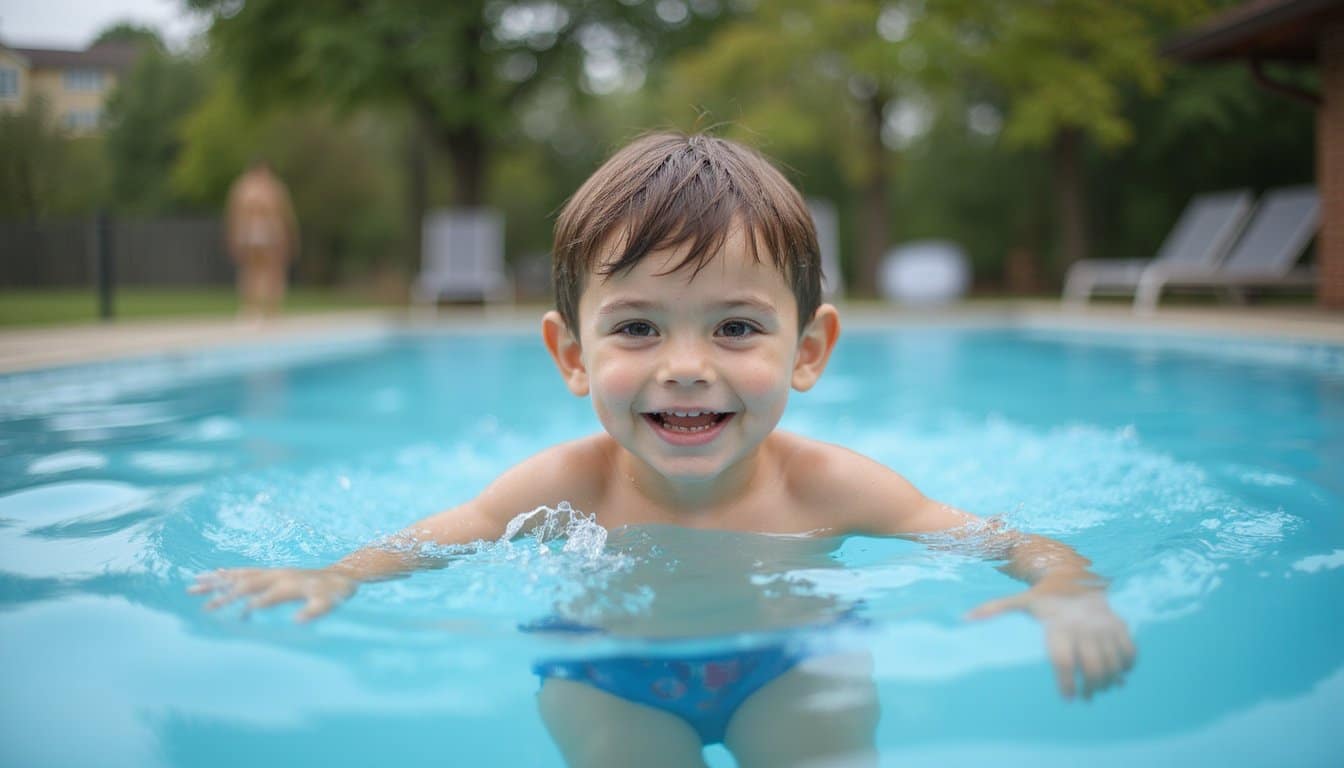
When selecting the right pool temperature, you’ll need to ponder who’s swimming and what activities they’re doing. The perfect swimming pool temperature for seniors falls between 82-86°F (28-30°C), providing joint comfort and preventing dangerous chills. During winter months, you should increase temperatures to 86-88°F for older adults. As people age, the body’s ability to regulate heat weakens, making proper water temperature even more critical.
Exercise swimmers require cooler conditions. You’ll want to maintain 78-84°F for fitness laps and 78-82°F for water aerobics to prevent overheating during vigorous activity. Exercise swimmers require cooler conditions, so you’ll want to maintain 78, 84°F for fitness laps and 78, 82°F for water aerobics to prevent overheating during vigorous activity, while recognizing that needs differ significantly for infants such as swimming pool temperature for 1 year old, which requires much warmer water for safety and comfort.
For arthritis therapy, temperatures between 84-90°F offer ideal relief, with limited-function individuals benefiting from the higher range. The water’s buoyancy helps relieve arthritis symptoms while reducing impact on joints during exercises.
Safety boundaries matter. Don’t exceed 90°F, as regulatory guidelines cap heated pools at this threshold. Temperatures below 78°F risk muscle stiffness, while excessive heat causes dehydration and cramping. For babies between 6 months and 1 year old, water should be maintained at 86°F-92°F to ensure their comfort and safety.
Best Pool Temperatures for Babies, Toddlers, and Kids
Maintaining the right pool temperature becomes critical when babies and young children enter the water. Infants under six months require pool temperatures between 86-90°F due to their high surface area-to-body mass ratio, which causes rapid heat loss. The American Red Cross recommends water above 89.6°F for sessions lasting 20-30 minutes.
For babies aged 6-12 months, you’ll want to maintain temperatures between 86-92°F. Limit their sessions to 10-15 minutes and watch for shivering or blue lips. Babies use excessive energy to generate heat in cool water, which can compromise their immune system. You can help your baby adjust to water temperatures by acclimating them through bath time before their first pool experience.
When considering pool temperature for kids aged 3-5 years, aim for 86-90°F to support comfortable play and swimming lessons. Children 6-12 years old adapt well to slightly cooler water between 84-88°F. Always use a reliable thermometer to verify conditions before allowing children to swim.
Ideal Pool Temperatures for Older Adults and Joint Pain

Older adults and individuals with joint pain require warmer pool temperatures than younger swimmers due to reduced thermoregulation and increased sensitivity to cold water. You should maintain recreational pools between 82°F and 86°F for senior lap swimming temperature needs, while leisure swimming benefits from temperatures between 86°F and 88°F. Older adults and individuals with joint pain require warmer pool temperatures than younger swimmers due to reduced thermoregulation and increased sensitivity to cold water, making accurate monitoring, whether using an indoor vs outdoor thermometer important for maintaining safe conditions. You should keep recreational pools between 82°F and 86°F for senior lap swimming, while leisure swimming benefits from slightly warmer temperatures between 86°F and 88°F.
For arthritis management, you’ll want water between 84°F and 88°F to stimulate blood flow and reduce joint stiffness. Therapeutic pool temperature ranges of 90°F to 94°F provide ideal conditions for aquatic therapy and rehabilitation exercises. These warmer therapeutic temperatures can particularly benefit those with chronic pain disorders like fibromyalgia by supporting gentle, low-intensity movements.
During winter months, adjust outdoor pools toward 86°F to 88°F to prevent cold shock and support circulation. Never exceed 95°F, as excessive heat increases cardiovascular strain and dehydration risk. Pools that are too warm can also create an environment for bacteria and algae to thrive, making regular water testing essential. These temperature guidelines help seniors maintain year-round swimming activity safely.
Best Pool Temperatures for Lap Swimming and Workouts
Lap swimmers and fitness enthusiasts require cooler pool temperatures than recreational swimmers to prevent overheating during sustained physical exertion. Your exercise swimming pool temperature should align with your workout intensity to optimize performance and safety.
For competitive training, maintain water at 77-82°F, as USA Swimming recommends temperatures not exceeding 82°F. Therapeutic lap swimming benefits from warmer 82-86°F ranges that ease joint stress. Warmer water reduces pressure on joints and allows muscles to relax, making it ideal for those recovering from injuries or managing chronic conditions. For competitive training, maintain water at 77, 82°F, as USA Swimming recommends temperatures not exceeding 82°F, a range that also supports a comfortable pool temperature for swimming during structured workouts. Therapeutic lap swimming benefits from warmer 82, 86°F conditions that ease joint stress, as warmer water reduces pressure on joints and allows muscles to relax, making it ideal for those recovering from injuries or managing chronic conditions.
| Activity Type | Water Temperature | Air Temperature |
|---|---|---|
| Competitive Laps | 77-82°F | 78-80°F |
| Aqua Fitness | 83-88°F | 70-82°F |
| Therapeutic Swimming | 82-86°F | 82-84°F |
You’ll find cooler air temperatures enhance endurance during aerobic activity. Keep indoor air around 70°F for moderate pool workouts to prevent overheating while maintaining cardiovascular efficiency.
Dangerous Pool Temperatures to Avoid
Extreme pool temperatures pose serious health risks that every swimmer must understand. Water below 70°F increases your heart rate and blood pressure while triggering muscle spasms. Drop below 64°F, and you face cardiac arrest risk. Cold shock from 50-60°F water can cause sudden drowning within seconds through involuntary gasping and rapid breathing. This cold shock can also trigger immediate panic and fear, impairing your ability to think clearly and make life-saving decisions.
At the opposite extreme, water above 90°F causes overheating, dehydration, and heat stroke during exercise. Your blood pressure drops rapidly in hot water, leading to dizziness and loss of consciousness. Hot tubs should always be kept below 104 degrees Fahrenheit to prevent these dangerous effects.
A safe pool temperature falls between these dangerous extremes. The ideal water temperature for comfortable and safe swimming ranges from 78-82 degrees Fahrenheit. Pregnant women, children, seniors, and those with heart conditions face heightened vulnerability. You should always verify water temperature before swimming and exit immediately if you experience warning symptoms.
Ready to Transform Your Backyard?
Your dream pool is closer than you think. At Schiller Pools, our experienced team brings over 40 years of expertise to every project, delivering stunning fiberglass pool installations and custom pool construction that turn ordinary backyards into extraordinary outdoor retreats. With flexible financing options and lifetime warranty backing, there has never been a better time to get started. Call (561) 475-5997 today for your free estimate.
Frequently Asked Questions
How Long Does It Take for a Pool to Warm up One Degree?
You can expect your pool to warm up one degree in about 1-2 hours with a gas heater, 4-8 hours with an electric heat pump, or up to a full day with solar heating. Your heater’s BTU output, pool volume, and ambient conditions directly affect timing. You’ll cut heating time by 30-50% when you use a pool cover to minimize heat loss through evaporation.
Can Pool Temperature Affect How Many Calories I Burn While Swimming?
Yes, pool temperature directly affects your calorie burn while swimming. When you swim in colder water (below 18°C/64°F), your body activates thermogenesis to maintain core temperature, increasing your metabolic rate by up to 350%. You’ll burn additional calories through shivering and brown adipose tissue activation. However, you shouldn’t sacrifice safety for calorie burn, water that’s too cold poses hypothermia risks, especially during extended sessions.
What Is the Most Energy-Efficient Way to Heat My Pool?
Heat pump pool heaters offer you the most energy-efficient heating solution. You’ll benefit from Coefficient of Performance ratings between 6.4 and 8 COP, meaning these units transfer substantially more heat energy than they consume. While you’ll pay more upfront than gas alternatives, you’ll recover that investment through drastically lower operating costs. For maximum efficiency, you should combine your heat pump with a solar pool cover to enhance heat retention.
Does Chlorine Effectiveness Change at Different Pool Temperatures?
Yes, chlorine effectiveness alters noticeably with temperature. Your salt chlorinator needs water above 60°F to produce chlorine efficiently, below that, electrolysis slows dramatically. Between 70-85°F, you’ll see peak sanitizer production. However, once temperatures exceed 85°F, you’ll face accelerated chlorine loss from heat and UV exposure, plus faster bacteria growth. You should shock your pool twice weekly during hot periods and maintain cyanuric acid at 30-100 ppm for stabilization.
How Do I Accurately Measure My Pool’s Water Temperature at Home?
You can accurately measure your pool’s water temperature using two reliable methods. For manual readings, collect a water sample about a foot below the surface, away from return jets, and use an instant-read thermometer. For continuous monitoring, install a wireless floating sensor that transmits data up to 300 feet to an indoor display. Look for devices with +/- 2°F accuracy, that’s sufficient for safe pool maintenance.