
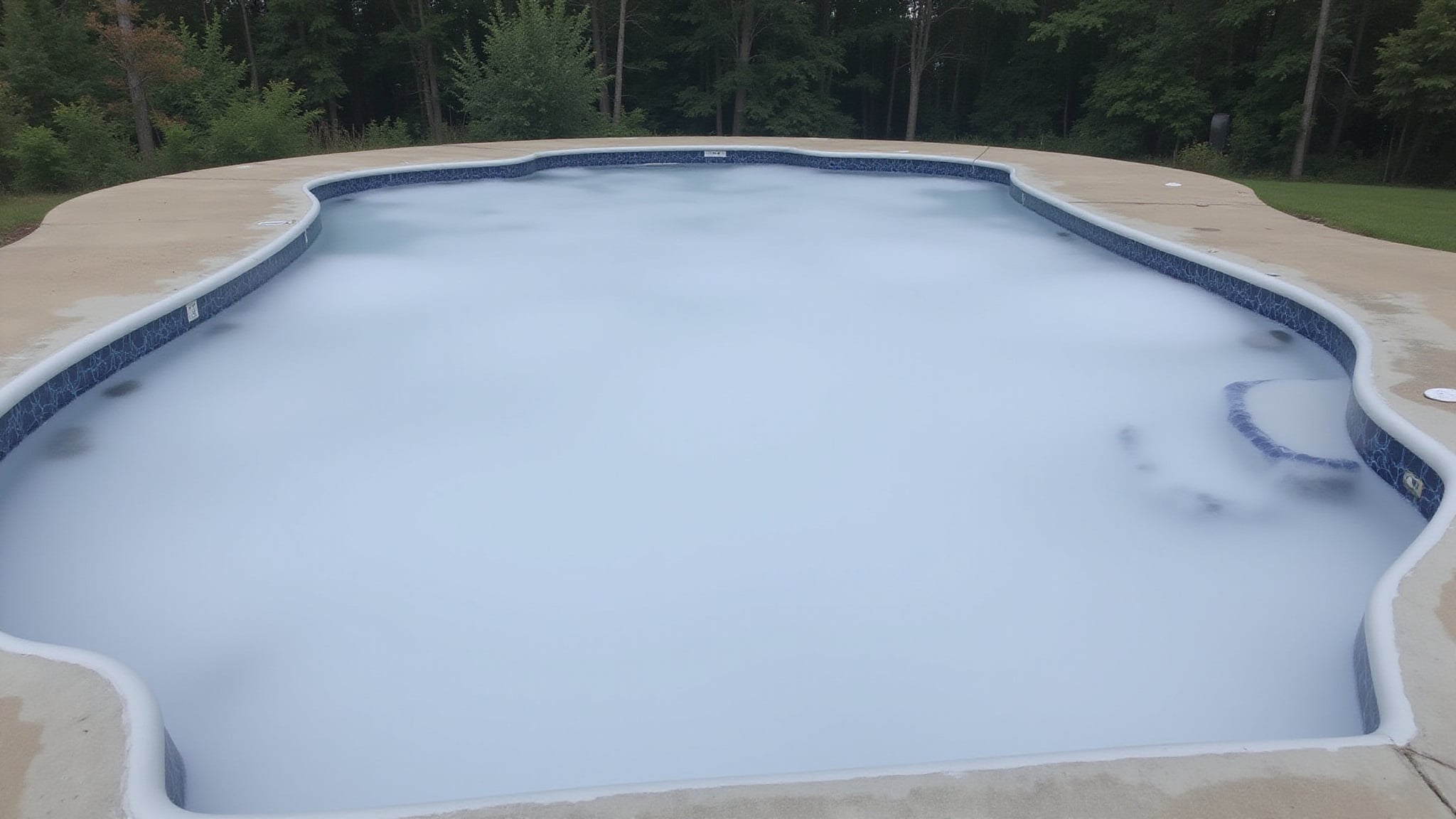
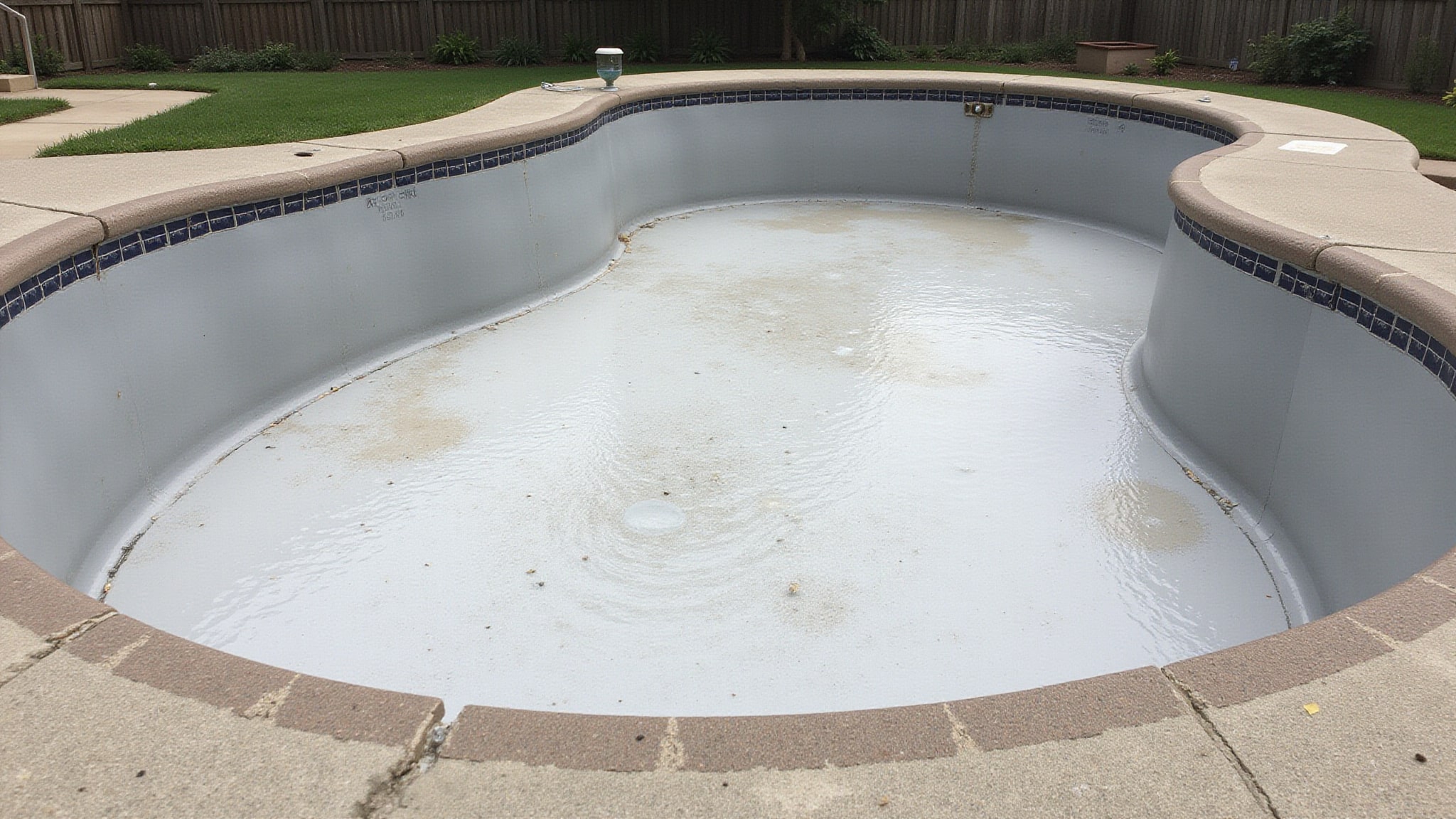
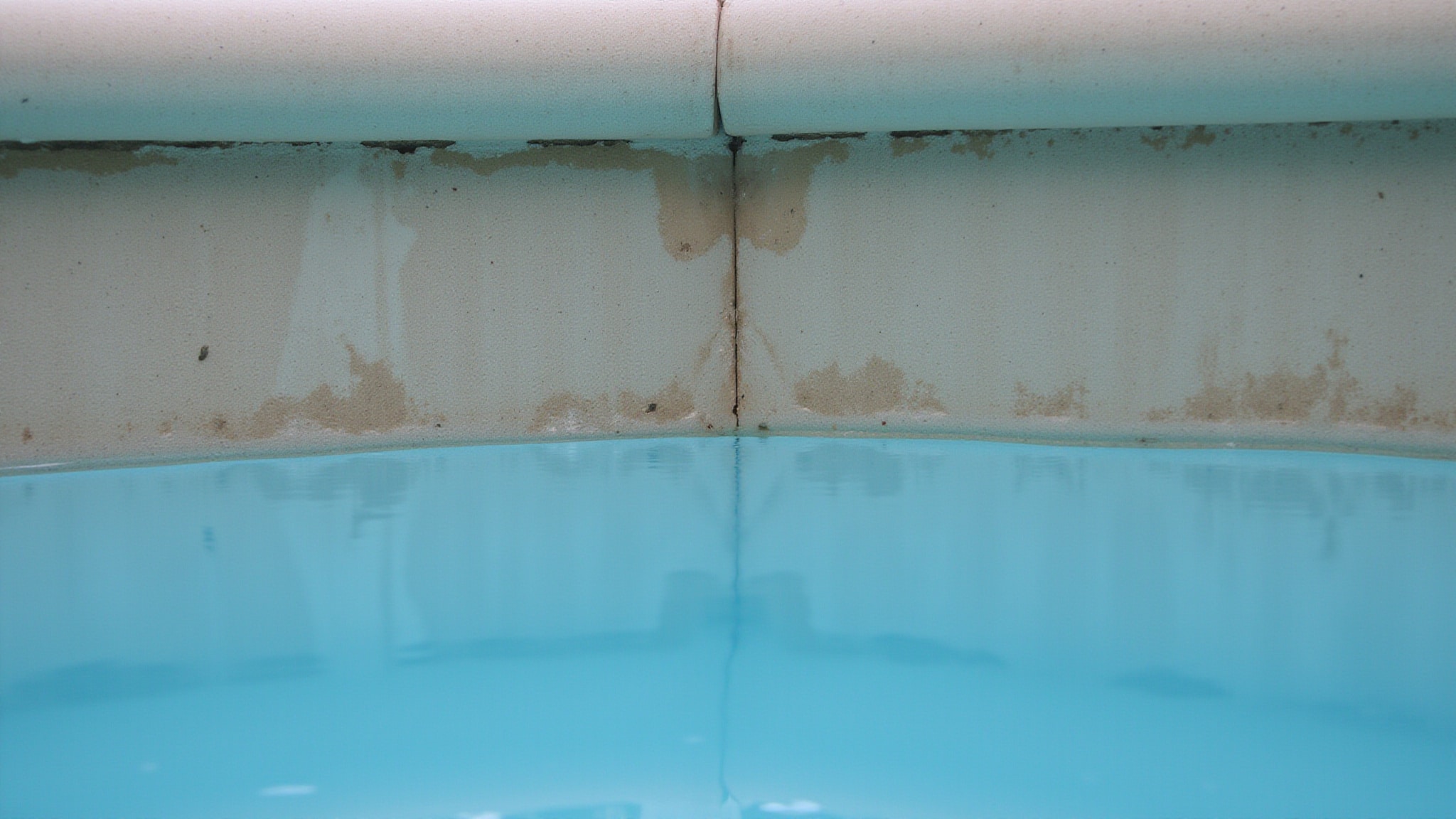
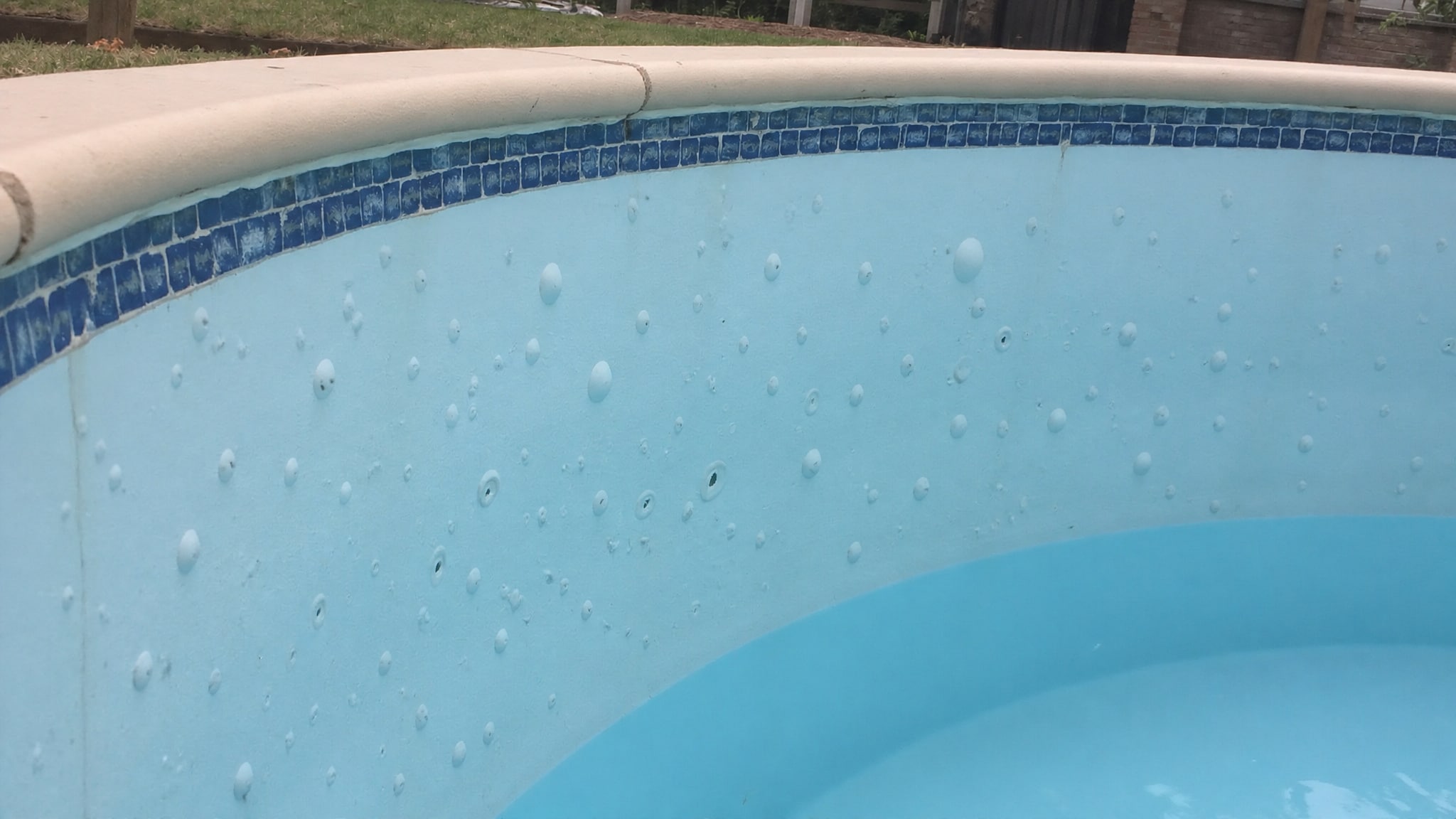
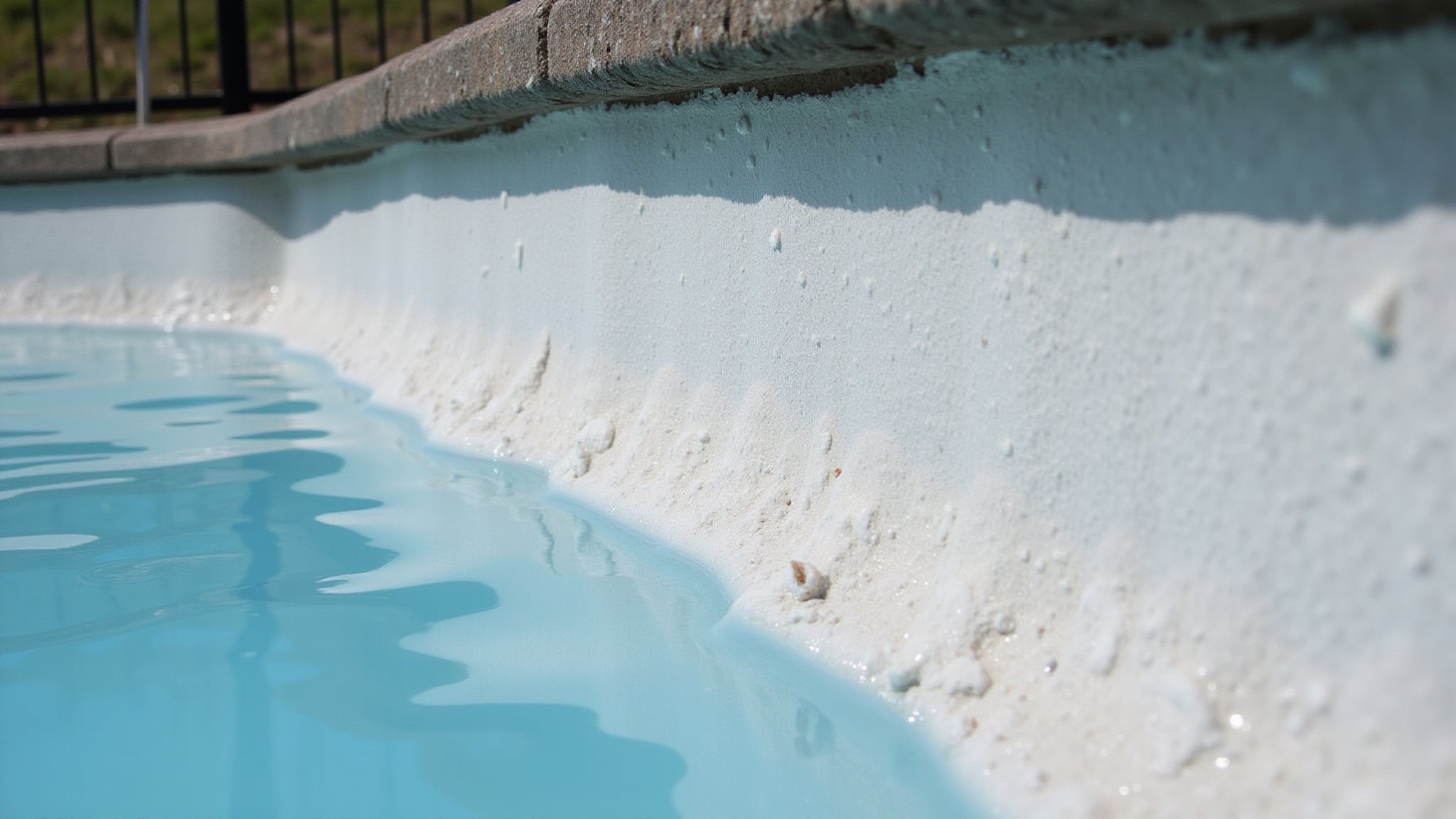
Calcium scale bonds fast to your fiberglass gel coat when hardness tops 400 ppm and pH climbs above 7.6. Confirm it’s scale with a muriatic acid fizz test, fizzing means calcium carbonate. Remove it quickly using calcium-dissolving compounds, a nylon pad, or a wet pumice stone. Then lock in your chemistry: pH 7.2, 7.6, alkalinity 80, 90 ppm, and LSI between, 0.30 and, 0.01. Dial in the right tools and targets below.
Key Takeaways
- Calcium hardness above 400 ppm and pH above 7.6 rapidly accelerate calcium scale formation on fiberglass gel coats.
- Skipping sequestrants like SC-1000 lets free calcium bond unimpeded, speeding up scale buildup on pool surfaces.
- Confirm scale with a muriatic acid fizz test, fizzing indicates calcium carbonate, distinguishing it from gel coat chalking.
- Remove fast using calcium dissolving compounds, liquid scale removers circulated 48 hours, or wet pumice stones on wet surfaces.
- Prevent rebuilding by maintaining pH 7.2, 7.6, alkalinity 80, 90 ppm, calcium 200, 400 ppm, and LSI between, 0.30 and, 0.01.
What Causes Calcium Scale on Fiberglass Pools
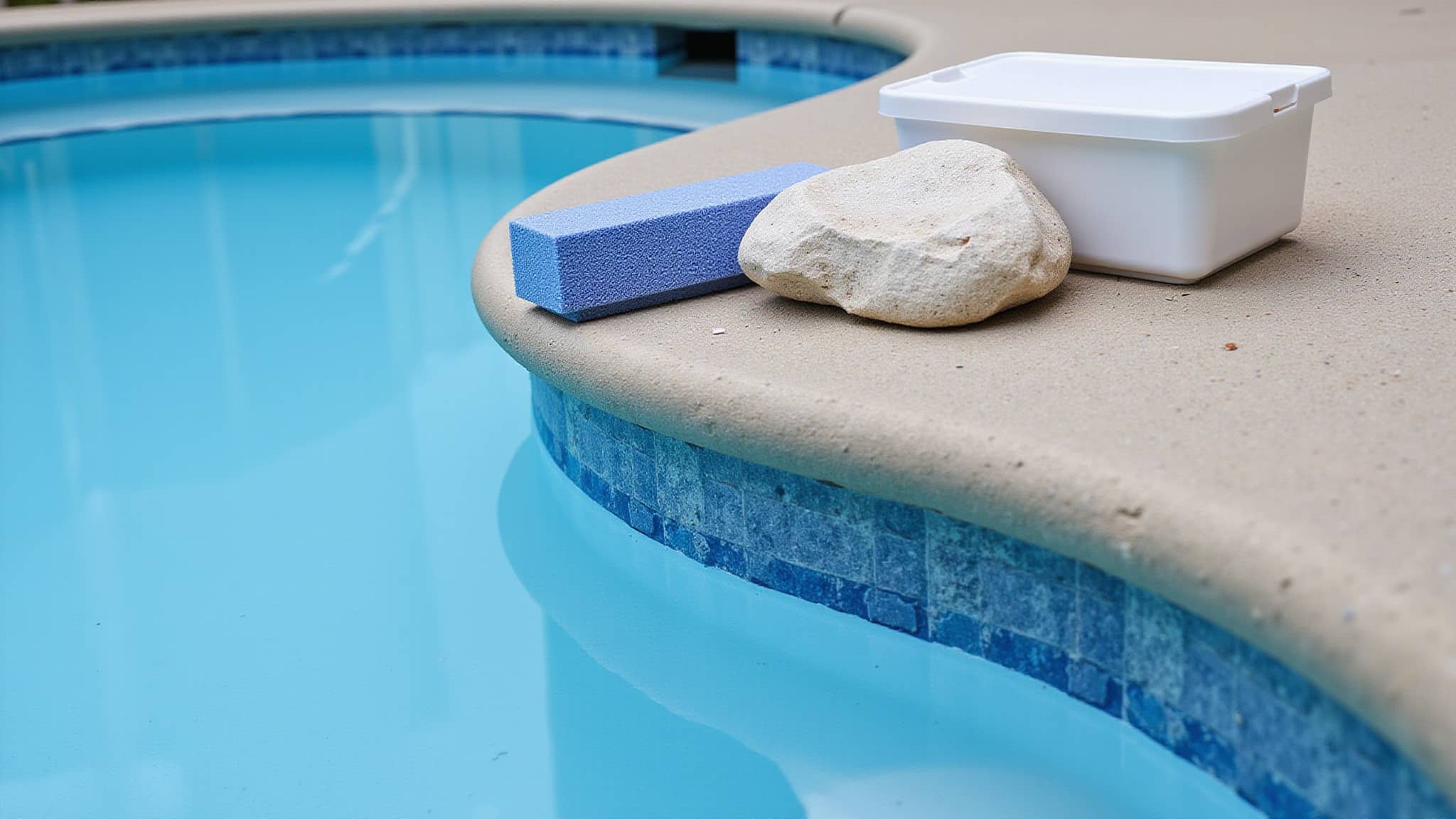
Calcium scale forms on fiberglass pools when calcium hardness climbs above 400 ppm and scale starts bonding directly to your pool’s gel coat. Several factors accelerate this calcium scale pool problem. When your pH exceeds 7.6, calcium carbonate precipitation becomes far more likely. High total alkalinity between 90, 120 ppm promotes rapid mineral deposition across the surface. In hard-water regions, evaporation leaves concentrated calcium deposits behind, worsening pool calcium buildup over time.
Without calcium-sequestering agents, free calcium bonds unimpeded to your pool shell. That’s why fiberglass pool scale develops so quickly when you skip sequestrants like SC-1000. To prevent it, keep your pH between 7.2, 7.6, alkalinity at 80, 90 ppm, and calcium hardness within 200, 400 ppm. Monitoring these metrics with an LSI calculator helps you catch scaling conditions before they take hold. Lower high pH pool water can also lead to cloudiness and unbalanced chemical levels, making it harder to maintain overall water quality.
How to Confirm It’s Scale, Not Gel Coat Chalking
Before you treat the problem, you need to confirm you’re dealing with calcium scale and not gel coat chalking. Start with the muriatic acid fizz test, mix 1/3 acid with 2/3 water and apply it to the deposit, where bubbling confirms calcium carbonate. Back this up with an acid-wipe removal check to see if the residue lifts (scale) or stays put (chalking), and use macro photography in early AM or late PM to reveal surface texture through shadowing.
Muriatic Acid Fizz Test
The muriatic acid fizz test tells you whether that white residue is calcium scale or gel coat chalking, and it gives you a definitive answer fast. Mix one part muriatic acid with two parts water, then apply a small amount directly to the suspect pool surface buildup. Watch closely. If the residue fizzes or bubbles, you’re dealing with calcium carbonate scale, not chalking.
That reaction confirms calcium scale fiberglass pool problems, since the acid dissolves the mineral deposit and releases carbon dioxide. No fizzing means the white area is likely oxidized gel coat, which requires different treatment. Always wear gloves and eye protection, and work in a well-ventilated area. This quick chemical check saves you time before choosing your removal method. Fiberglass pool scum removal can be an effective process when you know the right techniques. Using eco-friendly products can help maintain the integrity of your pool’s surface while achieving a thorough clean.
Acid-Wipe Removal Check
The acid-wipe removal check confirms whether you’re dealing with scale or chalking by testing removability rather than chemical reaction. This test distinguishes calcium scale from gel coat degradation by observing how the residue responds to direct acid application on a cloth. Scale lifts away cleanly, while chalking stays put because it’s actual surface breakdown, not a mineral deposit.
- Dampen a cloth with diluted muriatic acid (1/3 acid, 2/3 water).
- Wipe a small, inconspicuous section of the affected surface.
- Watch whether the white residue transfers to the cloth and disappears.
- Removable residue confirms calcium scale you can treat and dissolve.
- Persistent whiteness signals gel coat chalking, indicating surface damage instead.
Interpret results before choosing your removal method.
Macro Photography Shadowing
Macro photography shadowing reveals surface texture that your naked eye misses, letting you confirm scale versus chalking through shadow patterns. Shoot in early AM or late PM, when low-angle sunlight casts long shadows across the pool shell. These raking shadows exaggerate raised deposits, so calcium scale shows up as distinct three-dimensional crystalline ridges that catch and break the light. Chalking, by contrast, appears flat and diffuse, no shadow relief, just a dull, powdery haze embedded in the gel coat. Hold your camera close and focus tightly on the affected area. Compare the texture: sharp, heightened formations mean scale you can dissolve and remove, while uniform matte discoloration signals gel coat degradation that removal won’t fix. This visual confirmation guides whether you treat chemically or repair the surface.
Fastest Ways to Remove Calcium Scale
The fastest ways to remove calcium scale are specialized dissolving compounds, stain removers, liquid scale removers, wet pumice stones, and surface erasers, matched to your severity level. Confirm the deposit’s identity with a muriatic acid test, fizzing signals calcium carbonate. Once verified, target the buildup with methods that prioritize speed without damaging the gel coat.
- Specialized calcium dissolving compounds: soften buildup, then brush gently with a nylon pad.
- Stain removers: apply with the pump off and let stand up to three days.
- Liquid scale removers: circulate through your filter for 48 hours, no swimming due to acidity.
- Wet pumice stones: scrub scale only when both stone and surface stay wet.
- Surface erasers (80, 100 grit): safe for fiberglass, never vinyl or glazed tile.
Choosing the Right Scale Remover or Pumice Stone
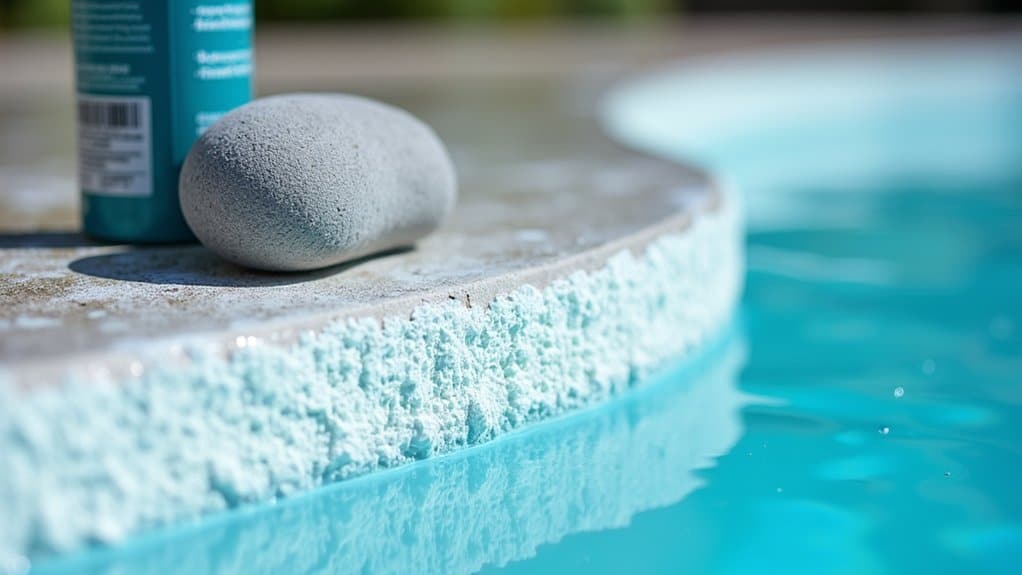
Match your removal tool to the scale’s severity and your surface type, and you’ll avoid both wasted effort and gel coat damage. For light-to-moderate buildup, start with specialized calcium dissolving compounds, softening deposits before you brush gently with a nylon pad. When scale resists, apply liquid scale removers, but plan for 48 hours of filter circulation and keep swimmers out due to acidity. For stubborn spots, wet pumice stones work. Just make sure both the stone and surface stay wet to prevent scratching. Surface erasers rated 80, 100 grit are safe for fiberglass, but never use them on vinyl or glazed tile. Before committing to any abrasive, run the acid-wipe test to confirm you’re dealing with removable scale, not gel coat chalking that abrasion worsens.
Water Chemistry Numbers That Trigger Scaling
When your pH climbs above 7.6, you’re pushing calcium carbonate toward precipitation, so keep it within the 7.2, 7.6 range to stay safe. Calcium hardness above 400 ppm accelerates scale on gel coats, which is why you’ll want to hold it between 200, 400 ppm or drop it to ≤120 ppm without sequestration. Watch your total alkalinity too, the 90, 120 ppm zone promotes rapid mineral deposition, so target 80, 90 ppm to shut down buildup.
High pH Thresholds
High pH thresholds matter because pH controls how readily calcium carbonate precipitates, making it the single most important number to watch on fiberglass surfaces. Past 7.6, precipitation risk climbs sharply, and by 8.09 you’ve hit the ceiling where calcium starts bonding directly into the gel coat. Keep your pH locked in the 7.2, 7.6 window to minimize scaling, and never let it drop below 7.0 during acid-based treatments. Watch these thresholds closely:
- 7.2, 7.6: Ideal range that minimizes calcium carbonate precipitation
- Above 7.6: Scaling likelihood increases measurably
- 8.09: Absolute ceiling before calcium bonds inside the gel coat
- Below 7.0: Too acidic; risks etching during acid treatments
- Weekly testing: Confirms pH stays within your target range
Monitor consistently and you’ll prevent rapid rebuildup.
Calcium Hardness Limits
Calcium hardness should stay within a target range of 200, 400 ppm, though some experts recommend keeping levels at or below 120 ppm when you’re not using a sequestrant. Calcium hardness works alongside pH to determine whether your water deposits scale or stays balanced. Above 400 ppm, you’ll see scale form rapidly on gel coats. If you’re running higher hardness, you’ll need SC-1000 or a comparable sequestrant to bind free calcium, which stays effective even at 1000 ppm. Without sequestration, that free calcium bonds directly to your pool shell. To lower excessive hardness, perform a partial drain and refill or apply a calcium reducer. Re-test calcium levels after any dilution to confirm you’ve hit your target and prevent rebuildup. How often to test pool water depends on factors like usage and weather conditions. Regular testing ensures that all chemical levels, including pH and calcium hardness, remain balanced.
Alkalinity Danger Zone
Total alkalinity between 90 and 120 ppm pushes your water into a danger zone that promotes rapid mineral deposition on fiberglass surfaces. This range destabilizes your water balance and drives calcium carbonate precipitation onto gel coats. You’ll want to pull alkalinity down and hold it within the safe target to stop scale before it forms.
- Maintain total alkalinity between 80 and 90 ppm to prevent scale buildup.
- Keep pH at or below 7.6, since increased pH compounds high-alkalinity scaling risk.
- Target calcium hardness at 200, 400 ppm, or ≤120 ppm without sequestration.
- Verify your LSI stays between, 0.30 and, 0.01 for safe scale control.
- Use the Orenda LSI calculator for real-time water balance assessment.
The pH and LSI Sweet Spot for Fiberglass Pools
The pH and LSI sweet spot for fiberglass pools keeps your gel coat scale-free without inviting corrosion. Keep your pH within 7.2, 7.6, the ideal range that minimizes calcium carbonate precipitation. If you exceed 7.6, you’re pushing calcium toward bonding directly with the gel coat. For balance, target an LSI between, 0.30 and, 0.01, which holds you in safe scale-control territory. Don’t rely on guesswork here, use the Orenda LSI calculator for real-time water balance assessment before you adjust anything. Watch your free chlorine too, keeping it at 2, 4 ppm; exceeding 4 ppm can restart deposit formation. By managing pH, alkalinity, and calcium together, you’re maintaining an LSI that neither scales your surfaces nor etches them. That’s the equilibrium you’re after.
Sequestrants That Stop Calcium Scale Rebuilding
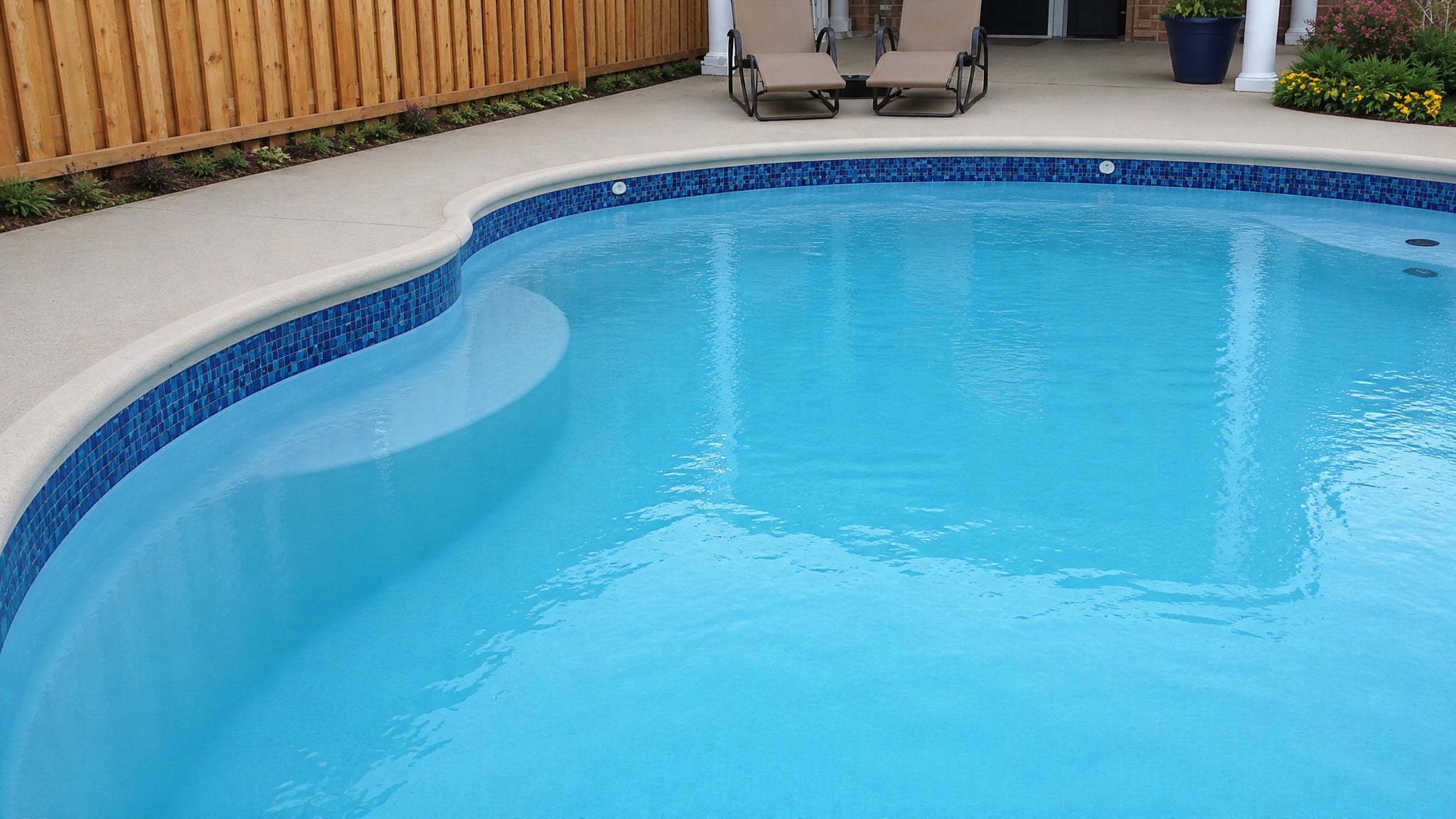
Sequestrants stop calcium scale rebuilding by binding free calcium ions, keeping them suspended in water instead of bonding directly to your pool shell. These agents serve as your frontline defense against calcium rebuilding on the gel coat once your pH and LSI are dialed in. Without sequestration, dissolved calcium precipitates onto fiberglass the moment conditions shift, restarting the scaling cycle you worked hard to eliminate.
Sequestrants lock up free calcium before it can bond to your gel coat, keeping scale from ever rebuilding.
- Use high-quality sequestrants like SC-1000 to bind free calcium even at 1000 ppm hardness.
- Apply weekly maintenance doses of scale preventer to keep calcium suspended in water.
- Combine sequestration with your pH ceiling below 8.09 to block gel coat bonding.
- Retest calcium levels after each dilution or refill to confirm effectiveness.
- Pair sequestrants with daily brushing to dislodge any early deposits forming.
Lowering Hardness Without Damaging Your Gel Coat
Lower calcium hardness by tackling it directly when your levels climb above 400 ppm, since no amount of sequestration fully compensates for water that’s chronically oversaturated. Start with a partial drain and refill, replacing enough volume to pull hardness back into the 200 to 400 ppm target range. If your fill water’s already hard, use a calcium reducer to precipitate excess minerals, then filter or vacuum them out. Run your auto vacuum continuously for 10 days if you’re using citric acid at 5 lbs per 10,000 gallons. Throughout any acid-based treatment, monitor pH closely and never let it drop below 7.0, since low pH threatens your gel coat. After dilution or replacement, re-test calcium and phosphate levels to confirm you’ve hit your targets before rebalancing.
Your Weekly Routine to Keep Scale Away
Consistent weekly maintenance keeps scale from creeping back once you’ve dialed in your hardness levels. The key is staying ahead of chemistry drift and dosing preventively before deposits form. Build these five tasks into your weekly rotation:
- Test water chemistry weekly, focusing on pH (7.2, 7.6), total alkalinity (80, 90 ppm), and calcium hardness (200, 400 ppm).
- Apply a weekly maintenance dose of scale preventer to keep calcium suspended and out of the gel coat.
- Dose a quality sequestrant like SC-1000 to bind free calcium, even at higher hardness levels.
- Brush pool surfaces to dislodge early scale before it hardens onto the shell.
- Verify LSI using the Orenda calculator, targeting, 0.30 to, 0.01 for reliable scale control.
Conclusion: Controlling Calcium Scale on Fiberglass
Calcium scale is the crusty white or gray buildup that forms when calcium and pH levels run high, and it tends to settle at the waterline and on surfaces. On fiberglass, keeping the water balanced is the best prevention, since the smooth gel-coat gives scale less to cling to than rougher surfaces. When scale appears, gentle removal and rebalancing the water clear it. Regular testing and balanced chemistry keep it from coming back.
Call Today and Get a Pool Built to Last
From cloudy water to algae growth, most pool problems trace back to poor construction, but a quality fiberglass pool changes everything. At Schiller Pools in Port St. Lucie, FL, our skilled team delivers dependable San Juan Fiberglass Pools designed for easy water care and lasting performance. Call +1 (561) 475-5997 today and get started with confidence.
Frequently Asked Questions
Can Calcium Scale Permanently Damage or Discolor My Fiberglass Pool’s Gel Coat?
Left untreated for a long time, heavy scale can dull or mark the surface, but caught early it usually cleans off without lasting harm. Fiberglass’s non-porous gel-coat resists scale better than porous surfaces. Removing buildup promptly and keeping calcium and pH in range protects the finish from long-term discoloration.
Is It Safe to Swim While Scale Is Present?
Yes, light scale is a cosmetic and comfort issue rather than a health hazard, so swimming is fine. Heavy scale can feel rough underfoot or at the waterline and signals the water balance needs attention. Correcting the chemistry and removing the buildup keeps the pool comfortable and prevents it from worsening.
How Much Does Professional Calcium Scale Removal Typically Cost?
Cost depends on how much scale there is and the method used, from a simple treatment to more involved surface cleaning. Minor cases are affordable, while heavy buildup costs more. A pool professional can assess the scale, remove it safely without harming the gel-coat, and advise on preventing it going forward.
Can Calcium Scale Clog My Pool’s Filter or Plumbing System?
Yes, over time scale can build up inside pipes, on equipment, and in the filter, reducing flow and efficiency, especially with a heater or salt cell. Keeping calcium and pH balanced prevents this. If you notice reduced circulation, have the equipment checked, since clearing scale early protects the whole system.
Does Saltwater Chlorination Increase the Risk of Calcium Scaling?
It can, because salt cells raise pH locally as they operate, which encourages scale to form on the cell and nearby surfaces if the water is not balanced. Keeping pH and calcium in range and cleaning the cell periodically prevents it. Managed well, a saltwater pool does not have to suffer from scaling.