
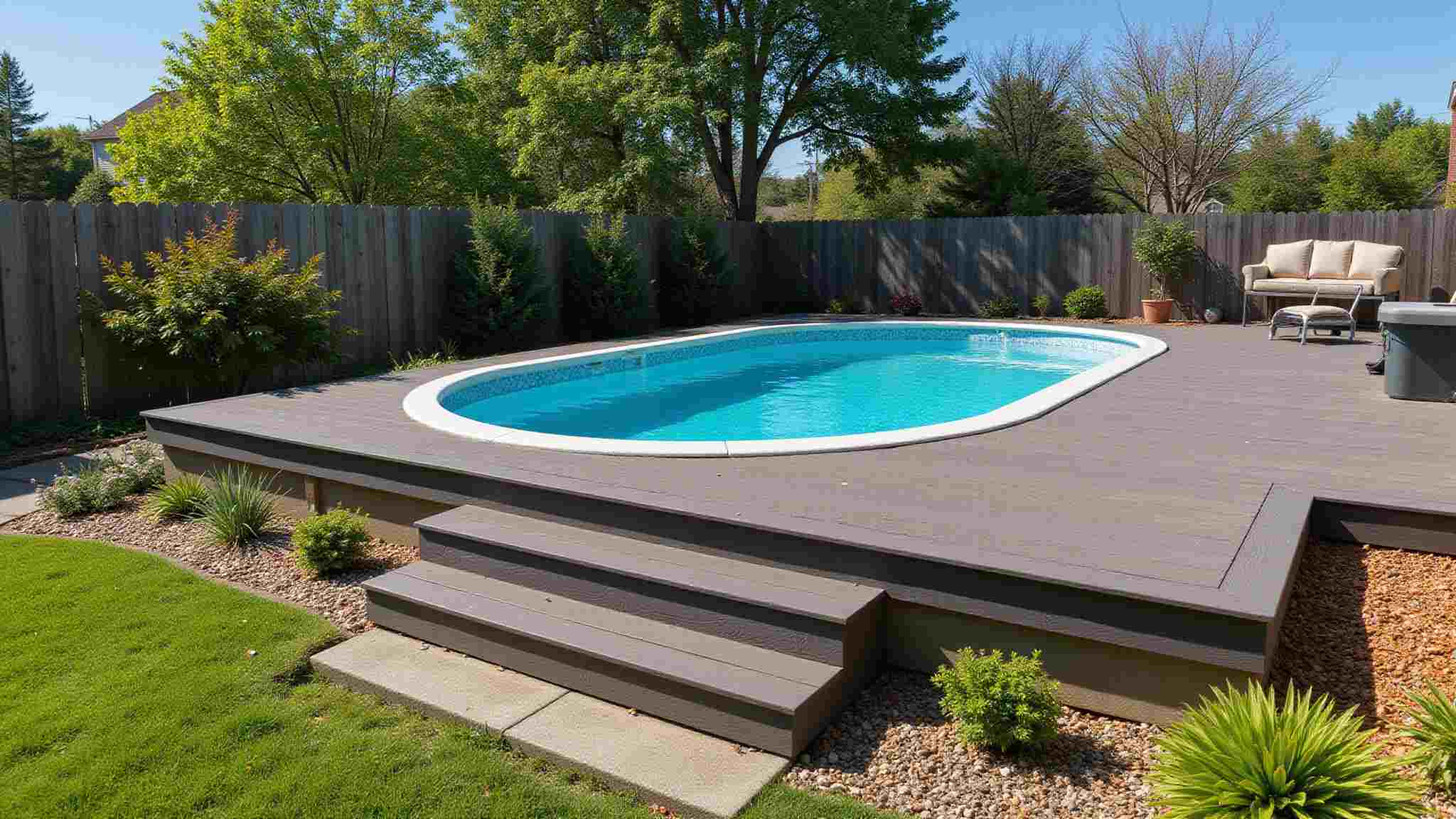
A semi-inground fiberglass pool is a fiberglass shell installed with part of its wall above the surrounding grade instead of fully buried. It’s most useful on sloped yards and sites where digging deep is difficult. Fiberglass shells are designed to be installed in the ground, so how much can sit above grade depends on the manufacturer and model. Latham’s evaluation report allows listed models to be installed up to 19½ inches above ground, and beyond what a model is rated for, the exposed side needs engineered support such as a retaining wall.
Below, you’ll find how semi-inground fiberglass pools work, when they make sense, and what to plan for with a Florida installation.
Key Takeaways
- A semi-inground pool sits partly above grade, with decking or a wall around the exposed part of the shell.
- Fiberglass shells are designed for inground installation, so partial exposure must follow the manufacturer’s guidance for that model.
- Latham’s ICC-ES evaluation report allows listed models up to 19½ inches above ground, and exposed portions not shaded by soil, decking or similar must be coated with a UV-inhibiting paint.
- Beyond the manufacturer’s rating, the exposed side typically needs a retaining wall or engineered support.
- Proper compacted backfill is required either way, and groundwater in the excavation must be reviewed by a design professional.
What Is a Semi-Inground Pool?
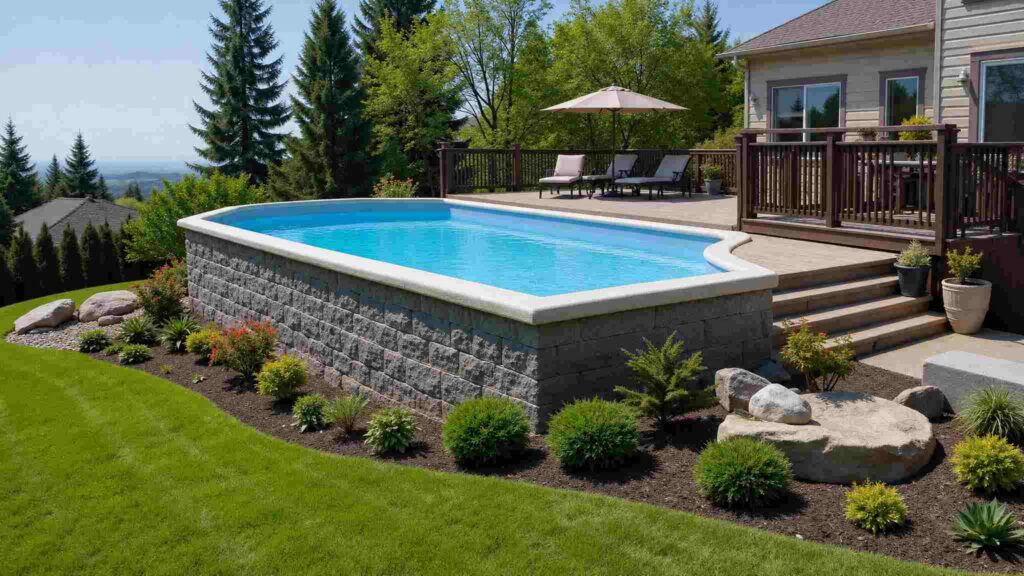
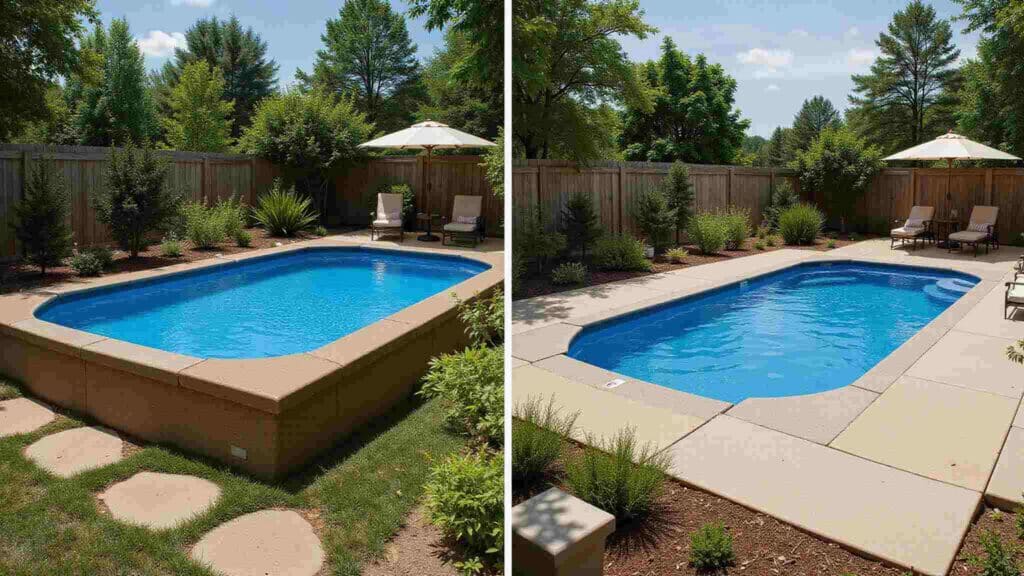
A semi-inground pool is installed with part of the pool wall above the surrounding ground. The rest of the pool sits in the excavation. The exposed section is usually wrapped in decking, a raised wall or landscaping so the finished pool looks intentional rather than unfinished.
Semi-inground pools come in several types. Steel-wall and vinyl liner kits are often sold specifically for partial burial. Fiberglass pools are different, because the one-piece shell is engineered to be supported by the soil and backfill around it.
Can a Fiberglass Pool Be Installed Semi-Inground?
Yes, within limits set by the manufacturer. Here’s what the evaluation reports for the two brands we install say.
| Manufacturer Source | What It Says About Partial Exposure |
|---|---|
| Latham (ICC-ES ESR-2014) | Shells must be installed in-ground, or up to 19½ inches above ground for models listed in the report. Exposed portions not shielded from sunlight need a UV-inhibiting opaque paint. |
| San Juan (IAPMO ER-298) | Doesn’t address above-grade installation. Backfill must be structurally stable sand or pea gravel. |
The takeaway is simple: a modest amount of exposure is possible on some models, and anything more needs engineering. Always confirm with the manufacturer’s installation instructions for the exact shell you choose.
Schiller Pools installs San Juan and Latham fiberglass pools. When you’re considering a semi-inground layout, the shell model and the manufacturer’s guidance for it decide what’s possible on your site. You can browse the lines we install on our Latham pools and San Juan pools pages.
When Does a Semi-Inground Fiberglass Pool Make Sense?
A semi-inground design solves specific site problems.
Sloped Yards
On a sloping lot, a semi-inground pool reduces the amount of digging on the high side and lets the low side sit partly above grade. Our guide to building a pool on a slope covers the options for hillside lots in more detail.
Difficult Excavation
Where digging deep is costly or impractical, keeping part of the pool above grade can reduce excavation. The exposed side still needs proper support and backfill.
Raised Pool Designs
Some homeowners want a raised pool wall that doubles as seating or creates a visual separation from the rest of the yard. A raised wall around the pool’s edge can be part of a semi-inground design.
What Do You Need to Plan for a Semi-Inground Fiberglass Pool?
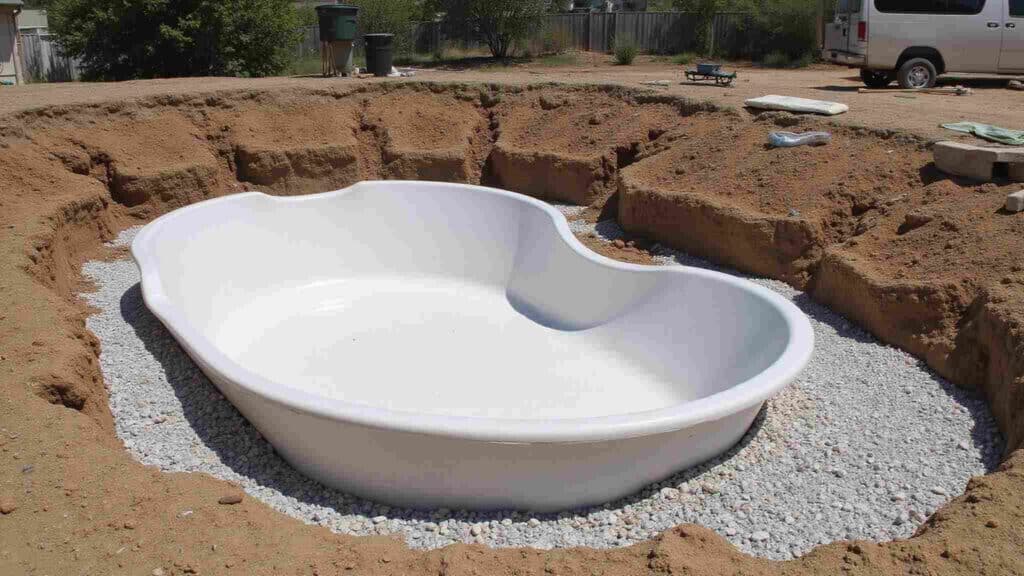
A semi-inground fiberglass pool needs more planning than a standard installation.
Backfill
Fiberglass shells rely on compacted backfill for support. Latham’s evaluation report requires backfill to be compacted with a tamper, and San Juan’s report calls for stable sand or pea gravel no larger than 3/8 inch. Our guide to the right backfill for a fiberglass pool explains the options.
Wall Support and Decking
The exposed part of the shell needs to be supported and protected. That might be a retaining wall, a framed deck or a soil berm. If the exposed height goes beyond what the model is rated for, the support must be engineered.
UV Protection
Fiberglass that’s exposed to direct sun needs protection. Latham’s report requires exposed portions not shielded by soil, decking or similar to be coated with a UV-inhibiting opaque paint compatible with the laminate.
Groundwater
Both Latham’s and San Juan’s evaluation reports treat groundwater in the excavation as a condition that requires review before installation continues. In parts of Florida with a high water table, this is an important early check. Our guide to pool types least likely to float in high water table areas covers this in more depth.
Permits
A semi-inground pool still needs permits and must meet Florida’s pool safety requirements. Our guide to what permits a new fiberglass pool needs walks through the process.
How Does a Semi-Inground Fiberglass Pool Compare With Other Options?
| Option | How It Works | Best For |
|---|---|---|
| Fully inground fiberglass | Shell fully buried and backfilled | Most yards and the cleanest finished look |
| Semi-inground fiberglass | Part of the shell above grade, with support and decking | Sloped yards and raised pool designs |
| Steel-wall semi-inground kit | Steel or panel walls designed for partial or full burial, depending on model | Budget projects where a fiberglass shell isn’t required |
| Above-ground fiberglass installation | Shell supported by an engineered structure | Rare cases where digging isn’t possible |
For more on raising a fiberglass pool fully out of the ground, see our guide on whether you can use a fiberglass pool above ground.
Is a Semi-Inground Fiberglass Pool Right for Your Yard?
A semi-inground fiberglass pool can be a smart solution for sloped lots and raised designs, as long as the shell model allows it and the exposed side is properly supported. Fiberglass pools are built to be installed in the ground, so the amount of exposure should follow the manufacturer’s guidance for your model, with engineering for anything beyond it.
Start with a site evaluation that looks at slope, soil and groundwater. Then choose a shell model and a support approach that fits both your yard and the manufacturer’s requirements.
Frequently Asked Questions
Are semi-inground pools a good idea?
They can be, especially on sloped yards or where deep excavation is difficult. For fiberglass pools, the exposed height must stay within the manufacturer’s guidance for the model, or be supported by an engineered wall. Done correctly, a semi-inground pool can solve site problems a fully inground pool can’t.
What is the best type of semi-inground pool?
The best type depends on your goals. Steel-wall and panel kits are designed for partial burial and are often the lower-cost option. Fiberglass offers a smooth, durable finish and low maintenance, but partial exposure is limited by the shell model and may need engineered support.
How deep can a semi-inground pool go?
The depth depends on the pool model, not on how much is buried. A fiberglass shell has a set depth profile, and installing it semi-inground changes how much of the wall sits above grade, not how deep the water is.
Can you fully bury a semi-inground pool?
Some steel-wall semi-inground kits can be partially or fully buried, depending on the model. Fiberglass pools are designed to be installed fully in the ground, so a fully buried installation is the standard approach for fiberglass.
What is a semi-inground pool?
A semi-inground pool is a pool installed with part of its wall above the surrounding grade. The exposed section is usually finished with decking, a raised wall or landscaping.
Planning a Fiberglass Pool on a Challenging Lot?
Sloped yards, raised designs and high water tables all affect how a fiberglass pool should be installed. Schiller Pools is an authorized San Juan and Latham fiberglass pool installer with more than 40 years of pool construction experience across the Palm Beach and Treasure Coast areas. We’ll evaluate your site and recommend the shell and installation approach that fits it.
Explore our fiberglass pools, visit the Schiller Pools homepage, get a quick number with our instant pool estimator, or contact our team. You can also call (561) 475-5997 to talk through your project.