
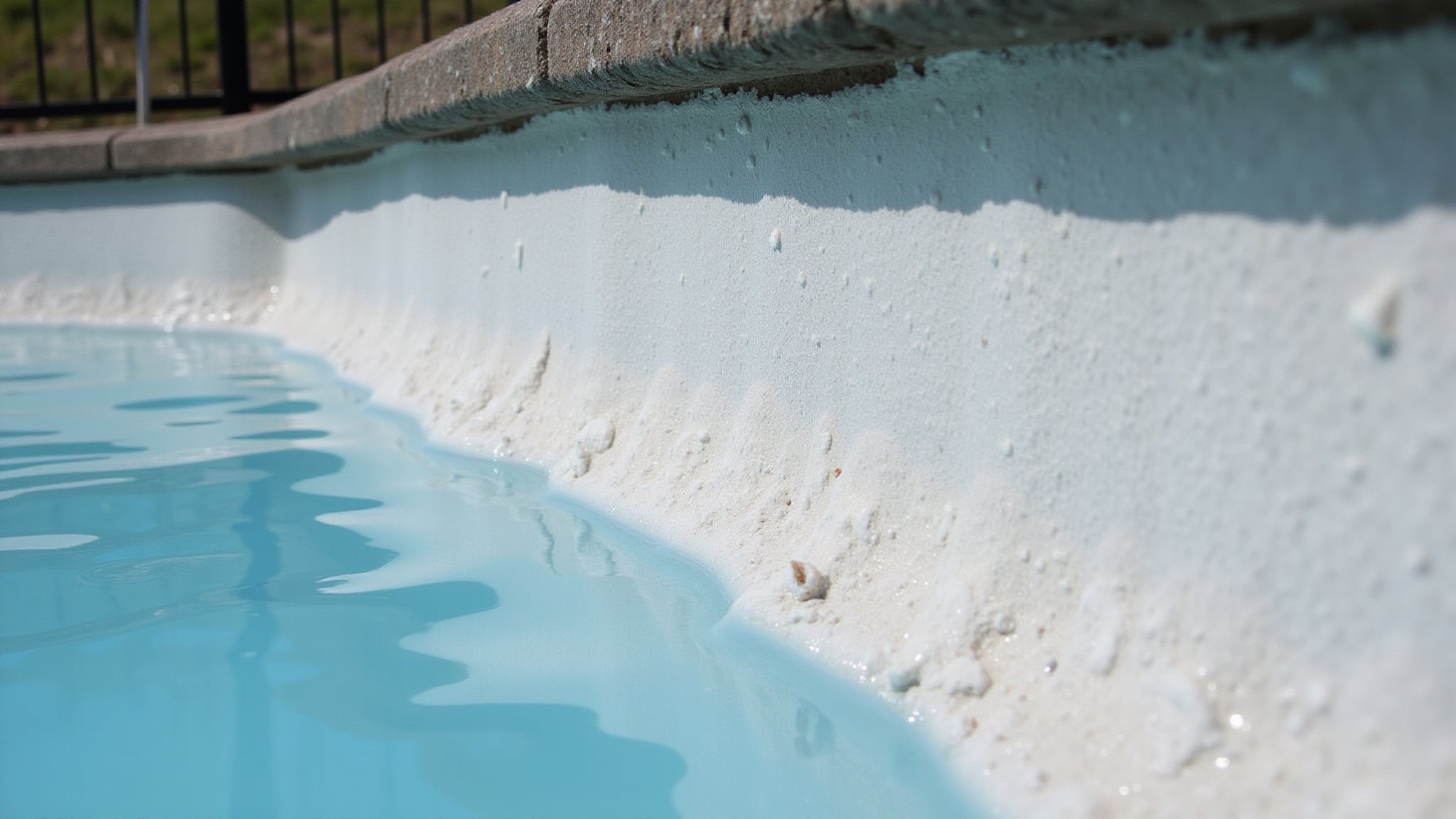
You should use clean crushed gravel for a fiberglass pool, it’s the only backfill that works. Choose ¾-inch clean fractured stone for structural support, ½-inch chip stone for edge-locking stability, and 3/8-inch crushed rock for hydrostatic pressure relief. The angular edges lock together and drain water fast, resisting the pressure that cracks and shifts pools. Never use dirt, clay, sand, pea gravel, or round stone. Below, you’ll find exactly why each choice matters.
Key Takeaways
- Clean crushed gravel is the best backfill material, with ¾-inch clean fractured stone recommended for primary structural support.
- Chip stone no larger than ½ inch provides edge-locking stability against pool walls.
- Use 3/8-inch clean crushed rock paired with the hydrostatic pressure relief pipe for drainage.
- Angular fractured stone works because its edges lock together and bear loads; round stone fails.
- Never use dirt, clay, sand, pea gravel, or round stone, as they cause settling and instability.
Why Backfill Makes or Breaks Your Fiberglass Pool
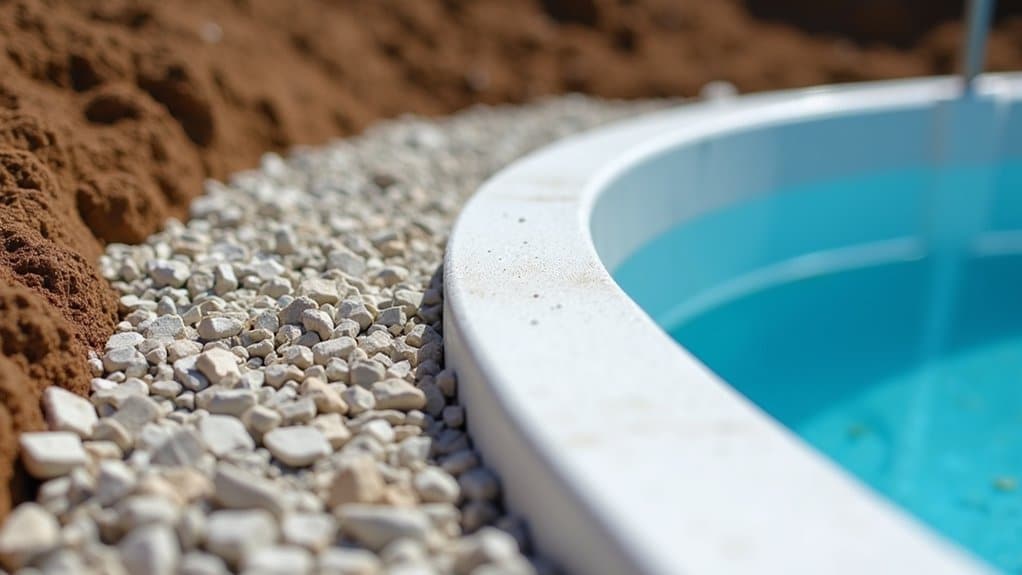
Backfill makes or breaks your fiberglass pool because it provides the structural support that holds walls plumb and resists hydrostatic pressure from surrounding groundwater. Your fiberglass pool backfill isn’t just filler, it’s what separates a pool that lasts decades from one that cracks, shifts, or floats within a few seasons. Choose the wrong pool backfill material, and you’ll face settling, wall movement, and voids under critical radii.
The best backfill fiberglass pool installers rely on is clean crushed gravel, prized for its drainage and edge-locking stability. Avoid dirt, clay, sand, and pea gravel; they settle, displace, and compromise integrity. Because fiberglass flexes, it depends entirely on what surrounds it. Proper backfill locks the shell in place, channels water away, and keeps your investment structurally sound for years. Fiberglass pool HOA process involves specific guidelines to ensure compliance with community standards. Understanding these requirements can help streamline the installation and maintenance of your pool.
The Best Backfill Material for Fiberglass Pools
Clean crushed gravel is the best backfill material for fiberglass pools, and it’s the top recommendation from manufacturers, engineers, and installers nationwide. For structural backfill, you’ll want ¾-inch clean fractured stone, which locks together to support the pool shell. Use chip stone no larger than ½ inch to create an edge-locking system against fiberglass walls, since round stone lacks the sharp edges required for stability. If you’re pairing your backfill for pool construction with a hydrostatic pressure relief pipe, 3/8-inch clean crushed rock performs best. Clean limestone in the 3/8″, 1/2″ range works reliably regardless of temperature. Crushed stone also delivers excellent drainage, reducing hydrostatic pressure around your walls. Choosing the right material is critical to a successful fiberglass pool installation and long-term structural integrity.
Which Crushed Stone Sizes Actually Work
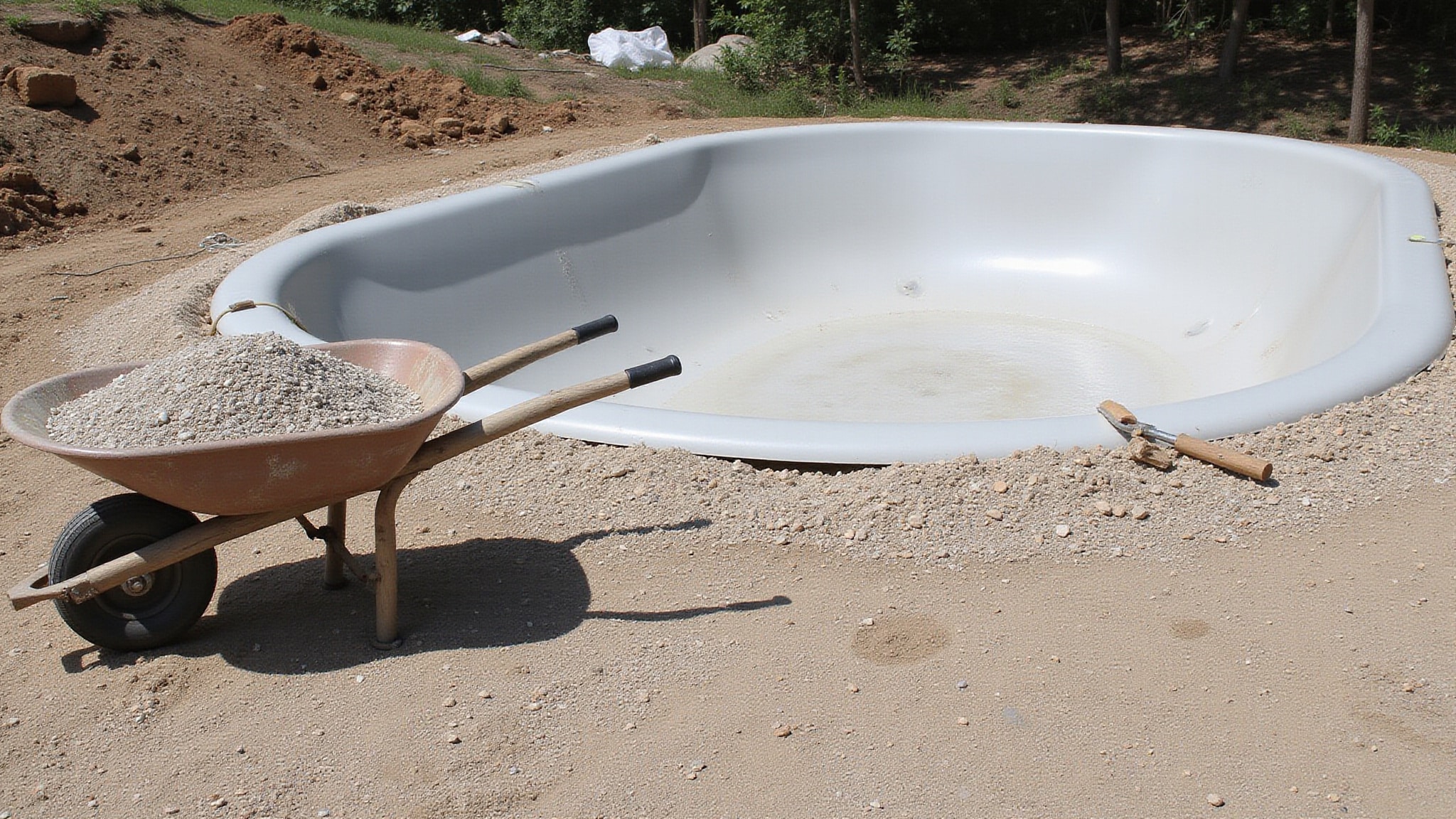
Three crushed stone sizes actually work for fiberglass pool backfill. You’ll want ¾-inch clean fractured stone as your primary structural backfill, its angular edges deliver the load-bearing performance your walls demand. For edge-locking stability against fiberglass walls, use chip stone no larger than ½ inch, which locks together tightly and resists shifting. If you’re installing a hydrostatic pressure relief pipe, 3/8-inch clean crushed rock is your best choice for that application. Clean limestone in the 3/8″, 1/2″ range works reliably regardless of temperature conditions. What ties these together is fracture: every option must be clean and angular. Round stone won’t work because it lacks the sharp edges needed to create the edge-locking system your fiberglass walls require.
Backfill Materials You Should Never Use
Just as important as knowing what to use is knowing what to avoid entirely. Dirt, clay, and excavated soil are strictly prohibited, they settle over time and ruin your pool’s structural integrity, while field sand and blow sand displace too easily to stay stable under flooding conditions. You’ll also want to skip pea gravel and round stone, since both are free-flowing, tough to compact, and lack the sharp edges needed for edge-locking against fiberglass walls. Fiberglass pool permit requirements can vary significantly by location, so it’s essential to check with your local authorities before getting started. Compliance with these regulations will help ensure your pool installation is safe and legally sound.
Soil and Sand Problems
Dirt, clay, and excavated soil ruin your pool’s structural integrity over time, even though they seem like convenient, cost-free options. These materials settle unpredictably, creating voids and shifting pressure against your fiberglass walls. Excavated material can never replicate the compaction of the original in situ soil, so your subgrade fails under load.
Sand presents its own problems. Field sand and blow sand displace too easily to remain stable under flooding conditions. If you’re using sand at all, you must control groundwater carefully, and it’s only viable behind shallow walls in limited situations.
Don’t gamble on these unstable materials. Once water infiltrates or the ground saturates, settling begins, and you’ll face structural damage that’s expensive, and often impossible, to correct after installation’s complete.
Unstable Stone Options
Unstable stone options include pea gravel and round stone, both of which invite the same settling problems that plague soil and sand. Pea gravel tops the list of what you should never use. It’s unstable, free-flowing, and nearly impossible to compact, which leads to frequent pool settling issues down the road. Round stone poses a similar threat. It lacks the sharp edges needed for the edge-locking stability your fiberglass walls require, so it shifts under load instead of holding firm. You want fractured, angular material that interlocks and stays put. Stick with clean crushed gravel, ¾-inch fractured stone, or 3/8″, 1/2″ limestone. These sizes lock together, resist displacement, and drain well. Skip the round or free-flowing options, and you’ll avoid costly structural failures.
Why Pea Gravel and Sand Cause Pool Settling
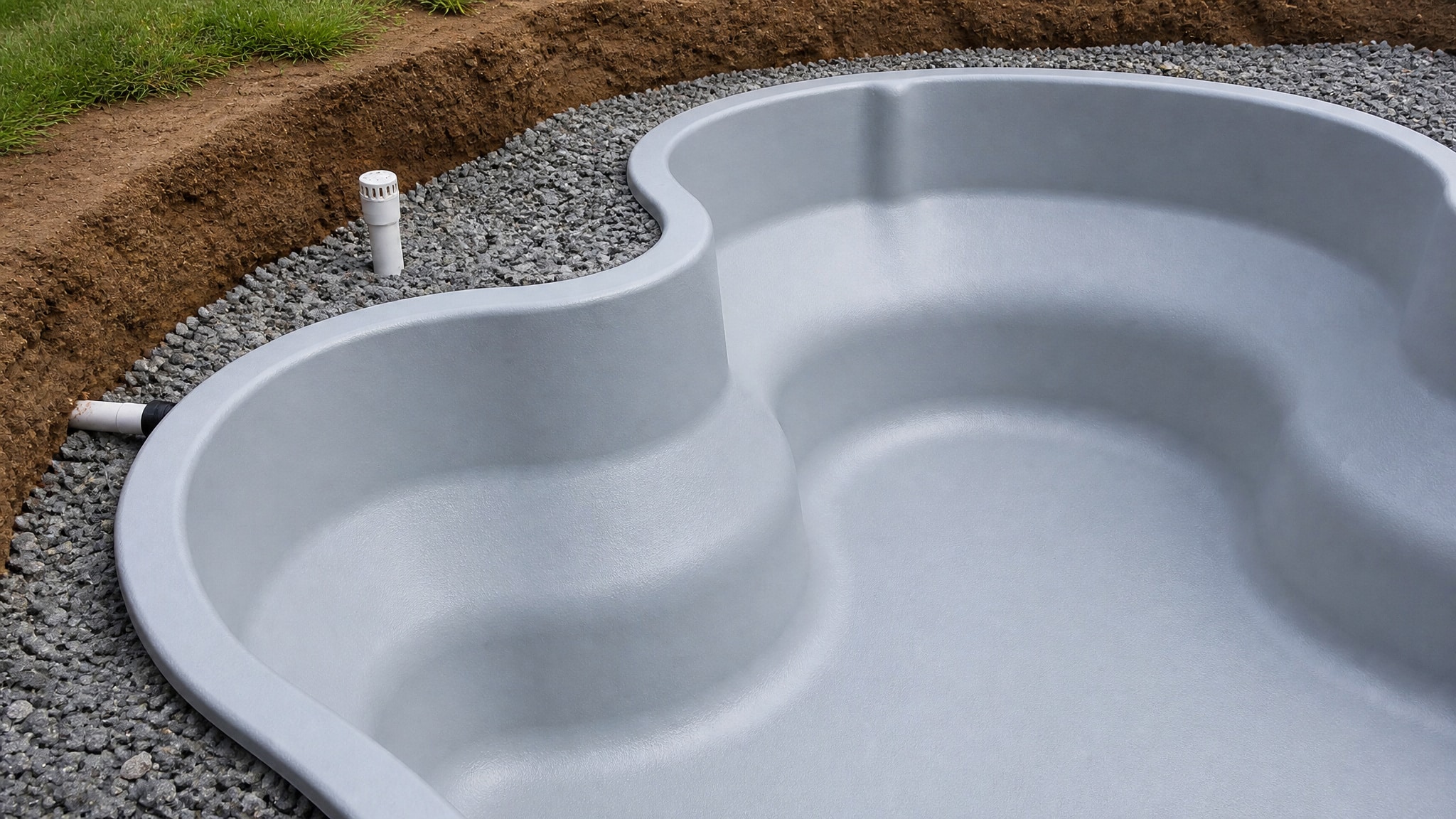
Pea gravel and sand cause pool settling because neither compacts into a stable, load-bearing mass. Pea gravel is free-flowing and rounded, so it resists compaction and shifts under pressure, triggering frequent pool settling. Its smooth stones lack the sharp edges needed for edge-locking stability against your fiberglass walls. Sand behaves no better. Field sand and blow sand displace too easily to stay stable under flooding conditions, and they demand strict groundwater control that’s viable only for shallow walls in limited situations.
When either material moves, it leaves voids beneath your walls and floor. Those voids let the shell drop, warp, or crack over time. You’ll avoid these failures by choosing clean crushed stone that locks tightly and holds its position.
How to Backfill as You Fill the Pool
Backfill as you fill the pool by installing clean crushed stone in sync with the water going into your pool. Backfill at the same rate you fill, keeping water levels within 6 inches of the backfill surface at all times. Work in shallow lifts, never filling one side to full depth. Hand tamp and slice the stone in layers, and never use mechanical packers or “jumping jacks.” Keep the backfill surface within 9 to 12 inches of level as you move back and forth around the pool. Slice granular material carefully under haunches and cove radii, and never leave voids beneath wall-to-floor or riser-to-tread passages. Check the pool rim constantly throughout the process, verifying it stays level as both stone and water rise together.
Compact Your Backfill in Shallow Lifts
Compact your backfill in shallow lifts, working back and forth around the pool rather than filling one side to full depth. Use hand tamping and slicing only, never mechanical packers or “jumping jacks,” which can stress and misalign fiberglass walls. Slice the granular material carefully under haunches, cove radii, and wall-to-floor junctions so you leave no voids behind.
Use Shallow Lifts
Compact the material in shallow lifts instead of dumping it in and filling one side to full depth. This method distributes load evenly and prevents structural stress on the walls. As you work, keep the backfill surface within 9 to 12 inches of level, proceeding back and forth around the pool.
- Add stone in thin layers, never all at once
- Hand tamp and slice each lift; never use mechanical packers or “jumping jacks”
- Slice granular material under haunches and cove radii to eliminate voids
- Keep backfill within 6 inches of the pool’s water level
- Check the rim level constantly throughout the process
This disciplined approach protects your pool’s long-term integrity.
Hand Tamping Only
Hand tamping and slicing are the only approved methods for compacting backfill behind fiberglass pools. Never use mechanical packers or “jumping jacks” on backfill behind fiberglass walls. These tools generate excessive force that can flex, bow, or damage the wall structure, compromising the pool’s integrity and warranty.
Instead, you’ll hand tamp each shallow lift as you go, working the crushed stone firmly into place. Slice the granular material carefully under haunches, cove radii, and wall-to-floor shifts to eliminate voids. This deliberate technique makes sure the edge-locking system engages properly against the walls.
Don’t leave any voids beneath wall-to-floor or riser-to-tread radii. Unfilled gaps lead to settling and structural failure. Consistent, methodical hand compaction protects your investment and delivers a stable, lasting installation.
Fill and Slice Voids
Fill and slice voids by building up your backfill in shallow lifts, not just by how you tamp it. You’ve got to install material in shallow lifts, working back and forth around the pool rather than filling one side to full depth. As you build each layer, slice the granular backfill under critical radii to eliminate voids that compromise structural integrity.
- Keep backfill surface levels within 9 to 12 inches of level as you progress.
- Never leave voids under wall-to-floor or riser-to-tread radii unfilled.
- Slice material carefully under haunches and cove radii during deep-end filling.
- Compact in layers using shallow lifts, not full-depth single pours.
- Work systematically around the entire perimeter for consistent support.
Voids left unaddressed will cause settling and eventual structural failure.
Why Hand Tamping Beats Mechanical Packers
Hand tamping beats mechanical packers because it protects your fiberglass pool’s shape while mechanical packers destroy it. When you’re backfilling with crushed stone, you must rely on hand tamping and slicing to consolidate the material properly. Mechanical packers or “jumping jacks” should never touch your backfill. The aggressive force they generate transmits directly into the fiberglass walls, distorting the shell and compromising its structural integrity. Hand tamping gives you controlled, precise compaction in shallow lifts without stressing the pool surface. You slice the granular material into voids beneath haunches and cove radii, ensuring complete support where it matters most. This deliberate approach protects the wall geometry while achieving the density your installation demands. Skip the machines, and your pool stays true.
How to Keep Groundwater From Wrecking Your Pool
Groundwater doesn’t have to wreck your pool if you manage it correctly. Bury an 8-inch hydrostatic pressure relief pipe vertically at the deepest point of the pool, giving trapped water a controlled escape route to the dry well. Then rely on crushed stone’s excellent drainage to reduce hydrostatic pressure around your walls, spreading the rock past the trenched area so groundwater always has a clear path out.
Hydrostatic Relief Pipe
A hydrostatic relief pipe gives groundwater a controlled escape route, relieving the pressure that builds beneath the water table before it damages your investment. That hydrostatic pressure builds relentlessly against your pool’s shell, and if you don’t manage it, it can crack walls or even float the entire structure out of the ground.
- Bury an 8-inch hydrostatic pressure relief pipe vertically at the deepest point of the pool.
- Pair the pipe with 3/8-inch clean crushed rock, the best size for this application.
- Spread crushed rock past the trenched area so groundwater flows toward the dry well.
- Rely on crushed stone’s excellent drainage to reduce hydrostatic pressure around your walls.
- Keep water levels within 6 inches of the backfill throughout installation.
Drainage With Crushed Stone
Crushed stone drains water faster than any other backfill you can pack against a fiberglass shell, making it your first line of defense against hydrostatic pressure. The angular fragments create interconnected voids that channel groundwater away from your walls, relieving the outward force that flat backfill traps. To make this work, spread your crushed rock past the trenched area, giving groundwater a clear path to the dry well. Don’t stop the stone at the excavation line. If you do, water pools against the shell and pressure builds. Pair this drainage layer with your hydrostatic relief pipe, and you’ve built a system that moves water instead of holding it. Keep the stone clean and fractured throughout, because dirty or rounded material chokes the flow and defeats the entire purpose.
Backfill Rules for Pools Over 5 Feet Deep
Backfill rules tighten considerably once your excavation exceeds 5 feet in depth. Deep walls demand backfill placed in shallow lifts, proceeding carefully around the deep end. You can’t dump material to full depth on one side; structural stress will compromise the shell. Slice granular backfill under every haunch and cove radius, eliminating voids beneath wall-to-floor and riser-to-tread transitions.
- Backfill deep walls in shallow lifts, working methodically around the deep end
- Continue backfilling to within 5 feet of the pool top before adding water
- Add water only after reaching the bottom of the lowest step
- Slice material carefully under haunches and cove radii during filling
- Check the pool rim level constantly throughout the entire process
Precision here protects long-term integrity.
How Much Stone Does Your Pool Need?
Standard fiberglass pool installations use 40 to 60 tons of stone on average. How much stone you’ll need depends on your pool’s length, shape, and soil conditions. A 29-foot pool requires roughly 50 tons, while a 35-foot pool generally needs around 55 tons. Step up to a 40-foot pool, and you’re looking at 60 to 70 tons, depending on the shape and the soil you’re working with.
Soil conditions matter more than you might think. If you’re dealing with sandy soil, expect your stone usage to climb, since cave-ins during excavation widen the void you’ll need to fill. Always factor in these variables before ordering, so you don’t come up short mid-installation or overpay for material you won’t use.
What Backfill Costs by Pool Size
Backfill costs by pool size scale with stone tonnage, since pool size directly determines what you’ll spend. Standard fiberglass installations typically consume 40 to 60 tons of clean crushed stone, so you’ll scale your costs against your pool’s footprint and excavation conditions. Here’s how tonnage breaks down by pool length:
Pool size drives stone tonnage, and tonnage drives your backfill costs, so your footprint ultimately determines what you’ll spend.
- Average installation: 40 to 60 tons across standard fiberglass pool sizes
- 29-foot pool: approximately 50 tons of stone for complete backfill
- 35-foot pool: around 55 tons for proper backfilling
- 40-foot pool: between 60 and 70 tons, depending on shape and soil conditions
- Sandy soil: additional tonnage due to potential cave-ins during excavation
You’ll multiply these figures by your local stone price per ton to calculate your total backfill investment accurately.
Conclusion: Getting Fiberglass Pool Backfill Right
The backfill around a fiberglass pool is what holds the shell in shape and prevents settling, so the material and method matter as much as the pool itself. Clean crushed stone, installed in shallow lifts and compacted as the pool fills with water, gives the stable, well-drained support the shell needs. Skipping proper compaction or using sand or pea gravel is what leads to shifting and costly repairs later. Done right, good backfill keeps a fiberglass pool level and solid for decades.
Build the Custom Fiberglass Pool of Your Dreams
From backfill selection to smart automation systems, every detail of your fiberglass pool deserves expert planning and installation. At Schiller Pools in Stuart, FL, our experienced team provides trusted Fiberglass Pool Installation with expert craftsmanship and 40+ years of local experience. Call +1 (561) 475-5997 today and get your free estimate.
Frequently Asked Questions
Can I Backfill a Fiberglass Pool Myself or Hire Professionals?
It can be done as a DIY job, but the technique has to be precise, since mistakes can cause permanent structural problems. The material goes in as crushed stone in shallow lifts, hand-tamped and sliced into place rather than packed with mechanical compactors, and it must keep pace with the water filling the pool, staying within about six inches of the water level. If you are unsure about compaction or groundwater control, it is safer to hire a professional.
How Long Does the Entire Backfilling Process Typically Take?
It depends on the pool’s size and depth, but the key is working carefully rather than fast. Backfill goes in at the same rate the pool is filled with water, keeping the two within about six inches of each other, and each layer is compacted in shallow lifts as you go. Because it is done in stages alongside filling, plan for it to take the better part of a day or more rather than something rushed.
Does Backfill Material Need Replacing or Maintenance Over Time?
Properly installed crushed stone backfill is designed to be permanent and generally needs no replacement. If the pool was backfilled with the wrong material, like sand or pea gravel, you may see settling or shifting that requires attention later. The best maintenance is getting it right the first time, along with keeping drainage and the surrounding grading in good shape.
Where Can I Buy Quality Crushed Stone for Backfilling?
Crushed stone is available from local gravel yards, quarries, and landscape supply companies, which can also advise on the right size for pool backfill. Ask for clean, angular crushed stone rather than rounded pea gravel, since angular stone locks together and resists settling. Your pool builder can usually recommend a supplier and the correct gradation for your installation.
Can I Install a Fiberglass Pool in Freezing Weather?
It is possible, but freezing conditions add challenges, since frozen ground is hard to excavate and cold can affect the backfill and setting. Many builders prefer to install in milder weather for that reason. If a winter installation is necessary, an experienced crew takes extra steps to manage the ground and water, so it is best handled by professionals.