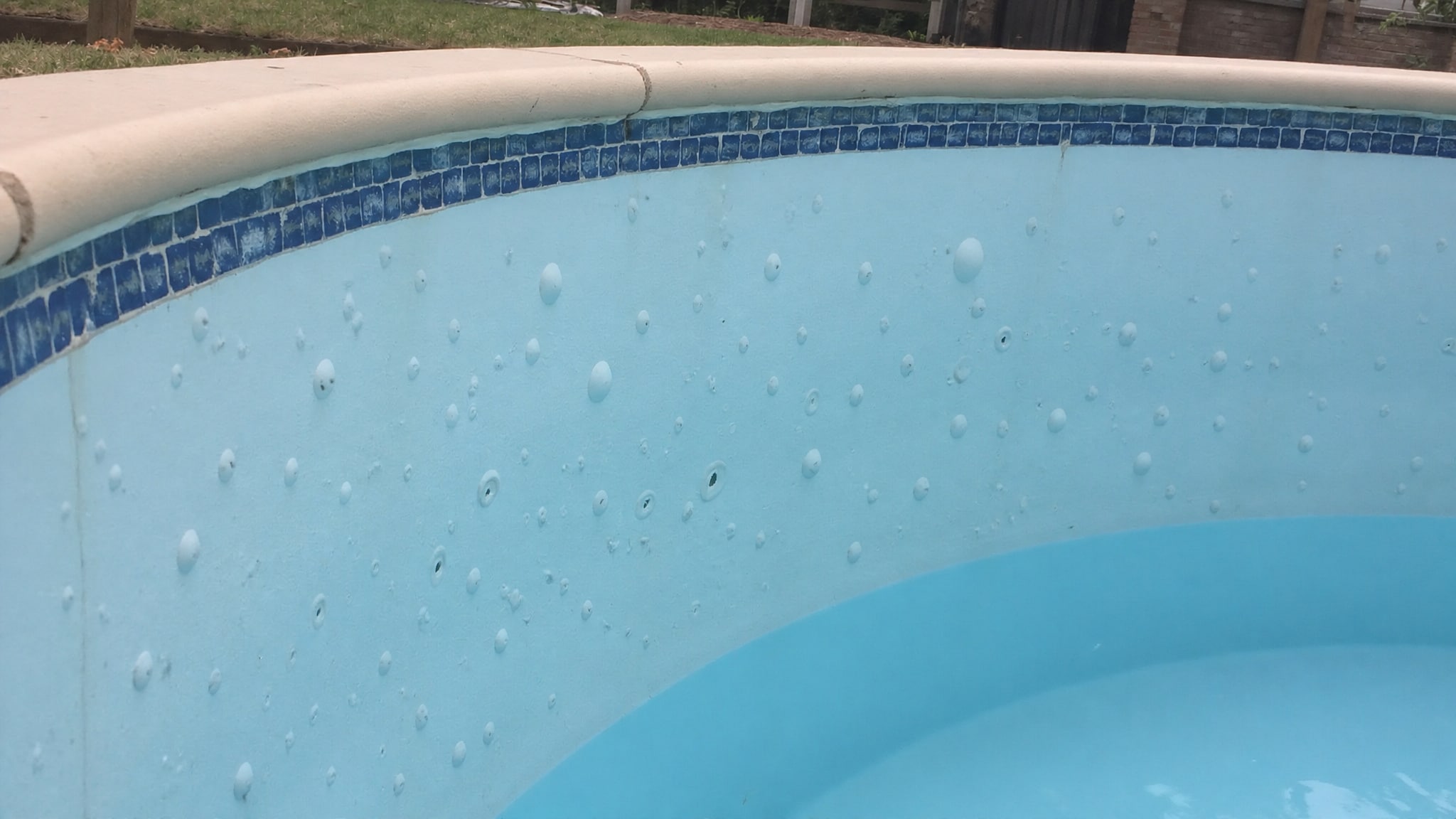
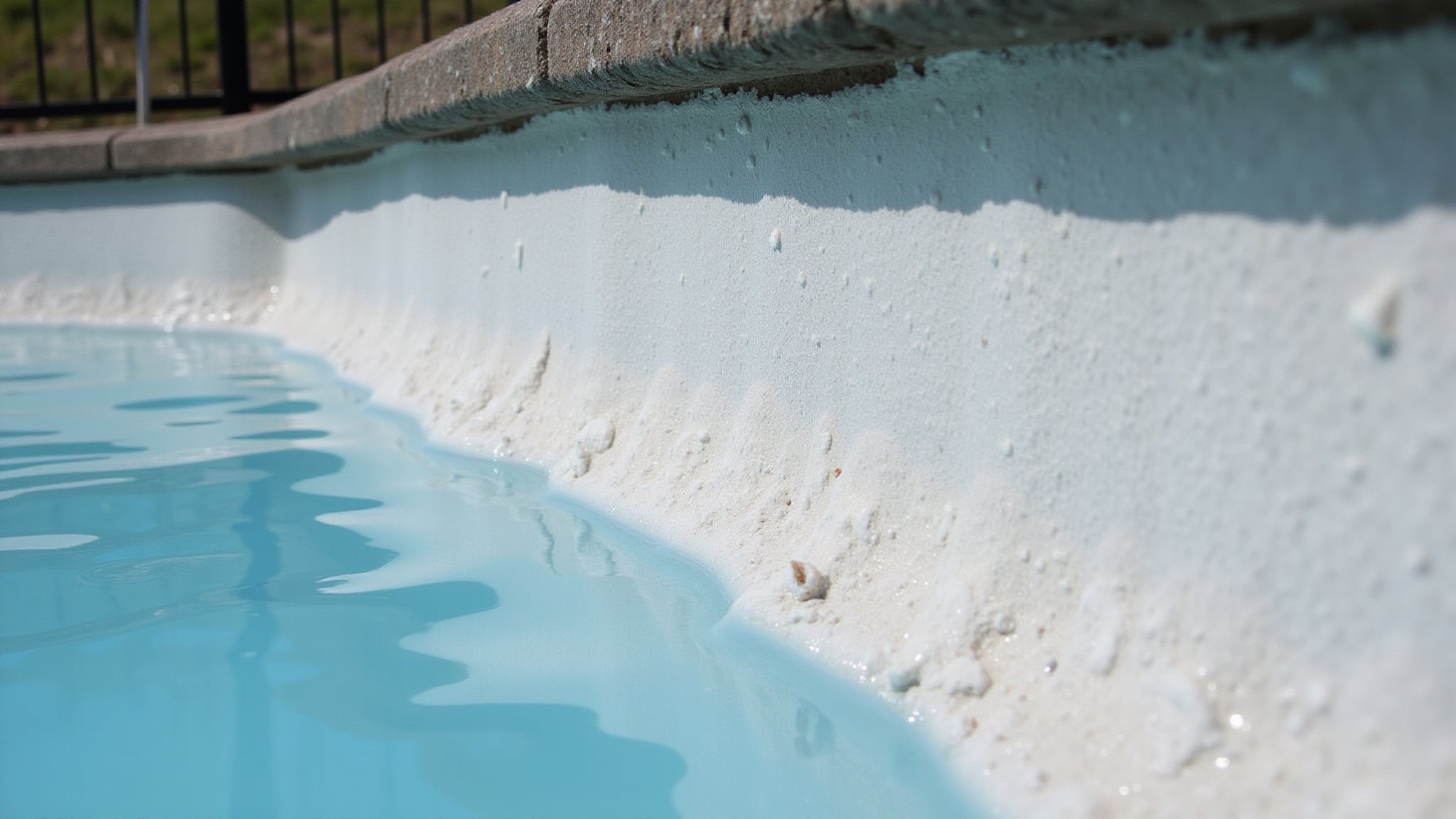
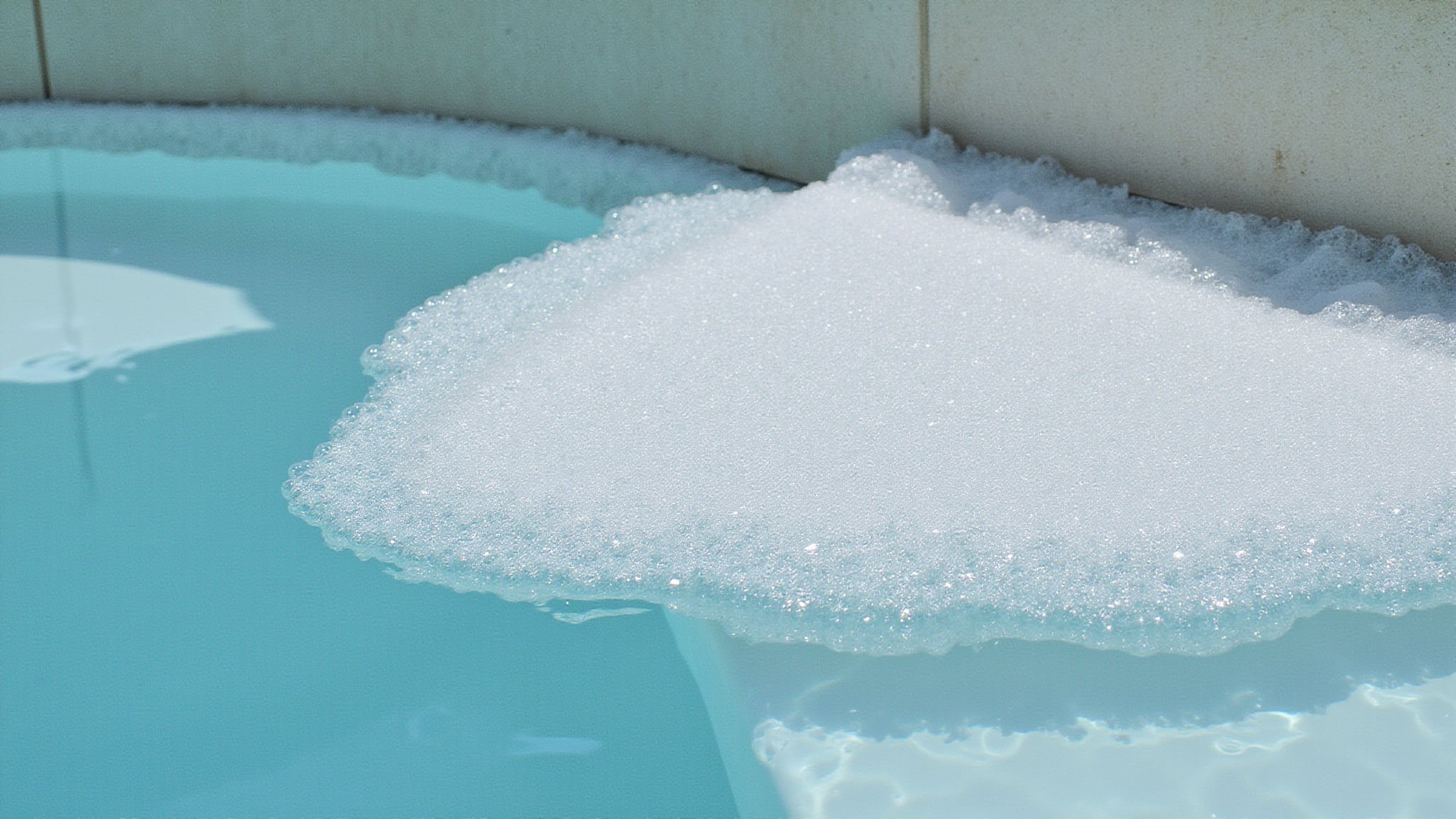
Your fiberglass pool’s gel coat fades because UV radiation breaks the chemical bonds holding color pigments together. As those bonds weaken, the protective resin degrades from the outside in, leaving chalky residue and washed-out tones. Water chemistry accelerates this: calcium build-up creates white hazing, oxidation drains pigment life, and over-chlorination erodes the surface. Add swimmer friction, debris abrasion, and hot-climate UV, and fading speeds up. Understanding each factor helps you slow it down. Fix chalky fiberglass pool surface by regularly maintaining water chemistry and minimizing UV exposure. Performing periodic inspections and repairs can also prevent further degradation.
Key Takeaways
- UV Radiation: Sunlight breaks the chemical bonds holding pigments together, degrading the protective gelcoat and causing chalking and faded color over seasons.
- Oxidation: Long-term weathering breaks down vibrant pigments, producing chalky residue and permanently altering resin chemistry, often requiring resurfacing rather than cleaning.
- Calcium Build-Up: Free calcium precipitates into the porous gelcoat, forming white hazing that spreads and accelerates surface degradation without proper hardness control.
- Chlorine Imbalance: Over-chlorination and low pH cause mild corrosion that erodes the gelcoat, breaks down pigments, and accelerates fading.
- Mechanical Wear: Swimmer friction, debris abrasion, and hot climates thin the resin-rich protective film, exposing pigment and speeding up fading.
What Gel Coat Fading Actually Looks Like
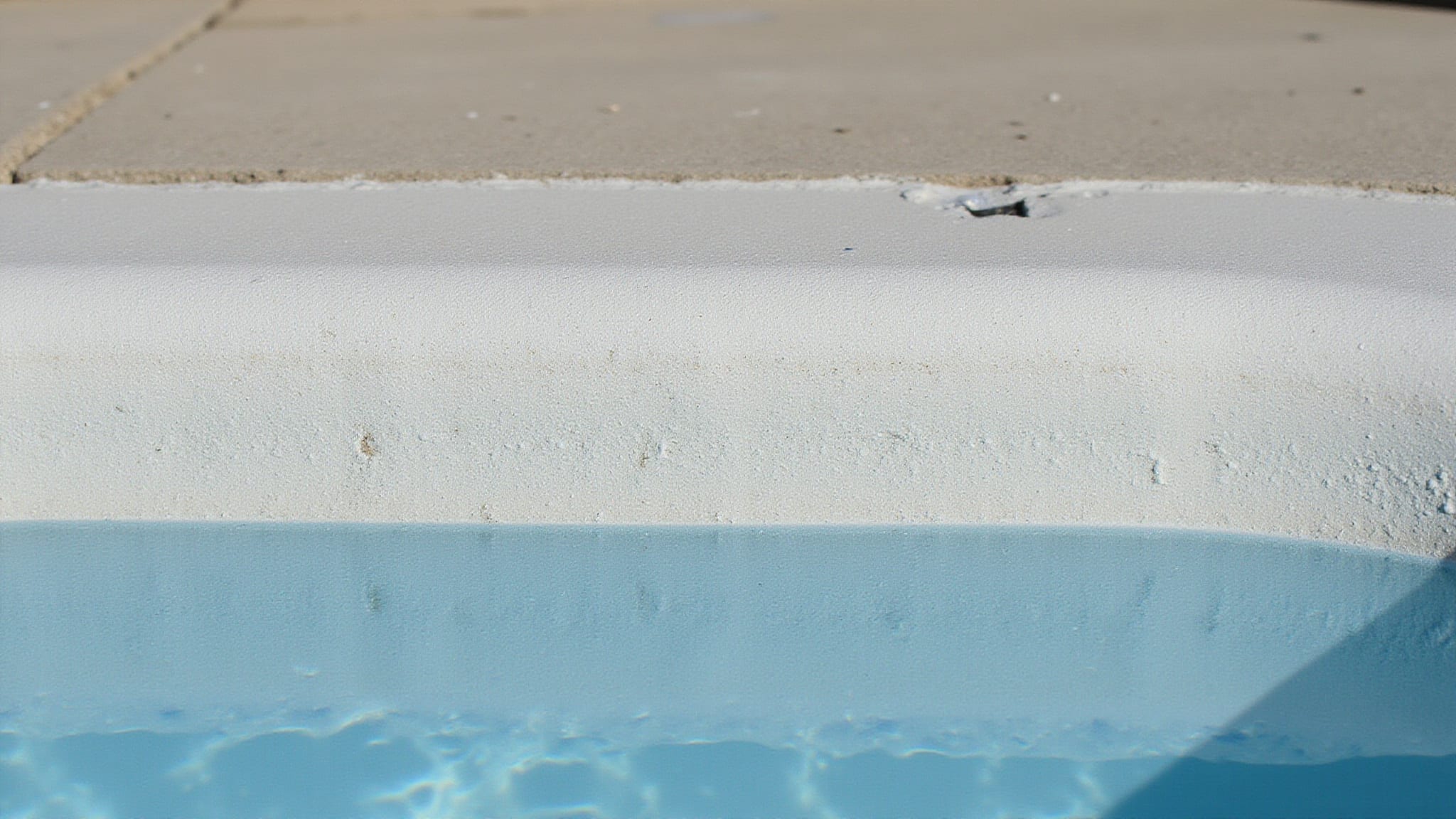
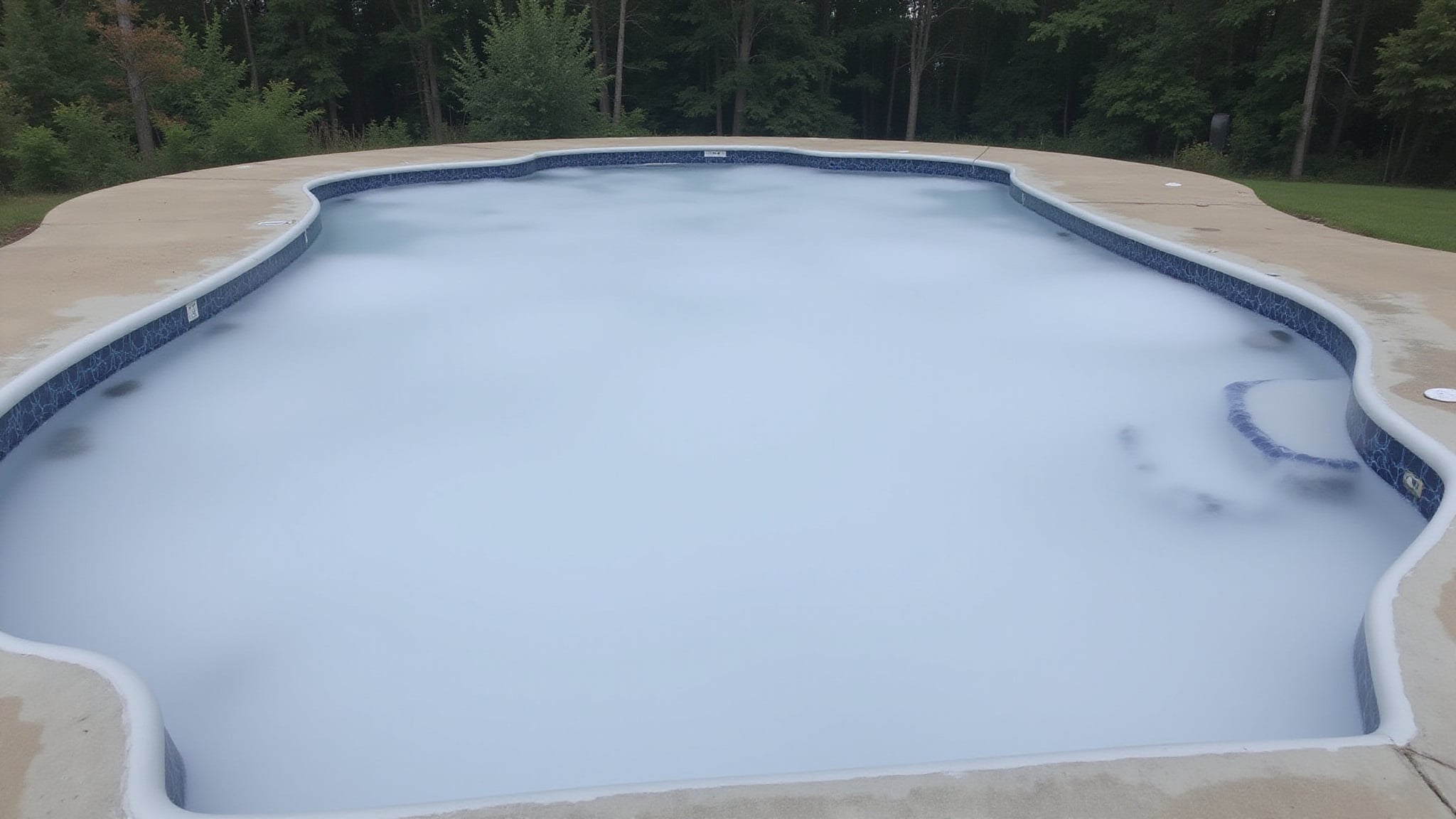
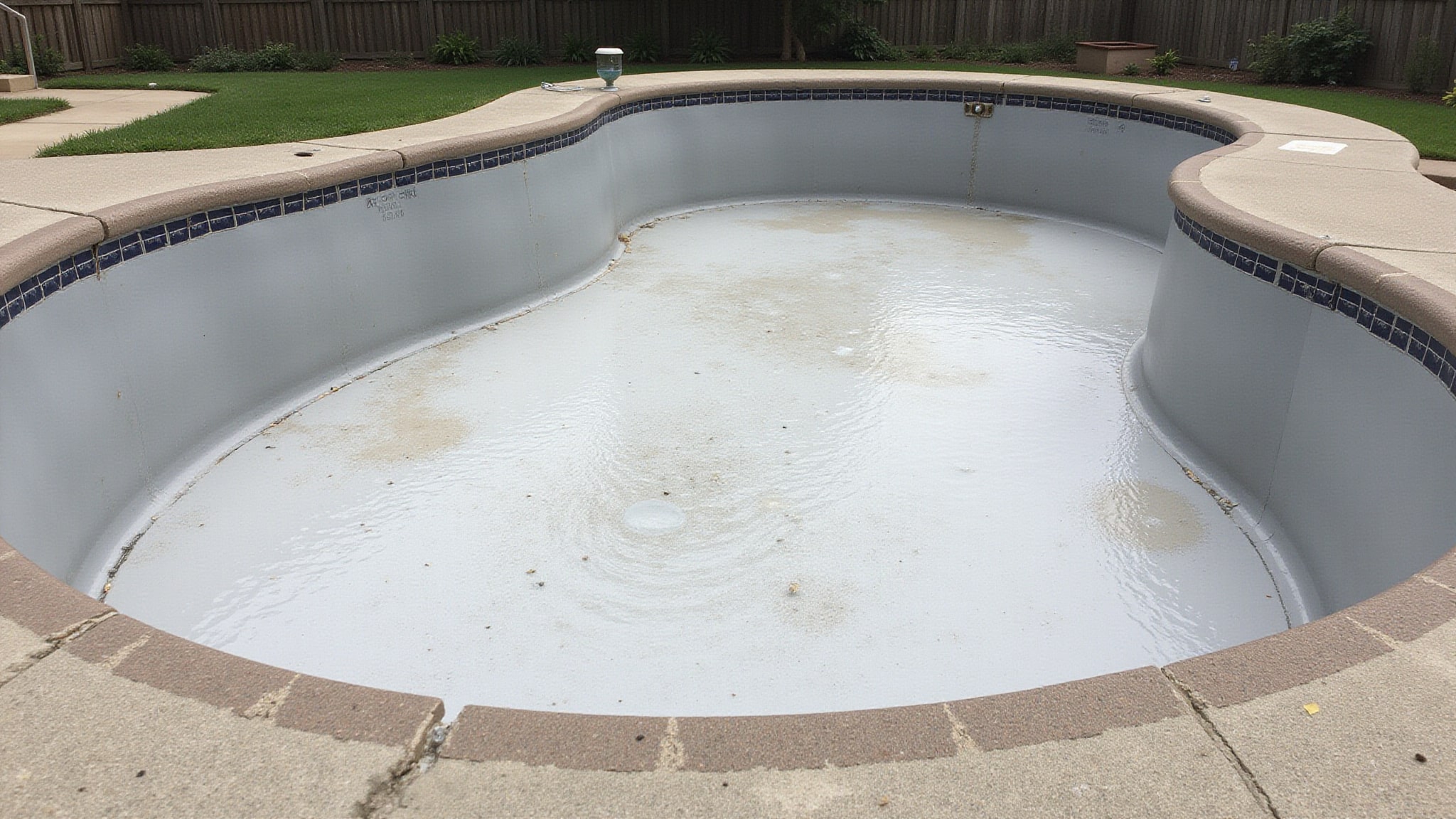
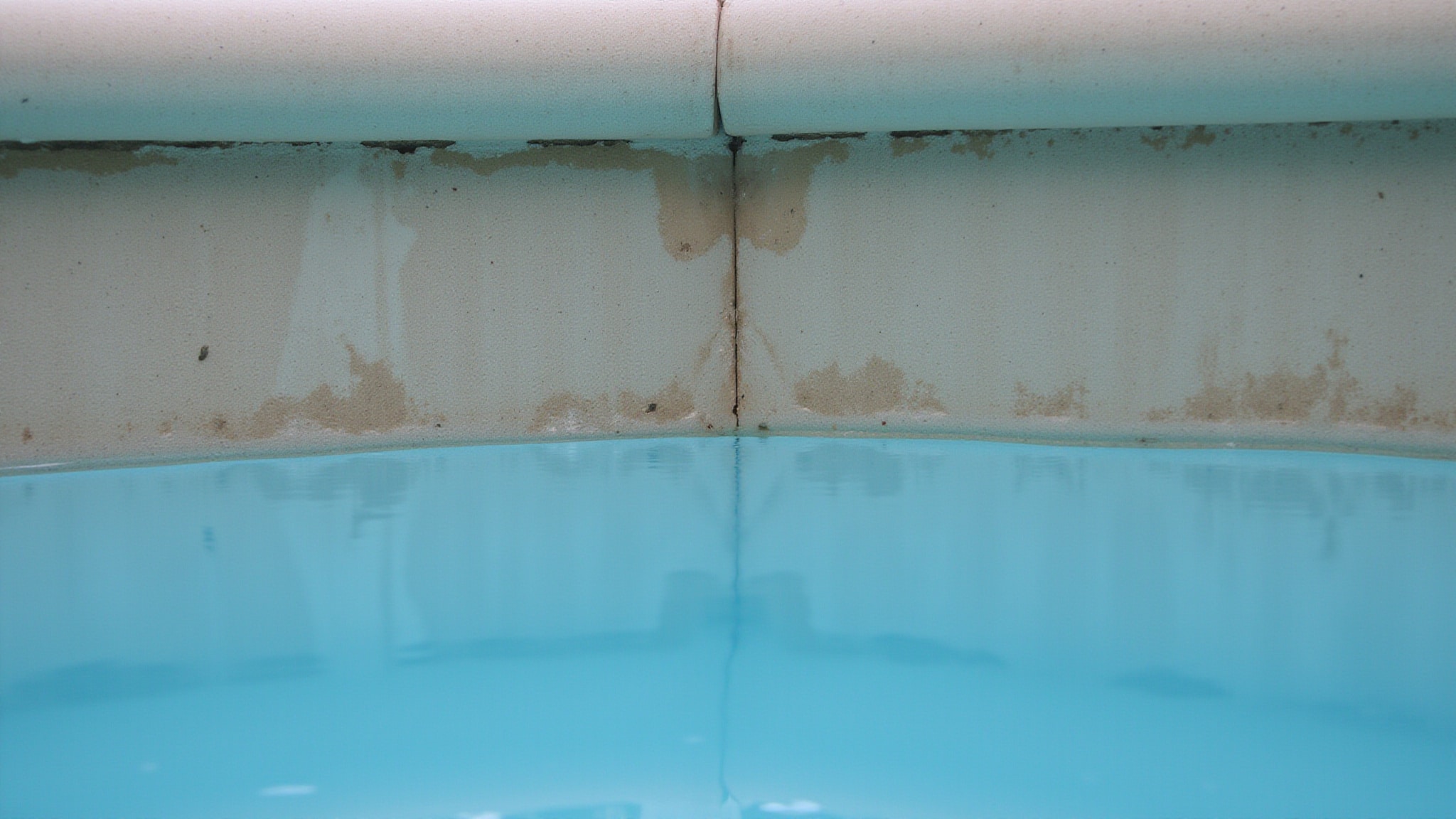
Your pool’s gel coat is fading when you spot a chalky, powdery residue that rubs off on your fingers. This chalking signals that UV radiation has broken the chemical bonds in the color pigments, dulling once-vibrant hues. You’ll notice pool surface fading first in areas receiving direct sunlight, where colors shift toward washed-out, muted tones. A faded pool gel coat often loses its glossy sheen, becoming rough or hazy to the touch. White film or hazing points to calcium build-up bonding inside the gel coat. Fiberglass pool gel coat fading typically progresses unevenly, with waterline zones and high-traffic spots degrading fastest. If your blue shell now looks gray or pale, the gelcoat’s protective layer is breaking down.
How UV Rays Break Down Your Pool’s Color
UV rays break down your pool’s color by delivering enough energy to break the chemical bonds holding color pigments together. As these bonds fracture, the pigments lose their ability to reflect light consistently, and your fiberglass pool color starts to dull. UV rays don’t stop at the pigment layer. They degrade the protective gelcoat itself, triggering surface chalking and a faded appearance.
In hot, sunny climates, intense sunlight accelerates this process. Your pool gel coat absorbs constant radiation, breaking down its molecular structure season after season. Standard coatings without sufficient UV protection show visible fading within just one or two seasons.
This degradation is a natural process for any colored surface exposed to sunlight, and fiberglass pools aren’t exempt from this gradual chemical breakdown.
Why Sunlight Chalks the Gel Coat Layer
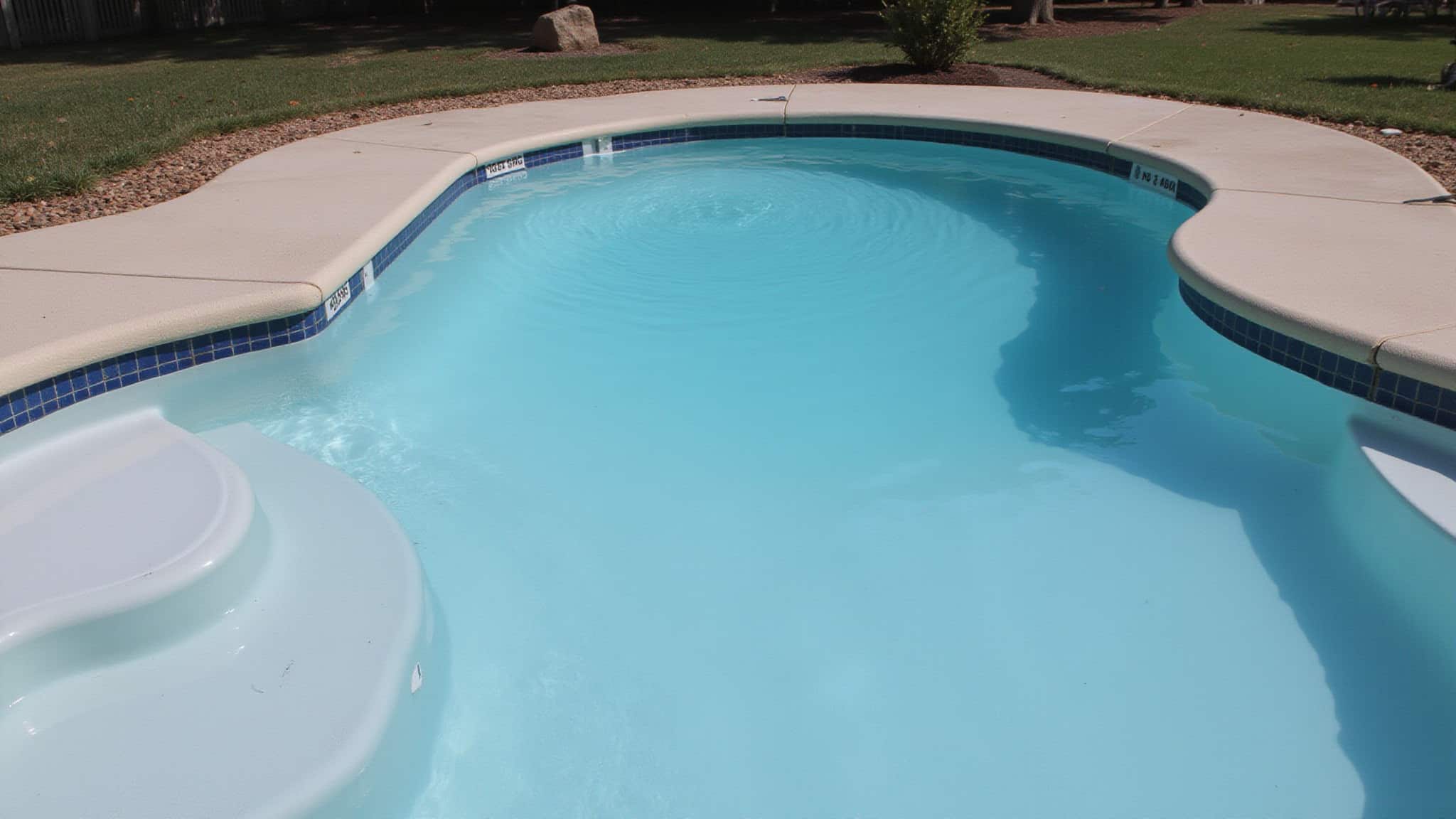
When sunlight hits your pool’s surface, UV radiation breaks the chemical bonds holding the gel coat’s pigments together, weakening the material from the outside in. As those bonds degrade, the protective gelcoat layer loses cohesion and begins chalking, leaving a dull, powdery residue where vibrant color once was. If you’re in a hot, sunny climate, this process accelerates materially, since intense and prolonged sun exposure drives faster surface breakdown.
UV Bond Breakdown
UV bonds break when ultraviolet radiation carries enough energy to sever the molecular connections holding your gel coat together, attacking it at the chemical level long before you notice any change in color. Every photon that strikes the surface transfers energy directly into the pigment molecules and the resin matrix binding them. When that energy exceeds the bond strength holding color compounds together, the bonds break. Once broken, those pigments can’t reflect light the way they once did, so vibrant colors gradually dull and shift toward chalky tones.
This breakdown works from the outside in, degrading the protective resin first and exposing deeper layers to the same process. The longer you leave the surface unshielded, the more bonds fracture, and the fading accelerates season after season until refinishing becomes necessary.
Gelcoat Surface Chalking
Gelcoat surface chalking is the powdery white residue that forms when sunlight strips away the resin binding your gel coat’s surface pigments. UV radiation attacks the polyester or vinyl ester resin at a molecular level, breaking the chemical bonds that hold pigment particles in place. As this binder degrades, the resin matrix erodes, leaving loose pigment and filler particles exposed on the surface. You’ll notice a fine, powdery white residue when you run your hand across the shell. That’s the chalk. This degradation acts like a slow poison, progressively thinning the protective outer layer season after season. In hot, sunny climates, the process accelerates because intense sunlight drives faster resin breakdown. Once chalking sets in, your gel coat loses its glossy seal, exposing deeper layers to further weathering and permanent discoloration.
Climate Exposure Effects
Climate exposure directly determines how fast your gel coat breaks down, because it dictates the intensity and duration of UV exposure your pool absorbs. In hot, sunny regions, intense sunlight triggers a gradual discoloration process, breaking chemical bonds in color pigments and dulling once-vibrant surfaces. UV radiation acts as a slow poison, degrading the protective gelcoat layer and producing surface chalking. If your coating lacks sufficient UV protection, you’ll see visible fading within just one or two seasons. The longer and more direct the exposure, the faster pigments lose their integrity. You can slow this process by installing pool covers to block UV rays when the pool sits unused, or by adding pergolas and umbrellas that reduce direct sunlight striking the surface.
Covers and Shade That Block UV Fading
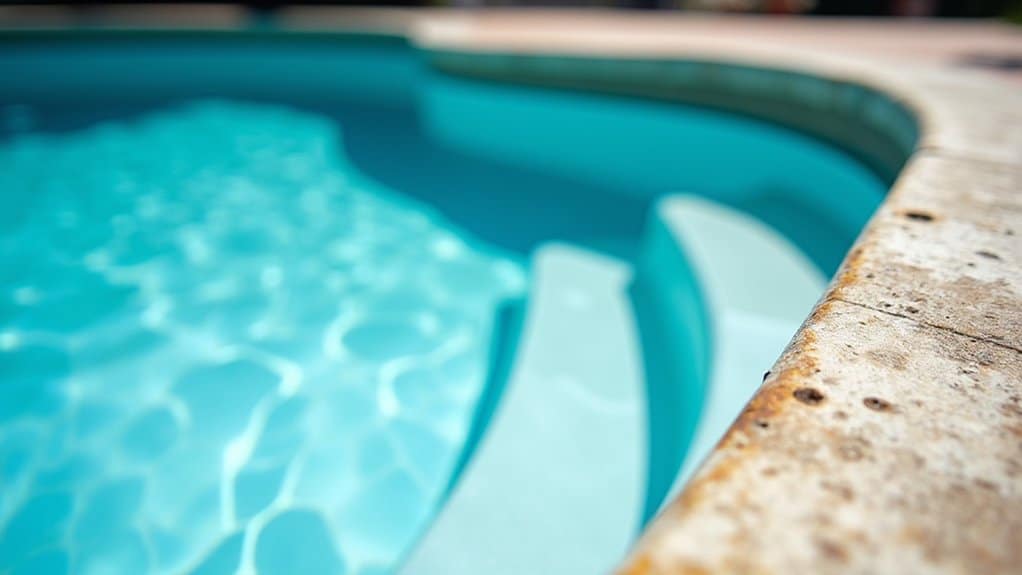
Covers and shade block UV fading by stopping sunlight before it ever reaches your gelcoat. When your pool sits idle, install a cover to eliminate direct UV exposure entirely. Since ultraviolet rays break the chemical bonds in your color pigments, cutting that exposure preserves pigmentation and slows chalking of the protective gelcoat layer.
Add shade structures like pergolas or umbrellas to reduce the sunlight hitting the surface during daylight hours. In hot, sunny climates where intense radiation triggers discoloration within one or two seasons, these barriers matter most.
For extra protection, have a professional apply a UV-resistant coating. It adds a sacrificial layer over the gelcoat, but you’ll need to reapply it every few years to maintain effectiveness.
How Over-Chlorination Fades the Gel Coat
When you overload your pool with chlorine, you’re not getting cleaner water, you’re triggering mild corrosion that erodes the gel coat and accelerates fading over time. Shocking the pool with high chlorine concentrations directly against the surface compounds the damage, breaking down the pigments and protective layer. To prevent this, you’ll want to maintain proper chemical balance: pH between 7.2 and 7.6, alkalinity between 80 and 120 ppm, and chlorine levels between 1 and 3 ppm.
High Chlorine Damage
High chlorine damage occurs when excess chlorine turns your sanitizer into a corrosive agent that slowly eats away at the gel coat. When you maintain levels above the ideal 1 to 3 ppm range, the excess chlorine creates mild corrosion that compounds over years. Higher chlorine doesn’t mean cleaner water, it means accelerated chemical degradation of the resin binding your color pigments. Low pH intensifies this effect, so you’ll want to hold pH between 7.2 and 7.6. Shocking the pool by dumping concentrated chlorine directly onto the surface causes localized damage, stripping the protective layer where granules settle. You’ll also reduce erosion by avoiding calcium hypochlorite and salt water systems, both of which contribute to progressive discoloration.
Proper Chemical Balance
Proper chemical balance comes down to holding three parameters within tight ranges, and each one interacts with the others to protect your resin matrix. When you keep these values stable, you minimize the mild corrosion that erodes gel coat pigmentation year after year. Test your water weekly and adjust incrementally rather than dumping corrective chemicals that spike concentrations against the surface.
- pH between 7.2 and 7.6: Low pH turns your water acidic, etching the gel coat and stripping color.
- Alkalinity between 80 and 120 ppm: This buffers pH swings, preventing the fluctuations that stress the resin.
- Chlorine between 1 and 3 ppm: Higher levels don’t clean better, they accelerate chemical breakdown.
Hold these ranges, and you’ll extend your finish’s lifespan considerably.
Ideal Chemical Levels That Prevent Fading
Ideal chemical levels that prevent fading start with holding pH between 7.2 and 7.6, since low pH creates mild corrosion that erodes the surface over years. Keep alkalinity between 80 and 120 ppm to buffer pH swings and prevent instability. Maintain chlorine between 1 and 3 ppm. Higher levels don’t mean cleaner water, they accelerate chemical degradation of the gelcoat. Control calcium hardness around or below 120 ppm to stop scale from bonding inside the coat, or apply a sequestrant like SC-1000 if your source water runs harder. Never shock the pool by dumping concentrated chlorine directly on the surface, and avoid calcium hypochlorite, which drives discoloration and chemical erosion.
Why Calcium Build-Up Creates White Hazing
Calcium build-up creates white hazing because calcium deposits bond directly inside the gel coat, embedding themselves within the material’s microstructure. Calcium build-up ranks as one of the three primary causes of gelcoat fading, and it works differently than the chemical erosion covered above. Instead of corroding the surface, calcium deposits embed inside the material. As free calcium in your water reaches saturation, it precipitates onto and into the porous gelcoat layer, forming a mineral matrix that scatters light and dulls your pool’s color.
You’ll notice the effects progress through distinct stages:
- A faint white film first appears along the waterline where evaporation concentrates minerals
- Hazing spreads across the surface as deposits accumulate inside the gel coat
- Accelerated surface degradation follows, permanently altering the finish
Controlling calcium hardness stops this bonding process before it starts.
How Sequestering Agents Stop Scale and Chalking
Sequestering agents like SC-1000 stop scale and chalking by binding free calcium before it can bond inside your gel coat. When you introduce a sequestrant, you’re chemically locking calcium ions into stable complexes that can’t crystallize or deposit onto the surface. This prevents the scale formation that leads to white film, hazing, and chalking. Lab data confirms that even at calcium hardness levels reaching 1000 ppm, no chalking occurs when you’re using a quality sequestrant. That means you don’t have to obsess over keeping hardness artificially low. Instead, you’re neutralizing the bonding mechanism itself, protecting your gel coat’s color and finish from the accelerated degradation that unmanaged calcium causes.
What Oxidation Does to Gel Coat Colors
Oxidation drains the life from gel coat colors, breaking down vibrant pigments and leaving the surface chalky and dull. It is a weathering effect driven by long-term exposure to the elements and frequent pool use. Unlike calcium deposits you can treat with sequestrants, oxidation triggers chemical changes in the resin itself, permanently altering the finish.
Here’s what oxidation does to your gel coat:
- Strips vibrant color pigments, dulling once-rich blues and greens
- Produces a chalky, powdery residue you can rub off by hand
- Alters the resin chemically, often demanding resurfacing or refinishing
Once that chemistry shifts, restoration, not cleaning, becomes your only option.
When Gel Coat Fading Means Resurfacing
Gel coat fading means resurfacing when oxidation alters the resin chemistry, moving past the point where cleaning or polishing can help. The gel coat has permanently changed at the molecular level, and no amount of surface treatment restores what UV radiation and chemical exposure have degraded. When chalking returns immediately after buffing, or when the color reads dull and uneven across the entire shell, you’re looking at structural breakdown rather than surface film.
At this stage, resurfacing or refinishing becomes the only fix. A professional applies a new gel coat layer or a modern epoxy coating that bonds to the prepared substrate. Watch for osmotic blistering too, since water penetrating the fiber layers signals compromised integrity that demands attention before you commit to any refinishing investment.
How Swimmers and Debris Wear the Gel Coat
Every time swimmers enter your pool, their movement creates friction against the gel coat, and over years this daily wear degrades the surface into a dull, faded finish. Debris compounds the problem: leaves, dirt, and other particles settle on the gel coat and abrade it if you don’t remove them promptly. By vacuuming and netting regularly, you’ll minimize this physical wear and protect the surface integrity. Over time, you may notice imperfections such as blisters forming on the gel coat. To maintain the aesthetics and longevity of your pool, it’s essential to fix gel coat blisters on pools as soon as they appear.
Daily Swimmer Wear
Daily swimmer wear slowly grinds down your gel coat through a process that most pool owners never notice until the finish looks dull. Every entry and exit, every stroke, and every push off the wall introduces friction against the surface. Over thousands of cycles, this daily contact abrades the outermost layer, thinning the resin-rich film that protects the pigment beneath. Fiberglass pool blister causes can often be attributed to the accumulation of moisture beneath the gel coat. This moisture can lead to a breakdown of the resin, compromising the structural integrity of the pool.
Consider what your gel coat endures during normal use:
- Feet dragging across steps and benches, wearing high-traffic zones faster than the rest of the shell
- Sunscreen, body oils, and lotions leaving residues that break down the surface film
- Repeated hand contact along the waterline, grinding away the protective top layer
This mechanical erosion gradually exposes the color layer, accelerating fading and dulling.
Debris Buildup Damage
Debris buildup damages your pool’s gel coat through an abrasive mechanism. Leaves, dirt, and grit accumulate on the bottom and along the waterline, and as water circulates, these particles grind against the gelcoat, scratching its protective layer. Over time, this abrasion thins the coating, exposing underlying fiber layers and accelerating fading. Organic debris compounds the problem by decomposing, altering localized water chemistry and promoting staining that dulls your pool’s color.
You prevent this degradation by vacuuming and netting regularly, removing debris before it settles and abrades the surface. Consistent cleaning keeps particles from grinding into the gelcoat, preserving its thickness and pigmentation. Prompt removal directly reduces the mechanical wear that shortens your gelcoat’s lifespan.
Why Hot Climates Speed Up Fading
Hot climates speed up fading because intense sunlight delivers a higher dose of UV radiation, breaking down your gel coat’s color pigments faster there than in milder regions. Those UV rays break the chemical bonds holding pigments together, dulling vibrant colors and degrading the protective gelcoat layer. In hot, sunny regions, this discoloration process accelerates, triggering visible fading within just one or two seasons for standard coatings.
Intense sunlight breaks pigment bonds faster, fading standard coatings within just one or two seasons in hot climates.
Here’s what intense sun does to your surface over time:
- Breaks pigment bonds, draining color saturation and leaving a washed-out finish
- Degrades the gelcoat layer, producing surface chalking and a rough, dull texture
- Compounds daily wear, speeding oxidation from combined heat and heavy pool use
You’ll notice fading sooner when your pool sits in relentless, direct sunlight.
Weekly Testing Habits That Prevent Fading
Weekly water testing prevents fading by keeping chemical levels within the range that protects your gel coat from corrosion. You’ll want to hold pH between 7.2 and 7.6, alkalinity between 80 and 120 ppm, and chlorine between 1 and 3 ppm. When you let these values drift, you create mild corrosion that erodes the gel coat over years. Watch your chlorine especially, consistently high levels don’t clean better, they just accelerate chemical degradation. Track calcium hardness too, keeping it around or below 120 ppm unless you’re using a sequestering agent. If you catch an imbalance early, you’ll correct it before it damages the surface. Consistent weekly testing turns prevention into a routine, so small deviations never compound into permanent discoloration or costly resurfacing down the line.
Conclusion: Keeping Your Gel Coat Looking New
Gel-coat fading is a natural result of years of sun, chemicals, and weather gradually lightening a fiberglass pool’s surface. It is a cosmetic change that does not affect the pool’s strength, and it happens slowly. Balanced water, a cover, and routine cleaning slow it down, while polishing or resurfacing can restore color when fading becomes noticeable. A little regular care keeps the finish vibrant for many years.
Get a Fiberglass Pool Built for Long-Term Beauty
Surface issues like crazing, chalking, and gel coat blisters are far less common with a quality-built fiberglass pool from a trusted installer. At Schiller Pools in Palm City, FL, our experienced team provides trusted San Juan Fiberglass Pools with limited lifetime warranties and expert installation. Call +1 (561) 475-5997 today and get your free estimate.
Frequently Asked Questions
Does Gel Coat Fading Affect the Pool’s Structural Strength or Safety?
No. Fading is a surface, cosmetic change in the gel-coat’s color and does not weaken the fiberglass shell beneath it or make the pool unsafe. The structure remains sound. Fading simply affects appearance, which is why it is treated with polishing or resurfacing rather than structural repair.
Can Faded Gel Coat Colors Be Restored Without Full Resurfacing?
Sometimes. Light fading can often be improved with professional cleaning, polishing, or a gel-coat restoration treatment that brings back shine and color. Heavy, widespread fading usually calls for resurfacing. A professional can assess the surface and tell you whether a lighter restoration will do or a full resurface is the better option.
Are Darker Pool Colors More Prone to Fading Than Lighter Ones?
Darker gel-coat colors tend to show fading more noticeably, since the change from a deep color to a lighter, weathered tone is more obvious than on pale finishes. All colors fade with sun and time. Good maintenance and a cover help all shades, but darker colors benefit most from consistent care.
Does Gel Coat Fading Reduce My Fiberglass Pool’s Resale Value?
A faded, dull surface can affect a buyer’s first impression, so significant fading may slightly lower appeal even though the pool is structurally fine. Polishing or resurfacing before selling refreshes the look and protects value. Keeping the finish maintained over the years is the easiest way to preserve both appearance and resale value.
How Much Does Professional Gel Coat Resurfacing Typically Cost?
Resurfacing cost varies with the pool’s size, condition, and finish, so it ranges widely, but it is far less than replacing the pool and renews the surface for many more years. Lighter restoration treatments cost less than a full resurface. A professional can evaluate your pool and provide an accurate quote.