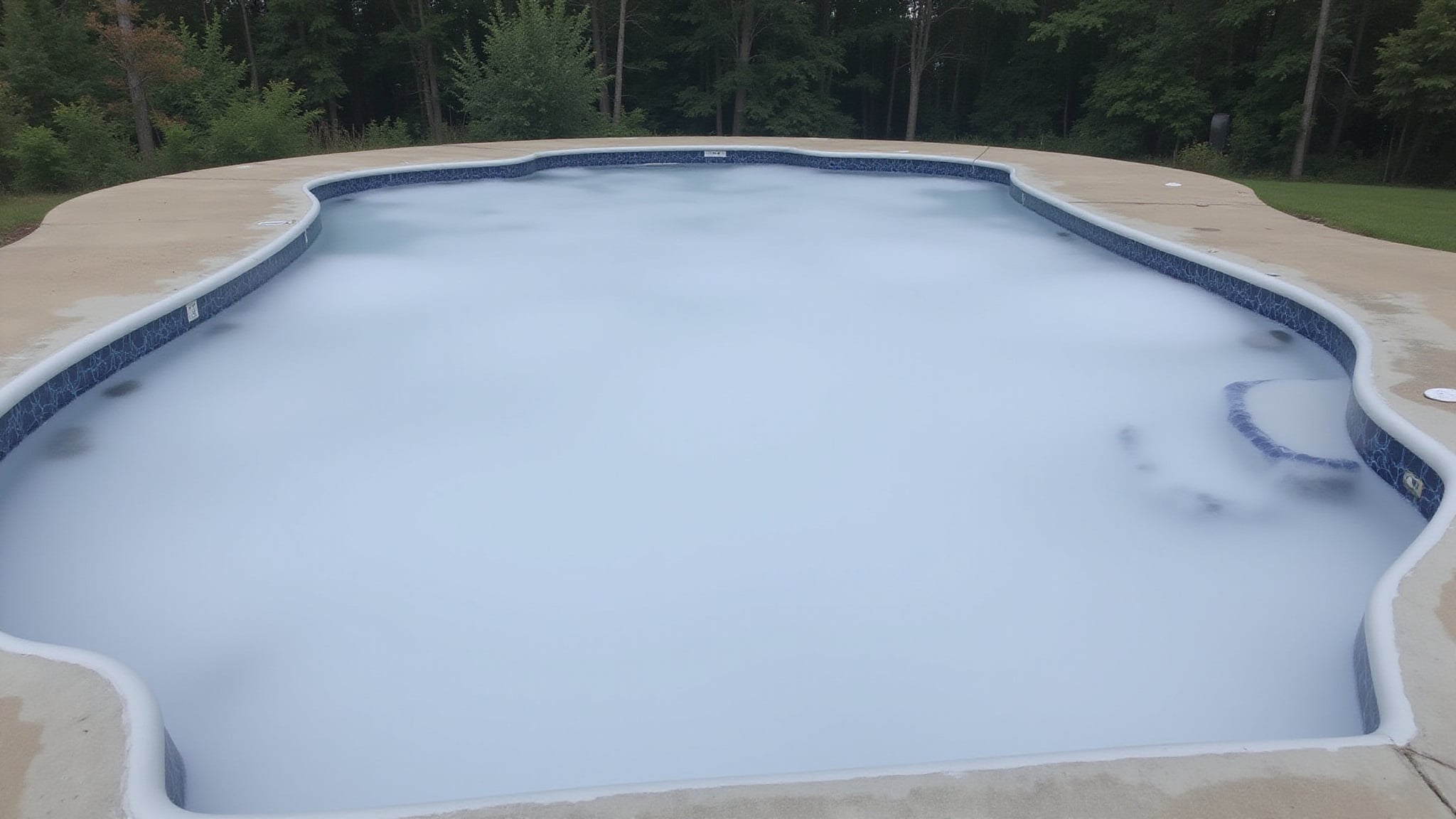
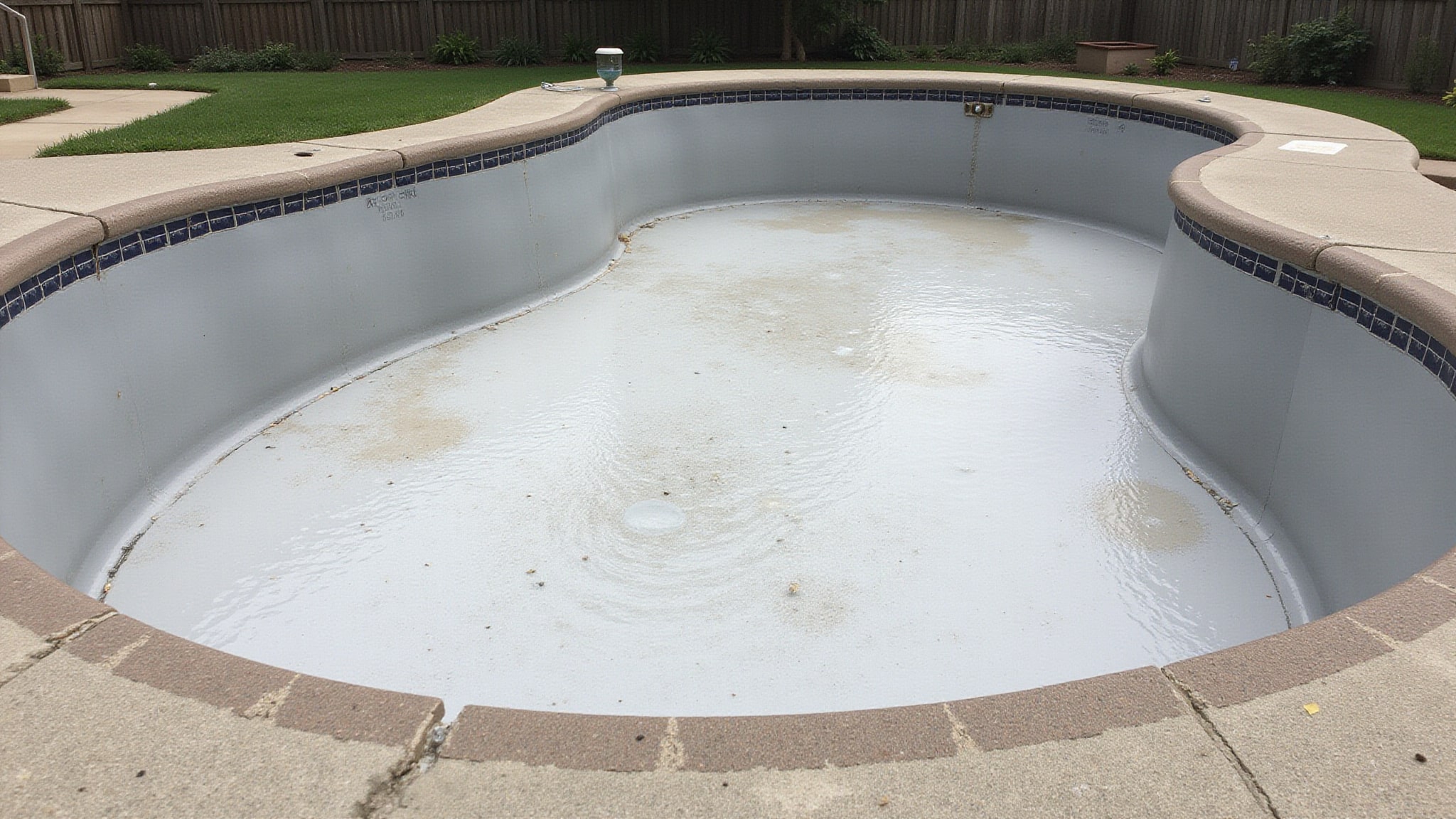
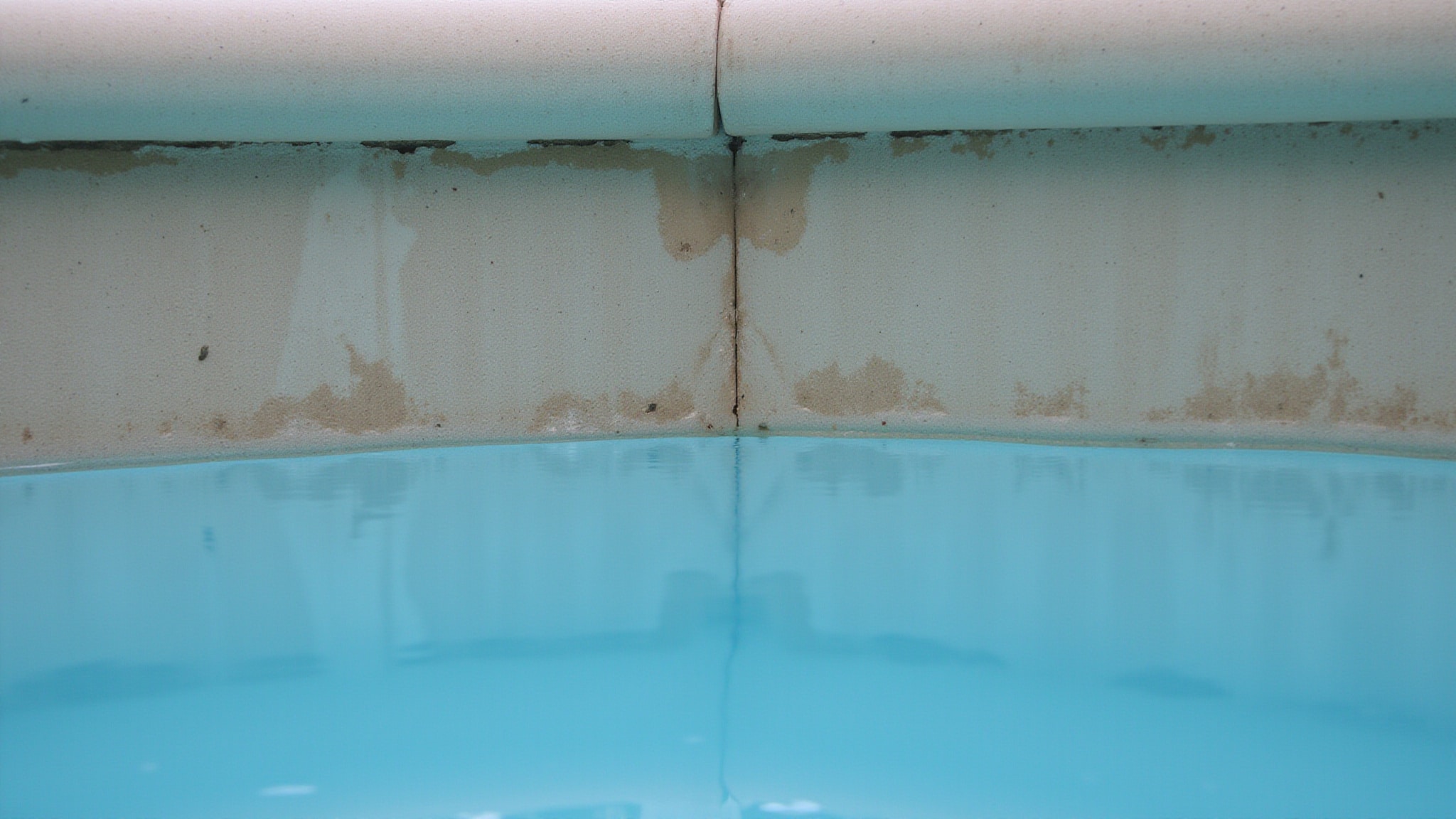
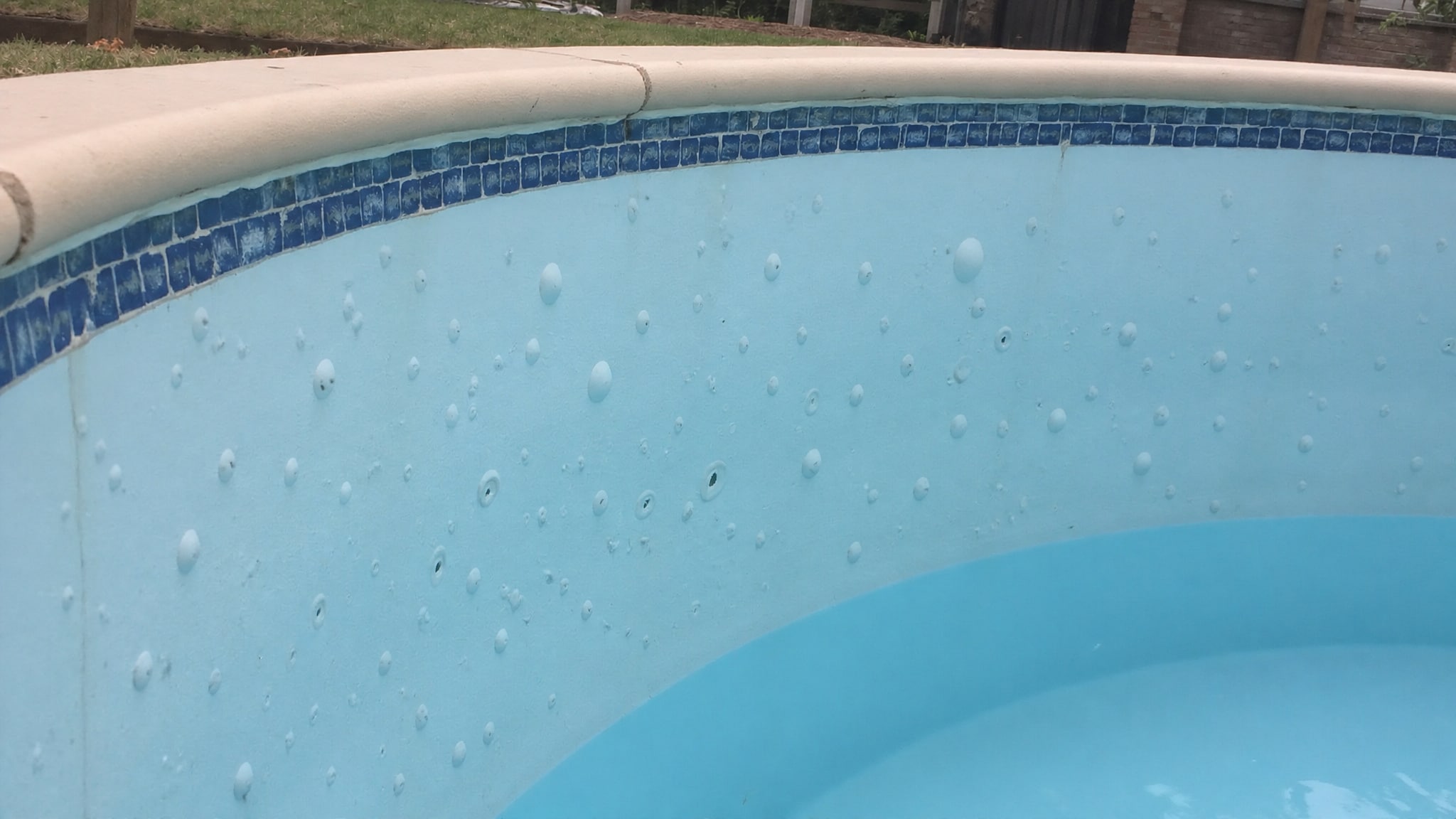
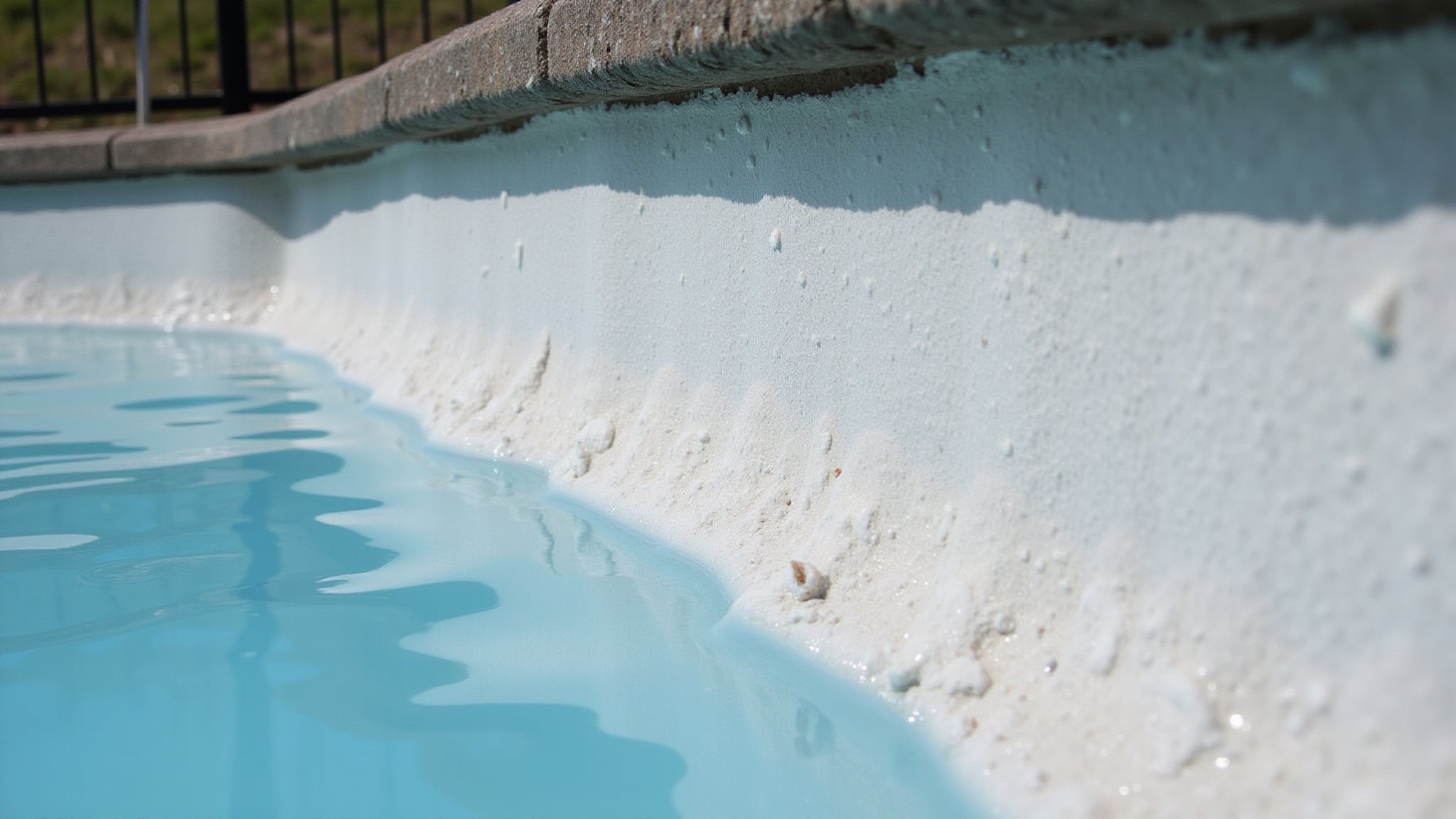
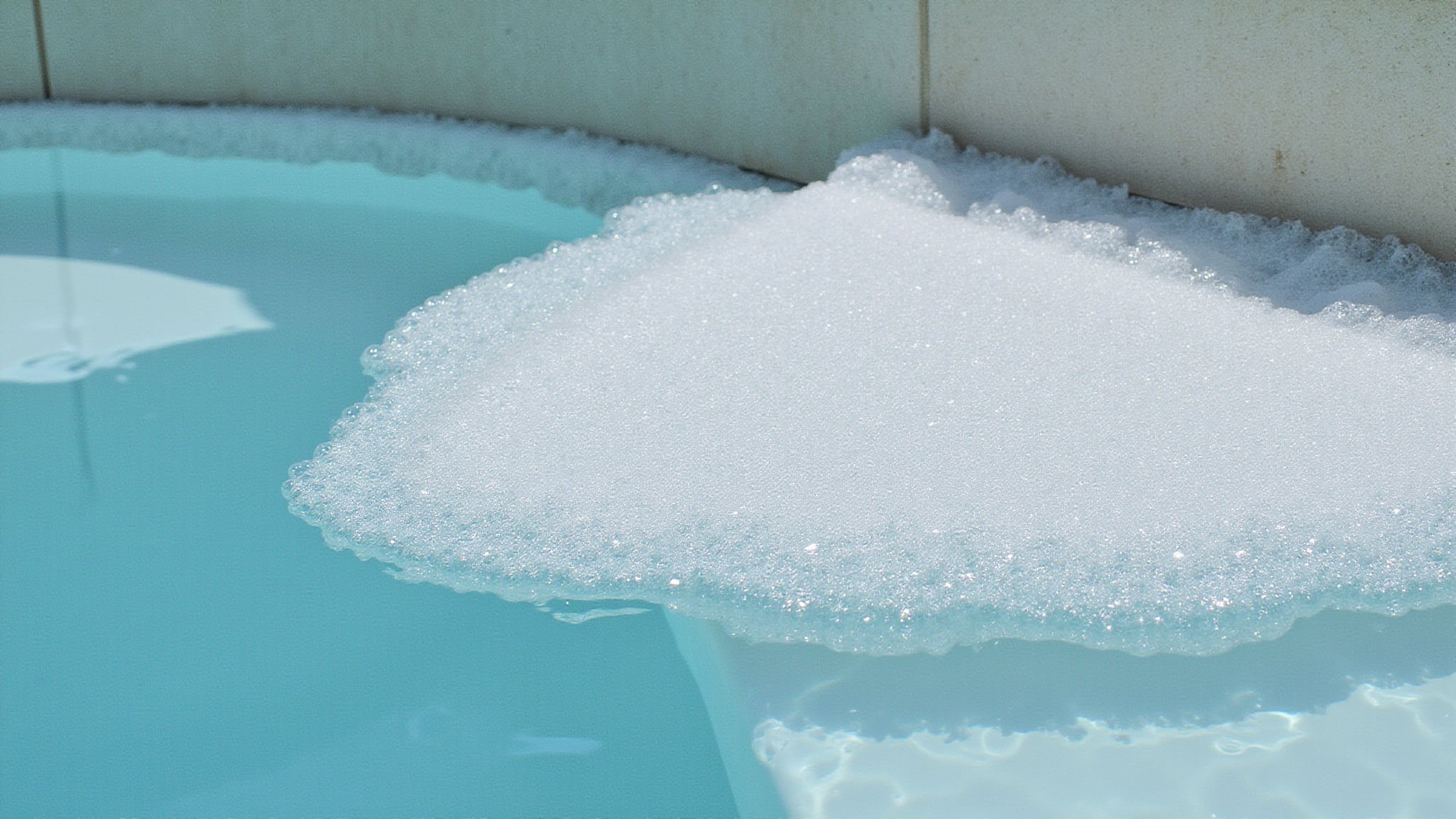
When your fiberglass pool starts chalking, the gel coat’s breaking down chemically, not just collecting scale. Test it with a diluted acid wipe: scale fizzes, chalking doesn’t. Chalking forms when unsequestered calcium bonds into the gel coat as calcium oxide, driven by high pH, over-chlorination, and UV aging. You can’t brush it away, and loose flakes pose health risks. Below, you’ll find the exact chemistry targets and repair steps that stop it. Why fiberglass gel coat blisters can be a significant issue for pool owners is due to the compromised integrity of the surface.
Key Takeaways
- Confirm chalking with an acid wipe test: no fizzing indicates chalking, while bubbling signals calcium carbonate scale.
- High pH above 8.09 and chlorine exceeding 3.0 ppm accelerate gel coat oxidation and chalking.
- Unsequestered calcium bonds into the gel coat, forming calcium oxide that brushing cannot remove.
- Loosened chalky flakes pose health risks, causing respiratory problems from inhalation or stomach issues from consumption.
- Remediate by draining with bracing, cleaning with acetone, then buffing, waxing, and resurfacing in severe cases.
Is It Chalking or Just Calcium Scale?
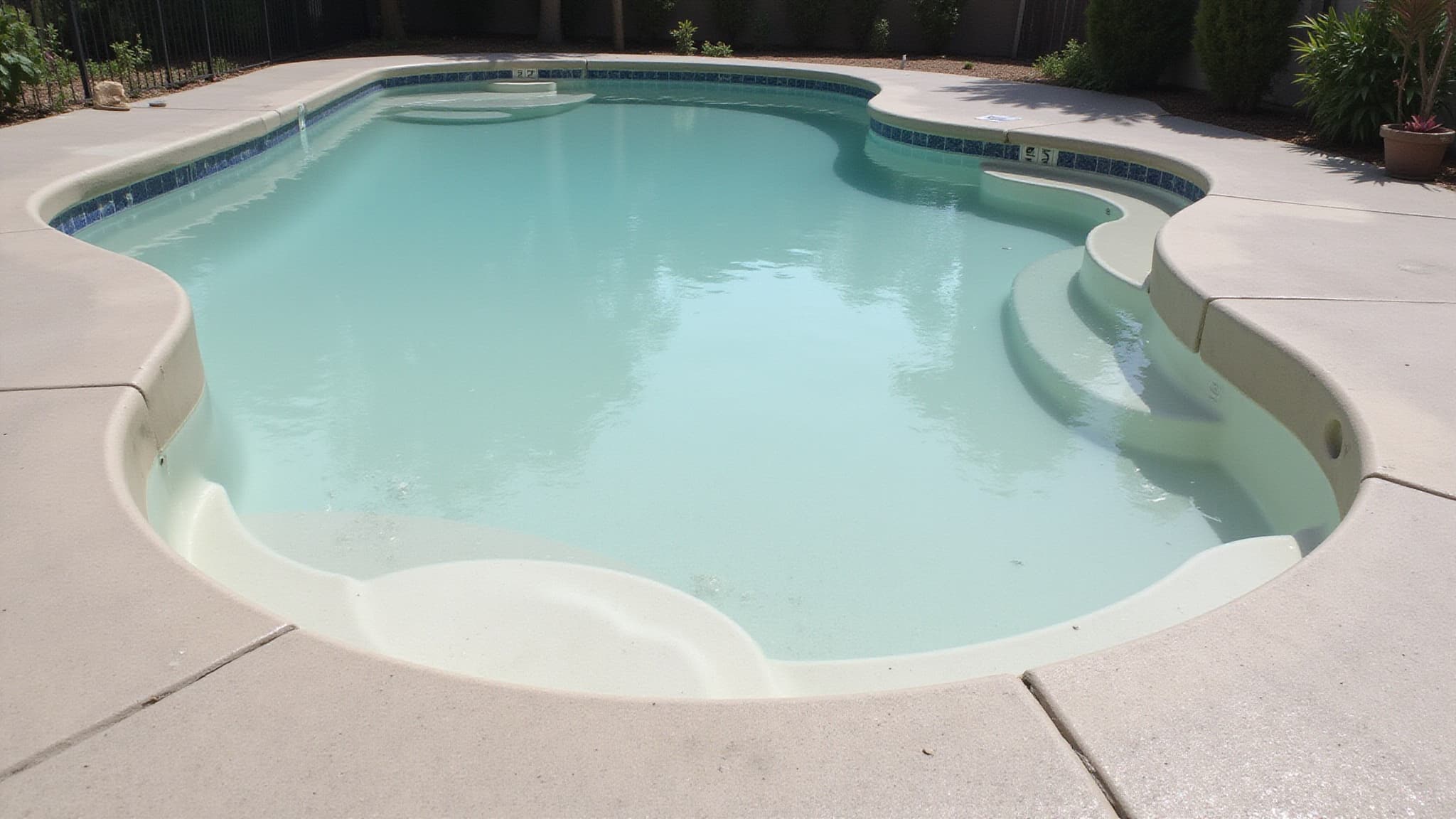
Chalking and calcium scale demand completely different treatments, so you need to know exactly what you’re dealing with before you reach for any chemicals. Start with a simple diagnostic test. Dilute some acid, apply it to a rag, and wipe it across the affected area. If the white material fizzes or bubbles, you’re looking at calcium carbonate scale, which cleans off easily after acid contact. If you get no reaction, you’re dealing with fiberglass pool chalking instead. Chalking won’t fizz because calcium oxide bonds chemically to the gel coat, unlike surface scale that sits on top. This distinction matters. Scale wipes away with treatment, but chalking represents a chemical change in the gel coat itself, requiring far more aggressive remediation to correct.
Why Fiberglass Pools Start Chalking
Fiberglass pools start chalking when the gel coat degrades and unchelated calcium bonds directly to it, forming calcium oxide (CaO) rather than surface scale. Several factors drive this chemical breakdown: Why gel coat fades over time can be attributed to prolonged exposure to sunlight and harsh chemicals.
- High pH and over-chlorination: Increased pH above 8.09 and chlorine exceeding 3.0 ppm accelerate gel coat oxidation.
- Unsequestered calcium: Free calcium in the water bonds into the gel coat when no agent like SC-1000 is present.
- Age and UV exposure: Normal wear and sunlight gradually weaken the gel coat’s integrity.
When these conditions combine, the calcium chemically bonds to the softened gel coat surface, producing chalking that won’t rinse or brush away easily.
Health and Structural Risks of Chalking
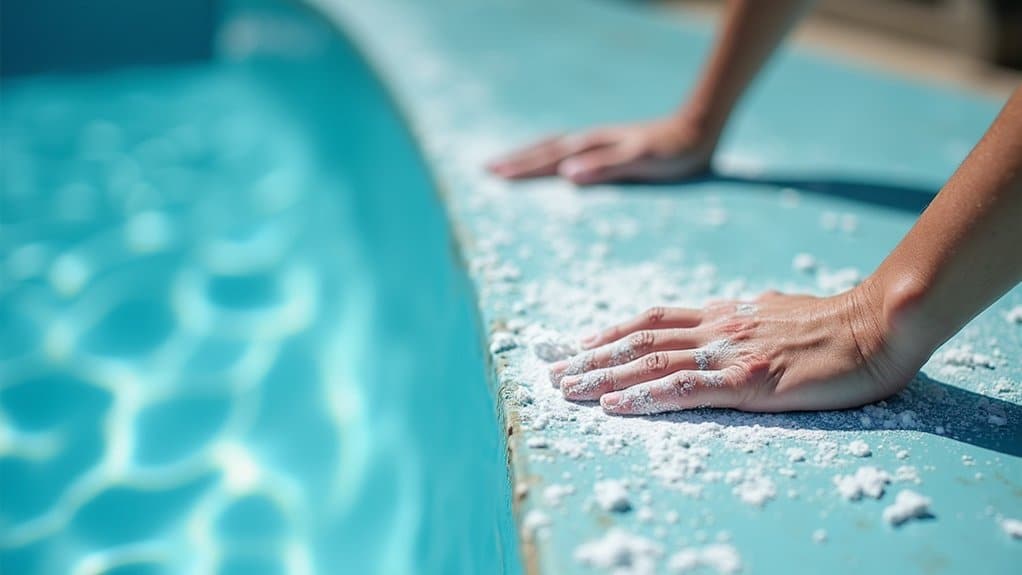
Chalking poses real health and structural risks you can’t ignore, even though it might look like a purely cosmetic problem. When top coat flakes break loose from a chalky pool surface, inhaling or consuming them becomes extremely unhealthy, potentially triggering respiratory problems and stomach-related issues. Inadequate circulation and sanitation compound these risks if you don’t eliminate the chalky residue completely.
The structural dangers surface during remediation. If you drain a fiberglass pool, you’ve got to brace the sides to prevent bulging or inward collapse from soil movement pressing against the shell. Remove too much water and you leave the pool vulnerable to “popping” or floating, which causes severe structural damage. So handle any draining procedure carefully, accounting for both hydrostatic pressure and surrounding soil conditions. Surface cracks vs crazing can often be mistaken for one another, but they indicate different issues. Surface cracks typically result from stress or tension, while crazing involves fine cracks that appear on the surface due to environmental factors.
Water Chemistry Numbers That Stop Chalking
The water chemistry numbers that stop chalking are specific ranges you need to hold, and each one has a target. Every parameter directly affects whether free calcium bonds to your fiberglass pool gel coat, so precision matters. Hold these ranges consistently:
- pH between 7.2 and 7.6, keeping a ceiling near 8.09 to stop calcium oxide from bonding to the surface.
- Chlorine at 1.0 to 3.0 ppm, since over-chlorination accelerates gel coat oxidation instead of improving sanitation.
- Total alkalinity at 80 to 120 ppm to stabilize pH and prevent swings.
You’ll also want calcium hardness around or below 120 ppm without sequestration, plus an LSI between, 0.30 and, 0.01. Test frequently and adjust immediately to keep chalking from ever forming.
How to Repair and Prevent Chalking Damage
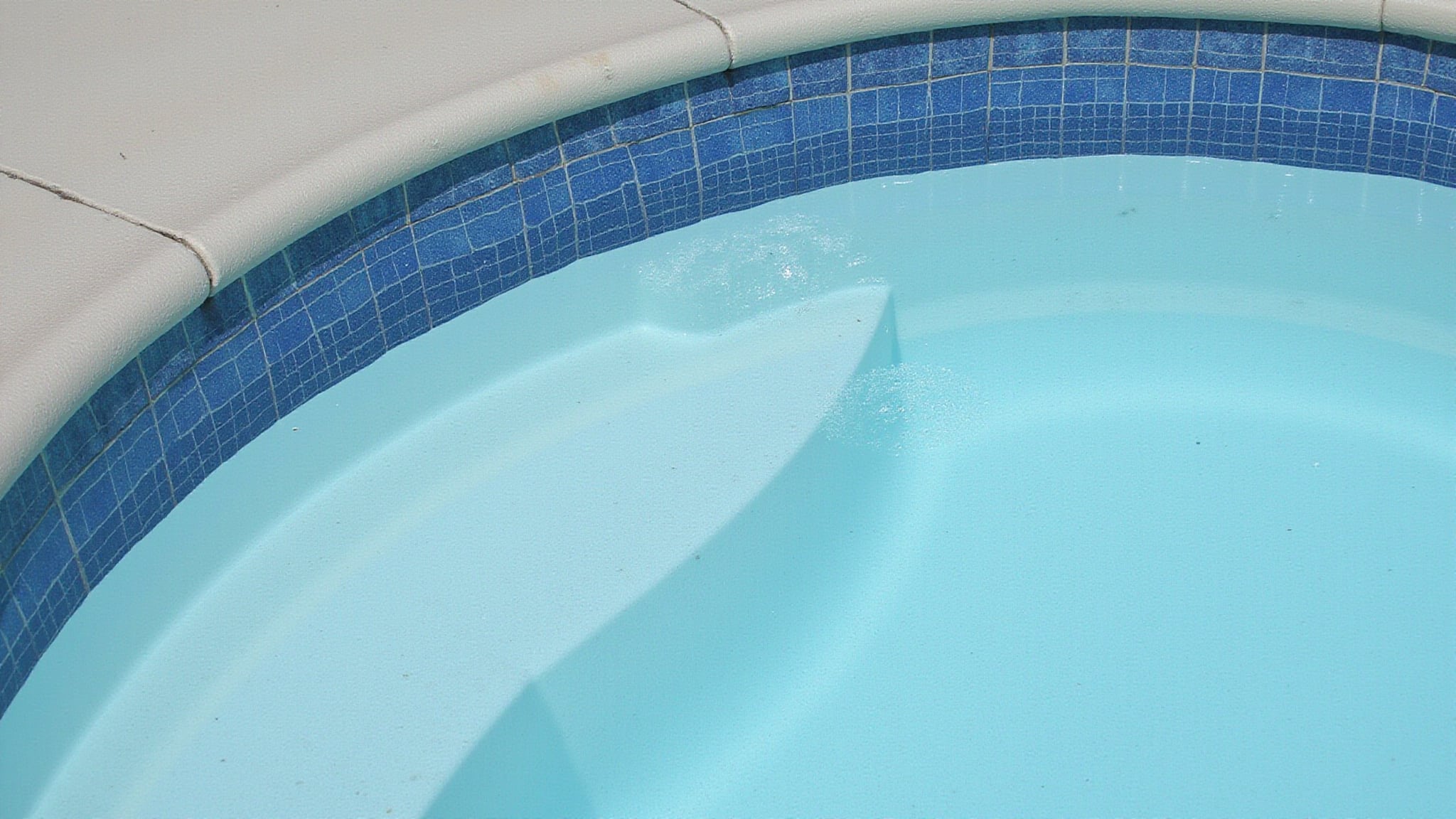
Repair chalking damage by refurbishing the surface itself, because chalking chemically bonds calcium oxide into the gel coat, so you can’t scrub it away like scale. Physical refinishing is the primary fix: have licensed specialists perform a drain, buff, and wax procedure, polishing the interior after an acetone cleaning. In severe cases, resurfacing the shell restores what the chemically changed gel coat lost.
When draining, brace the sides to prevent bulging or inward collapse, and never remove too much water, or you risk the pool “popping.”
To prevent recurrence of these pool surface problems, hold pH below the 8.09 ceiling, keep chlorine at 1.0, 3.0 ppm, and dose SC-1000 to sequester free calcium. Brush aggressively, boost circulation, and add clarifier so your filter captures loosened particles.
Conclusion: Dealing With a Chalking Fiberglass Surface
Chalking is the gradual dulling and powdery feel that develops as a fiberglass pool’s gel-coat weathers over years of sun and chemical exposure. It is a cosmetic, age-related change rather than a structural problem, and mild cases can be improved with cleaning and polishing. When chalking is heavy, resurfacing restores the finish. Balanced water and routine care slow it down and keep the surface looking good for longer.
Get a Fiberglass Pool Built for Long-Term Beauty
Surface issues like crazing, chalking, and gel coat blisters are far less common with a quality-built fiberglass pool from a trusted installer. At Schiller Pools in Palm City, FL, our experienced team provides trusted San Juan Fiberglass Pools with limited lifetime warranties and expert installation. Call +1 (561) 475-5997 today and get your free estimate
Frequently Asked Questions
How Much Does Professional Fiberglass Pool Resurfacing Typically Cost?
Resurfacing cost depends on the pool’s size, condition, and the finish used, so it ranges widely. It is a significant investment but far less than a new pool, and it renews the surface for many more years. A resurfacing professional can evaluate your pool and give an accurate quote for the work.
Can I Swim in My Pool While It’s Chalking?
Yes. Chalking is a surface finish issue, not a safety or structural one, so the pool is fine to swim in. You might notice a chalky residue on skin or swimsuits from a heavily chalking surface, which is harmless. Cleaning and polishing reduce it, and resurfacing resolves it when it becomes significant.
How Long Does a Sequestering Agent Last Before Reapplication?
Sequestering agents, which help control metals and staining, generally need reapplying periodically, often monthly or as directed on the product, since they break down over time. Regular testing and following the product’s guidance keeps protection consistent. Your pool professional can recommend a schedule based on your water and equipment.
Does Pool Color Affect How Visible Chalking Appears?
Yes. Chalking tends to show more on darker gel-coat colors, where the powdery, lightened surface contrasts against the deep color, and less on lighter finishes. It is happening on both, just more noticeable on dark surfaces. This is worth keeping in mind when choosing a color, though good maintenance matters more than shade.
Are Certain Fiberglass Pool Brands More Prone to Chalking?
Chalking relates mostly to gel-coat quality, age, sun exposure, and water chemistry rather than brand alone, though higher-quality gel-coats tend to resist it longer. All fiberglass surfaces weather eventually. Choosing a reputable manufacturer and maintaining balanced water are the best ways to delay chalking regardless of brand.