
Spider cracks and crazing both stay confined to your pool’s gelcoat layer, not the structural laminate beneath. You’ll spot spider cracks as fine hairline fractures radiating from one center point, staying localized where point-loading exceeded gelcoat flex tolerance. Crazing spreads as a diffuse, interconnected network without a single origin, tied to thermal stress, chemical imbalance, or over-thick gelcoat. Nailing the root cause determines your fix, and what’s driving yours might surprise you.
Key Takeaways
- Spider cracks are hairline fractures radiating from a single center point, while crazing forms an interconnected network without one distinct origin.
- Spider cracks stay localized to a small area, whereas crazing spreads across broader zones of the pool surface.
- Both are cosmetic gelcoat-confined cracks that don’t penetrate the structural laminate or compromise water-holding ability.
- Spider cracks stem from point pressure exceeding gelcoat flex tolerance, while crazing results from thermal stress, chemical imbalance, or over-thick gelcoat.
- A wetting test distinguishes them from structural cracks, which darken from moisture retention while gelcoat cracks do not.
What Are Spider Cracks and Crazing?
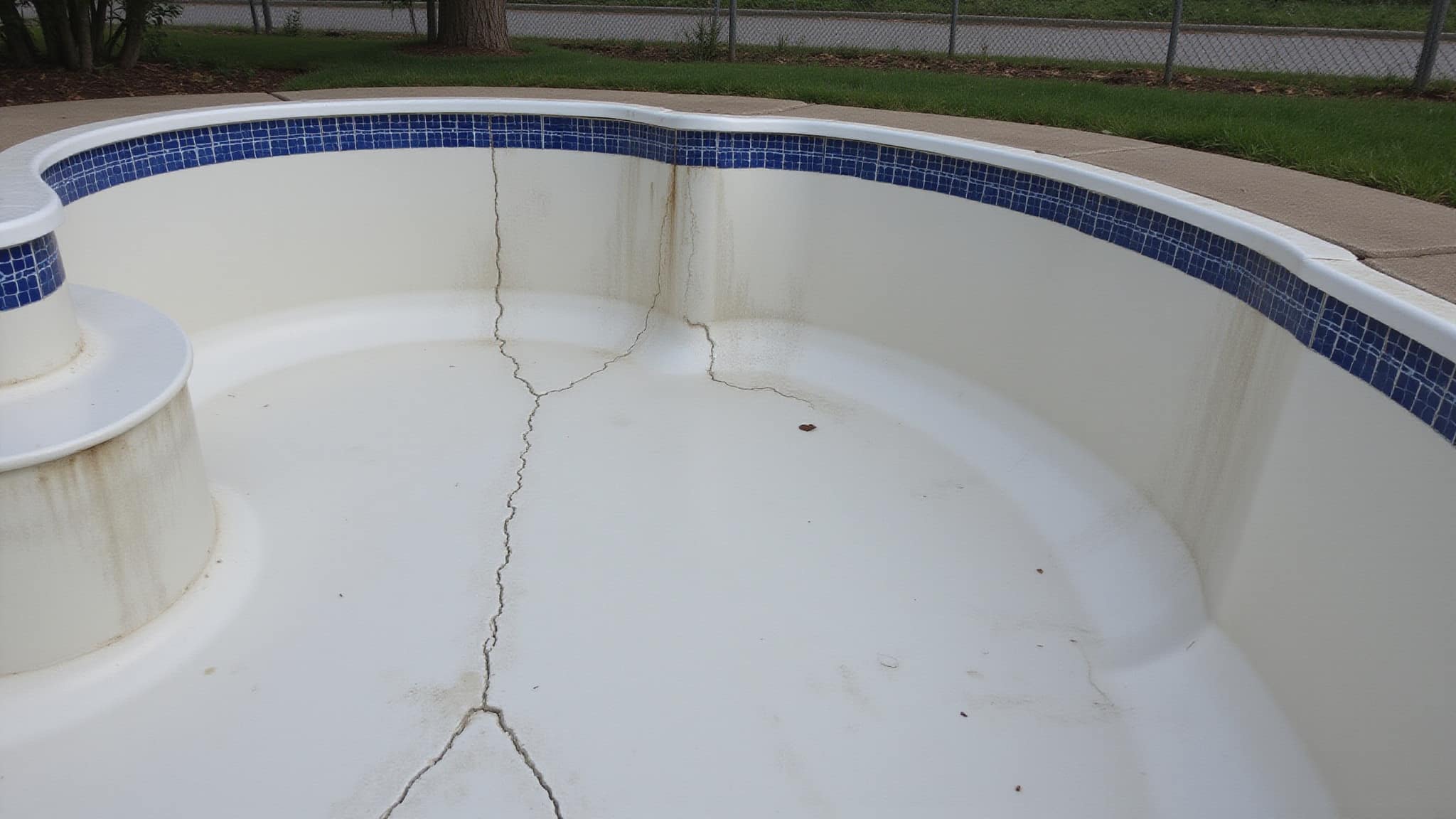
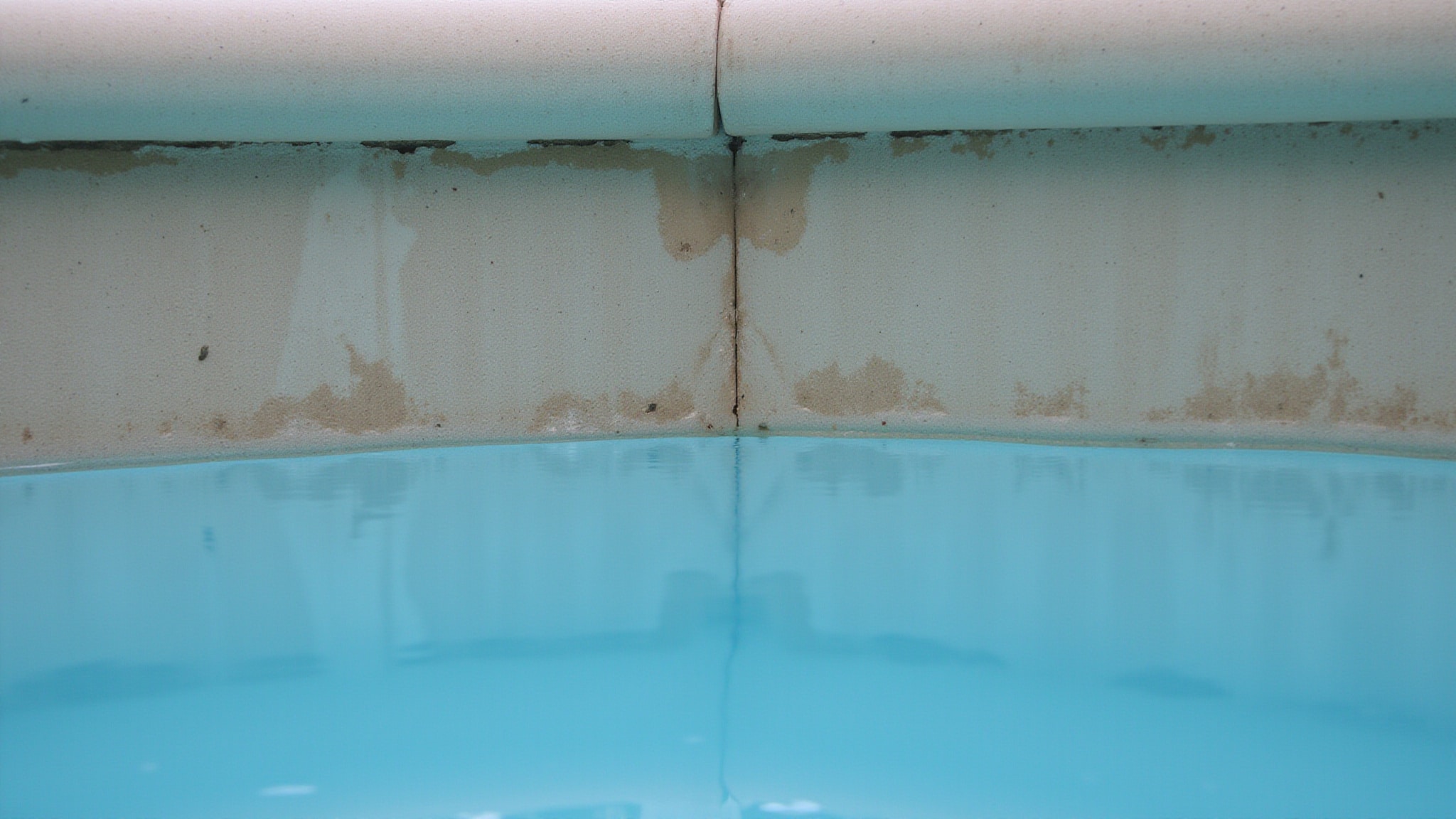
Spider cracks and crazing are two closely related gelcoat defects that appear as fine hairline fractures on your fiberglass pool’s surface. Spider cracks on a fiberglass pool appear as fine fractures radiating from a center point, fanning outward like a spider web. Pool crazing presents as a network of interconnected hairline lines resembling webbing, rather than a single irregular fracture. Both defects are gelcoat cracks confined to the thin gelcoat layer, not the structural laminate beneath. Spider cracks typically stay isolated to one small area, while crazing spreads across a broader network. Don’t confuse these with structural cracks, which cut deeper, appear as noticeable irregular lines, retain moisture, and can leak water. These surface imperfections remain cosmetic when they don’t penetrate the laminate.
How to Tell Crazing and Spider Cracks Apart
Tell crazing and spider cracks apart by reading the crack pattern and pinpointing its origin. Focus on geometry and point of failure within the gelcoat layer. Spider cracks radiate outward from a single center point, fanning like a web where localized pressure exceeded the gelcoat’s flex tolerance. Crazing, by contrast, presents as a diffuse network of fine lines without one distinct origin, typically triggered by thermal stress, chemical imbalance, or over-thick gelcoat application.
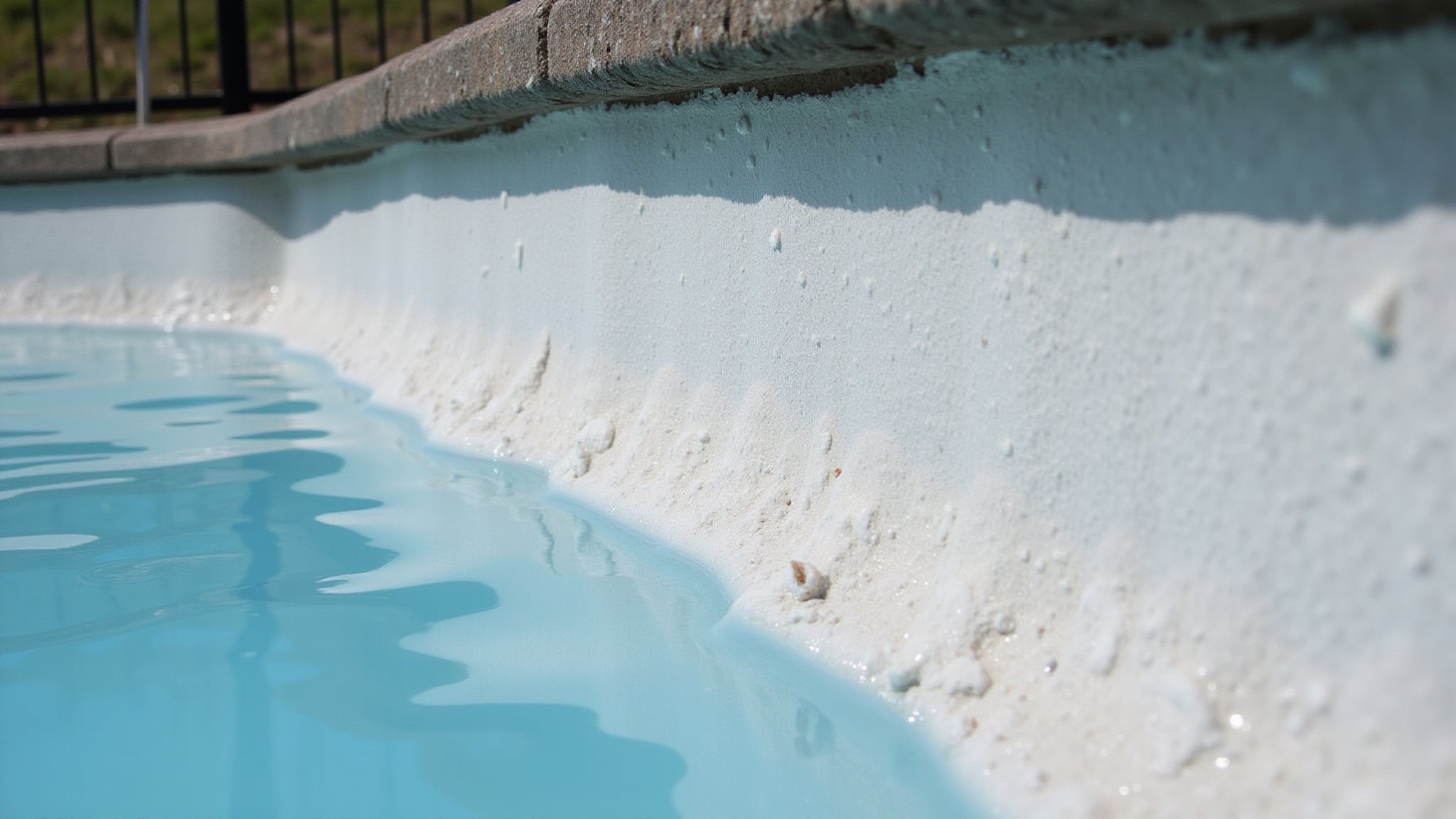
Check the affected footprint too. Spider cracks stay isolated to one small area, while crazing spreads across broader zones of the surface. Both fiberglass pool cracks remain confined to the gelcoat, so these pool surface cracks won’t darken when wet like structural cracks do. Fiberglass pool chalking causes can often be attributed to environmental factors such as UV exposure and improper chemical balance. Understanding these causes is crucial for maintaining the appearance and longevity of your pool.
Spider Cracks vs Structural Cracks
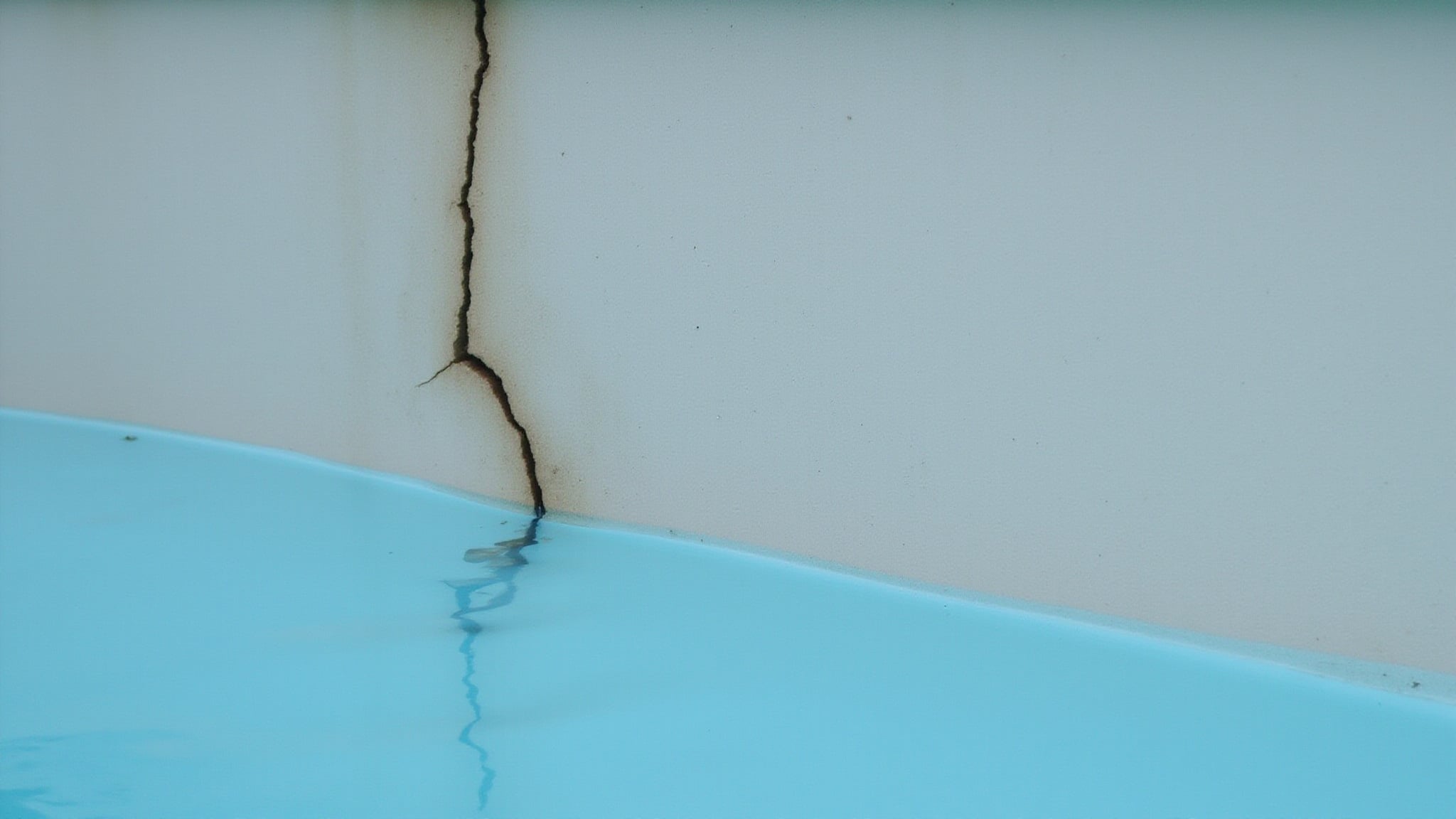
Spider cracks and structural cracks differ in depth and severity. Spider cracks stay confined to the gelcoat layer, forming when point pressure exceeds the coating’s ability to flex. They’re cosmetic and don’t reach the structural laminate, so they won’t compromise your pool’s water-holding ability. Structural cracks run deeper, penetrating into the fiberglass laminate itself, and they can leak water.
You can tell them apart by wetting the surface. Structural cracks darken because they retain moisture, while spider cracks don’t. Structural cracks also appear as noticeable, irregular lines rather than fine hairline fractures fanning from a center point. Diagnosing depth correctly determines whether you’re facing a simple targeted repair or full resurfacing.
What Causes Spider Cracks in Gelcoat
Spider cracks form when pressure on a specific point of the pool shell exceeds the gelcoat’s ability to flex. This pressure often stems from improper shipping, manufacturing errors, or incorrect leveling during installation. Application also matters: if you’ve got gelcoat applied too thick, beyond the ideal 25 to 30 mils, it loses pliability and becomes more susceptible to cracking. Beyond installation and manufacturing faults, thermal stress, ground settling, and normal wear and tear all contribute to surface cracking over time. Chemical imbalances play a role too, weakening the gelcoat surface and increasing its vulnerability. Understanding these root causes helps you pinpoint whether the damage is preventable or manufacturing-induced.
Are Spider Cracks a Structural Threat?
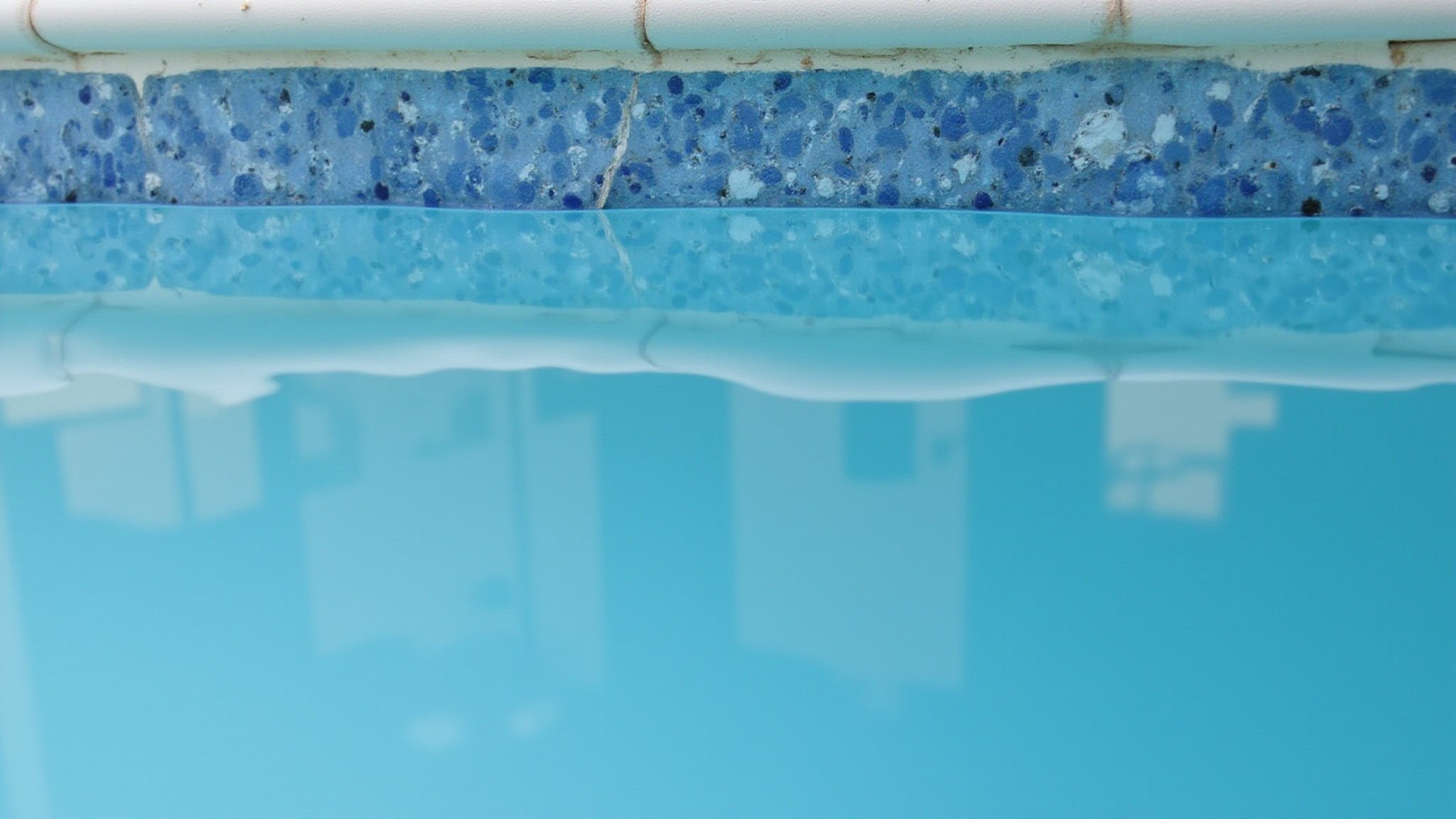
Spider cracks are not a structural threat in isolated cases. These fine hairline fractures are cosmetic imperfections confined to the thin gelcoat layer, typically 25 to 30 mils, that don’t extend into the structural laminate below. They won’t compromise your pool’s water-holding ability or structural integrity. Structural cracks, by contrast, run deeper and often darken when wet because they retain moisture, whereas spider cracks won’t.
However, don’t ignore them indefinitely. When spider cracking spreads across large portions of the surface, it signals deeper underlying issues rather than a simple point-pressure event. Widespread crazing may indicate the gelcoat’s reaching the end of its useful life, requiring full resurfacing instead of targeted repair.
Assess the scope. Localized cracks stay cosmetic; extensive networks warrant closer inspection to rule out laminate penetration or delamination.
How to Prevent Gelcoat Spider Cracks
You’ll prevent most gelcoat spider cracks by eliminating the point-loading and chemical stresses that push the gelcoat beyond its flex tolerance. Start by vetting an experienced installer who levels the shell correctly and avoids the shipping, manufacturing, and installation errors that generate localized pressure. From there, you’ll want to maintain balanced water chemistry to keep the gelcoat from weakening and use clean stone or gravel backfill to prevent wall bulges that stress the shell.
Choosing a Qualified Installer
Installer selection matters so much for preventing spider cracks because improper leveling during installation generates concentrated pressure on the pool shell, exceeding the gelcoat’s ability to flex and triggering hairline fractures. When you vet installers, verify their experience with fiberglass shell handling, backfill procedures, and site preparation. A qualified installer uses clean stone or gravel backfill instead of sand, preventing wall bulges that stress the gelcoat layer. They’ll also confirm proper leveling to distribute load evenly across the shell, eliminating point pressure that cracks the surface. Prioritize trustworthy, high-quality installers with documented track records and manufacturer certifications. Their precision during leveling and backfilling protects the gelcoat’s integrity from day one, addressing the root cause of installation-induced spider cracking before it starts.
Maintaining Balanced Water Chemistry
Maintaining balanced water chemistry directly determines whether the gelcoat retains its pliability or degrades into a crazing-prone surface. When you let pH, alkalinity, or chlorine drift outside recommended ranges, aggressive water chemically attacks the gelcoat’s resin matrix, weakening the surface and priming it for the fine, web-like fractures characteristic of crazing. Fiberglass gel coat damage causes can also stem from physical impacts or prolonged exposure to UV rays. These factors can lead to discoloration and diminishment of the gelcoat’s protective qualities.
Test your water regularly and correct imbalances before they compound. Maintain pH between 7.2 and 7.8, keep alkalinity buffered to stabilize pH swings, and hold chlorine at manufacturer-specified levels to prevent oxidative degradation.
Balanced chemistry preserves the gelcoat’s flexibility, letting it flex under thermal and hydrostatic stress instead of fracturing. By controlling this root cause, you protect against both surface discoloration and progressive crazing across your pool’s finish. Osmotic blisters on fiberglass pool shells can occur when water infiltrates the gelcoat layer. Addressing these issues promptly is crucial to maintaining the integrity of your pool’s finish.
Using Proper Backfill Materials
Use clean stone or gravel backfill to protect your pool shell from localized pressure that transfers to the gelcoat. When you use sand, it shifts and settles unevenly, creating concentrated pressure points against the shell. These points exceed the gelcoat’s ability to flex, triggering spider crack formation. You’ll prevent this by specifying clean stone or gravel backfill instead. Angular stone locks together, distributing loads uniformly across the shell rather than channeling stress into isolated areas. This eliminates wall bulges, a primary source of point pressure that fractures the thin gelcoat layer. Clean gravel also drains water away from the shell, reducing hydrostatic stress during ground saturation. By controlling the backfill’s structural behavior at installation, you address the root cause before any surface cracking can develop.
Repairing Spider Cracks and Crazing
Once you’ve confirmed the damage is localized and the gelcoat hasn’t delaminated from the fiberglass, you can cut out the cracked area to the depth of the crack and apply a bond coat to the removed section. DIY repair kits handle this process for isolated spider cracks, but they won’t guarantee the smoothing and setting precision a professional delivers. Weigh the crack’s extent and your finishing skills before deciding whether to tackle the repair yourself or hire out the job.
Targeted Repair Process
Targeted repair restores the surface without a full resurface when spider fractures or crazing stay localized and you catch them before the gelcoat delaminates from the fiberglass. Start by cutting out the cracked area to the depth of the crack, removing compromised gelcoat down to sound material. Apply a bond coat to the excavated section, ensuring adhesion to the underlying laminate. If you find blistering or delamination, sand the area down, remove the damaged fiberglass, and apply repair resin with a fiberglass brush. Once the resin cures, sand with fine sandpaper until smooth, blending the patch seamlessly into the surrounding surface. DIY kits handle spider cracks, but hiring a professional ensures proper smoothing and setting, critical when addressing the root-cause pressure that triggered the fracture.
DIY vs Professional
Choose DIY for localized spider cracks confined to the gelcoat, but choose a professional when the crack’s scope is larger or when you haven’t diagnosed the root-cause pressure driving it. DIY kits handle those surface cracks, but they can’t smooth or set the surface as precisely as a professional. Weigh these factors:
- Peace of mind: A pro confirms the crack hasn’t reached the structural laminate.
- Frustration risk: A botched DIY bond coat leaves visible, uneven patches.
- Cost pressure: Kits save money upfront, but recurring cracks multiply expenses.
- Root-cause blindness: DIY ignores the underlying pressure point still stressing the shell.
- Lasting results: Professionals blend repairs seamlessly, matching gelcoat thickness and pliability.
Choose based on damage, not convenience.
When Your Pool Needs Full Resurfacing
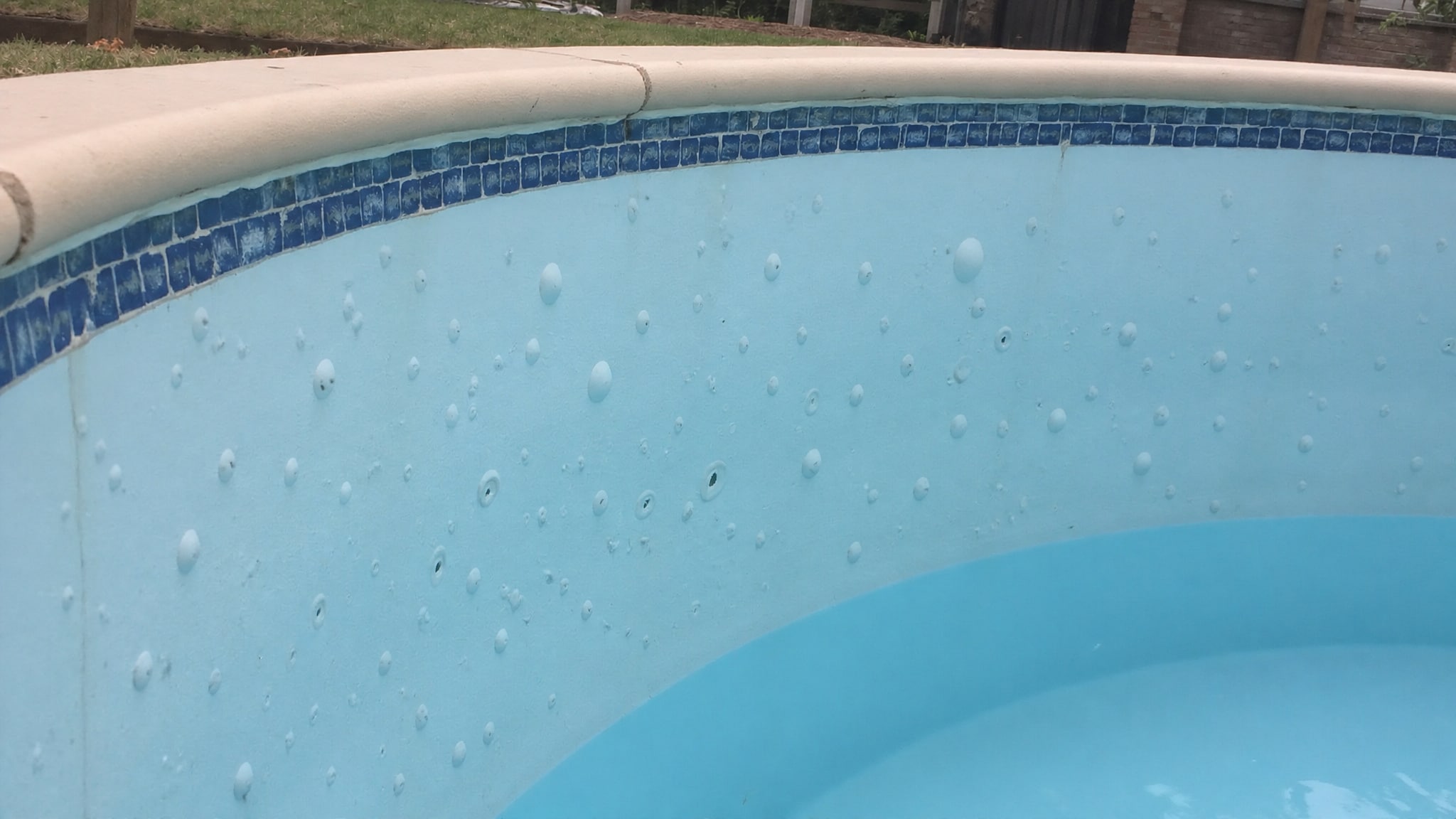
Widespread gelcoat failure demands full resurfacing, not targeted repairs. When spider cracking covers large portions of your pool or worsens over time, you’re past the point of patching. Full resurfacing becomes necessary once significant gelcoat degradation, fading, or roughness spreads throughout the surface, or delamination separates the gelcoat from the fiberglass laminate.
Watch for recurring blisters that reappear after previous repairs. They signal that targeted fixes can’t restore integrity. Evidence of water penetration, osmotic blistering, or structural cracks compromising the laminate mandates complete surface layer replacement.
Once your gelcoat reaches the end of its useful life, repairs won’t restore structural integrity or appearance. At that stage, resurfacing the entire shell is your only reliable solution.
Conclusion: Understanding Spider Cracks and Crazing
Spider cracks and crazing are fine, web-like marks in a fiberglass pool’s gel-coat, and in most cases they are cosmetic rather than structural. They come from normal stresses, temperature changes, or the curing of the surface, and they usually do not affect the pool’s integrity or safety. Still, it is worth having any new cracking checked, since a professional can tell surface flaws from deeper issues. Knowing the difference helps you respond calmly and correctly.
Get a Fiberglass Pool Built to Prevent Cracks
Spider cracks and crazing rarely appear on properly manufactured and installed fiberglass pools, which is why choosing the right builder matters. At Schiller Pools in Palm City, FL, our experienced team provides trusted San Juan Fiberglass Pools with limited lifetime warranties and expert installation. Call +1 (561) 475-5997 today and get your free estimate.
Frequently Asked Questions
How Much Does Professional Spider Crack Repair Typically Cost?
Repair cost depends on how widespread the cracking is and whether it is a simple gel-coat touch-up or a larger resurfacing. Minor cosmetic repairs are relatively affordable, while extensive work costs more. A pool professional can assess the surface and give an accurate quote based on the extent and location of the cracks.
Are Spider Cracks Covered Under Most Fiberglass Pool Warranties?
It varies by manufacturer. Some warranties cover structural defects but treat minor gel-coat spider cracks as cosmetic and exclude them, while others offer some coverage. Check your specific warranty terms and keep your documentation. If cracking appears early or seems more than cosmetic, contact the manufacturer or builder to ask about coverage.
How Long Does a Full Pool Resurfacing Project Take?
A full fiberglass resurfacing typically takes several days to a couple of weeks, depending on the pool’s size, condition, and the products used, plus curing time before refilling. Weather can affect the schedule. A resurfacing professional can give a realistic timeline for your pool once they have evaluated the surface.
Can I Swim in the Pool With Spider Cracks?
In most cases, yes. Cosmetic spider cracks in the gel-coat do not usually affect the pool’s safety or hold water any less, so swimming is generally fine. It is still smart to have new or spreading cracks inspected to rule out a deeper issue. Once a professional confirms they are cosmetic, you can swim without concern.
Do Spider Cracks Lower My Pool’s Resale Value?
Visible cracking can affect a buyer’s impression, so noticeable spider cracks may slightly lower appeal even when they are only cosmetic. Documentation showing they are surface-level, or a gel-coat repair before selling, helps reassure buyers. Keeping the surface in good shape protects both the look and the resale value of the pool.