
The best pool fence ideas for a Florida backyard balance safety, views and durability in salt air and sun. Popular choices include powder-coated aluminum fences, frameless glass panels, removable mesh safety fencing and vinyl privacy fencing, often softened with landscaping. Whichever style you choose, a pool barrier in Florida must be at least 4 feet high with gates that open outward, self-close and self-latch, so design and code need to be planned together.
Below are pool fence ideas that work well in Florida, how the main materials compare, and the barrier rules your fence needs to meet.
Key Takeaways
- Powder-coated aluminum is one of the most practical Florida choices because it resists rust and suits coastal conditions.
- Frameless glass keeps views of the water open, while removable mesh fencing can come down when it isn’t needed.
- Vinyl gives full privacy, and wrought iron is prone to rust in coastal climates.
- Florida law requires a pool barrier to be at least 4 feet high with outward-opening, self-closing, self-latching gates, so every design starts there.
- A wall of the house can serve as part of the barrier if it has no door or window that opens directly to the pool, which can shorten the fence you need.
What Are the Best Pool Fence Ideas for a Florida Backyard?
These ideas cover the most popular styles, from open-view designs to full privacy.
1. Powder-Coated Aluminum Picket Fence
Aluminum picket fencing is one of the most common choices around Florida pools. It doesn’t rust, comes in pool-code styles, and powder-coated finishes resist sun and heat. Black aluminum frames the pool without blocking the view.
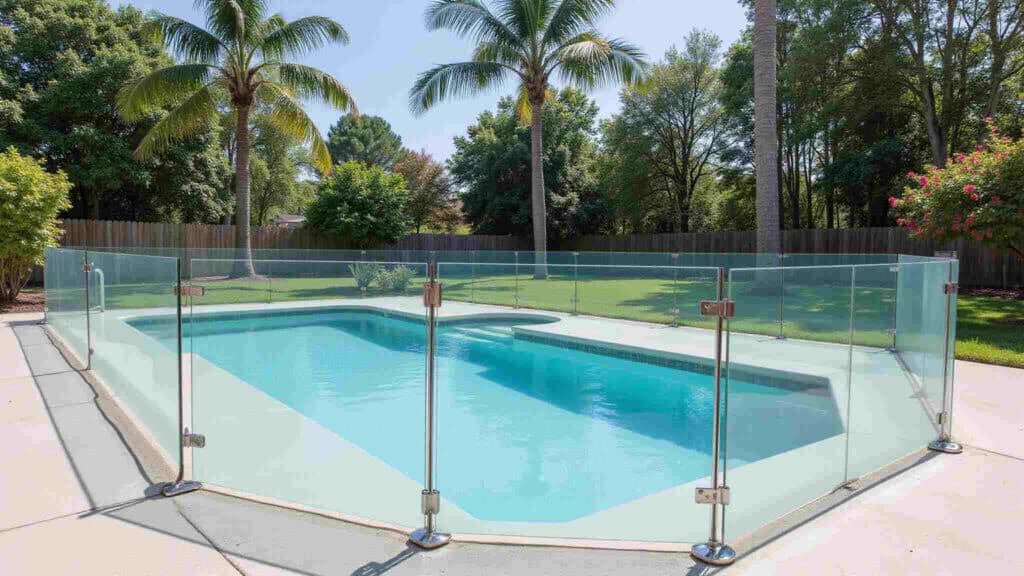
2. Frameless Glass Pool Fence
Tempered glass panels held by clamps or a base shoe create a nearly invisible barrier. Glass keeps the view of the water and landscape open, which makes it a favorite for modern homes and waterfront lots.
3. Semi-Frameless Glass With Slim Posts
Glass panels set between slim metal posts give you the open look of glass with a more structured frame. It’s a good middle ground between full frameless glass and aluminum.
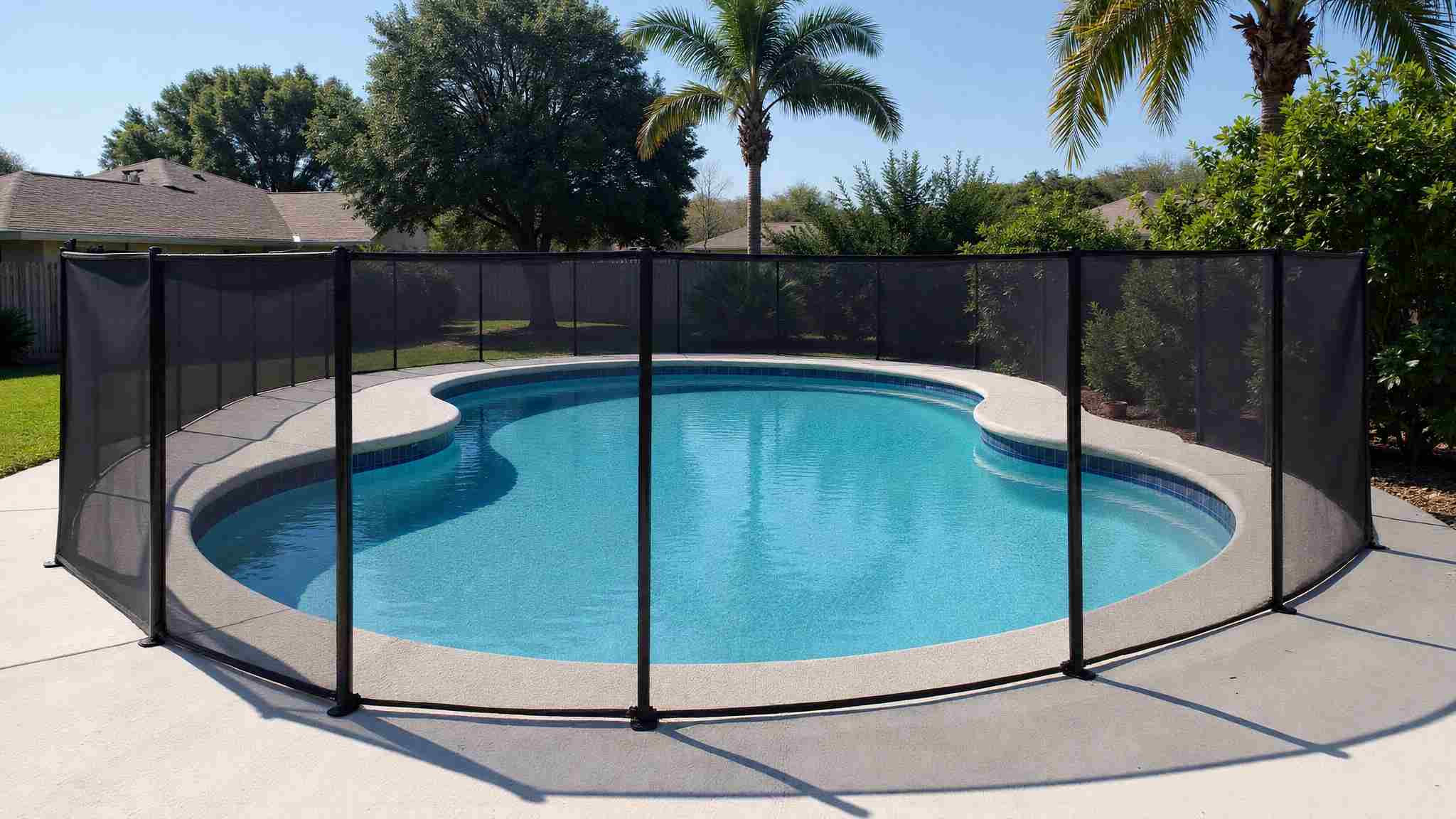
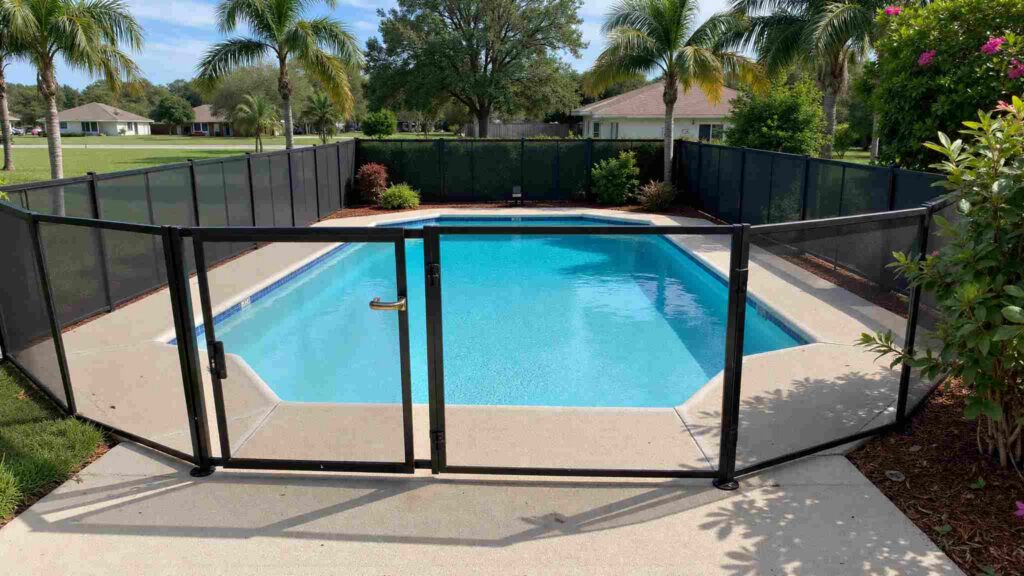
4. Removable Mesh Safety Fence
Removable mesh fencing uses posts set into sleeves in the deck. It can be taken down when there are no young children around and put back up when needed. Mesh fences aren’t designed for hurricane-force winds, so plan to remove and store them before a major storm.
5. Vinyl Privacy Fence
Solid vinyl panels create full privacy from neighbors and don’t need painting. Choose styles rated for use around pools and confirm wind requirements in your area.
6. Aluminum Fence With Landscaping
Pair an aluminum fence with low shrubs or ornamental grasses planted outside the barrier. The planting softens the fence line, while the aluminum handles the safety role. Keep plants from creating anything a child could climb. Our guide to the best landscaping plants around a fiberglass pool suggests options that suit pool areas.
7. Glass on the Water Side, Aluminum Elsewhere
Use glass panels where the pool faces the best view, such as a lake, canal or garden, and aluminum on the other sides. It controls cost while keeping the most important view open.
8. Fence That Uses the House Wall
Florida allows a wall of the home to serve as part of the barrier, as long as it has no door or window that opens to give direct access to the pool. This can reduce the length of fence you need.
9. Matching Fence and Gate Hardware
Choose gate hardware in the same finish as the fence. Self-closing hinges and a self-latching lock are required on pool gates, and a matching finish makes them look like part of the design rather than an add-on.
10. Pool Fence With an Integrated Seating Wall
A low seating wall inside the pool area adds seating and definition. Keep it positioned so it can’t be used to climb the barrier, since Florida law doesn’t allow structures or equipment placed where they could help someone climb over.
Which Pool Fence Material Is Best for Florida?
Each material has trade-offs in Florida’s climate.
| Material | Strengths | Considerations |
|---|---|---|
| Powder-coated aluminum | Resists rust, comes in pool-code styles, suits coastal homes | Pickets must be spaced to meet code |
| Frameless glass | Open views, modern look | Glass panels and hardware must be rated for the application |
| Removable mesh | Can be taken down when not needed | Not designed for hurricane-force winds; remove before major storms |
| Vinyl | Privacy, no painting | Confirm pool-code style and wind rating |
| Wrought iron | Traditional look | Prone to rust and corrosion in coastal climates |
For most Florida pools, powder-coated aluminum offers the best balance of durability, cost and code compliance. Glass is the premium choice when views matter most.
What Should Every Pool Fence Design Account For?
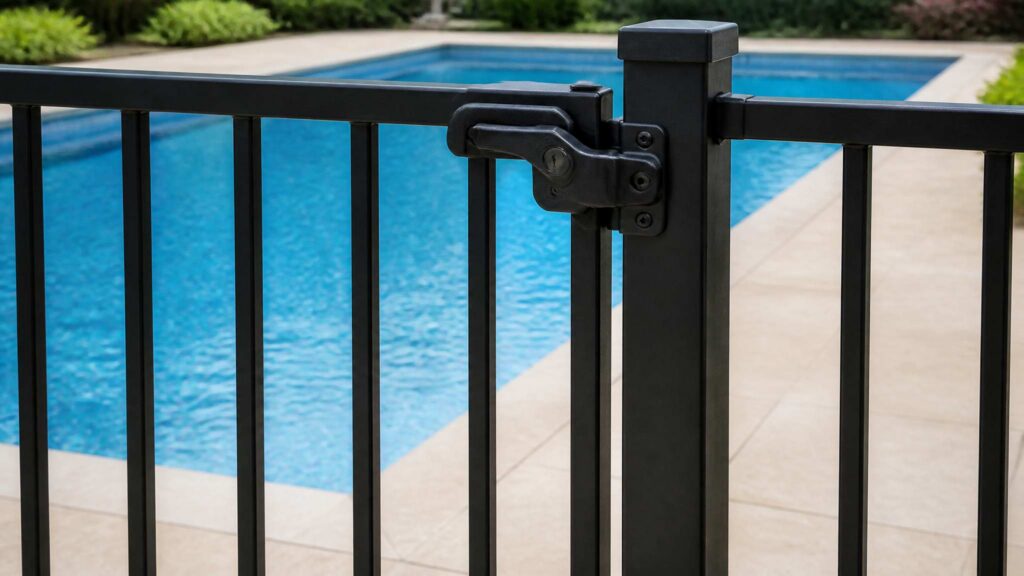
A pool fence is a safety barrier first, so a few requirements shape every design. Under Florida’s Residential Swimming Pool Safety Act, the barrier must be at least 4 feet high on the outside and can’t have gaps or features a young child could crawl under, squeeze through or climb over. Gates must open outward away from the pool and be self-closing and self-latching.
Your city or county building department applies more detailed specifications, such as limits on gaps at the bottom of the fence, picket spacing and latch height. Check those, along with your HOA’s rules, before you choose a style, so the fence you love is also the fence that passes inspection. Our guide to what permits a new fiberglass pool needs explains how inspections fit into a pool build.
How Do You Choose the Right Pool Fence for Your Pool?
Start with your priorities. If you want to keep the view, choose glass or a slim aluminum picket. If privacy matters most, consider vinyl. If you only need a barrier while children are young, removable mesh fencing can be a flexible option.
Then check your HOA’s rules and your local barrier requirements before you finalize the design. Our guide to the HOA approval process for fiberglass pools covers what many associations ask for.
Frequently Asked Questions
What is the best type of fence to put around a pool?
For most Florida homes, powder-coated aluminum is the best all-round choice. It resists rust, comes in pool-code styles and suits coastal conditions. Frameless glass is the best option when you want an unobstructed view, and removable mesh works well when you only need a barrier for a period of time.
What is the safest pool fence?
The safest pool fence is one that meets Florida’s barrier requirements: at least 4 feet high, no gaps a child could squeeze through, nothing a child could climb, and gates that open outward and self-close and self-latch. Material matters less than meeting these requirements and keeping the gate latched.
What is the cheapest way to fence a pool?
Costs vary by material and fence length. Using a wall of the house as part of the barrier, where it has no door or window opening directly to the pool, can reduce the length of fence you need. Aluminum and removable mesh are generally more budget-friendly than frameless glass.
What are some affordable ideas for pool fencing?
Powder-coated aluminum picket fencing is an affordable, durable choice for most Florida pools. You can save further by using glass only on the side with the best view and aluminum on the others, or by softening a simple fence with landscaping planted outside the barrier.
Can I use a removable mesh fence around my pool in Florida?
Yes, as long as the mesh fence meets your local barrier requirements. Removable mesh fences aren’t designed for hurricane-force winds, so take them down and store them before a major storm.
Planning a New Pool and Its Safety Barrier?
The best time to plan your pool fence is while you’re designing the pool. Schiller Pools is an authorized San Juan and Latham fiberglass pool installer serving the Palm Beach and Treasure Coast areas for more than 40 years, and we plan your pool layout and safety requirements together so your project is ready for final inspection.
Explore our fiberglass pools, visit the Schiller Pools homepage, get a quick number with our instant pool estimator, or contact our team. You can also call (561) 475-5997 to talk through your project.