You’ll want plants with non-invasive roots that won’t shift your fiberglass shell, plus heat and salt tolerance for reflected warmth and chlorine splash. Ornamental grasses like fountain grass and blue fescue, shallow-rooted succulents, and structural evergreens such as Emerald Green Arborvitae work well. Add tropical hibiscus, lantana, palms, and bird of paradise for color and vertical interest. Bay Laurel and frangipani keep debris low. Discover the exact varieties suited to your climate below.
Key Takeaways
- Choose plants with non-invasive roots like ornamental grasses, succulents, and bird of paradise to protect the fiberglass shell.
- Select heat- and salt-tolerant options such as lantana, hibiscus, day lilies, and bougainvillea to withstand reflected heat and chlorine splashes.
- Prioritize low-debris evergreens like citrus trees, bay laurel, frangipani, and bottlebrush to maintain water clarity and reduce cleanup.
- Use Emerald Green Arborvitae, ornamental bamboo, or boxwood for dense, non-invasive privacy screening without destabilizing the pool.
- Layer spring, summer, and fall bloomers to ensure vibrant, continuous color that peaks during high pool-use season.
What Makes a Plant Right for Fiberglass Pools?
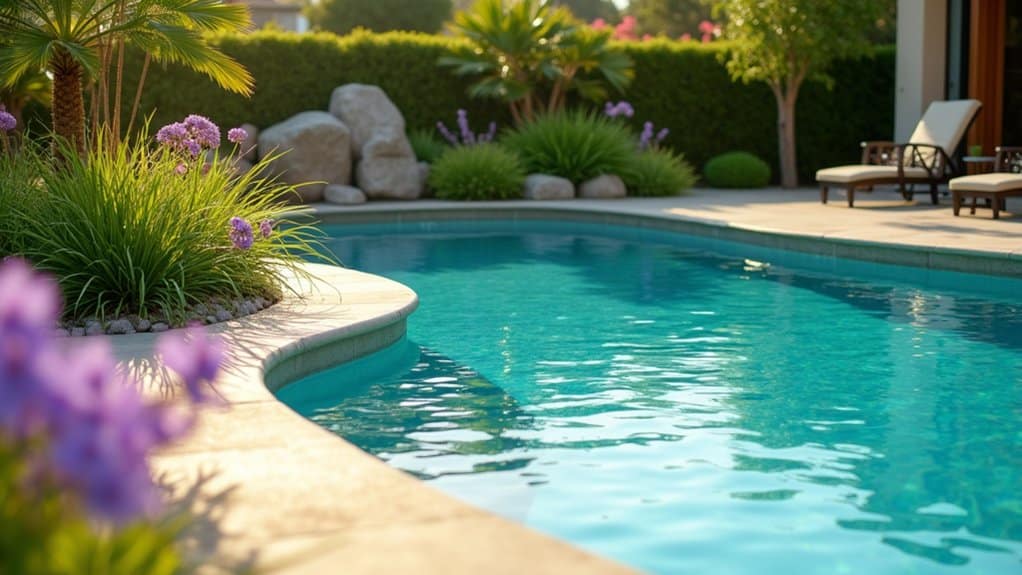
A plant is right for fiberglass pools when it meets four technical factors: root behavior, heat tolerance, salt resistance, and debris output. Your fiberglass shell sits in a formed excavation, so you’ll want non-invasive roots that won’t shift the structure, think ornamental grasses, structural evergreen shrubs, or bird of paradise. Reflected heat off the pool surface pushes temperatures higher, so pick heat-tolerant pool landscaping plants like lantana, tropical hibiscus, or day lilies that also handle chlorine and salt splashes. Debris matters too: choose evergreen options like Bay Laurel, citrus, or bottlebrush that drop minimal foliage, keeping your water clear. Selecting plants around fiberglass pool zones with these criteria in mind keeps your poolside landscaping functional, structural, and low-maintenance year-round.
Non-Invasive Roots That Won’t Damage Your Pool
When you’re protecting your fiberglass pool’s structure, start with ornamental grasses like fountain grass and blue fescue, plus shallow-rooted succulents such as aloe, jade, and echeveria for texture without root pressure. Add structural evergreen shrubs to form your design skeleton, since their contained root systems won’t shift the pool shell. For height, you’ll want tall non-invasive options like bird of paradise, which reaches 10 feet without threatening your pool zone. After you’ve established your plants, consider regular fiberglass pool maintenance to ensure clarity and cleanliness. This will help prevent debris buildup that could affect your pool’s appearance and functionality.
Ornamental Grasses and Succulents
Ornamental grasses and succulents are ideal candidates for planting close to your fiberglass pool shell because of their root systems. Ornamental grasses like fountain grass, blue fescue, and pampas grass deliver texture and movement with minimal root damage risk, making them among the best pool plants for softening hardscape edges. For low-maintenance pool garden ideas, incorporate succulents such as aloe, jade, and echeveria. Their shallow root patterns and non-spiny forms keep the shell secure while requiring little water. Filling in an unwanted pool can also be achieved by utilizing strategic plant placement. Consider adding vibrant flowers or even decorative rocks around the edges to create a cohesive look.
Combine these categories to build layered zones: use fescue and fountain grass for vertical interest, then anchor beds with clustered echeveria and jade. This pairing tolerates reflected pool heat, resists structural shifting, and maintains clean lines around your fiberglass installation without threatening the pool’s integrity.
Structural Evergreen Shrubs
Structural evergreen shrubs form the design skeleton that gives poolside beds year-round definition. Their non-invasive root systems won’t shift your fiberglass pool’s structure, so you can plant them confidently near the shell.
Start with Emerald Green Arborvitae for dense, sturdy growth that doubles as a privacy wall without shedding heavy debris. Add boxwoods and rosemary to create geometric beds with structured, sculptural forms. For edible structure, work in Bay Laurel. It delivers evergreen mass with minimal leaf drop and non-aggressive roots.
Combine these plantings to anchor your layout: use arborvitae as vertical backdrops, boxwoods as clipped hedges, and Bay Laurel as accent specimens. Together, they hold your design’s shape through every season.
Tall Non-Invasive Options
Tall non-invasive options add height without threatening your pool’s shell. Bird of paradise delivers dramatic verticality, reaching up to 10 feet while keeping its roots non-invasive, ideal for tight fiberglass pool zones. If you’re after edible structure, plant Bay Laurel, an evergreen that combines minimal leaf drop with non-aggressive root growth. For screening and privacy, Emerald Green Arborvitae builds a dense, tall barrier without shedding heavy debris or spreading roots that shift your pool’s structure. In cooler regions, ornamental bamboo offers hardy height, while palm varieties suit warm climates. Each of these options gives you the elevation and screening you need, so you won’t sacrifice your pool’s integrity for vertical drama.
Heat and Salt-Tolerant Plants for Poolside Zones
Reflected heat from your fiberglass pool surface creates a hotter-than-normal microclimate, so you’ll need plants that handle both intense sun exposure and occasional chlorine or salt splashes. For salt-tolerant flowering options, day lilies and spirea perform reliably near saltwater or chlorinated zones, while lantana delivers color bursts under sustained heat. Choose heat-resistant varieties like tropical hibiscus, which retains foliage year-round despite chlorine contact, or hardy hibiscus cultivars that adapt across climate zones while maintaining heat tolerance.
Salt-Tolerant Flowering Plants
Salt-tolerant flowering plants that shrug off both high temperatures and salt exposure include day lilies, spirea, hibiscus, and lantana. Day lilies and spirea perform reliably near saltwater or chlorinated fiberglass pools, tolerating both mineral splashes and intense radiant heat. Tropical hibiscus handles chlorine contact while retaining its glossy foliage year-round, delivering large blooms through peak season. If you’re working across variable climate zones, hardy hibiscus varieties adapt without sacrificing heat tolerance. For sustained color, plant lantana, which thrives under direct sun and heat while producing continuous bursts of bloom. When you combine these species, you’ll build a poolside border that resists salt burn, withstands reflected temperatures, and maintains flowering interest throughout the swimming months.
Heat-Resistant Poolside Varieties
Heat-resistant poolside varieties include tropical hibiscus, hardy hibiscus, lantana, and day lilies, all of which withstand reflected sunlight, high temperatures, and occasional chlorine splash. Pool surfaces reflect sunlight back onto surrounding beds, so your poolside plants face hotter-than-normal temperatures that require serious heat tolerance. You’ll want species engineered for reflected heat and occasional chlorine splash, retaining foliage and color through peak intensity. Prioritize varieties that hold structure without wilting or dropping stressed leaves into the water.
- Tropical hibiscus: handles chlorine splashes and high heat while retaining foliage year-round for consistent structure.
- Hardy hibiscus: adapts across climate zones, maintaining heat tolerance where tropical types can’t overwinter.
- Lantana: delivers color bursts under full sun and intense heat exposure with minimal upkeep.
- Day lilies: combine salt tolerance with heat resilience near chlorinated fiberglass zones.
Positioning these where reflected heat concentrates ensures they thrive rather than scorch through summer.
Low-Debris Plants That Keep Pool Water Clear
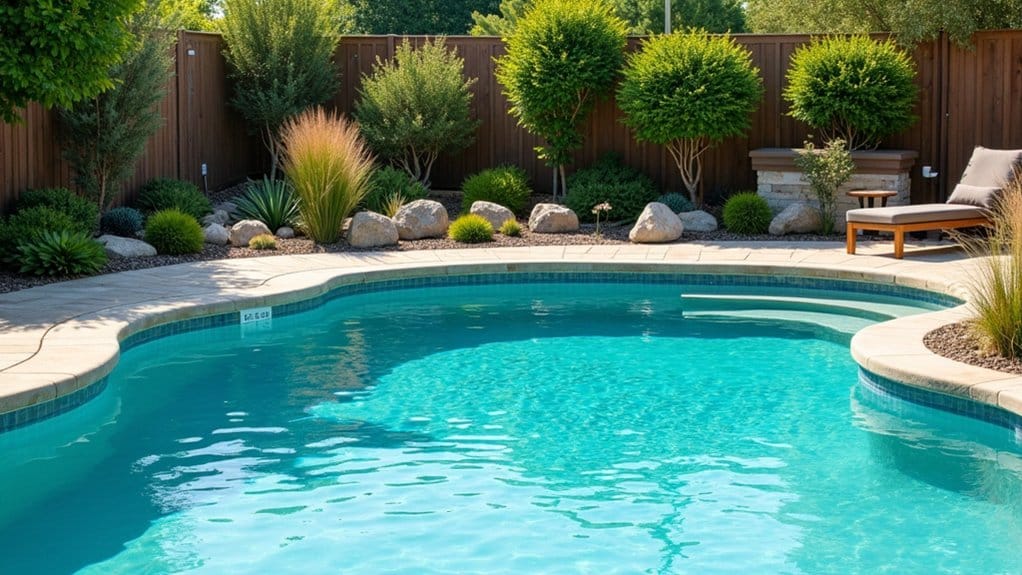
Low-debris plants that keep pool water clear include evergreens that retain foliage year-round, since fall leaf drop clogs skimmers and clouds water. Citrus trees and Bay Laurel hold their leaves through the seasons, giving you structure without constant cleanup. For tidy tree options, plant frangipani or bottlebrush, both stay small and shed few leaves near the water’s edge. Emerald Green Arborvitae works as a dense, non-invasive shrub that forms privacy barriers without dumping heavy debris into your pool. Avoid deciduous trees that drop their entire canopy come autumn, they’ll compromise water clarity and multiply your maintenance hours. By selecting these low-litter varieties, you’ll keep your fiberglass pool cleaner and your filtration system running efficiently.
Flowering Picks for Season-Long Poolside Color
Flowering picks for season-long poolside color start with sequencing your bloom times so no season goes bare, layering spring, summer, and fall performers into a single cohesive palette.
- Spring: Plant azaleas and hydrangeas for early-season color before peak pool usage begins.
- Summer: Anchor peak season with tropical hibiscus and bougainvillea, both thriving under reflected heat and chlorine splashes.
- Fall: Extend interest with butterfly bushes, keeping your landscape vibrant after summer blooms fade.
- Season-long: Edge your deck with geraniums in pink, red, and white for sun-loving, continuous color.
Combine these with salt-tolerant day lilies and heat-hardy lantana, and you’ll build a rotating display that peaks precisely when you’re using the pool most.
Tall Hedges and Vines for Poolside Privacy
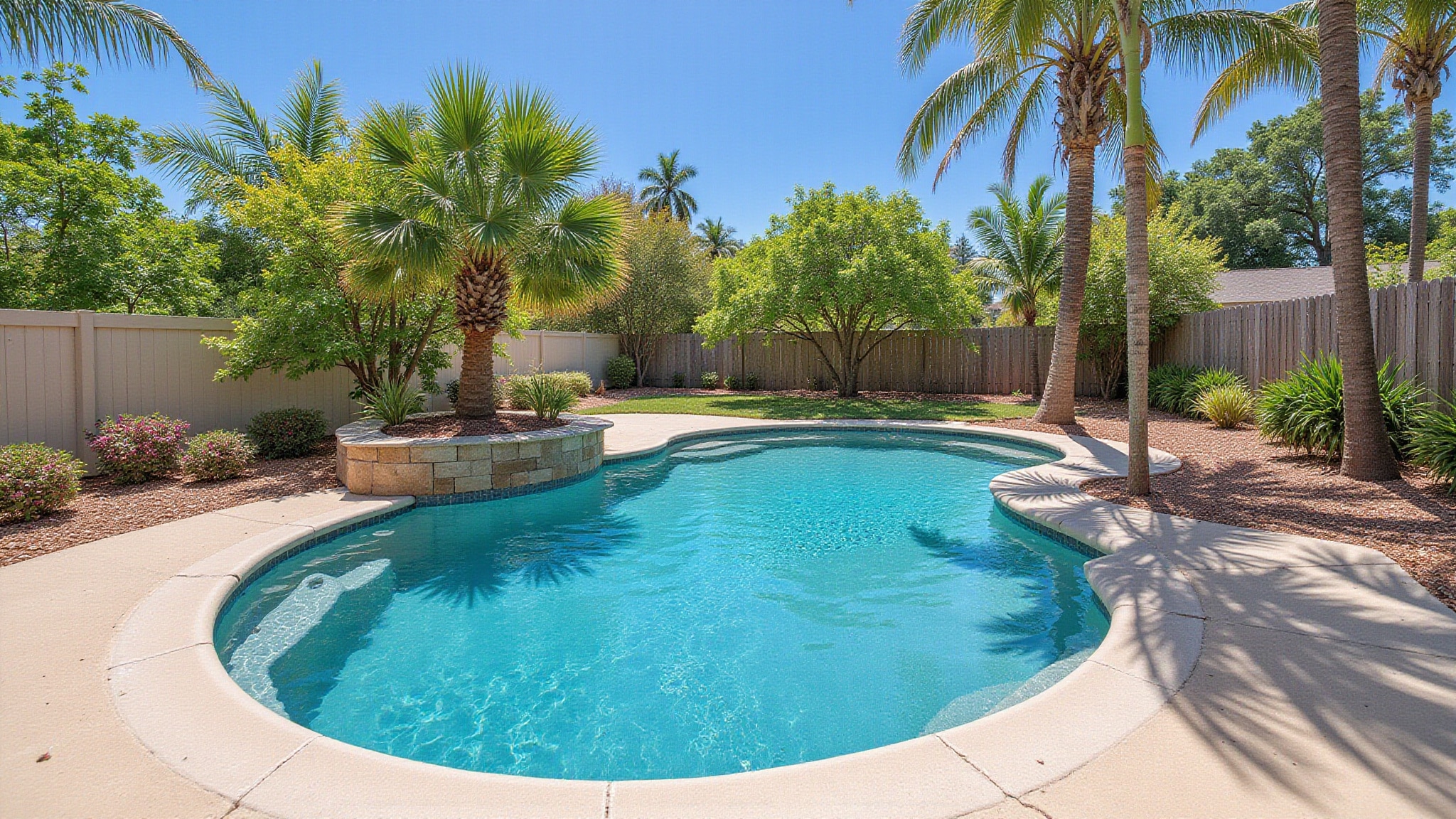
Tall hedges and vines create poolside privacy by adding vertical structure that screens sightlines without dropping debris or destabilizing the shell. Emerald Green Arborvitae delivers sturdy, dense foliage for effective privacy walls, forming a non-invasive barrier that won’t shift your fiberglass structure. Ornamental bamboo establishes tall, fast screening, while boxwood, holly, lilacs, azaleas, or rhododendrons build layered greenery walls with structured, sculptural forms. Position these strategically to block adjacent sightlines and frame your retreat.
For vertical texture on fences, pergolas, or trellises, train climbing vines like ivy or wisteria to enhance ambiance without consuming deck space. Keep vines on dedicated supports, not near the shell, so their growth stays controlled. Combine hedges and vines to layer height, density, and year-round enclosure.
Best Poolside Plants for Warm Climates
The best poolside plants for warm climates are palms, bird of paradise, crotons, and tropical hibiscus, all of which thrive in the reflected heat radiating off your fiberglass shell. You’ll want plants that combine non-invasive root systems with genuine heat and chlorine tolerance, protecting your pool structure while withstanding intensified surface temperatures. Fiberglass pools with sun shelves are especially appealing for families looking to create a relaxing atmosphere. The sun shelf provides a shallow area for young children to play safely while adults lounge nearby.
- Palm varieties deliver vertical exotic structure and shallow, non-aggressive roots ideal for fiberglass zones.
- Bird of paradise reaches 10 feet with non-invasive roots, anchoring your tropical composition.
- Crotons contribute saturated foliage color that endures full sun and reflected heat.
- Tropical hibiscus handles chlorine splashes and high temperatures while retaining year-round foliage.
Layer these with lantana and bougainvillea for summer color bursts. Together, they’ll build an exotic retreat that’s structurally safe, low-debris, and precisely matched to your warm-climate conditions.
Hardy Poolside Plants for Cooler Regions
Hardy poolside plants for cooler regions include ornamental bamboo and Japanese maples, both hardy alternatives that thrive in cooler regions and won’t threaten your pool’s structure. These plants deliver year-round structure while sparing your fiberglass shell from root pressure and heavy debris. For dense privacy walls and reliable winter form, plant Emerald Green Arborvitae, which delivers sturdy growth and non-invasive roots without shedding heavy debris.
Anchor your design skeleton with evergreen shrubs that hold structure through harsh winters. Layer in structural boxwoods for geometric, sculptural beds, and add hydrangeas, azaleas, or butterfly bushes for staggered blooming that extends seasonal interest. Blue fescue and fountain grass introduce texture with minimal root damage risk, keeping your fiberglass zone protected and visually dynamic across every season.
Shrubs and Trees That Anchor Your Poolscape
Structural evergreen shrubs and tidy trees anchor your poolscape by forming the design skeleton that shapes every other planting decision. Their non-invasive root systems won’t shift your fiberglass shell, and their year-round foliage minimizes leaf drop into the water. Select species that anchor sightlines while tolerating reflected heat and chlorine splashes.
- Bay Laurel: edible evergreen structure with minimal leaf drop and non-aggressive roots
- Emerald Green Arborvitae: dense, sturdy growth creating privacy walls without heavy debris
- Frangipani and bottlebrush: small, tidy trees dropping few leaves in pool zones
- Olive trees: Mediterranean charm through ornamental cultivars producing few or no fruits
Position these anchors first, then layer grasses, succulents, and seasonal bloomers around their established forms for balanced composition.
Conclusion: Landscaping Around a Fiberglass Pool the Smart Way
Good poolside landscaping adds privacy, shade, and beauty without creating extra maintenance or mess in the water. The best choices are low-litter, non-invasive plants set back far enough that roots and debris stay clear of the pool and equipment. Mixing potted and in-ground planting, choosing the right mulch, and watering wisely keeps the area lush and low-hassle. Thoughtful landscaping turns a fiberglass pool into a true backyard retreat.
Call Today and Enjoy Low-Maintenance Fiberglass Pools
From energy-saving heat retention to landscaping design, fiberglass pools deliver real value across every year of ownership. At Schiller Pools in West Palm Beach, FL, our skilled team delivers dependable Fiberglass Pool Installation designed for lasting enjoyment and easy maintenance. Call +1 (561) 475-5997 today and get started with confidence.
Frequently Asked Questions
How Far Should Plants Be Placed From a Fiberglass Pool?
As a general rule, keep trees and large shrubs several feet back from the pool, ideally beyond the deck, so roots do not disturb the shell, decking, or plumbing and debris does not blow into the water. Smaller plants can go closer. A landscaper can advise on spacing based on each plant’s mature size and root spread.
Should I Use Potted Plants or In-Ground Planting Near Pools?
Both work, and many people mix them. Potted plants are flexible, easy to move, and keep roots contained, which is handy right beside the pool. In-ground planting suits the outer edges and larger greenery. Combining the two gives you close-in color you can rearrange and a lush border further out.
How Often Should Poolside Plants Be Watered in Summer?
It depends on the plants, soil, and heat, but most poolside plants need regular watering in summer, often several times a week, and potted plants dry out faster and may need daily attention. Choosing drought-tolerant species reduces the workload. Watering early in the day and mulching helps the soil hold moisture.
Do Poolside Plants Attract Bees, Wasps, or Other Pests?
Some flowering plants attract bees and wasps, which can be a nuisance near a pool. Choosing plants with less fragrant or showy flowers, and keeping flowering varieties a bit further from seating, helps. Avoiding standing water and fruiting plants also cuts down on pests. A landscaper can suggest attractive, low-attraction options.
What Mulch Is Best for Landscaping Around a Fiberglass Pool?
Heavier mulches like rubber, rock, or larger bark are good near a pool because they are less likely to blow or wash into the water than fine, lightweight mulch. Rock and rubber also last longer and resist rot. Whatever you choose, keeping mulch a little back from the pool edge helps keep the water clean.