
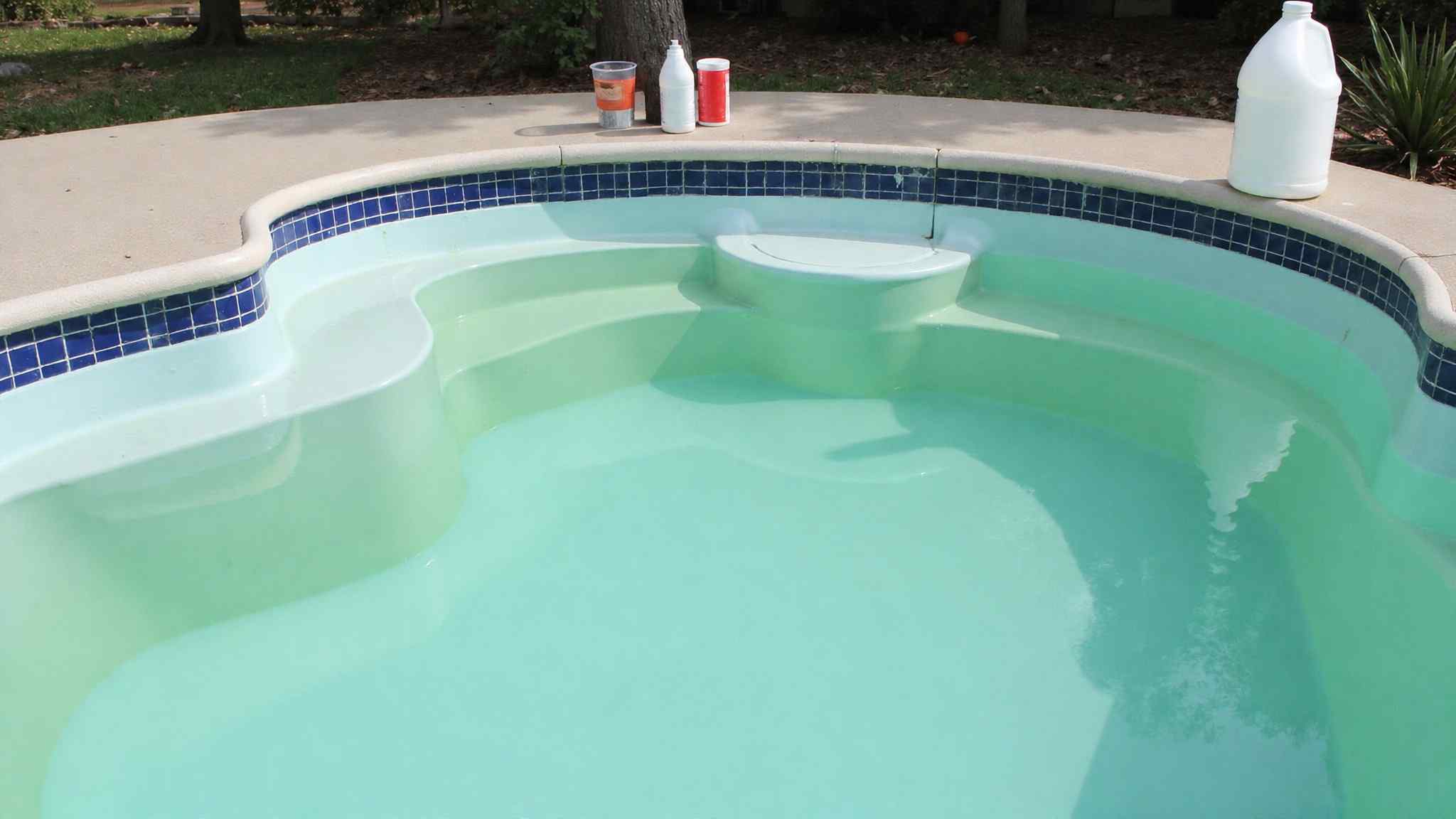
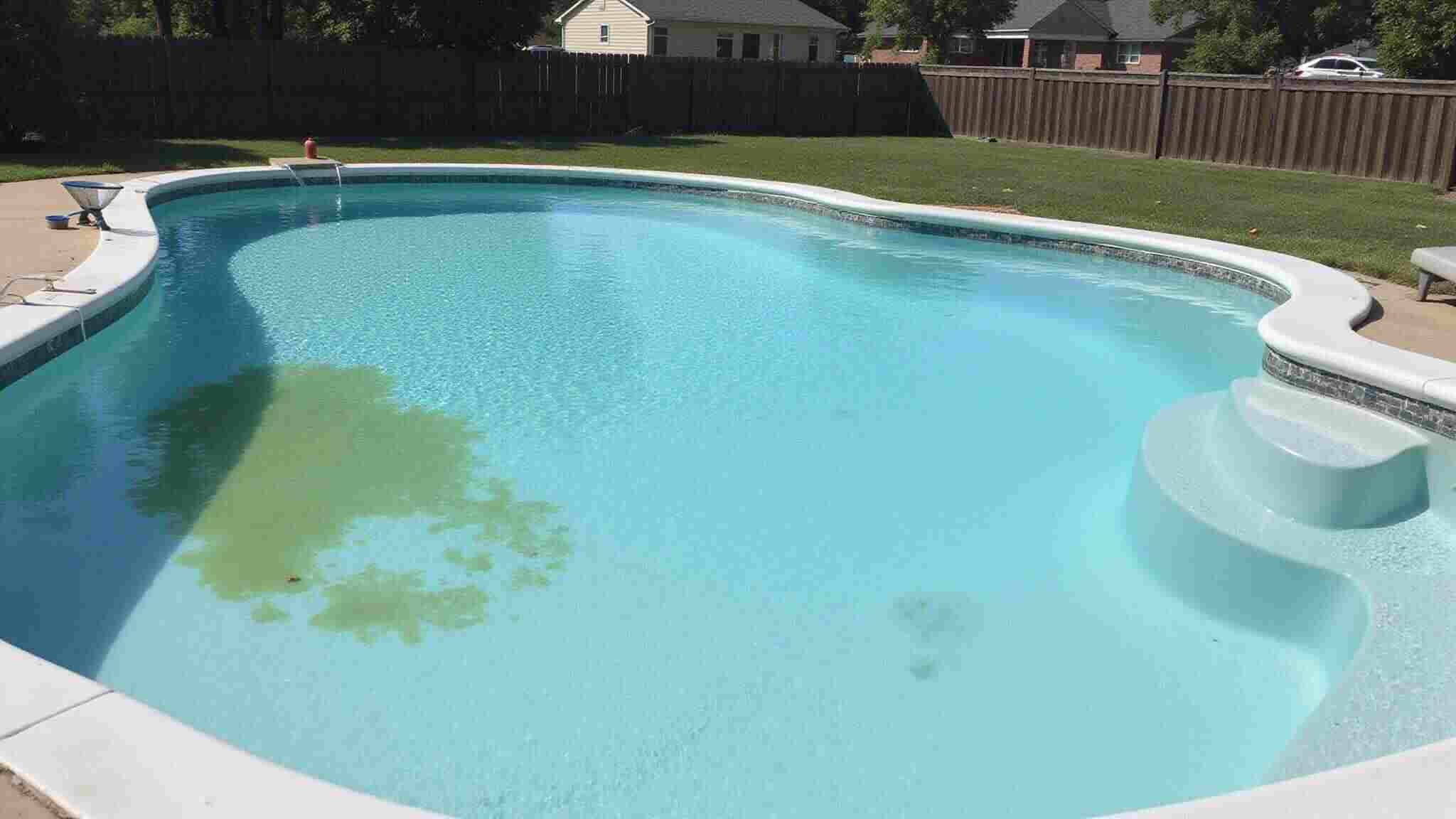
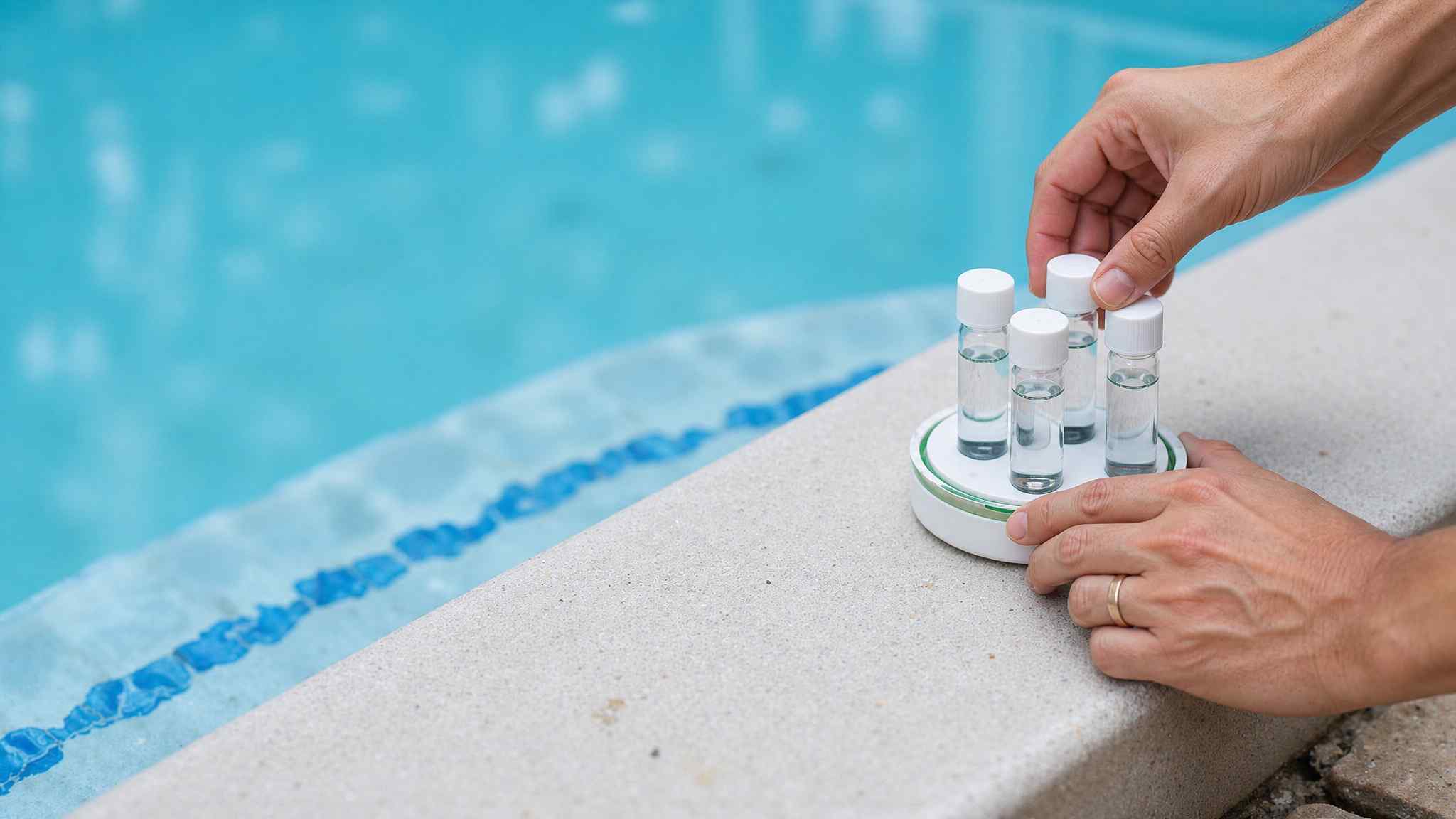
Yes, plain bleach honestly wipes out pool algae. It contains sodium hypochlorite, the same active chlorine in pool sanitizer, just at a lower concentration around 6%. To kill a bloom, you’ll need shock-level doses (often two to three times normal) plus enough contact time. Balance your pH to 7.2, 7.6 first, brush the algae loose, then add bleach slowly with the pump running. There’s more you’ll want to know before you start.
Key Takeaways
- Yes, plain unscented bleach kills pool algae because it contains sodium hypochlorite, the same active chlorine used in pool shock.
- Bleach kills algae by releasing free chlorine that oxidizes and destroys the cell walls and internal structures.
- Effective cleanup requires shock-level chlorine concentrations, not small maintenance doses, plus adequate contact time.
- A rough guideline is about three gallons of 6% bleach per 10,000 gallons, with more needed for heavy growth.
- Brush algae loose, balance pH to 7.2, 7.6, run circulation, and retest chlorine to confirm effective dosing.
Does Bleach Kill Algae in a Pool
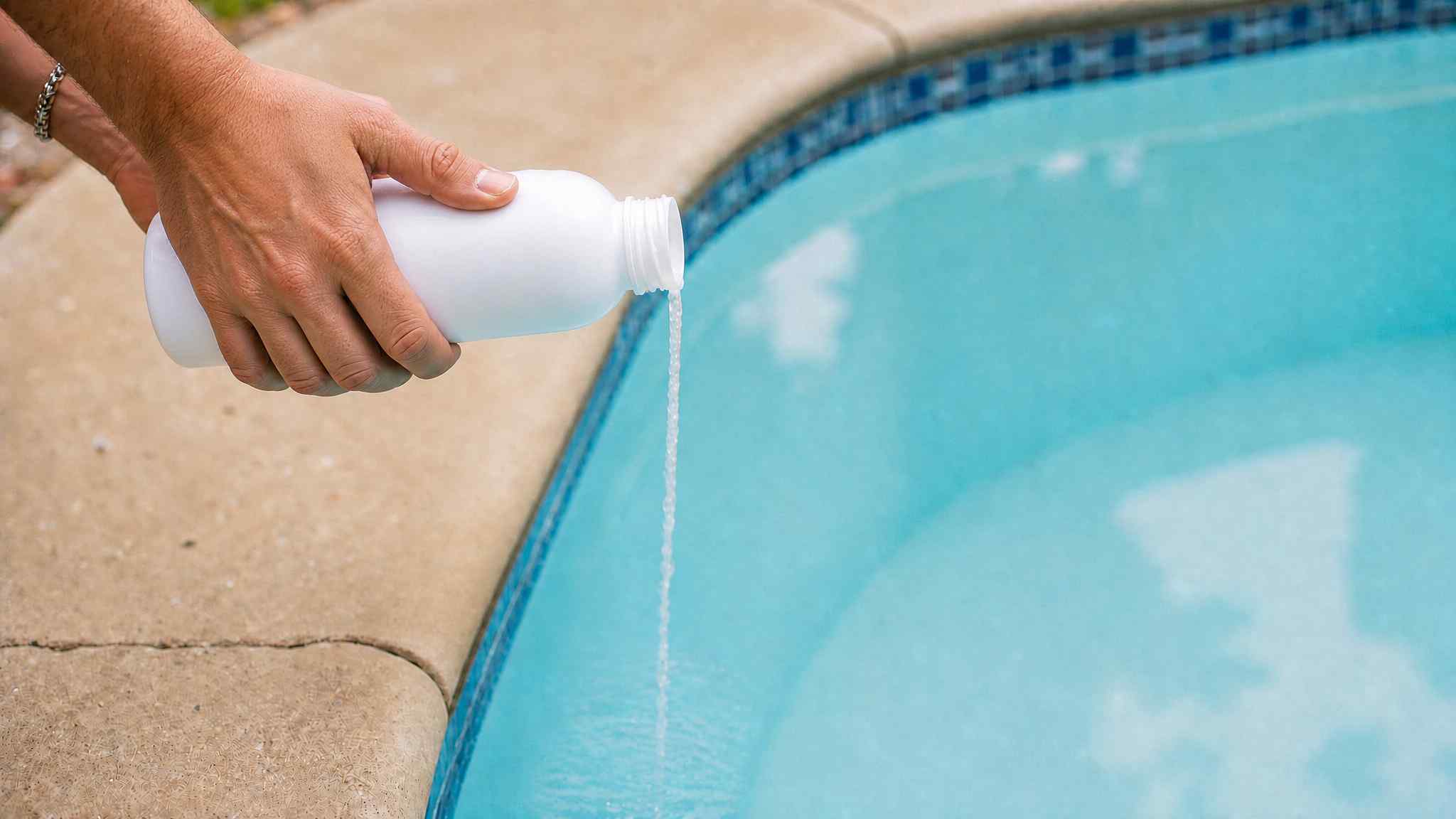
Bleach kills algae in a pool by releasing chlorine that oxidizes and destroys algae cells. Plain, unscented bleach contains sodium hypochlorite, the same active chlorine compound used in pool sanitation. When you add it to your pool, that chlorine oxidizes algae cells, breaking down their structure and destroying them. So yes, bleach kills algae, but only when you dose it correctly and maintain sufficient contact time.
You’ll need a high enough free chlorine level to overwhelm the growth, especially with moderate infestations. Don’t expect a small maintenance dose to work, algae cleanup usually demands shock-level concentrations.
Keep in mind that bleach acts strictly as a chlorine source, not a complete solution. It’ll destroy existing algae, but you must still brush, circulate, and filter to remove dead cells and prevent regrowth.
How Does Bleach Kill Algae
Bleach kills algae by oxidizing its cell walls and internal structures. The sodium hypochlorite in bleach releases free chlorine, which breaks down algae cell walls and destroys the internal structures the organisms need to survive. When you add enough bleach to reach a shock-level free chlorine concentration, the oxidation overwhelms the algae faster than it can regrow.
For this treatment to work, you’ve got to maintain sufficient contact time. Chlorine needs minutes to hours in the water to fully oxidize algae colonies, so keep your pump running to distribute it evenly. Brushing helps by exposing protected cells inside dense growth. Without adequate chlorine levels, circulation, and contact, the oxidation stays incomplete, and surviving algae will simply recolonize the basin.
How Much Bleach Do You Need for Your Pool Size
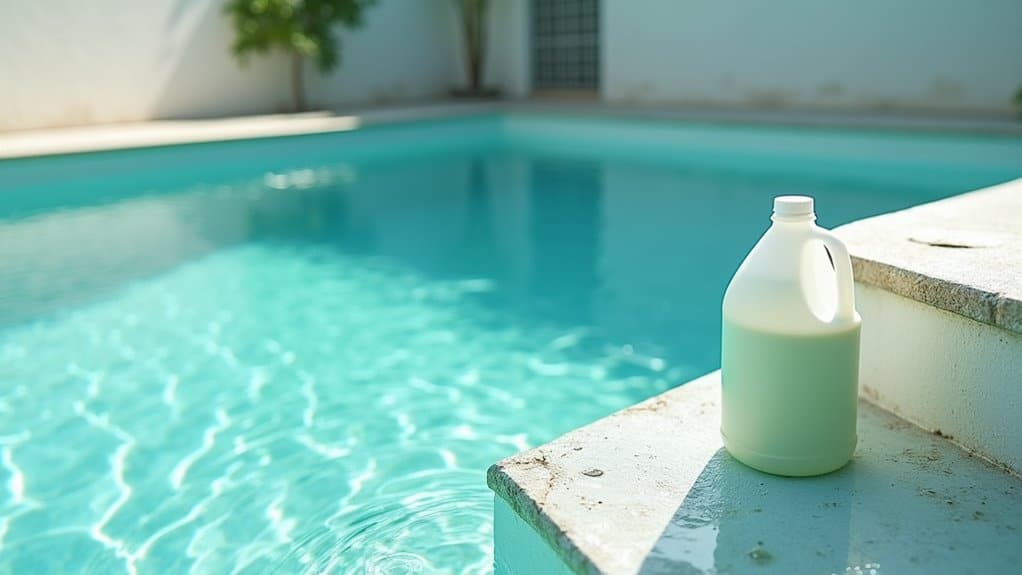
You need roughly three gallons of 6% bleach per 10,000 gallons for mild green algae. Heavier growth demands more, often two to three times your normal chlorine dose. Always test your free chlorine after adding, and supplement if levels fall short of the shock threshold.
| Pool Volume | Mild Algae (6% bleach) | Super-Chlorination |
|---|---|---|
| 5,000 gal | 1.5 gallons | 6, 12 cups |
| 10,000 gal | 3 gallons | 12, 24 cups |
| 15,000 gal | 4.5 gallons | 18, 36 cups |
| 20,000 gal | 6 gallons | 24, 48 cups |
Add bleach gradually with the pump running, distributing it around the basin. Retest before assuming you’ve dosed enough.
How Do You Apply Bleach to Treat Algae Safely
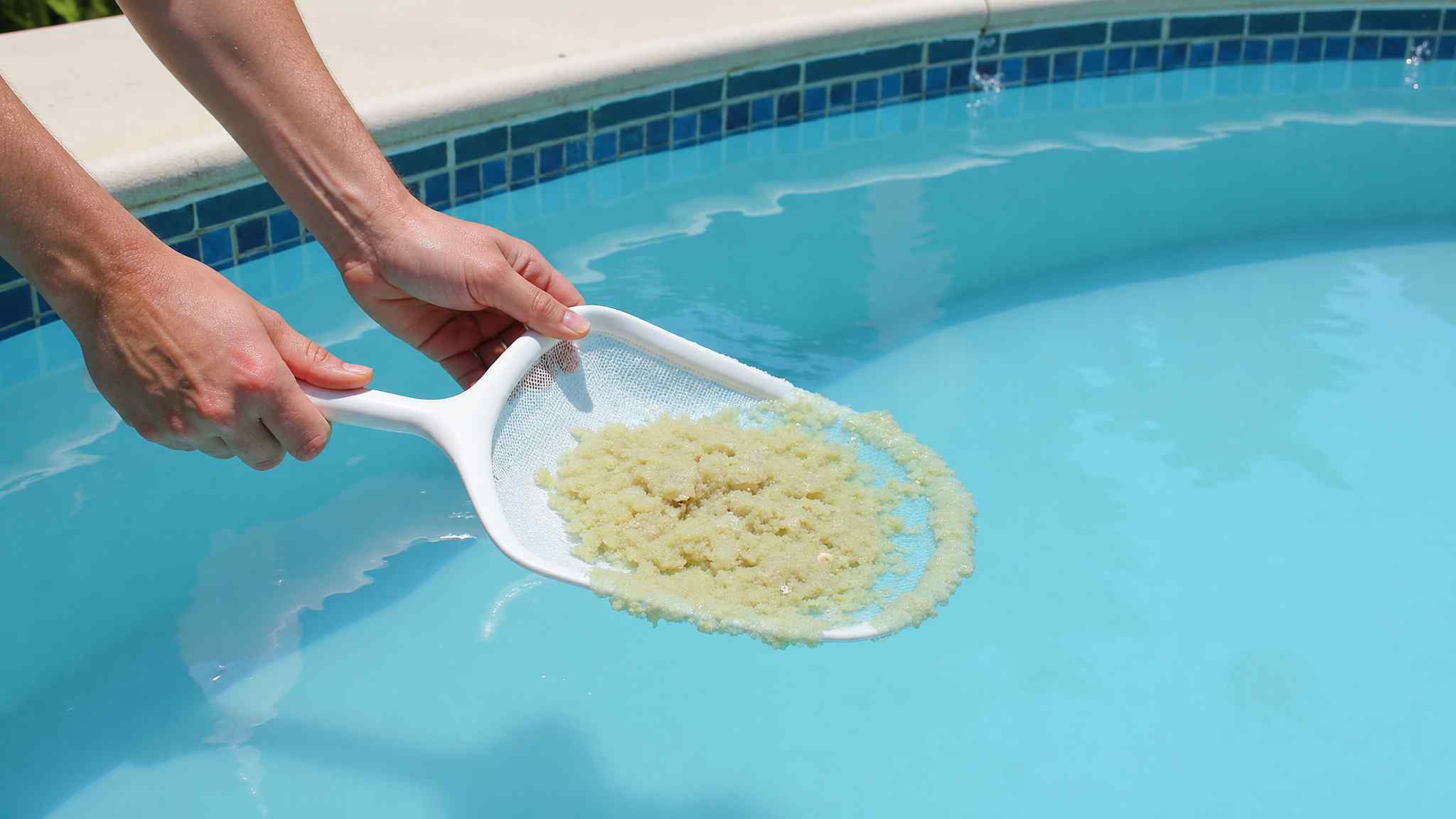
Apply bleach to treat algae safely by balancing pH to 7.2, 7.6, circulating the water, brushing algae loose, and adding the bleach slowly around the perimeter. Bleach oxidizes algae most effectively within that pH range. Turn on the pump and keep it running continuously to distribute chlorine throughout the basin. Brush the walls and floor first, loosening algae colonies so chlorine can penetrate cell structures instead of skimming over slime. Pour the bleach slowly around the perimeter, targeting visible growth. Let circulation and filtration work, then test your free chlorine level. If it’s dropped too low, add more. Vacuum and filter out dead algae afterward. Don’t swim until chlorine returns to a normal range and the water’s clear enough for safe visibility.
How Does Bleach Compare to Pool Shock and Algaecide
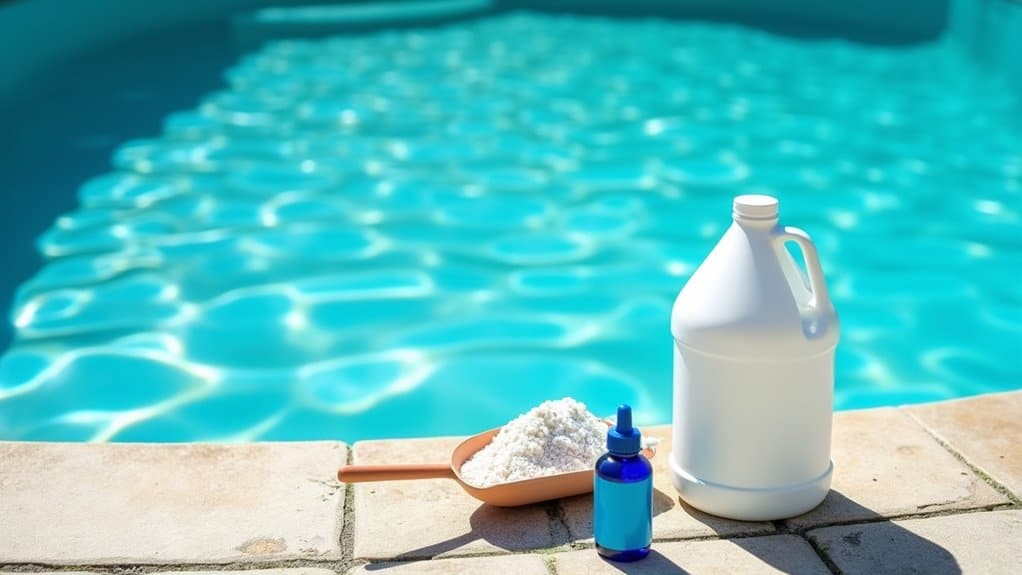
Bleach compares to pool shock as a lower-concentration chlorine option, while algaecide serves a different role in algae prevention and control. Bleach and pool shock share the same active ingredient, sodium hypochlorite, so they oxidize algae identically. The difference is concentration. Household bleach typically runs 6%, while liquid pool chlorine and granular shock deliver higher, more efficient sanitizing power per unit. For heavy infestations, you’ll pour far more bleach to reach shock-level free chlorine, which gets impractical fast.
Algaecide works differently. It doesn’t sanitize; it disrupts algae growth and cell function, often as a preventive follow-up after chlorine treatment. You shouldn’t rely on it to eliminate active blooms alone.
For mild growth, bleach handles the job. For stubborn or recurring algae, pool-grade chlorine plus algaecide gives you stronger, more targeted control.
What Are the Risks of Using Bleach in a Pool
Using bleach in a pool can create unsafe chlorine levels, damage surfaces and equipment, raise pH, degrade quickly in sunlight, and pose handling hazards. Overdosing spikes free chlorine to unsafe levels, so you can’t swim until it drops back to a normal range and the water clears. High chlorine concentrations can damage liner surfaces, corrode metal fittings, and bleach vinyl if you pour bleach directly onto them instead of diluting into circulating water. Because bleach raises pH, you’ll need to retest and adjust to stay within 7.2, 7.6, or you’ll reduce sanitizing efficiency. Unstabilized chlorine degrades fast in sunlight, so you might overapply chasing a target level. Handle bleach as a corrosive chemical, wear eye and skin protection, never mix it with acids or other pool chemicals, and store it away from heat.
How Do You Prevent Algae After Treating It
Prevent algae after treating it by keeping the water properly sanitized, balanced, circulated, filtered, and brushed. Keep your free chlorine within a normal sanitizing range and test it regularly, adding bleach whenever levels drop too low. Hold pH between 7.2 and 7.6, since balanced water lets chlorine work efficiently. Run your pump continuously enough to circulate treated water through the entire basin, and clean or backwash your filter to remove trapped dead algae. Brush walls and floors routinely to disrupt colonies before they establish. Because unstabilized chlorine from bleach breaks down quickly in UV light, you’ll need consistent dosing during sunny periods. Correct root causes too, poor circulation, weak filtration, or high pH, otherwise algae weakens temporarily but returns once conditions favor it again.
Conclusion
So, does plain bleach really kill pool algae? Yes, it does, because it’s the same sodium hypochlorite that pool shock uses, just more dilute at around 6%. The keys to success are dosing to shock-level free chlorine (roughly three gallons per 10,000 gallons for mild growth, more for heavy blooms) and giving it enough contact time. Set yourself up to win by balancing pH to 7.2, 7.6 first, brushing the algae loose, then pouring the bleach slowly around the perimeter with the pump running, and retest before assuming you’re done. Handle it carefully, never mix it with other chemicals, and finish by vacuuming and filtering out the dead algae. Then keep it from returning with steady sanitation, balanced water, strong circulation, clean filters, and routine brushing, and your pool stays clear, healthy, and swim-ready.
Choose a Fiberglass Pool That Resists Algae
Algae growth is far easier to control with a smooth-surface fiberglass pool from an authorized installer. At Schiller Pools in Palm City, FL, our experienced team provides trusted San Juan Fiberglass Pools with expert installation and algae-resistant design. Call +1 (561) 475-5997 today and get your free estimate.
Frequently Asked Questions
Can I Mix Bleach With Other Pool Chemicals at the Same Time?
No, you shouldn’t mix bleach directly with other pool chemicals. Combining sodium hypochlorite with acids, algaecides, or shock products can trigger dangerous reactions, releasing toxic chlorine gas or causing violent heat buildup. Instead, you’ll want to add each chemical separately, allowing your pump to circulate the water fully between additions. Always test your levels afterward, and never pre-mix concentrated products in the same container; doing so risks serious injury and equipment damage.
How Long Does Bleach Stay Effective Once Opened and Stored?
You’ll find that opened bleach loses potency fairly quickly, degrading roughly 20% per year under ideal conditions, but heat, light, and air accelerate this considerably. Once you’ve broken the seal, expect noticeable strength loss within about six months. Store it cool, dark, and tightly sealed to slow decomposition. Since weakened bleach won’t deliver reliable chlorine levels, you’ll need to test your dosing and increase quantities if the product’s aged.
Will Bleach Damage My Pool Liner, Plaster, or Vinyl Surfaces?
Bleach won’t damage your pool liner, plaster, or vinyl if you dose it correctly and keep circulation running. Problems arise when you pour concentrated bleach directly onto surfaces, causing localized bleaching or vinyl degradation. Always dilute it, distribute it around the basin, and run your pump to prevent pooling. Keep your pH balanced around 7.2, 7.6, since imbalanced water stresses surfaces more than properly diluted chlorine ever will.
Does Water Temperature Affect How Well Bleach Kills Algae?
Yes, water temperature affects how well bleach kills algae. In warmer water, chlorine reacts faster, so you’ll often see quicker oxidation of algae cells. However, warmth also speeds chlorine breakdown and accelerates algae growth, so you’ll need to monitor free chlorine closely and re-dose as needed. In colder water, reactions slow down, requiring longer contact time. Keep your circulation running, brush thoroughly, and test chlorine levels regularly for reliable results.
Can I Use Bleach in Saltwater or Above-Ground Pools?
Yes, you can use plain unscented bleach in both saltwater and above-ground pools, since it’s just a sodium hypochlorite chlorine source. In saltwater systems, it supplements your salt cell without harming it. For above-ground pools, confirm your liner tolerates direct chlorine contact and pre-dilute the bleach in water before adding it. Keep your pH balanced at 7.2, 7.6, run circulation continuously, and test free chlorine after dosing to protect surfaces.