

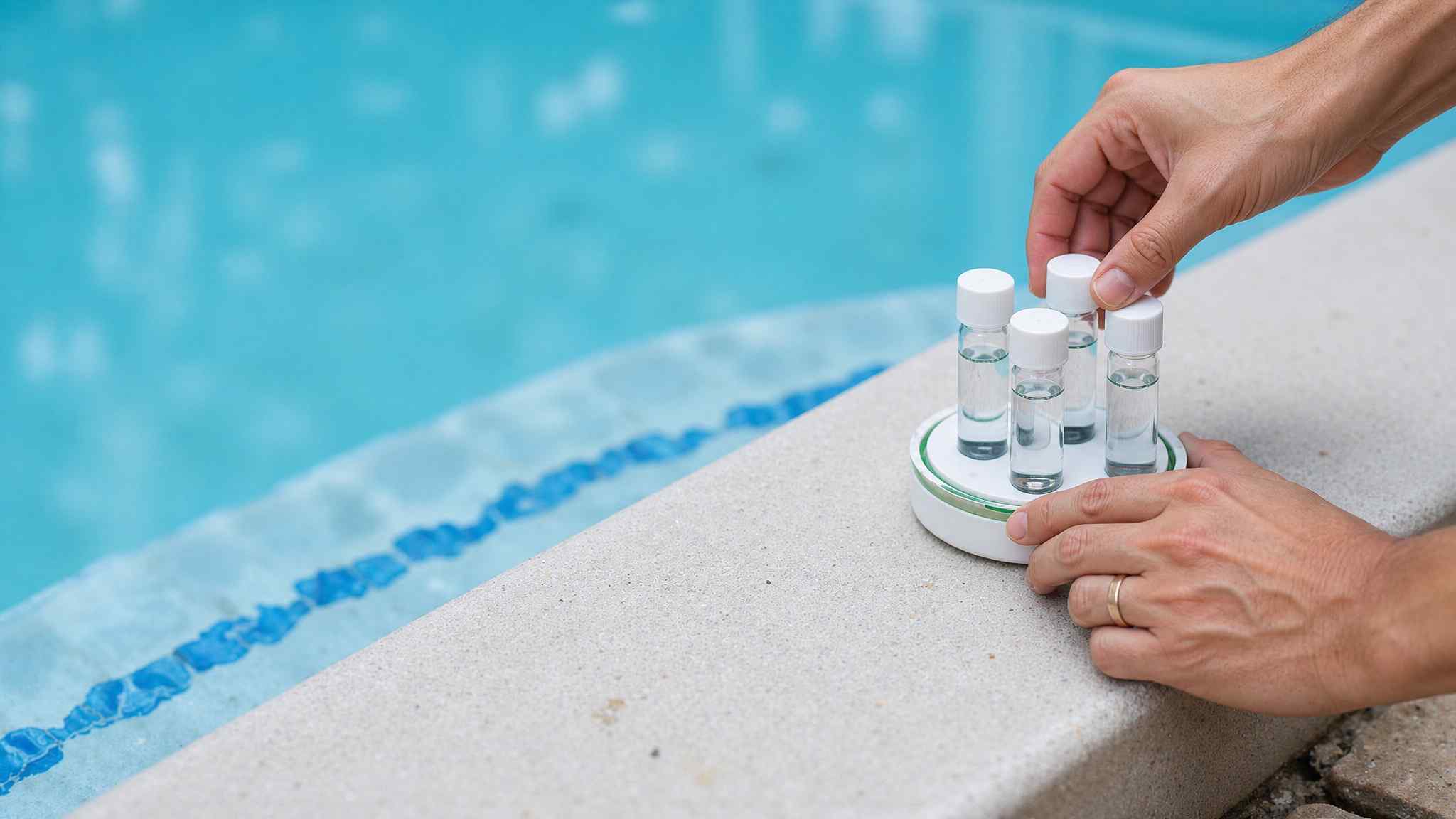
To test pool alkalinity precisely in a couple minutes, collect a representative sample 12, 18 inches below the surface, away from jets and skimmers. Rinse a clean tube, then fill to 25 mL. Add 2 drops of R-0007 and 5 drops of R-0008, then swirl. Add R-0009 one drop at a time until the first permanent color change. Multiply your drop count by 10 for ppm. Keep going to master every detail.
Key Takeaways
- Collect water 12, 18 inches deep, away from jets and skimmers, using a clean tube for accurate results.
- Use a liquid drop kit for precise titration, or a colorimeter for the highest measurement accuracy.
- Fill to 25 mL, add 2 drops R-0007 and 5 drops R-0008, then swirl.
- Add R-0009 one drop at a time, swirling until the first permanent color change appears.
- Multiply the acid titrant drop count by 10 for total alkalinity in ppm as calcium carbonate.
How Do You Test Pool Alkalinity
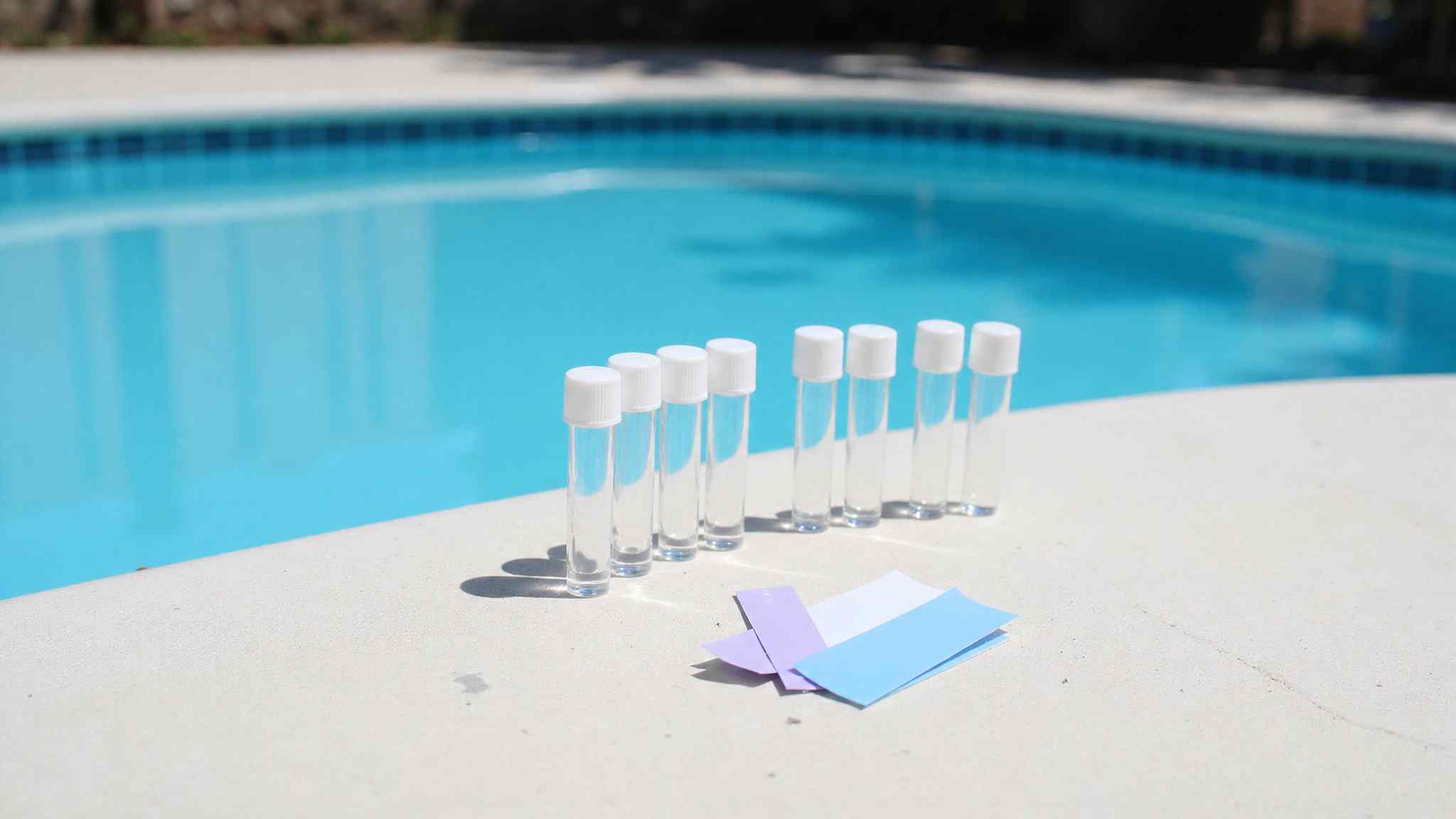
Test pool alkalinity by collecting a representative water sample and using either a drop-based test kit or test strips. Draw water from 12, 18 inches below the surface, away from return jets and skimmers, so localized effects don’t skew your reading. Use a clean tube to avoid residue that distorts water chemistry results.
Choose your method based on precision needs. A drop-based test kit delivers reliable total alkalinity values, while strips work for fast screening. For the drop kit, fill the test cell to the marked line or 25 mL mark.
Then follow the reagent order precisely, add titrant one drop at a time, and count each drop. Multiply the count by 10 to get total alkalinity in ppm as calcium carbonate. Re-test if the endpoint looks unclear.
What Is the Ideal Alkalinity Range for a Pool
The ideal pool alkalinity range is 80, 120 ppm as calcium carbonate. Keeping your water within this band stabilizes pH and prevents rapid swings that corrode surfaces or cloud the water. When you drop below 80 ppm, pH becomes erratic and aggressive. Above 120 ppm, you risk scaling and cloudy water. Verify your reading against this range every time you test, whether you’re using a drop kit, colorimeter, or test strips. If your result lands outside 80, 120 ppm, confirm it with a fresh sample and clean tube before adjusting. Test at least once weekly for routine maintenance, and increase frequency after heavy use or rain, since those conditions shift balance quickly. Consistent sampling and accurate drop counting keep your target range reliable.
What Are the Different Ways to Test Alkalinity
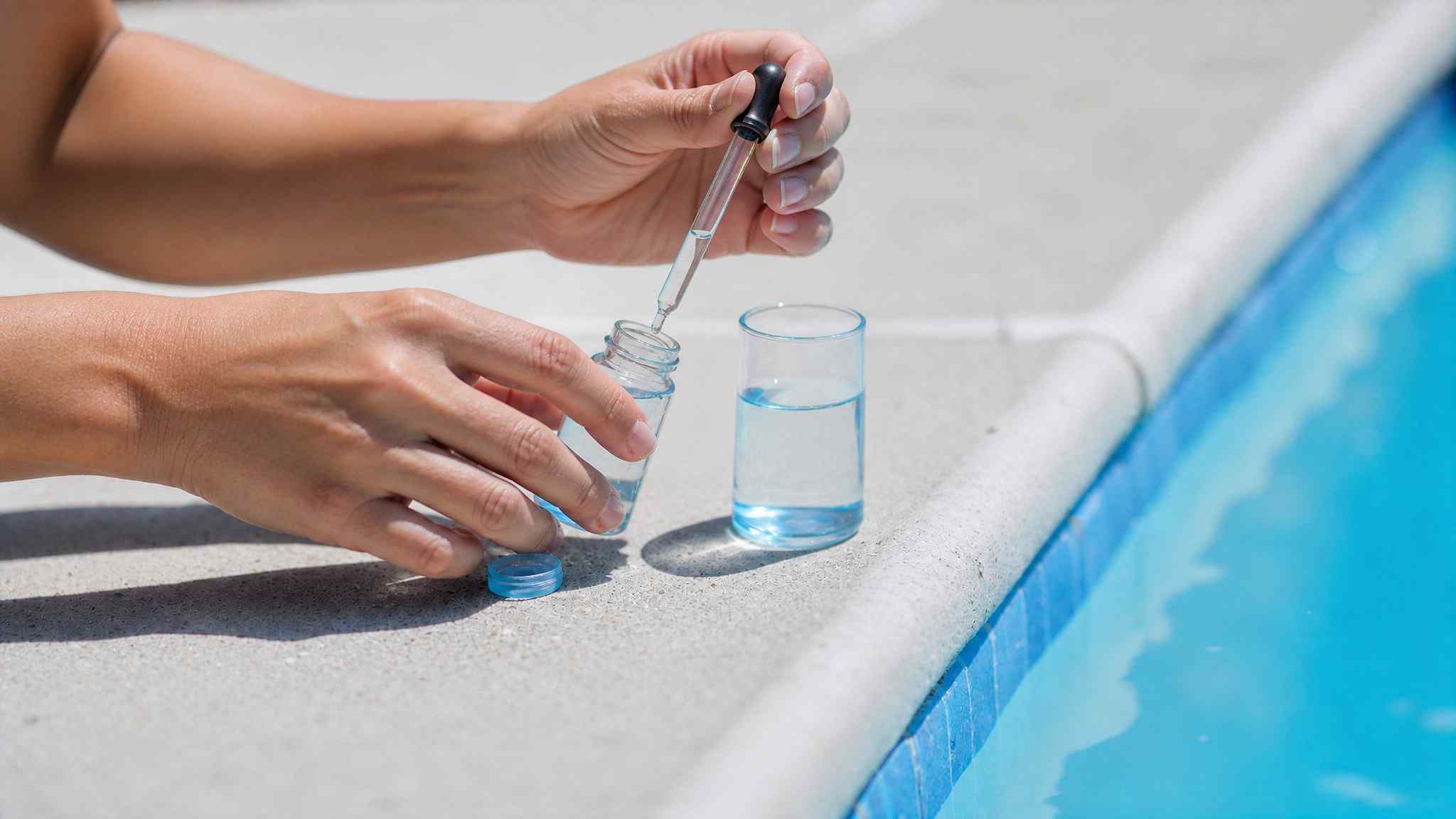
The different ways to test alkalinity are quick test strips, liquid drop kits, and colorimeters. Strips deliver fast screening, while drop tests give you higher precision for confident adjustments.
| Method | Best Use |
|---|---|
| Test strips | Fast screening in seconds |
| Liquid drop kit | Precise titration results |
| Colorimeter | Highest measurement accuracy |
With strips, you dip fully for two seconds, shake off excess, wait fifteen seconds, then compare against the bottle chart within thirty seconds. With a drop kit, you titrate reagent one drop at a time and count to the endpoint. Choose strips when speed matters and drop kits when accuracy drives your decision.
How Do You Use a Test Kit or Test Strips Step by Step
Use a test kit or test strips by collecting a representative sample from 12 to 18 inches below the surface, away from return jets and skimmers, using a clean tube or container.
For a drop kit, rinse the tube with pool water, then fill to the marked line or 25 mL. Add 2 drops of R-0007, then 5 drops of R-0008, and swirl. The sample turns green or blue-green. Add R-0009 one drop at a time, swirling after each, until the first permanent color change. Multiply the drop count by 10 for ppm.
For strips, dip fully for 2 seconds, shake off excess, wait 15 seconds, then compare the pad to the bottle chart within 30 seconds.
How Often Should You Test Your Pool’s Alkalinity
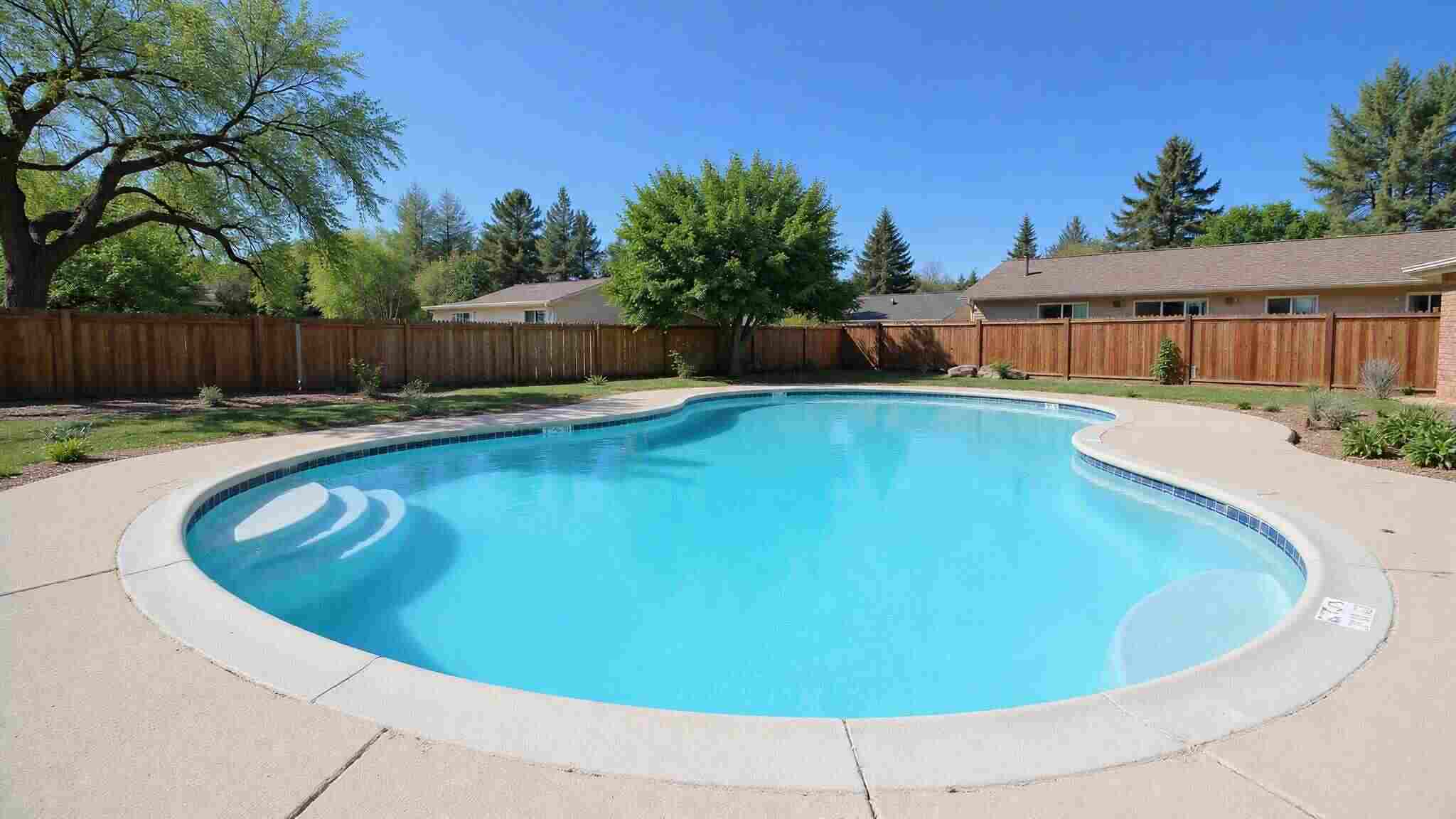
Test your pool’s alkalinity at least once per week for standard maintenance. This weekly cadence catches gradual shifts before they compromise water balance. Increase your testing frequency after heavy bather load or rainfall, since both conditions dilute or disrupt chemistry quickly and push readings outside the target range.
Aim to hold alkalinity within the commonly cited 80, 120 ppm range. When you detect a value drifting toward either limit, retest promptly and adjust before the imbalance affects pH stability.
You can complete a test in a couple of minutes using a strip test or a practiced drop test, so frequent checks don’t burden your schedule. Consistent sampling depth, correct reagent order, and careful drop counting keep your recurring results reliable.
How Do You Read and Act on Your Results
Read your results by multiplying the acid titrant drop count by 10 for common Taylor and similar pool kits, then record the result as total alkalinity in ppm as calcium carbonate. Count each acid titrant drop carefully, because that count directly determines your total alkalinity. Ignore the final extra drop if it doesn’t produce a lasting color change. If the endpoint looks unclear or the color briefly oscillates as you swirl, re-test with a fresh sample and clean tube.
Compare your result to the ideal 80, 120 ppm range. If you read below 80, you’ll need to raise alkalinity; above 120, you’ll lower it. If readings come back unexpectedly low or high, repeat the test before adjusting, since a skewed sample wastes chemicals and effort.
How Do You Choose the Right Testing Method
Choose the right testing method by matching speed and precision to your testing goal. Choose strips when you want fast screening. Dip fully for about 2 seconds, shake off excess water, wait 15 seconds for the pad to develop, then compare to the bottle chart within 30 seconds. Strips get you a couple-minute answer, but they trade precision for speed.
Choose a liquid drop kit or colorimeter when you need higher precision. Drop tests let you count titrant drops for a defined endpoint, multiply by 10, and record total alkalinity in ppm as calcium carbonate. Use drops for routine accuracy and troubleshooting. Reserve strips for quick checks between more exact tests.
Conclusion
Testing your pool’s alkalinity is quick, easy, and the foundation of balanced water, so it’s well worth doing right. Pull a representative sample 12, 18 inches down, away from jets and skimmers, into a clean tube, then pick your method: a drop kit (25 mL, 2 drops R-0007, 5 drops R-0008, then R-0009 one drop at a time to the first permanent color change, multiplied by 10) for precise numbers, or strips for a fast screening check. Aim to hold your reading in the ideal 80, 120 ppm range, test weekly and more often after rain or heavy use, and re-test whenever an endpoint looks unclear. Nail the sampling depth, reagent order, and drop count, and you’ll get reliable results in a couple of minutes, giving you the confidence to keep your pH steady and your water clear all season.
Call Today and Build a Pool Made for Easy Care
From alkalinity balancing to overall water chemistry, quality pool construction makes maintenance simple. At Schiller Pools in Stuart, FL, our skilled team delivers dependable Pool Construction designed for long-term enjoyment and easy upkeep. Call +1 (561) 475-5997 today and start planning your dream pool.
Frequently Asked Questions
How Do I Raise or Lower My Pool’s Alkalinity?
First confirm your reading by testing accurately, targeting the commonly cited ideal range of 80, 120 ppm. If your result falls outside that range, re-test with a fresh sample and clean tube to verify before adjusting. For precise chemical treatment, consult a dedicated pool-chemistry resource or product label.
Does High Alkalinity Affect pH or Chlorine Effectiveness?
Yes, high alkalinity affects both. It resists pH adjustments, so you’ll find pH harder to move and often drifting upward, which pushes water toward scaling. Elevated pH from that drift reduces chlorine’s effectiveness, since chlorine sanitizes less efficiently as pH climbs. You’ll get sluggish, cloudy water and weaker disinfection. Keep alkalinity in the 80, 120 ppm range so your pH stays stable and your chlorine works at full strength.
Can Old or Expired Reagents Cause Inaccurate Alkalinity Readings?
Yes, old or expired reagents can skew your alkalinity readings. Degraded titrant or indicator affects drop potency and color development, so your endpoint shifts or looks unclear. To confirm accuracy, hold bottles vertically for consistent drop size, swirl after each drop, and watch for a clean color change. If results read unexpectedly low or high, repeat with fresh reagents, a clean tube, and a new sample to verify.
How Is Total Alkalinity Different From pH?
Total alkalinity and pH measure different things. Total alkalinity quantifies water’s buffering capacity (its resistance to pH change), reported in ppm as calcium carbonate. pH measures how acidic or basic your water is on a 0, 14 scale. You’ll test alkalinity by counting titrant drops and multiplying by 10, targeting 80, 120 ppm. Think of alkalinity as a stabilizer: when you maintain it properly, you’ll keep your pH steady and prevent sudden swings.
Does Cyanuric Acid or Salt Interfere With Alkalinity Tests?
Cyanuric acid can slightly inflate your total alkalinity reading, since it contributes to the measured buffering capacity. Salt doesn’t meaningfully interfere with a standard drop titration. To keep results precise, follow the correct reagent order: add R-0007, then R-0008, then titrate with R-0009 one drop at a time. Multiply your drop count by 10, and re-test with a fresh, clean sample if the endpoint looks unclear or oscillates during swirling.