
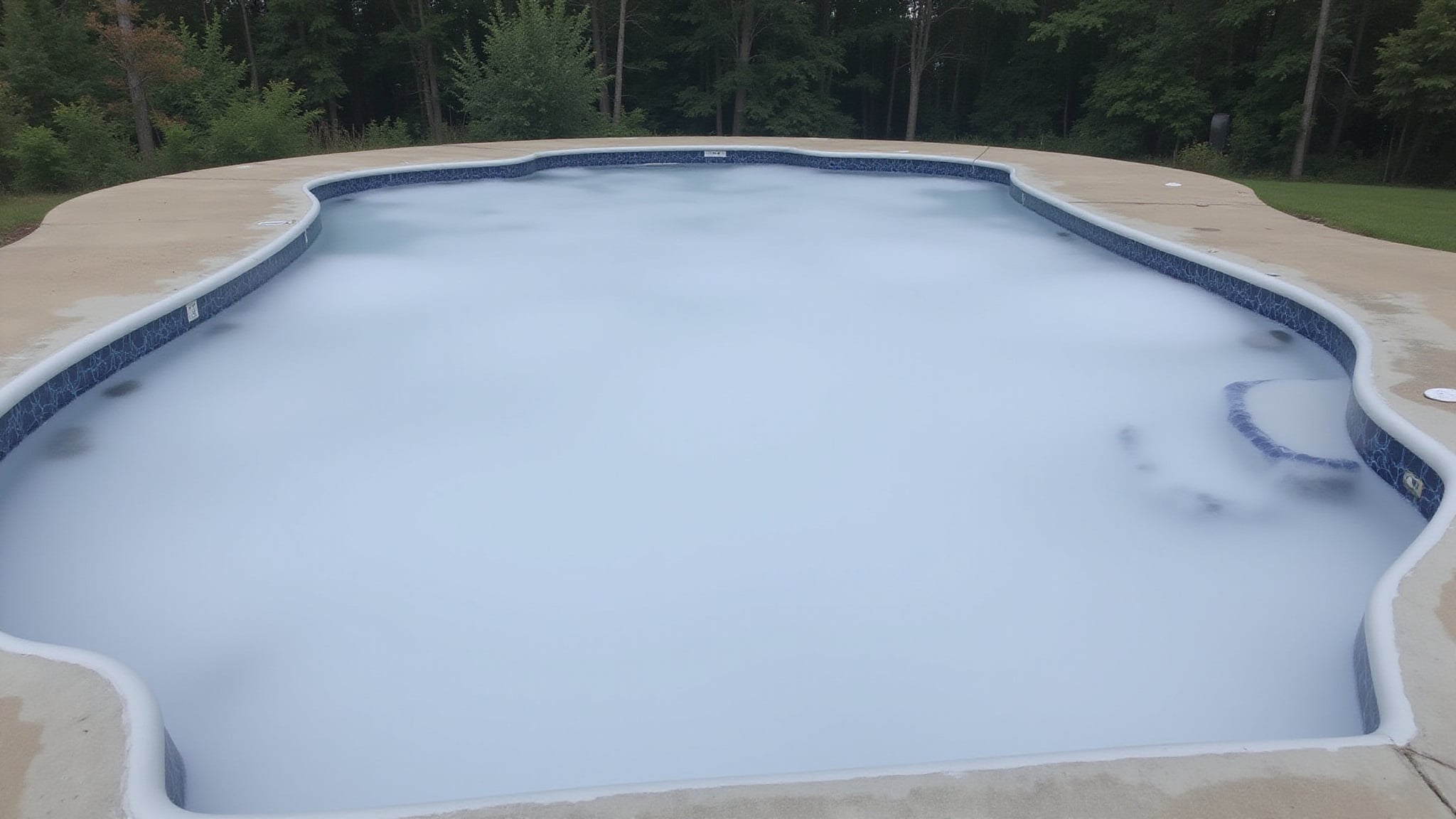
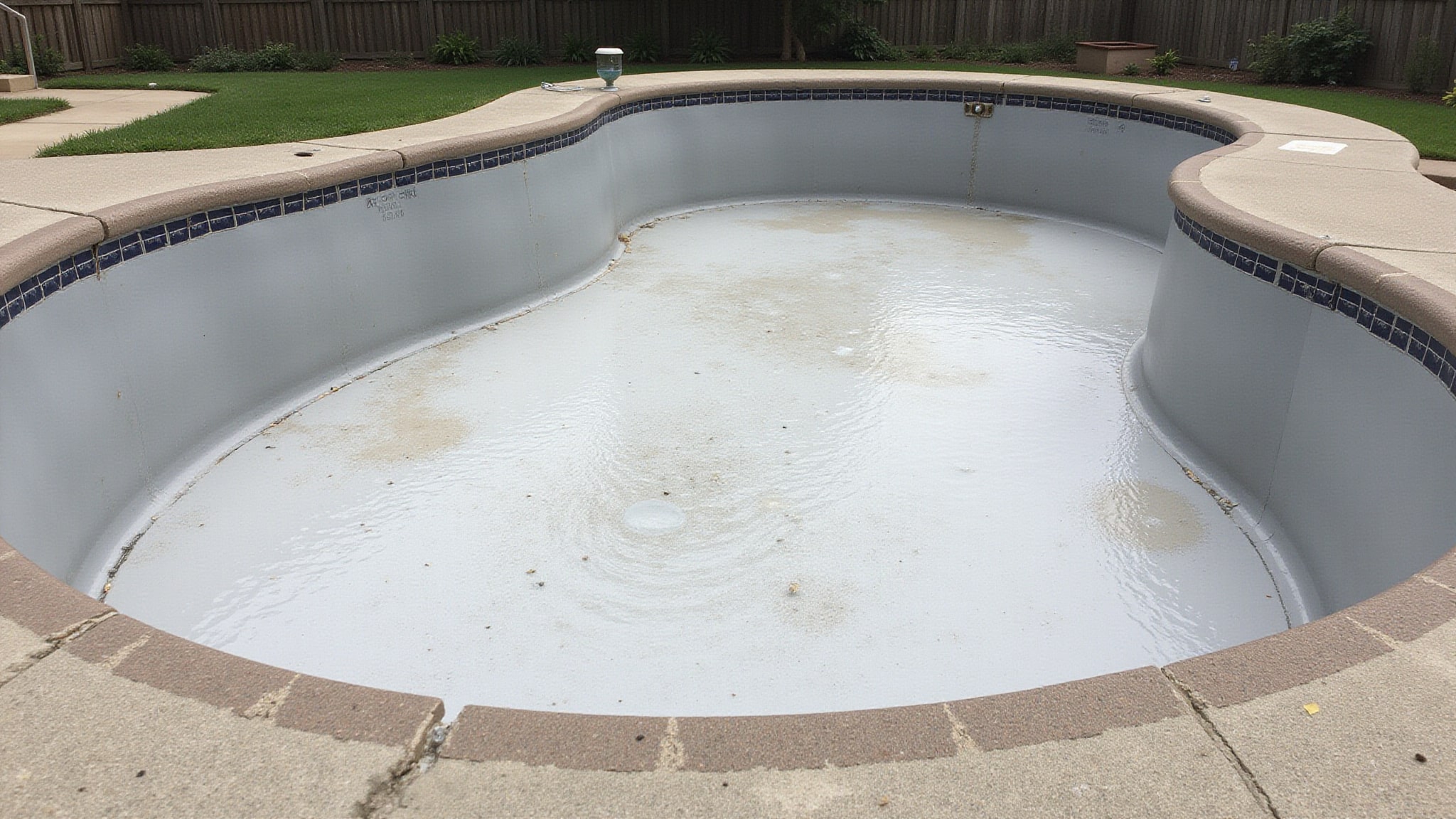
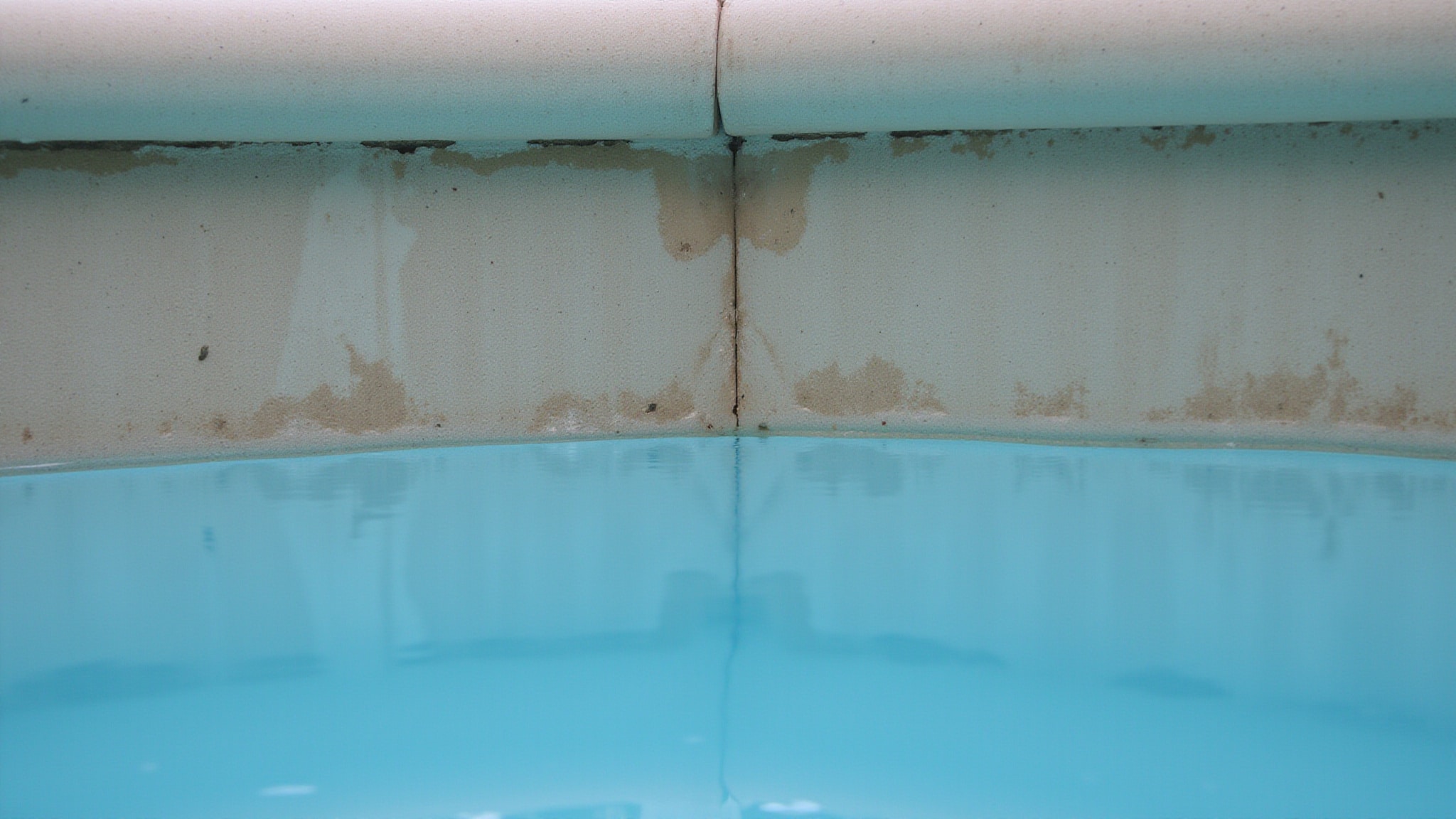
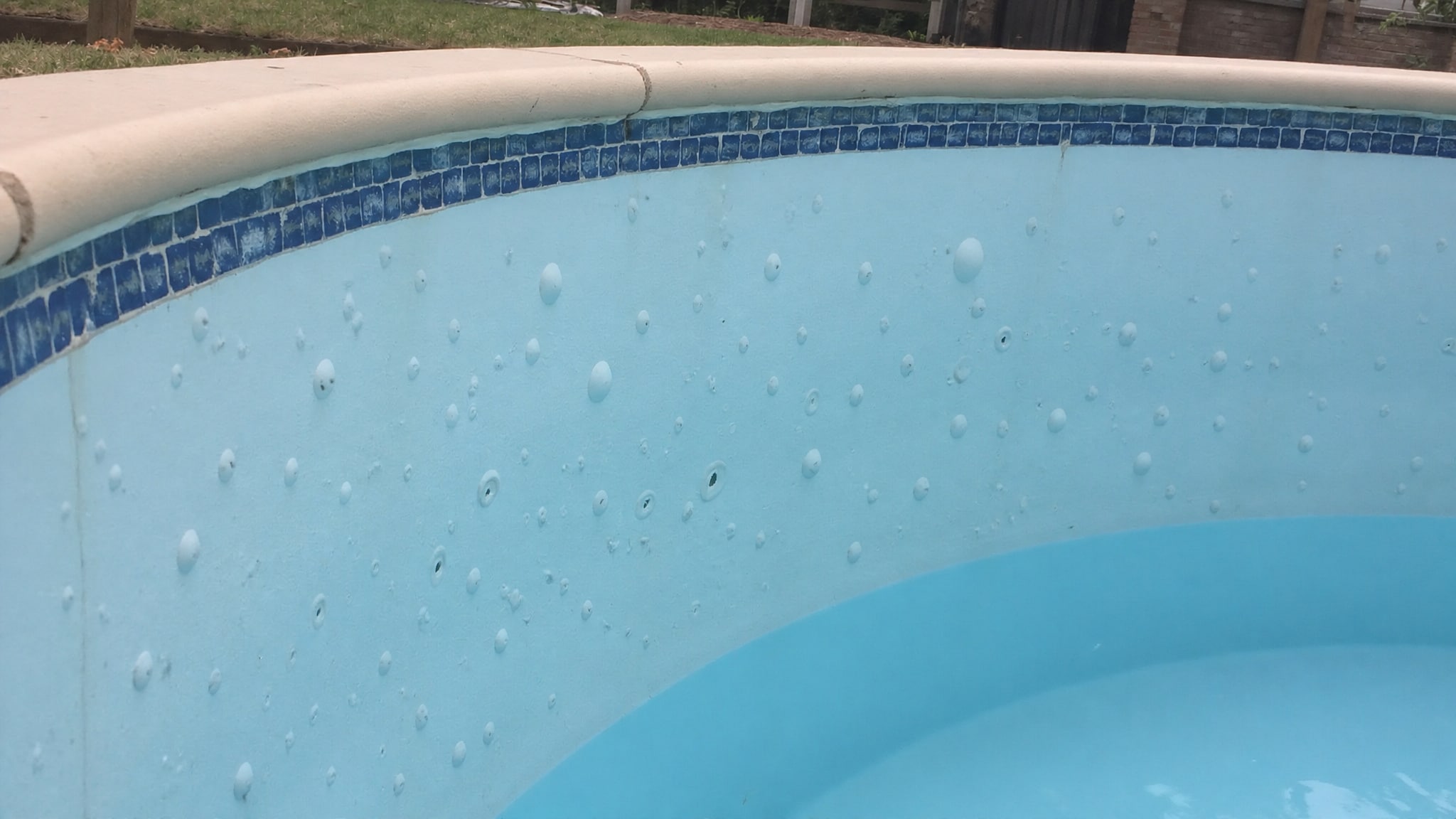
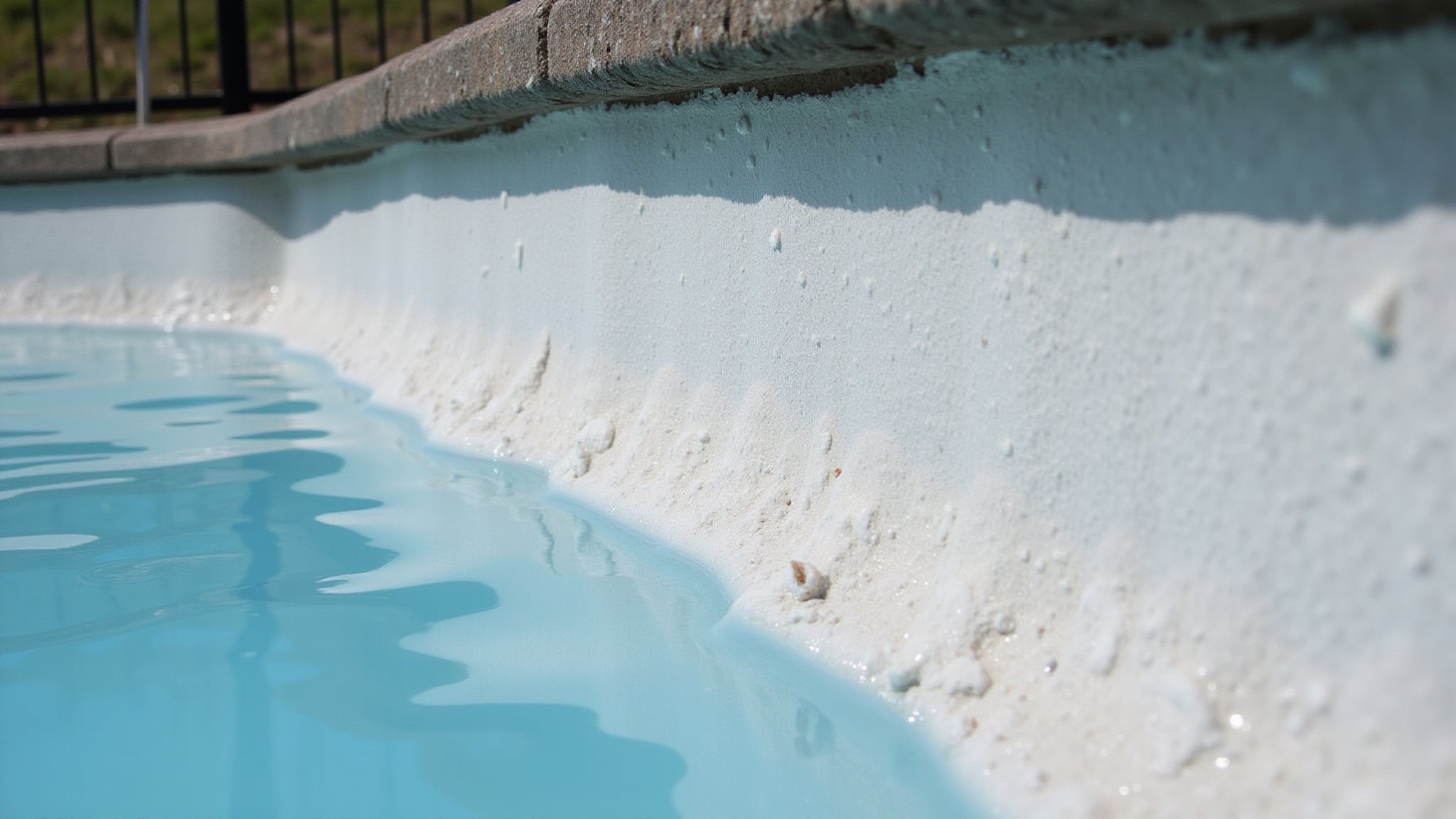
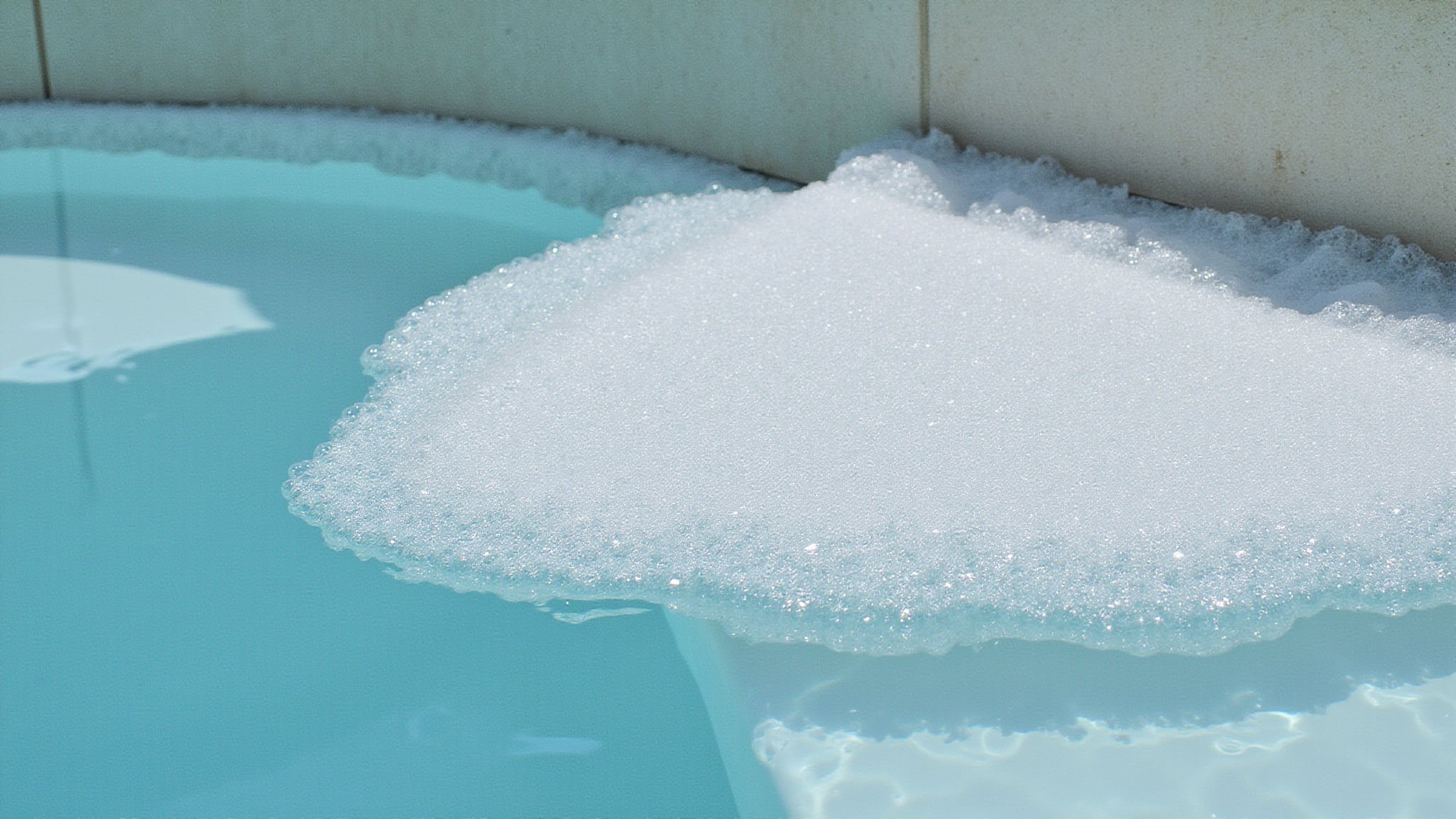
Your fiberglass pool turns cloudy when free chlorine drops below 0.8 ppm, letting bacteria and microscopic algae multiply while ammonia consumes your sanitizer. Push pH above 7.6 or hardness past 300 ppm, and calcium carbonate precipitates into milky crystals. Weak filtration, pump runtimes under 8, 10 hours, leaves fine particles suspended indefinitely. Debris, pollen, and swimmer oils spike chlorine demand fast. Often several of these strike at once, so pinpointing your exact trigger changes everything.
Key Takeaways
- External contamination from tree debris, pollen, and body oils increases chlorine demand and creates persistent haze from fine suspended particles.
- Chemical saturation occurs when pH above 7.6 and hardness above 300 ppm cause calcium carbonate to precipitate into milky, insoluble crystals.
- Filtration failure from pump runtimes below 8, 10 hours or clogged filters leaves fine particles suspended, producing mechanical cloudiness despite balanced chemistry.
- Biological growth thrives when free chlorine drops below 0.8 ppm, letting algae and bacteria multiply and release ammonia that clouds the water.
- Weak circulation creates dead spots near steps, corners, and ladders where debris stays suspended and chlorine cannot reach effective concentrations.
What Makes Fiberglass Pool Water Turn Cloudy?
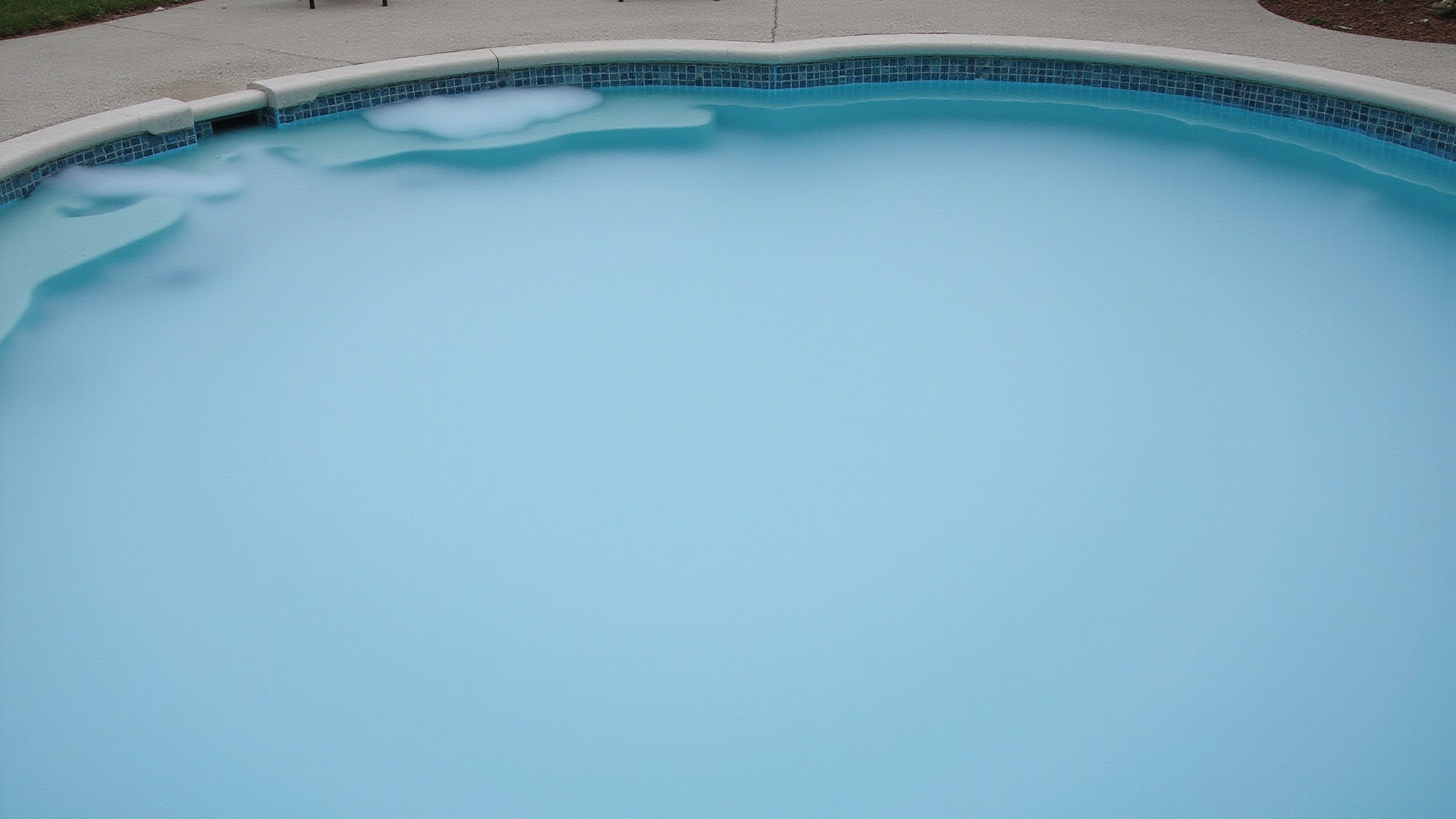
Fiberglass pool water turns cloudy from a measurable disruption in one of four chemical or mechanical systems: external contamination, chemical saturation, filtration failure, or biological growth. Each system leaves a distinct signature. External contamination introduces tree debris, pollen, and body oils that overwhelm your filter’s capacity. Chemical saturation develops when pH climbs above 7.6 or hardness exceeds 300 ppm, triggering calcium precipitation and hazy cloudy pool water. Filtration failure emerges from short pump runtimes below 8-10 hours or clogged cartridges that can’t clear suspended particles. Biological growth begins when free chlorine drops below 0.8 ppm, letting microscopic algae multiply before green color appears. Diagnosing cloudy fiberglass pool water means testing these variables systematically, because pool water problems rarely stem from a single cause.
How Tree Debris and Pollen Cloud Your Pool
When leaves and seeds fall into your pool, they decompose and release organic compounds that increase your water’s ammonia load and cloud it. Pollen from nearby vegetation introduces fine particles that stay suspended, overwhelming your filter’s capacity to trap them. Both contaminants add organic matter that consumes free chlorine, letting cloudiness build faster than your sanitizer can compensate.
Falling Leaves And Seeds
Falling leaves and seeds shed from surrounding trees settle onto the water surface and introduce organic contaminants into your pool. As this debris decomposes, it releases dissolved organic compounds that consume free chlorine, driving sanitizer levels below 0.8 ppm. Once chlorine depletes, microscopic algae and bacteria multiply, producing ammonia that clouds your fiberglass pool water. Seeds and leaves that sink accumulate on surfaces, contributing to organic buildup if you don’t skim daily. This suspended particulate matter overwhelms your filtration capacity, leaving fine particles circulating and creating murky pool water. The organic load also destabilizes your chemistry, increasing chlorine demand faster than standard dosing compensates. Skim the surface daily, maintain adequate chlorine residual, and run your pump long enough to capture settling debris efficiently.
Suspended Pollen Particles
Suspended pollen particles are microscopic and your filtration system struggles to capture them. These fine particles measure just a few microns, small enough to pass through standard cartridge and sand filters and remain suspended throughout your water column. During heavy pollen seasons, or after rain events wash airborne particles into your pool, you’ll notice persistent cloudiness that daily skimming won’t resolve.
Suspended pollen also feeds biological activity. As these organic particles decompose, they consume free chlorine and elevate your sanitizer demand, dropping levels below the 0.8 ppm threshold where algae and organic matter multiply. You’ll need a clarifier to coagulate these tiny particles into larger masses your filter can trap, combined with extended pump runtime to clear the haze.
Why Swimmer Oils Overwhelm Your Pool Filter
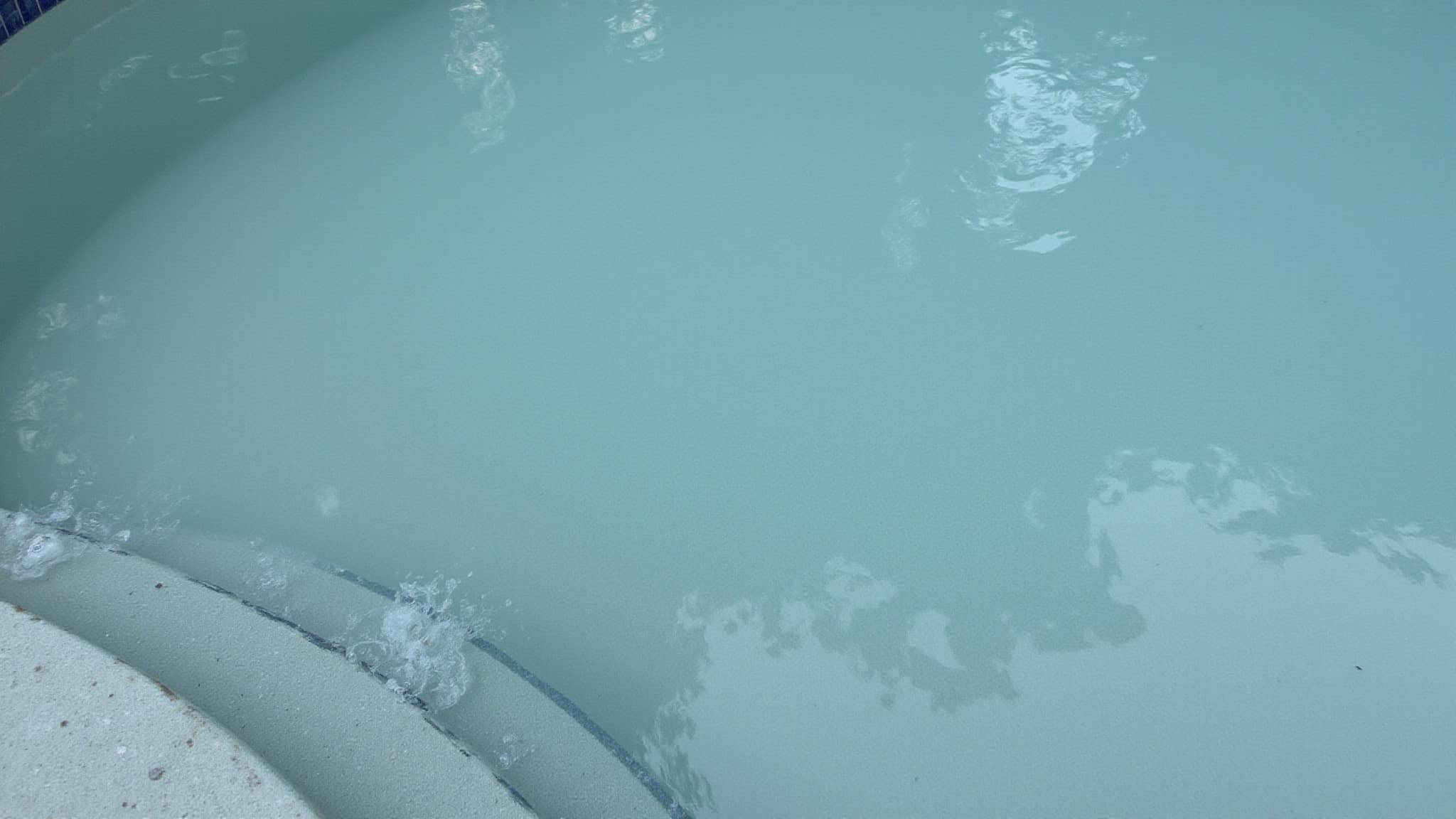
Swimmer oils overwhelm your pool filter because your filtration system wasn’t designed to handle in bulk the body oils and sweat that every swimmer introduces. When heavy swimmer loads accumulate, these oils overwhelm your standard filtration capacity, coating filter media and reducing its ability to trap fine particles. Body oils don’t dissolve, they emulsify, forming a suspended layer that scatters light and creates persistent haze. Sweat adds nitrogen compounds that combine with chlorine to form chloramines, depleting your free chlorine below the 0.8 ppm threshold needed to control organic matter. As sanitizer efficiency drops, organic contaminants multiply faster than your filter removes them. You’ll notice cloudiness intensifying after peak use, since your circulation system can’t process the concentrated organic load quickly enough to maintain clarity.
How High pH Triggers Calcium Clouding
High pH triggers a chemical reaction that clouds your water from within. When your pH climbs above 7.6, chlorine efficiency drops and calcium begins precipitating out of solution. This happens because raised pH shifts the water’s saturation balance, forcing dissolved calcium to convert into insoluble calcium carbonate. Those microscopic crystals stay suspended, scattering light and producing that milky, hazy appearance.
The problem compounds when high hardness above 300 ppm or raised water temperature enters the equation. Both push your water toward oversaturation, accelerating precipitation. You’ll notice clouding intensify on hot days when high pH and high temperature combine.
To reverse it, lower your pH into range and restore proper saturation to keep calcium dissolved.
When Hard Water Turns Your Pool Milky
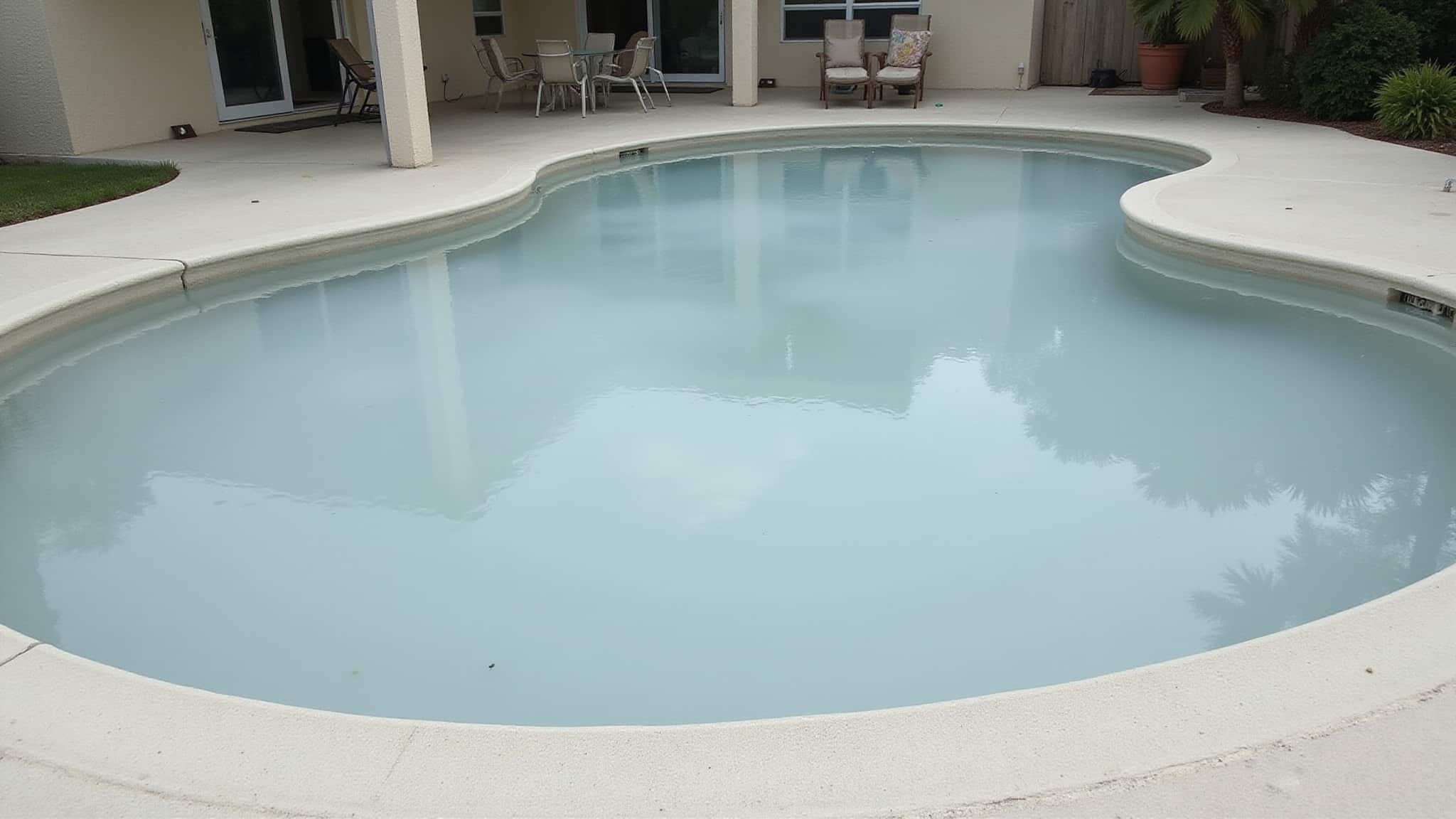
Hard water turns your pool milky because dissolved calcium reaches concentrations that water can’t hold in solution when your water hardness climbs past 300 ppm. The excess precipitates out as microscopic calcium carbonate crystals, suspending throughout the water column and scattering light. That scattering produces the milky, hazy appearance you’re seeing. This saturation intensifies when high pH or heightened temperature drives calcium toward its solubility limit, since warmer water and alkaline conditions both reduce how much calcium stays dissolved. You can’t fix this by adding more chlorine. The problem’s physical, not sanitary. Instead, test your calcium hardness directly and dilute with fresh water to lower the concentration below 300 ppm. Balancing pH simultaneously prevents further precipitation. Until you reduce that dissolved calcium load, the crystals keep forming and your clarity won’t return.
Low Chlorine and Hidden Algae Growth
Free chlorine below 0.8 ppm lets microscopic algae multiply long before you’ll see any green tint in the water. At this concentration, your sanitizer can’t oxidize organic contaminants fast enough, so algae colonies and bacteria proliferate unchecked. Bacteria metabolize waste and produce ammonia, which accumulates and drives further clouding. You’ll notice haze setting in as suspended cells scatter light throughout the water column.
Even after you shock the pool, dead algae residue stays suspended if your filtration can’t capture the fine particulate. That’s why chemical treatment alone won’t restore clarity. You need adequate circulation and filter capacity to physically remove the debris. Test your free chlorine regularly and maintain it above 1.0 ppm to prevent this hidden biological buildup entirely.
Is Your Filter Too Old to Clear Cloudy Water?
Yes, your filter can be too old to clear cloudy water. Once yours ages past its service life, it can’t capture the fine particulate that keeps water hazy. Old filters lose their capacity to remove debris, dirt, and dissolved chemicals from your fiberglass water, letting suspended particles multiply. Clogged cartridges or degraded sand media force water through channels that bypass proper filtration, so you’ll see persistent cloudiness despite balanced chemistry. Inadequate backwashing compounds the problem, trapping accumulated organic buildup inside the media. If you’re running your pump 8-10 hours daily and still fighting haze, your filter’s likely the culprit. Clean or replace clogged cartridges immediately, inspect sand for channeling, and confirm your media hasn’t hardened beyond effective particle removal.
Why Short Pump Runtime Leaves Water Hazy
When you run your pump below 8-10 hours daily, you’re preventing adequate particle removal, since suspended contaminants pass through the filter media too few times to get trapped. This shortfall weakens water circulation, creating dead spots where debris and fine particles stay suspended instead of cycling toward the filter. The result is persistent suspended debris that keeps your water hazy, as insufficient runtime can’t process the full pool volume enough times to restore clarity.
Inadequate Particle Removal
Inadequate particle removal happens when your pump runs for fewer than 8-10 hours daily, leaving a significant fraction of suspended solids untouched because your filter can only capture particles that actually pass through it. Each pass cycles only a portion of your total water volume through the filter media, so shortened runtimes mean fine particulates, pollen, dead algae, coagulated organics, never reach the cartridge or sand bed. Weak circulation compounds this, creating dead spots where debris stays suspended indefinitely. Without adequate turnover, you can’t achieve the multiple filtration cycles needed to trap particles below 20 microns. Chlorine oxidizes contaminants, but oxidation byproducts and residual solids still require physical removal. If your pump doesn’t run long enough to filter the entire volume several times, haze persists regardless of chemical balance.
Weak Water Circulation
Weak water circulation leaves pockets where water barely moves, and those dead spots undermine both filtration and chemical distribution, even when your pump runs long enough to cycle the full water volume. In these stagnant zones, debris and fine particles stay suspended instead of routing toward your filter, so they never get removed. Chlorine can’t reach these areas at effective concentrations, letting microscopic algae and organic contaminants multiply below your sanitizer’s threshold. You’ll also find clarifiers fail here, since they can’t distribute evenly to coagulate particles for capture. The result is persistent haze concentrated around corners, steps, and behind ladders. Improving return jet angles and eliminating dead spots restores uniform flow, letting your filtration and chemistry work together to clear the water.
Persistent Suspended Debris
Persistent suspended debris comes from running your pump fewer than 8-10 hours daily, which leaves fine particles suspended in the water column, since they never pass through your filter media often enough to get captured. Pollen, dirt from rain events, and dead algae residue stay dispersed because inadequate turnover fails to route the full pool volume through your cartridge or sand bed. Each pass removes only a fraction of suspended solids, so short runtimes let particulate concentration accumulate faster than filtration clears it. Weak circulation compounds this, creating dead spots where debris never reaches the intake. You’ll notice persistent haze even with balanced chemistry, because the problem’s mechanical, not chemical. Extend your runtime to 8-10 hours minimum, ensuring enough turnover cycles to trap fine particles and restore clarity.
Why Debris Gets Stuck in Dead Spots
Debris gets stuck in dead spots because weak circulation patterns create zones where water barely moves, letting debris and fine particles stay suspended instead of reaching your filter. When your pump runtime drops below 8-10 hours daily, circulation weakens further, and these low-flow zones expand. Particles that settle here never coagulate into filterable masses, so clarifiers can’t distribute evenly across the full pool volume. Without adequate flow, suspended organic matter and pollen accumulate, resisting removal even after chemical treatment. You’ll notice persistent cloudiness concentrated near steps, corners, and behind ladders where directional jets don’t reach. To fix this, you’ve got to redirect return fittings and extend runtime, pushing stagnant water toward proper filtration.
How to Clean and Backwash a Clogged Filter
To clean and backwash a clogged filter, check your pressure gauge first; a reading 8-10 psi above baseline signals restriction. A clogged filter traps accumulated debris in its media, restricting flow and slashing the particle-removal capacity you need to clear murky water. For cartridge filters, remove and hose each pleat, then soak in a diluted muriatic acid solution to dissolve calcium scale and organic buildup. For sand or DE systems, backwash by reversing flow until the sight glass runs clear, flushing trapped contaminants to waste. Inadequate backwashing leaves debris in the media, so extend the cycle until water clarifies. Rinse afterward to reset the bed. After flow’s restored, run your pump 8-10 hours daily to circulate treated water, removing suspended particles and eliminating dead spots that sustain cloudiness.
Why Improper Shock Dosing Fails
Improper shock dosing fails because insufficient chlorine can’t oxidize the full load of organic matter and chloramines suspended in your water. You underdose, and the shock treatment fails. When you leave organic matter undissolved, microorganisms stay active, multiplying faster than the residual sanitizer can neutralize them. You need to calculate your dose against your pool’s actual volume and current combined chlorine concentration, not a fixed estimate. If your free chlorine sits below 0.8 ppm before shocking, you’re already behind, and a standard dose won’t reach breakpoint chlorination. You must exceed the chloramine threshold by roughly ten times to fully oxidize the load. Otherwise, dead algae residue and partially oxidized compounds remain suspended, sustaining the haze. Verify your dosing math, then confirm free chlorine climbs high enough afterward.
Clearing Dead Algae Residue After Shocking
To clear dead algae residue after shocking, you must physically remove the suspension of dead algae cells that your filter can’t immediately capture because their particle size falls below your media’s filtration threshold. These lysed cells remain suspended, scattering light and producing persistent haze even after your sanitizer readings normalize. You need to physically remove this residue rather than wait for oxidation alone.
- Run your pump continuously for 24-72 hours to maximize particle passes through the media.
- Add a clarifier to coagulate sub-micron cells into filterable masses.
- Brush walls and floor to dislodge settled residue back into circulation.
- Backwash or clean cartridges once pressure rises 8-10 psi above baseline.
- Vacuum settled debris to waste if you’ve applied flocculant instead.
How Bacteria and Ammonia Cloud Your Pool
When bacteria colonize your water, they metabolize organic waste and produce ammonia that accumulates and clouds the pool over time. This ammonia buildup often stems from animal droppings and organic contaminants that overwhelm your available free chlorine. As bacterial populations multiply, they consume sanitizer faster than you can replenish it, driving haze that won’t clear until you restore proper disinfection levels.
Ammonia Buildup Sources
Ammonia buildup comes from two primary sources: biological waste and bacterial metabolism. Bacteria break down organic matter and release ammonia as a metabolic byproduct, driving nitrogen concentrations upward. Meanwhile, tree-dwelling animals deposit droppings that introduce nitrogenous compounds directly into the water column. As these sources compound, ammonia levels rise and clouding develops progressively.
Watch for these ammonia-generating contributors:
- Animal droppings from tree dwellers introducing organic, nitrogen-rich contaminants
- Bacterial metabolism converting organic debris into dissolved ammonia
- Decomposing tree debris, leaves and seeds, feeding bacterial populations
- Swimmer waste, including sweat and body oils, adding nitrogen loads
- Insufficient chlorine below 0.8 ppm permitting bacterial proliferation
Address these sources before ammonia saturates your water.
Bacterial Contamination Effects
Bacterial contamination degrades your sanitizer and destabilizes water chemistry. Ammonia doesn’t just accumulate, it actively consumes free chlorine and drives levels below the critical 0.8 ppm threshold. When bacteria proliferate in your fiberglass pool, they produce ammonia that fuels this decline. Once your sanitizer drops there, disinfection fails, and organic contaminants multiply rapidly. Microscopic algae exploit this deficit, building up before any visible green tint appears. The result is progressive haze that thickens as bacterial loads climb. Causes of mustard algae growth can often be traced back to poor water circulation and inadequate filtration. In addition, high nutrient levels from decomposing organic matter create an environment where these algae thrive.
You’ll notice this cloudiness resists standard treatment because ammonia binds chlorine into ineffective chloramines, neutralizing your shock efforts. Undissolved organic matter stays suspended, keeping microorganisms active. To reverse it, you need aggressive shock dosing that breaks the chloramine cycle and restores free chlorine, then adequate filtration to remove the residual biological debris.
Clarifier and Flocculant Mistakes to Avoid
Avoid treating clarifiers and flocculants interchangeably, because they work through fundamentally different mechanisms and confusing them invites persistent cloudiness. Clarifiers coagulate tiny suspended particles into larger masses that your filter captures during normal circulation. Flocculants force those particles to settle to the pool floor, requiring manual vacuuming to waste. Confuse the two, and you’ll either overwhelm your filter or leave settled debris resuspending.
- Skipping the vacuum-to-waste step after flocculant use lets settled particles redisperse into the water column.
- Overdosing clarifier overloads filter media, reducing capture efficiency and circulation.
- Applying either with poor circulation prevents even distribution throughout the pool volume.
- Using flocculant when filtration alone suffices wastes chemicals and adds unnecessary labor.
- Ignoring pH before treatment compromises coagulation chemistry, leaving haze unresolved.
How Rain and Sunlight Cause Cloudy Water
Rain and sunlight cause cloudy water by altering your pool’s chemistry from the outside. When rain falls, it introduces external contaminants like pollen, dirt, and fine particles that stay suspended in your water. Rain also dilutes your free chlorine, and after you drop below 0.8 ppm, microscopic algae and organic matter start multiplying before you see any green. Sunlight attacks from another angle. UV rays degrade chlorine faster, so without a cover during peak hours, your sanitizer burns off quickly and leaves organics unchecked. Heat compounds the problem: high water temperature combined with high pH accelerates calcium precipitation, clouding your water further. You’re fighting chemistry driven by conditions you can’t control, so test after every rain and shield your pool from prolonged sun exposure.
Conclusion: Clearing Cloudy Pool Water
Cloudy water usually comes down to a chemistry or filtration issue, such as unbalanced pH, low sanitizer, fine debris, or a filter that needs cleaning. It is common and generally quick to fix once you find the cause. Balancing the water, running the filter, and using a clarifier if needed usually restores clarity within a day or two. Regular testing and good filtration keep the water sparkling.
Call Today and Get a Pool Built to Last
From cloudy water to algae growth, most pool problems trace back to poor construction, but a quality fiberglass pool changes everything. At Schiller Pools in Port St. Lucie, FL, our skilled team delivers dependable San Juan Fiberglass Pools designed for easy water care and lasting performance. Call +1 (561) 475-5997 today and get started with confidence.
Frequently Asked Questions
How Long Does Cloudy Fiberglass Pool Water Usually Take to Clear?
With the right steps, mild cloudiness often clears within 24 hours once you balance the chemistry, run the filter continuously, and add a clarifier if needed. Heavier cloudiness can take a couple of days. Keeping the pump running and rechecking the water speeds it up, since filtration does much of the work.
Is It Safe to Swim in Cloudy Pool Water?
It is best to wait until it clears. Beyond looking unappealing, cloudy water reduces visibility, which is a safety risk, and it can indicate low sanitizer or unbalanced chemistry. Once the water is balanced, the sanitizer is in range, and clarity returns, it is safe to swim again.
Can I Use Household Products Instead of Pool Clarifiers?
It is not recommended. Household products are not formulated for pool water and can throw off the chemistry or damage equipment. Pool clarifiers and the correct balancing chemicals are inexpensive and made for the job. Sticking with proper pool products gives reliable results without risking the water or your gear.
How Often Should I Test My Fiberglass Pool Water?
Testing two to three times a week during swim season, and more after heavy use, rain, or adding chemicals, keeps the water balanced and helps prevent cloudiness before it starts. Regular testing catches small imbalances early. Consistent checks are the simplest way to keep the water clear and comfortable.
Does Pool Size Affect How Quickly Cloudiness Develops?
It can. Smaller pools have less water, so their chemistry can shift faster, while larger pools change more slowly but take longer to correct once cloudy. Filtration and bather load matter more than size alone. Whatever the size, regular testing and good circulation are what keep the water from clouding up.