
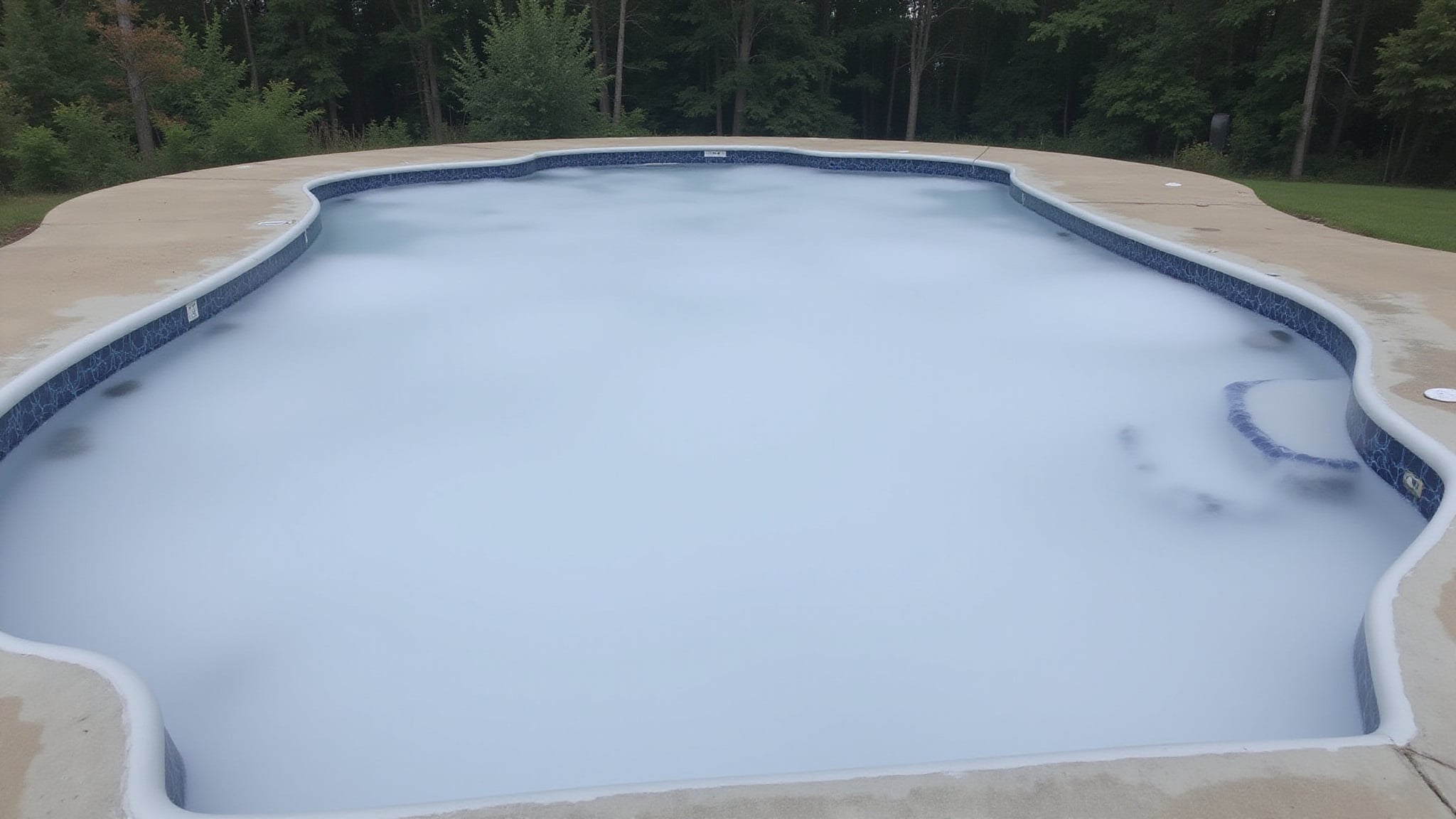
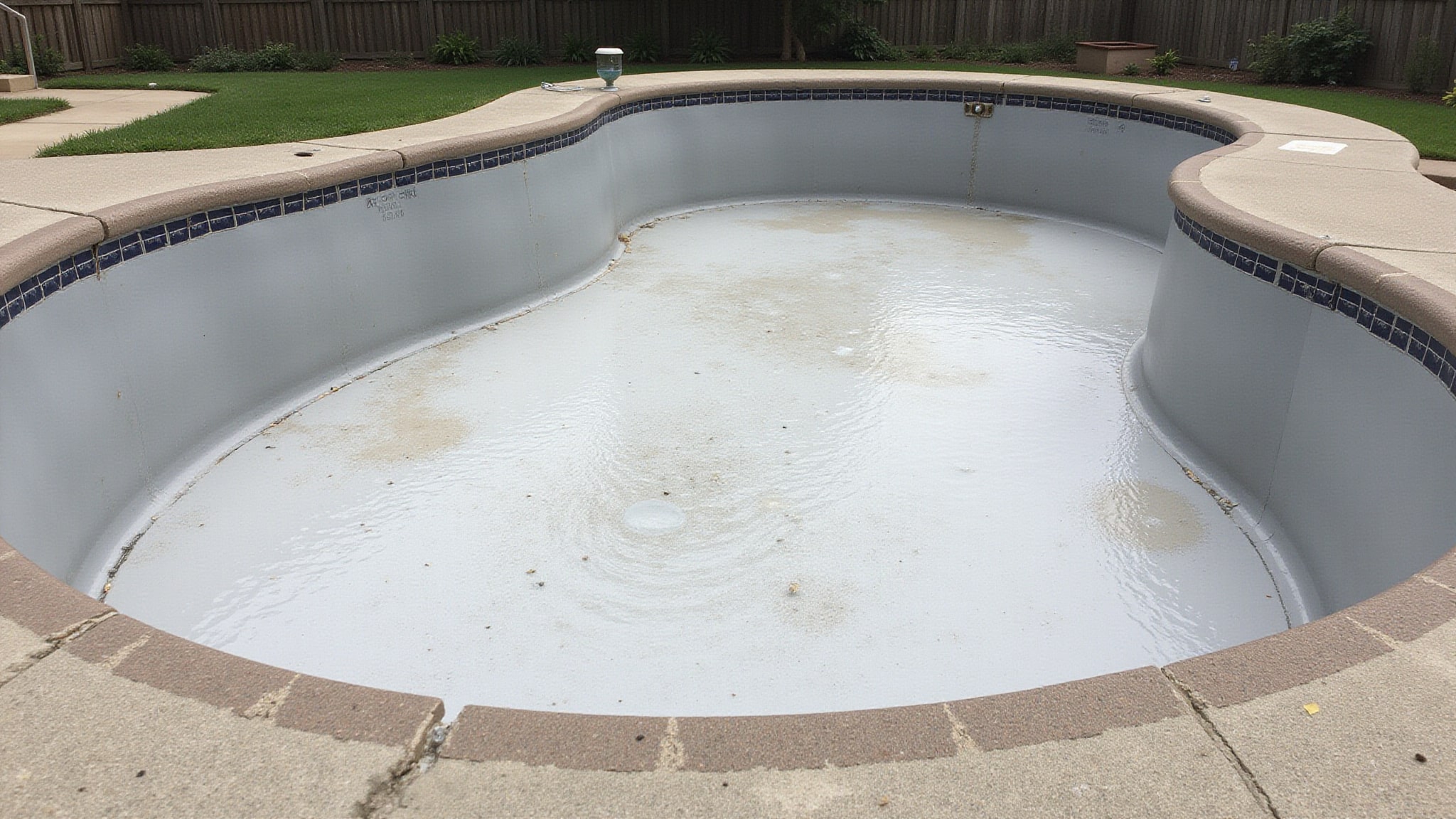
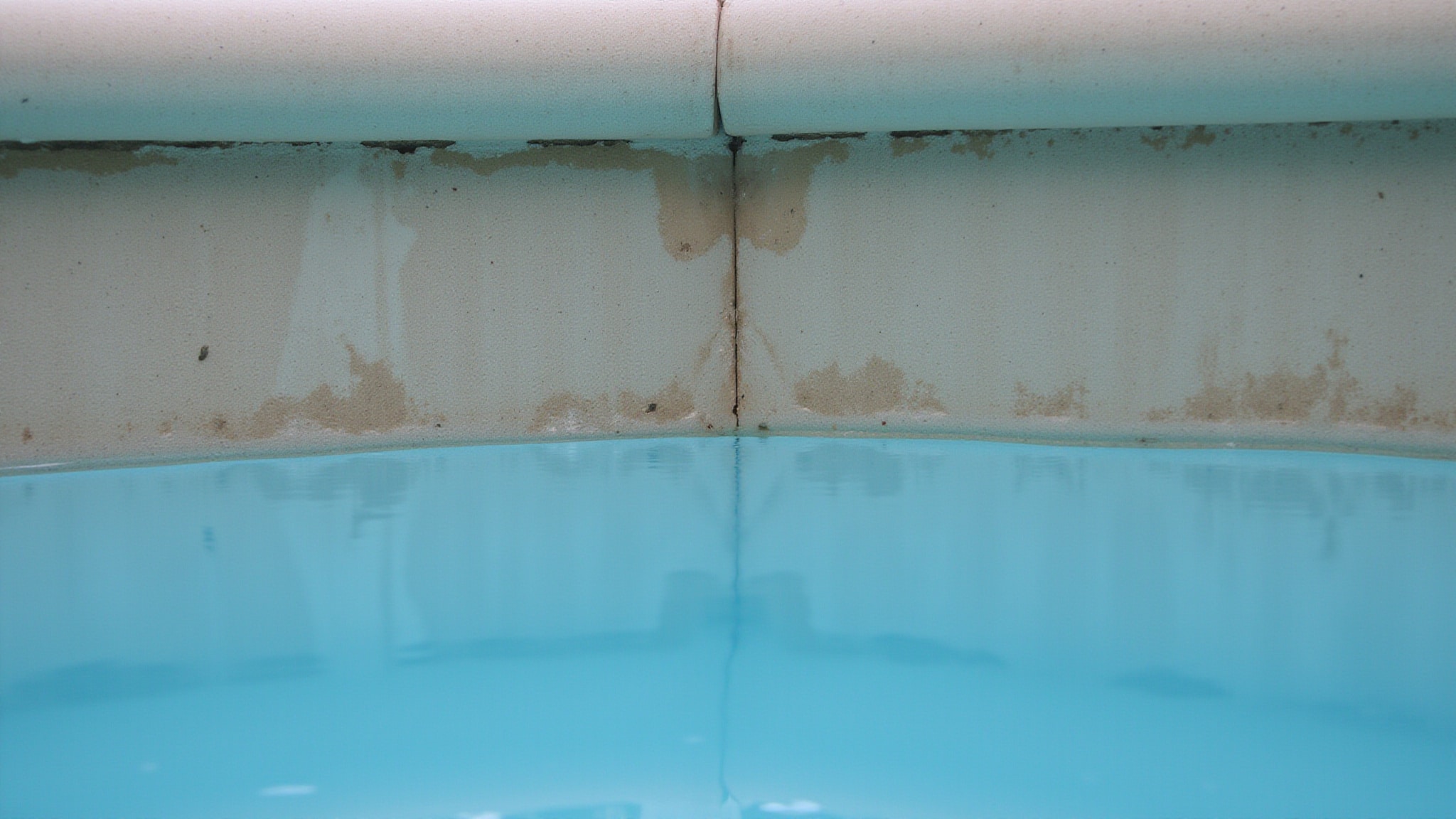
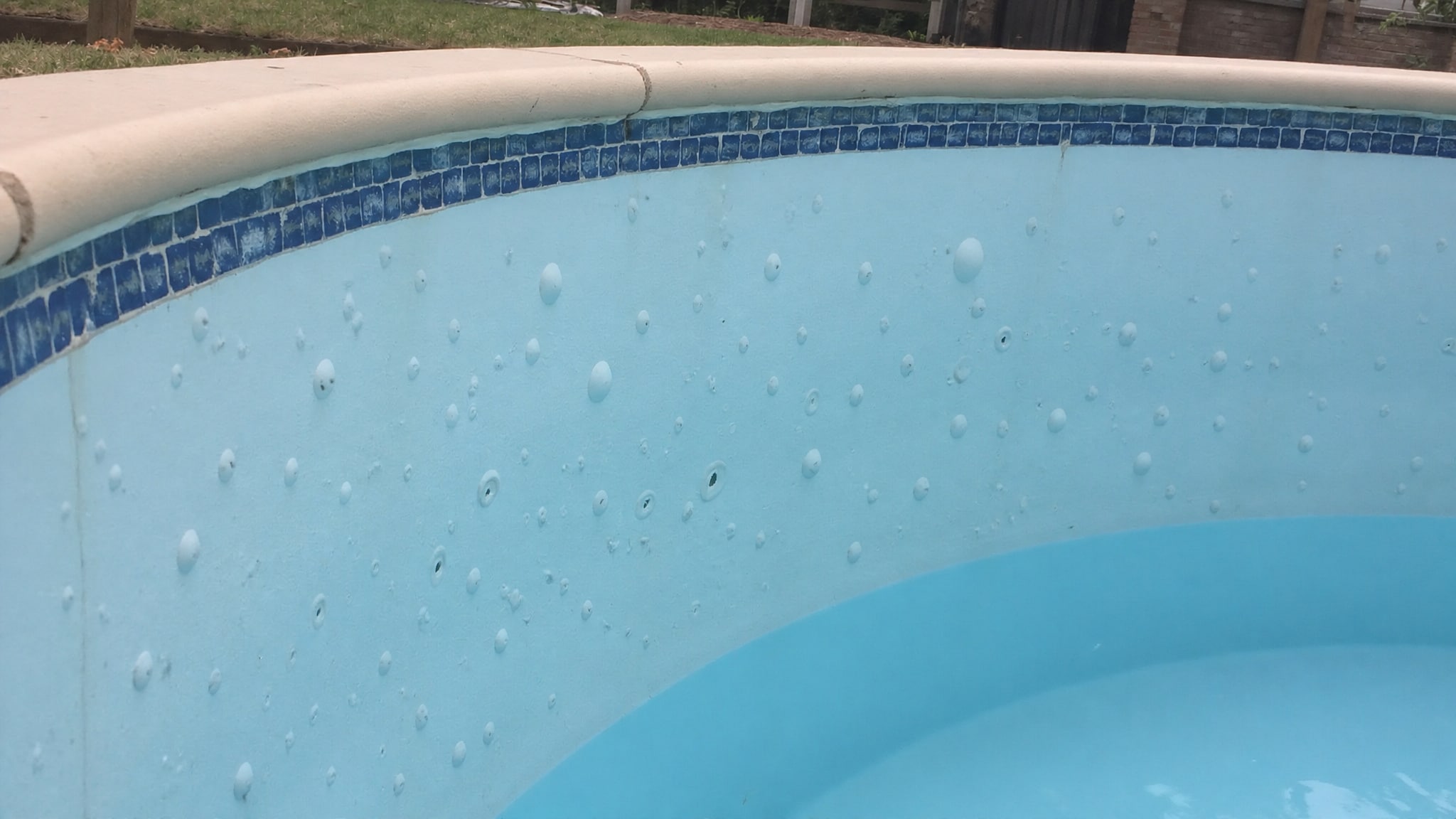
Mustard algae grows in your fiberglass pool when several conditions align. Low or fluctuating chlorine residuals let spores colonize shaded, low-flow surfaces. Excessive cyanuric acid above 100 ppm cripples your chlorine’s killing power, even when readings look fine. High pH and swinging alkalinity disable sanitizer further. Poor circulation creates dead zones, while phosphates, nitrates, and silicates feed the bloom. Warm summer water accelerates everything. Understanding each trigger helps you eliminate this stubborn intruder for good.
Key Takeaways
- Low or fluctuating chlorine residuals allow mustard algae to colonize, especially after high-demand events like pool parties.
- Excessive cyanuric acid (above 100 ppm) binds free chlorine, disabling its killing power even when readings appear adequate.
- pH and alkalinity imbalances disable chlorine above 7.6 and erode gelcoat below 7.2, creating pits for algae anchoring.
- Poor circulation and filtration failures create stagnant dead zones near steps and shaded corners where algae thrives undisturbed.
- Nutrients like phosphates, nitrates, and silicates from debris, fill water, or swimmers provide food fueling algae colonization.
What Mustard Algae Looks Like in Fiberglass Pools
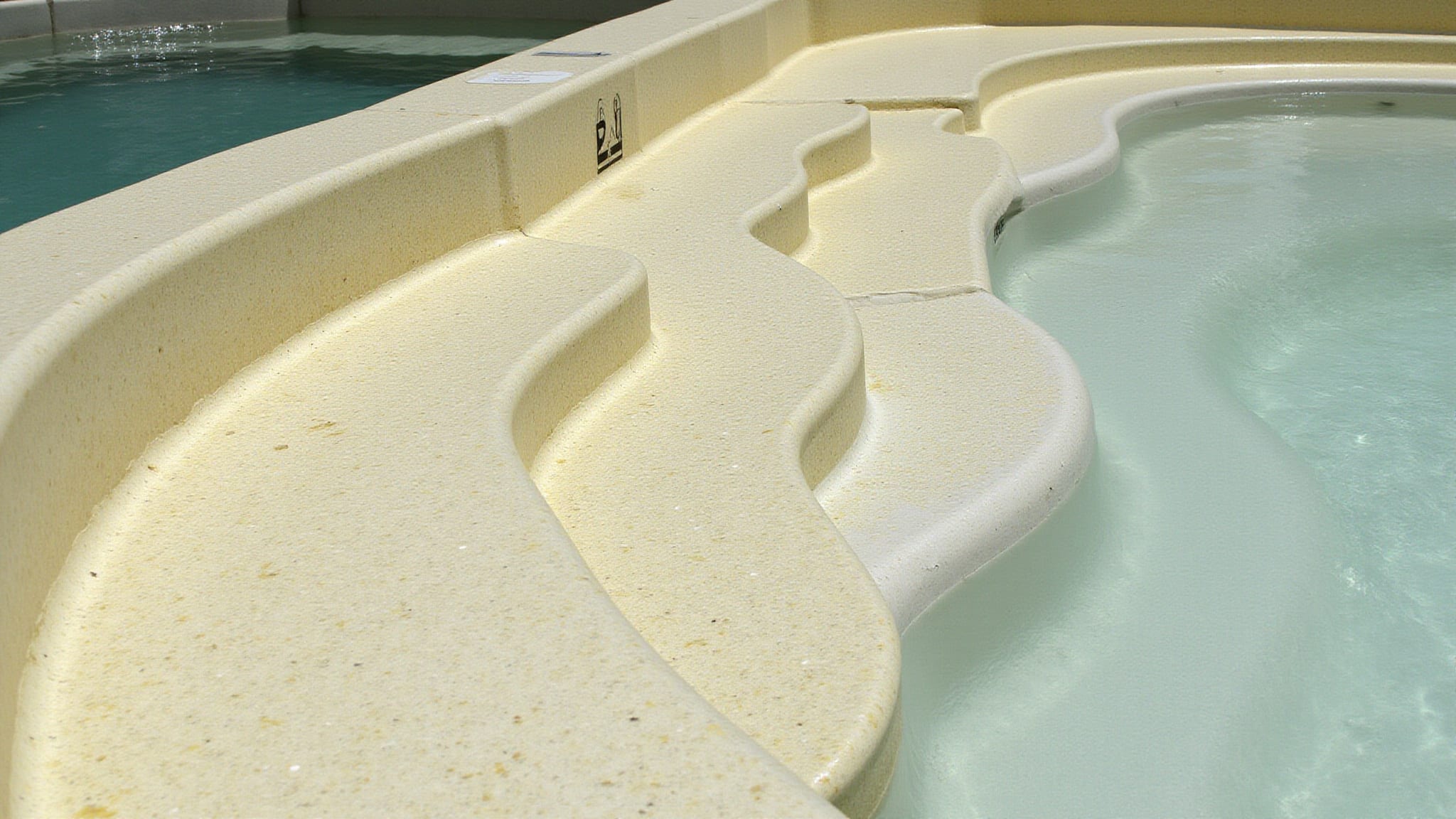
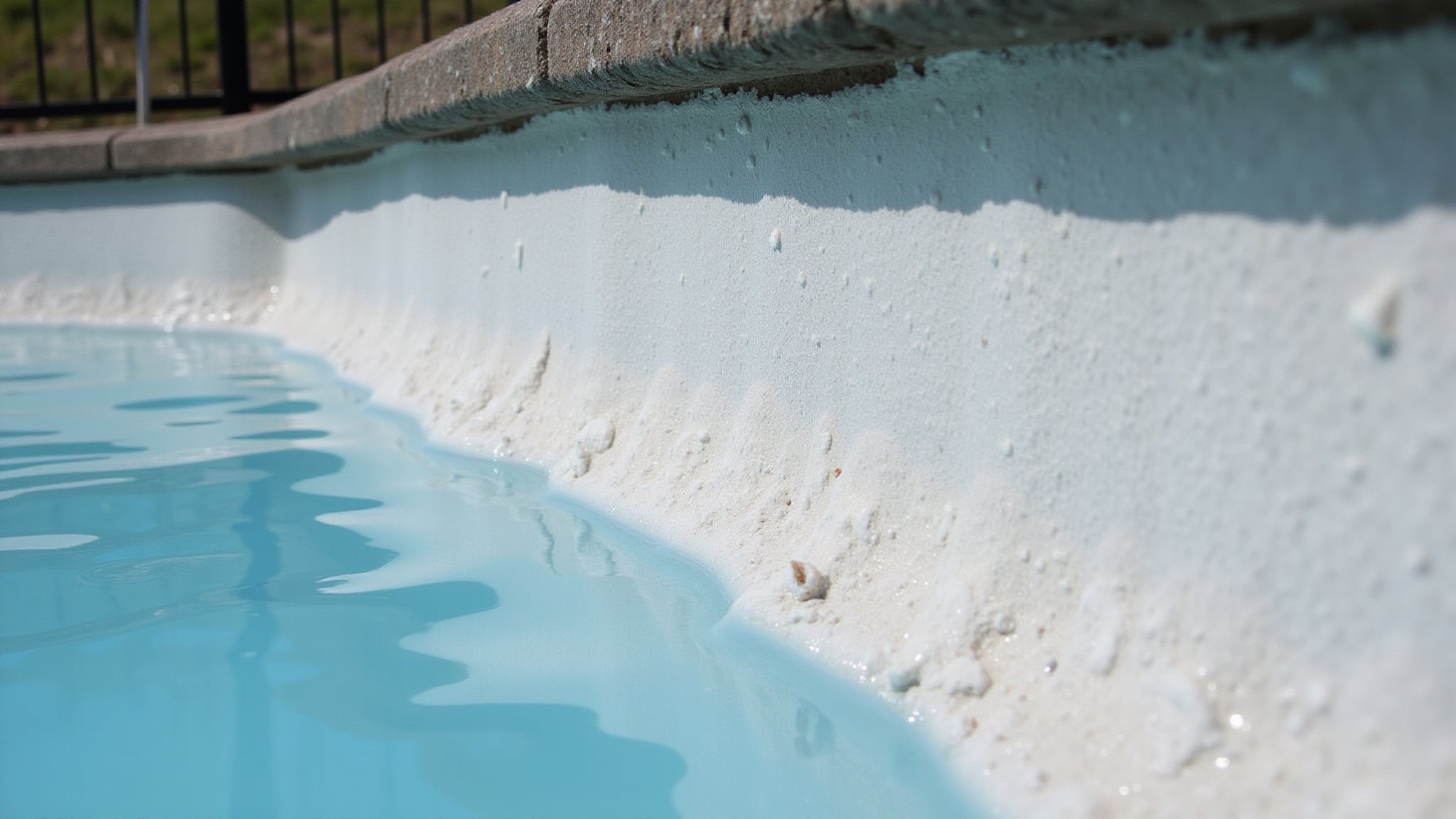
Mustard algae presents as a yellowish, brownish, or dull green film that clings to walls, steps, and shaded corners of your fiberglass surfaces. Because it often masquerades as ordinary dirt or sand, you’ll need to look closely to identify it. Unlike loose debris, fiberglass pool algae resists your first brushing attempt, then quickly resettles in the same spot within hours. In a yellow algae pool, you’ll notice these deposits concentrate in dead zones near steps, walls, and areas with poor circulation and reduced UV exposure. Run your hand along the surface, mustard algae feels powdery rather than gritty. Check low-flow regions and shaded sections first, since these harbor the earliest colonies. Confirming this powdery, reattaching texture distinguishes true algae from harmless sediment or dirt.
Why Low Sanitizer Levels Invite Mustard Algae
Low sanitizer levels invite mustard algae by leaving your fiberglass pool without the chemical defense it needs to kill spores before they colonize. When chlorine residuals drop or fluctuate, you allow algae strikes to occur frequently. High-demand events like pool parties spike chlorine consumption, letting a mustard algae fiberglass pool bloom overnight. Inconsistent residuals during heavy swimmer volume compound the problem. Watch your cyanuric acid levels too. Excessive CYA reduces chlorine effectiveness, so even measurable readings won’t fully kill pool algae. Mustard algae thrives in exactly this scenario: chlorine’s present but not effective enough to eliminate it. Maintain a consistent free chlorine residual, keep CYA within range, and shock after high-use events to deny algae the survival window it needs.
How High Cyanuric Acid Weakens Your Chlorine
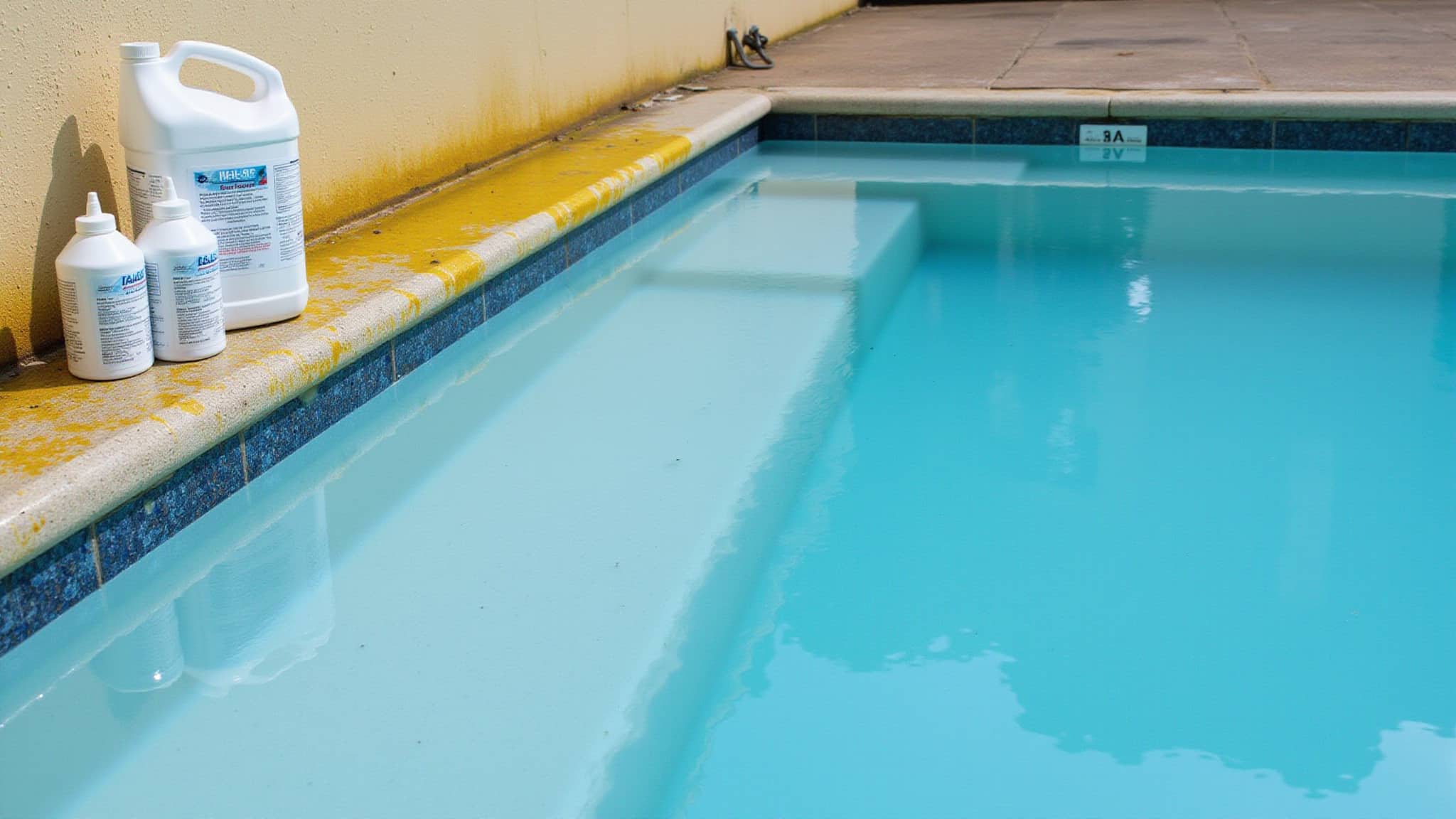
When your cyanuric acid climbs too high, it binds to free chlorine and slows its ability to sanitize. That means your test kit might show adequate chlorine levels while the actual killing power drops substantially. Mustard algae exploits this gap, surviving in water where chlorine’s present but too weak to eliminate it.
CYA Reduces Chlorine Effectiveness
High cyanuric acid (CYA) reduces chlorine effectiveness by binding too much of your free chlorine, markedly reducing its killing power. CYA stabilizes chlorine against UV degradation, but excessive concentrations create a serious problem. Your test strip might read 3 ppm, but if CYA sits above 100 ppm, the active chlorine available to attack mustard algae drops markedly.
This creates the exact condition mustard algae exploits: chlorine’s present but not effective enough to fully kill it. The algae survives, colonizes, and returns despite your maintenance efforts.
To fix this, test your CYA levels regularly and keep them between 30-50 ppm. If readings exceed that range, partially drain and refill your pool to dilute the stabilizer.
Algae Survives Weak Chlorine
Mustard algae survives weak chlorine that appears adequate on paper but can’t actually deliver a lethal dose. When your test kit shows a healthy free chlorine reading, you assume you’re protected, but that number doesn’t reflect chlorine’s actual killing power. Mustard algae thrives specifically in this gap: chlorine’s present, yet it’s not effective enough to fully kill the colony. The algae withstands weakened sanitizer, establishing footholds on walls and steps while you’re convinced your levels are fine.
To fix this, stop trusting free chlorine alone. Measure your CYA-to-chlorine ratio and maintain free chlorine at roughly 7.5% of your CYA level. If your CYA runs high, you’ll need proportionally more chlorine, or a partial drain and refill to restore effective sanitizing strength.
Why pH and Alkalinity Imbalances Fuel Mustard Algae
When your pH climbs too high, it inhibits chlorine’s disinfecting power, letting mustard algae survive even at adequate sanitizer levels. Unbalanced total alkalinity destabilizes your water, triggering pH spikes that compound this problem. And when pH drops too low, it erodes your fiberglass surface, creating micro-pits where algae can anchor and flourish.
High pH Disables Chlorine
High pH disables chlorine by converting it to the sluggish hypochlorite ion, drastically reducing kill rates as pH climbs above 7.6. Because chlorine’s disinfecting power depends heavily on pH, letting your water drift alkaline effectively neutralizes your sanitizer even when test strips show adequate residual. Mustard algae exploits this gap. Present chlorine simply isn’t potent enough to eradicate it.
Correct this imbalance by targeting these parameters:
- pH: Hold between 7.2 and 7.4 to maximize hypochlorous acid activity.
- Total alkalinity: Maintain 80-120 ppm to buffer against pH spikes.
- Free chlorine: Keep 2-4 ppm, verified only after pH sits in range.
Test pH before trusting any chlorine reading. Lower it with muriatic acid or sodium bisulfate, then retest. Balanced pH restores your sanitizer’s full oxidizing strength against algae.
Alkalinity Swings Spike pH
Alkalinity swings spike pH when total alkalinity drifts outside the 80-120 ppm range, causing pH to lose its stability and swing unpredictably. Total alkalinity acts as your pH buffer. Low alkalinity lets pH crash and spike with every chemical addition or bather load, eroding your fiberglass surface and creating microscopic pits where mustard algae anchor. High alkalinity drives pH upward, pushing it past 7.8 where chlorine’s disinfecting power collapses. Either way, you’re handing algae an opening.
Test alkalinity weekly and correct it before adjusting pH. Add sodium bicarbonate to raise low alkalinity, or muriatic acid to lower excessive levels. After you’ve locked alkalinity into range, pH stabilizes between 7.4 and 7.6, keeping chlorine active. Stable water chemistry denies mustard algae the erosion damage and weakened sanitizer it needs to establish.
Low pH Erodes Surfaces
Low pH erodes your pool’s surfaces by delivering direct damage to your fiberglass. When pH drops below 7.2, acidic water erodes your pool’s smooth gelcoat surface, etching microscopic pits and rough patches. These imperfections give mustard algae the ideal footholds it needs to anchor and flourish, protected from circulating chlorine. One of the common issues pool owners encounter is why pool water turns murky. Factors such as high levels of organic debris, poor filtration, or imbalanced chemicals can contribute to this problem.
Here’s how low pH accelerates colonization:
- Surface etching: Acidic water breaks down the gelcoat, creating rough zones where algae attach and resist brushing.
- Chlorine consumption: Correcting pH swings consumes sanitizer, leaving residuals too low to kill established spores.
- Nutrient traps: Pitted surfaces collect debris, phosphates, and nitrates that feed algae growth.
Test pH twice weekly and keep it between 7.4 and 7.6 to protect your surface.
Can High Silicates in Tap Water Cause Mustard Algae?
Yes, high silicates in tap water can cause mustard algae. When you fill your fiberglass pool with tap water, you might unknowingly introduce silicates that accelerate mustard algae growth. Silicate-rich fill water provides a mineral foundation that speeds up algae colonization on your pool’s surfaces. If your municipal or bore source carries high silicate concentrations, you’re feeding conditions that favor mustard algae establishment.
Test your tap water’s silicate levels before filling, especially if you rely on bore sources known for increased mineral content. When you detect high silicates, use a specialized sequestering agent or metal-and-mineral treatment to bind and neutralize them before they settle.
Combine this with proper sanitizer residuals and balanced chemistry to eliminate the accelerated-growth window. By managing silicate input at the source, you’ll deny mustard algae one of its early advantages.
Poor Circulation and Dead Spots That Feed Algae
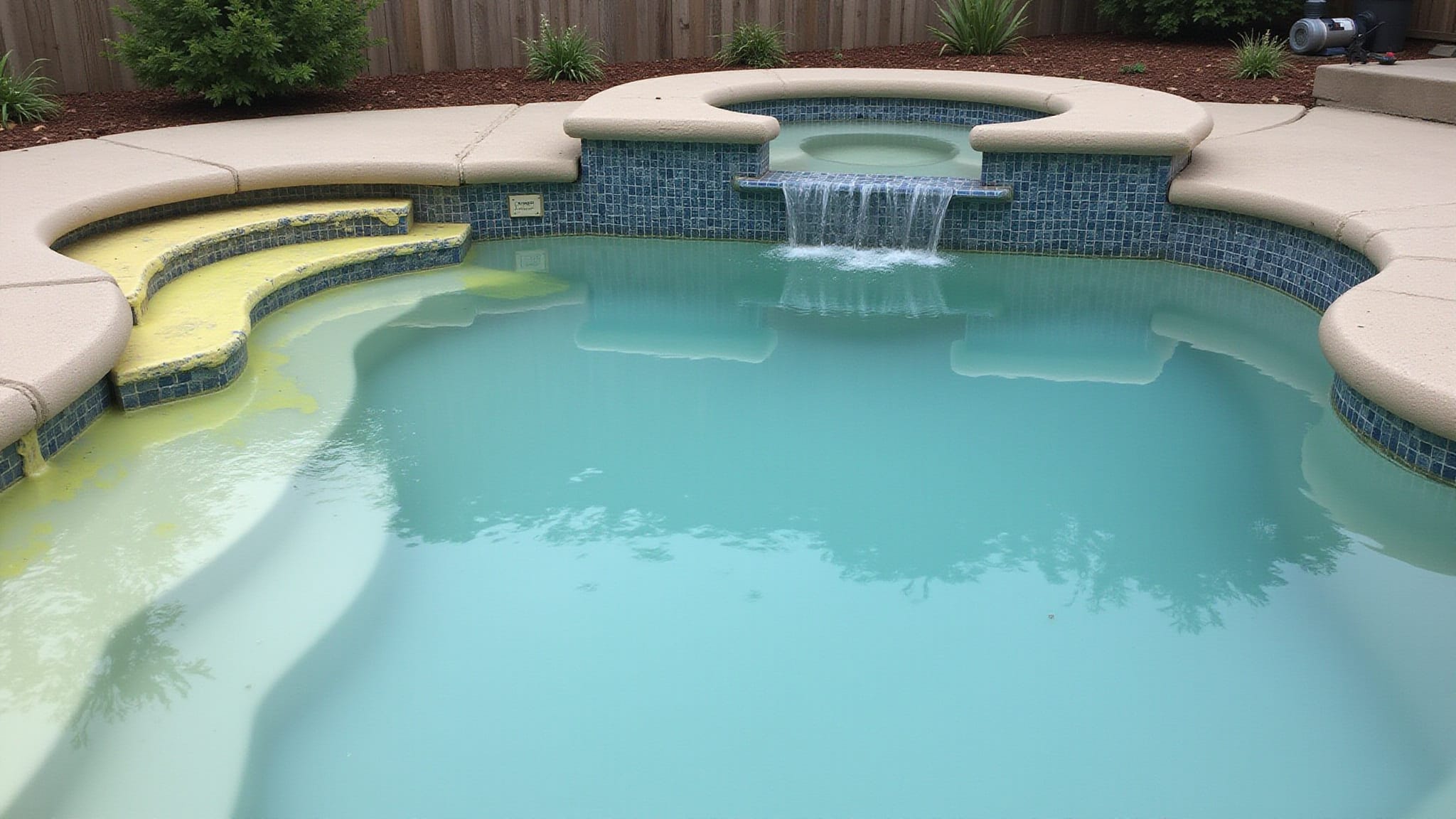
Poor circulation creates the exact dead zones where mustard algae settles and thrives, because water that doesn’t move can’t distribute sanitizer. A malfunctioning filter lets debris like leaves and dirt accumulate, feeding algae with phosphates and nitrates. Faulty or underpowered pumps generate stagnant areas near steps and walls, where colonies establish undisturbed. Shaded spots that stay cooler and receive less UV exposure often coincide with these weak-flow regions, further compounding the problem.
To eliminate dead spots in your fiberglass pool:
- Inspect your filter and pump for adequate flow rate and proper sizing.
- Adjust wall return jet fittings to redirect flow toward stagnant corners.
- Test suspected dead zones by observing dye or debris movement.
Correcting circulation ensures sanitizer reaches every surface, denying algae its foothold.
How Filtration Failures Let Debris Build Up
When your filter’s malfunctioning, debris like leaves and dirt build up in the water instead of getting trapped and removed. That accumulated debris carries phosphates and nitrates, which feed mustard algae directly. Combine a failing filter with a faulty or underpowered pump, and you’ll create stagnant areas where algae can settle and colonize.
Malfunctioning Filter Systems
Malfunctioning filter systems let debris like leaves and dirt build up in your pool water, and that debris carries the phosphates and nitrates mustard algae feed on. As organic material decays, it releases nutrients that fuel colonization, especially in fiberglass pools where smooth surfaces mask early strikes. A compromised filter can’t remove these contaminants, so you’ll see accumulation accelerate. Address the failure by checking these components:
- Filter media: Inspect cartridges, sand, or DE grids for clogging, channeling, or degradation, then clean or replace as needed.
- Pressure gauge: Verify readings; a spike above 8-10 psi over baseline signals restricted flow requiring backwashing.
- Seals and gaskets: Confirm they’re intact to prevent unfiltered water bypassing the media entirely.
Restore filtration to starve algae effectively.
Stagnant Areas And Debris
Stagnant areas form where faulty or underpowered pumps fail to circulate water, letting debris settle and algae take hold. You’ll find these dead spots near steps, walls, and shaded corners that stay cooler with less UV exposure. When circulation fails, leaves, dirt, and organic matter accumulate in these zones. That debris is rich in phosphates and nitrates, direct food sources for mustard algae.
To fix this, check for dead zones by observing where debris collects or water feels still. Adjust your wall return jet fittings to direct flow toward these problem areas, eliminating stagnation. Verify your pump’s horsepower matches your pool’s volume for adequate turnover. By improving circulation and removing settled debris, you cut off the nutrient supply algae need to colonize your fiberglass surfaces. Why shock turns pool water brown can often be attributed to an imbalance in chemicals or the presence of contaminants. It’s crucial to ensure that you are using the right type and amount of shock treatment for your specific pool conditions.
Phosphates and Nitrates: Mustard Algae’s Hidden Food
Phosphates and nitrates are the hidden food source that lets mustard algae flourish even when your chlorine levels look perfect. These nutrients let algae survive despite adequate sanitizer. Debris, decaying plants, sweat, lotions, and food residue all feed the problem, and infrequent water changes let concentrations climb.
Perfect chlorine won’t win the battle if hidden phosphates and nitrates keep feeding your mustard algae.
To starve mustard algae, target these thresholds:
- Nitrates: Keep below 20-40 ppm.
- Phosphates: Maintain under 0.1-0.2 mg/L.
- Organic load: Remove debris and rinse off pollutants before swimming.
Test regularly, since nutrient buildup happens gradually and often goes unnoticed. If your readings exceed these limits, use a phosphate remover and partial water changes to lower them. Cutting off the food supply makes your sanitizer far more effective.
Why Warm Summer Water Speeds Up Mustard Algae
Warm summer water speeds up mustard algae by accelerating every stage of its growth cycle. Summer’s the season mustard algae favors, and for good reason. When your water climbs into the 26~28°C range, common in heated fiberglass pools, you’ve created ideal conditions for rapid colonization. Warm water, heat, and chlorine resistance combine as the primary drivers of growth, so even trace contamination expands fast.
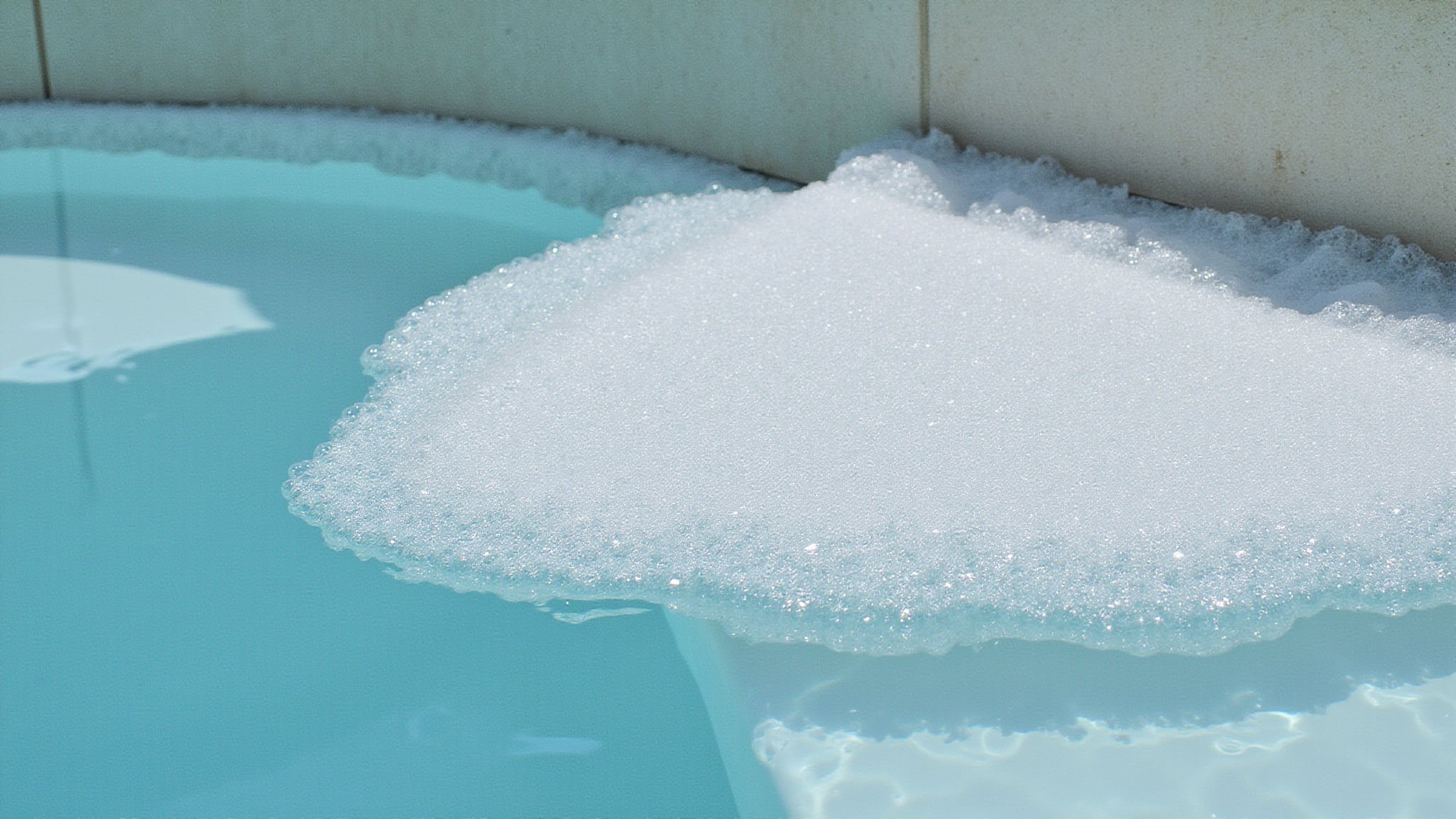
Hot weather compounds the problem. That’s when your pool sees the heaviest use, spiking chlorine demand exactly when you need consistent residuals. Add rain storms carrying wind-borne spores, and you’ve got accelerated growth on multiple fronts. Pool water foaming causes can often be attributed to excessive organic matter and imbalances in chemical levels. Algae blooms, which thrive in warm weather, may also contribute to foam formation.
To counter this, boost sanitizer levels during warm months and test residuals more frequently to stay ahead.
Wind, Rain, and Spores That Sneak Into Your Pool
Wind and rain act as delivery systems for mustard algae spores that sneak into your pool. Storms carry wind-borne spores directly into your water, and they often spike right after heavy rain. You’ll also introduce contamination through everyday vectors that bypass your sanitizer entirely.
Target these three entry points:
- Contaminated swimwear and equipment: Rinse suits and gear that touched natural water bodies before they enter your pool.
- Pool toys and floats: Don’t store them in damp, dark spaces where spores colonize and transfer back into your water.
- Fill water: Test bore-sourced water, which acts as a specific spore vector.
Contaminated Swimwear, Toys, and Fill Water to Watch
Contaminated swimwear, toys, and fill water are three vectors you can control directly to keep mustard algae out of your pool. If you’ve swum in a lake, river, or ocean, your swimsuit carries spores straight into the water, so rinse it thoroughly before it touches your pool. Pool toys and floats stored in damp, dark spaces harbor algae too, so rinse them after use in any natural water body and dry them completely. Fill water deserves scrutiny; bore sources act as a specific vector, introducing spores directly through your hose. Test fill water before topping off, especially from wells. By rinsing swimwear and toys and vetting your fill source, you close the entry points that let algae re-establish after every treatment cycle.
Conclusion: Preventing and Beating Mustard Algae
Mustard algae is a stubborn, yellowish algae that clings to pool surfaces and resists normal chlorine levels, often taking hold when sanitizer dips or circulation is poor. On fiberglass, the smooth surface makes it a bit easier to brush and remove than on rougher pools. Beating it takes thorough brushing, a strong shock, and cleaning anything that touched the water, followed by good ongoing chemistry. Steady maintenance is the best defense against it returning.
Choose a San Juan Fiberglass Pool That Lasts
Water chemistry challenges become far easier to manage with a properly built fiberglass pool from an authorized installer. At Schiller Pools in Stuart, FL, our experienced team provides trusted San Juan Fiberglass Pools with premium quality and 40+ years of installation expertise. Call +1 (561) 475-5997 today and get your free estimate.
Frequently Asked Questions
Is Mustard Algae Harmful to Swimmers’ Health?
Mustard algae itself is generally not dangerous, but its presence signals that sanitizer and circulation are not keeping up, which can allow harmful bacteria to grow. It is best not to swim until the algae is cleared and the water is balanced. Treating it promptly keeps the pool safe and comfortable.
How Do I Completely Remove Mustard Algae From My Pool?
Removing it takes a thorough approach: brush all surfaces well, shock the pool to a high chlorine level, run the filter continuously, and brush again. Clean or replace anything that contacted the water, like toys, floats, and swimwear, since the algae can hide there. Then keep chemistry and circulation strong to prevent regrowth.
Can Mustard Algae Stain or Damage Fiberglass Surfaces Permanently?
It rarely causes permanent damage. Fiberglass’s non-porous gel-coat resists staining, and mustard algae usually brushes off without leaving a lasting mark when treated promptly. Left for a long time, any algae can discolor a surface, so acting quickly is the best way to avoid staining and keep the finish looking clean.
How Long Does It Take to Eliminate Mustard Algae?
With aggressive treatment, most cases clear within a few days, though stubborn outbreaks can take longer and may need a second shock and thorough re-cleaning. Running the filter around the clock and repeated brushing speed it up. Patience and thoroughness matter, since leftover spores are what let it come back.
Does Mustard Algae Come Back After Treatment?
It can, because its spores are hardy and easily reintroduced from swimwear, toys, or equipment that were not cleaned. Preventing a return means keeping sanitizer and circulation strong, brushing regularly, and cleaning anything that enters the pool. Consistent maintenance is what keeps mustard algae from taking hold again.