
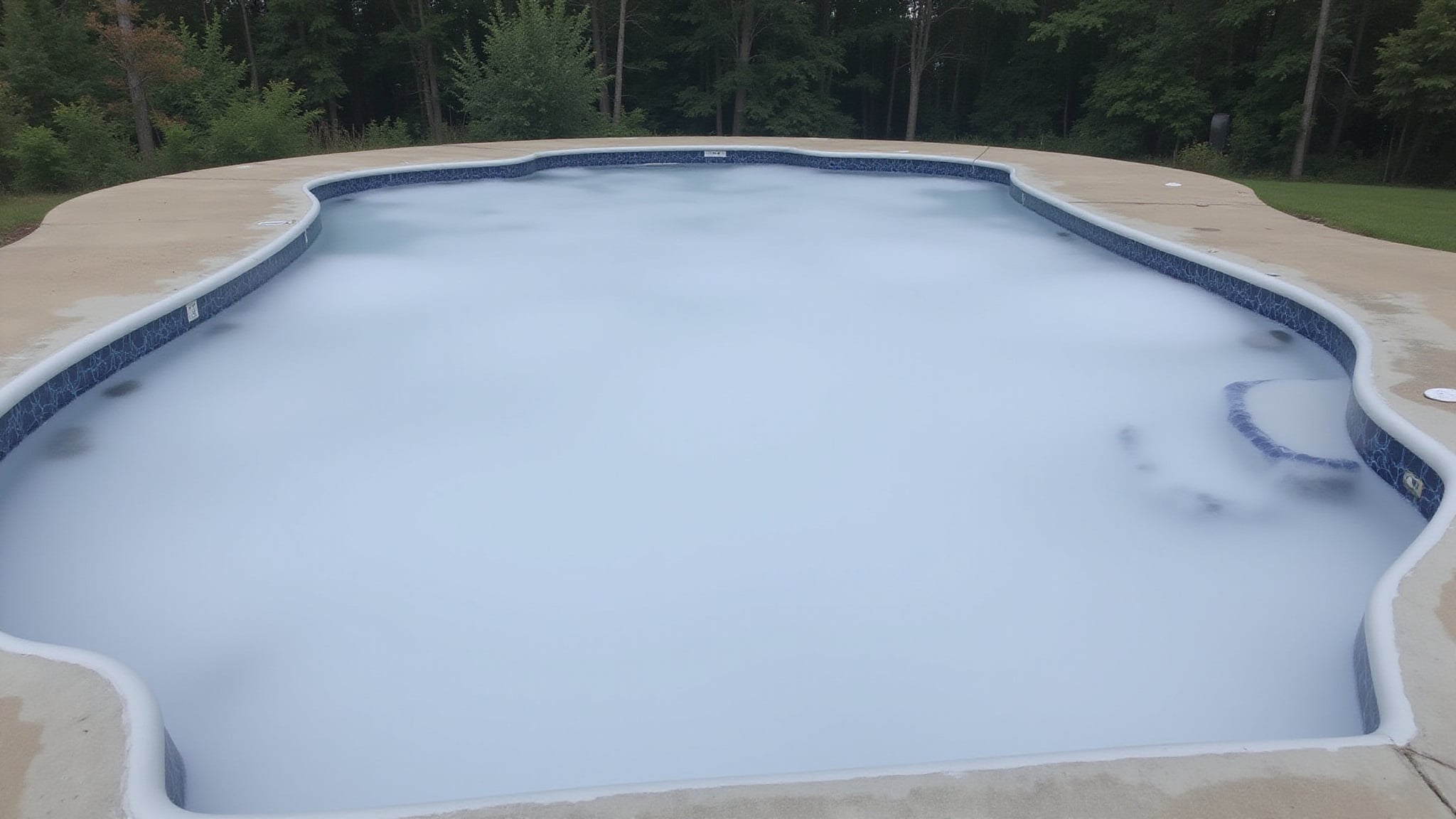
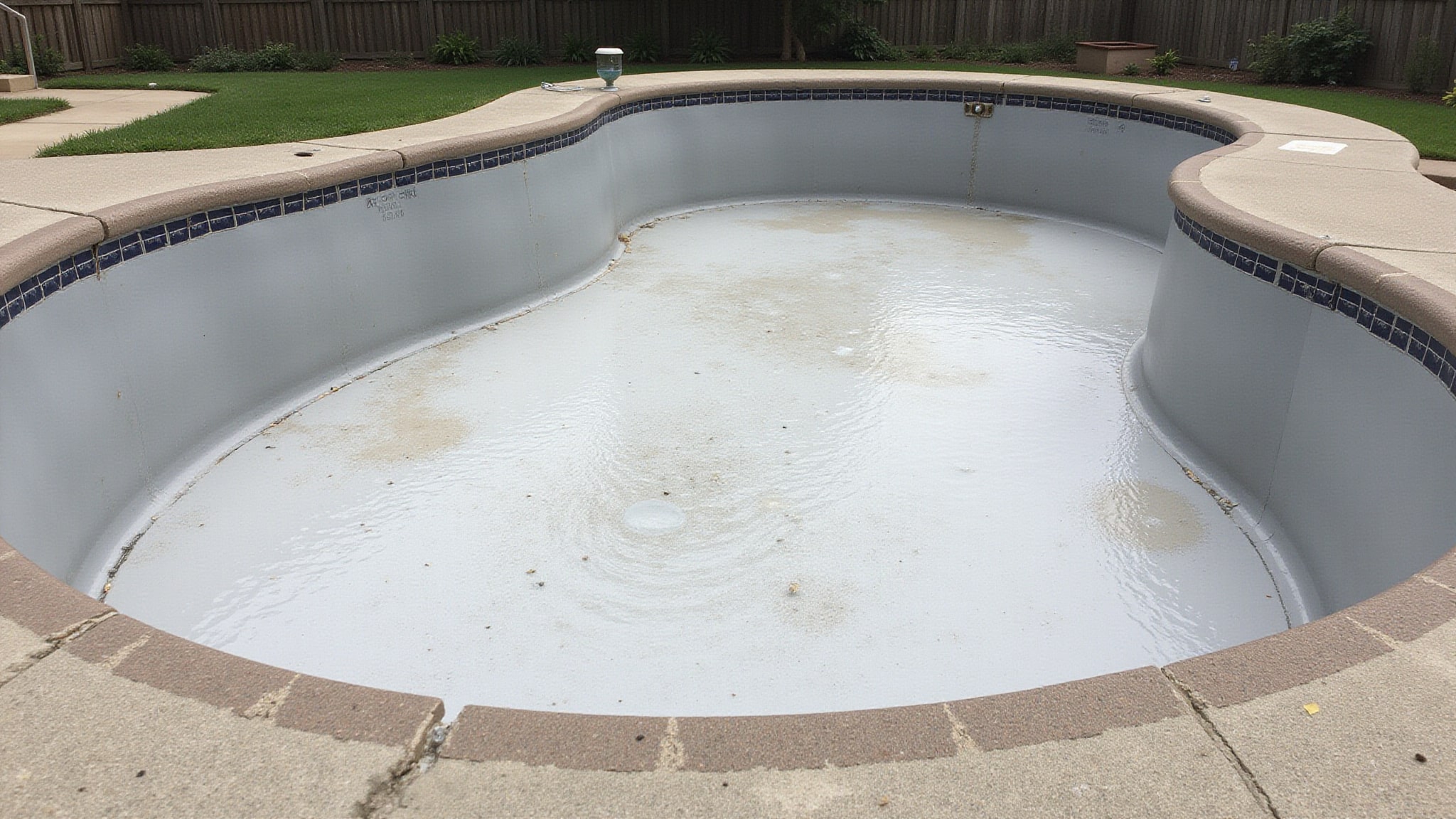
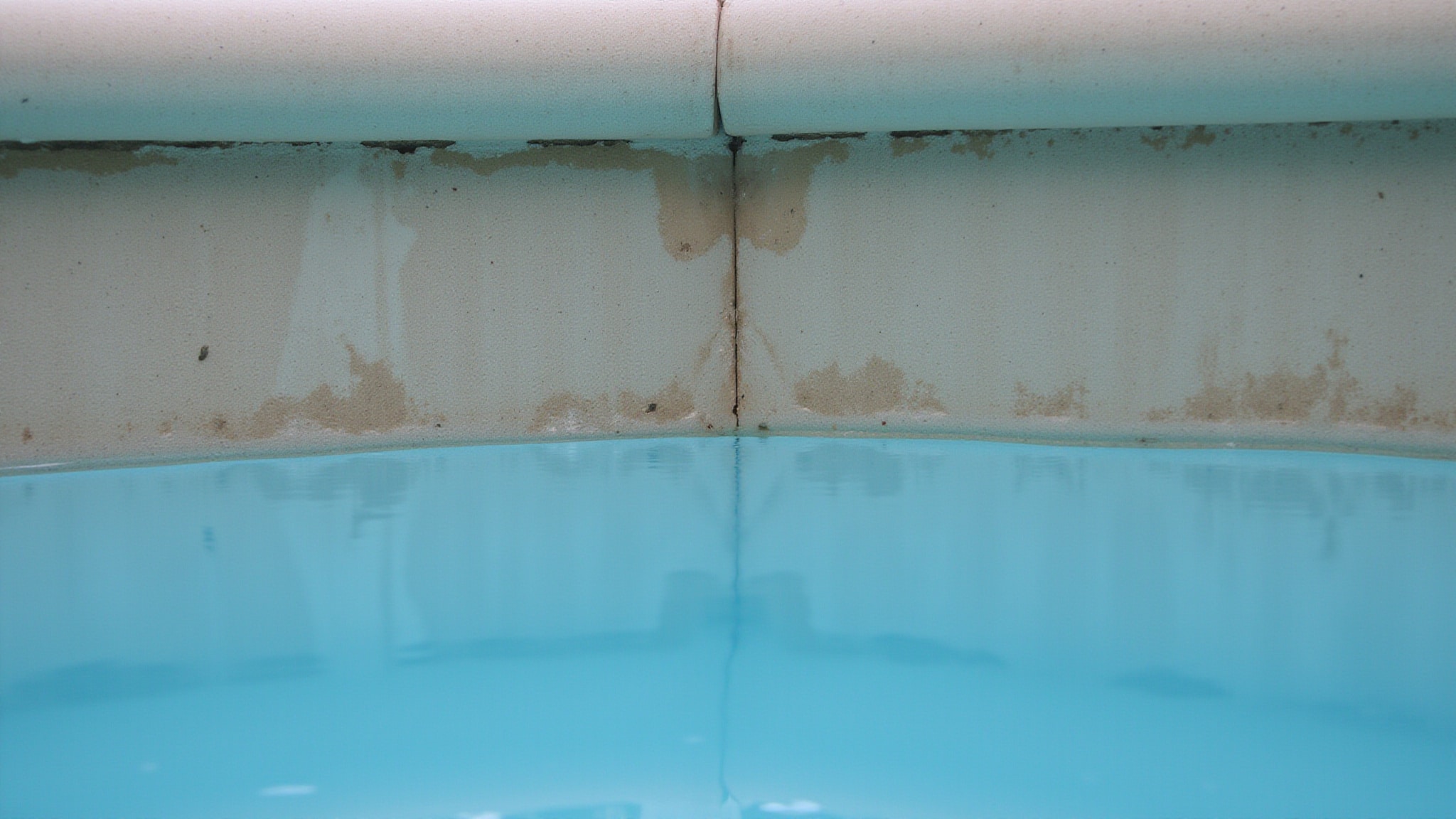
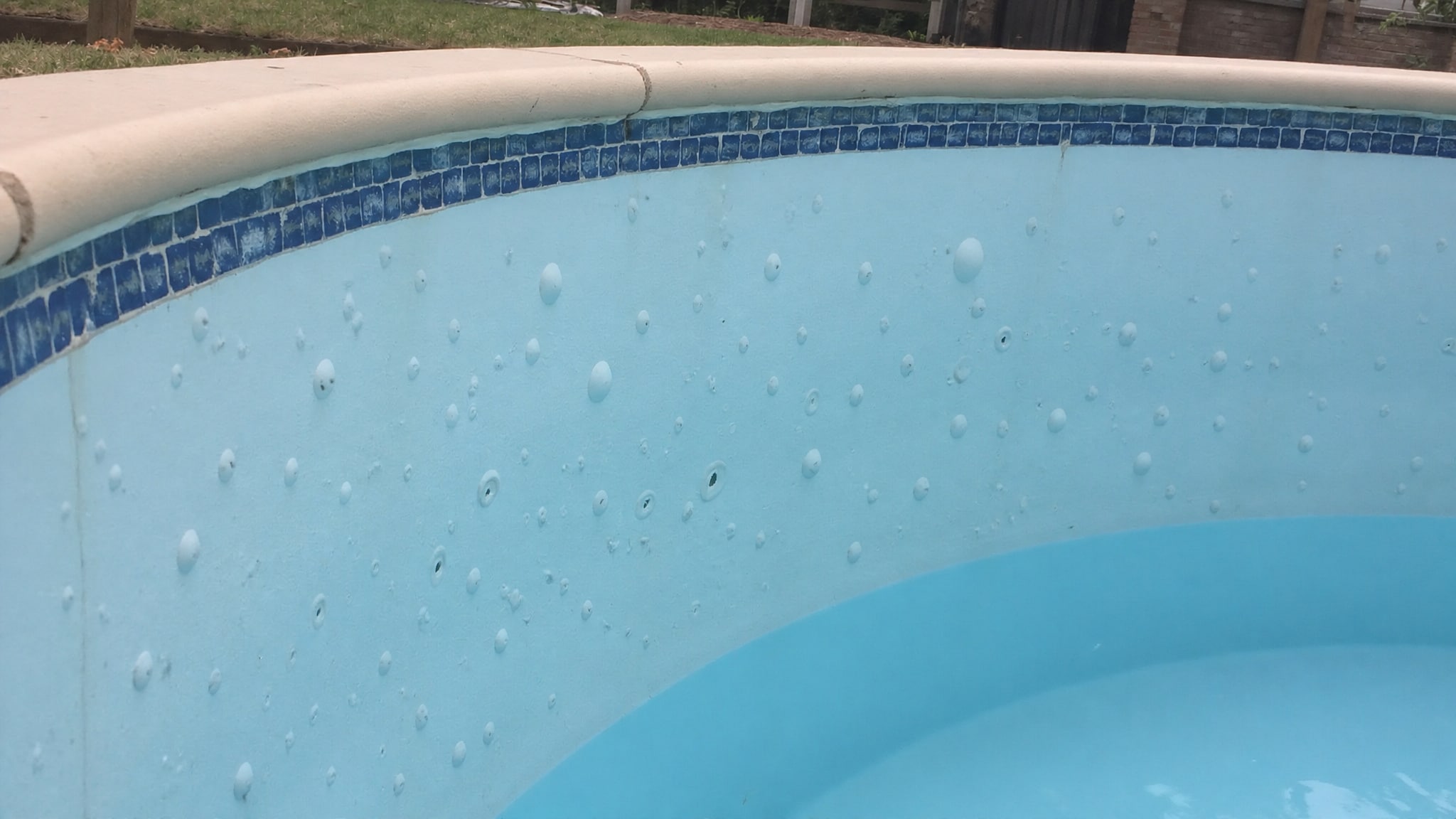
When your pool turns brown after shocking, chlorine’s oxidized dissolved metals, iron, manganese, or copper, into visible particles. Stop adding chlorine immediately. Turn off chlorinators and salt cells, then lower free chlorine below 1.0 ppm to halt oxidation. Don’t swim yet; suspended particles can irritate skin and stain surfaces. Test pH and metals, adjust pH to 7.2, 7.4, then apply the right sequestrant. The exact fix depends on what’s actually driving your discoloration.
Key Takeaways
- Chlorine oxidizes dissolved metals like iron, manganese, and copper into visible brown particles, while dead algae releases brown pigment.
- Stop adding chlorine immediately, turn off chlorinators and salt cells, and lower free chlorine below 1.0 ppm.
- Avoid swimming, as oxidized particles irritate skin and eyes and can stain hair, swimwear, and pool surfaces.
- Test iron, copper, and manganese to confirm the cause, then adjust pH to 7.2, 7.4 before adding sequestrant.
- Apply the correct sequestrant, circulate 24, 48 hours, then filter, backwash, or vacuum settled debris to waste.
Why Your Pool Turned Brown After Shocking
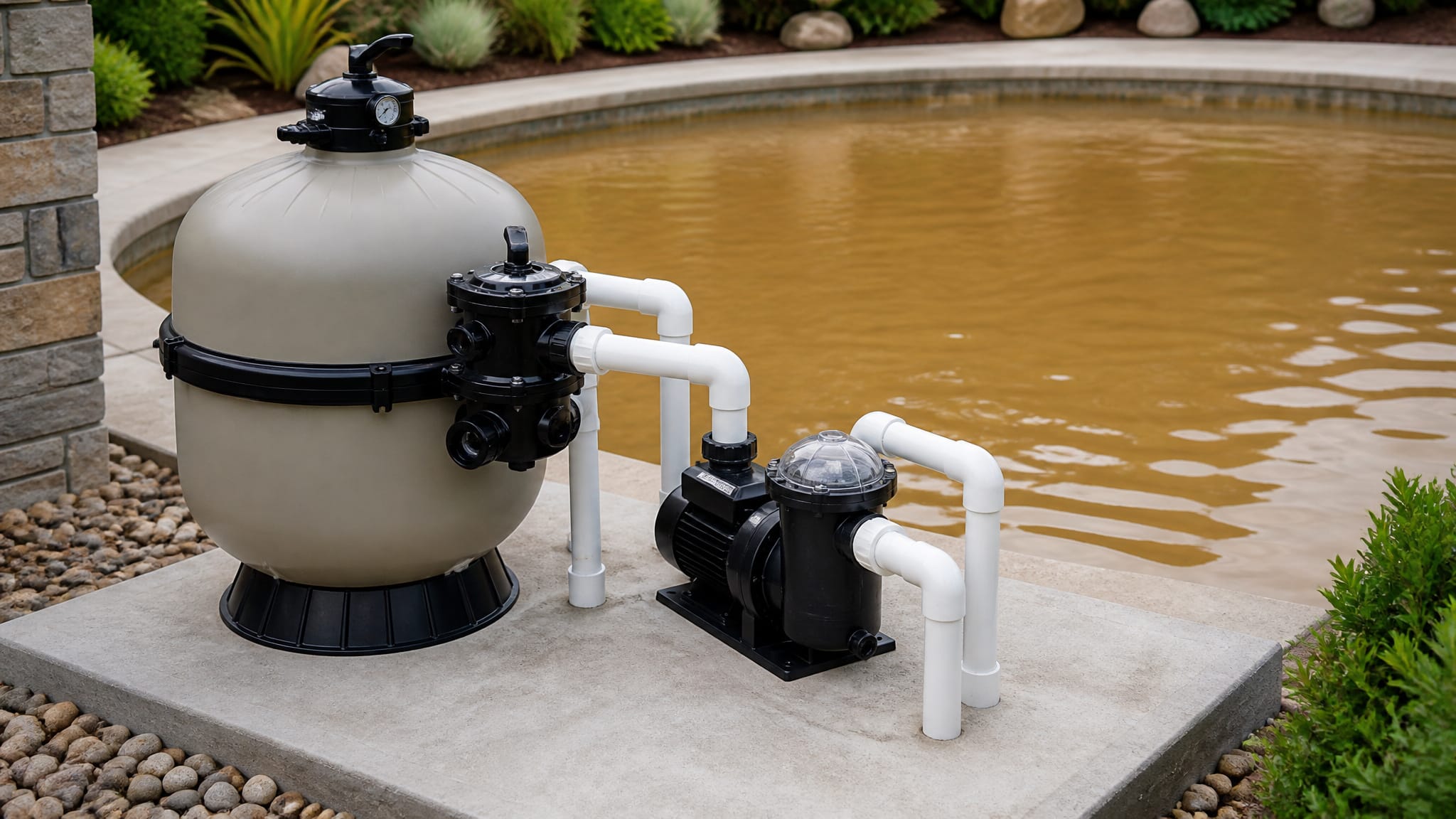
Your pool turned brown after shocking because the chlorine oxidized dissolved metals in the water. Your pool shock treatment introduces chlorine that reacts with dissolved metals in the water. High iron content oxidizes into visible rust particles on contact with chlorine. Manganese produces a similar brown tint when oxidized, while copper contamination reacts to create brown or reddish-brown discoloration. If your source water comes from a well, these metals are the most likely culprits behind brown pool water after shock.
Killed algae can also release brown pigment that clouds the water immediately after chlorination. Additionally, chemical reactions between your shock and existing pool chemicals sometimes trigger unexpected color changes. Identifying which cause applies determines your correct treatment response. Mustard algae causes in fiberglass pools can also lead to slippery surfaces that can be hazardous for swimmers. Regular maintenance and prompt treatment of algae growth are crucial to maintain a safe swimming environment.
Stop Adding Chlorine and Halt the Oxidation Now
Stop adding chlorine the moment you notice brown water, because every added dose accelerates iron precipitation and worsens staining. Turn off automatic chlorinators and salt cells immediately to halt further oxidizer introduction. Brown pool water gets worse each time chlorine contacts dissolved metals, so stopping the source is your first priority.
Next, lower chlorine levels below 1.0 ppm. You can let it degrade naturally or add sodium thiosulfate to speed the reduction. This step neutralizes the oxidation reaction driving your pool water problems. Fix murky fiberglass pool water by first ensuring that your filtration system is running efficiently. Regularly clean the filter and ensure that debris is removed from the pool surface.
Once chlorine drops, allow 24, 48 hours for metal binding before you attempt aggressive cleaning or filtration. Don’t vacuum to waste until you’ve circulated sequestrant for at least one hour. Rushing this stage redistributes metals and intensifies staining throughout the pool.
Is Brown Pool Water Safe to Swim In?
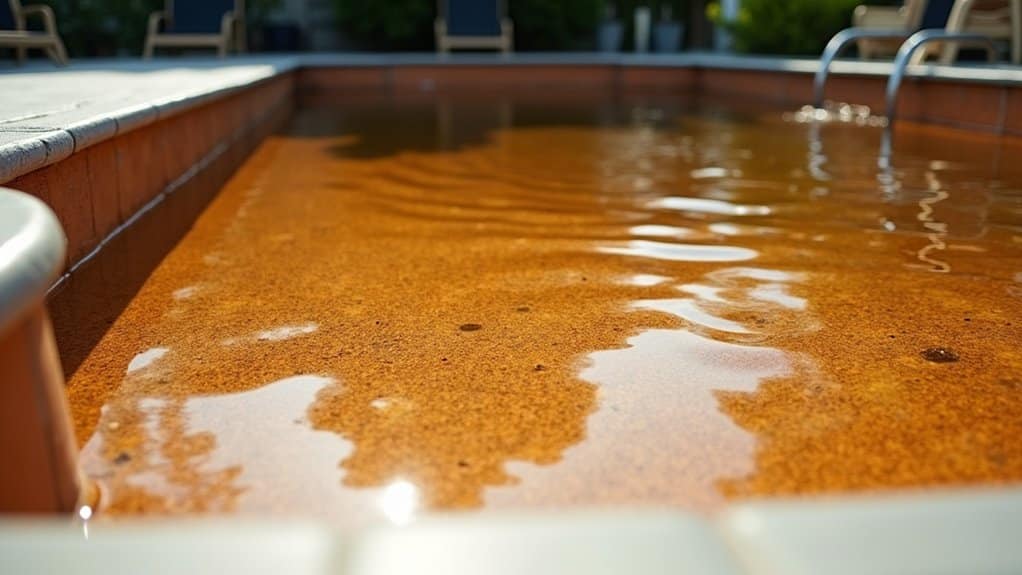
Brown pool water is generally not safe to swim in, and you should keep swimmers out until you’ve resolved the discoloration. The brown tint signals oxidized metals, iron, manganese, or copper, suspended throughout the water column. These particles can irritate skin and eyes, and they’ll stain hair, swimwear, and pool surfaces on contact.
Beyond metals, the discoloration often coincides with unbalanced chemistry. Your chlorine may be raised from shocking, or your pH may sit outside the safe 7.2, 7.6 range, both of which pose exposure risks.
Don’t allow entry until you’ve tested free chlorine, pH, and metal concentrations, confirmed levels fall within safe ranges, and cleared the suspended particles through sequestration and filtration. Once the water runs clear and balanced, swimming’s safe again.
Iron, Manganese, and Copper Behind the Brown
Iron, manganese, and copper are the three metals that drive the brown discoloration you’re seeing. Each reacts differently when chlorine shock hits the water, but all produce that murky brown tint.
Iron oxidizes on contact with chlorine, converting dissolved ferrous iron into visible rust particles that suspend throughout the water column. Manganese behaves similarly, oxidizing into a brown tint nearly identical to iron once the shock introduces its oxidizing power.
Copper takes a slightly different path, reacting with chlorine to generate brown or reddish-brown discoloration. This metal typically enters your pool through corroded copper plumbing, heat exchangers, or algaecides containing copper compounds.
Identifying which metal you’re dealing with requires testing. Use a dedicated metal test kit to measure iron, copper, and manganese concentrations before selecting your treatment approach.
Could Dead Algae Be Turning Your Pool Brown?
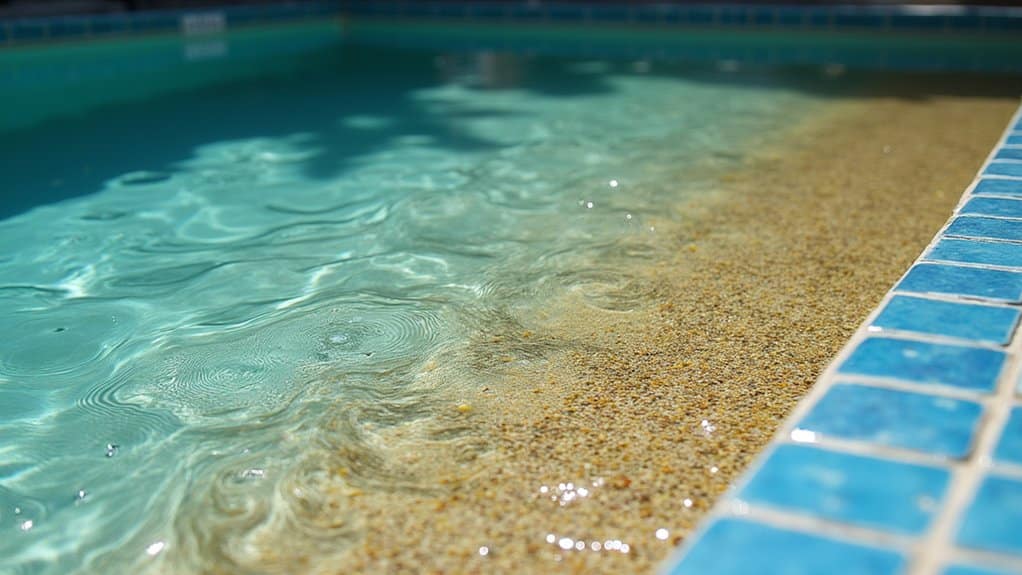
Yes, dead algae can turn your pool brown. When shock kills an algae bloom, the dying cells release brown pigment that clouds your water instantly. Unlike metal staining, this discoloration comes from suspended organic debris rather than oxidized minerals. Metals cause most brown discoloration, but dead algae can produce the same effect immediately after you chlorinate.
To confirm algae as the cause, test your water for iron, copper, and manganese. If metal readings come back low or negative, dead algae is the likely culprit. Run your pump continuously to filter the suspended pigment and debris from the water column.
Backwash sand or DE filters as pressure rises, and vacuum settled brown debris to waste rather than back through your filter. If cloudiness persists, apply flocculant to settle remaining particles overnight.
How to Lower Chlorine Below 1.0 Ppm Fast
To lower chlorine below 1.0 ppm fast, add sodium thiosulfate, dosing carefully according to your pool’s gallon capacity to avoid overshooting. Turn off automatic chlorinators and salt cells to halt further oxidizer introduction. If time allows, let natural degradation reduce levels, sunlight breaks down free chlorine over several hours. Circulate the water to distribute the neutralizer evenly, then retest free chlorine after 30 minutes. Repeat small doses as needed until readings drop below 1.0 ppm. Don’t rush with large additions, since overcorrection complicates later pH and metal adjustments. Lowering chlorine below 1.0 ppm stops the oxidation reactions driving your brown water, so tackle this before applying any sequestrant. Once chlorine sits below the threshold, you’re ready to proceed with pH correction and sequestrant application.
Test for Metals Before You Add Anything Else
Before dosing any sequestrant, test your free chlorine, pH, total alkalinity, iron, copper, and manganese so you’re treating actual conditions rather than guessing. Use a dedicated metal test kit or submit a water sample to your pool store for accurate iron, copper, and manganese readings. Adjust pH into the 7.2, 7.4 range first, since sequestrants perform best within that window.
What to Test
Test free chlorine, pH, total alkalinity, iron, copper, and manganese before you add any more chemicals in the wake of brown water. Each reading tells you something specific. Free chlorine confirms how much oxidizer’s still active and driving metal precipitation. pH and total alkalinity determine whether you can proceed to sequestrant treatment or need adjustment first. Iron, copper, and manganese identify the exact contaminant behind the discoloration, so you’re not guessing at a fix.
Standard test strips won’t cut it for metals. Use dedicated metal test kits, or take a water sample to your pool store for accurate readings. Record every concentration in ppm. You’ll dose your sequestrant against these numbers, so precision here directly controls your treatment’s success.
Testing Methods
Test metal levels using one of two reliable methods, and neither involves standard test strips. Standard strips won’t give you accurate readings for iron, copper, or manganese, so skip them entirely. Instead, use a dedicated metal test kit designed to measure these specific contaminants at the concentrations that cause brown water. Follow the kit instructions precisely, matching reagent quantities to sample volume for reliable numbers.
Your second option is to collect a water sample and submit it to a pool store for analysis. Their equipment delivers accurate metal readings and confirms which contaminant you’re dealing with. Either method tells you the exact concentration, which you’ll need to dose sequestrant correctly. Don’t guess. Measure iron, copper, and manganese levels before adding any treatment chemicals.
Adjust pH First
Adjust pH to the 7.2, 7.4 range before adding any sequestrant, after you’ve measured your metal levels. This range optimizes sequestrant performance, ensuring the product binds iron, manganese, and copper effectively rather than letting them precipitate and stain surfaces.
Lower pH slowly, adding acid in measured increments to avoid overshooting your target. Follow this procedure:
- Add pH reducer according to your pool’s exact gallon capacity.
- Circulate water for 30, 60 minutes after each acid addition.
- Re-test pH to confirm you’ve reached the 7.2, 7.4 window.
- Repeat incremental dosing if readings remain above target.
Don’t rush this step or dump acid all at once. Uneven distribution creates localized low-pH zones. After you’ve stabilized pH within range, you’re ready to proceed with metal treatment.
Set Your Pool pH to 7.2, 7.4 First
Set your pool’s pH to the 7.2, 7.4 range before dosing any sequestrant, since this acidic window optimizes how effectively the sequestrant binds iron, copper, and manganese. Test your current pH first, then lower it slowly using a measured acid dose. Don’t rush this step. Adding too much acid at once overshoots your target and forces you to correct upward again. After you’ve added acid, circulate the water for 30, 60 minutes to distribute it evenly and stabilize the reading. Re-test to confirm you’re within the 7.2, 7.4 band before proceeding. If the pH still reads high, add another small acid increment and circulate again. Only after you’ve locked in this range should you move forward with your metal sequestrant application for maximum binding efficiency.
Pick the Right Metal Sequestrant for Brown Water
Select a sequestrant that matches your water’s specific metal problem. Not all sequestrants perform equally, so target the active ingredient to your measured contaminants:
- HEDP-based sequestrants deliver maximum efficacy against both iron and manganese, making them the top choice for brown water.
- Phosphonic acid formulas bind dissolved metals reliably and resist chlorine degradation during ongoing treatment.
- Phosphonic acid derivatives offer broad-spectrum control when you’re dealing with mixed metal contamination.
- Copper-specific formulations address reddish-brown discoloration caused by copper reacting with chlorine.
Match your product to your test results, don’t guess. Once you’ve picked the correct sequestrant, you’ll dose it precisely by gallon capacity and measured metal concentration in the next step.
How to Apply Sequestrant the Right Way
Apply sequestrant the right way by getting three variables correct: accurate dosing, correct injection point, and sufficient circulation time. Start by calculating your pool’s exact gallon capacity and confirming measured metal concentration levels. Both determine how much product you’ll add. Under-dosing leaves metals suspended, over-dosing wastes chemicals.
Pour the sequestrant slowly near your return jets. This injection point ensures even distribution throughout the water column as circulating water carries the product across the entire pool volume.
Run your pump continuously for 24, 48 hours after dosing. This extended circulation lets the sequestrant bind suspended iron and manganese while your filter captures the particles.
After you’ve cleared the brown water, add a weekly maintenance dose. Consistent dosing prevents metal reoccurrence and stops staining before it starts.
Run the Pump to Filter Out the Metals
Once you’ve added the sequestrant near the return jets for even distribution, run the pump continuously for 24, 48 hours to filter the suspended metals from the water column. This uninterrupted circulation forces the water through your filter media repeatedly, trapping the metal particles that the sequestrant has bound. Don’t shut the pump off during this window, or the metals will settle and prolong the treatment.
Continuous Circulation Timing
Run your pump continuously for 24, 48 hours after you’ve added the sequestrant to filter the suspended metals out of the water column. Continuous circulation keeps bound metals moving toward your filter media, preventing them from settling and staining surfaces. Don’t interrupt the pump during this window, as stagnation allows precipitated particles to redeposit on walls and floor.
Track your timing and conditions carefully:
- Start the clock immediately after sequestrant reaches the return jets.
- Verify flow by confirming steady discharge at each return throughout the cycle.
- Monitor pressure on your filter gauge and backwash if it climbs 8, 10 psi above baseline.
- Hold circulation the full 48 hours if brown tint persists past the first day.
Re-test water chemistry once circulation completes.
Position Near Returns
Position sequestrant near your return jets, where outgoing water carries it directly into the pool’s circulation route. This placement ensures even distribution throughout the water column instead of letting the chemical pool in one area or accumulate before it disperses. As the sequestrant spreads, it binds suspended iron, manganese, and copper, holding them in solution so your filter can capture them.
With the sequestrant introduced at the returns, run the pump continuously for 24 to 48 hours. This extended runtime pushes the treated water through your filter repeatedly, trapping the bound metals. Don’t cut circulation short. Incomplete filtration leaves metals floating, and they’ll re-oxidize into visible brown particles again.
Filter Suspended Metals
Your pump is the primary tool for clearing suspended metals from the water once the sequestrant is circulating through your system. Once the sequestrant binds the iron, manganese, and copper, continuous filtration captures those particles before they settle or stain surfaces. Keep the pump running without interruption to maximize contact between the water and your filter media.
- Run the pump continuously for 24, 48 hours after adding sequestrant.
- Monitor filter pressure and backwash sand or DE filters once particles accumulate.
- Clean cartridge filters with a hose or specialized cleaner to restore flow.
- Vacuum any settled brown debris to waste rather than back through the filter.
This sustained circulation traps bound metals, clears the discoloration, and prepares the water for your final chemistry adjustments.
Backwash and Vacuum the Brown Debris
Backwash sand or DE filters thoroughly to flush trapped metal particles from the media after 48 hours of continuous filtration. The filter’s done its job trapping suspended metals, so now you’ll physically remove the accumulated debris. For cartridge systems, remove the element and clean it with a hose or specialized filter cleaner to restore filtration efficiency.
Next, address the brown debris that’s settled on the pool floor. Vacuum this sediment directly to waste rather than routing it back through the filter system. This prevents re-suspending metals or overloading your freshly cleaned media.
If the water remains brown after 48 hours of continuous filtration and sequestration, apply a flocculant. Then turn the pump off for 8, 12 hours, letting particles settle overnight for removal.
When to Reach for Flocculant Instead
If your pool’s still brown after 48 hours of continuous filtration and sequestration, it’s time to reach for flocculant. Applying it correctly means dosing per your pool’s gallon capacity, then running the pump briefly to distribute it before shutting down. Turn the pump off for 8, 12 hours so the bound particles settle to the floor overnight, then vacuum the debris to waste rather than back through your filter. Green pool water causes concerns for many pool owners, especially if the proper maintenance steps are overlooked. Regular testing and balancing of your pool’s chemicals can help prevent issues before they arise.
Applying Flocculant Correctly
Apply flocculant when your pool stays brown after 48 hours of continuous filtration and sequestration. This product binds suspended metal particles into larger clumps that settle to the pool floor for removal. Follow this procedure precisely:
- Add flocculant according to your exact pool gallon capacity, distributing it near the return jets for even dispersion.
- Turn the pump off for 8, 12 hours, allowing the bound particles to settle overnight undisturbed.
- Vacuum the settled brown debris directly to waste, never back through the filter system.
- Refill the pool to compensate for water lost during the vacuuming process.
After you’ve removed the settled debris, re-test your water chemistry and adjust pH to the 7.4, 7.6 range.
Settling And Removal
Flocculant clears water when sequestration and filtration alone can’t do the job after 48 hours of continuous pump operation. After you’ve added the flocculant, turn the pump off for 8, 12 hours to let particles settle overnight. Don’t disturb the water during this window; agitation resuspends the debris and forces you to restart the process.
The next morning, you’ll see brown sediment collected on the pool floor. Set your multiport valve to waste to bypass the filter entirely, then vacuum the settled debris slowly. Moving too fast stirs particles back into suspension and reduces removal efficiency.
After vacuuming, refill the pool to replace lost water, then re-test and adjust pH to the 7.4, 7.6 range. Backwash or clean your filter to remove any residual metal particles.
Pre-Treat Well Water Before It Hits the Pool
Pre-treat well water before it hits the pool to remove dissolved iron, manganese, and copper before they ever reach your pool. Pre-treating your source water stops metal oxidation reactions before they can trigger brown discoloration during shock treatment.
Follow this procedure before adding well water:
- Test the water for iron, copper, and manganese concentrations using a dedicated metal test kit or a pool store sample analysis.
- Apply an iron-out product to your fill water to precipitate and remove dissolved metals.
- Add a metal sequestrant if you know metals are present in your supply, binding them before they enter the pool.
- Repeat weekly sequestrant maintenance dosing with each water refill to keep metal levels controlled.
This preemptive approach prevents staining entirely.
Keep Metals in Check With Weekly Dosing
Keep metals in check by dosing metal sequestrant on a weekly schedule, which keeps dissolved iron, manganese, and copper bound before they can oxidize and stain your pool. Add the maintenance dose according to your product’s label and your exact pool gallon capacity. Apply it near the return jets so it distributes evenly throughout the water column as the pump circulates. Time each dose with your weekly water refill, since fresh source water reintroduces metals that need immediate binding. HEDP and phosphonic acid derivatives work best for ongoing iron and manganese control. Don’t skip a week, because unbound metals accumulate quickly and oxidize the moment you shock. If you top off after heavy evaporation, add a proportional dose. This routine prevents recurrence and protects surfaces from brown staining.
Conclusion: Why Pool Water Turns Brown After Shocking
Brown water right after shocking is usually a sign of dissolved metals, often iron from well water, that the shock oxidizes and brings out of solution. It looks alarming but is generally fixable with a metal sequestrant, proper filtration, and balanced chemistry. Testing your fill water for metals helps you prevent it in the first place. Handled promptly, brown water clears up without lasting harm to the pool.
Choose a San Juan Fiberglass Pool That Lasts
Water chemistry challenges become far easier to manage with a properly built fiberglass pool from an authorized installer. At Schiller Pools in Stuart, FL, our experienced team provides trusted San Juan Fiberglass Pools with premium quality and 40+ years of installation expertise. Call +1 (561) 475-5997 today and get your free estimate.
Frequently Asked Questions
How Much Does Professional Metal Removal Treatment Typically Cost?
Cost depends on the pool size and how much metal is present, but treating it is usually affordable, mainly the price of a metal sequestrant or removal product plus any service fee. Severe cases may need repeated treatments. A pool professional can test the water and recommend the most cost-effective approach for your situation.
Can Brown Pool Water Permanently Stain My Pool Surfaces?
It can if metal staining is left untreated, since oxidized metals can settle and mark surfaces over time. Fiberglass’s non-porous gel-coat resists staining better than some surfaces, and acting quickly with a sequestrant and proper cleaning usually prevents permanent marks. The sooner you address brown water, the less likely it is to leave a stain.
How Often Does Well Water Need Iron Testing?
If you fill or top up from a well, testing for iron and other metals whenever you add a significant amount of water is wise, and at least at the start of each season. Well water can vary over time. Knowing your metal levels lets you add a sequestrant before shocking, which prevents the brown-water surprise.
Will a Saltwater System Worsen Brown Water Problems?
A salt system can contribute, because the chlorine it produces oxidizes metals just as shock does, which can bring out brown discoloration if metals are present. The fix is the same: keep metals in check with a sequestrant and balanced water. Testing fill water and treating metals early keeps a salt pool clear.
Does Brown Water Damage My Pool Pump or Heater?
Dissolved metals and the scale they can form may, over time, affect equipment like the heater and pump if left unmanaged. Clearing the metals with a sequestrant and keeping the water balanced protects the equipment. Addressing brown water promptly is good not just for appearance but for the longevity of your pool gear.