
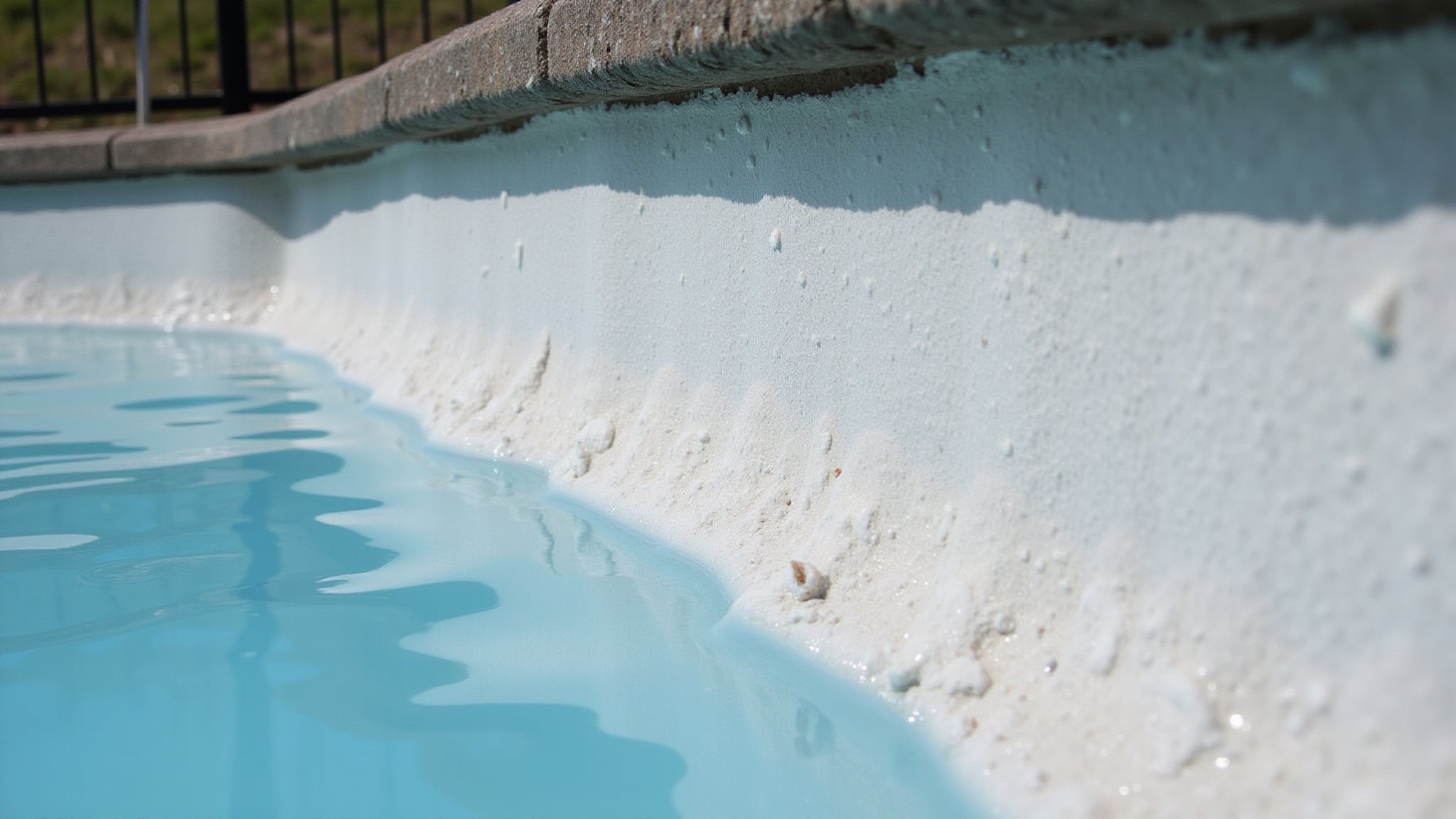
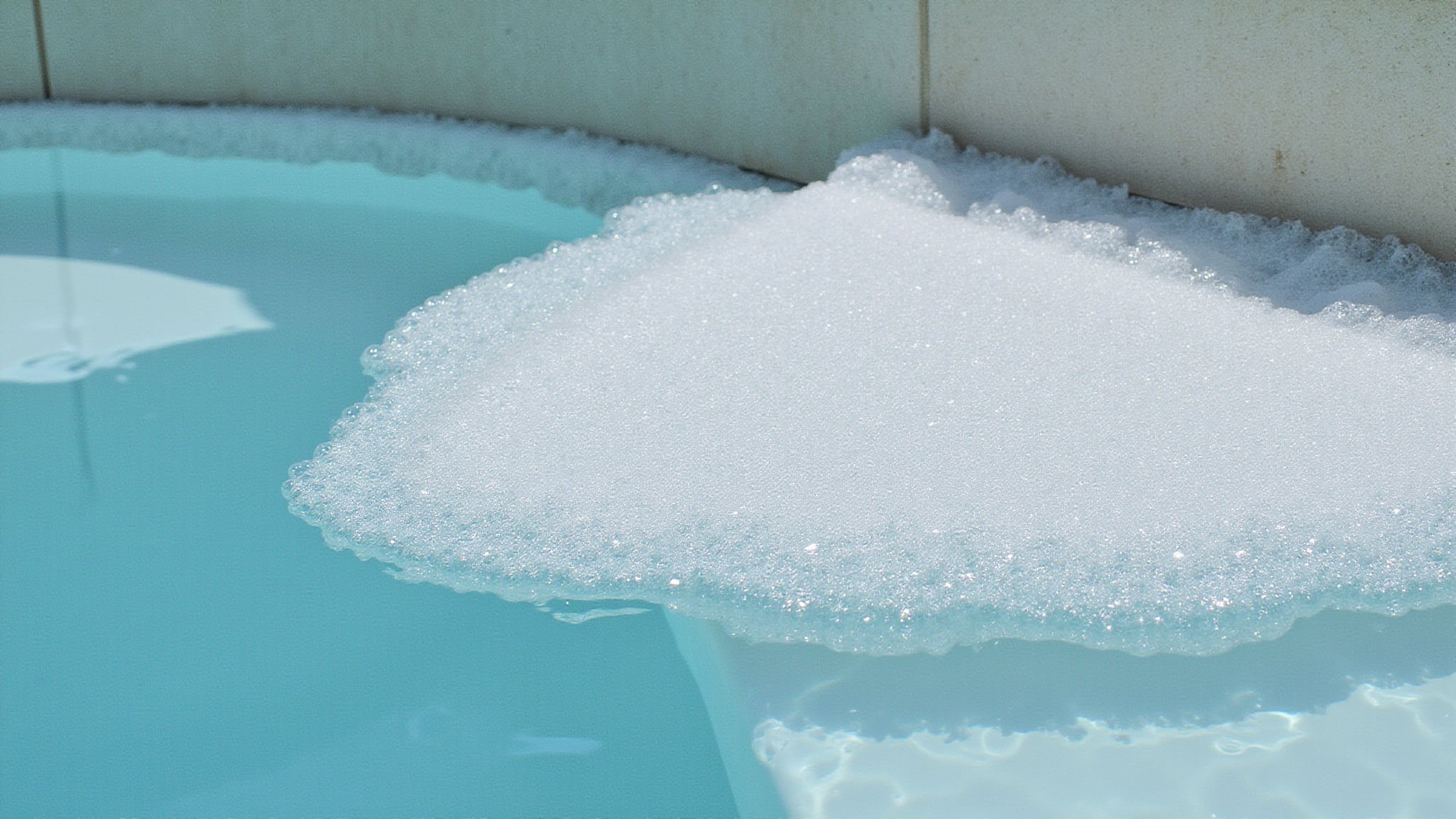
To clean stubborn waterline scum from fiberglass pools, first lower your water level about 5 cm below the scum line using backwash or a submersible pump. Pre-rinse to soften baked-on oils. Scrub with a soft-bristle brush in gentle circular motions, never use abrasives like magic erasers or wire wool. Apply vinyl waterline gel or 50/50 vinegar, then spot-treat calcium with citric or vitamin-C paste. Rinse, rebalance, and refill. There’s more you’ll want to know below.
Key Takeaways
- Lower the water level about 5 cm below the scum line to expose and access the affected strip.
- Pre-rinse the exposed band with pool water to soften baked-on body oils before applying cleaners.
- Use only soft-bristle or fiberglass brushes, avoiding magic erasers, wire wool, and scouring powders that damage gelcoat.
- Treat calcium spots with acidic cleaners like diluted citric acid or vitamin-C paste, then rinse thoroughly.
- Refill to mid-skimmer, balance pH to 7.4, 7.6 and alkalinity to 80, 120 ppm, and add clarifiers to prevent return.
What Causes That Stubborn Waterline Scum Ring
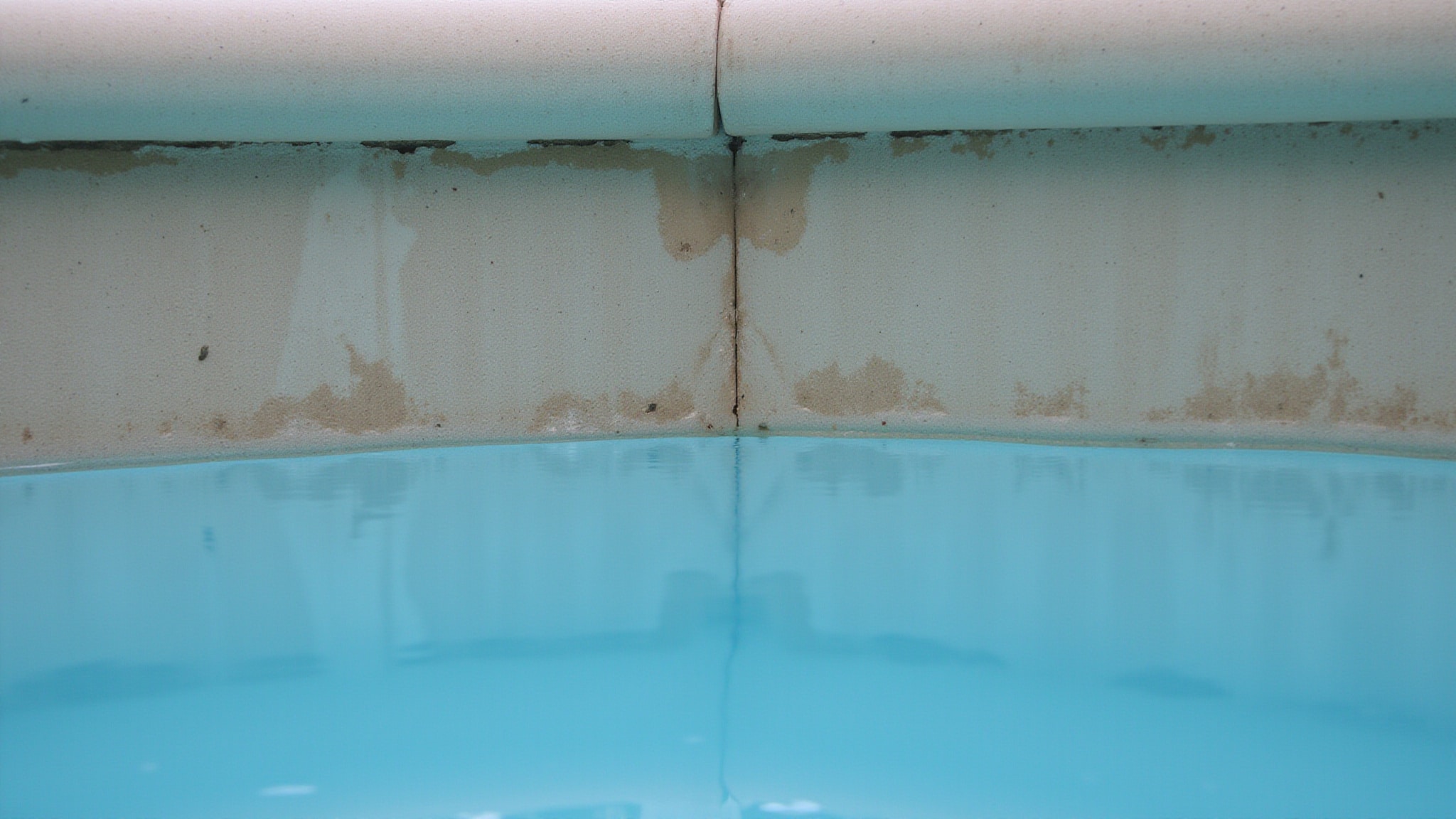
That stubborn scum ring resists a quick wipe-down because sun exposure has “baked” its oils onto the surface, while fresh film comes off with a single pass because it stays soft. The difference lies in composition and exposure time. Your pool scum line starts as body oils, sweat, lotions, and fatty residues that bind with minerals in the water. When sun exposure bakes those oils onto the surface, they embed into the fiberglass gelcoat, creating stubborn waterline stains pool owners struggle to remove. High pH above 7.6 accelerates the problem, precipitating minerals that adhere to oil residues and form a hard ring. Calcium scale compounds it, depositing white bumps where evaporation peaks. Effective fiberglass pool cleaning starts by identifying which of these mechanisms produced your specific buildup.
Lower Your Water Level to Expose the Scum
Start by dropping your pool water level about 5 cm (50, 75 mm) below the scum line to fully expose the affected strip. Use your backwash function or a submersible pump to lower the water quickly and gain clear access to the wall. Once exposed, pre-rinse the strip with pool water to soften body oils before you apply any cleaning agents.
Drop Below Scum Line
Dropping the water level below the scum line works because scrubbing at the waterline while it’s submerged never quite works. Water resistance blunts your brushing force, and submerged pool waterline scum simply won’t release under those conditions. Start by dropping the level roughly 5 cm (50, 75 mm) below the scum line to expose the affected band completely.
Use your backwash function or a submersible pump to lower the water quickly and efficiently. This full exposure is critical for cleaning fiberglass pool waterline surfaces, giving you direct access to the baked-on residue. After ensuring the surfaces are dry, it’s time to focus on how to remove calcium scale on fiberglass pool. Begin by applying a suitable descaler and allow it to penetrate for several minutes.
After the strip sits above the water, pre-rinse it with pool water to soften body oils before applying anything. Keep the pump running throughout, directing debris toward the main drain, and switch off pressure-side cleaners to prevent splashing.
Pump and Backwash Methods
Two reliable methods let you drop the water level: filter backwash and a submersible pump. Choose the method that matches your equipment and how fast you need results. Engage your filter’s backwash function to expel water rapidly, watching the sight glass until the level falls roughly 5 cm (50, 75 mm) below the scum line. This exposes the affected strip completely for direct access.
Alternatively, deploy a submersible pump for faster, more controlled drainage, positioning the discharge hose away from the pool basin. Either method works, so pick based on your setup.
Keep the pool pump running as you drop the level to maintain debris flow toward the main drain. After you’ve exposed the full band, pre-rinse it with pool water to soften body oils before scrubbing begins. Natural fixes for high pool pH can help maintain a balanced pool environment. Consider using white vinegar or baking soda as gentle alternatives to commercial chemicals.
Pre-Rinse the Strip
Pre-rinse the affected strip with pool water to soften the baked-on body oils before you apply any cleaner. This pre-rinse step loosens fatty residues embedded in the gelcoat, reducing the chemical intervention you’ll need later. Direct water across the entire exposed band, keeping the surface saturated so oils begin to release.
Turn off any pressure-side cleaners. Doing so prevents floating debris from splashing back onto the work area you’ve just exposed. Keep the pool pump running throughout, maintaining steady debris flow toward the main drain.
Work methodically along the strip, rinsing section by section. This softening stage primes the surface, ensuring your brush and cleaner act on pliable oils rather than hardened, fully bonded residue.
Best Brushes and Cloths for Scrubbing Scum
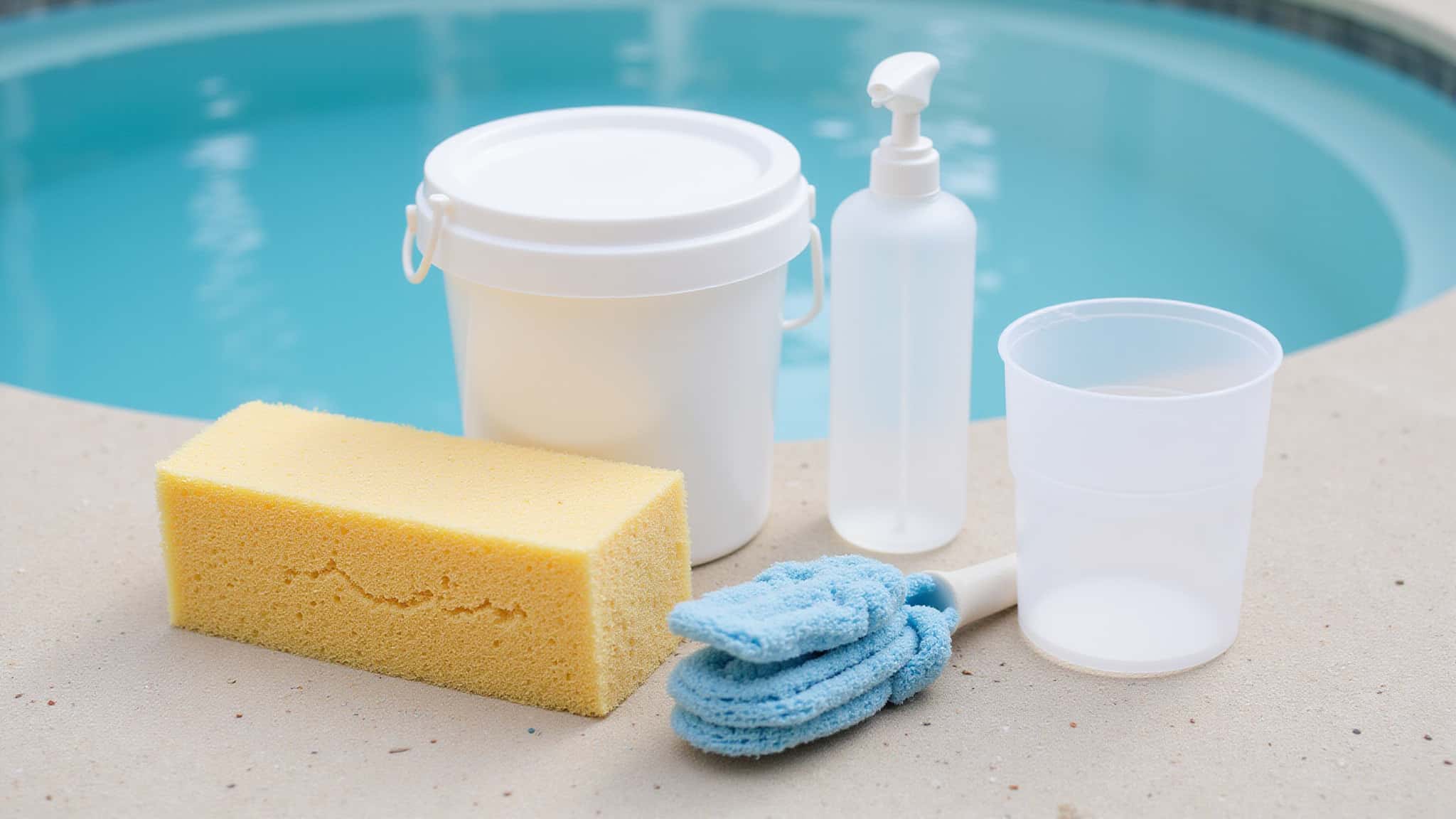
Choosing the right tools protects your fiberglass gelcoat while lifting scum effectively. You’ll pair a soft-bristle brush, tile brush, or dedicated fiberglass waterline brush with a telescoping pole for reach, then follow up with microfibre cloths and a waterline squeegee to clear loosened residue. Steer clear of magic erasers, wire wool, stiff bristle brushes, and scouring powders, since these cause micro-scratches that dull the surface.
Recommended Brushes and Poles
Recommended brushes for waterline scum include a soft-bristle brush, tile brush, or dedicated fiberglass waterline brush, each paired with a telescoping pole for consistent reach along the entire scum line. The right brush protects your gelcoat while lifting baked-on residue. The pole lets you maintain steady, controlled pressure without leaning into the shell or straining sections unevenly.
Skip magic erasers, wire wool, stiff-bristle brushes, and scouring powders. These cause micro-scratches and dull your gelcoat, leaving permanent surface damage that traps future oils. Apply gentle circular motions using roughly 10 cm circles with light pressure, which prevents uneven gloss on the finish.
After you’ve brushed each section, run a waterline squeegee across it to wipe away loosened debris and residual scum immediately.
Microfibre Cloths and Squeegees
Microfibre cloths and squeegees handle the wiping and finishing work after brushes lift baked-on scum. You’ll rely on these tools to clear debris and restore gloss before it resettles.
- Wipe fresh scum with a microfibre cloth, reserving chemical intervention only for stubborn, baked-on buildup that resists dry removal.
- Run a waterline squeegee across loosened debris immediately after brushing each section, pulling residual scum away before it re-adheres.
- Buff the cleaned band dry with a microfibre cloth to eliminate streaks and restore high gloss, especially on dark shells.
- Work section by section, wiping and squeegeeing one meter at a time so scum doesn’t dry back onto the gelcoat surface.
Tools and Materials to Avoid
Certain tools destroy a gelcoat surface because they are too abrasive. Avoid magic erasers, which grind away the gelcoat’s protective layer despite feeling soft. Skip wire wool entirely. It embeds micro-scratches that dull the finish and trap future oils. Stiff bristle brushes cut into the fiberglass surface, creating uneven texture that accelerates scum adhesion. Scouring powders act the same way, abrading the gloss and leaving a hazy, roughened band along the waterline.
These tools might remove buildup faster, but they permanently damage the shell. After you’ve scratched the gelcoat, oils and minerals bind more aggressively, forcing more frequent cleaning. Choose soft-bristle brushes and non-abrasive pads instead, protecting the surface while lifting scum effectively.
Chemical Cleaners That Dissolve Baked-On Scum
Chemical cleaners dissolve baked-on scum when manual scrubbing falls short. Match your solution to the residue type, targeting oils and mineral deposits separately for maximum effectiveness. Apply thin coats and let dwell times work before wiping.
- Vinyl waterline cleaner or gel: Spray onto a soft sponge or pad, then spread a thin coat over one meter of wall.
- 50/50 vinegar and water: Wipe on with a sponge, or use a tiny amount of Jif for mild surface cleaning.
- Melamine sponge with diluted citric cleaner: Press for 30 seconds against white calcium scale spots.
- Crushed vitamin-C paste: Smear on stubborn calcium nodules, wait five minutes, then wipe clean.
Rinse each section thoroughly afterward.
How Do You Remove White Calcium Scale Spots?
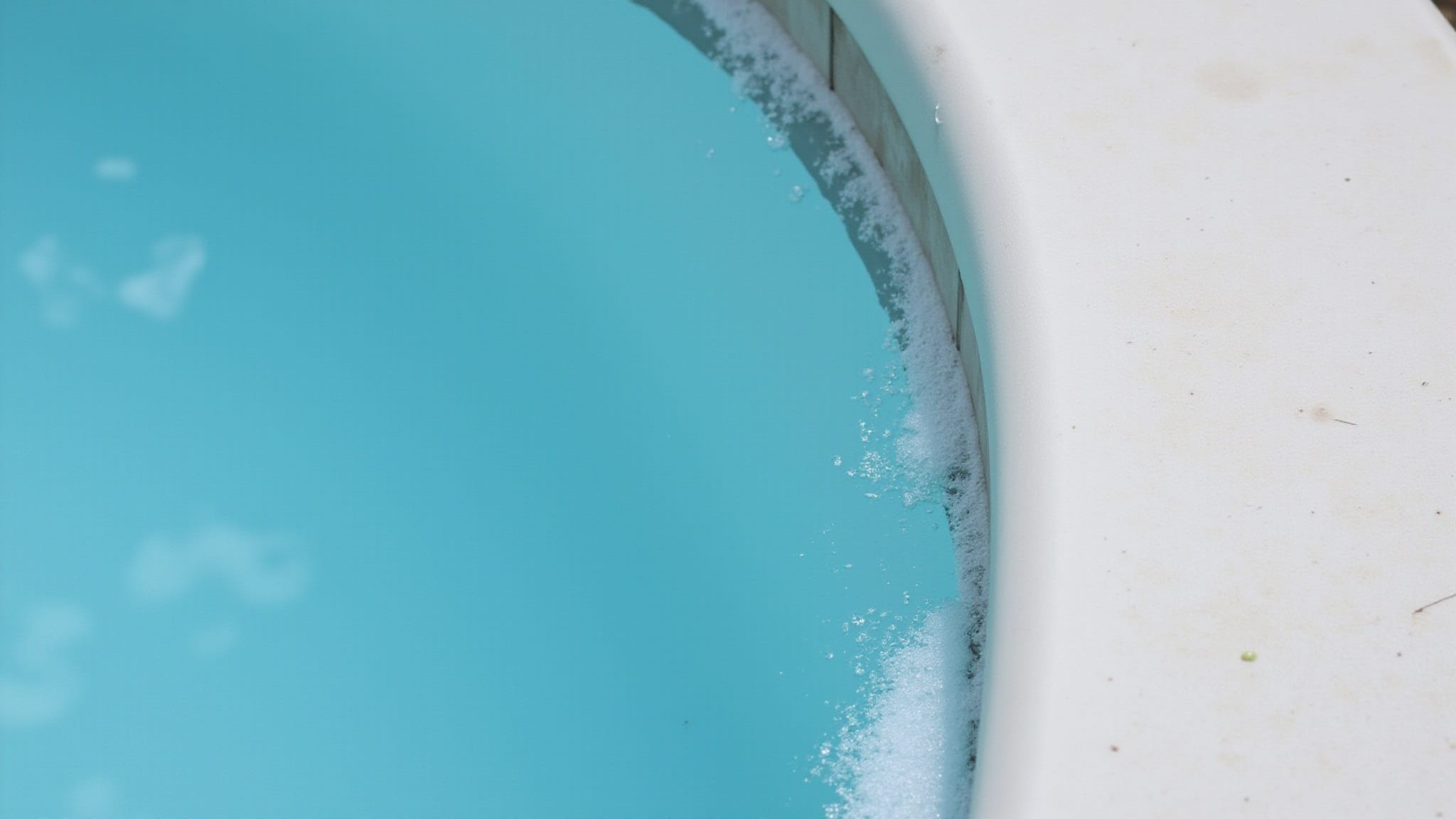
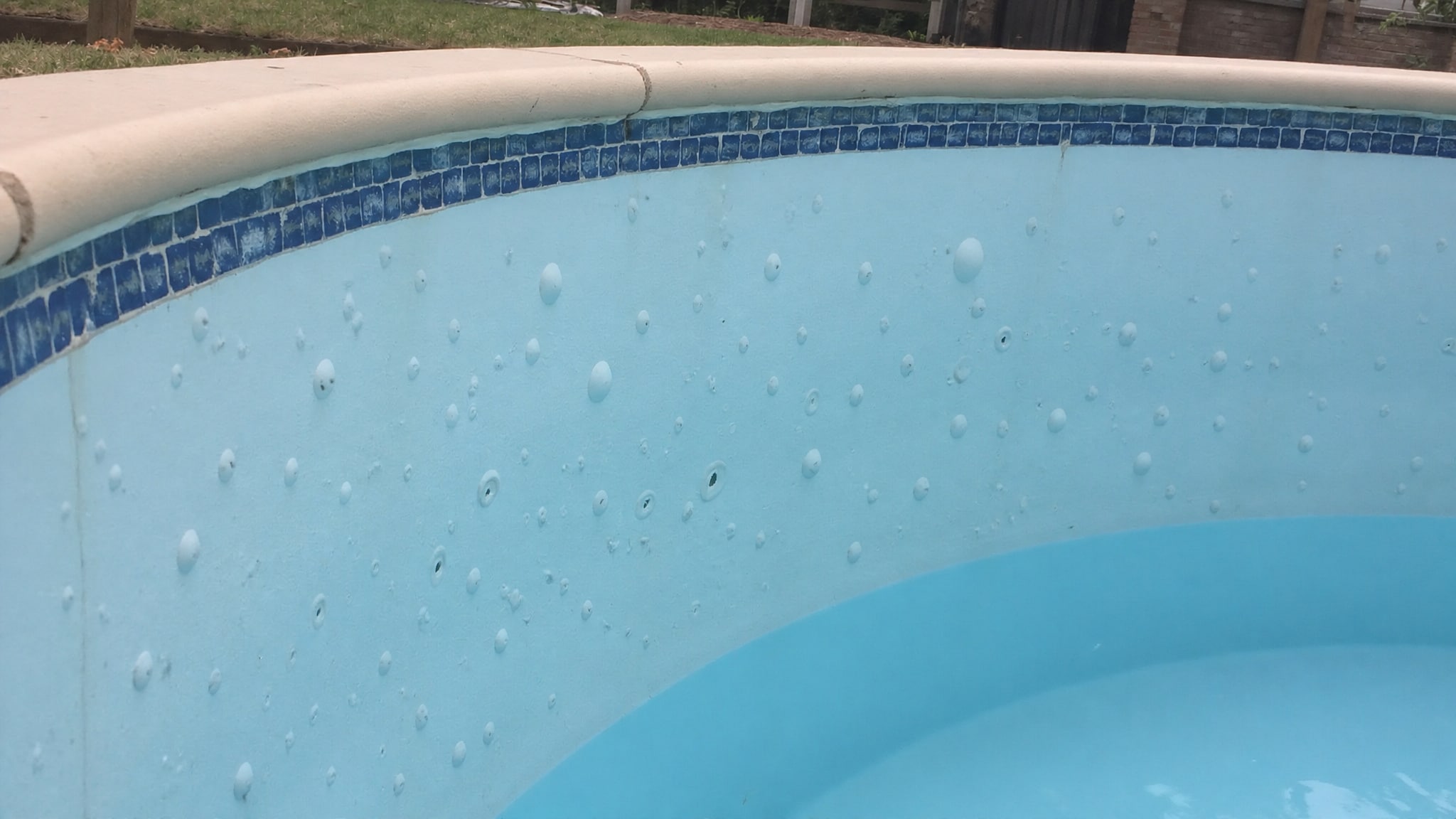
Remove white calcium scale spots with acidic cleaners rather than the vinyl gels that dissolve baked-on oils, because calcium scale bonds differently than oily scum. Calcium scale appears as white bumps forming where evaporation rates run highest, typically alongside the oily scum line. Target these spots with a melamine sponge charged with diluted citric cleaner, pressing it against each nodule for 30 seconds to let the acid penetrate the mineral deposit. For stubborn calcium nodules, crush vitamin-C tablets and mix with water to form a paste. Smear the paste directly onto the affected spots, then wait five mines before wiping clean. The ascorbic acid dissolves the calcium bond without scratching the gelcoat. Rinse each treated section thoroughly with clean water afterward to remove any residual acid.
Rebalance and Refill After Cleaning the Scum
Rebalancing and refilling restores your pool to operating condition after you’ve stripped away the scum. Cleaning agents leave chemical residue and disrupt water chemistry, so you’ll need to flush the surface, refill, and rebalance before resuming normal operation. Work through these steps in sequence to lock in your results. Pool water testing frequency is crucial to maintaining a healthy swimming environment. Regular checks help identify potential issues before they grow, ensuring the water remains safe and balanced.
- Rinse cleaned sections frequently with clean water from the return line or a spray bottle to prevent chemical buildup on the gelcoat.
- Buff the cleaned waterline band dry with a microfibre cloth to remove streaks and restore gloss, especially on dark shells.
- Refill the pool to mid-skimmer level to restore proper water volume.
- Test and adjust pH to 7.4, 7.6 and TA to 80, 120 ppm, then run the pump one hour.
Keep Waterline Scum From Coming Back for Good
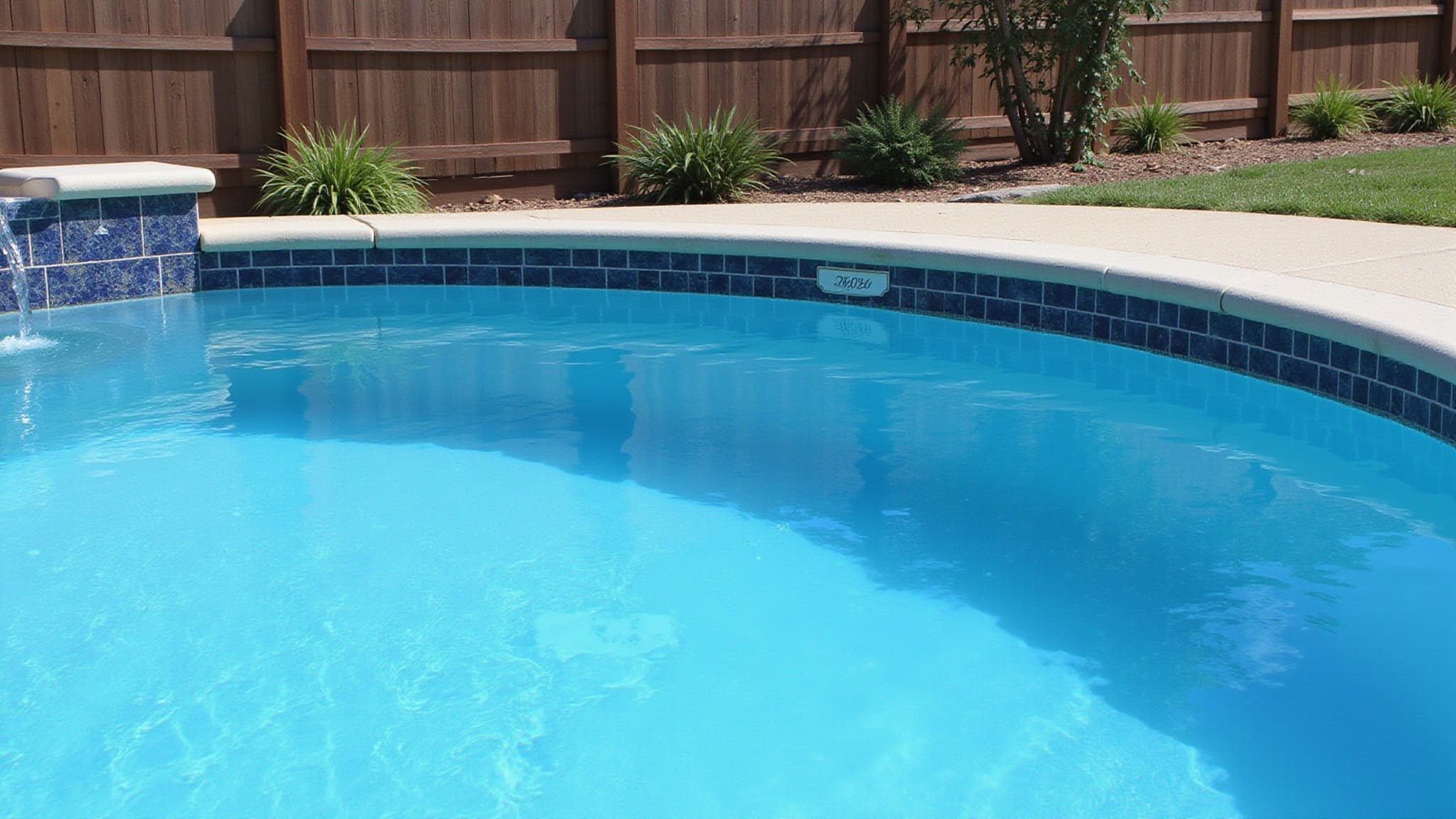
A maintenance routine that stops oils and minerals from rebuilding along the waterline keeps scum from coming back for good. Add chitosan-based clarifiers like Vinyl Care & Protect or Lochlor Ultra Kleer 4 regularly to bind fats and oils so your filter removes them before they settle. Pour enzyme cleaners into the skimmer or float them freely, circulating for 24 to 48 hours to break down organic residues. Replace enzyme pods every few weeks, or immediately when they appear saturated. Float clean, new fuzzy tennis balls to absorb surface oils, swapping them out regularly. Hold pH between 7.2 and 7.6 and total alkalinity between 80 and 120 ppm to prevent minerals from precipitating and adhering to any remaining oil film.
Conclusion: Keeping the Waterline Clean
Waterline scum is one of the most common cosmetic issues on a fiberglass pool, caused by oils, sunscreen, and grime collecting where the water meets the surface. The good news is that the smooth gel-coat makes it easier to wipe clean than rougher surfaces. Regular light cleaning, the right non-abrasive products, and good water balance keep the line clear. A little routine attention prevents buildup and keeps the pool looking its best.
Call Today and Build a Pool Made for Easy Care
Every well-built fiberglass pool starts with proper construction, right from the first shovel of dirt to the final finish. At Schiller Pools in Stuart, FL, our skilled team delivers dependable Pool Construction built around lasting quality and low-maintenance living. Call +1 (561) 475-5997 today and start planning your dream pool.
Frequently Asked Questions
How Often Should I Clean My Fiberglass Pool’s Waterline?
A quick wipe of the waterline once a week during swim season keeps scum from building up and hardening. Pools with heavy use, lots of sunscreen, or nearby trees may need it more often. Staying ahead of it with light, regular cleaning is far easier than scrubbing off a thick, set-in ring later.
Can Waterline Scum Cause Health Issues for Swimmers?
The scum itself is mostly oils and grime and is not usually a direct health hazard, but heavy buildup can harbor bacteria and signal that the water needs attention. Keeping the waterline and the water balanced is part of good pool hygiene. If scum is persistent, it is worth checking your sanitizer and filtration.
Does Swimwear or Sunscreen Type Affect Scum Buildup?
Yes. Oils, lotions, and sunscreens rinse off swimmers and collect at the waterline, so heavy sunscreen use adds to buildup. Rinsing off before swimming and choosing lighter or pool-friendly products reduces it. It will not eliminate scum entirely, but it noticeably cuts how quickly the line gets dirty.
Are Professional Pool Cleaning Services Worth It for Scum?
For routine waterline scum, most owners can handle it themselves with simple tools and products. A professional service is worth considering if buildup is heavy, you are short on time, or you want a regular maintenance plan. They can also spot other issues, but for ordinary scum, a DIY wipe-down is usually enough.
Can I Prevent Scum Without Using Any Chemical Products?
To a degree, yes. Rinsing off before swimming, using a tennis ball or a scum-absorbing sponge to soak up oils, skimming regularly, and keeping the water balanced all reduce buildup without harsh products. A soft cloth and mild cleaner handle the rest. These low-chemical habits keep the waterline much cleaner day to day.