
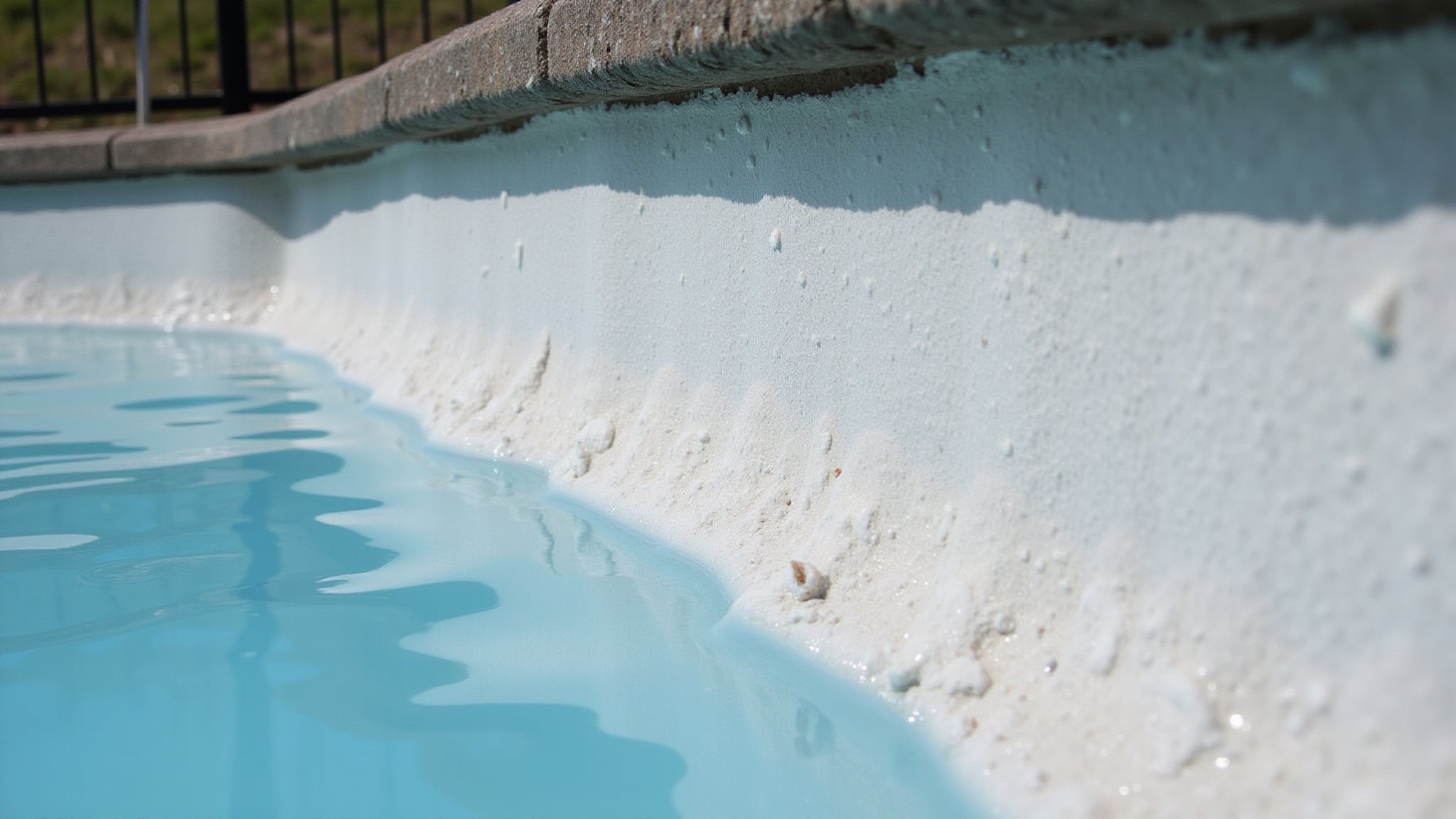
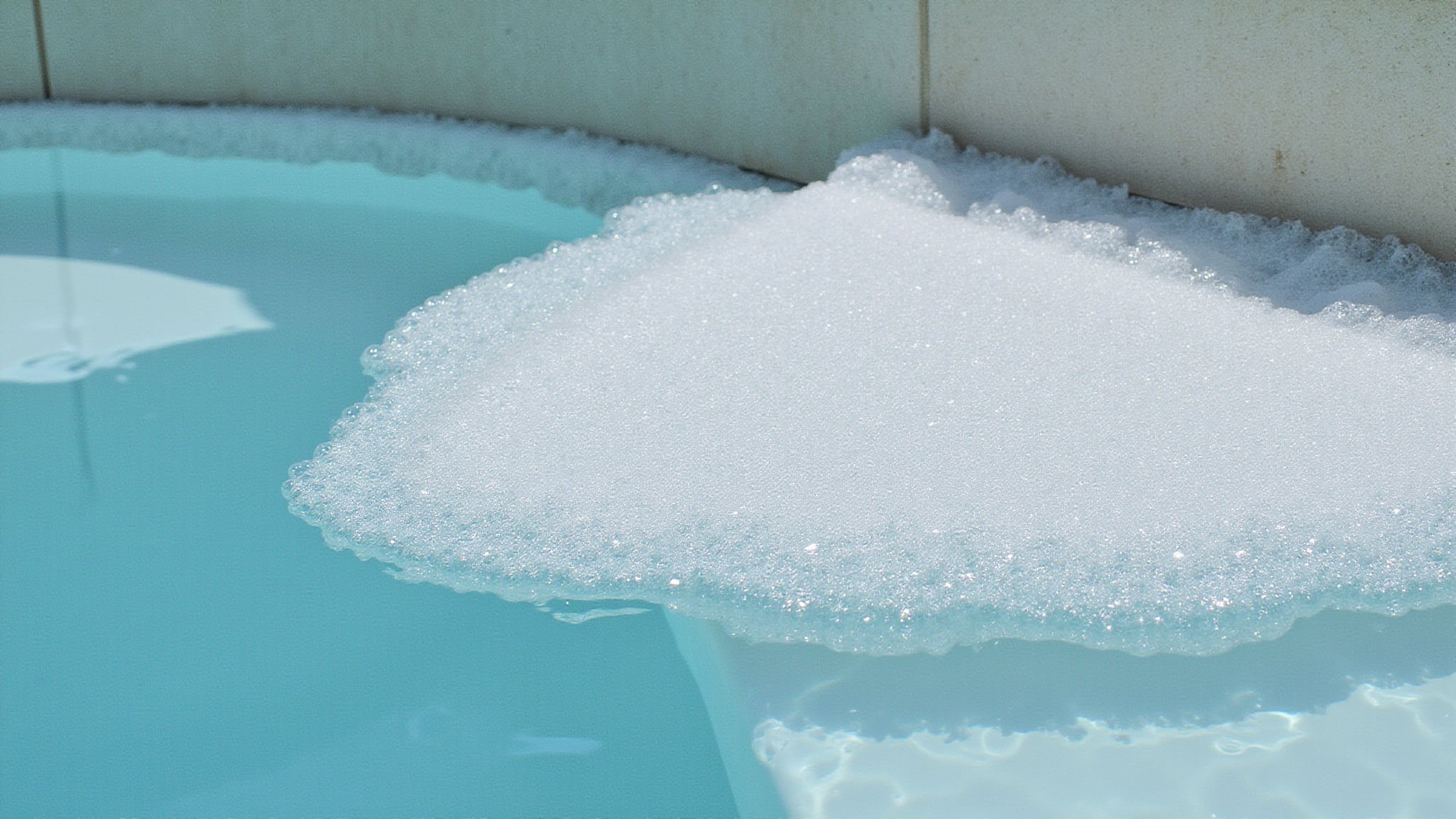
To lower your pool’s high pH naturally, you’ve got several options. Add white vinegar or lemon juice near return jets while the pump runs, one gallon per 10,000 gallons drops pH about 0.1 units. For gradual correction, place peat moss in your skimmer basket. If alkalinity exceeds 120 ppm, drain 10, 25% and refill. Always adjust incrementally, circulate, and retest to hit the 7.2, 7.6 range. Below, you’ll find exactly how each method works.
Key Takeaways
- Add white vinegar or lemon juice near return jets to lower pH quickly by about 0.1 units per gallon.
- Place peat moss in a mesh bag in the skimmer basket to gradually reduce pH over days.
- Partially drain and refill 10, 25% of pool water to dilute alkalinity and lower pH naturally.
- Reduce aeration by adjusting return jets and limiting fountain or spa jet runtime to retain CO2.
- Adjust pH incrementally, circulate water thoroughly, and retest until stable within the 7.2, 7.6 range.
Why Your Pool pH Keeps Climbing
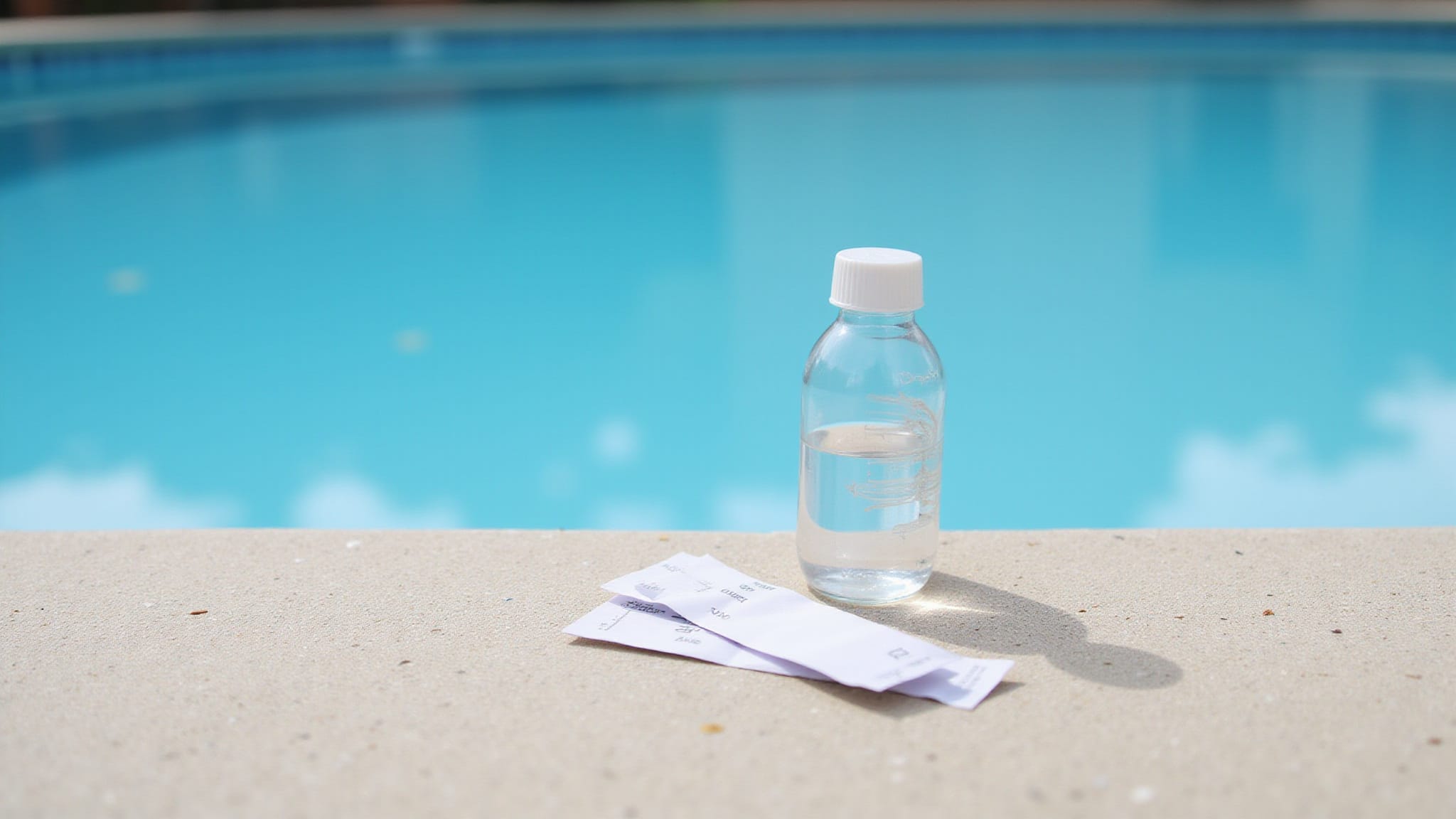
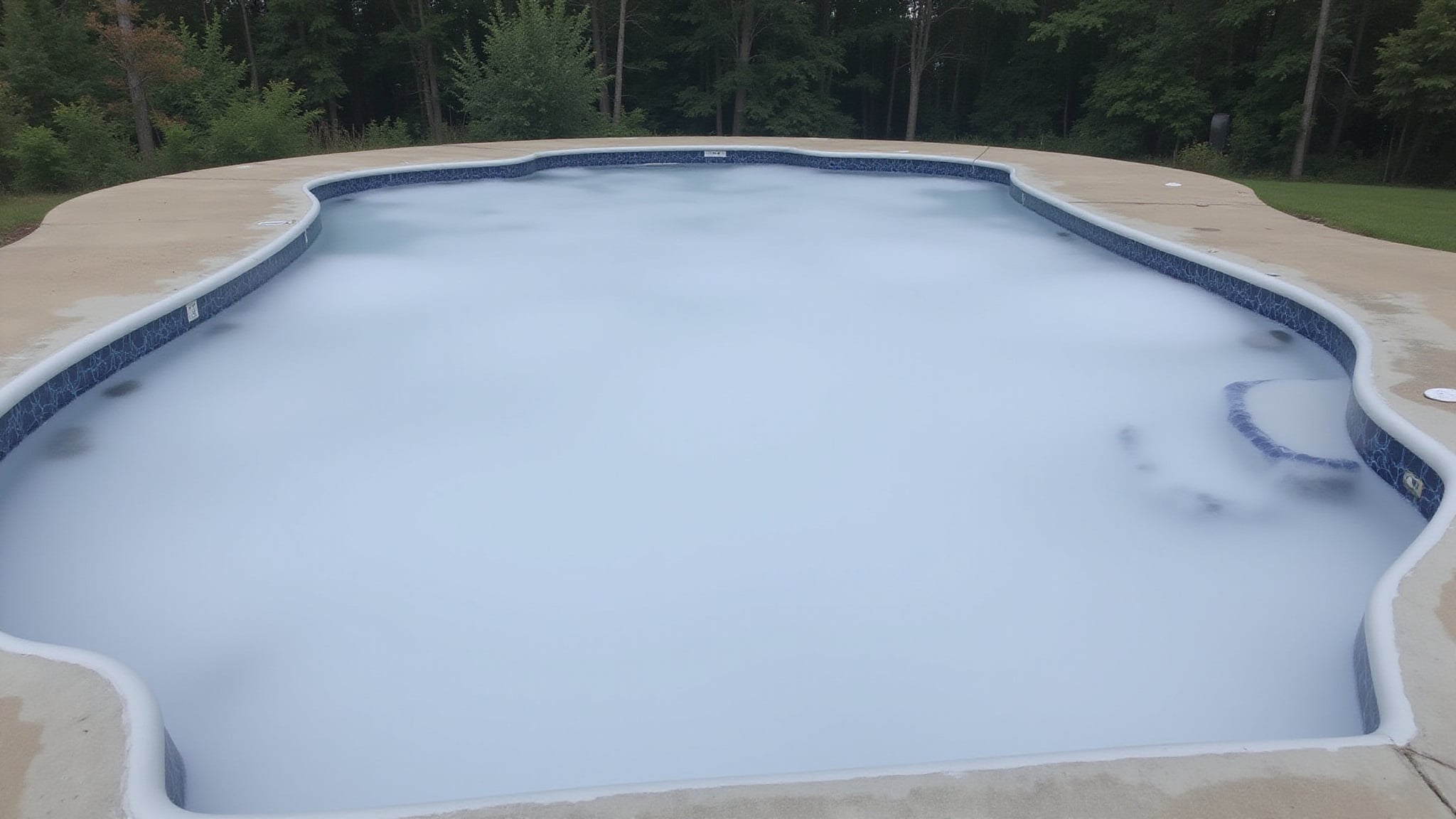
Your pool’s pH keeps climbing usually because of excessive aeration. Every time your fountains, waterfalls, or spa jets run, they drive carbon dioxide off-gassing. As CO2 escapes, your pool pH levels climb steadily upward.
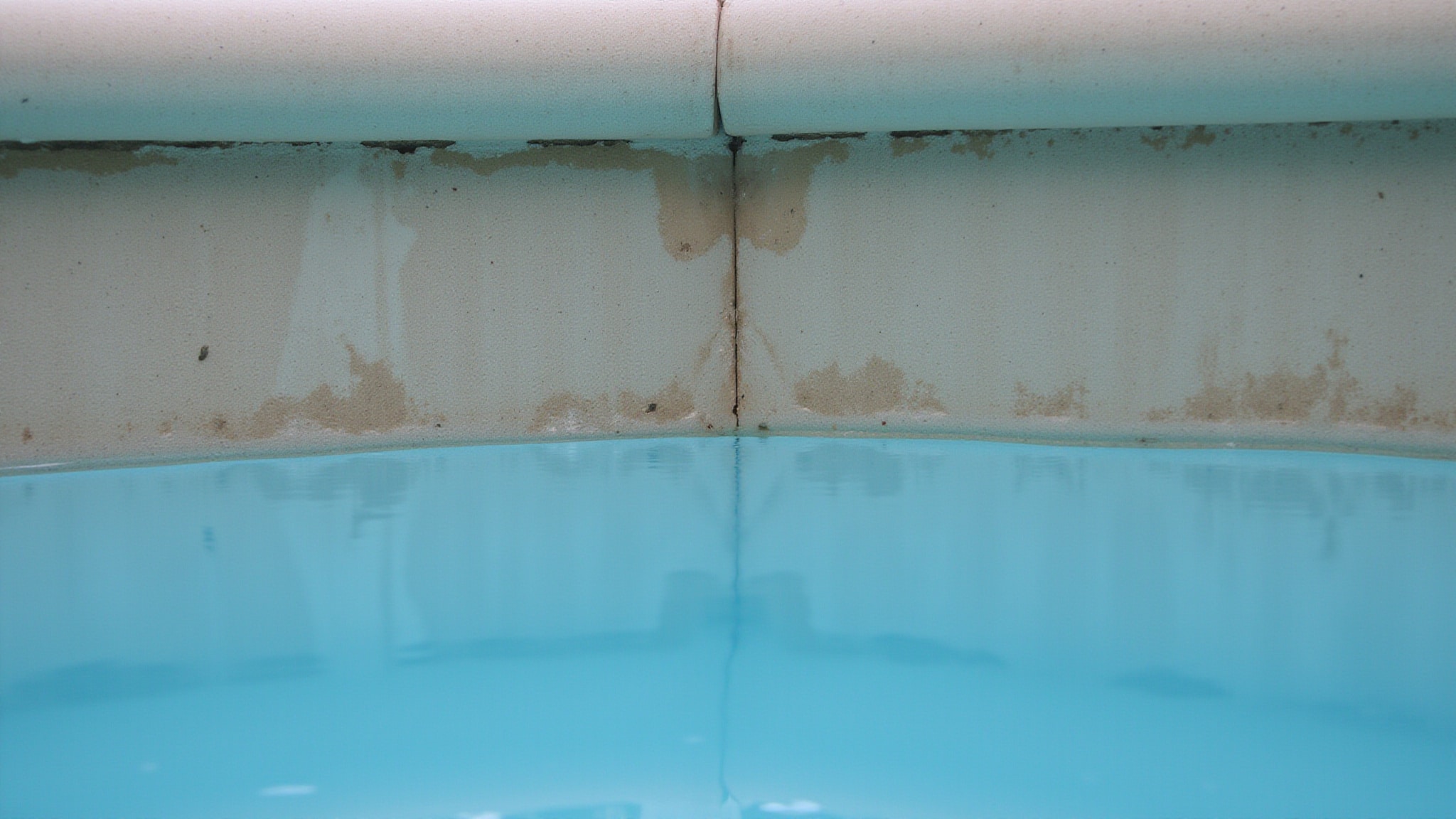
Biological activity plays a role too. Algae growth and decomposing organic debris push alkalinity beyond the point where dilution alone can correct it. That’s why skimming and vacuuming matter when balancing pool water. Calcium scale buildup fix is essential for maintaining a clean and healthy pool environment. If left untreated, calcium deposits can lead to surface damage and increased maintenance costs.
Alkalinity acts as your buffer. When total alkalinity runs above the 80, 120 ppm range, pH resists your corrections and drifts high. Over-cleaning features like spillovers can worsen the problem.
Understanding these triggers helps you target the right natural fix instead of chasing numbers blindly every day.
Lower pH Fast With Vinegar or Lemon Juice
White vinegar (pH 3.0) and lemon juice (pH 2.0) are two natural acids already in your kitchen that lower pool pH fast. To lower pool pH naturally, add 1 gallon of white vinegar per 10,000 gallons to reduce pH by roughly 0.1 units. Pour it near the return jets while the pump runs, ensuring even distribution throughout the water. Alternatively, use the juice of one lemon or an equivalent vinegar measure at the return jets for natural acidification. Keep the pump running continuously during addition to fix high pH pool conditions without creating localized concentration. Retest pH after 15, 20 minutes of circulation, confirming the water reaches the 7.2, 7.6 target range before making any further incremental adjustments.
Use Peat Moss and Driftwood to Lower pH
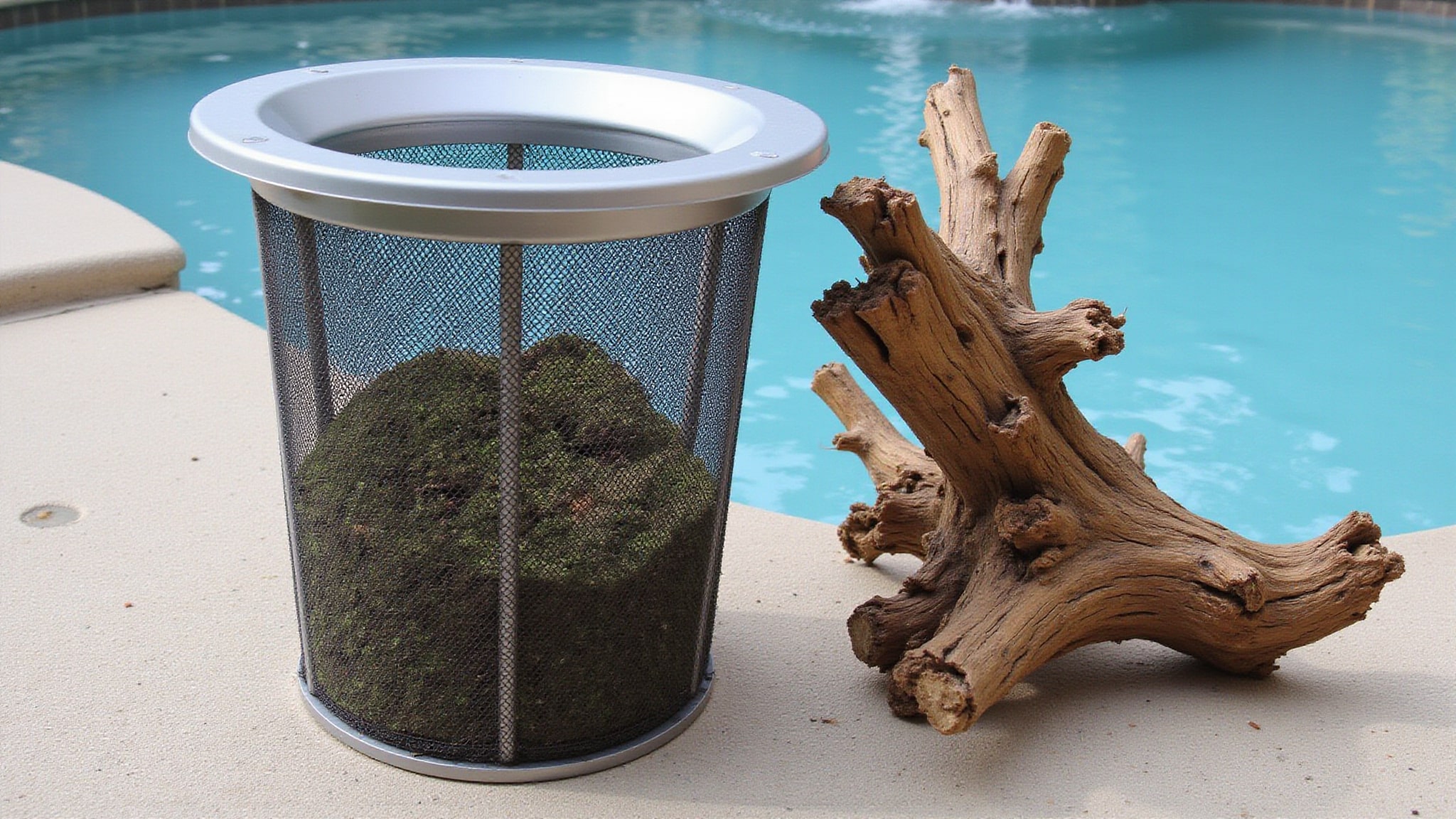
Peat moss and driftwood offer a slower, gentler way to lower pool pH. Peat moss releases tannic and humic acids that gradually reduce alkalinity, while aquarium-safe driftwood works well in smaller water features. These methods lower pH over days, not minutes, so plan for gradual adjustments.
Nature works slowly, peat moss and driftwood ease pH down over days, rewarding patience with stable, balanced water.
- Place peat moss in a mesh bag and set it in the skimmer basket for controlled, gradual pH reduction.
- Use aquarium-safe driftwood in smaller water features to achieve a similar pH-lowering effect.
- Skim and vacuum regularly to remove organic debris before decomposition triggers unwanted pH shifts.
Monitor your levels daily, keeping total alkalinity within 80, 120 ppm, and adjust incrementally to avoid overcorrection and maintain stable, balanced water.
Drain and Refill to Lower pH Naturally
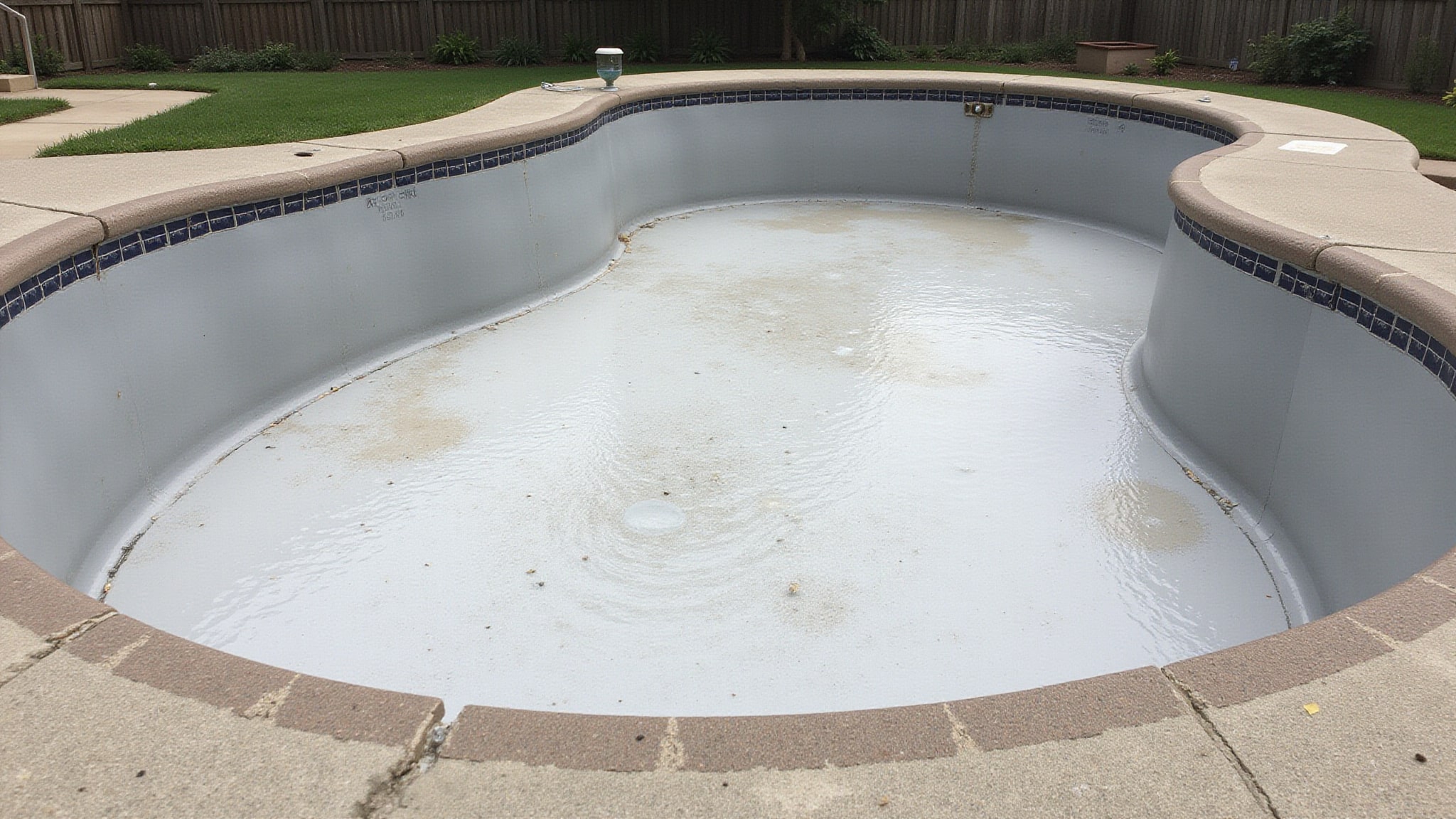
A partial drain and refill lowers pH naturally by diluting alkaline content directly. Start by draining 1 to 3 inches of water to initiate dilution. For deeper correction, remove 10, 15% of total volume, roughly 1,500, 2,000 gallons for a 15,000-gallon pool. A 10, 25% partial drain and refill lowers pH by 0.1, 0.2 units per 10,000 gallons. Refill with reverse-osmosis filtered or store-bought distilled water for best results. If you’re using collected rainwater, add it gradually from food-safe containers, limiting each addition to 5% of total volume. After refilling, run the pump for a full 6, 8 hour circulation cycle to ensure uniform mixing, then let water circulate 24 hours before testing pH again.
Trap CO2 to Stop pH From Rising
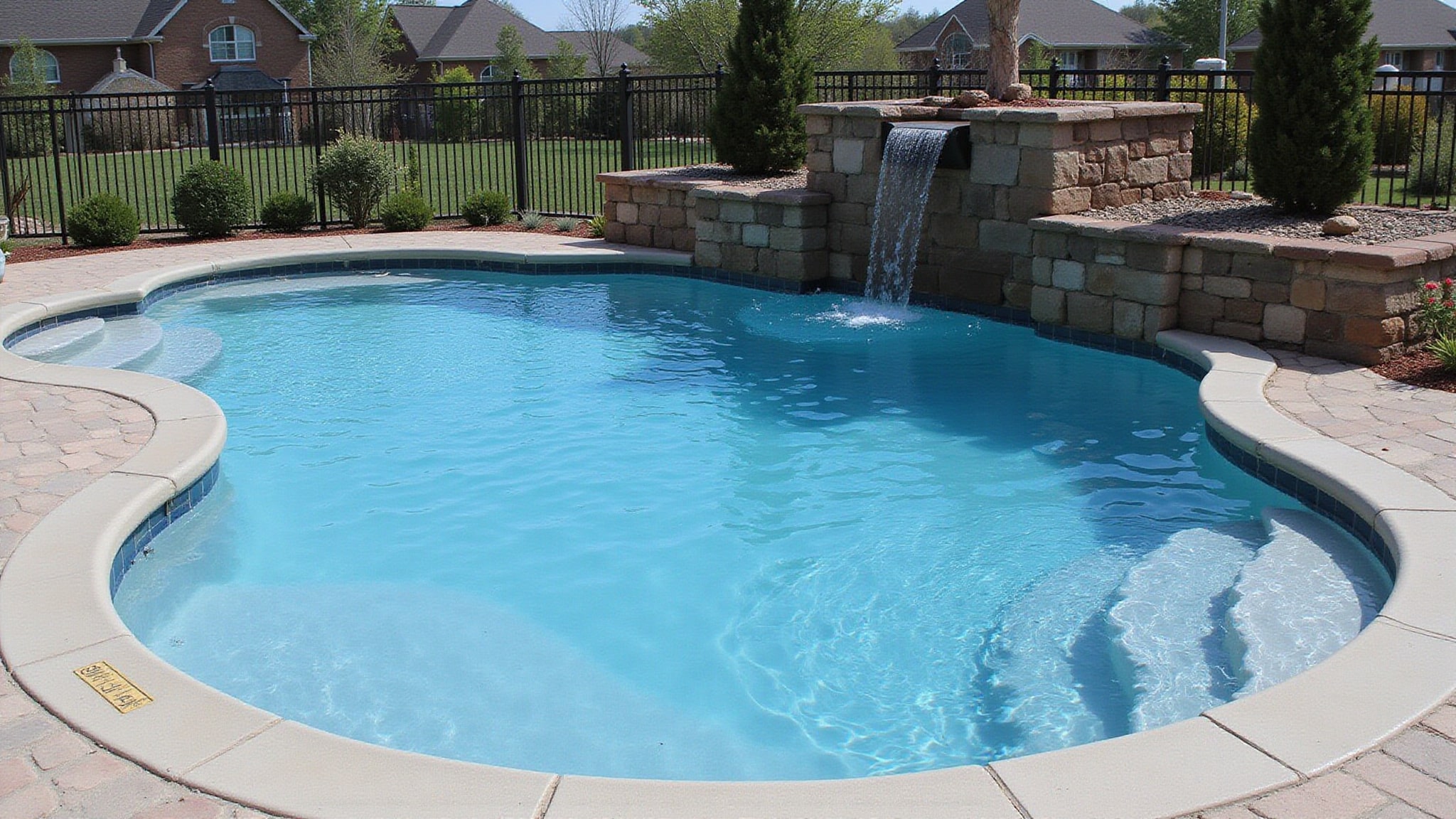
When water agitates at the surface, it releases dissolved CO2, which drives your pH upward. To slow this off-gassing, point your return jets toward the surface instead of angling them downward, reducing unnecessary aeration. You’ll also want to limit fountain and waterfall runtime, running spa jets or water features for only 4, 6 hours overnight to retain dissolved CO2.
Reduce Water Aeration
Reduce water aeration to slow the pH climb that off-gassing causes, because aeration drives dissolved carbon dioxide out of your water. Every bubble that breaks the surface releases CO2, and less CO2 in solution means higher pH. By minimizing surface agitation, you retain dissolved CO2 and stabilize your chemistry naturally, without adding acids. Adjust your equipment and runtime to limit unnecessary turbulence.
- Point your return jets toward the surface instead of angling them downward to reduce surface agitation.
- Run spa jets or water features for only 4, 6 hours overnight to limit excessive bubbling.
- Limit fountain and waterfall runtime to prevent CO2 off-gassing, which raises pH.
Retest pH after these adjustments to confirm you’re maintaining the target 7.2, 7.6 range consistently.
Limit Feature Runtime
Limit feature runtime by restricting spa jets or water features to just 4, 6 hours overnight. Your fountains and waterfalls add ambiance, but they’re constantly stripping CO2 from your water and driving your pH upward. Each time water splashes or cascades, it off-gasses dissolved carbon dioxide, reducing the natural acidity that keeps your pH stable. Reducing fountain and waterfall runtime retains more CO2 in the water, helping maintain balanced chemistry.
Avoid over-cleaning features like spillovers or fountains if your pH keeps climbing, since excessive agitation accelerates off-gassing. Reducing feature operation is a simple, chemical-free adjustment that supports your target pH range of 7.2, 7.6. Monitor your levels after adjusting runtime, and fine-tune circulation to preserve dissolved CO2 without compromising water clarity or filtration efficiency.
Keep Alkalinity in the Right Range for Stable pH
Keep your total alkalinity in the 80, 120 ppm range, since it acts as a buffer that stabilizes pH and prevents rapid swings. Test alkalinity daily to catch any drift before it pushes pH beyond correction thresholds. When you need to adjust, make incremental changes and retest to avoid overcorrecting and destabilizing your water chemistry.
Ideal Alkalinity Range
The ideal alkalinity range is 80, 120 ppm total alkalinity, which keeps your water chemistry stable. Alkalinity often works behind the scenes as your pool’s chemical buffer, absorbing shifts before they knock pH out of range. This band gives you reliable pH control without over-buffering, which can make corrections through dilution alone ineffective. Test daily, since alkalinity fluctuates with additive use, aeration, and biological activity. When you adjust, do it incrementally to avoid overcorrection and destabilizing your pH target of 7.2, 7.6.
- Target 80, 120 ppm to balance buffering capacity with pH responsiveness.
- Monitor daily to catch drift before it exceeds correction thresholds.
- Adjust in small increments to prevent overshooting and maintain stability.
Consistent monitoring keeps your water predictable and safe.
Daily Alkalinity Monitoring
Test your alkalinity daily to catch drift before it pushes pH out of the 7.2, 7.6 range. Alkalinity acts as your pH buffer, so keep it within the 80, 120 ppm range for stable, predictable water chemistry. When you check levels every day, you’ll spot upward trends early, often caused by biological activity like algae growth or decomposing organic debris. Catch these shifts before they push alkalinity beyond correction thresholds that dilution alone can’t fix. Adjust incrementally to avoid overcorrection, and pair daily testing with regular skimming and vacuuming to remove organics before they trigger pH swings. By staying consistent with your monitoring, you’ll maintain the buffer that keeps pH steady, reducing your reliance on frequent acid additions or partial drains.
Incremental Chemistry Adjustments
Adjust your water chemistry in small steps to avoid overshooting your pH target and destabilizing the alkalinity buffer. Sudden, large corrections often push pH below the 7.2, 7.6 range, forcing repeated adjustments that waste additives and stress your system. Instead, add measured amounts, circulate fully, and retest before dosing again.
- Add 1 gallon of white vinegar per 10,000 gallons to lower pH by roughly 0.1 units, then wait.
- Keep total alkalinity within 80, 120 ppm to maintain a stable buffer against rapid pH swings.
- Let additives circulate at least two hours before retesting to confirm accurate readings.
This incremental approach protects your buffer, prevents overcorrection, and keeps your pool chemistry balanced. You’ll conserve resources while maintaining safe, swimmer-friendly water conditions throughout every treatment cycle. Cleaning stubborn pool scum requires regular maintenance and the right cleaning agents. By implementing a routine that includes thorough scrubbing and appropriate chemical use, you can keep your pool looking pristine.
Circulate and Test to Confirm Results
Circulate the water thoroughly to confirm your results after you’ve added any natural acid or performed a partial drain. Run the pump continuously during and after acid addition to guarantee even distribution throughout the pool. Allow natural additives to circulate for at least two hours before retesting pH levels. If you’ve completed a partial drain and refill, let the water circulate for a full 24 hours, or run a complete 6, 8 hour cycle to ensure uniform mixing. When to test your pool water is an essential aspect of maintaining a healthy swimming environment. Regular testing ensures that you can detect imbalances early, preventing potential issues that could arise from poor water quality.
After circulation, retest pH to verify the water reaches the 7.2, 7.6 target range. For vinegar or lemon juice additions, retest after 15, 20 minutes of circulation. Adjust incrementally to avoid overcorrection, and repeat the process until you’ve confirmed stable, balanced results.
Which Natural Method Should You Pick?
Pick the natural method that matches your pool’s specific cause of high pH. Assess your alkalinity, aeration levels, and water source before committing to a single technique. If your alkalinity sits above 120 ppm, prioritize partial draining and refilling with reverse-osmosis or distilled water. If CO2 off-gassing drives your pH up, reduce aeration first. For minor corrections, natural acids offer precise, incremental control.
- High alkalinity (above 120 ppm): Drain 10, 25% and refill to dilute buffering capacity.
- Excessive aeration: Limit fountain and jet runtime to retain dissolved CO2.
- Small pH adjustments: Add vinegar or lemon juice near return jets for 0.1-unit shifts.
Retest after circulating, then adjust incrementally to avoid overcorrection.
Conclusion: Managing High pH the Natural Way
High pH makes chlorine less effective and can cloud water and irritate skin and eyes, so keeping it in range matters. While muriatic acid is the standard fix, gentler options like dry acid and careful aeration management can help nudge pH down, alongside good habits. Whatever method you use, regular testing is what keeps pH steady. Balanced water is more comfortable to swim in and easier on your pool and equipment.
Choose a San Juan Fiberglass Pool That Lasts
Water chemistry challenges become far easier to manage with a properly built fiberglass pool from an authorized installer. At Schiller Pools in Stuart, FL, our experienced team provides trusted San Juan Fiberglass Pools with premium quality and 40+ years of installation expertise. Call +1 (561) 475-5997 today and get your free estimate.
Frequently Asked Questions
Is a High pH Level Dangerous for Swimmers’ Skin and Eyes?
High pH can cause skin dryness and eye irritation and leave the water feeling cloudy or scaly, and it makes chlorine less effective at sanitizing. It is not usually dangerous at mildly high levels, but it is uncomfortable and worth correcting. Keeping pH in the ideal range makes swimming far more pleasant.
What Test Kits Most Accurately Measure Pool pH and Alkalinity?
Liquid reagent test kits and digital testers give more precise pH and alkalinity readings than test strips, which are quick but less exact. Many owners use strips for daily checks and a liquid or digital kit when they want accuracy. For managing pH closely, a more precise kit is the better tool.
Can I Use Natural pH Methods Alongside Chlorine Sanitizers Safely?
Yes. Managing pH with gentler acids or aeration works fine alongside chlorine, since you are adjusting balance rather than replacing sanitizer. In fact, keeping pH in range makes chlorine more effective. Just add products separately and allow time between them, and keep testing so the two stay in a healthy balance.
How Often Should I Check My Pool’s pH During Summer?
In summer, checking pH two to three times a week is a good routine, and more after heavy use, rain, or adding chemicals. Heat, sunlight, and bather load all shift pH quickly. Frequent testing lets you make small adjustments before the level drifts far, which keeps the water comfortable and the chlorine working.
Does High pH Damage Pool Equipment, Liners, or Surfaces Over Time?
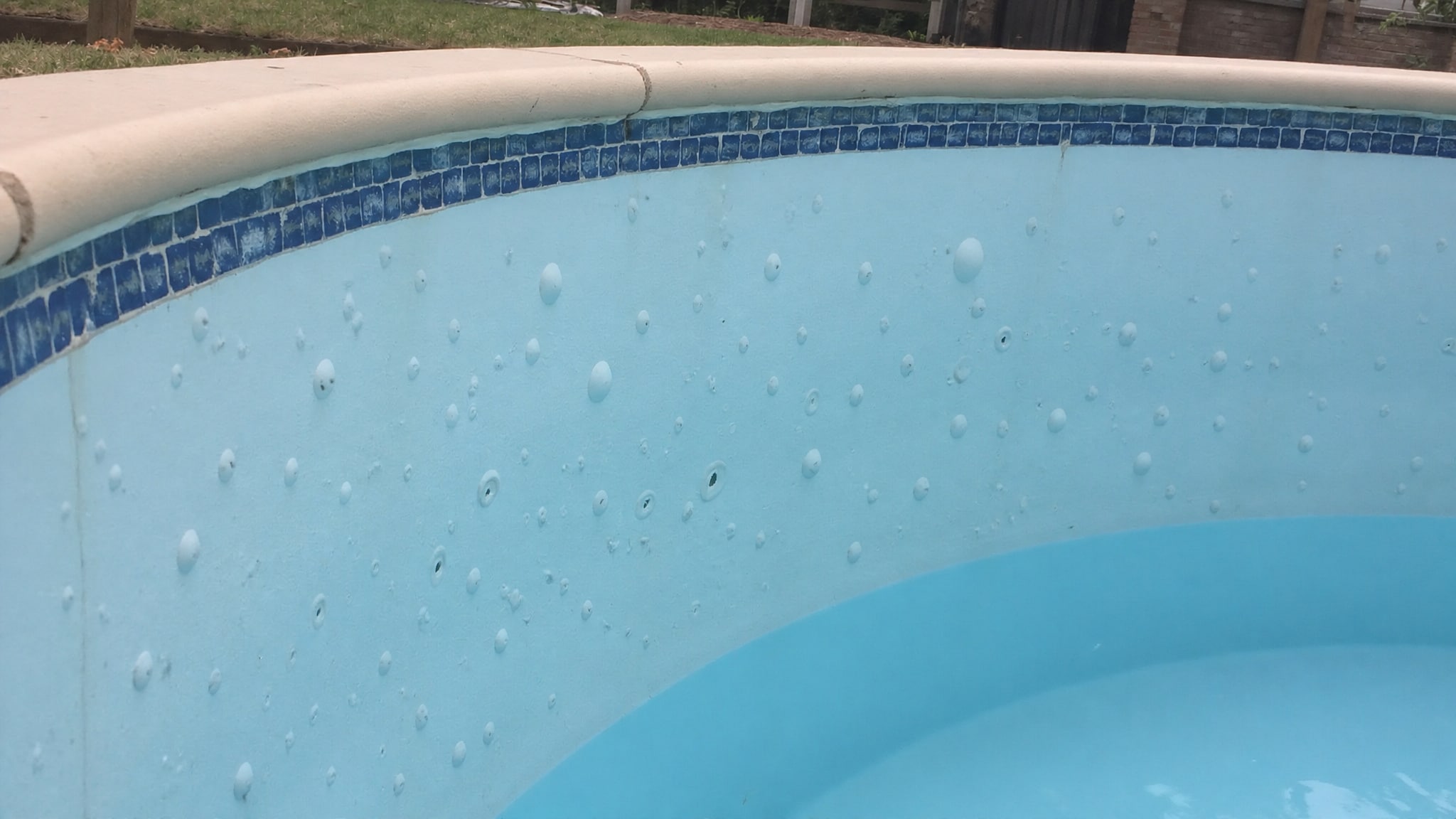
Sustained high pH can lead to scale buildup on surfaces and equipment and cloud the water, which over time affects the heater, pump, and finish. Fiberglass resists this better than some surfaces, but balance still matters. Keeping pH in range protects your equipment and keeps the pool looking and running its best.