
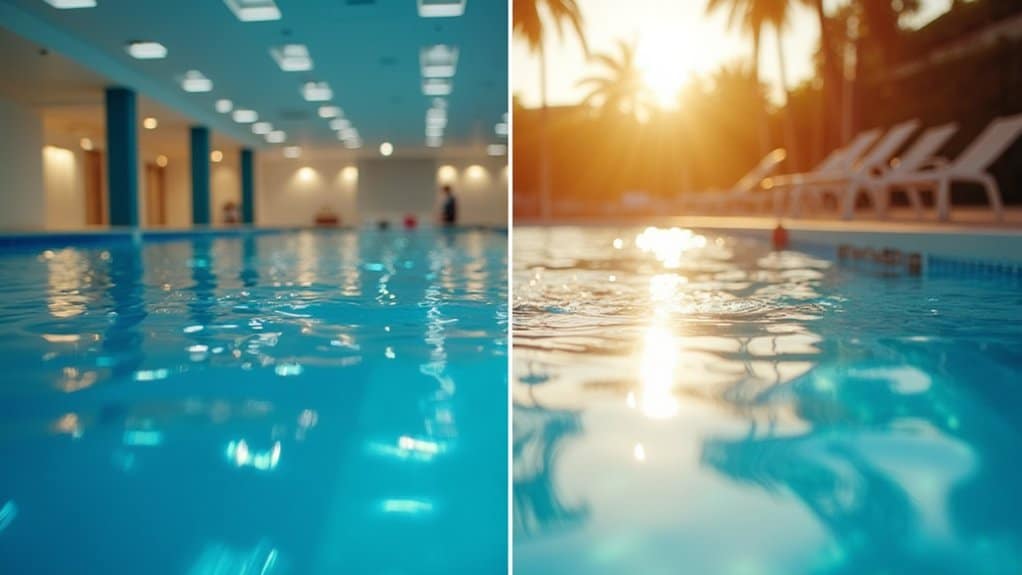
Indoor pools let you maintain stable water temperatures year-round, typically between 78-86°F, with air kept 2-4°F warmer than the water to control humidity and reduce operating costs. Outdoor pools face fluctuating conditions due to weather exposure, generally ranging from 78-82°F for residential settings. You’ll need to adjust temperatures based on your swimmers’ needs, competitive athletes require cooler water, while children and seniors benefit from warmer conditions. Understanding indoor vs outdoor pool temperature and the details below helps you optimize for different user groups.
Best Pool Temperatures for Every Activity
Finding the right pool temperature depends entirely on what you’re doing in the water. Your ideal indoor pool temperature varies greatly based on activity intensity and swimmer needs.
For competitive swimming and lap training, maintain temperatures between 77-82°F to prevent overheating during high-intensity workouts. Recreational swimmers prefer warmer conditions, with 84-88°F serving as the prime range for general enjoyment.
Competitive swimmers thrive in cooler 77-82°F water, while recreational swimmers prefer the comfort of 84-88°F temperatures.
Water aerobics and moderate fitness activities perform best at 86-88°F, while therapeutic and rehabilitation programs require 90-92°F for maximum muscle and joint benefits. Preschool-aged children benefit from warmer water temperatures between 88-94°F to keep their smaller bodies comfortable during swim lessons. Water aerobics and moderate fitness activities perform best at 86, 88°F, aligning with the best swimming conditions for health benefits by balancing comfort and exertion, while therapeutic and rehabilitation programs require 90, 92°F for maximum muscle and joint relief. Preschool-aged children benefit from even warmer water temperatures between 88, 94°F to keep their smaller bodies comfortable during swim lessons.
Your outdoor pool temperature will fluctuate with environmental conditions, requiring more frequent adjustments. Wind, sunlight, and air temperature all influence how swimmers perceive water warmth, making consistent monitoring essential for maintaining safe, comfortable conditions across all activities. The Red Cross recommends a pool temperature between 78°F and 82°F as suitable for most recreational and competitive swimming activities. For indoor pools, keeping the air temperature 2°F warmer than the water temperature helps minimize evaporation and reduces operating costs.
Safe Pool Temperatures for Kids, Seniors, and Therapy
While activity level shapes your baseline temperature needs, swimmer age and health conditions demand even more precise adjustments to prevent safety risks.
Children’s Temperature Requirements
You’ll need to maintain indoor pool water temperature between 84°F-88°F for toddlers and older kids during lessons and play. Infants under four require warmer conditions at 90°F-93°F, with sessions limited to 10-15 minutes to prevent overheating. You’ll need to maintain indoor pool water temperature between 84°F, 88°F for toddlers and older kids during lessons and play, which also reflects the best pool temperature in winter when comfort and warmth are essential. Infants under four require warmer conditions at 90°F, 93°F, with sessions limited to 10, 15 minutes to prevent overheating.
Senior and Arthritis Considerations
Seniors benefit from indoor pool water temperature settings between 86°F-90°F, which promotes joint mobility and reduces discomfort during low-intensity exercises. Using a reliable pool thermometer to check water temperature before every swim ensures consistent safety for this age group. Staying hydrated becomes more important when pool temperatures exceed 80 degrees, especially for seniors with heart issues.
Therapeutic Applications
Therapy and rehabilitation pools require 91°F-95°F for ideal muscle relaxation. However, you must exercise caution with specific conditions, multiple sclerosis patients need cooler water at 80°F-84°F, while pregnant swimmers should stay within 78°F-84°F to avoid adverse effects.
Indoor vs. Outdoor Pools: Key Temperature Differences
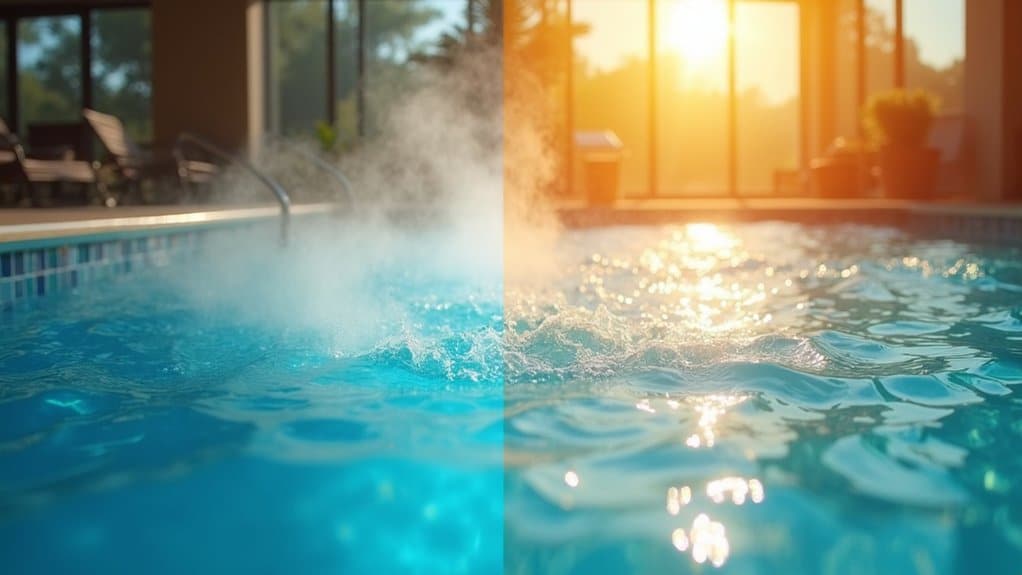
Because indoor pools operate in controlled environments, they maintain stable water temperatures year-round without weather interference. You’ll find the typical indoor swimming pool temperature ranges from 78-86°F, with competitive facilities targeting 82°F and leisure pools reaching 89°F.
Outdoor pools face variable conditions that affect thermal comfort. The average outdoor pool temperature for residential settings falls between 78-82°F, though actual perceived warmth fluctuates with weather exposure. When young children or elderly individuals use the pool, a slightly warmer temperature may be more appropriate for their comfort and safety.
Key differences you should consider:
- Indoor air should remain 2-4°F warmer than water, never exceeding 86°F
- Outdoor pools lose heat through wind exposure and evaporation
- Indoor facilities reduce operating costs by minimizing the air-water temperature gap
- Weather conditions make outdoor heating requirements unpredictable
- Indoor environments allow precise humidity and temperature control
What Happens When Pool Water Is Too Hot or Too Cold?
Water temperature outside the recommended 78-86°F range creates measurable physiological effects that impact both safety and performance. When you swim in water below 78°F, you’ll experience muscle stiffness, breathing difficulties, and reduced circulation. Temperatures below 70°F dramatically increase hypothermia and drowning risks due to cold shock upon entry. Water between 50-60°F is particularly dangerous as swimmers experience total loss of breathing control and cannot prevent gasping and hyperventilation. Body heat is lost twenty-five times faster in water than in air when temperatures drop below 70°F.
Following outdoor swimming pool temperature guidelines becomes critical when water exceeds safe thresholds. Above 86°F, you’ll face accelerated fatigue, dehydration, and overheating, particularly dangerous for those with heart disease, diabetes, or high blood pressure. Pregnant swimmers should avoid temperatures above 84°F.
For competitive swimming, maintain 78-82°F to optimize performance and prevent exhaustion. Children require temperatures above 84°F for proper engagement, while elderly swimmers need minimum 84°F to avoid cold stress. Infants and toddlers need even warmer water between 90°F and 93°F because they cannot regulate body temperature like adults. These parameters protect all pool users from preventable health complications. For competitive swimming, maintain 78, 82°F to optimize performance and prevent exhaustion, a range that fits within established safe pool temps for active use. Children require temperatures above 84°F for proper engagement, while elderly swimmers need a minimum of 84°F to avoid cold stress. Infants and toddlers need even warmer water between 90°F and 93°F because they cannot regulate body temperature like adults, and these parameters help protect all pool users from preventable health complications.
How to Keep Your Pool at the Right Temperature
Knowing the ideal temperature range safeguards swimmers from health risks, but you’ll need dependable methods to actually maintain those parameters. Select heating equipment matched to your climate and usage patterns. Gas heaters raise temperatures by 1, 3 degrees per hour, making them ideal for rapid adjustments. Heat pumps offer energy-efficient operation in moderate climates with precise control. Solar panels can harness the sun’s power to heat pool water efficiently, proving cost-effective in the long run. Advanced pool management systems integrate temperature sensors with heating mechanisms to automatically maintain desired ranges.
Match your heating equipment to your climate and usage patterns for dependable pool temperature control year-round.
Essential temperature management strategies include:
- Installing pool covers to reduce evaporation by up to 95% and prevent nighttime heat loss
- Using digital or smart sensors for real-time monitoring and alerts
- Running circulation pumps during cooler nighttime hours for natural cooling
- Deploying aerators or fountains to lower temperature through evaporation, as aerators work by introducing oxygen to the water surface
- Cleaning filters monthly to confirm efficient heating and cooling performance
Ready to Transform Your Backyard?
Your dream pool is closer than you think. At Schiller Pools, our experienced team brings over 40 years of expertise to every project, delivering stunning fiberglass pool installations and custom pool construction that turn ordinary backyards into extraordinary outdoor retreats. With flexible financing options and lifetime warranty backing, there has never been a better time to get started. Call (561) 475-5997 today for your free estimate.
Frequently Asked Questions
How Much Does It Cost to Heat a Pool One Degree?
You’ll spend approximately $0.50, $0.80 per degree using a heat pump, while gas heaters cost $3, $6 per degree but heat faster. Propane runs even higher at $9, $12 per degree. Solar heaters offer the lowest per-degree cost at pennies, though they’re slower and weather-dependent. Your actual costs depend on pool size, heater efficiency, local utility rates, and whether you’re using a solar cover to prevent heat loss.
Does Pool Temperature Affect Chlorine Effectiveness?
Yes, pool temperature directly affects chlorine effectiveness. In warmer water, your chlorine works faster but depletes quicker due to accelerated chemical reactions and increased contaminant loads from algae, bacteria, and swimmer organics. You’ll need more frequent dosing above 85°F. In colder water, chlorine persists longer but disinfects more slowly, requiring higher concentrations or extended contact times. You should adjust your sanitization routine seasonally to maintain safe, properly disinfected water.
How Long Does It Take to Heat a Pool?
You’ll typically need 8-48 hours to heat your pool 10-20°F, depending on your heater type and pool size. Gas heaters work fastest, raising temperature 1-2.5°F per hour, while heat pumps add 0.5-1.5°F hourly. Solar heaters contribute 2-4°F per sunny day. Environmental factors like wind, air temperature, and humidity profoundly impact heating time. Using a pool cover dramatically improves efficiency by reducing heat loss through evaporation.
Can I Swim During a Thunderstorm if the Water Is Warm?
You should exit the water immediately at the first sign of thunder or lightning. Apply the 30-30 rule: evacuate if thunder follows lightning within 30 seconds, and wait 30 minutes after the last thunder before re-entering.
Does Darker Pool Liner Color Increase Water Temperature Naturally?
Yes, a darker pool liner can increase your water temperature naturally, though the effect is modest. You’ll typically see only 1-2 degrees of warming due to water’s light refraction, despite some users reporting 5-10 degree differences. Dark liners absorb more sunlight, making them beneficial in cooler climates for extending your swimming season. However, don’t rely on liner color alone, you should invest in proper heating equipment for consistent temperature control.