
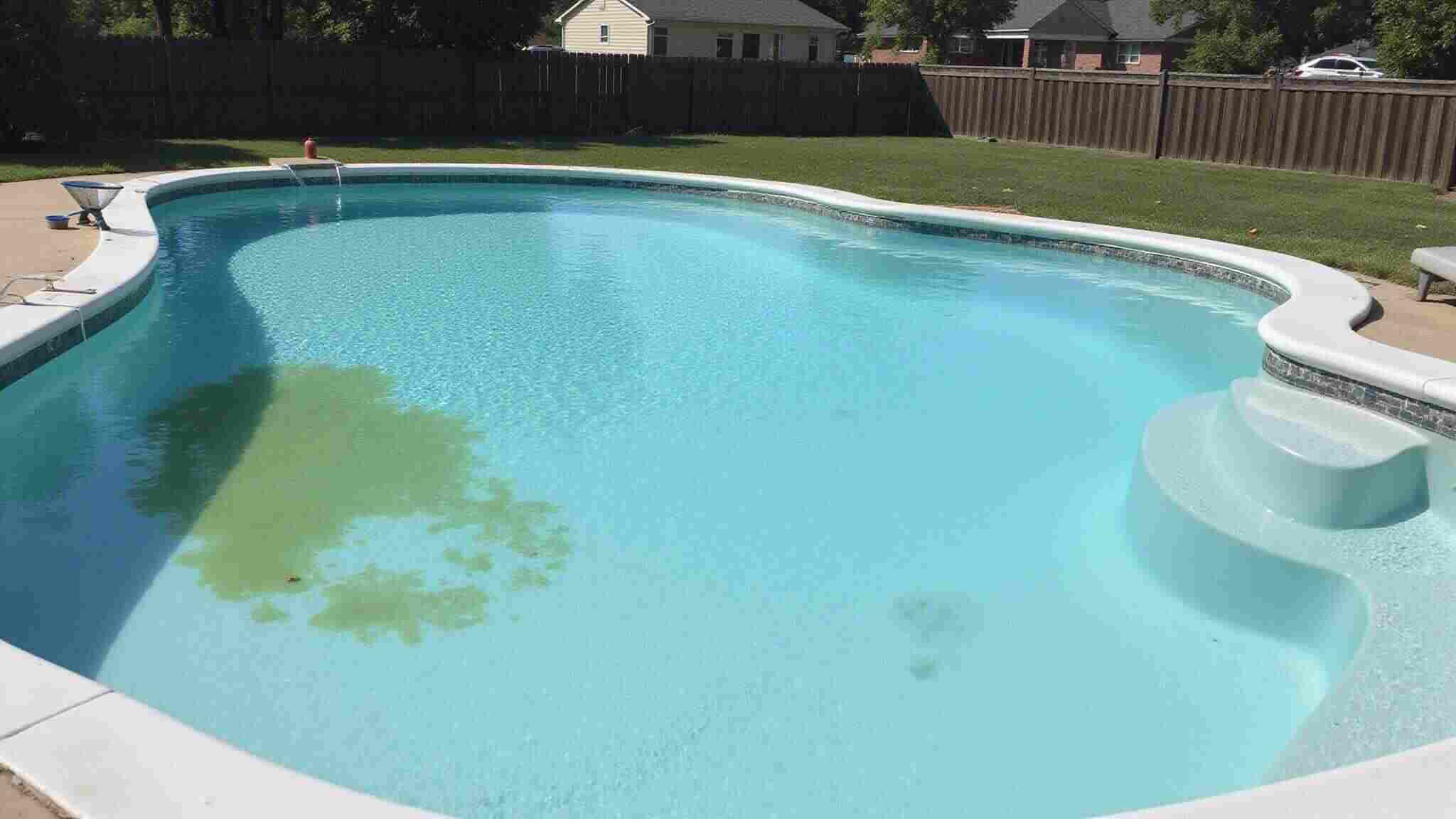
If your pool water’s clear but the bottom looks green, you’re facing one of two causes. Either algae’s growing on your surfaces, or dissolved copper’s staining the floor. Test the texture first: algae feels slimy and lifts when you brush it, while metal staining stays firm and won’t budge. Then test your chemistry: free chlorine, pH, and metals. Each cause demands a different fix, and knowing which one saves you time.
Key Takeaways
- Clear water with a green bottom often points to dissolved copper staining rather than suspended algae.
- Brush and vacuum the floor: algae lifts and disperses, while metal staining clings and won’t budge.
- A slimy or slick feel on surfaces indicates biological algae growth, not metal staining.
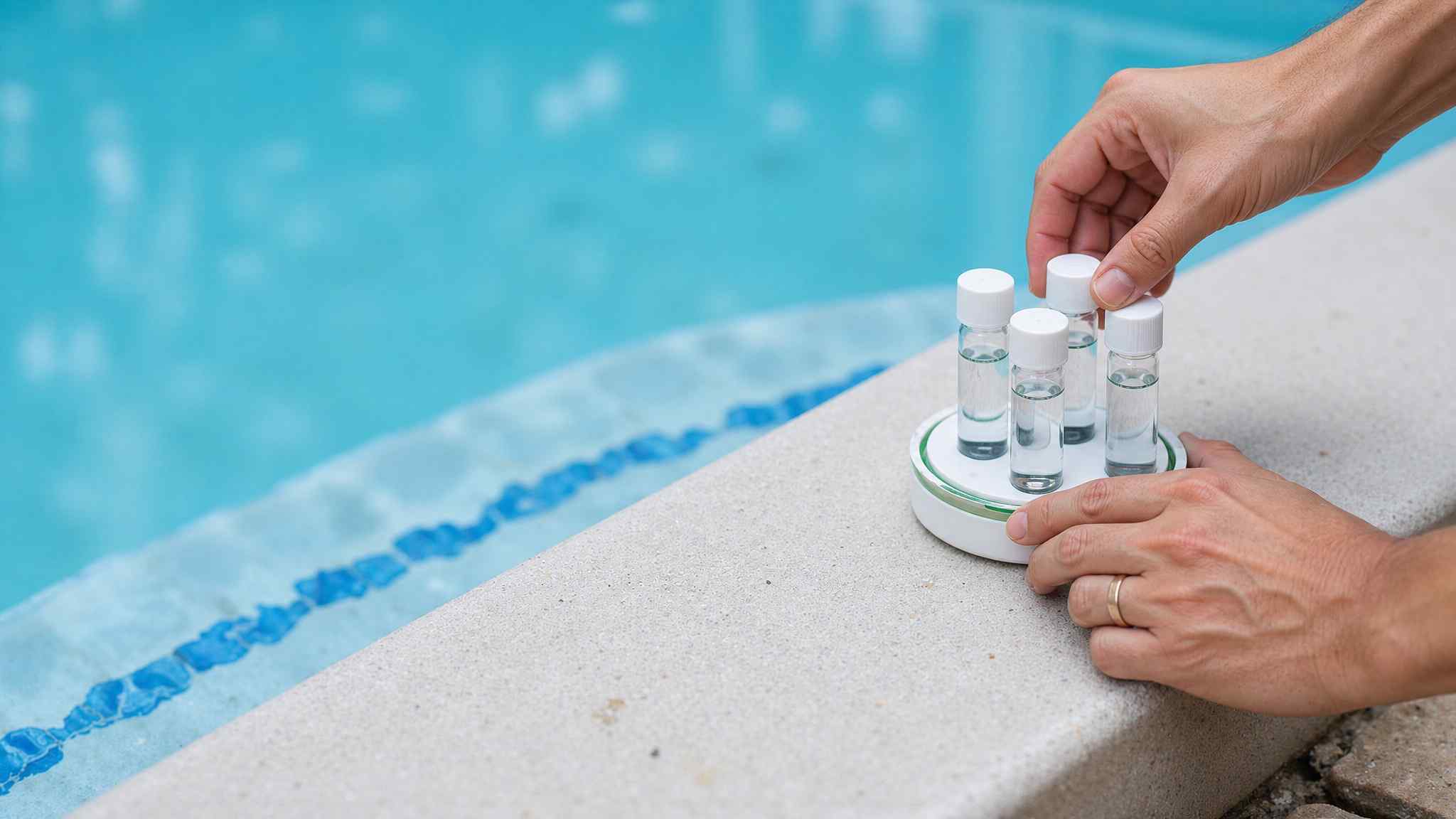
- Test water for metals, free chlorine, and pH to accurately identify the true cause before treating.
- For copper, avoid adding chlorine and use a sequestrant; for algae, shock, brush, and boost circulation.
Why Is Your Pool Water Clear but the Bottom Green
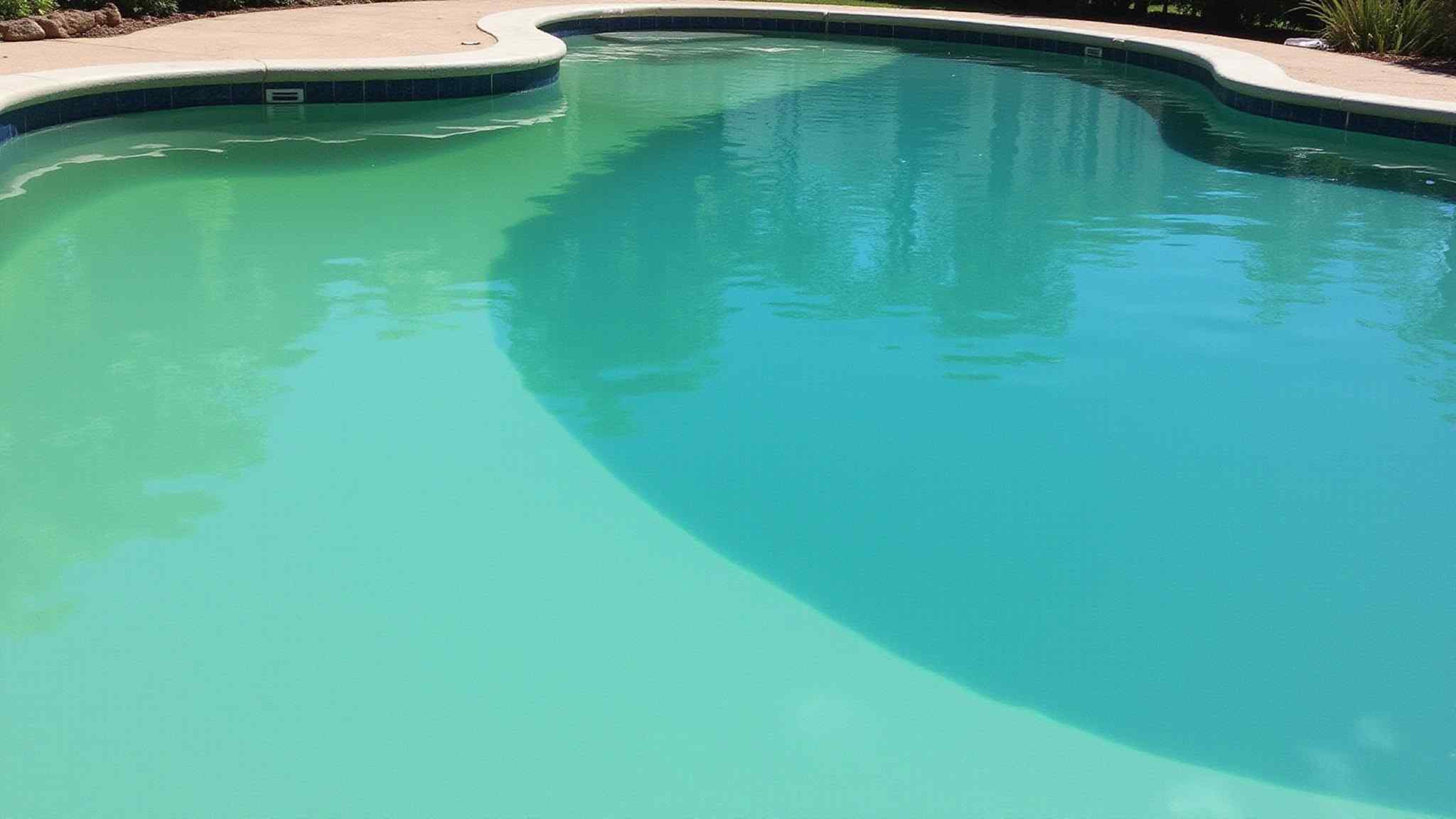
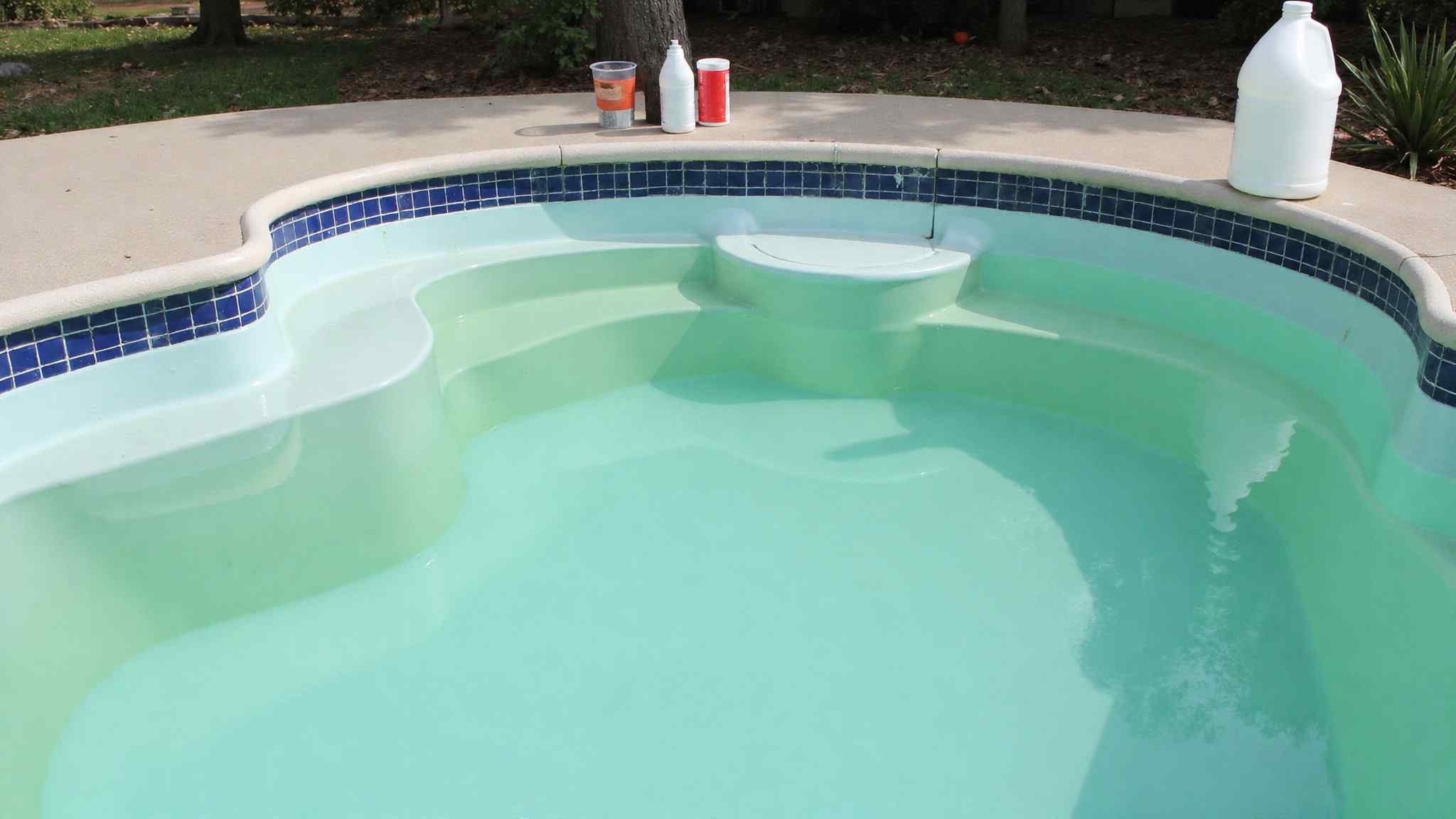
Your pool water can look clear while the bottom turns green because algae may be growing on surfaces, or dissolved metals like copper may be staining the pool.
Algae often begins on the floor and walls before it suspends into the water column, so you’ll see a green bottom while the upper water stays visually clear. Check for slimy walls or a slick feel, those confirm biological growth rather than staining. Using bleach for pool algae can be an effective way to tackle the problem. It helps to break down the organic material and promote a cleaner environment for swimming.
Dissolved metals behave differently. Copper introduced through well water or copper-based algaecides can tint the water green without clouding it, leaving the floor visible. When you shock the pool, chlorine oxidizes these metals, producing green or teal staining on surfaces. Distinguishing algae from metals determines which treatment path you’ll follow next.
Is It Algae or Something Else on the Floor
Green pool floor discoloration can be algae or metal staining, and the difference usually shows in water clarity and surface texture. If your water stays crystal-clear while the floor shows a green tint, you’re likely dealing with dissolved copper rather than algae. Cloudy water or a slimy feel on the walls and bottom points to biological growth. Run a quick check: brush the affected area, then try to vacuum it. Algae lifts and disperses, while metal staining clings and won’t budge. Next, test your water chemistry, measure free chlorine, pH, and metals. Low chlorine and high pH favor algae, while present chlorine paired with a green-but-clear pool suggests copper. Confirming both texture and chemistry before you treat prevents wasted chemicals and targets the actual source accurately.
Can Metals Like Copper Cause the Discoloration
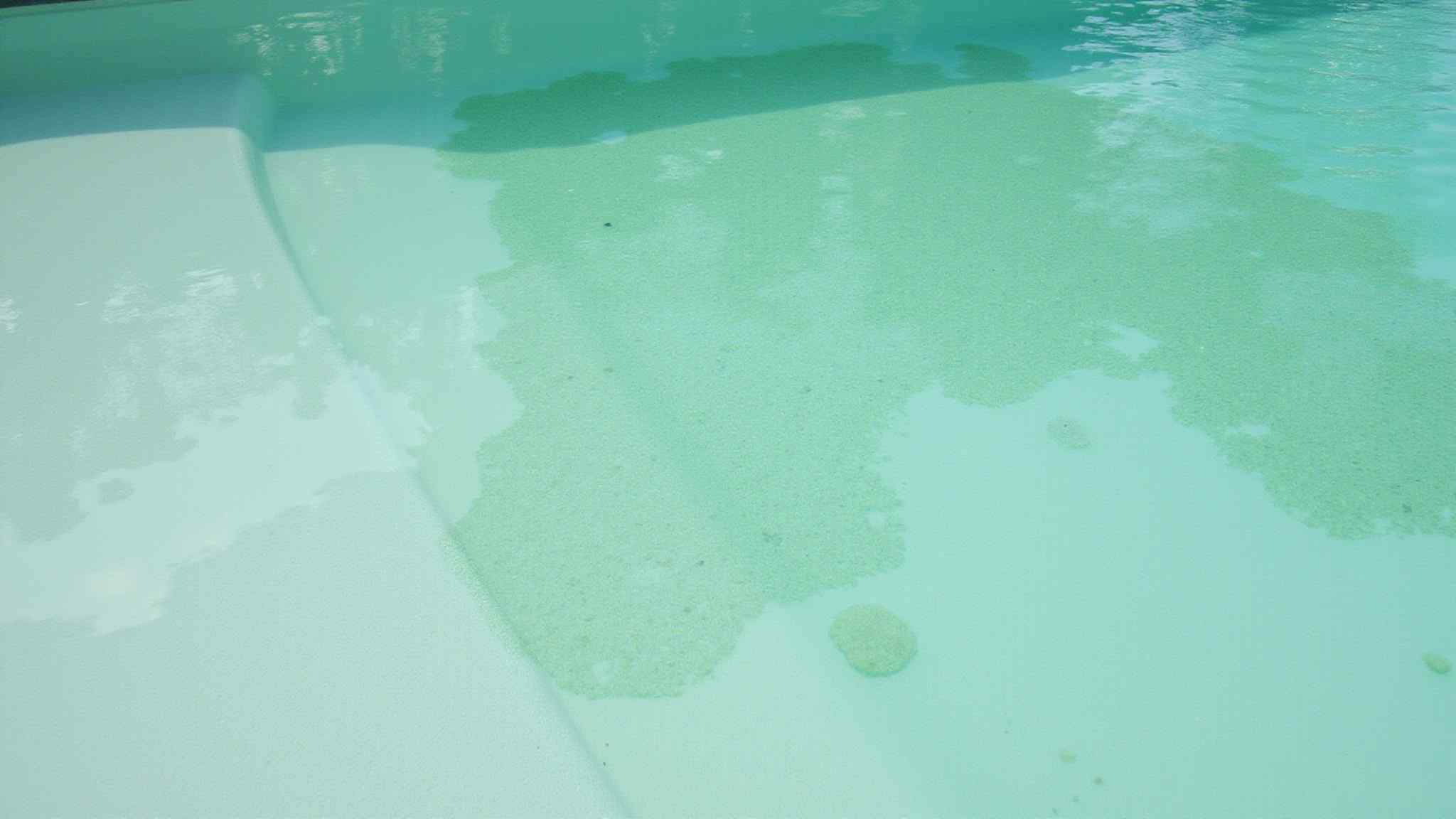
Yes, metals like copper can discolor pool water, often turning it green or teal while the water stays crystal-clear. When your water stays clear and the floor remains visible, suspect metals rather than algae. Copper enters through well water fills, source water, or copper-based algaecides. When you add chlorine, dissolved copper oxidizes and produces a green or teal appearance, often right after shocking.
| Indicator | Points To Metal When |
|---|---|
| Water clarity | Stays clear, not cloudy |
| Floor visibility | Bottom remains visible |
| Color trigger | Appears after shocking or filling |
| Water source | Filled from well water |
| Treatment used | Copper-based algaecide applied |
Test for metals, chlorine, pH, and alkalinity before treating. Confirming copper prevents you from mistakenly chasing an algae problem that isn’t there.
How Do You Tell Algae From Stains
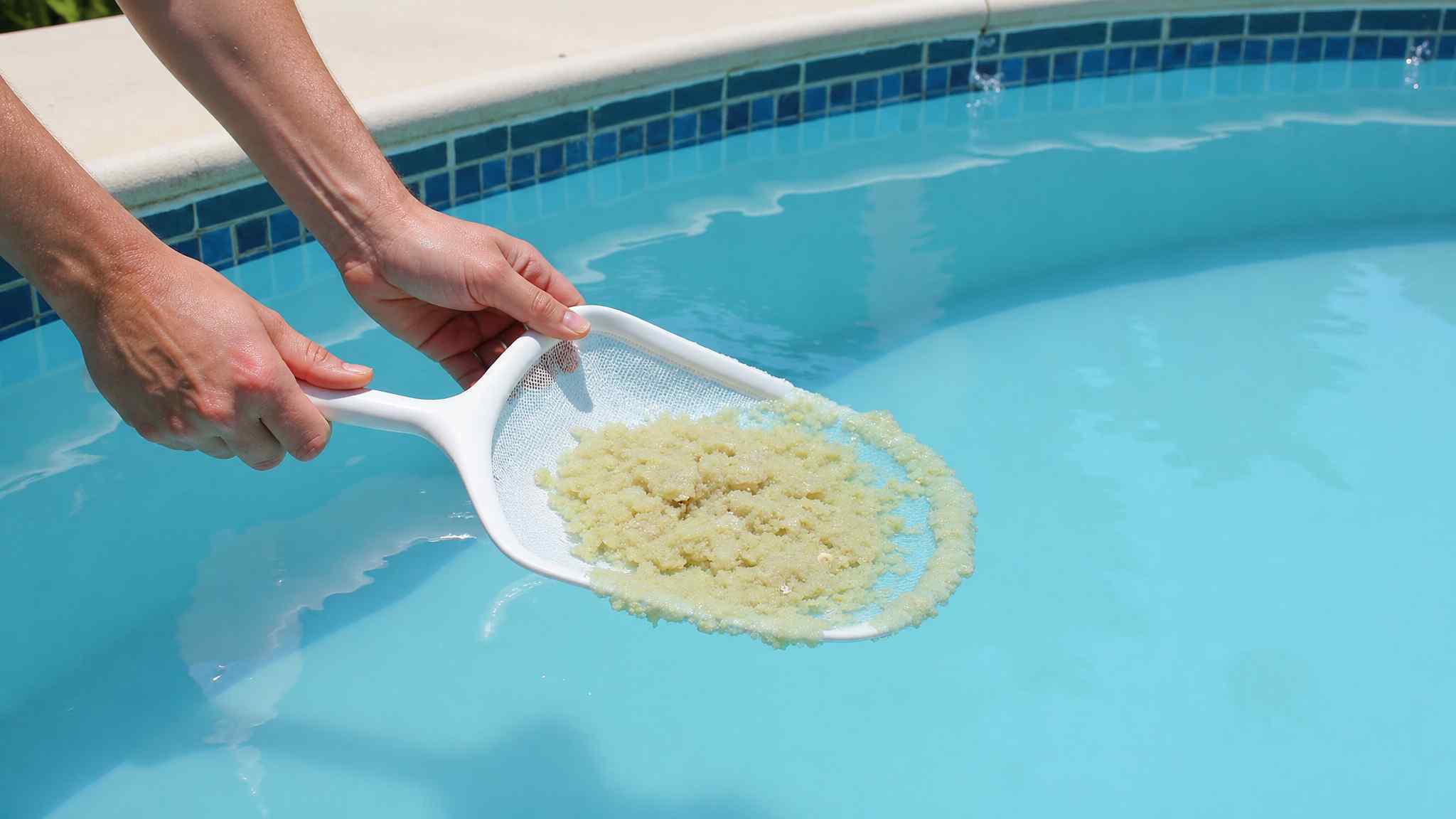
Algae usually makes pool water cloudy and surfaces slimy, while stains keep the water clear and feel smooth and hard. To maintain a pristine swimming environment, it is essential to remove dead algae from pool regularly. Regular maintenance not only ensures clear water but also prevents the growth of harmful microorganisms.
Check clarity first. Cloudy green water points to algae, while clear water with a green tint points to metal or staining. Algae suspends in the water column, so a full bloom clouds the pool. Clear water with a green floor suggests something bound to the surface.
Next, test texture. Touch the wall or floor. A slimy, slick feel confirms biological growth, since algae forms a living film. Stains feel smooth and hard, staying fixed to the surface without slickness.
Confirm with chemistry. Low free chlorine and high pH favor algae. If chlorine reads adequate and surfaces feel firm, suspect staining.
How Do You Remove the Discoloration From the Floor
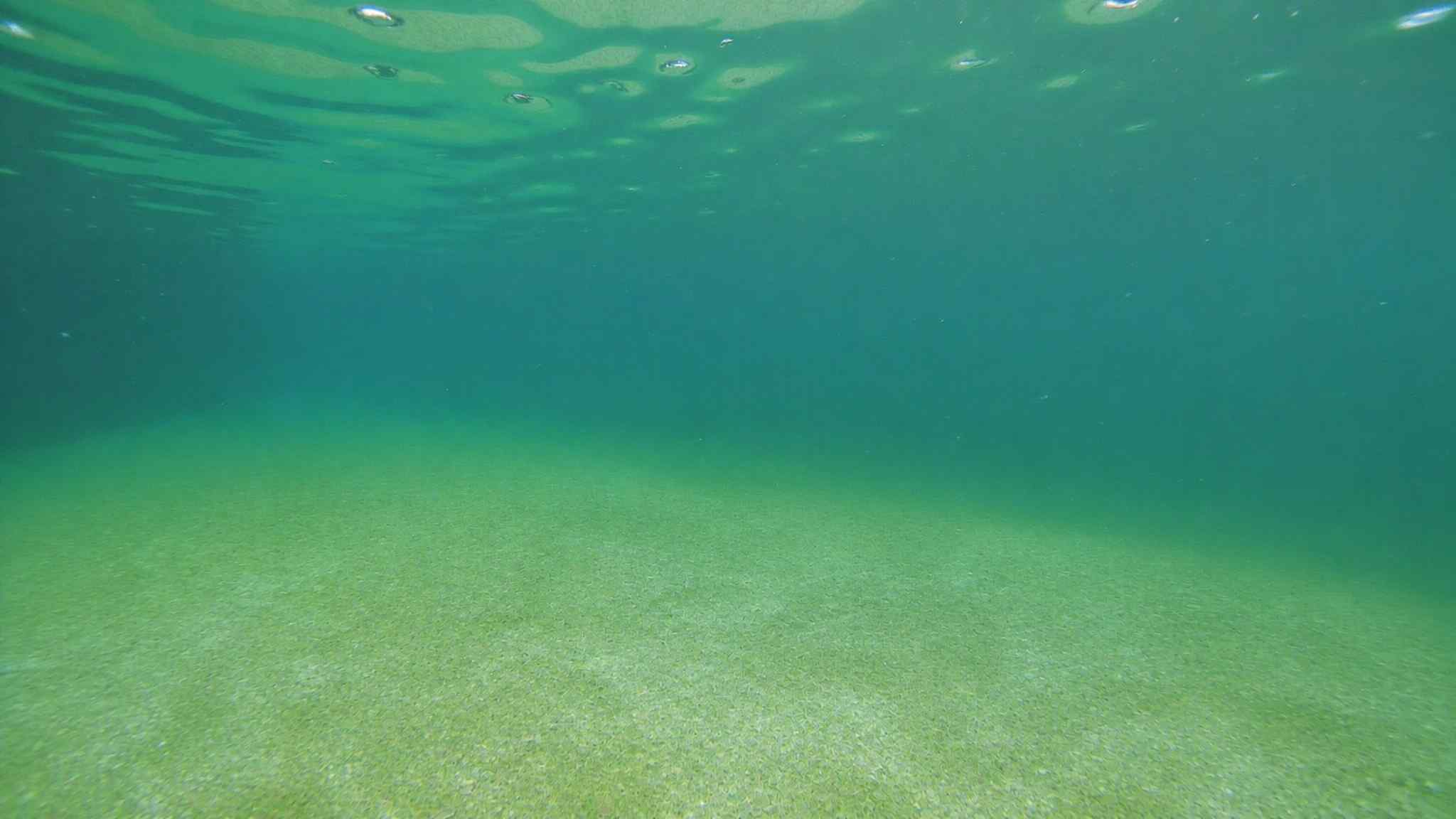
Remove the discoloration from the floor by treating the specific cause, algae or metal staining.
If it’s algae, first correct your chemistry. Lower pH below 7.8 so chlorine can work, then raise free chlorine to shock levels. Brush the floor and walls to break the growth loose, then run the pump and filter continuously to clear suspended debris. Weak circulation leaves dead spots, so redirect returns toward stagnant areas. Natural pool algae removal can often be a straightforward process if you follow the right steps. Regular maintenance, including checking water chemistry and circulation, is essential for preventing future growth.
If it’s metal, don’t add more chlorine, since oxidizing copper only deepens the tint. Instead, add a metal sequestrant to bind the dissolved copper, then filter it out. Test source water before refilling.
After treatment, retest chlorine, pH, and alkalinity to confirm the bottom stays clear.
How Do You Fix the Underlying Cause of a Green Bottom
Fix the underlying cause of a green bottom by correcting the water imbalance, metal issue, or circulation problem that allowed it to develop. Test chlorine, pH, alkalinity, and metals to identify the source. If free chlorine reads low, raise it to restore sanitizing capacity and stop early algae. If pH exceeds 7.8, lower it so chlorine works effectively and metals stay stable. When tests confirm copper or other dissolved metals, add a metal sequestrant and avoid copper-based algaecides going forward. Inspect circulation next: run the pump longer, clear dead spots, and confirm the filter moves water across the entire floor. If well water introduced metals, treat each fill. Correcting these conditions together prevents the green bottom from returning after you clean it.
How Do You Stop the Bottom From Turning Green Again
Stop the bottom from turning green again by keeping algae and metals under control. Keep free chlorine within its target range so algae can’t establish on the walls or floor. Test pH regularly and hold it below 7.8, since high pH reduces sanitizer effectiveness and lets metals oxidize. Run your pump and filter long enough each day to distribute chemicals evenly and eliminate dead spots where growth settles. Brush the floor and walls routinely to disrupt early algae before it clings. If you’re adding source water, test it for copper and other metals, and use a sequestrant when needed. After heavy rain, high heat, or shocking, recheck your chemistry promptly to catch imbalances before they trigger green discoloration again.
Conclusion
A clear pool with a green bottom almost always comes down to one of two things: algae growing on the surfaces or dissolved copper staining the floor, and telling them apart is the whole battle. Trust the simple tests, slimy growth that lifts when you brush points to algae, while a firm stain that won’t budge points to metal, and confirm with a chemistry check of free chlorine, pH, and metals. From there the fix is targeted: shock, brush, and boost circulation for algae, or skip the chlorine and use a sequestrant for copper. Keep chlorine in range, hold pH below 7.8, run strong circulation, and test any fill water, and you’ll not only clear the green bottom but keep it from coming back, leaving you with a floor that stays clean and water that looks its best.
Get Expert Care for Fiberglass Pool Chemistry
Fiberglass pool chemistry stays balanced far more easily with the right pool from an authorized installer. At Schiller Pools in Palm City, FL, our experienced team provides trusted Fiberglass Pool Installation with expert guidance on water chemistry and long-term care. Call +1 (561) 475-5997 today and get your free estimate.
Frequently Asked Questions
Is It Safe to Swim in a Pool With a Green Bottom?
It depends on the cause. If you’ve got algae, indicated by slimy walls or a green film, don’t swim until you’ve corrected low chlorine and cleared it, since algae signals unsafe sanitizer levels. If dissolved copper’s the culprit, with clear water and a visible floor, you’re generally safe, though metals can stain skin or hair. Test chlorine, pH, and metals first. Confirm the source before you decide to enter.
How Long Does It Take to Clear a Green Pool Bottom?
You’ll typically clear a green bottom in 24 to 72 hours, depending on the cause. If it’s algae, brush the surfaces, raise free chlorine, and run your filter continuously. Expect one to three days. If it’s copper, you’ll need a metal sequestrant and adequate filtration, which can take longer. First, test chlorine, pH, and metals to identify the source. Correct pH below 7.8, then treat accordingly for faster results.
How Much Does Professional Green Pool Treatment Typically Cost?
Your total cost depends on the underlying cause. Confirm whether you’re dealing with algae, dissolved copper, or a chemistry imbalance first, since each requires different treatment. Test for metals, chlorine, pH, and alkalinity to identify the problem before you request a professional quote.
Can I Use a Robotic Cleaner to Remove Green Buildup?
Yes, you can use a robotic cleaner to remove green buildup, but confirm it’s algae first. Slimy walls or a green floor with a visible bottom indicate biological growth the cleaner can scrub and collect. If the tint comes from copper or dissolved metals, scrubbing won’t help. Address the chemistry instead. Before running the cleaner, check your free chlorine and pH, then let it target settled algae on surfaces methodically.
Will Draining and Refilling My Pool Fix the Green Bottom?
Draining and refilling won’t reliably fix a green bottom, and it can introduce new problems. If metals cause the tint, your fill or well water may add more copper right back. If algae’s the source, you’ll leave residual growth clinging to surfaces. First, test for metals, chlorine, and pH, then identify the actual cause. Once you know it, you’ll treat it directly, which is more effective and less wasteful than a full drain.