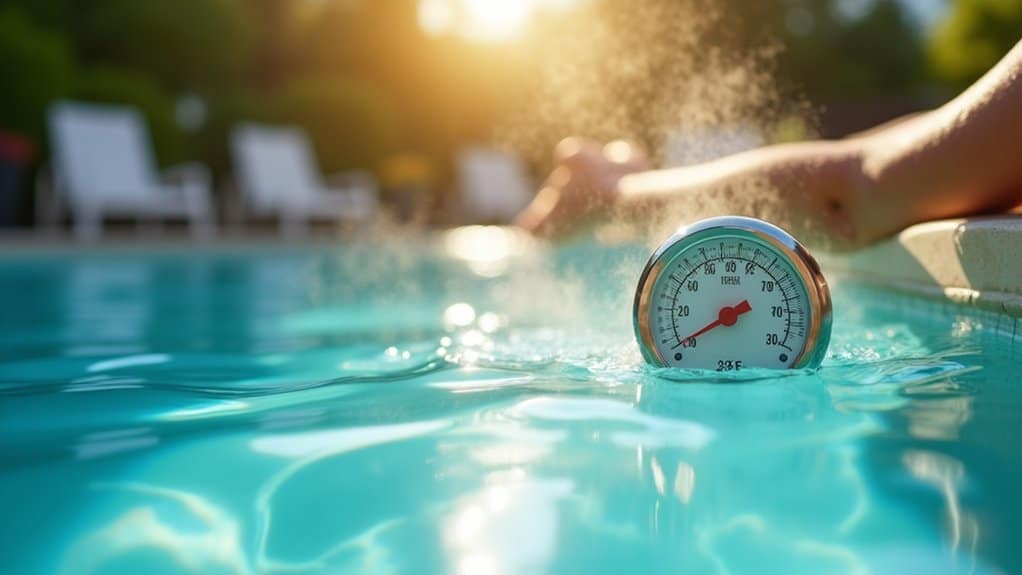
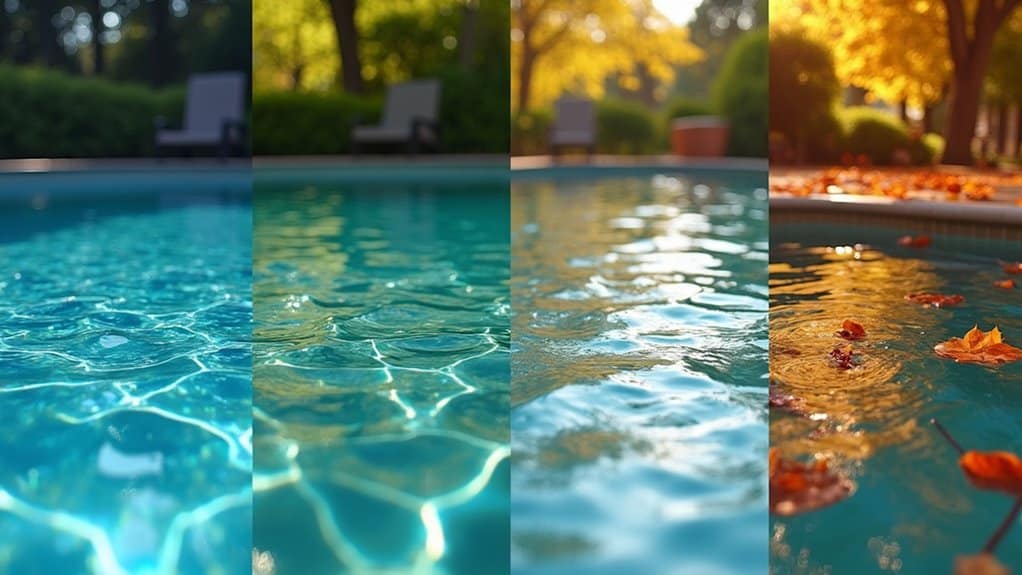
Your pool’s ideal temperature depends on the season and current weather conditions. During summer, maintain 78-85°F to prevent bacterial growth while staying comfortable. In winter, raise it to 86-88°F to counter cold air exposure, your body loses heat 25 times faster in water than air. Spring and fall call for adjustments based on ambient temperatures, typically 83-86°F. Understanding how swimmer age and activity type affect these ranges will help you optimize both comfort and safety.
Ideal Pool Temperatures for Every Season
Seasonal shifts consistently demand pool temperature adjustments to maintain both comfort and safety standards. Understanding pool temperature by season guarantees you’ll maximize swimmer comfort while controlling operational costs.
During spring, you should maintain temperatures between 32-36°C (90-97°F) for relaxation once outdoor temperatures reach 21°C (69.8°F). Lower the temperature slightly if using the pool during the day to avoid overheating in the spring sun. Summer requires cooler settings of 78-85°F (26-29°C), which the American Red Cross recommends for safe, comfortable swimming. You’ll want to keep temperatures below 82°F (28°C) to prevent bacterial growth and avoid bath-like conditions. Maintaining this recommended temperature range also helps control algae growth since warmer water allows algae to float to the surface faster.
Autumn swimming demands warmer spa-range temperatures of 34-38°C (93-100°F) to counter cooling air. Run your filtration system during colder hours to minimize heat loss. Always use thermal covers to reduce day-night temperature fluctuations and preserve energy efficiency throughout seasonal changes. If you need assistance preparing your pool for seasonal transitions, Puddle technicians bring years of industry experience to ensure your pool is properly opened and maintained.
Winter Pool Temperature: Stay Comfortable Without Overheating
When winter temperatures drop, you’ll need to adjust your pool settings to balance comfort against overheating risks and energy costs. The American Red Cross recommends maintaining 78-85°F for safe winter swimming, while seniors benefit from temperatures between 84-94°F to support circulation and joint comfort.
Unlike the ideal pool temperature in summer, winter conditions require warmer water ranging from 86-88°F to counter cold air exposure and prevent shivering upon entry or exit. Keep your pool above freezing when air temperatures drop below 45°F to protect pipes from damage. In colder months, warmer water also helps loosen muscles and reduce joint pain for seniors, making movement easier for those with limited mobility.
To control monthly heating costs of $100-400, install pool covers and consider heat pumps sized appropriately for your desired temperature. A quality pool cover serves as a significant cost-saving investment by preventing heat loss and reducing overall energy consumption. Be aware that increasing temperature can boost energy costs up to 30% per degree, so finding the right balance is essential. Stay within 82-88°F to avoid overheating while maintaining therapeutic benefits.
Summer Pool Temperature: Cool Off Without Wasting Energy
Although summer heat naturally warms your pool water, maintaining the ideal temperature range of 78°F to 82°F delivers both comfort and energy efficiency without excessive cooling costs. The average pool temperature in summer often rises above preferable levels, increasing chemical evaporation and algae proliferation risks.
You’ll achieve the best results by targeting 78°F for competitive swimming and fitness activities, where high-intensity movement generates substantial metabolic heat. Recreational swimmers typically prefer 80°F to 82°F for balanced comfort. At this temperature range, children and seniors can comfortably enjoy extended pool sessions without discomfort.
Cooler temperatures within this range naturally inhibit bacterial growth, reducing your chemical treatment requirements. Every degree you lower your pool temperature decreases operational costs proportionally. Keep in mind that energy consumption increases by 10%, 30% for each degree you raise the temperature above your baseline setting. This approach lets you extend swim sessions safely while preventing overheating during sustained aerobic activity.
Spring and Fall Pool Temperature Adjustments
Spring and fall present unique temperature management challenges that differ markedly from summer’s consistent warmth. You’ll want to maintain a warm pool temperature between 82-85°F during these fluctuating seasons to prevent cold shock and extend your swimming season safely.
The American Red Cross recommends keeping water between 78-85°F for safe recreational swimming. Follow these seasonal adjustment protocols:
- Adjust temperature gradually at 1°F per week to allow proper acclimation
- Add 2°F per 1,000 feet elevation in mountain regions
- Target 84-94°F for children and elderly swimmers in variable weather
- Lower evening temperatures to 80-82°F during fall to match cooling air
These incremental changes minimize heating costs while maintaining code-compliant safety standards throughout shoulder seasons. Matching your pool temperature to the season not only improves comfort but also enhances energy efficiency for your heating equipment. Installing solar covers can trap 75% more heat than leaving your pool uncovered, making them especially valuable during these transitional months. Using a pool heater allows you to maintain consistent temperatures during spring and fall when outdoor conditions fluctuate unpredictably.
Best Pool Temperature by Activity and Swimmer Age
Different activities and swimmer age groups require specific temperature ranges to guarantee safety, comfort, and ideal performance in the water. When planning your seasonal pool temperature, you’ll need to account for who’s swimming and what they’re doing.
For infants and toddlers, maintain water between 86°F-92°F to prevent rapid heat loss. Children ages 6-13 require 84°F-88°F for lessons and recreational play. Seniors benefit from 86°F-90°F, which supports joint mobility and reduces arthritis discomfort. Water temperature directly affects safety, health, and enjoyment for all age groups in the pool.
Competitive swimmers and lap trainers need cooler conditions, 77°F-82°F prevents overheating during intense exercise. Aquatic therapy participants require warmer water at 88°F-92°F for muscle relaxation and improved circulation. Wireless pool thermometers provide real-time temperature updates to your phone, making it easy to ensure optimal conditions for therapy sessions.
Multi-purpose facilities should target 83°F-86°F to accommodate various activities. The Red Cross recommends a general pool temperature between 78°F and 82°F as suitable for most recreational and competitive swimming activities. You’ll want to adjust your seasonal pool temperature settings based on your primary user groups and scheduled activities.
Cut Seasonal Heating Costs Without Sacrificing Comfort
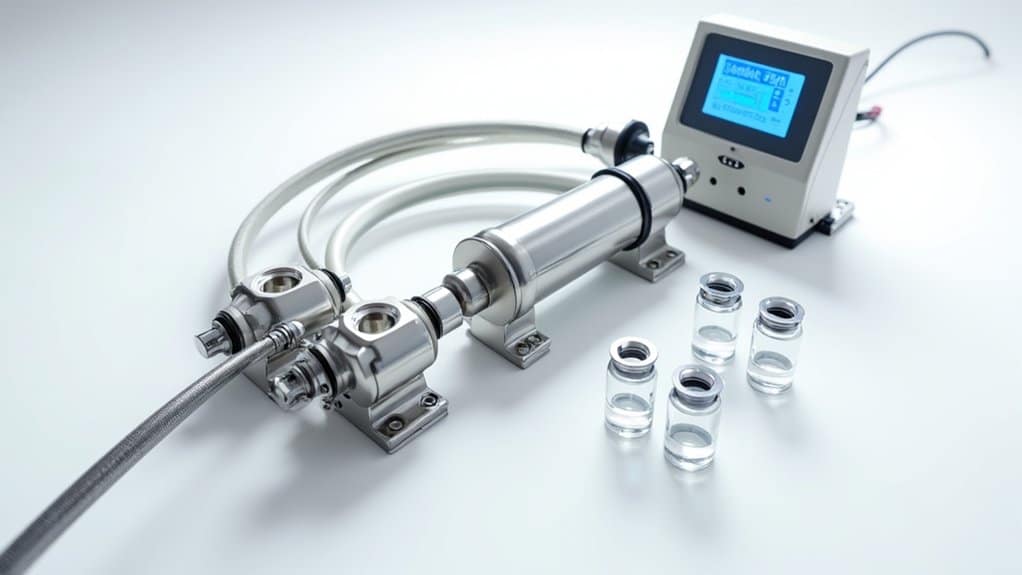
When you combine proper equipment selection with strategic temperature management, you’ll dramatically reduce seasonal heating costs while maintaining comfortable swim conditions. Heat pump systems deliver 300-600% efficiency ratings, vastly outperforming gas heaters at 78-82% efficiency.
Smart equipment choices paired with strategic temperature control slash heating costs while keeping your pool swim-ready all season.
To maximize savings while determining when is it warm enough to swim, implement these strategies:
- Install pool covers to reduce seasonal heating expenses by 89-92%, dropping costs from $1,485 to $158 per season
- Select heat pumps with monthly operational costs of $50-$300 versus higher gas expenses
- Maintain setpoints at 76-78°F during moderate weather to reduce heating runtime proportionally
- Adjust temperatures seasonally, lowering settings during cooler months when ambient conditions provide natural heating assistance
Dark pool covers maximize solar absorption, extending comfortable swimming periods efficiently. Since your body sheds heat 25 times faster in water than in air, even 80°F pool water can feel brisk despite comfortable air temperatures. Installing windbreaks like fences or shrubs can significantly cut costs since wind accelerates evaporation, which is the primary cause of heat loss from your pool.
Ready to Transform Your Backyard?
Your dream pool is closer than you think. At Schiller Pools, our experienced team brings over 40 years of expertise to every project, delivering stunning fiberglass pool installations and custom pool construction that turn ordinary backyards into extraordinary outdoor retreats. With flexible financing options and lifetime warranty backing, there has never been a better time to get started. Call (561) 475-5997 today for your free estimate.
Frequently Asked Questions
How Does Wind Speed Affect Perceived Pool Temperature During Outdoor Swimming?
Wind speed drastically lowers your perceived pool temperature through two mechanisms. First, it accelerates evaporative cooling on your wet skin when you exit the water, making you feel chilled even in properly heated pools. Second, wind disrupts the water’s surface, increasing heat loss and creating a cooling sensation while you’re swimming. On windy days, you’ll need water temperatures 2-4°F higher than calm conditions to maintain comfortable swimming. Consider installing windbreaks to mitigate this effect.
Should Pool Temperature Change Based on Cloudy Versus Sunny Days?
You should adjust pool temperature based on cloud cover. On sunny days, solar radiation naturally heats your pool, allowing you to set heaters lower within the 78°F to 82°F range. During cloudy conditions, you’ll need to compensate for reduced solar gain by increasing heater output to maintain comfortable temperatures. Without this adjustment, you risk water dropping below 77°F, which can adversely affect swimmers’ breathing and cause post-swim shivering.
How Long Does It Take to Heat a Pool After Temperature Drops?
Heating time depends on your heater type and the temperature differential. Gas heaters raise water temperature 1-2°F per hour, requiring 10-20 hours to increase 10°F. Electric heat pumps work slower at 0.5-1°F per hour, needing 20-32 hours for the same increase. Solar heaters add 2-4°F per sunny day. You’ll achieve faster results by using a pool cover to minimize heat loss during the heating cycle.
Does High Humidity Make Pool Water Feel Warmer Than the Actual Temperature?
Yes, high humidity makes pool water feel warmer than its actual temperature. When you’re swimming in humid conditions, you’ll experience reduced evaporative cooling from your skin because the saturated air can’t absorb additional moisture. This impairs your body’s natural cooling mechanism, creating a warmer sensation. You should maintain relative humidity between 50-60% (per ASHRAE guidelines) for ideal thermal comfort and to prevent condensation issues that can compromise facility safety.
What Pool Temperature Works Best During Unexpected Cold Snaps in Summer?
You’ll want to raise your pool temperature to 82, 84°F during unexpected summer cold snaps. This range meets American Red Cross activity guidelines of 83, 86°F while preventing the shivering that occurs below 78°F. Don’t drop below 50°F, as this creates dangerous cold shock conditions. If you’re heating for children or seniors, push toward 84, 88°F for added warmth. Mid-70s temperatures can work short-term but won’t provide full comfort protection.