
Assess Your Backyard Space and Define Your Pool Goals
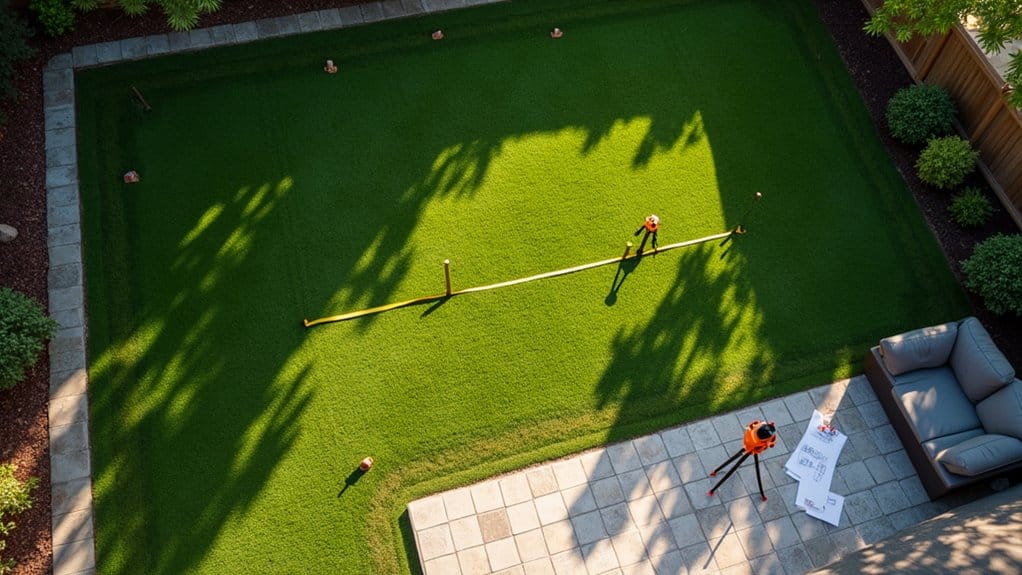
Before you break ground on your dream pool or spa, you’ll need to thoroughly evaluate your backyard’s dimensions, topography, and existing features. Measure your yard’s length, width, and usable area while noting slopes that could impact placement. Analyze yard obstacles like trees, structures, and underground utilities that might restrict your pool’s footprint. Identify level areas within your property that offer the most suitable foundation for pool placement.
Track sunlight patterns throughout the day to position your pool for ideal solar exposure. This affects both comfort and heating efficiency. Keep in mind that regular pool inspections provide visibility to damages or issues early, making ongoing maintenance more manageable and cost-effective.
Next, define your primary usage goals, whether recreation, lap swimming, or relaxation. Calculate optimal pool capacity in gallons based on your desired surface area and depth requirements. Match these specifications to your family’s needs while respecting local setback requirements and zoning distances from property lines. When planning your layout, ensure adequate space for gates and fencing around the pool area to meet security requirements and proper functioning standards.
Conduct a Professional Site Survey and Create Your Layout Design
Once you’ve mapped out your backyard’s dimensions and established clear usage goals, you’re ready to bring in professional expertise that transforms rough concepts into buildable plans.
Your surveyor begins with geologic exploration, analyzing soil composition, water table depths, and subsurface obstacles like rocks or root systems. This critical assessment determines excavation feasibility and identifies whether base reinforcement is necessary. Simultaneously, utility conflict avoidance mapping locates underground pipes, electrical lines, and drainage systems that could complicate construction.
Before breaking ground, surveyors analyze soil conditions and map underground utilities to prevent costly surprises during excavation.
Using a total station, technicians stake precise pool boundaries with spray paint and pegs, marking inside corners, waterline positions, and drainage gradients. They’ll evaluate access paths for cranes and excavators while noting gates or narrow passages requiring modification. The surveyor will also identify any surrounding structures or plants that could affect the pool’s optimal location and final design. A physical template is then placed on-site to help you visualize the end result and confirm the pool’s exact footprint before excavation begins.
Finally, 3D visualization lets you preview the design, confirming shape, placement, and sun exposure before finalizing plans. Be prepared for a project timeline of 2-4 weeks depending on the complexity of your chosen design options and additional features.
Select Premium Materials and Custom Features for Your Pool Spa
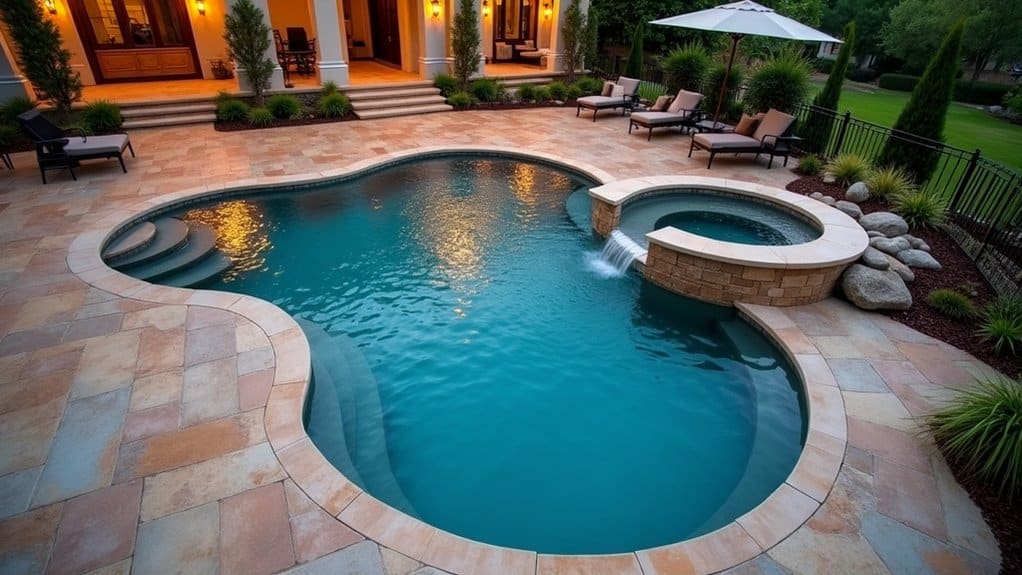
Choosing the right materials and features sets the foundation for a pool spa that’ll deliver decades of performance and visual appeal. You’ll want to select reinforced steel frameworks paired with shotcrete shells for maximum durability, while Composite Armour™ fiberglass technology offers lifetime structural integrity. High-grade plumbing systems ensure efficient water flow and minimize long-term maintenance needs. Concrete pool construction allows for custom shapes and sizes that perfectly complement your home’s architecture. Top-tier materials are engineered to endure even the harshest weather conditions, guaranteeing lasting satisfaction.
- Surface finishes: Pebble finishes and glass bead applications provide exceptional UV resistance and color retention for harsh climates.
- Natural stone surrounds: Travertine or flagstone enhances traction while enabling complementary landscaping designs.
- Custom seating: Ergonomic loungers with ideal jet placement maximize therapeutic benefits.
- Luxury entertainment features: Infinity edges, waterfalls, and custom lighting create stunning nighttime ambiance.
Salt chlorination systems paired with quality materials minimize maintenance requirements.
Complete Engineering Plans and Permit Preparation
You’ll need to specify the size and spacing of all reinforcing steel throughout your pool and spa structure, with detailed tables and standard wall sections that account for your site’s soil conditions. Your structural plans must be stamped by a licensed civil engineer and include calculations for surcharges, unusual loading conditions, and walls adjacent to patios or buildings. The design fee is based on 2% of the Estimated Retail Construction Value, which is assessed according to your budget expectations and construction experience. Before submitting your three sets of scaled plans, guarantee they’ve been reviewed by the engineer of record and include the site staking requirements for set-back and easement compliance.
Steel Rebar Structural Reinforcement
Steel rebar forms the skeletal framework that transforms your pool shell from a brittle concrete basin into a flexible, load-bearing structure capable of withstanding decades of hydraulic pressure, soil movement, and thermal cycling. Your structural reinforcement practices must incorporate seismic stability considerations, particularly in earthquake-prone regions where ground displacement threatens shell integrity. Professional rebar installation creates a unified structure where concrete and steel work together to resist the combined forces of ground movement, water pressure, and temperature fluctuations. The inherent malleability of rebar makes it perfect for curved designs, allowing builders to construct creative pool shapes while maintaining structural integrity. The rebar framework must undergo rigorous inspection before concrete application to ensure it meets local building codes and structural standards.
Follow these critical reinforcement specifications:
- Select grade-appropriate steel: Use D250N standard grade or D500N for high-strength applications, ensuring AS/NZS 4671:2019 compliance.
- Calculate grid patterns: Base rebar sizing on pool dimensions, water pressure loads, and soil conditions.
- Layer strategically: Install multiple rebar layers at floors, walls, corners, and juncture points.
- Verify placement precision: Use laser tools to confirm exact spacing before shotcrete application.
Permit Approval Process
How effectively you navigate the permit approval process determines whether your pool project launches on schedule or stalls in bureaucratic limbo for weeks.
Your permit application timeline begins with submitting complete documentation through online portals like myOCeServices or EZOP. You’ll need three sets of plans showing site layouts, cross-sections extending 5 feet beyond property lines, and equipment specifications. Don’t forget pool light wattages, emergency shut-offs, and self-closing gate hardware details.
The plan review process follows a strict sequence: electric company first, then city planning for zoning compliance, followed by engineering’s structural evaluation. Health department approval must precede building permit issuance. The review process verifies compliance with California Building Codes, the San Bernardino County Development Code, and other applicable regulations, meaning construction cannot start until your permit is officially obtained.
Standard pools clear first review in 5 working days; non-standard designs require 15. Incomplete submissions get rejected outright, missing elements trigger delays and amended plans demand additional fees. Your approval remains valid for two years. Failing to comply with permit requirements can result in fines and forced modifications to your pool, as well as potential legal action from your city or HOA.
Execute the Construction Phases With Precision
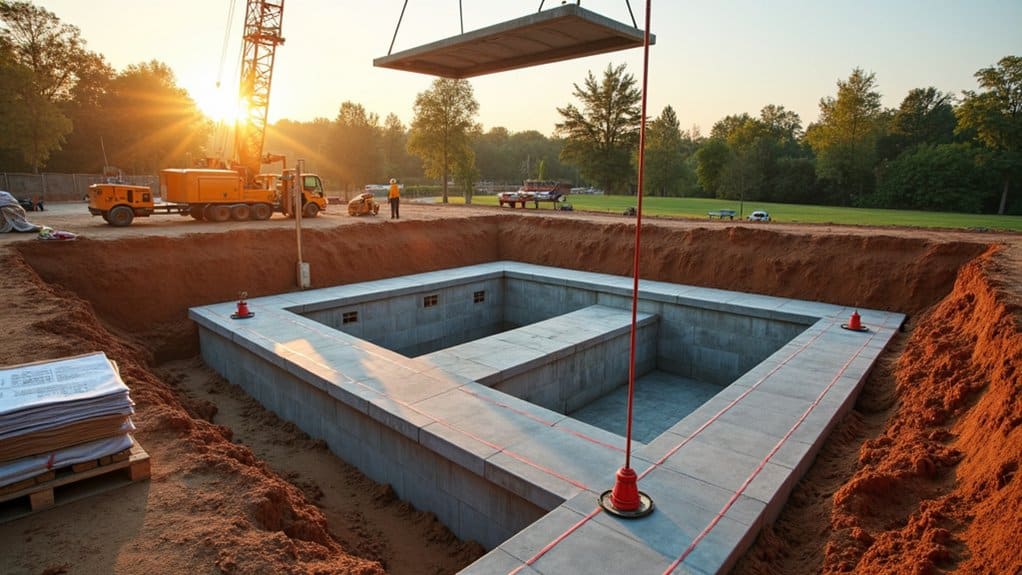
Five distinct construction phases transform your backyard from an empty canvas into a fully functional pool and spa retreat. Understanding project timeline management helps you anticipate each stage’s duration, while cost estimation considerations guarantee you’ve budgeted for soil challenges or complex additions.
Building your dream pool unfolds through five precise phases, each stage bringing you closer to backyard paradise.
- Demolition and excavation clears obstacles, digs precise dimensions, and compacts soil, typically completing within one week depending on terrain conditions.
- Steel reinforcement and plumbing installation creates your pool’s structural backbone, with pressure-tested lines ensuring long-term functionality.
- Gunite application sprays concrete onto the rebar frame, sculpting steps and curves before a critical curing period.
- Equipment and electrical setup wires pumps, filters, heaters, and safety fencing to meet compliance standards.
You’ll watch your vision materialize across 8-12 weeks of precision craftsmanship.
Install Finishing Touches and Decorative Elements
Once the structural phases conclude, your pool and spa project enters its most visually transformative stage, the finishing touches that convert raw concrete into a stunning backyard retreat. Custom tile mosaics along waterlines and coping edges deliver luxury while protecting vulnerable surfaces from weathering and chemical exposure.
Strategic lighting placement transforms your space after dark, LED systems highlight architectural features, illuminate pathways for safety, and create ambient glow around water features. You’ll integrate waterfalls for visual and auditory appeal while low-voltage systems maintain energy efficiency.
Your finishing phase extends to composite decking, slip-resistant stone pavers, and decorative concrete that frame the pool cohesively. Premium covers with automated lifts, privacy screens, and native landscaping complete the transformation, turning construction zones into functional, elegant retreats.
Perform Final Inspections and Water Chemistry Balancing
Your stunning tile work and ambient lighting mean nothing if structural flaws or chemical imbalances compromise the entire installation. Before filling your pool spa, you’ll need to guarantee proper installation across every system and verify regulatory compliance with local codes.
Critical Final Inspection Checklist:
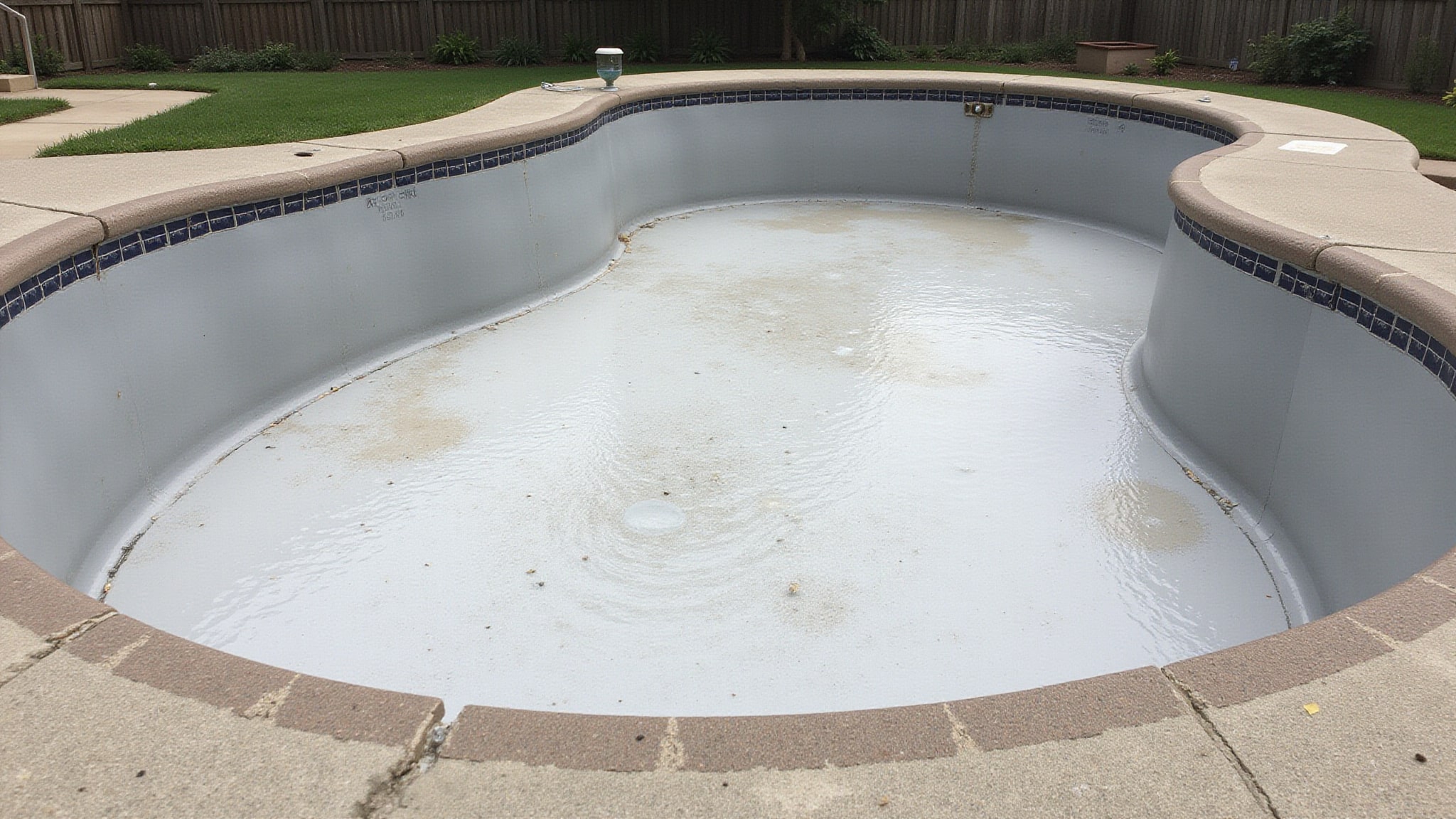
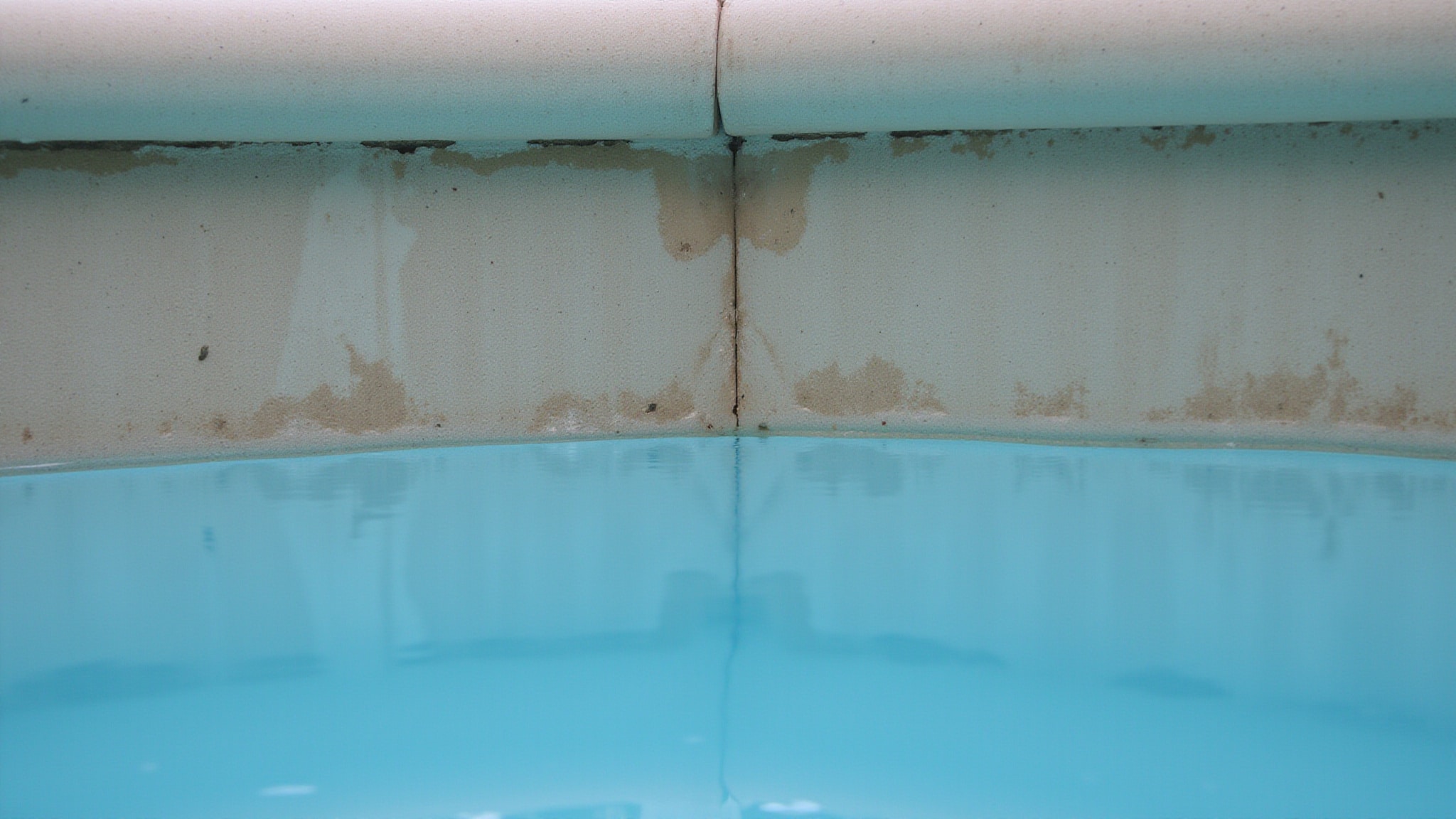
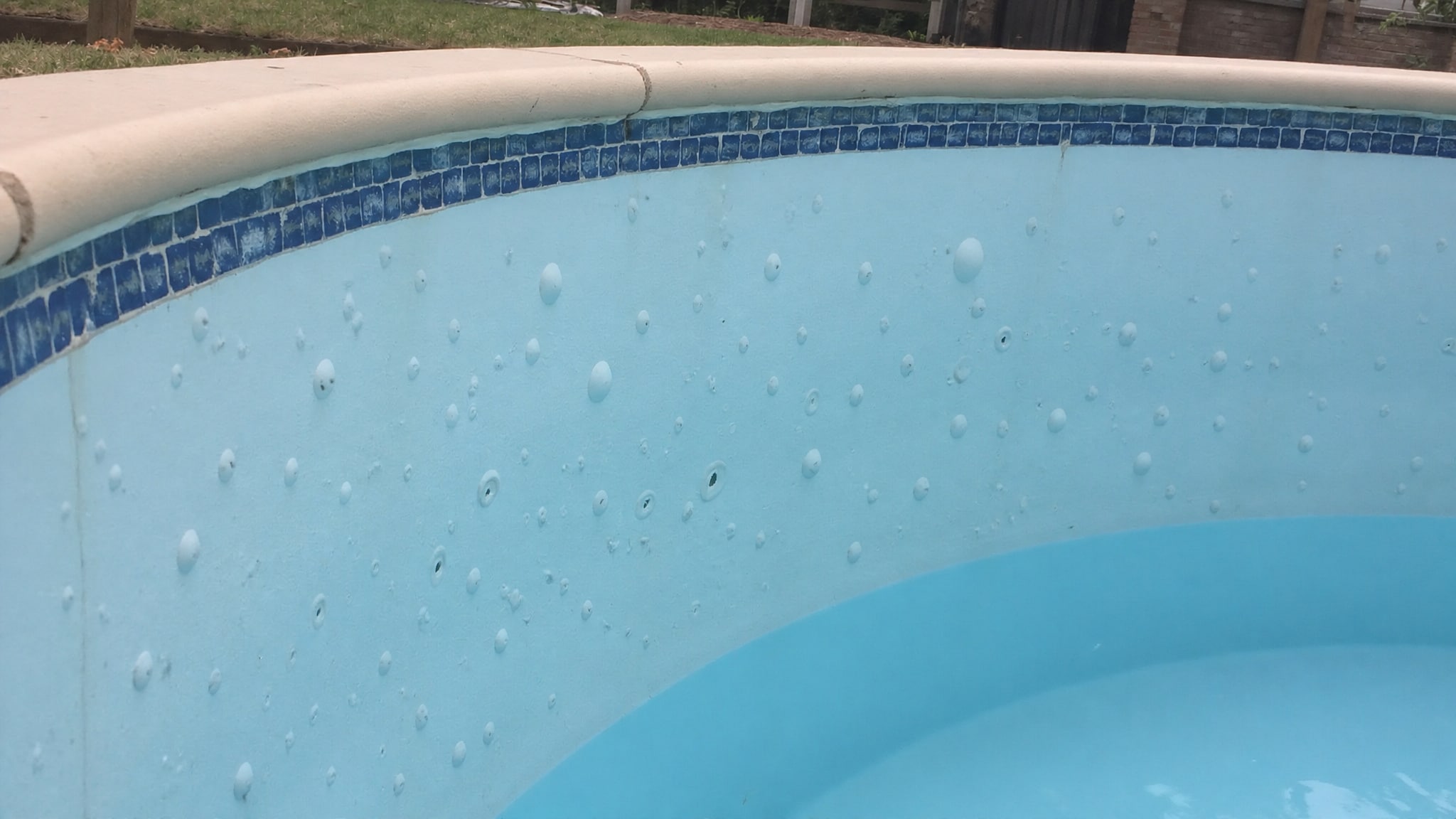
- Structural integrity, Examine the pool shell for cracks, pitting, and open joints; confirm decking maintains proper slope (1/4″ to 5/8″ per foot) away from the pool.
- Safety barriers, Certify fencing meets code with self-closing, self-latching gates opening outward.
- Electrical systems, Test GFCI protection, bonding, and grounding on all lighting fixtures.
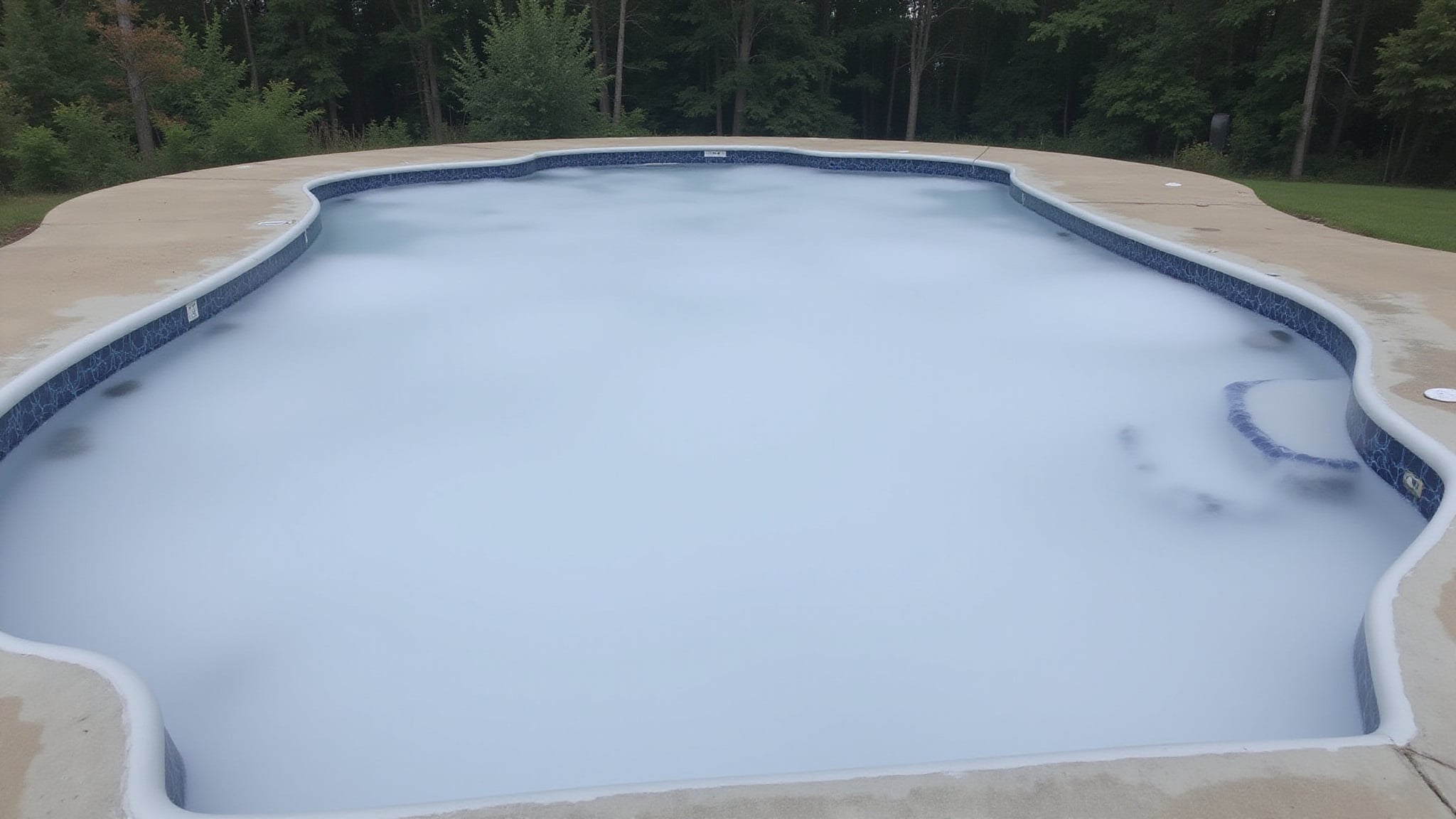
- Water chemistry, Balance chlorine/bromine levels and pH; maintain water clarity without debris or surface staining.
Don’t overlook drain covers, they must comply with VGBA anti-entrapment regulations.
Frequently Asked Questions
How Long Does the Entire Pool Spa Construction Process Typically Take?
Your pool spa’s design timeline typically spans 3-12 weeks, covering concept development, permitting, and HOA approvals. Once you’ve cleared those hurdles, your construction timeline runs 6-12 weeks depending on your chosen materials, fiberglass shells finish faster at 6-8 weeks, while gunite requires 8-12 weeks for proper curing. You’re looking at roughly 9-24 weeks total, though weather delays and custom features can extend your project’s completion date.
What Is the Average Cost Range for a Custom Backyard Pool Spa?
You can expect to invest between $60,000 and $200,000 for a custom backyard pool spa combo. Your cost per square foot varies dramatically based on material selection factors, fiberglass runs more affordable, while concrete with infinity edges or waterfall features pushes budgets higher. When you’re adding integrated spas, premium finishes, and beach entries, you’ll likely land in the $150,000, $500,000 range for truly luxurious installations.
How Often Will I Need to Drain and Refill My Pool Spa?
You’ll need to drain and refill your pool spa every 3-4 months under typical usage conditions. Your water quality monitoring routine directly impacts this timeline, if you’re testing twice weekly and maintaining a consistent chemical treatment schedule, you can maximize intervals. Heavy use, hard water, or persistent cloudiness signals earlier draining. Calculate your specific needs using this formula: divide gallons by daily bathers, then divide by three for days between drains.
What Ongoing Maintenance Costs Should I Budget for Annually?
You should budget $3,000, $6,000 annually for detailed pool spa upkeep. Your routine chemical maintenance runs $175, $750 yearly, depending on your pool’s surface material, concrete demands roughly $750, while fiberglass requires just $175. Electricity adds $800, $1,200, and professional cleaning services average $1,200, $3,600. Don’t forget periodic equipment repair costs ranging $400, $1,000+. Monthly utilities fluctuate $50, $200 for swim spas, so you’ll want a cushion for unexpected expenses.
Can I Finance My Pool Spa Project Through the Builder?
Yes, you can finance your pool spa project directly through most builders. Many partner with lenders like GreenSky, Lyon Financial, and HFS Financial, offering diverse pool financing options including zero-down loans up to $500,000 with terms spanning 20 years. The financing approval process typically involves soft credit checks and electronic documentation, delivering instant decisions without impacting your credit score. You’ll find stage funding releases money at project milestones, keeping construction flowing seamlessly.