Why Your Pool Liner Won’t Look Like the Sample
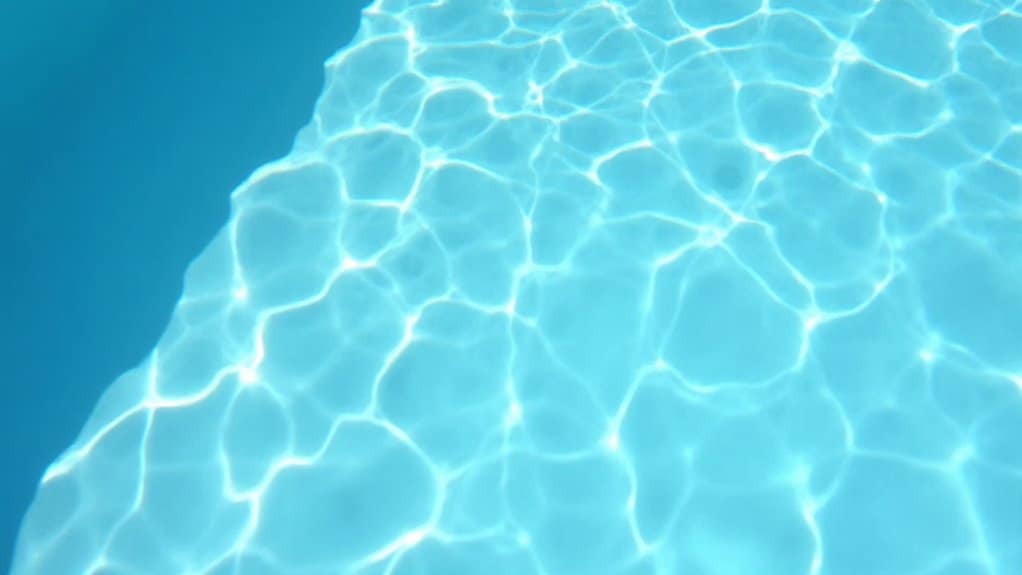
When you select a pool liner from a showroom sample, you’re viewing it under artificial lighting in a dry, flat state, conditions that won’t replicate once installation is complete. Vinyl pool liner colors appear markedly different once submerged, as water depth, refraction, and natural sunlight alter color perception. Liner colors in water typically present darker and more saturated than dry samples indicate.
Above ground pool colors shift based on pool depth, sun angle, and surrounding landscape reflections. Light-colored liners reflect sunlight and appear brighter, while darker patterns absorb light and deepen underwater. Water movement creates additional visual variation throughout the day. Over time, exposure to UV rays from the sun can also cause liner colors to fade, further changing the appearance from your original selection. Additionally, chlorine levels above 3 PPM can accelerate fading, causing your liner’s appearance to change more rapidly than expected. When evaluating options, keep in mind that lighter-colored liners make it easier to spot dirt, leaves, and debris, which can influence both maintenance routines and visual expectations. Request wet samples or manufacturer water-simulation photos before finalizing your selection to accurately anticipate the installed appearance.
How Pool Water Transforms Blue, Tan, and Dark Liner Colors
Because liner color fundamentally alters how sunlight interacts with your pool water, understanding each hue’s underwater behavior prevents installation regrets. Choosing the right shade can create a stunning visual effect that enhances the beauty of your backyard oasis. Additionally, the pool water colors you select can influence the overall warmth or coolness of the pool environment, impacting comfort levels for swimmers throughout the season. Therefore, careful consideration of each color’s impact is crucial for achieving the desired aesthetic and functionality. As you explore popular pool color trends for summer, consider how vivid shades like turquoise or deep blue can transform your space into a refreshing retreat. These colors not only enhance the visual appeal but can also evoke a sense of calm, making your pool area more inviting for gatherings or relaxation. Additionally, pairing these hues with complementary landscape features can elevate the overall ambiance of your backyard.
Blue pool liner colors produce sparkling turquoise to deep azure tones. Clear water intensifies reflection, while depth creates natural gradients from light surface hues to vivid depths. Proper chemical balance maintains true coloration. Deeper pools create more saturated, intense color appearances compared to shallow installations. Blue or light-blue liners with design elements help camouflage wear and tear over time.
Blue liners transform ordinary water into stunning turquoise depths, with color intensity naturally deepening from surface to bottom.
Tan liners yield warmer, tropical results. When combined with water’s natural blue tint, you’ll achieve greenish-aqua tones. These painted pool colors hide minor debris effectively and reflect sunlight for cooler temperatures.
Dark pool paint colors absorb light, producing navy, indigo, or charcoal appearances. You’ll notice chlorine discoloration appears more prominently on darker surfaces. UV fading accelerates visibly, creating uneven patches. Copper-related issues intensify purple or black tints underwater. High-quality liners with protective varnish coatings help reduce staining and bacterial growth while extending overall lifespan.
Dark pool paint colors absorb light, producing navy, indigo, or charcoal appearances. These deeper tones can also influence what are the best colors to wear in a pool, as darker water shades affect contrast and visibility against swimwear. You’ll notice chlorine discoloration appears more prominently on dark surfaces, while UV fading accelerates visibly, creating uneven patches over time. Copper-related issues can intensify purple or black tints underwater. Using high-quality liners with protective varnish coatings helps reduce staining and bacterial growth while extending the pool’s overall lifespan.
Best Liner Colors for Hot Climates, Cold Regions, and Heavy Use
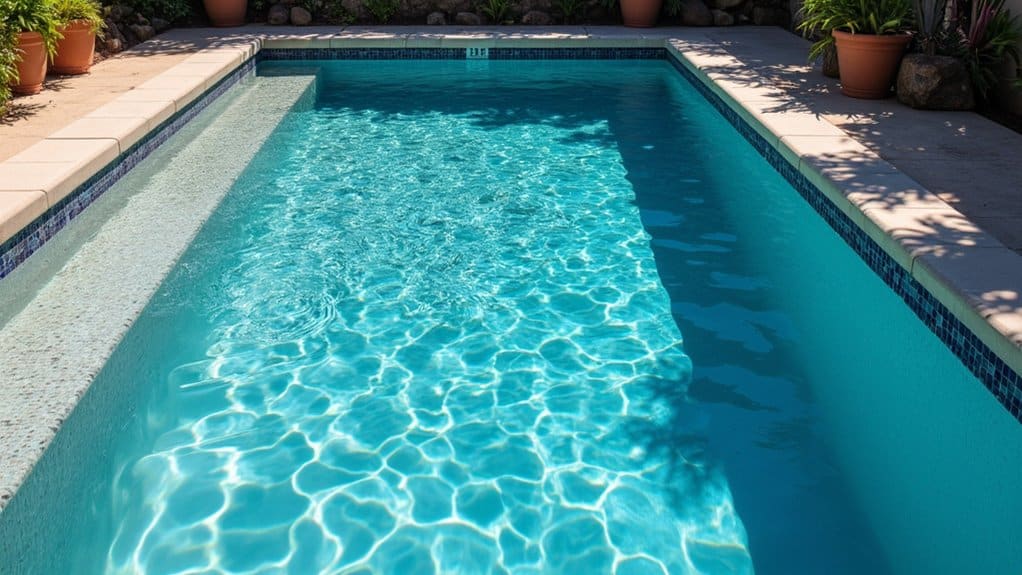
Your liner color choice directly impacts heat management and long-term appearance based on your specific conditions. In hot climates, you’ll want light-colored liners like white or light blue that reflect sunlight and minimize temperature rise, while colder regions benefit from dark navy or black liners that absorb infrared energy for modest heat gains of 1-2 degrees. For high-traffic pools, darker patterns and gray tones effectively conceal wear marks, staining, and sun bleaching that would quickly show on lighter surfaces. Sand or beige liners create a warm turquoise water effect that brings Mediterranean ambiance to your pool area. When selecting a liner, choose thick, reinforced 60 mil PVC membranes that can withstand temperature fluctuations and provide superior durability across all climate conditions.
Light Colors for Heat
Light-colored pool liners function as reflective surfaces that bounce solar radiation away from the water, making them the ideal choice for hot climates where temperature control matters most. White, light blue, and light gray liners maintain cooler water temperatures while producing crystal-clear visual clarity on sunny days.
| Liner Color | Heat Reflection | Best Application |
|---|---|---|
| White | Highest | Desert climates |
| Light Blue | High | Subtropical regions |
| Light Gray | Moderate-High | Southern exposures |
| Cream | Moderate | Mixed-use pools |
| Sand | Moderate | Coastal installations |
You’ll reduce evaporation stress and minimize equipment strain on filtration systems by selecting lighter tones. Pair your light liner with a thermal cover to create a thermos effect that maintains consistent temperatures during cooler evening hours. However, it’s worth noting that research shows negligible temperature difference between dark and light liners due to refraction of light in water dispersing the heat. Regardless of your color choice, remember that crystal clear water remains the ultimate indicator of a healthy pool rather than any specific hue or temperature level.
Darker Liners Hide Wear
Dark-colored pool liners excel at concealing the inevitable wear that comes with regular use, making them the practical choice for high-traffic installations.
You’ll find that dark liners effectively mask debris accumulation, including leaves, insects, and sediment. Scratches, scuffs, and chemical staining remain far less visible compared to light-colored alternatives. If you select a patterned design with intricate elements, you’ll achieve superior camouflage for surface imperfections.
For households with children or teenagers who generate significant pool activity, dark or patterned liners reduce your maintenance burden. You can extend intervals between scrubbing sessions since minor blemishes won’t demand immediate attention. With proper care, your liner could last up to 20 years rather than the typical 6-10 year average. Keep in mind that fading is often an early indicator of deeper structural problems, so monitor your liner’s color consistency regularly.
Consider your climate when selecting dark liners. In hot, sunny regions, UV exposure accelerates fading and may shorten replacement timelines. Shaded pools or northern installations experience minimal color degradation, extending your liner’s service life. As an added benefit, dark liners absorb and retain heat, potentially reducing your heating costs throughout the swimming season.
Light vs. Dark Pool Liners: The Real Temperature Difference
When comparing identical pools with different liner colors, the temperature gap can surprise you, anecdotal evidence shows dark liners producing water that’s up to 7°F warmer than their light counterparts during peak summer sun exposure. This occurs because dark colors absorb the sun’s infrared radiation while light colors reflect it, the same principle that makes blacktop scorching underfoot.
However, water refraction complicates this advantage. Sunlight scatters as it penetrates the water column, creating those familiar dancing light patterns. This dispersion limits ideal heat retention to roughly 1-2°F in most conditions. Wind on the surface further diminishes the effect. Even running your pump longer or adding features like rock waterfalls may not significantly cool down a dark-finished pool that has absorbed substantial heat.
For preferred thermal performance, you’ll want a dark print on dark blue stock combined with a solar cover. In cooler climates, this strategy reduces heating costs; in hot regions, lighter liners keep temperatures manageable. Choosing a dark stock liner also provides the practical benefit of not showing wear as easily over time.
Which Pool Liner Colors Hide Wear and Stains Best?
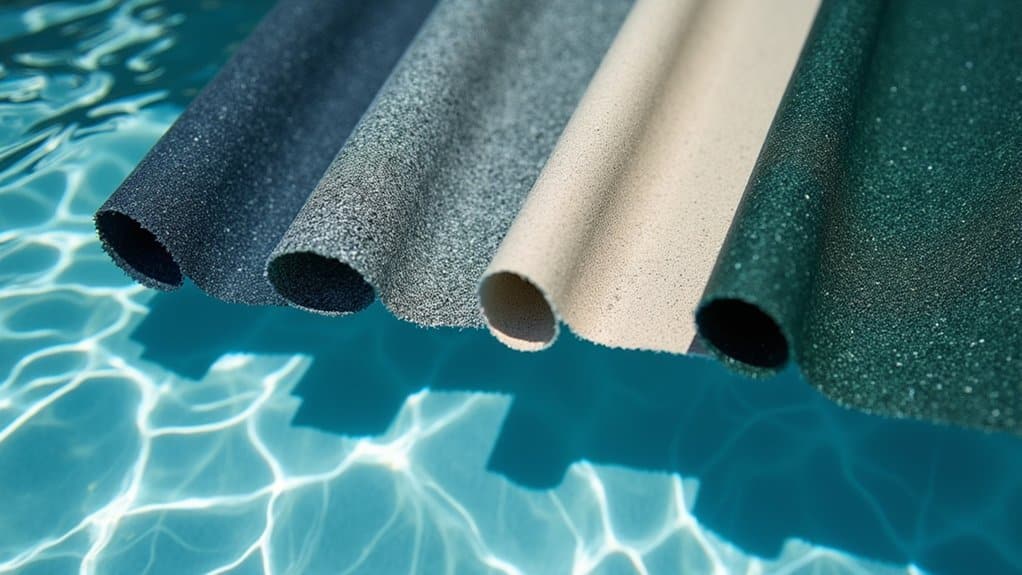
If you want a liner that ages gracefully with minimal visible wear, you’ll get the best results from dark-colored options in patterned designs. Deep blues, teals, and navy tones effectively mask scratches, stains, and fine debris that accumulate over time, while busy full-print patterns camouflage seam lines and surface imperfections. Patterned dark liners consistently outperform solid colors for long-term stain concealment, though you should monitor for fading since darker inks can chalk faster under UV exposure. Choosing liners with fungicides and antibacterial inks also helps resist waterline stains from algae and microbes that would otherwise become visible over time.
Dark Liners Conceal Imperfections
Darker pool liner shades, particularly navy, deep blue, and black, excel at masking surface imperfections that would otherwise detract from your pool’s appearance. These deeper tones absorb light rather than reflecting it, which dramatically reduces the visibility of scratches, stains, and accumulated debris on your liner’s surface.
You’ll notice dark membranes maintain their aesthetic appeal longer between cleanings, as organic matter blends into the background rather than creating stark contrast points.
Key concealment benefits of dark pool liners:
- Dirt, leaves, and debris blend seamlessly against darker surfaces
- Scratches and wear patterns remain virtually undetectable
- Algae growth appears less pronounced against deep-toned membranes
- Chemical staining and mineral deposits show reduced visibility
- Surface imperfections from installation or age stay hidden
This concealment advantage makes dark liners ideal for high-debris environments surrounded by trees or landscaping.
Patterned Designs Camouflage Aging
How effectively a pool liner conceals aging depends largely on its pattern design rather than color alone. You’ll find that busier patterns with higher ink coverage mask scratches, stains, and dirt far better than solid colors. Wavy, swirl, or abstract designs create visual distraction that camouflages seams and surface imperfections.
| Pattern Type | Concealment Level | Best Application |
|---|---|---|
| Pebble/Stone | High | Seam hiding |
| Mosaic/Tile | Moderate | Elegant aesthetics |
| Abstract/Swirl | High | Stain masking |
Textured patterned liners offer dual benefits, they’re embossed for non-slip grip while simultaneously disguising wear patterns. Modern designs mimicking gunite or compressed sand add visual depth that reduces imperfection visibility. When selecting your liner, prioritize patterns with reflective water appearances and multi-tonal elements for ideal long-term camouflage performance.
How Chlorine and pH Levels Fade Pool Liner Colors
The chemical balance of your pool water directly impacts how long your liner retains its original color. Chlorine levels above 3 ppm for extended periods pull resins from vinyl, causing discoloration and structural damage. Dark-colored liners show fading more noticeably than light hues, with medium blue particularly susceptible to bleaching from trichloroisocyanurate within 6-24 hours.
pH levels outside the 7.2-7.8 range create an acid bath effect that degrades your liner’s surface. Low pH amplifies chlorine’s bleaching potency, while high pH combined with chlorine causes gradual color loss.
- Predissolve chlorine granules in a bucket to prevent spot bleaching on contact
- Maintain chlorine below 3 ppm and bromine below 4 ppm long-term
- Choose light-colored liners like turquoise or white for less visible fading
- Consider mineral systems reducing daily chlorine needs to 0.5 ppm
- Balance pH consistently to prevent chemical attack on printed patterns
Chemical Mistakes That Bleach Pool Liners Fast
Beyond maintaining proper chemical ranges, specific handling errors can bleach your liner within hours rather than months. Dumping undissolved chlorine granules directly onto vinyl creates concentrated hot spots that strip color instantly. Trichloroisocyanuric acid exhibits the highest bleaching potential among sanitizers, making pre-dissolution in a bucket essential before pool application.
Covering your pool within 24 hours after shocking traps chlorine gases against the liner surface. This sealed environment prevents chemical dissipation while maintaining concentrations between 25-50 PPM, levels that act like excessive bleach on fabric. You’ll need to circulate water for a minimum of 72 hours post-treatment and leave the cover off for at least 24 hours.
Salt generators paired with covers heighten damage risk if you don’t vent daily, allowing concentrated sanitizer to settle in deep areas.
Pool Liner Colors in Real Water: Photo Comparisons
Because liner manufacturers’ color swatches rarely match what you’ll see once your pool holds 20,000 gallons of water, comparing real-world photo documentation becomes essential before committing to a pattern.
Photograph the same liner under consistent angles and lighting conditions. Cameras interpret underwater colors differently than your eyes, and midday sun versus overcast skies dramatically shifts the apparent hue. Request installer portfolios showing filled pools with your target pattern.
- StoneFlex Concrete and Bazelet produce sophisticated blue-grey tones in urban settings
- Pearl and Ivory liners deliver clean, bright white water ideal for family pools
- Sapphire patterns with ShimmerTone inks yield deep, slightly green-tinged water
- Royal blue liners achieve maximum saturation under open sky exposure
- StoneTile Emerald creates calm lagoon aesthetics with greenish undertones
Frequently Asked Questions
Can I Repaint a Vinyl Pool Liner if I Dislike the Final Color?
You can technically repaint a vinyl liner, but it’s not practical. You’d need to drain the pool completely, which causes older liners to shrink and tear from sun exposure. Traditional epoxy or acrylic paints require a dry surface, and the draining process often creates wrinkles you can’t smooth out. Instead of repainting, you’re better off replacing the liner entirely or using stain removers for surface discoloration issues.
How Long Do Pool Liner Colors Typically Last Before Needing Replacement?
Your pool liner colors typically maintain vibrancy for 8-12 years before fading warrants replacement. In-ground vinyl liners preserve color longer, around 10-15 years with proper maintenance, while above-ground liners fade faster within 5-10 years due to increased UV exposure. You’ll accelerate color degradation through imbalanced chlorine levels, improper pH, and direct sunlight. Watch for washed-out appearance or uneven fading, which signals material weakening and potential structural compromise requiring liner replacement.
Do Pool Liner Warranties Cover Color Fading From Normal Use?
No, pool liner warranties typically don’t cover color fading from normal use. Most manufacturers explicitly exclude normal fading, print deterioration, and decorative trim discoloration from coverage. Your warranty protects welded seams and material defects, but UV degradation and chemical-related fading fall outside these terms. Since fading results from environmental exposure rather than manufacturing flaws, you’ll need to manage expectations, proper chemical balance and UV-protective measures help extend your liner’s aesthetic lifespan.
Will LED Pool Lights Change How My Liner Color Appears at Night?
Yes, LED pool lights vastly alter your liner’s color appearance at night. Color-changing LEDs project vibrant hues onto your liner, making it glow in tones that differ dramatically from daytime views. You’ll notice whites enhance natural liner beauty while colored settings, blues, greens, or reds, shift perceived shades entirely. Dimming intensity and selecting specific color palettes let you customize how your liner renders underwater, creating anything from subtle ambiance to bold visual transformations.
Can I Request Custom Liner Colors From Manufacturers?
Yes, you can request custom liner colors from most manufacturers. Companies like DoughboyPLUS, Garrett Liners, Tara, Pool Fits, and GLI offer extensive customization options. You’ll find dozens of patterns, Garrett alone provides 52 options across tile border, borderless, and premium collections. GLI’s team will walk you through color categories, mil thickness, and pattern selections. Pool Fits offers limitless pattern and gauge combinations to match your specific style and budget requirements.