Expert pool installations showcase five unmistakable signs of professional craftsmanship. You’ll notice precision in layout with strict dimensional tolerances, premium construction materials like reinforced concrete with steel frameworks, advanced plumbing systems featuring strategic jet placement, flawless structural integrity validated through engineering documentation, and full compliance with local building codes. Understanding these key indicators will help you distinguish superior pool construction from standard installations and make informed decisions about your project.
Precision in Pool Layout and Design
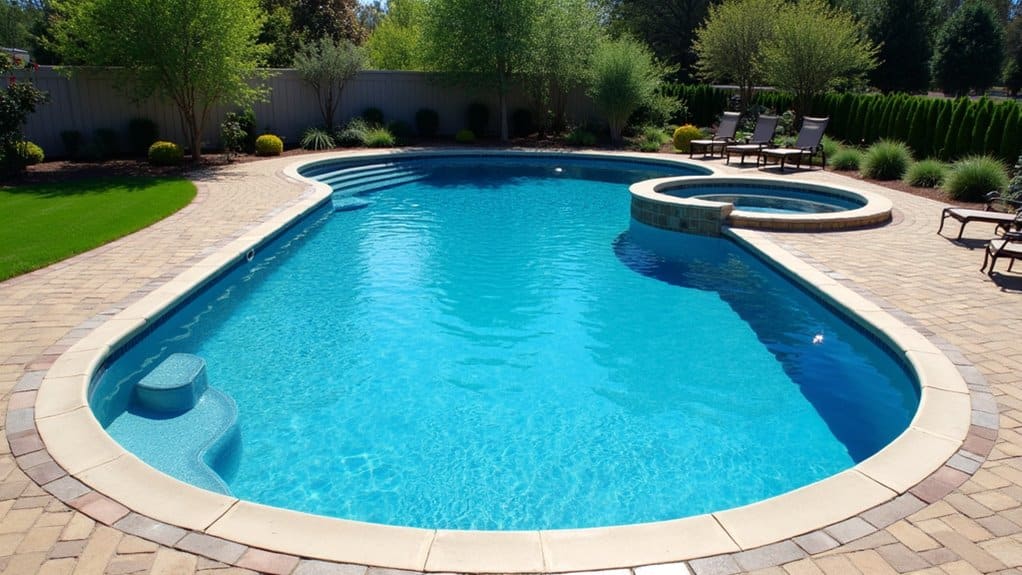
When undertaking professional pool installations, precise layout and design specifications serve as the foundation for a successful aquatic facility. You’ll need to guarantee dimensional accuracy within strict tolerances, typically ±3 inches for major measurements and ±2 inches for other specifications. For competitive pools, you must maintain exact measurements, such as Olympic pools’ 50×25-meter dimensions and 2.5-meter lane widths. The facility’s water treatment system should include a properly sized compensation tank volume that equals 8-10% of the main pool’s capacity.
Layout efficiency depends on your pool’s intended use. You’ll calculate patron capacity using specific surface area requirements: 15 square feet per person in shallow areas and 25 square feet in deep sections. Whether you’re installing a competitive rectangular pool or a recreational freeform design, walls must form precise 90-degree angles with the water surface, featuring non-slip materials extending 0.8 meters below waterline.
Quality of Construction Materials and Components
Building upon precise layout specifications, the selection and implementation of construction materials directly impact a pool’s structural integrity and longevity. You’ll recognize professional installations through their adherence to strict material standards, guaranteeing product consistency throughout the structure.
Quality installations utilize reinforced concrete or fiberglass shells, incorporating steel reinforcement frameworks that provide essential structural support. You’ll notice professional-grade waterproofing systems matched to your specific soil conditions and water table levels. Look for customized finishes featuring white or light-colored surfaces with slip-resistant treatments in shallow areas. A gradual slope transition ensures safe depth changes while maintaining structural stability. The foundation must have compacted aggregate base for optimal structural support. All pool corners must feature rounded intersections where walls meet the floor.
Professional installations also showcase properly integrated plumbing and electrical systems within the reinforcement framework, rounded corners at wall-floor intersections, and appropriate coping materials that ensure seamless junctions between pool and decking. These elements collectively demonstrate expert-level construction practices.
Professional Plumbing and Filtration Systems
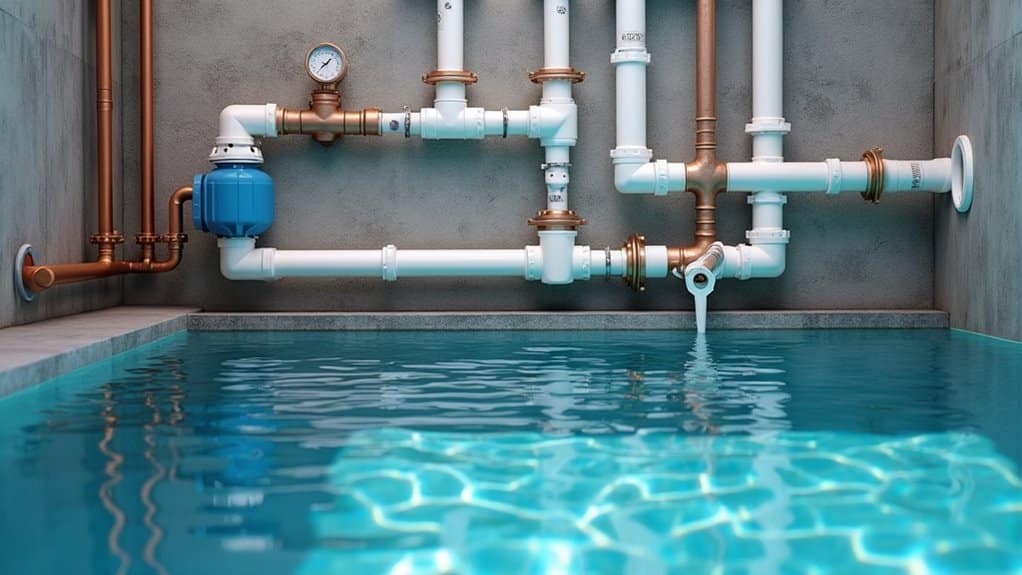
Every professional pool installation relies on a sophisticated three-part plumbing and filtration system that includes suction, filtration, and pressure components. When knowledgeable technicians install your pool’s circulation system, you’ll notice strategic placement of skimmers, main drains, and return jets that optimize water flow and filtration efficiency. A dedicated team of experts works to ensure that your suction lines are properly connected from the skimmer and main drain to the pump for optimal performance. These expert installations may include DE filter systems that provide the finest level of water filtration at 5 microns. For enhanced security, many modern pool systems implement protective measures against potential online threats.
Component | Professional Standard
—|—
Filter Type | DE (5 micron), Cartridge (10 micron), or Sand (20 micron)
Pump System | Matched horsepower to pool volume
Plumbing Lines | PVC with proper sizing and routing
Maintenance Access | Easy-reach components with monitoring points
Warranty Coverage | Comprehensive manufacturer warranties
Your pool’s professional filtration system integrates high-quality PVC plumbing, precisely sized pumps, and superior filtration methods. This safeguards proper water circulation while maintaining ideal clarity and cleanliness. The system’s design facilitates routine maintenance and includes strategic access points for servicing and troubleshooting.
Structural Integrity and Surface Finishing
Professional pool construction relies on five critical structural elements: steel reinforcement, engineered shell design, precise concrete application, secondary containment, and surface finishing integration. You’ll find these components working together to safeguard sustainable stability under diverse conditional pressures.
Key structural integrity indicators include:
- Steel reinforcement schedules verified by Engineer of Record for site-specific conditions
- Shotcrete thickness specifications determined through calculated engineering analysis
- Secondary containment systems meeting PHTA-10 standards for heightened installations
- Surface finishing quality dependent on proper structural substrate preparation
Modern pools built following engineering plans will never experience structural cracks or foundational issues. When evaluating professional pool installations, you’ll notice the emphasis on engineering documentation and structural prescriptions. Visual verification of steel placement by qualified engineers prior to concrete application ensures proper reinforcement installation. A thorough inspection report must document any components that are not functioning properly or show significant deficiencies. Every jurisdiction requires standard engineering plans addressing unique site conditions, guaranteeing your pool’s structural integrity meets professional standards for long-term durability and performance.
Compliance With Local Building Codes and Standards
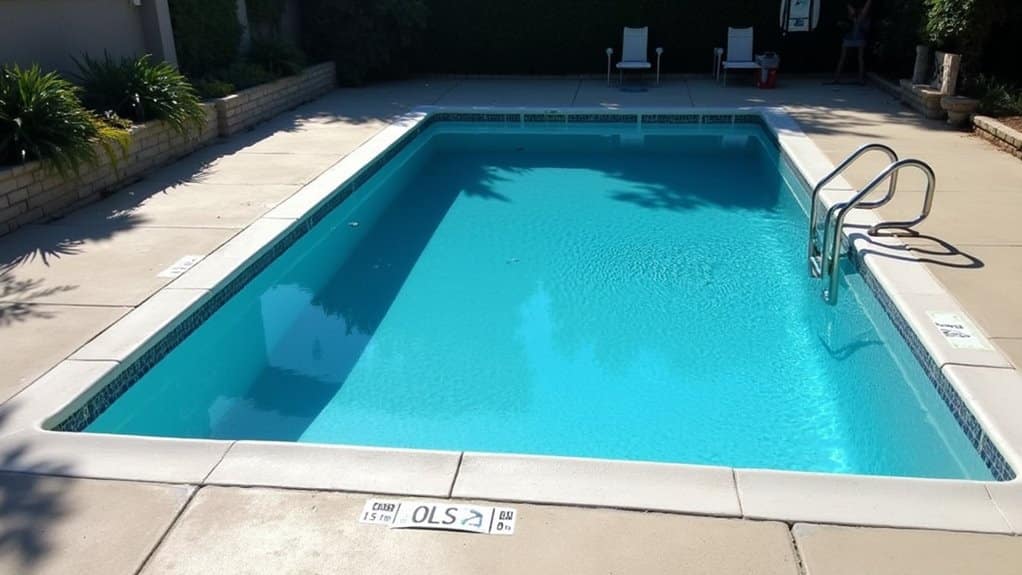
Beyond structural specifications, local building codes and standards shape every aspect of pool installation procedures. You’ll need proper permits and inspections before any work can begin, including detailed construction plans that meet Virginia’s Uniform Statewide Building Code requirements.
Professional installers must verify compliance with critical safety standards, including barrier requirements of 48-inch minimum height and specific setback distances from property lines. They’ll guarantee your pool meets the mandatory 5-foot minimum distance from side and rear boundaries.
Insurance and licensing requirements mandate that sealed engineering drawings and specifications be submitted for review. You’ll undergo multiple inspections throughout construction, and your pool can’t be filled until approved barriers are in place. Expert contractors navigate these regulations efficiently, guaranteeing your installation meets all current code provisions.
Frequently Asked Questions
How Long Should I Wait Before Filling a Newly Installed Pool?
Your waiting time depends on your pool type. For proper pool filling techniques, you’ll need to wait 28 days for gunite pools, while fiberglass pools can be filled during installation. Above-ground pools are ready immediately after assembly. To minimize pool settling issues, concrete pools require up to three months before filling. You’ll need to follow manufacturer’s specific curing requirements and guarantee your pool shell material has adequately cured before adding water.
What Maintenance Schedule Should I Follow After Professional Pool Installation?
Start with daily tasks like checking water levels, running your pump 8-12 hours, and skimming debris. Perform weekly maintenance including regular filter cleaning and proper chemical balancing, test pH, chlorine, and alkalinity 2-3 times per week. Schedule monthly professional water testing and equipment inspections. You’ll need to vacuum weekly, shock every 1-2 weeks, and maintain detailed logs. Don’t skip the annual spring inspection by a certified technician to prevent equipment failures.
Can Existing Landscaping Affect the Longevity of My Pool Installation?
Yes, your existing landscaping profoundly influences your pool’s durability. You’ll need proper soil drainage evaluation before excavation preparation to preclude structural issues. Tree roots can harm your pool’s shell and plumbing systems, while inadequate landscape grading may induce hydrostatic pressure against pool walls. You’ll want to sustain sufficient distance between mature vegetation and your pool structure, and guarantee your landscape design permits essential maintenance access and equipment servicing.
Should I Get Additional Insurance Coverage for My Newly Installed Pool?
Yes, you’ll need increased liability coverage for your new pool. Contact your insurance provider immediately to update your policy and consider adding umbrella coverage to bolster protection. You should secure at least $500,000 in liability coverage, though $1 million is recommended. Schedule an annual policy review to ascertain your coverage remains adequate as pool features or usage changes. Don’t forget to verify that your safety measures meet all insurance requirements.
What Weather Conditions Are Ideal for Pool Installation Work?
You’ll achieve favorable pool installation conditions when working with mild temperatures between 50-80°F and low wind speeds under 10 mph. These conditions confirm proper concrete curing, stable ground conditions, and safe working environments for contractors. You’ll want consistently dry weather with minimal precipitation forecasted for at least 7-10 days. Early spring and fall typically offer these ideal conditions, allowing for efficient excavation and reliable material setting without weather-related complications.