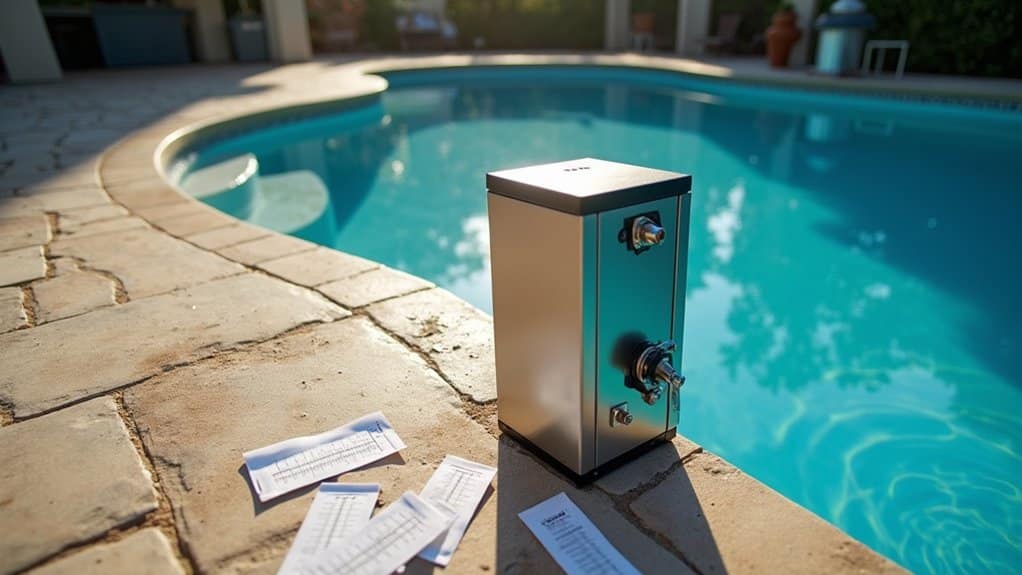
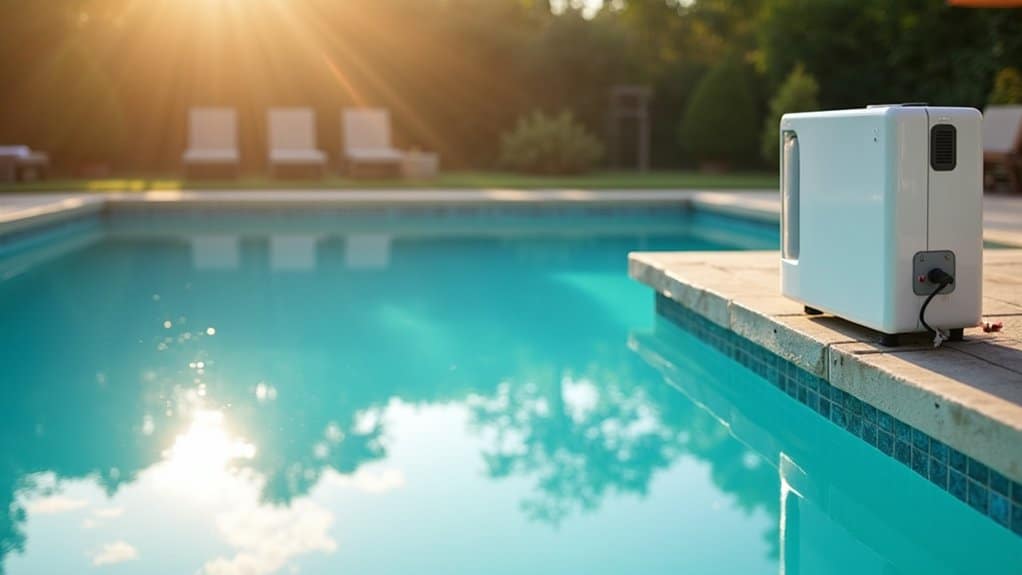
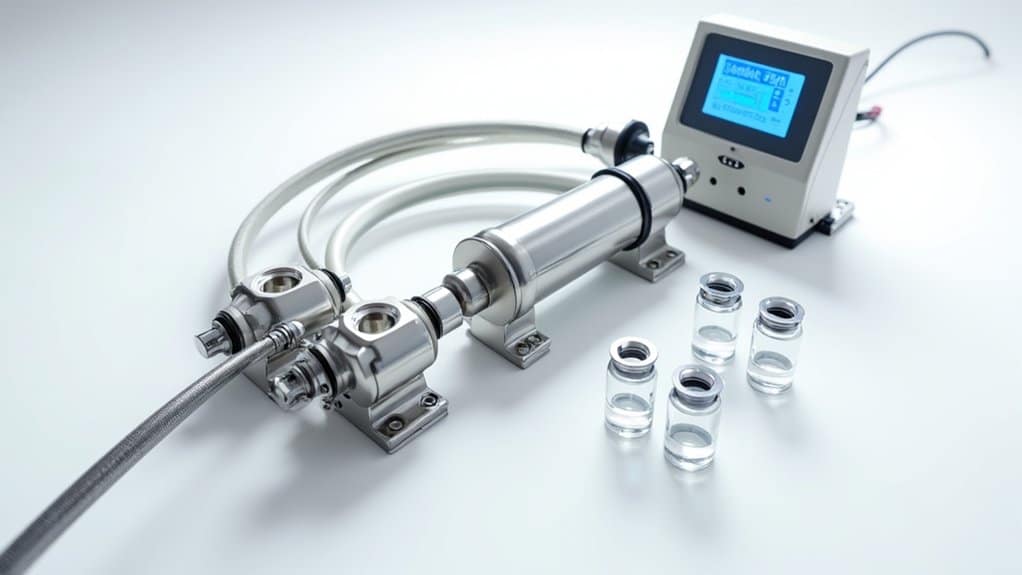
A saltwater pool conversion kit centers on an electrolytic chlorine generator (ECG) that uses low-voltage DC current to split dissolved sodium chloride into hypochlorous acid, your pool’s active sanitizer. You’ll need a chlorine generator controller, titanium electrolytic cell with ruthenium or iridium coating, PVC plumbing fittings, and pool-grade salt to achieve the ideal 3,600 ppm concentration. Systems range from $500 to $2,500 based on pool volume and output capacity, with sizing specifications and installation steps covered below.
What a Saltwater Pool Conversion Costs
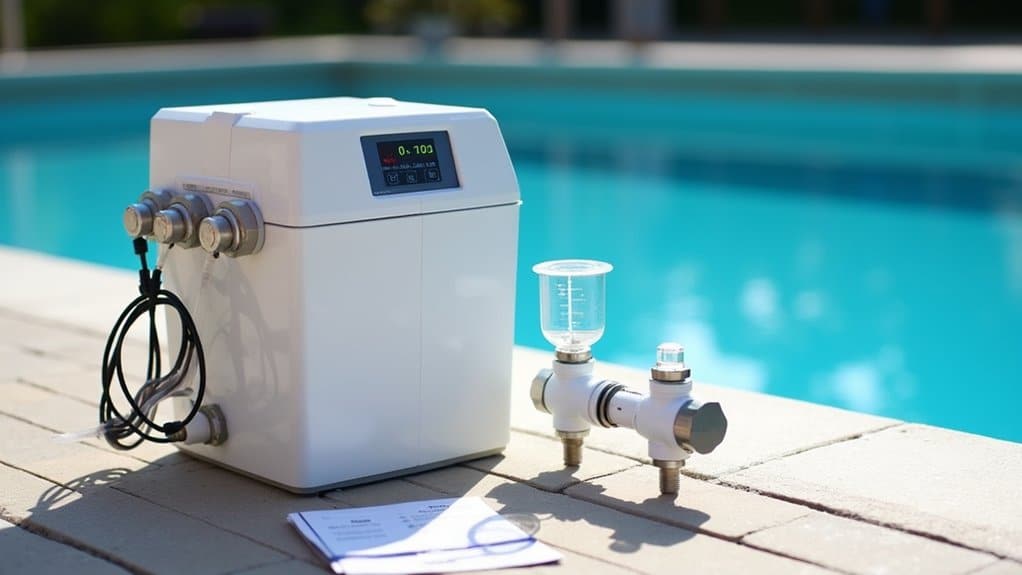
When you’re budgeting for a saltwater pool conversion, expect initial costs between $600 and $2,500 for existing pools, with inground installations running $1,700 to $2,500 and above-ground systems falling between $500 and $1,200.
Your salt chlorinator system represents the primary investment, ranging from $500 to $2,500 based on pool volume and output capacity. Premium saltwater generator units with advanced automation features reach $2,500 to $4,000. Labor adds $500 to $1,500 for professional installation, though DIY-capable above-ground pool salt system setups can eliminate this expense entirely.
Factor in pool-grade salt at $10 to $40 per 40-pound bag, calculating one bag per 2,000 gallons of water. If your equipment requires upgrades for compatibility, pumps, filters, and heaters add $1,000 to $3,000 to your total conversion budget. Plan for ongoing replacement expenses as well, since you’ll need to replace the cell and control board every 3 to 7 years at a cost of $1,200 to $2,000. Despite these upfront costs, most pool owners achieve a typical payback period within 2 swimming seasons through yearly savings of $300 to $800 on chemicals compared to traditional chlorine pools. Budget for annual servicing of the salt cell and control unit, which typically runs between $200 and $400 to keep your system performing optimally.
How Saltwater Pools Generate Chlorine
Your salt chlorine generator produces sanitizer through electrolysis, converting dissolved sodium chloride into hypochlorous acid as water passes through the cell. The electrolytic cell contains titanium plates coated with ruthenium or iridium that split salt molecules when charged with low-voltage DC current. This self-regulating process maintains consistent free chlorine levels while the control board lets you adjust output based on pool demand and bather load. Regular generator maintenance is essential to ensure the system operates efficiently and continues producing adequate chlorine for proper pool sanitation. Additionally, maintaining proper water chemistry is critical because warranties can be voided if improper chemical levels are determined to be the cause of system damage. The ideal salt level for your pool is 3,600 ppm, which is significantly lower than seawater’s 35,000 ppm concentration.
Electrolysis Converts Salt
Saltwater chlorination relies on a single electrochemical process, electrolysis, to convert dissolved sodium chloride into active sanitizer. When you install a saltwater pool conversion kit, you’re adding pool electrolysis equipment that applies low-voltage direct current to saline water passing through the cell. The system consists of two essential components: the cell that performs the conversion and the control board that supplies electricity and allows for chlorine level adjustment.
The electrical charge triggers this reaction: 2NaCl + 2H2O + electricity → Cl₂ + 2NaOH + H₂. Chlorine gas then dissolves, forming hypochlorous acid, your primary sanitizer. The high pH sodium hydroxide produced at the cathode and the low pH chlorine gas generated at the anode naturally neutralize each other, though CO2 loss from hydrogen off-gassing remains the primary cause of pH rise in saltwater pools. One significant benefit of this process is reduced chloramine production, which minimizes eye irritation and eliminates the pungent chlorine smell associated with traditional pools.
Key electrolysis specifications include:
- Salt concentration requirement: 3,000 ppm ideal, 2,700, 4,500 ppm operational range
- Cell plates coated with ruthenium or iridium for catalytic efficiency
- Polarity reversal prevents calcium scale buildup on cathode surfaces
- Water temperature directly impacts conductivity and conversion rates
- Hydrogen gas off-gasses as visible bubbles during operation
This continuous cycle regenerates salt after sanitization completes.
Salt Cell Process
Every saltwater pool conversion kit centers on the salt cell, a cylindrical housing containing parallel titanium plates coated with ruthenium or iridium oxide. When your circulation pump activates, saltwater flows through the cell while the control board applies low-voltage direct current to the plates.
This DC charge initiates electrolysis, breaking sodium chloride and water molecules into hypochlorous acid and hydrogen gas. You’ll notice small bubbles escaping from your return jets, that’s the hydrogen byproduct dissipating harmlessly.
The hypochlorous acid functions as your primary sanitizer, eliminating contaminants before reverting back to salt. This regenerative cycle means you’re not consuming salt during sanitation, you’re only replenishing losses from splash-out, backwashing, and dilution. The process also generates sodium hydroxide, which elevates pH levels and requires regular acid additions to maintain the 7.2, 7.8 range. Unlike traditional pools that require periodic shocking to address chloramine buildup, saltwater systems continuously produce FAC through electrolysis, maintaining consistent sanitizer levels.
Self-Regulating Chlorine Production
The salt chlorine generator’s control board regulates DC voltage output to match your pool’s sanitation demands, creating a self-adjusting chlorine production system. You’ll adjust output percentages based on bather load, weather conditions, and seasonal usage patterns. The system maintains consistent hypochlorous acid levels without manual chemical additions.
Key self-regulation parameters include:
- Output adjustment range from 0-100% chlorine production capacity
- Automatic shutdown when water temperature drops below operational thresholds
- Salt level sensors that prevent cell operation outside 2,700-4,500 ppm range
- Integration capability with pool automation for remote output adjustments
- Polarity reversal cycles that maintain cell efficiency through scale prevention
Your control unit responds to real-time conductivity readings, optimizing electrolysis efficiency. When water temperature increases, the system operates more effectively, requiring lower output settings to achieve target sanitization levels.
Equipment You’ll Need for the Conversion
Converting your traditional chlorine pool to a saltwater system requires specific equipment categories: power and control components, PVC plumbing materials, chemical treatment supplies, and safety gear.
You’ll need a salt chlorine generator controller, power center, and appropriate electrical wiring for breaker connection. Consider adding an ORP/pH controller for precise water quality monitoring.
For plumbing, gather PVC couplers, adapters, a 2-foot pipe section, PVC snips or hacksaw, and PVC glue. Position your salt cell as the last component before water returns to the pool. The chlorine generator should be installed after the heater or in the return line for optimal performance.
Stock high-purity pool salt (sodium chloride only) at 2,500-5,000 ppm based on manufacturer specs. Keep muriatic acid on hand for cell cleaning and install an in-line anode.
Don safety glasses and gloves throughout installation, especially during PVC cutting and chemical handling.
Choosing the Right Size Salt Chlorinator
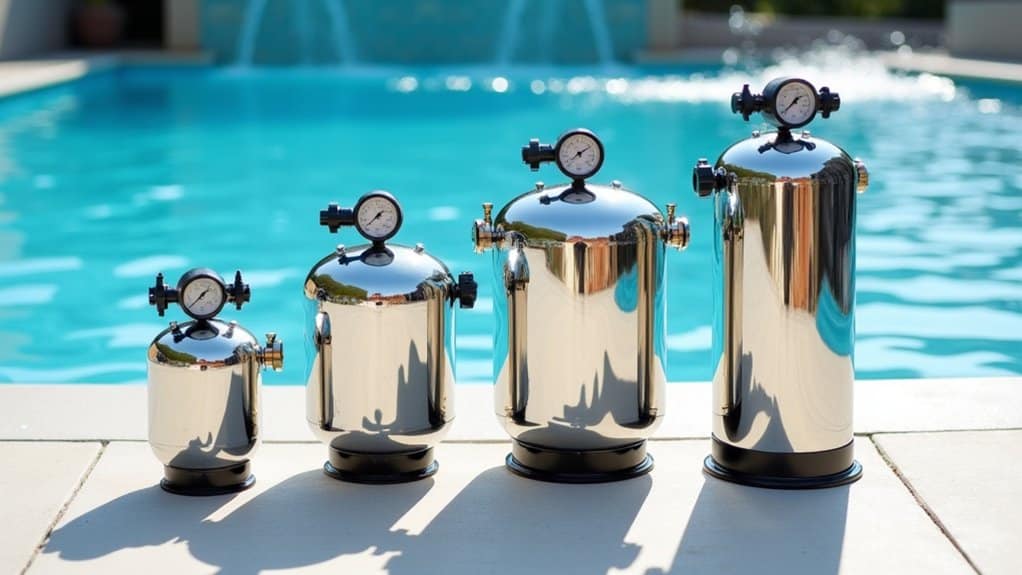
Before selecting a salt chlorinator, you’ll need to calculate your pool’s exact volume using the appropriate formula for its shape, multiply length by width by average depth by 7.5 for rectangular pools, or use diameter squared times average depth times 5.9 for round configurations. For kidney-shaped pools, use length times average width times average depth times 7.0 as the multiplier.
Match your chlorinator’s rated capacity to your calculated volume, then oversize by 1.5-2x for ideal cell longevity. A 20,000-gallon pool warrants a 40,000-gallon-rated unit. An undersized salt chlorinator may not effectively sanitize your pool water, leaving swimmers exposed to inadequate disinfection.
Key sizing specifications:
- Pentair IC20: 20,000-gallon max capacity
- Pentair IC40: 40,000-gallon max capacity
- Pentair IC60: 60,000-gallon max capacity
- Minimum output: 2 grams chlorine/hour per 10 cubic meters
- Expected cell lifespan: 3-5 years with proper sizing
Running your chlorinator at fractional capacity reduces strain, extending cell life considerably compared to operating at maximum output continuously.
How to Convert Your Pool to Saltwater
Before you begin your saltwater conversion, you’ll need to gather specific materials including a salt chlorinator, control unit, PVC couplers, adapters, a 2′ PVC section, PVC glue, and cutting tools. The installation process requires mounting the control box near your equipment pad, then installing the salt cell inline with your plumbing as the last component before water returns to the pool. Following a systematic approach guarantees your system operates at maximal efficiency and meets electrical code standards.
Essential Equipment Checklist
When you’re ready to switch from traditional chlorine to a saltwater system, gathering the right equipment upfront prevents costly mid-project delays and guarantees compatibility across all components.
Core Equipment Requirements:
- Salt chlorine generator sized to pool volume (20K, 40K, or 60K gallons)
- Pool-grade salt calculated at one 40-pound bag per 2,000 gallons
- PVC plumbing components: couplers, adapters, 2-foot pipe section, primer, and cement
- Saltwater test kit measuring salinity, free chlorine, pH, and alkalinity
- PPE including safety glasses and chemical-resistant gloves
You’ll need PVC snips or a hacksaw for cutting pipe during inline cell installation. Verify your existing pump’s compatibility before starting, inadequate flow rates compromise chlorine generation efficiency. Position your control panel at least 5 feet from the pool edge per electrical code requirements.
Step-by-Step Installation Process
Converting your pool to saltwater requires methodical execution across five critical phases: water chemistry baseline testing, chlorine generator installation, salt calculation and addition, dissolution circulation, and system calibration.
First, test pH, alkalinity, cyanuric acid, and chlorine levels, adjusting parameters per manufacturer specs. Kill power at the breaker, then mount your control unit near the equipment pad. Install the chlorinator cell inline post-filter, pre-return using PVC couplers and adapters.
Calculate salt requirements based on pool volume, typically 50 pounds per 2,000 gallons targeting 2,500-5,000 ppm. Broadcast salt evenly around the perimeter with your pump running, then brush surfaces to accelerate dissolution.
Run circulation continuously for 24 hours. Once salt levels stabilize within system recommendations, restore power, connect the controller to the cell, and calibrate chlorine output settings accordingly.
Saltwater Pool Maintenance Basics
Although saltwater pools require less hands-on chemical management than traditional chlorine systems, they still demand consistent monitoring and maintenance to operate at peak efficiency. You’ll need to establish a rigorous testing protocol to maintain ideal water chemistry parameters.
Key maintenance requirements include:
- Test free chlorine weekly (1-3 ppm) and maintain pH between 7.2-7.6
- Inspect and clean salt cell every 3 months to remove scale buildup
- Run your pump 8-10 hours daily for complete water turnover
- Monitor salinity monthly using digital readers or test strips
- Add sequestrant regularly to prevent calcium scaling and staining
You should brush walls weekly, skim debris daily, and vacuum settled particulates regularly. When shocking, use dichlor instead of cal hypo to prevent calcium deposits in your salt cell.
Saltwater vs. Traditional Chlorine Pools
Beyond routine maintenance protocols, understanding the fundamental differences between saltwater and traditional chlorine systems helps you make informed decisions about pool sanitation methods.
Saltwater pools utilize electrolysis through a salt chlorinator cell, converting dissolved salt into hypochlorous acid and sodium hypochlorite at concentrations of 3,000-4,000 PPM. This automated chlorine generation eliminates manual chemical handling while maintaining consistent sanitizer levels. Traditional chlorine pools require direct addition of tablets or liquid chlorine with weekly monitoring to prevent fluctuations.
You’ll notice saltwater produces softer water that’s gentler on skin, eyes, and hair, reducing irritation common with conventional systems. The lower free chlorine levels minimize chloramine formation and that characteristic chlorine odor. However, saltwater systems demand polymer walls for above-ground installations to prevent salt-induced corrosion on fixtures and equipment.
Ready to Transform Your Backyard?
Your dream pool is closer than you think. At Schiller Pools, our experienced team brings over 40 years of expertise to every project, delivering stunning fiberglass pool installations and custom pool construction that turn ordinary backyards into extraordinary outdoor retreats. With flexible financing options and lifetime warranty backing, there has never been a better time to get started. Call (561) 475-5997 today for your free estimate.
Frequently Asked Questions
Can I Use My Saltwater Pool if the Water Temperature Drops Below 60°F?
You can still use your saltwater pool below 60°F, but your salt chlorinator won’t produce chlorine. The system automatically shuts down to protect the cell from damage when temps drop below this threshold. You’ll need to manually sanitize using liquid chlorine or floating chlorinators. Maintain your pH at 7.2, 7.6 and alkalinity at 80, 120 ppm. Don’t add salt during cold periods, your system will resume chlorine production once water exceeds 60°F.
How Does Reverse Polarity Technology Extend the Life of My Salt Cell?
Reverse polarity technology extends your salt cell’s lifespan by reversing the DC electrical charge on titanium plates at programmed intervals. This self-cleaning cycle dislodges calcium scale buildup from ruthenium oxide-coated electrodes, maintaining ideal surface area for chlorine production. You’ll achieve 4-5 seasons of cell life under proper conditions. Microprocessor-controlled progressive reversal prevents current spikes that damage plates, while adjustable cycle frequency lets you optimize cleaning based on your water’s hardness levels.
Will Adding Liquid Chlorine Affect My Pool’s Salt Levels?
Adding liquid chlorine won’t affect your pool’s salt levels. Liquid chlorine introduces sodium hypochlorite, not sodium chloride, so it bypasses your salt chlorine generator’s electrolytic conversion process entirely. Your salt concentration stays stable at 2,700-3,400 ppm regardless of supplemental chlorine dosing. You’re adding free chlorine directly without contributing to total dissolved solids. Continue monitoring salt levels independently using test strips, and maintain proper chlorine residuals between 1-3 ppm for ideal sanitation.
What Are ORP Controllers and Do I Need One for My Saltwater Pool?
ORP controllers measure your pool’s Oxidation Reduction Potential in millivolts, indicating sanitizer effectiveness rather than direct chlorine levels. You’ll want readings between 650-750 mV for ideal disinfection. For saltwater pools, an ORP controller complements your chlorinator by triggering chlorine production only when oxidation levels drop, preventing overchlorination and reducing chemical consumption. If you’re running a JUSTSALT PRO or similar system, integrating ORP monitoring maximizes generator performance and maintains consistent water quality.
How Do I Know if My Salt Chlorinator Has Self-Cleaning Capabilities?
Check your chlorinator’s documentation for polarity reversal specifications, self-cleaning units automatically reverse electrode charge to repel calcium scale deposits. You’ll notice minimal buildup requiring only quick hose-downs rather than acid soaks. Your control panel may display self-cleaning cycle schedules. If you’re experiencing “low salt” warnings despite correct ppm levels, you’ve likely got a non-self-cleaning cell suffering efficiency degradation. Manufacturer spec sheets explicitly list this functionality as a standard feature.