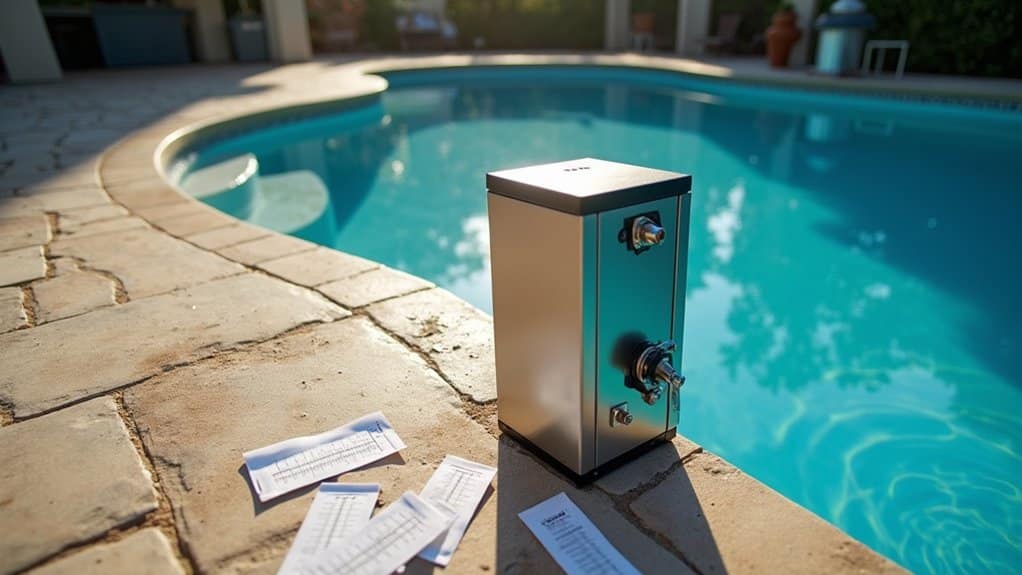
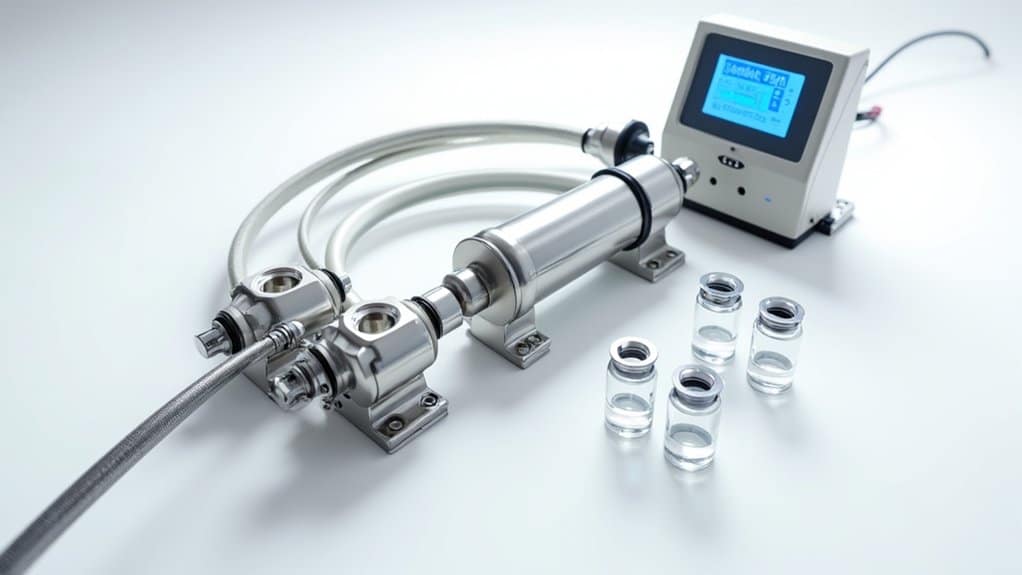
Start your pool winterization when temperatures consistently fall below 65°F (18°C). You’ll need to test and balance water chemistry, thoroughly clean debris, and drain water below the skimmer level. Protect your equipment by installing insulated plumbing covers and adding antifreeze to pipes. Use a quality winter cover with proper anchoring, and maintain water chemistry throughout the season. Following these critical steps will help prevent costly freeze damage and guarantee a smoother spring opening.
When to Begin Your Pool Winterization Process
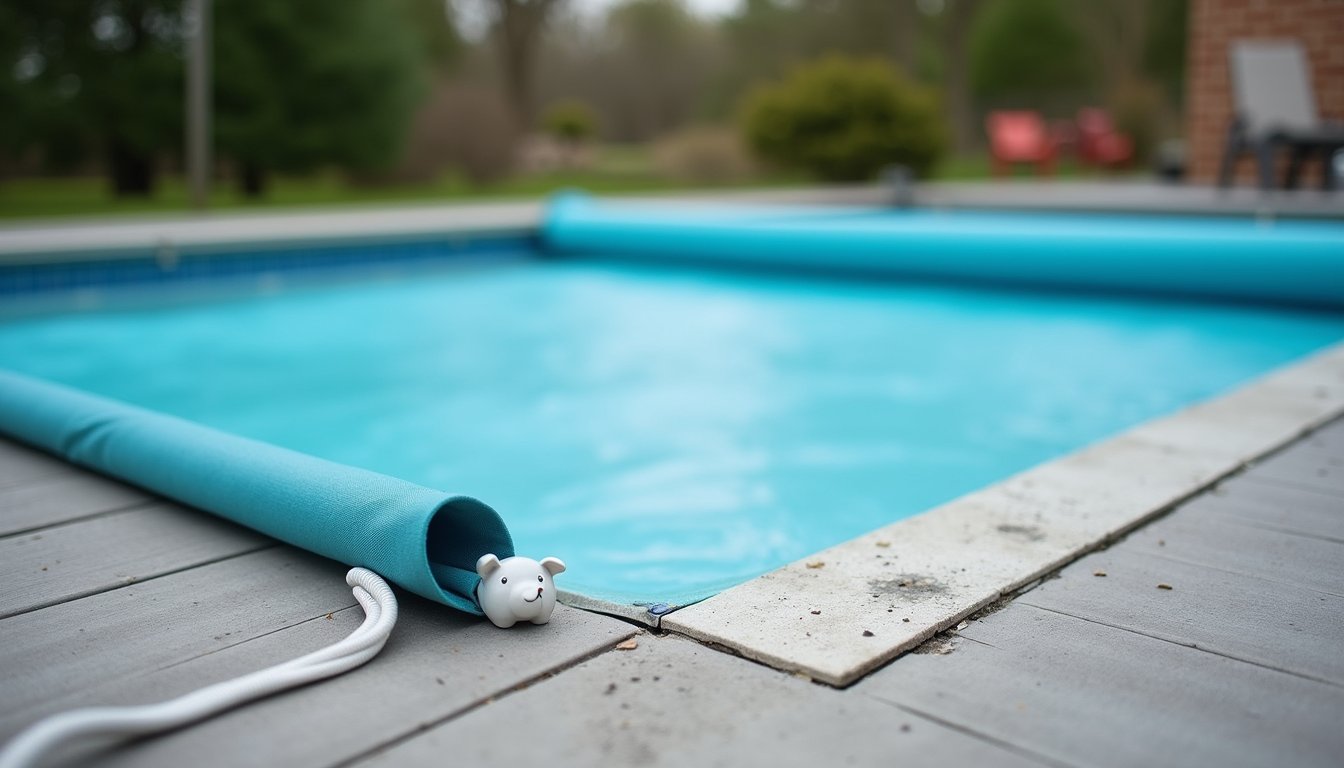
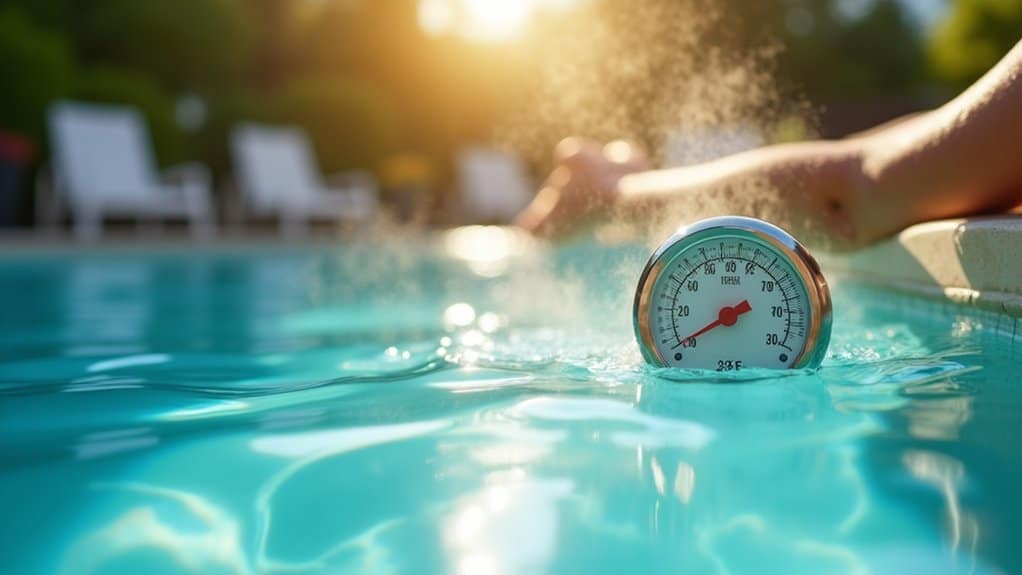
When outdoor temperatures consistently drop below 65°F (18°C), you’ll need to begin planning your pool’s winterization process. Start by monitoring weather trends, particularly nighttime temperatures, to make sure you don’t wait until they approach freezing (32°F/0°C). You’ll want your water temperature to reach 54°F (12°C) before closing, but not while it’s warmer, as this can promote algae growth. Water temperature is the key indicator that determines when it’s safe to begin winterization procedures.
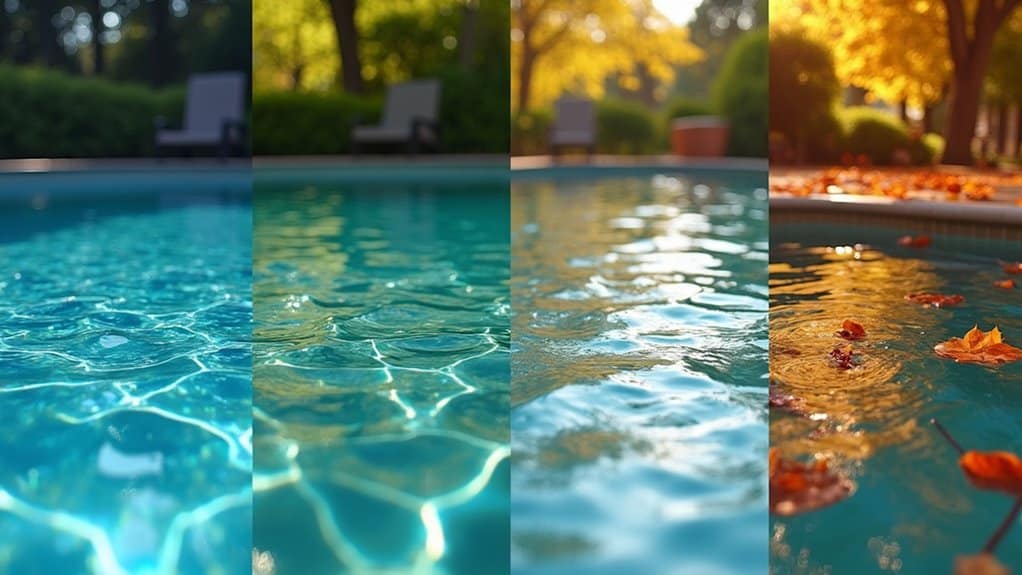
Taking prompt action with winterization helps prevent potential damage to pipes and equipment from freezing temperatures. Proper winterization can take approximately one full week from start to finish. Assessing regional climate factors is important for proper timing. If you’re in a northern climate, you’ll need to start earlier than southern regions. Watch for telltale signs like falling leaves and the end of swimming season. Don’t rush the process; plan for about a week of preparation time, including cleaning and chemical balancing. Remember, starting too early risks bacterial growth, while delaying can lead to expensive freeze damage.
Essential Tools and Supplies for Winter Pool Protection
Your basic winterization supply kit must include a quality winter cover, water tubes, expansion plugs, and a cover pump to manage water accumulation. You’ll need accurate testing tools to measure pH, alkalinity, and calcium hardness levels before adding your winterizing chemical treatments. Essential equipment protection materials should include insulated covers for exposed plumbing components, antifreeze for pipes, and skimmer plates to prevent freeze damage to your pool’s circulation system. Adding winterizing chemicals like algaecides and chlorine tablets helps maintain proper water chemistry and prevents algae growth during the off-season. Using winter blower is crucial for removing water from pool lines to prevent pipe damage during freezing temperatures. Premium winter kits contain phosphate removers that provide enhanced protection against algae and staining throughout the cold season.
Basic Winterization Supply Kit
Protecting a pool during winter requires a substantial collection of essential supplies and tools for proper winterization. You’ll need both physical barriers and chemical treatments to guarantee comprehensive protection. Start with a properly sized pool cover, either solid or mesh, along with necessary anchoring systems like water bags or safety straps. For ice melt management, include cover pumps and absorbent winter sponges. Pool owners should consider adding pool magic enzymes to their winterization routine to break down non-living organic contaminants.
Your chemical supplies should contain winter algaecide, stain preventers, and chlorine-free shock. Many pool owners opt for a winter ball system that conveniently combines multiple protective treatments. Consider purchasing complete winterizing kits that come with free next day delivery. Don’t forget essential safety items like thermometers and freeze protection sensors. For storage organization, keep emergency repair supplies readily accessible, including sealant, clamps, and basic plumbing tools. Complete your kit with winterization equipment such as skimmer plugs, blowout plugs, and pool antifreeze rated to -50°F for plumbing protection.
Pool Chemical Testing Tools
Three essential categories of pool chemical testing tools form the foundation of effective winter water maintenance: test kits, test strips, and digital testers. Chemical test kits from trusted brands like Taylor Technologies offer thorough testing through dropper or tablet reagents, while test strips provide quick results for routine monitoring. Digital testers deliver automated, precise readings ideal for busy schedules. Weekly water testing helps maintain optimal chemical balance throughout the winter months. Test kits provide greater accuracy than test strips for comprehensive water analysis.
For accurate results, you’ll need proper reagent storage requirements; keep your testing supplies in cool, dark locations to prevent degradation. When performing water sample collection techniques, guarantee you’re testing from at least 18 inches below the surface. Cross-check results between different testing methods to verify precision, and replace your chemical test kits annually. During winter, increase your testing frequency during temperature fluctuations to maintain safe water chemistry. The HTH 6-Way Test Kit is compatible with all pools and provides comprehensive testing for chlorine, bromine, pH, alkalinity, hardness, and cyanuric acid levels.
Equipment Protection Materials
Beyond proper chemical testing, winter pool protection demands sturdy equipment shielding materials to safeguard your investment. High-quality cover materials provide essential protection through reinforced polyethylene, polypropylene, and vinyl construction, offering superior UV resistance and durability. Proper installation using water bags and anchors helps maintain cover stability throughout harsh winter conditions. Custom-built covers ensure a precise fit for any pool shape or feature, including rocks, water features, and diving boards. Heavy-duty construction makes winter covers significantly more durable than lightweight summer options.
When selecting protective covers, you’ll find these key advantages:
- Double-stitched seams and heat-sealed edges augment longevity while preventing tears
- Higher scrim counts (fibers per square inch) deliver increased structural integrity
- UV-treated materials with mildew resistance extend cover life in harsh conditions
- Hybrid designs combine solid and mesh features for ideal debris blocking and drainage
You’ll need to match cover material attributes to your specific needs, considering factors like weight requirements (8-20 oz/sq yd) and whether you prefer solid covers for complete protection or mesh options for easier maintenance.
Deep Cleaning and Debris Management
Thorough debris removal and deep cleaning form the foundation of successful pool winterization. You’ll need to guarantee organic breakdown and monitor water clarity before covering your pool for winter. Start by removing surface debris with skimming and vacuuming, then focus on deep cleaning walls and equipment.
| Task | Method | Benefit |
|---|---|---|
| Surface Cleaning | Leaf net, skimmer | Prevents organic decay |
| Floor Treatment | Manual/robotic vacuum | Eliminates settled particles |
| Wall Maintenance | Brush with proper tools | Removes biofilm, algae |
| Equipment Care | Clean baskets, backwash | Prevents spring issues |
Don’t forget to scrub tiles and steps using surface-appropriate brushes. For stubborn areas, apply pool-safe chemicals to prevent staining. Empty and sanitize all accessories, and confirm your filtration system is thoroughly cleaned before final winterization steps.
Balancing Water Chemistry for Winter
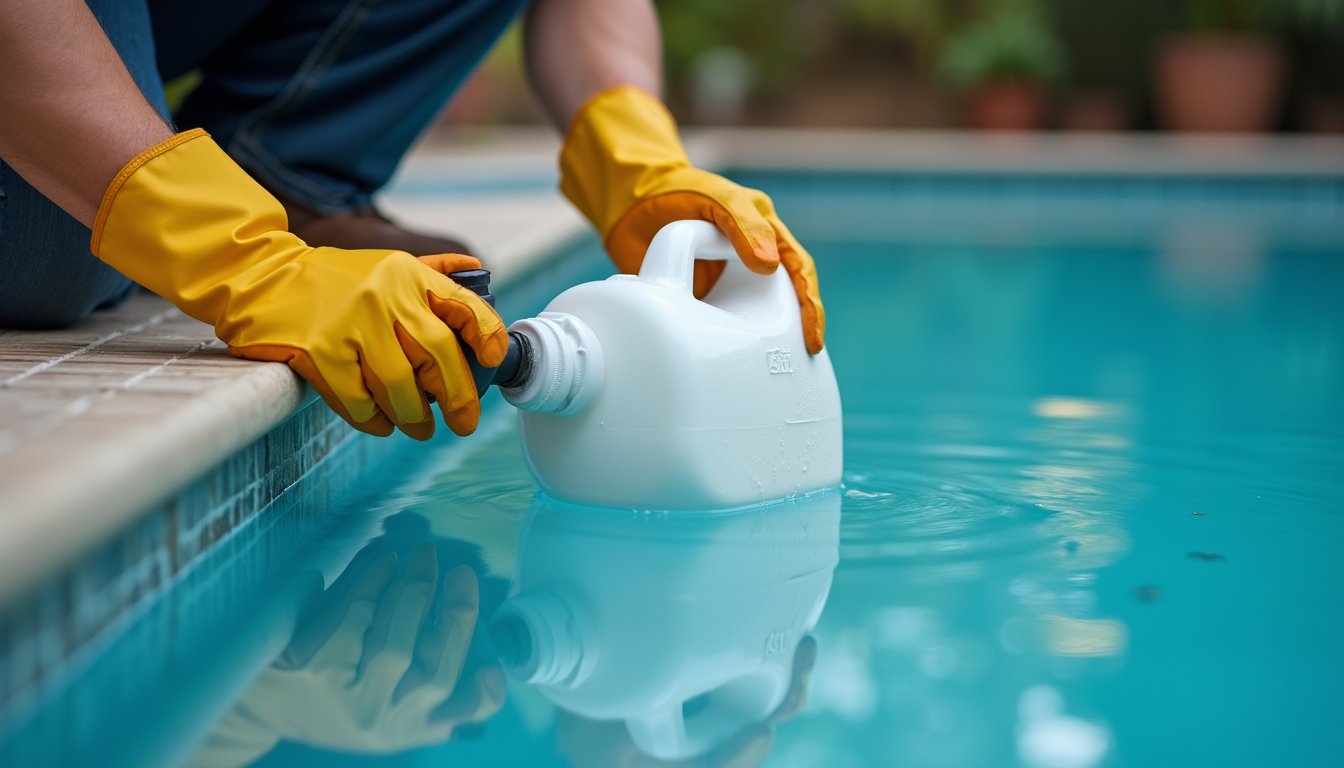
After completing your deep cleaning routine, proper water chemistry becomes the next keystone of winter pool protection. You’ll need to maintain precise chemical levels to prevent damage during the dormant months.
Maintaining proper water chemistry during winter pool closure is crucial to prevent damage and ensure a hassle-free spring reopening.
Essential winterizing parameters to monitor and adjust:
- Set pH between 7.2-7.8, leaning toward the higher end to offset natural drops during stagnation
- Maintain ideal alkalinity range of 100-175 ppm to buffer pH and safeguard pool surfaces
- Guarantee calcium hardness reaches at least 200 ppm to prevent surface etching
- Adjust chlorine to 1-3 ppm and add winter algaecide for sustained protection
Consistent chemical monitoring throughout winter remains indispensable, even after closing. Test levels regularly and make adjustments while water temperatures stay above 65°F for perfect chemical dissolution and reaction. This proactive approach prevents costly repairs and simplifies spring reopening.
Safeguarding Pool Equipment and Plumbing Systems
Protecting pool equipment and plumbing systems requires a systematic approach during cold weather to prevent costly freeze damage. Start by draining all water from pumps, filters, and heaters using compressed air to eliminate residual moisture. You’ll need to remove drain plugs and store accessories in a dry location.
Install freeze sensor monitoring systems that automatically activate pumps when temperatures approach 34°F. These smart controls manage frozen condensate management by triggering pumps and opening valves during cold snaps. If you don’t have automated systems, run pumps manually during freezing events. For complete winterization, blow out plumbing lines with compressed air and add pool antifreeze to pipes that can’t be fully drained. Keep essential tools readily available and monitor weather forecasts to enable quick responses to unexpected temperature drops.
Installing and Maintaining Winter Pool Covers
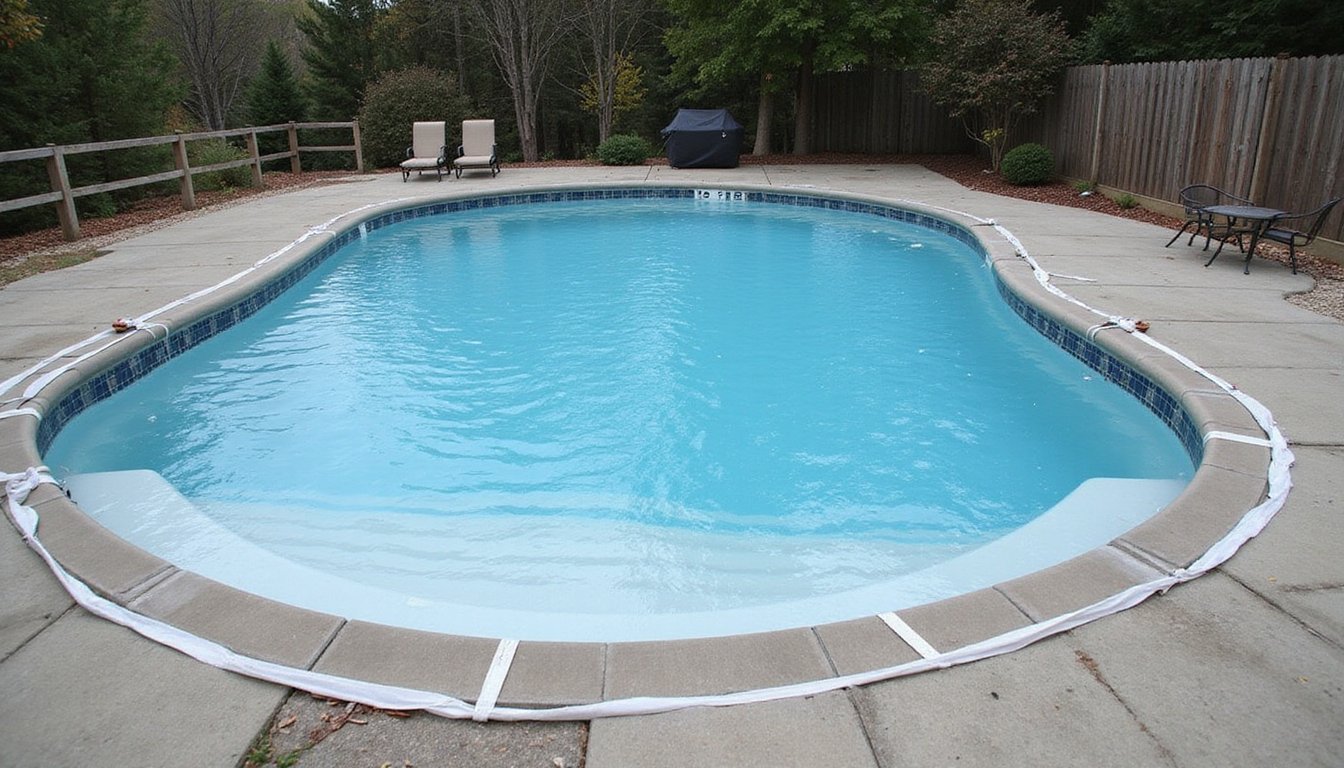
Successful winter pool protection hinges on installing the right cover with precise measurements and proper anchoring techniques. You’ll need to guarantee your cover extends 10-20 inches beyond the pool’s edge for an effective seal. Before installation, remove all pool accessories and clean the deck thoroughly.
Proper pool winterization requires exact measurements and careful cover installation, ensuring complete protection through proper extension and anchoring.
Follow these critical steps for proper cover anchoring techniques:
- Mark anchor points 18-20 inches from the cover’s edge using chalk lines
- Install center straps initially, followed by corners and sides for even tension
- Compress springs one-third to two-thirds for secure fitment
- Pad all contact points to prevent material wear
Regular performance inspections during winter are essential. Check for sagging, remove accumulated water and debris, and maintain proper water levels within 18 inches of the cover. Clear snow using soft brooms to prevent punctures.
Frequently Asked Questions
Can I Winterize My Pool if It’s Already Started Freezing?
Yes, you can still perform late season winterization on a partially frozen pool, but you’ll need to act quickly and carefully. Foremost, thaw any frozen equipment using warm blankets or heating pads. Once thawed, lower the water level below the skimmer, add winterizing chemicals, and carefully remove surface ice. Then, drain and store your equipment, balance water chemistry, and secure your pool cover. Don’t operate frozen pumps or filters to prevent damage.
How Do I Protect My Pool if Electricity Fails During Winter?
When your pool’s electricity fails in winter, you’ll need to act quickly. Initially, add a thick pool cover and thermal blanket to retain heat. If you’ve got backup power sources like generators, use them only for essential circulation to prevent freezing. Consider alternative heating methods such as solar covers or floating heating discs. Break any surface ice manually to prevent structural damage, and keep all plumbing insulated. Don’t add chemicals until power’s restored and circulation resumes.
What Happens if Animals Damage My Pool Cover During Winter?
If animals damage your pool cover during winter, you’ll face potential water contamination, structural damage, and costly repairs. You’ll need to immediately patch any tears or replace the cover entirely to prevent debris from entering your pool. To deter animal activity, install motion-activated lights and maintain a 5-6 ft fence around your pool area. Make sure you monitor pool cover integrity regularly through winter, checking for signs of wear or damage from wildlife encounters.
Should I Test Pool Water Chemistry During the Winter Months?
Yes, you should regularly test your pool’s water chemistry throughout winter. You’ll need to monitor water balance at least monthly to prevent corrosion, scaling, and algae growth. Check your pH levels (7.2-7.6), alkalinity (80-120 ppm), and calcium hardness (180-400 ppm). When you check filtration system components, test chlorine levels too, aiming for 1-3 ppm. Even in cold temperatures, chemical reactions continue, though slower, making ongoing testing essential for protecting your pool’s surfaces and equipment.
When Is the Earliest Safe Time to Reopen My Pool?
You’ll find the ideal pool reopening timeframe begins when daytime temperatures consistently reach 70°F, typically during late spring. Monitor your local weather patterns and frost-free periods to guarantee a safe, gradual pool reopening process. Don’t rush; wait until water temperatures stabilize above 70°F for effective sanitization and safe swimming conditions. You’ll want sustained warmth to preserve proper chemical balance and equipment efficiency while preventing potential plumbing damage.