

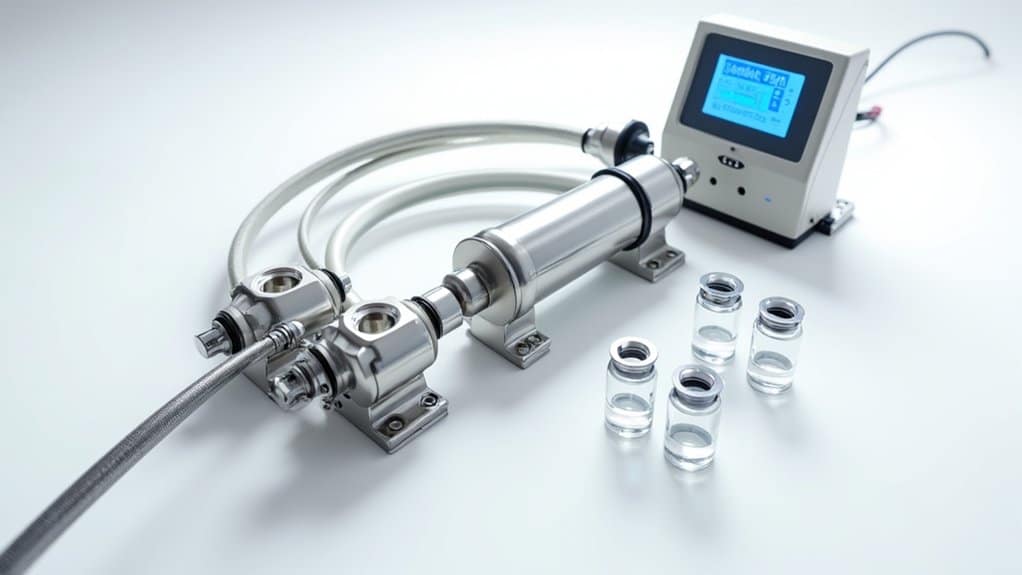
You’ll find resistance pools cost between $23,000 to $75,000, with above-ground models starting at $23,000 and in-ground installations beginning at $32,000. Site preparation costs start at $10,000, while professional installation adds $1,000-$3,000. Monthly operating expenses range from $90-$270, and 10-year maintenance varies by material: vinyl ($11,000-$17,000), fiberglass ($5,000-$15,000), or concrete ($27,000-$40,000). Our detailed breakdown reveals key factors affecting your total investment.
What Is a Resistance Pool and How Does It Work
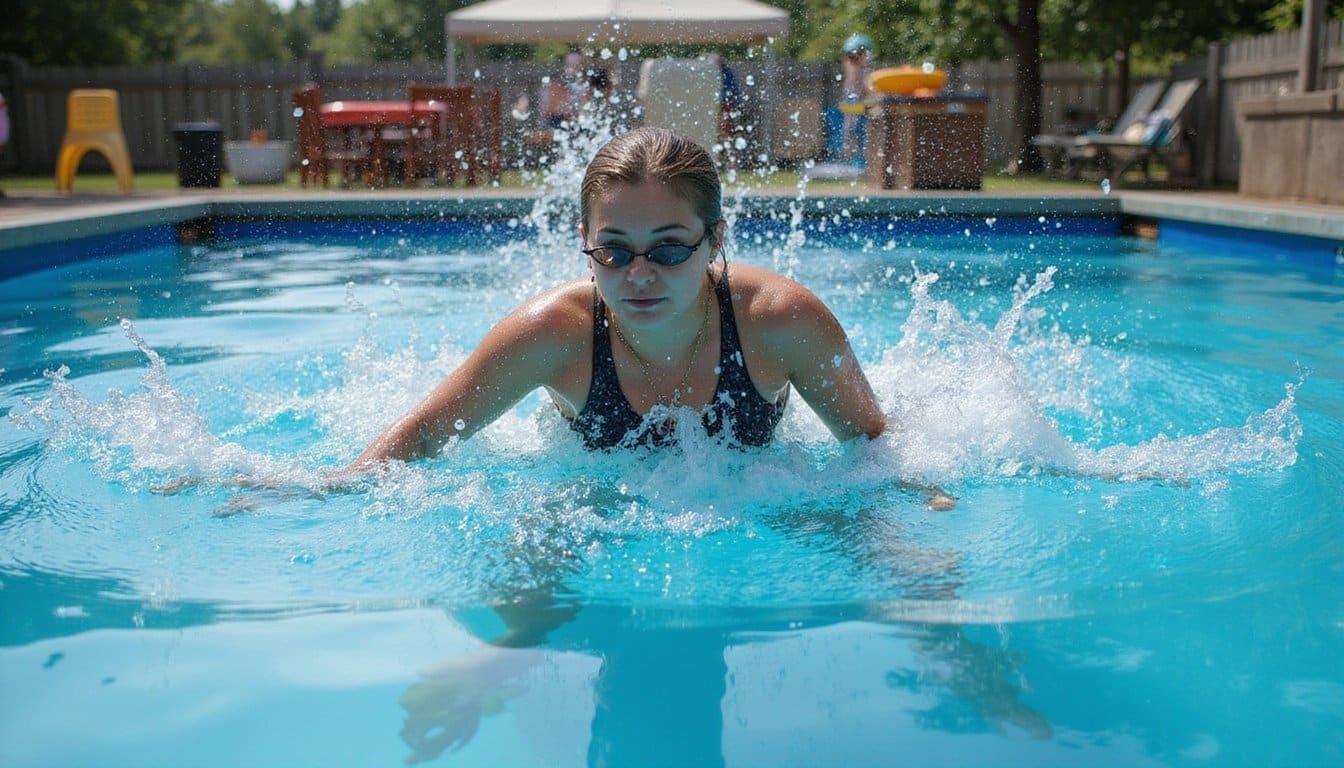
While traditional swimming pools offer limited exercise options, resistance pools revolutionize aquatic training by creating a continuous water current that allows you to swim in place. These specialized pools use sophisticated tether systems with adjustable resistance bands and cords to simulate swimming against natural currents, providing boosted aquatic aerobics capabilities. The innovative design provides omnidirectional resistance that targets muscles throughout the entire body for comprehensive strengthening. For optimal security, temporary access limitations may be implemented during maintenance or system updates. The powerful system features a LAPS technology that generates up to 30,000 liters of water flow per minute for an Olympic-level training experience.
You’ll find the system’s core technology relies on durable materials like nylon and rubber, engineered specifically for targeted muscle group training. The resistance mechanisms can be fine-tuned to match your fitness level and training goals. Whether you’re a competitive athlete or rehabilitation patient, the pool’s adjustable current creates a customizable workout environment. The system transforms a compact swimming space into an efficient training zone, offering the benefits of long-distance swimming without the need for a full-length pool.
Types of Resistance Pools Available in the Market
Five distinct categories of resistance pools dominate today’s market: Original Series models, fitness-focused systems, compact wellness pools, material-based variants, and application-specific installations.
Your pool component materials and pool installation logistics will vary considerably based on your chosen type: Consider exploring various pool upgrade ideas like adding a hot tub or incorporating energy-efficient heating systems. These enhancements not only improve your pool’s functionality but also increase its aesthetic appeal and value.
| Type | Key Features | Installation Requirements |
|---|---|---|
| Original Series | Adjustable current system | Flexible space adaptation |
| Fitness-Focused | Integrated workout equipment | Amplified structural support |
| Compact Wellness | Cold therapy capabilities | Minimal footprint planning |
| Material-Based | Fiberglass/vinyl/concrete options | Material-specific foundation |
| Application-Specific | Purpose-built designs | Location-based modifications |
You’ll find Original Series models ideal for residential settings, while fitness-focused systems cater to commercial facilities. Compact wellness pools offer therapeutic benefits in limited spaces. Material-based options range from DuPont™ Kevlar-reinforced fiberglass to customizable concrete installations. The growing emphasis on eco-friendly solutions has influenced the development of sustainable material options in resistance pool manufacturing. Application-specific pools serve distinct markets from rehabilitation centers to educational institutions. With residential use contributing to 25% market share, homeowners increasingly view resistance pools as valuable fitness investments. The specialty stores network plays a crucial role in helping customers select the most appropriate resistance pool type through expert consultation and product demonstrations. Homeowners are also exploring inground pool renovation ideas that enhance both aesthetics and functionality. Incorporating elements like LED lighting and energy-efficient heating systems can significantly elevate the pool experience. These innovations not only improve the overall appeal but also promote a more sustainable lifestyle for users.
Average Installation Costs and Price Factors
Before committing to a resistance pool purchase, you’ll need to account for detailed installation costs that extend well beyond the base unit price. Site restrictions and weather considerations substantially impact your total investment, with above-ground installations ranging from $23,000 to $35,000 and in-ground systems starting at $32,000. Local climate plays a significant role, as warmer regions typically offer more cost-effective installation options.
Your site preparation costs begin at $10,000, covering essential infrastructure like concrete foundations capable of supporting 250+ pounds per square foot. Professional installation services, similar to standard pool setups, can add $1,000 to $3,000 to your project costs. Electrical requirements add $800 to $1,600 for underground conduit runs, plus $250 to $900 for dedicated circuit installation. You’ll also need permits for electrical work, concrete pouring, and excavation.
Indoor installations can reach $60,000, while complete outdoor packages typically range from $26,000 to $75,000, depending on terrain complexity and local labor rates. Operating costs can vary significantly, with monthly maintenance and utility expenses running between $100-$300 depending on usage patterns and system features.
Operating and Maintenance Expenses
Understanding your resistance pool’s operational costs helps prevent budget surprises after installation. While specific resistance pool data isn’t available, general pool maintenance patterns suggest you’ll need to budget for monthly utilities, chemical treatments, and professional services. Adding an automatic pool cover can significantly reduce ongoing maintenance costs. Upkeep costs comparisons indicate that material choice dramatically impacts long-term expenses. A professionally installed in-ground pool typically starts around $50,000 for basic features.
Planning ahead for pool maintenance costs prevents financial strain, with material choices significantly affecting long-term expenses.
- Monthly operating expenses typically range from $90-$270, covering electricity for pumps, water treatment chemicals, and basic maintenance.
- Annual professional service requirements vary by pool material, with concrete demanding more frequent attention than fiberglass or vinyl.
- Long-term maintenance projections over 10 years show substantial differences: vinyl ($11,000-$17,000), fiberglass ($5,000-$15,000), and concrete ($27,000-$40,000).
Regular maintenance through professional service contracts often proves more cost-effective than addressing issues reactively, helping extend your pool’s lifespan while minimizing emergency repairs.
Comparing Resistance Pools to Traditional Swimming Pools
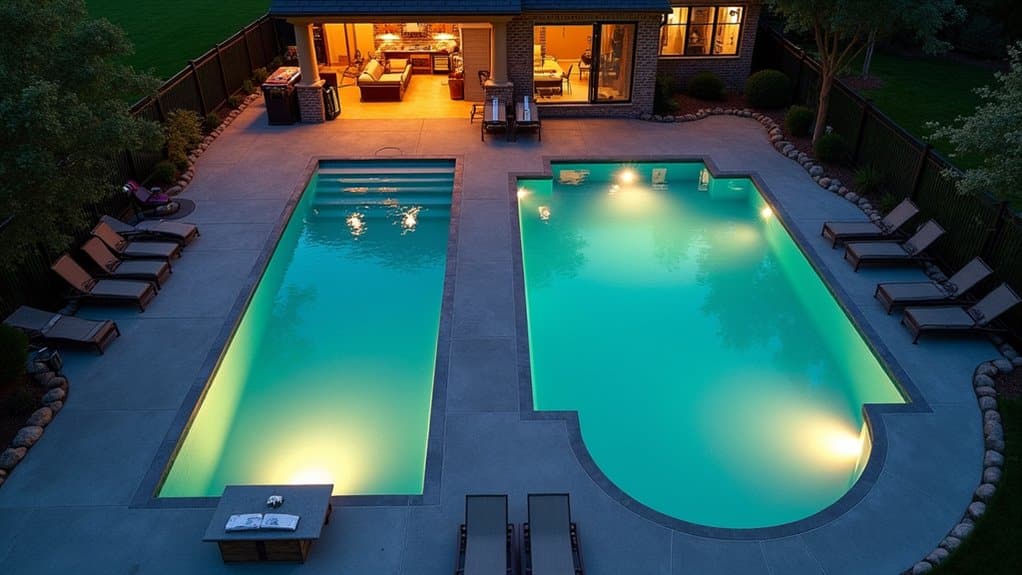
When you’re comparing resistance pools to traditional swimming pools, you’ll find that resistance pools require markedly less space while delivering equivalent workout capabilities. A key advantage is their adjustable current system that lets swimmers customize their training intensity. You’ll need to ponder distinct installation requirements – resistance pools often need specific plumbing and electrical modifications, while traditional pools demand extensive excavation and landscaping adaptations. The operating costs differ vastly, with resistance pools using less water and chemicals, though both systems require ongoing maintenance for excellent performance. Modern resistance pools can incorporate swim tether cords to enhance swimming technique and provide stability during low-impact exercise sessions. These versatile systems provide an excellent option for year-round swimming, allowing users to maintain their fitness routine regardless of outdoor weather conditions.
Space Requirements and Footprint
Many homeowners face space constraints when considering pool installation, making resistance pools an increasingly popular alternative to traditional swimming pools. With integrated exercise equipment and modular design options, these compact systems deliver full aquatic benefits while requiring just a fraction of the space needed for conventional pools.
- Standard resistance pools measure 8-15 feet in length, compared to traditional pools that typically exceed 25 feet, making them ideal for limited yard spaces
- Installation flexibility allows for both indoor and outdoor placement, with models fitting easily in basements, garages, or compact backyards
- The smaller footprint preserves valuable property space for multiple uses, including gardens, entertainment areas, and children’s play zones
These space-efficient designs particularly benefit urban homeowners and properties with strict lot restrictions, offering year-round swimming without sacrificing entire yard functionality. In addition to maximizing usability, a pool patio redo can enhance the aesthetic appeal of outdoor spaces. Innovative materials and designs can transform a basic area into a luxurious oasis, perfect for entertaining or relaxing. Homeowners are increasingly looking to create multifunctional spaces that merge comfort with style, making the most of their property investments.
Installation and Setup Differences
Installing a resistance pool differs fundamentally from traditional pool construction in both complexity and scope. While traditional pools require extensive excavation and weeks of construction, you’ll find resistance pools can be operational within hours after placement.
Site selection considerations focus primarily on structural support, requiring a 6-inch concrete slab foundation rather than large-scale ground preparation. For indoor installations, you’ll need to evaluate floor loading capacity and guarantee adequate crane access for delivery. The electrical infrastructure demands are also streamlined, requiring only a 60-amp breaker connected to a split 30/30 GFCI subpanel.
Indoor space preparation requirements include examining ceiling height clearance, ventilation needs, and potential plumbing modifications. You’ll benefit from the modular design’s flexibility, allowing installation in diverse indoor spaces like basements or garages with minimal structural alterations.
Operating Costs Comparison
Operating costs between resistance pools and traditional swimming pools differ substantially across multiple expense categories. You’ll experience significant energy consumption savings with resistance pools, requiring just £20-£50 monthly for pump operation compared to traditional pools’ higher utility demands. Long-term ownership costs reveal even more dramatic differences, particularly over a 10-year period.
- Traditional concrete pools demand up to $27,000 in maintenance costs over a decade, while resistance pools typically require £700-£2,100 annually
- Heating expenses range from $120-$850 for traditional pools, whereas resistance pools maintain consistent, lower energy requirements
- Chemical and water treatment costs remain minimal for resistance pools due to smaller water volumes, averaging £7-£20 monthly versus traditional pools’ higher chemical demands
Top Resistance Pool Manufacturers and Their Price Ranges
Five dominant manufacturers lead the resistance pool and swim spa market, each offering distinct technological advantages and price positioning. You’ll find pioneering features like Aqua Technics’ graphene nano-technology for pool weight reduction and SwimEx’s paddlewheel resistance systems. Most manufacturers back their products with extensive warranty coverage, ranging from 35 years to lifetime structural guarantees.
| Manufacturer | Key Features & Price Range |
|---|---|
| PDC Spas | Performance series, $30-45K |
| Endless Pools | Original swim tech, $25-40K |
| Hydropool | Canadian engineering, $28-42K |
| Thursday Pools | Proprietary strength tech, $35-50K |
| San Juan Pools | 60+ years expertise, $40-55K |
When evaluating options, consider that higher-end models typically offer advanced current generation systems, reinforced durability features, and more sophisticated control interfaces.
Financing Options and Return on Investment
Making a significant investment in a resistance pool requires careful consideration of both financing paths and expected returns. When evaluating your investment, you’ll need to weigh the potential 7-8% average ROI against annual maintenance costs of $1,450 and property tax implications. While the long term resale value can reach up to $36,700 for quality installations, your specific returns will largely depend on geographic location and pool type.
Investing in a resistance pool demands strategic financial planning, with ROI ranging 7-8% against yearly costs and location-specific property values.
- Standard financing options include home equity loans, personal loans, and manufacturer financing programs
- Annual operating costs encompass maintenance, chemicals, electricity, and potential insurance adjustments
- Non-monetary returns include a perfect 10/10 joy score and bolstered quality of life through family gatherings
To optimize your investment potential, consider year-round usability in your climate and secure proper insurance coverage for liability protection.
Ready to Transform Your Backyard?
Your dream pool is closer than you think. At Schiller Pools, our experienced team brings over 40 years of expertise to every project, delivering stunning fiberglass pool installations and custom pool construction that turn ordinary backyards into extraordinary outdoor retreats. With flexible financing options and lifetime warranty backing, there has never been a better time to get started. Call (561) 475-5997 today for your free estimate.
Frequently Asked Questions
Can Resistance Pools Be Used in Cold Climates During Winter?
Yes, you can use resistance pools in cold climates if you follow proper cold climate insulation requirements. You’ll need to maintain continuous pump operation when temperatures drop below 35°F and implement thorough seasonal maintenance schedules. Install freeze protection systems, including digital timers with temperature sensors and quality winter covers. For year-round operation, consider geothermal heating solutions and guarantee proper insulation of all external plumbing systems.
Do Resistance Pools Require Special Permits Different From Regular Pools?
Yes, you’ll need special permits beyond standard pool requirements for your resistance pool. Local regulations often classify these as “Exercise Spas,” requiring supplementary approvals and documentation. You’ll need to check your area’s zoning requirements, as many jurisdictions mandate separate electrical permits for the specialized equipment. Moreover, you’ll have to meet standard pool barrier specifications and GFCI protection requirements. The permit process varies by municipality, with some requiring dual permits.
What Happens if the Resistance Mechanism Breaks During Warranty Expiration?
If your resistance mechanism fails after warranty expiration, you’ll need to cover all repair costs yourself. This includes parts, labor, and shipping charges. In equipment failure scenarios, you’re responsible for contacting authorized service technicians and paying their fees. Warranty implications mean you won’t receive any manufacturer support for repairs or replacements. It’s recommended to establish a maintenance fund or consider purchasing extended coverage before your original warranty expires.
Are There Health Insurance Benefits for Installing Therapeutic Resistance Pools?
You won’t receive direct health insurance coverage for installing a therapeutic resistance pool, as insurers typically only cover professional therapy services and not installation costs. However, you may qualify for tax incentives for installation if you can document medical necessity through your healthcare provider. Medicare and private insurers will cover your therapy sessions in the pool when prescribed, but they’ll exclude the actual pool construction expenses.
Can Multiple People Use a Resistance Pool Simultaneously for Different Activities?
Yes, you’ll find dual-current resistance pools specifically designed for simultaneous workouts. The system allows two users to exercise independently with individual customization of current speeds and resistance levels. You can perform different activities like rehabilitation exercises, swim training, or aqua jogging at the same time. The separate remote controls let you adjust your personal settings without affecting the other user’s workout parameters.