How fiberglass pools are built involves five key steps that transform raw materials into a durable shell. You’ll start with digital modeling to finalize specifications, then prepare the mold with multiple gelcoat layers for UV protection. Next, technicians hand-roll fiberglass with vinyl ester resin at precise catalyst ratios. The shell cures for 24, 72 hours before demolding, trimming, and quality inspection. Each stage below breaks down the techniques that guarantee structural integrity.
Design Phase and Digital Modeling

Every fiberglass pool begins with a detailed design phase where specifications and dimensions are outlined for precise construction. You’ll collaborate with designers and engineers who evaluate your backyard layout, available space, and personal preferences. Shape, size, depth, and integrated features like entry steps and seating are carefully considered during this stage.
Advanced CAD software provides 3D rendering capabilities that transform your vision into detailed blueprints. These digital customization options let you visualize the final product before manufacturing begins. Engineers optimize both functionality and aesthetics through precise modeling, ensuring every aspect meets structural integrity requirements. Pool builders may use specialized 3D modeling software to present multiple design options that help you fully envision your completed pool.
Once you’ve finalized the design, it serves as the template for mold creation. The mold is then crafted from high-quality materials to ensure accuracy and durability throughout the manufacturing process. This thorough planning minimizes production errors and establishes the foundation for your flawless fiberglass pool. Streamlining production upfront helps manufacturers avoid costly mistakes and delays during the fabrication process.
Mold Preparation and Gel Coat Application
Before any fiberglass application begins, technicians craft the pattern from MDF wood, which offers a smooth surface that’s easy to shape and refine. They’ll use a laser level to verify accuracy within 1/8 inch, then polish the surface to a glossy shine using buffing compounds. Multiple layers of tooling gelcoat follow, starting with an orange layer. Pattern making typically takes 3-6 months to complete before mold production can begin.
Once the mold’s removed from the pattern, workers clean it thoroughly through power washing and soap washing. The mold surface texture requires sanding with 1000-grit and 2000-grit compounds to achieve ideal smoothness.
For gelcoat application, technicians spray a minimum thickness of 30 mils onto the prepared mold. Gelcoat spray consistency matters, they’ll apply multiple thin coats, starting thin then building thicker layers. This provides UV protection, chemical resistance, and that signature glossy finish.
Fiberglass Layering and Resin Application
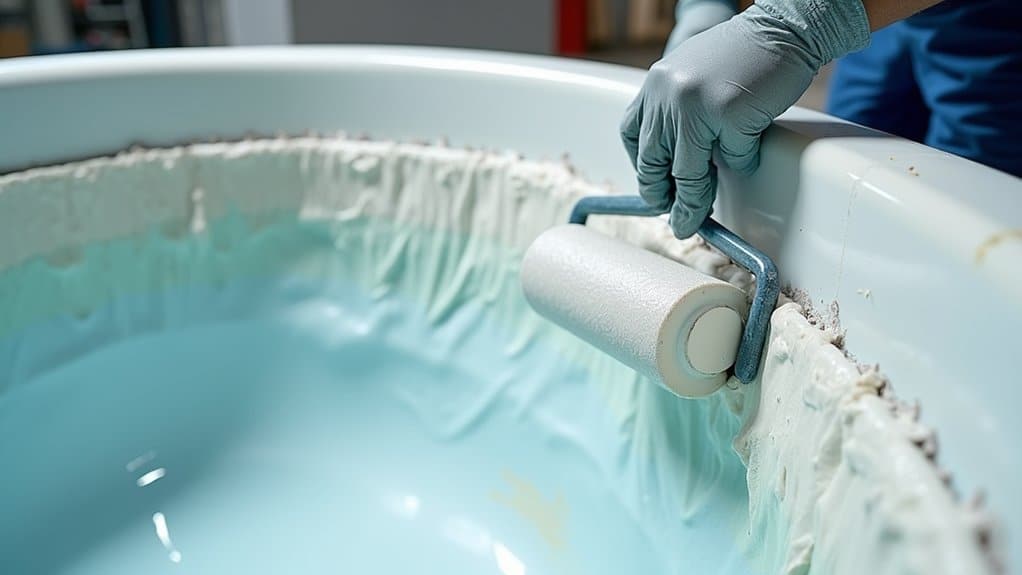
With the gel coat cured to a tack-free state, technicians begin the structural layering that gives fiberglass pools their renowned durability. High quality resin selection determines the pool’s long-term performance, with vinyl ester resin providing superior impact strength and water resistance.
You’ll find that thorough resin mixing requires combining catalyst at a 1-2% ratio by weight, stirring for 2-3 minutes to eliminate air bubbles. Technicians roll the first resin coat onto the surface, then lay fiberglass mat evenly across the entire area. Unlike automated spray applications, this 100% hand-rolled process ensures precise control over material distribution and thickness.
Using disposable rollers, workers saturate the mat completely, pressing out trapped air. Multiple layers build structural integrity through hand-laid fabrication. The integration of fabric layers creates a strong one-piece shell that eliminates weak points found in multi-component construction. After each layer cures, gentle sanding prepares the surface for subsequent applications. This methodical process prevents voids and maintains consistent thickness throughout the shell. The gelcoat applied during manufacturing creates a seamless pool surface that resists algae growth and provides easier cleaning compared to concrete alternatives.
Curing Process and Shell Hardening
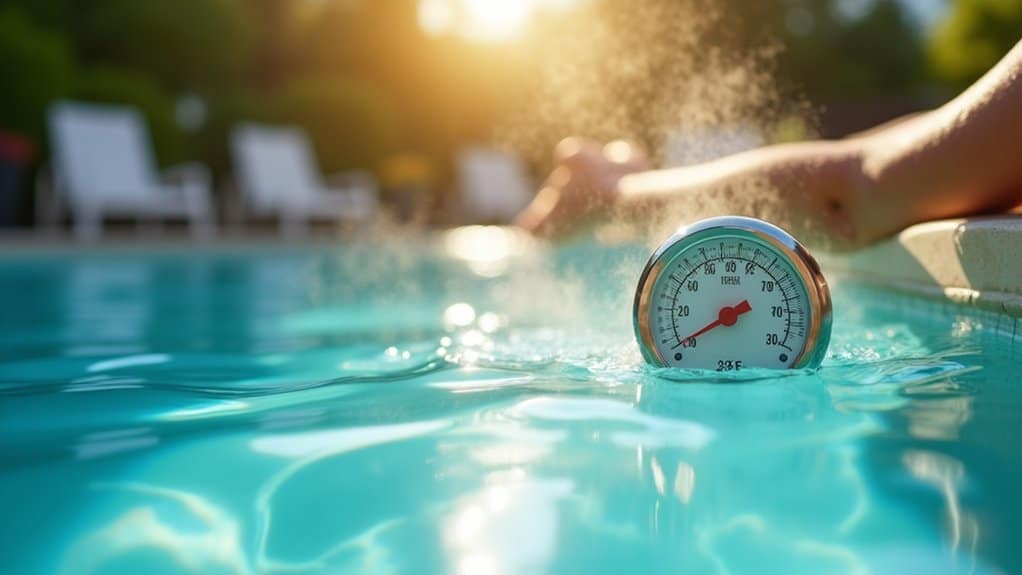
The pool shell requires a minimum 24-hour cure inside the mold before demolding can occur. You’ll find that temperature effects substantially influence hardening times, ambient conditions above 70°F guarantee optimal curing, while cooler environments extend the process considerably.
Each resin and fiberglass layer must cure completely before you apply the next. Humidity levels determine whether you’re looking at 24 or 72 hours for full polyurethane sealant hardening. You should maintain proper air circulation using fans, but avoid directing airflow onto curing surfaces. During this phase, ensure the workspace remains well-ventilated and free of debris to prevent contaminants from compromising the curing resin.
To verify cure completion, perform a water drop test checking for zero absorption. The surface should feel hard and appear dull under bright light. After demolding, inspect for maximum hardness and water resistance at the seven-day mark to confirm structural integrity. The cured gelcoat layer provides algae-resistant properties that reduce long-term pool maintenance requirements. When future resurfacing becomes necessary, professional technicians with specialized tools and material handling knowledge ensure proper coating application without air pockets or surface imperfections.
Demolding, Trimming, and Quality Inspection
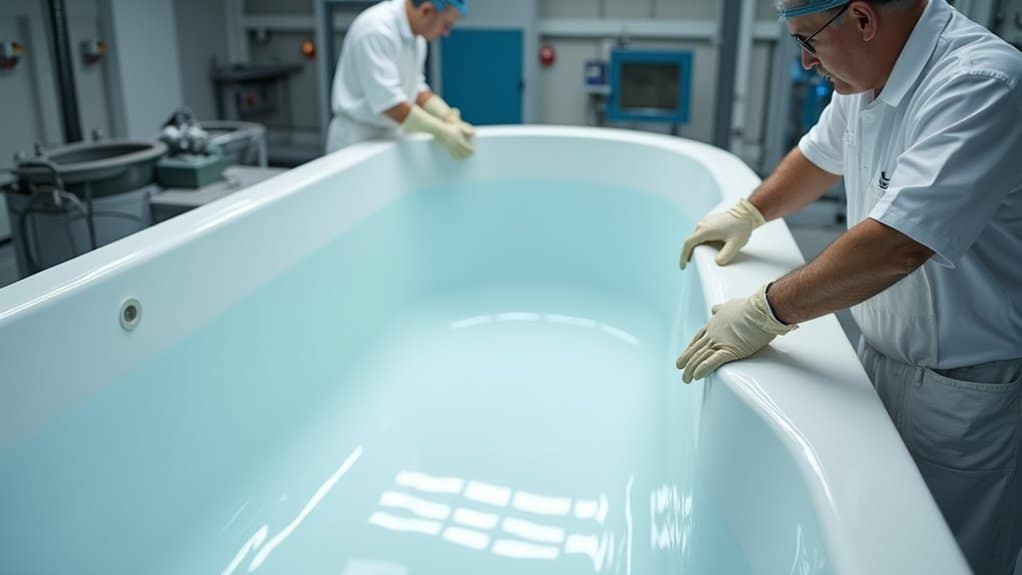
Once the curing process reaches completion, you’ll remove the pool shell from its mold using precision extraction techniques that protect both components from damage. You’ll flip the mold carefully, applying controlled lifting methods that prevent structural stress on the fiberglass laminate.
After demolding, you’ll trim excess fiberglass edges with specialized saws, cutting along the pool perimeter for clean lines. You’ll remove overhangs, rough spots, and excise PVC piping, skimmers, and jets during edge refinement. Material reuse considerations require you to segregate metal frame components immediately for recycling. This process aligns with environmental stewardship principles by ensuring appropriate recycling or disposal of all manufacturing materials.
Quality inspection demands structural integrity testing through visual checks for cracks, bubbles, or delamination. You’ll verify dimensions against mold specifications and test laminate layers for uniform resin bonding. Surface sanding confirms finish readiness, while photo documentation records all inspection outcomes for compliance records. You’ll prepare a photo journal for the owner’s records documenting the complete manufacturing process. These fiberglass shells require less intensive maintenance and repairs compared to concrete or vinyl alternatives once installed.
Frequently Asked Questions
How Long Does a Fiberglass Pool Typically Last With Proper Maintenance?
With proper maintenance, your fiberglass pool typically lasts 25, 50+ years, with many exceeding 30 years of solid performance. Key pool longevity factors you’ll need to control include installation quality, water chemistry balance, and environmental conditions. Your maintenance requirements involve keeping pH levels between 7.2, 7.6, scheduling annual professional inspections, and monitoring for gelcoat issues after 15 years. You’ll find fiberglass outlasts vinyl liners and concrete surfaces considerably when you follow these technical protocols.
Can Fiberglass Pools Be Customized With Different Colors and Finishes?
Yes, you can customize fiberglass pools with custom color options and unique finish designs. During manufacturing, technicians spray gelcoat in various colors directly onto the mold, allowing you to select specific interior hues beyond standard blue finishes. You’ll specify your preferences during the design phase, and hand-laid processes integrate color-specific resin mixes into the shell. Surface sanding and final gelcoat applications guarantee you receive a smooth, polished texture with enhanced durability.
What Is the Average Cost of a Fiberglass Pool Installation?
You’ll typically pay between $33,270 and $100,000 for a fiberglass pool installation. Your pool installation cost factors include shell size, excavation complexity, and equipment specifications. Basic installations run $45,000 to $65,000, while turn-key projects with decking, fencing, and electrical reach $65,000 to $100,000. The average pool construction timeline spans 160 labor hours with a five-person crew, making fiberglass considerably faster than concrete alternatives.
How Do Fiberglass Pools Compare to Concrete Pools in Durability?
Fiberglass pools offer superior durability through their flexible structure, which resists cracking from ground movement and freeze-thaw cycles. You’ll find the gel coat surface lasts 25-50 years without resurfacing. Concrete pools, despite their 50+ year lifespan, come with higher maintenance requirements, you’re facing resurfacing every 10-15 years and weekly brushing. While concrete’s installation complexity allows custom shapes, fiberglass’s non-porous surface reduces chemical use by 70% and minimizes algae growth.
What Warranty Coverage Is Typically Offered for Fiberglass Pools?
You’ll typically receive structural warranty coverage ranging from 25 years to lifetime, protecting your pool shell against cracks, leaks, and manufacturing defects. Pool warranty duration for surface and gelcoat protection spans 7-15 years, covering fading, blistering, and UV damage. Warranty coverage details require you to maintain proper water chemistry, keep maintenance logs, and use certified installers. Remember, manufacturer warranties cover shell defects while installer warranties address plumbing and leveling work separately.