
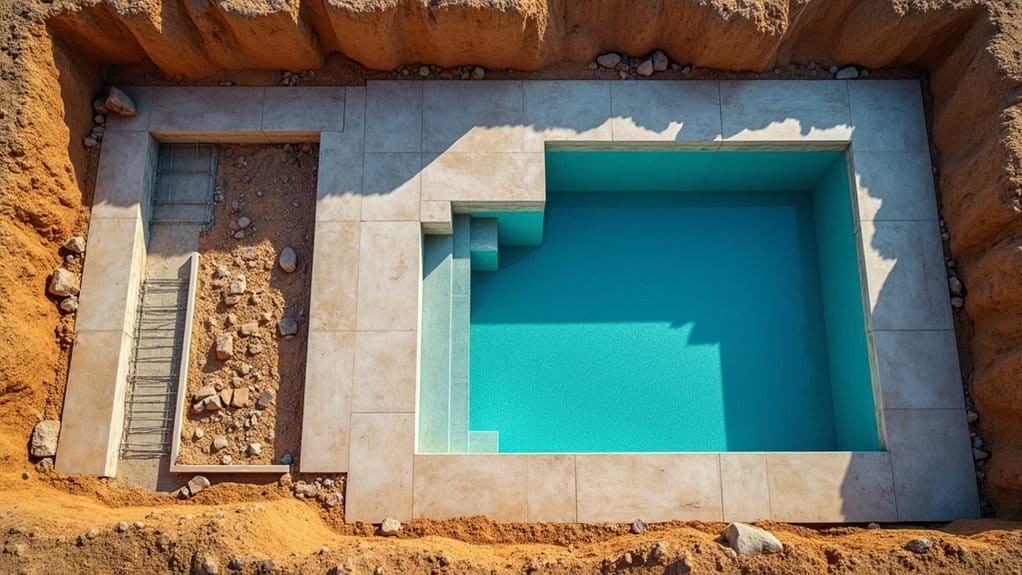

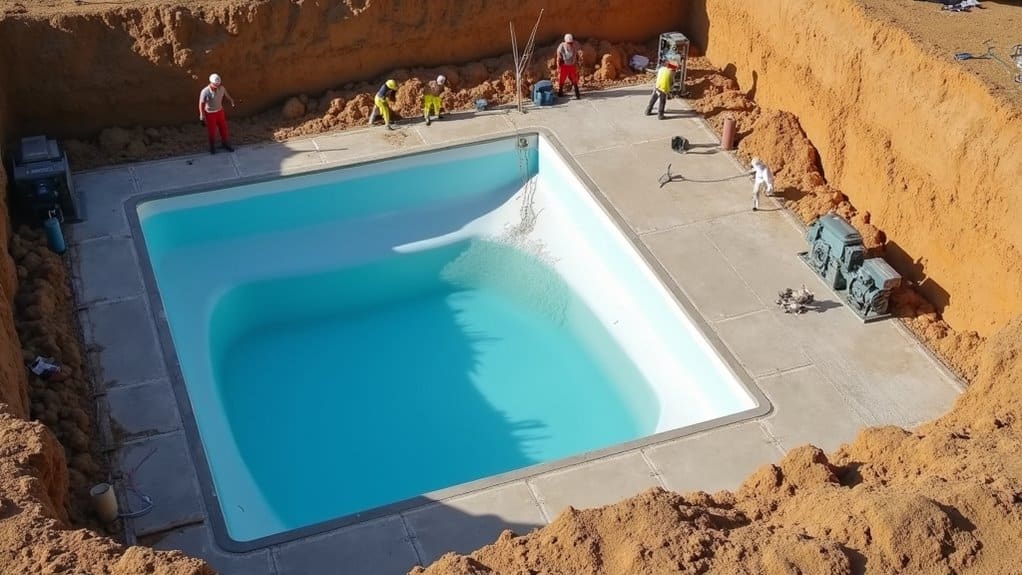


Why Pool Tile Color Isn’t the Color You’ll See
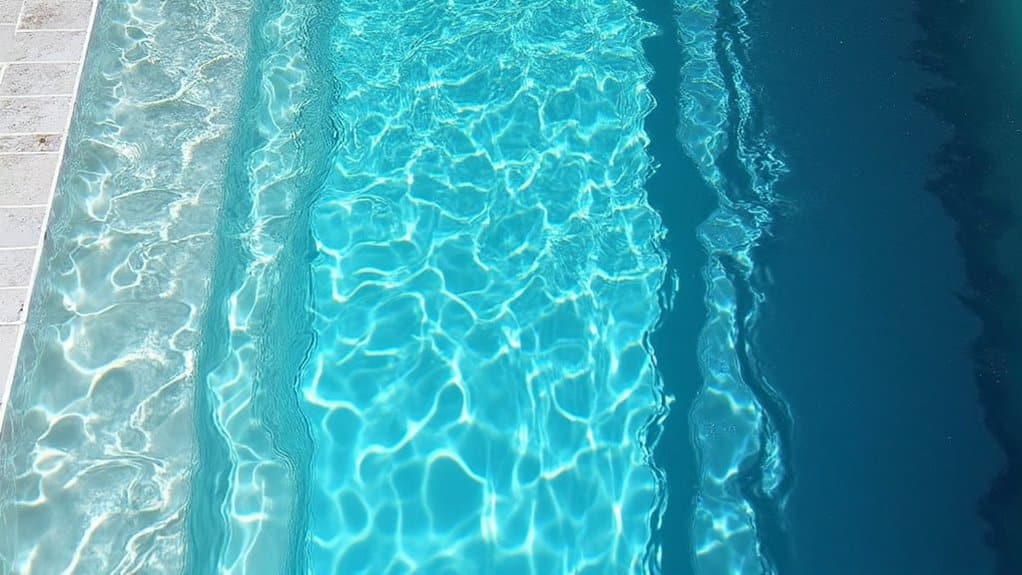
When you’re standing in the showroom holding that gorgeous sapphire tile sample, you’re not seeing what your finished pool will actually look like. That’s because swimming pool water color emerges from a complex dance between light, depth, and environment, not just your finish selection.
Light reflection water creates transforms every tile choice. Sunlight penetrates the surface, bounces off your pool bottom, and refracts back through varying depths. The pool depth color effect means your eight-foot deep end will appear dramatically darker than your sun shelf, even with identical finishes throughout. This mirrors the color variations observed in tropical oceans, where shallow shores appear turquoise while deeper waters shift to deep blue.
Your surrounding landscape matters too. Lush greenery casts reflections that shift blue tiles toward aquamarine. Nearby decking and your home’s exterior bounce their hues into the water, continuously altering what you perceive. Even moving water features like fountains and waterfalls change the appearance by breaking up light patterns and creating dynamic surface reflections. Weather conditions also play a role, as bright sunny days will make your water appear more vibrant compared to overcast conditions.
How Light Blue and Dark Blue Tiles Create Different Water Colors
Though light blue and dark blue tiles both amplify water’s natural tendency to scatter blue wavelengths, they produce strikingly different visual experiences in your finished pool.
Water naturally scatters blue light, but your tile choice determines whether that blue whispers serenity or commands attention.
Light blue tiles enhance your pool water color with crisp, invigorating clarity. They’re why pools look blue in that classic, refreshing way you’ve seen in resort imagery. Dark blue tiles transform pool water appearance into something moodier, think private lagoon rather than tropical oasis. Dark blue tiles add elegance while also keeping the water warm in cooler weather. This color difference becomes especially noticeable in shallow areas like steps and tanning ledges, where tile color creates an optical illusion that dramatically influences perceived water depth. However, dark tiles can cause visibility issues, making it difficult to see the pool bottom clearly, which is an important safety consideration for diving and jumping areas.
- Light blue reflects sunlight, creating bright, airy water that appears shallower
- Dark blue absorbs light, producing dramatic depth and mirror-like reflections
- Glossy light finishes maximize sparkle and visual expansion
- Matte dark finishes offer sophisticated, understated elegance
Your choice shapes the entire aesthetic narrative.
Why White Surfaces Create That Bright Caribbean Pool Look
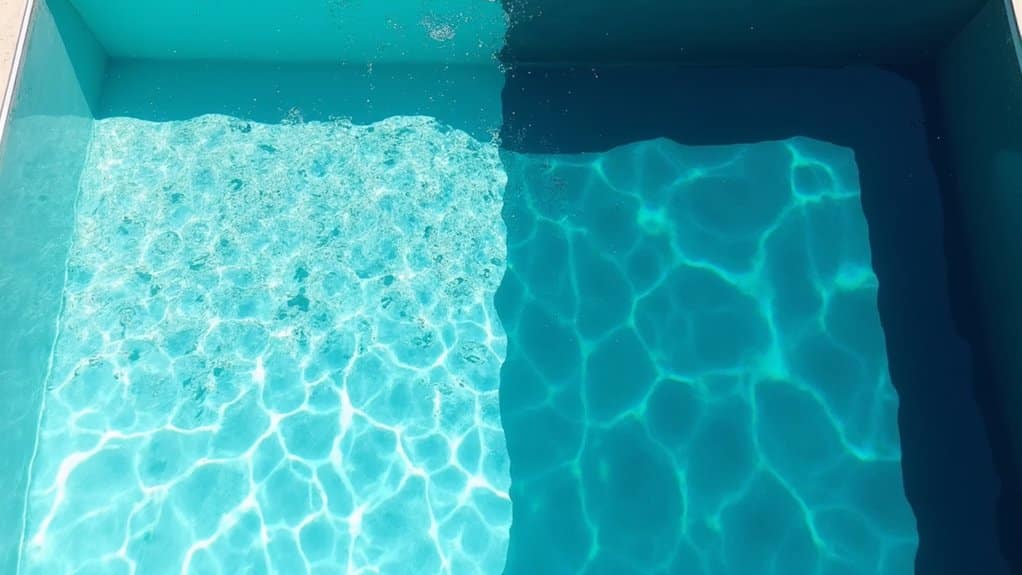
Beyond blue tiles lies an even brighter option, white surfaces that transform your pool into a slice of Caribbean paradise. White finishes reflect maximum light through the water column, amplifying those natural blue wavelengths your eye craves. The result? Crystalline, tropical water that practically glows under direct sunlight.
Ezarri’s white tile options showcase this effect beautifully. The Perla mosaic from the Iris collection delivers an iridescent shimmer, while Diamond blends reflective and matte whites for dimensional depth. For striking simplicity, 2545-A from the Lisa collection offers pure, solid white. The Carrara option from the Zen collection provides a marble effect with anti-slip properties for added safety.
Your surrounding environment shapes the final look. Desert landscapes enhance that bright, airy aesthetic, while lush greenery introduces subtle green undertones. Deeper sections naturally appear more intensely blue, creating gorgeous gradients from shallow turquoise to deeper sapphire tones. Keep in mind that pool color samples may differ from how your finished pool actually appears once filled with water, as sunlight absorption and water depth affect the perceived hue. For those seeking alternatives to tile, finishes like Gulf White from Signature Matrix create light blue water hues that complement the Caribbean aesthetic.
How Dark Finishes Create Deep Lagoon Pool Colors
When you choose dark tiles for your pool, you’re tapping into a design trend that transforms ordinary backyard water into something resembling a secluded natural lagoon. These deep-hued surfaces absorb light rather than reflecting it, which creates that sought-after dramatic depth effect that makes your pool look endlessly profound. The result is water that shifts between rich sapphire blues and mysterious emerald greens depending on the time of day and surrounding landscape. Dark finishes are particularly well-suited for larger pool areas, where they enhance the grandeur and perception of space. This natural depth also makes your surrounding landscaping and pool lighting pop, creating an especially impactful visual experience at night. The warmer water temperature created by dark finishes absorbing more heat can also extend your swimming season, allowing you to enjoy your lagoon-like retreat for more months throughout the year.
Dark Tiles Absorb Light
Dark pool tiles transform ordinary backyard water into something that feels pulled from a tropical lagoon or luxury resort. When sunlight hits your dark-finished pool, the tiles absorb most of that light instead of bouncing it back. This absorption eliminates harsh reflections and creates that coveted deep, mysterious aesthetic. The darker tiles also make the pool look deeper, creating a more dramatic effect that enhances the lagoon-like atmosphere.
Here’s what happens beneath the surface:
- Dark tiles swallow longer wavelengths like reds and oranges first
- Shorter blue and green wavelengths scatter beautifully, creating rich teal tones
- Glossy finishes add shimmer as light interacts with the absorbed energy
- Still water produces uniform dark tones while ripples animate colors dynamically
You’ll notice your pool mirrors the sky and surrounding landscape like glass. This reflective quality gives dark-tiled pools their signature moody, sophisticated vibe that’s dominating modern design trends. In cooler climates, dark tiles offer an added benefit since they absorb more heat from the sun, which can help warm your pool water naturally and reduce heating costs. Pairing your dark finish with coloured LED lights creates a stunning visual experience that transforms your pool into a captivating nighttime centerpiece.
Creating Dramatic Depth Effects
That light-absorbing quality of dark tiles does more than eliminate glare, it creates an optical illusion that makes your pool look bottomless. When you choose charcoal or black finishes, the water appears to fade into an abyss, transforming your backyard into something resembling a tropical lagoon or natural lake.
The depth illusion intensifies as your pool’s actual depth increases. In deeper sections, you’ll notice more intense emerald greens emerging, while shallower areas shift toward unexpected gold tones. This gradient effect mimics the endless quality of natural bodies of water.
Navy blue finishes produce tranquil sapphire tones that deepen dramatically toward the center. For 2025’s boldest trend, consider emerald green aggregates that evoke Florida-style oases. These dark finishes seamlessly blend with surrounding landscaping, creating that coveted resort-style retreat aesthetic.
Why Deeper Pools Look Dramatically Different Than Shallow Ones
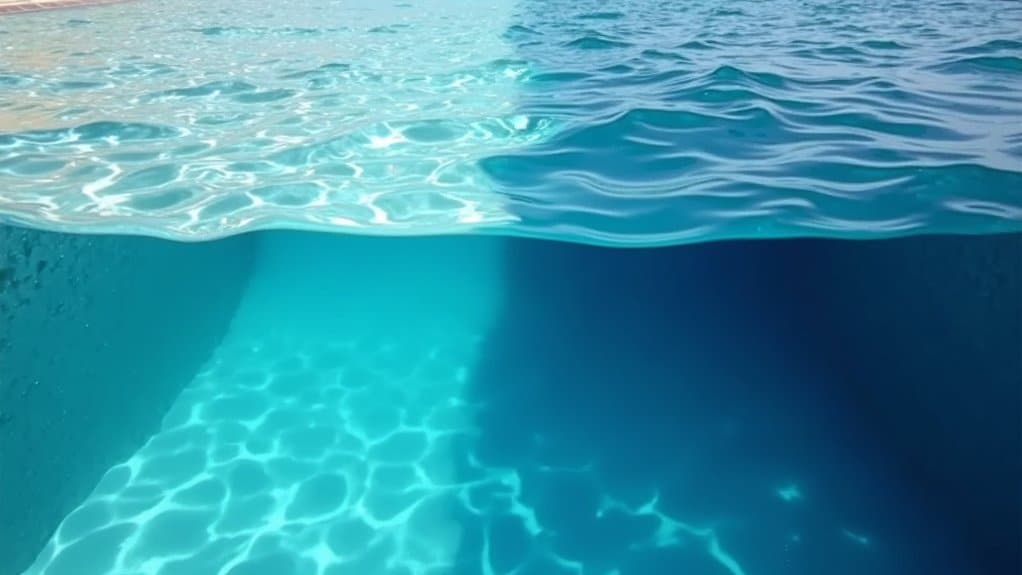
When you’re standing at the edge of your pool, you’ll notice the shallow end reveals your tile work in crisp detail while the deep end transforms into something far more mysterious. That’s because water absorbs light progressively, the deeper your pool extends, the more red wavelengths disappear, leaving behind intensified blue tones that create dramatic visual depth. This natural phenomenon means your pool’s color story shifts from bright and transparent near the steps to rich and saturated where the water volume increases.
Light Absorption Increases Depth
Light behaves differently as it travels through water, and this simple physics principle transforms how your pool looks from one end to the other. As sunlight penetrates deeper, water selectively absorbs longer wavelengths, reds and oranges vanish first, leaving shorter blue wavelengths to dominate your view.
This creates that coveted gradient effect designers love:
- Shallow areas under 50 cm stay nearly transparent, showcasing your finish’s true color
- Mid-depths reveal subtle blue undertones emerging
- Deep ends display rich, saturated blues regardless of surface material
- Olympic-depth pools achieve brilliant, jewel-toned intensity
You’ll notice your integrated spa appears noticeably lighter than the adjacent deep end, that’s absorption at work. Understanding this principle helps you anticipate how your chosen finish will actually perform across varying depths.
Water Volume Intensifies Color
Beyond simple depth absorption, the sheer volume of water in your pool acts as a natural color amplifier, transforming subtle hues into statement-making saturation.
Think of it this way: larger pools create more opportunities for light to scatter and dance across the surface. Water molecules interact with sunlight wavelengths selectively, absorbing warm reds, oranges, and yellows while scattering blue light more readily. The greater your water volume, the more dramatic this transformation becomes.
You’ll notice Olympic-sized pools showcase brilliant blue hues, while wading pools appear nearly transparent. That integrated spa? It reads noticeably lighter than your main pool despite identical finishes. Even your shallow end looks distinctly different from the deep end under the same sunlight.
Greater volume equals more dramatic color payoff, it’s simple physics creating luxury aesthetics.
Shallow Areas Reveal Tiles
Stepping into your pool’s shallow end offers a revealing glimpse of your actual finish, tan tiles appear as warm beachy hues, white plaster glows bright, and pebble surfaces showcase their intricate texture. Light penetrates these zones fully, allowing you to appreciate every design detail you’ve selected.
What shallow water reveals:
- Glass bead finishes shimmer with mesmerizing luminosity under direct sunlight
- Quartz aggregates display their full color spectrum and depth
- Sand-toned surfaces maintain their authentic coastal aesthetic without green undertones
- Light gray bases preserve that coveted bright blue appearance longer
You’ll notice the deep end tells a different story, those same finishes transform into darker, bluish-green tones as water absorbs red wavelengths progressively. This natural contrast creates dimensional beauty throughout your pool’s varying depths. Choosing the right color can enhance the overall aesthetic and feel of the space. For example, when considering what is the best color for a swimming pool, shades of blue are often preferred for their soothing and inviting qualities. Additionally, lighter colors can make the water appear clearer, creating an illusion of a more expansive area.
How Your Landscape Secretly Changes Pool Color
When you gaze at your pool, you’re not just seeing water, you’re witnessing a dynamic interplay between your entire outdoor environment. Lush green vegetation creates striking contrast against blue water, amplifying perceived vibrancy. Desert landscaping harmonizes beautifully with earth-tone finishes, creating cohesive visual flow.
Your hardscape choices matter equally. Natural stone decking complements warmer finishes, while polished concrete speaks to modern luxury and alters color perception entirely. Even your patio furniture factors into this visual equation.
Don’t overlook what’s overhead. Trees cast shadows that deepen water tones, while the sky’s reflection shifts your pool’s appearance from morning to dusk. Rock formations and native plantings work exceptionally well with natural finishes, creating that coveted lagoon-like ambiance you’ve admired in design magazines.
Why Your Pool Looks Different at Noon Than Sunset
The same pool can look like two completely different backyard retreats depending on when you’re lounging beside it. At noon, intense overhead sunlight saturates your water with vibrant, true-to-finish colors as it bounces off a brilliant blue sky. Come golden hour, those warm, low-angle rays transform your pool into a shimmering canvas of amber and rose tones that feel impossibly romantic.
Midday Light Intensity
Because the sun positions itself directly overhead at noon, your pool transforms into its most vibrant version of the day. Direct sunlight penetrates the water’s surface with maximum intensity, scattering blue wavelengths while absorbing warmer red and orange tones. This selective filtering creates that signature saturated blue you’ll notice during peak hours.
Here’s what midday light does for your pool’s aesthetic:
- Intensifies blue tones through enhanced wavelength scattering
- Eliminates shadows for uniform color across the entire surface
- Reveals depth gradients distinctly from shallow to deep ends
- Highlights your pool finish’s true character and texture
Your light-colored finishes will appear brilliantly turquoise, while deeper sections take on richer, more dramatic hues. It’s the perfect moment to capture your pool’s most photogenic look. The key to achieving this stunning effect lies in the combination of pool liner and water color. Selecting the right materials can enhance the overall aesthetic, transforming your outdoor space into a luxurious retreat. Consider how light interacts with the surface to create a shimmering oasis that invites relaxation and enjoyment. When exploring modern pool color ideas, think about incorporating vibrant tiles or natural stone finishes that reflect your personal style. Each choice can evoke a different atmosphere, from tranquil blues to invigorating greens, enhancing the pool’s allure.
Golden Hour Color Shifts
As the sun dips toward the horizon, your pool undergoes a dramatic transformation that rivals any designer color palette swap. Golden hour light shifts from noon’s cool 5000-6500K to warm 2000-3000K, fundamentally altering how your water reads. That crisp aquamarine? It’s now molten amber.
Rayleigh scattering filters out blue wavelengths at sunset, leaving red-orange light to dominate your pool’s surface. Dark finishes absorb this shift dramatically, black plaster that showed emerald depths at midday now glows gold in the shallows. Glass bead accents amplify these sunset oranges by 50% compared to noon’s muted blues.
Your pool’s depth intensifies the effect. Expect 2x saturation increases in 3-6ft zones during golden hour, creating rich gradients that make every evening swim feel like a luxury resort experience.
How Underwater Lights Transform Pool Color at Night
When the sun dips below the horizon, your pool’s daytime personality transforms entirely, and underwater LED lights become the artist behind this dramatic shift.
Modern RGBW systems access 16 million colors, letting you sculpt your water’s mood with smartphone precision. Position lights 9-12 inches below the waterline for perfect beam spread that eliminates harsh shadows.
Popular nighttime effects include:
- Rainbow smooth fades that create ethereal, ever-shifting atmospheres
- Music-synced strobes for high-energy poolside gatherings
- Warm amber tones that produce inviting, intimate glows
- Deep jewel hues that intensify darker pool finishes
These 12V low-voltage systems consume 79% less energy than traditional incandescent options while delivering superior color uniformity. Your finish color serves as the canvas; LED technology paints the masterpiece.
Why Murky Water Ruins Your Chosen Pool Color
Even the most stunning pool finish becomes invisible the moment water clarity fails, murky conditions create an opaque barrier that swallows light before it ever reaches your carefully chosen surface.
Your investment in that perfect pebble finish or elegant quartz blend means nothing when algae blooms, metal oxidation, or filtration failures cloud your water. These culprits don’t just dim your pool, they completely override your aesthetic vision.
| Contaminant | Color Effect | Your Fix |
|---|---|---|
| Algae bloom | Green tint | Chlorine shock |
| Iron oxidation | Rusty brown | Metal sequestrant |
| High pH minerals | Cloudy white | Chemical rebalancing |
| Copper oxidation | Bright green | Chelating agents |
| Debris buildup | Dark murky | Filter replacement |
Clear water isn’t optional, it’s the canvas that makes your chosen pool color actually visible.
Resort Calm or Natural Lagoon: Choosing Pool Color by Style
Once your water achieves crystal clarity, you’re finally ready to make the design choice that transforms a simple pool into a curated outdoor statement. Your finish selection determines whether guests feel transported to a sleek Maldivian resort or a hidden tropical lagoon.
Match your aesthetic vision:
- Resort elegance, Dark gray or volcanic black finishes create mirror-like drama with sophisticated, Caribbean-inspired water tones
- Natural lagoon, Light blue and turquoise options deliver that coveted tropical paradise effect with crystal-clear brilliance
- Tropical island warmth, Sand and tan finishes evoke sun-kissed beaches while complementing organic landscaping
- Contemporary minimalism, Silver grey and ice silver produce pristine, ethereal water perfect for modern architecture
Each style creates distinctly different moods, so let your surrounding landscape and design preferences guide your choice.
Frequently Asked Questions
Can I Change My Pool’s Water Color Without Replacing the Entire Surface Finish?
Yes, you can transform your pool’s water color without touching the surface finish! Try temporary chemical dyes for instant party-ready vibes, they’ll give you bold hues lasting two to three days without affecting water chemistry. You can also swap in colored light lenses or upgrade to digital LEDs for stunning nighttime color shifts. Even strategic landscaping changes around your pool will naturally alter how your water’s shade appears.
Do Pool Covers Affect How Water Color Appears When Uncovered?
Yes, pool covers definitely affect how your water color appears once removed. When you uncover your pool, sunlight finally interacts with your liner and water depth, creating that signature color you’ve been missing. You’ll notice the hue appears more vibrant and saturated as natural light penetrates and reflects off surfaces. The full depth-gradient effect and environmental reflections only emerge once you’ve removed the cover completely.
Will Adding a Water Feature Change How My Pool Color Looks?
Yes, adding a water feature will transform how your pool color appears. Moving water scatters and redirects light differently than still water, creating dynamic shimmer and enhanced vibrancy. Fountains and waterfalls shift hues toward brighter, more saturated tones, especially in sunlight. Your finish plays a role too: lighter surfaces produce crisp blues with movement, while pebble finishes reveal richer emerald tints. You’ll notice your pool’s color becomes more alive and visually alluring.
How Does Pool Shape Influence the Overall Perception of Water Color?
Your pool’s shape directly influences how light moves through the water, creating distinct color experiences. Sloped entries produce gorgeous gradient shifts from crystal shallows to deeper blues, while curved designs bend light in unexpected ways, adding visual intrigue. Freeform shapes scatter sunlight unevenly, giving you those coveted dynamic patterns that trend-forward designers love. Even identical finishes look completely different based on shape, it’s why custom geometry has become such a sought-after design element.
Does Salt Water Appear Different in Color Than Chlorinated Pool Water?
You won’t notice a color difference between saltwater and chlorinated pools, both rely on chlorine for sanitation. What you *will* notice is clarity. Saltwater systems produce fewer chloramines, eliminating that hazy, yellowish tinge traditional pools sometimes develop. The salt softens your water, creating a crystal-clear, almost luminous quality that’s trending among design-conscious homeowners. Your pool’s true color comes from its finish, not its sanitizer, saltwater just lets that color shine brighter.