
When you’re budgeting for a cocktail pool, expect to spend between $15,000 and $35,000 for most installations. The national average cocktail pool cost sits at $25,000, which covers both labor and materials for a standard build. HomeAdvisor reports an average installation cost of $22,650, giving you a reliable benchmark for project planning.
Your final price depends heavily on material selection. Prefab cocktail pool cost runs lower than custom concrete options, making it attractive for budget-conscious homeowners. Fiberglass pool pricing also tends to fall on the affordable end, with prefabricated models starting around $9,399 for basic configurations. Keep in mind that labor accounts for 25% to 50% of your total project cost.
At minimum, you’ll spend $5,000 for a DIY installation using economical materials. Maximum costs can reach $85,000 for premium, fully-customized builds. Adding bonus features like a water heater, jets, or lighting can increase your total cost significantly beyond the base price. Premium materials and sophisticated design elements can push your investment to $50,000 or more, especially when incorporating custom features.
At minimum, you’ll spend around $5,000 for a DIY installation using economical materials, while maximum costs can reach $85,000 for premium, fully customized builds. When evaluating what is a cocktail swimming pool, it’s important to factor in how added features like water heaters, jets, or integrated lighting can increase your total investment well beyond the base price. Premium materials and sophisticated design elements can push overall costs to $50,000 or more, particularly when incorporating high-end custom features.
Above-Ground vs. In-Ground Cocktail Pool Prices
Your installation type, above-ground or in-ground, creates the most significant cost split in cocktail pool pricing. When considering the options available, the differences between cocktail pool vs spool can impact your overall experience and satisfaction. Cocktail pools are designed for socializing and lounging, while spools often accommodate both swimming and spa features.
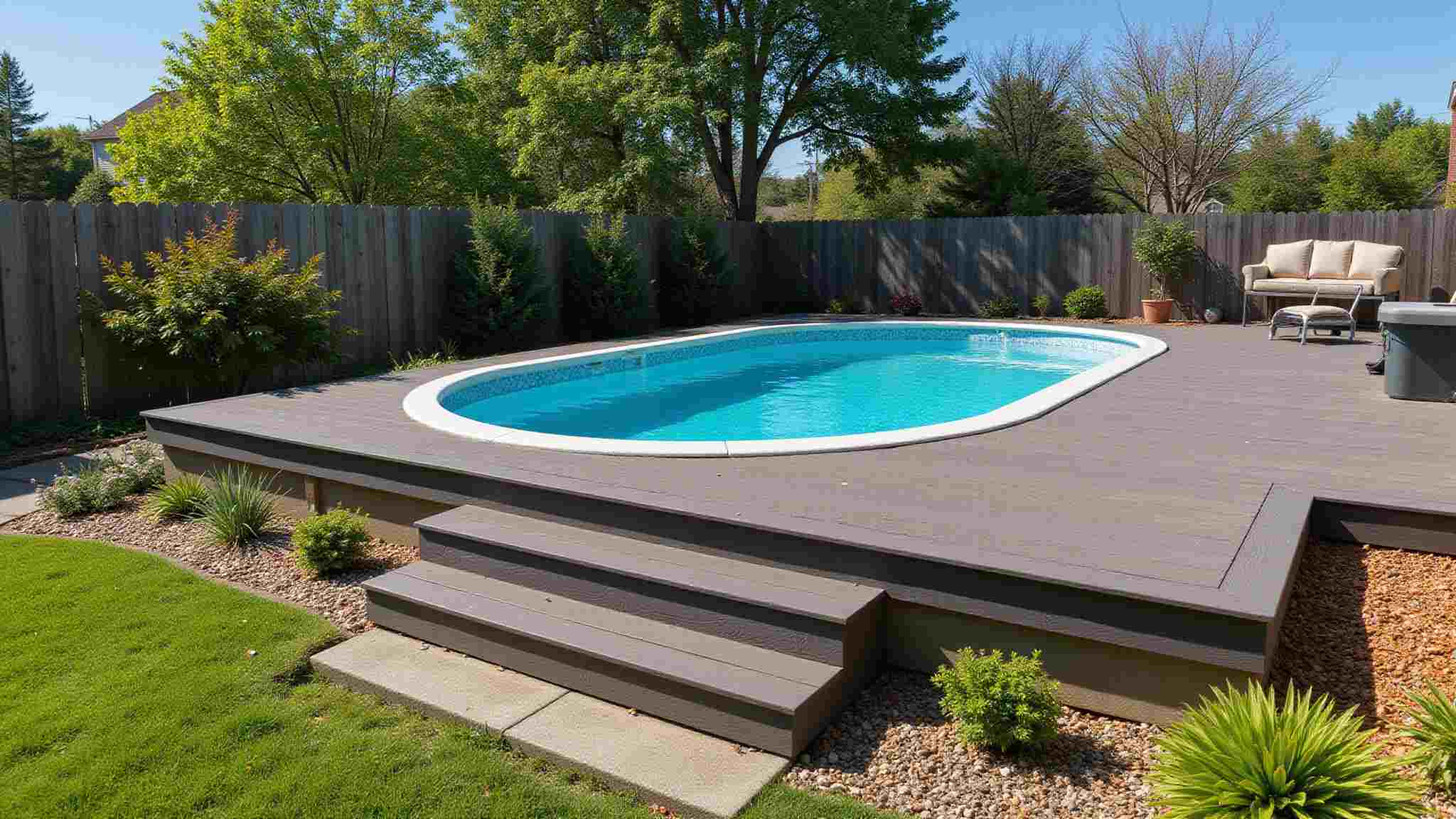
Above-ground cocktail pools range from $5,000 to $20,000, with most homeowners spending approximately $15,000. You’ll need a concrete slab foundation at $6 to $12 per square foot, but you’ll eliminate expensive excavation costs entirely. Manufacturers like Endless Pools offer above-ground options starting around $35,000, plus shipping and installation for premium models.
Above-ground cocktail pools deliver serious savings, skip the excavation costs and still get backyard luxury for around $15,000.
When calculating how much is a cocktail pool installed in-ground, expect $15,000 to $35,000, averaging $25,000. Excavation runs $100 to $300 hourly, and labor accounts for 25% to 50% of your total cocktail pool cost. You’ll also need to budget for permits ranging from $100 to $1,800 depending on your local requirements.
The cocktail pool price gap narrows with premium features. Above-ground deck additions cost $1,000 to $5,000, while in-ground decking reaches $3,000 to $20,000. Custom concrete in-ground builds can hit $80,000 to $100,000, approaching full-sized pool investments.
How Cocktail Pool Materials Change Your Price

Your material choice directly determines whether your cocktail pool falls at the budget-friendly $15,000 range or climbs toward premium $50,000+ territory. Vinyl and fiberglass offer cost-effective options starting around $20,000-$50,000 for the pool unit, while custom concrete builds can reach $80,000-$100,000 for top-tier installations. If you’re considering distinctive aesthetics, copper and steel represent the most expensive material options, commanding premium prices that exceed standard construction methods. For those seeking a more affordable route, cedar provides a cheaper alternative among the various material options available, and StainlessSwim cocktail pools start at $9,399 for budget-conscious buyers who want a genuine pool without the hefty price tag. Beyond the base materials, you can personalize your space with custom lighting and unique tiling to create a tailored atmosphere that enhances your entertaining experience.
Vinyl Versus Concrete Costs
Material selection directly impacts your cocktail pool budget, with vinyl and concrete representing opposite ends of the pricing spectrum. Vinyl installations range from $25,000 to $50,000, while concrete builds start at $35,000 and climb to $120,000+ for custom designs. You’ll save $20,000-$50,000 upfront by choosing vinyl over concrete. Despite being thinner at just 30mm thick, vinyl liners offer reliable durability for smaller cocktail pool applications.
Long-term costs widen this gap further. Vinyl requires liner replacement every 8-10 years at $6,000, with annual maintenance running $1,200-$1,800. Your 10-year total reaches $58,000-$94,000. Concrete demands $1,800-$2,500 yearly maintenance, plus acid washing every 3-5 years ($500-$800) and resurfacing ($8,000-$15,000) every 7-15 years. Concrete also requires frequent brushing to prevent algae buildup on its porous surface. Expect $99,500-$147,500 over a decade. According to industry data, concrete pool maintenance costs range from $15,000 to $27,000 over 10 years for standard upkeep alone.
Concrete’s 10-year costs exceed vinyl by $40,000+ on average. If you’re working under a $100,000 budget, vinyl delivers better total ownership value.
Fiberglass Price Advantages
Fiberglass cocktail pools deliver the strongest long-term value proposition, with total project costs ranging from $45,000 to $95,000 depending on size, site conditions, and delivery distance.
You’ll benefit from these key advantages:
- Installation speed: Pre-made shells complete in 2 to 3 weeks versus months for concrete builds
- Zero resurfacing costs: Marine-grade resins and UV-stable gelcoat eliminate the $10,000+ maintenance concrete requires over 10 years
- No liner replacements: You avoid the $4,500 vinyl liner swap every 5 to 9 years
The one-piece engineered composite construction prevents cracking and staining, delivering decades of performance without major interventions. The smooth, non-porous fiberglass surface resists algae buildup, simplifying your maintenance routine year-round. Precision-built in Florida, these pools arrive installation-ready, meaning less disruption in your backyard and faster time to swim. Labor accounts for 25% to 50% of your total cost, and fiberglass’s faster timeline reduces this outlay considerably compared to custom concrete builds.
Premium Metal Pool Options
Premium Metal Pool Options (How Cocktail Pool Materials Change Your Price)
Several premium metal options command top-dollar pricing but deliver distinct aesthetic and performance characteristics you won’t find with standard pool materials.
Steel cocktail pools average $25,000 to $28,000 for 300-square-foot installations, including materials and labor. While steel delivers durability and works well for above-ground setups, you’ll need to account for potential corrosion from pool chemicals and salt systems.
Copper represents the luxury tier at $50,000 to $55,000 for comparable sizes. You’re paying for an unmatched aesthetic, but copper reacts with various chemicals and demands regular maintenance to prevent discoloration. These pools also come with built-in seating and jets that enhance the relaxation experience.
Stainless steel offers a cost-effective metal alternative, with basic cocktail pools starting at $9,399. You’ll get metal durability without concrete’s price tag, plus customizable features like integrated decking for smaller backyard spaces. If you prefer a more traditional approach, gunite cocktail pools typically range from $30,000 to $65,000 and allow for fully custom shapes and designs.
Stainless steel offers a cost-effective metal alternative, with basic cocktail pools starting at around $9,399. You get metal durability without concrete’s price tag, along with customizable features like integrated decking that work well in smaller backyard spaces, especially when browsing cocktail pool designs pictures to visualize compact layouts. For a more traditional approach, gunite cocktail pools typically range from $30,000 to $65,000 and allow for fully custom shapes and designs tailored to your outdoor aesthetic.
Popular Add-Ons and What They Cost

You’ll want to budget for add-ons that extend your pool’s usability and visual appeal. Pool heaters typically run $1,800 to $4,100, though California homeowners should note that Title 24 regulations added roughly $5,000 to heating costs in 2026 due to gas heater restrictions. Water features like waterfalls cost between $300 and $2,000, with basic 48-inch cascades starting around $320.
Pool Heater Costs
Pool heaters represent one of the most impactful add-ons for extending your cocktail pool’s usability, with costs varying dramatically based on fuel type and system efficiency.
Cost Comparison by Heater Type:
- Natural gas heaters, $1,500 to $4,500 for equipment plus $500 to $2,000 installation; monthly operation runs $200 to $400
- Propane heaters, $1,500 to $5,500 for units plus $1,000 to $2,500 installation; expect $400 to $850 monthly operating costs
- Heat pumps, $1,500 to $5,000 initial investment with only $300 to $500 installation; monthly expenses drop to $40 to $60
Heat pumps deliver the lowest long-term costs, operating at roughly 50% of natural gas expenses and 25% of propane costs. You’ll also benefit from their 10-15 year lifespan compared to combustion alternatives.
Water Feature Prices
Water features transform a basic cocktail pool into a backyard centerpiece, but prices span from budget-friendly $15 fountains to $20,000+ custom rock installations.
Entry-Level Options
You’ll find Aqua Select Wonder Fountains starting at $14.99, $24.99, while LED waterfalls from Brilliant Wonders range from $113.36 for 24″ models to $1,199 for 72″ units. Sheet waterfalls run $1,000, $5,000 installed.
Mid-Range Features
Stainless steel spillways like the Nakano 8″ cost $339.95, with 72″ open-top versions reaching $1,799.95, $2,199.95 for copper finishes. Pool water bowls from Essex and Kona average $1,799 each. Cascade waterfalls typically cost $3,000, $10,000.
Premium Installations
Rock waterfalls demand $8,000, $20,000+, with Universal Rocks models like Caribbean Falls priced at $7,809. Custom designs start at $10,000 and escalate based on complexity and materials.
Hidden Cocktail Pool Installation Costs
When budgeting for a cocktail pool, hidden installation costs often catch homeowners off guard. Labor typically accounts for 25% to 50% of your total project cost, while site preparation adds $0.40 to $2.00 per square foot for leveling or regrading.
You’ll need to factor in these frequently overlooked expenses:
- Electrical work, Electricians charge $50 to $130 per hour, adding $1,000 to $2,500 total for pumps, lights, and heaters
- Plumbing installation, Plumbers run $75 to $150 per hour, costing $1,500 to $3,000 for circulation lines and drains
- Building permits, Fees range from $200 to $2,000 depending on your municipality
Rocky soil, limited equipment access, or sloped terrain pushes excavation costs toward the higher end of $100 to $300 per hour.
What Monthly Cocktail Pool Maintenance Runs
How much should you budget for ongoing cocktail pool care? Professional maintenance services run $80 to $150 monthly, with cocktail pools typically falling at the lower end due to their compact size. Annual costs average $800 to $1,300, translating to roughly $67 to $108 per month when spread across the year.
Service frequency impacts your bottom line. Weekly visits for heavy use cost $80 to $150 per week, while biweekly service runs $120 to $200 monthly. Chemical balancing adds $15 to $35 per visit.
Factor in periodic add-ons: heater tune-ups cost $100 to $350, filter replacements run $150 to $600, and seasonal opening/closing services total $200 to $400 each. Budget 1% to 3% of your total pool cost annually to cover routine maintenance and unexpected repairs.
Ways to Lower Your Cocktail Pool Costs
Smart planning cuts cocktail pool expenses without sacrificing quality or functionality. You’ll maximize savings by focusing on three key areas: size, materials, and equipment efficiency.
- Choose fiberglass over concrete, You’ll spend just $175 annually on chemicals thanks to the algae-resistant surface, and better heat retention reduces energy costs.
- Position your pool closer to your house, This minimizes decking, piping, and infrastructure expenses while cutting ongoing operational costs.
- Install a pool cover, You’ll reduce evaporation by up to 90%, lowering water refills and chemical rebalancing needs.
Upgrade to variable-speed pumps and consider solar heaters running at $10-$25 monthly versus $50-$150 for heat pumps. These equipment choices slash electricity bills substantially while maintaining excellent performance for your cocktail pool.
How to Set a Realistic Cocktail Pool Budget
Setting a realistic cocktail pool budget requires understanding the full cost spectrum before you commit to any contractor. Start with the average installation cost of $22,650, then factor in your preferred materials. Fiberglass shells average $15,000, while concrete builds start at $23,000 and can exceed $50,000 with premium finishes.
Don’t overlook add-on expenses that quickly inflate your total. Heaters run $1,800 to $4,100, and features like jets, lighting, or infinity edges add $40 to $90 per square foot. You’ll also need permits ($100 to $1,000+) and fencing ($10 to $45 per linear foot).
Plan for ongoing costs too. Monthly maintenance ranges $50 to $350, with seasonal services adding $150 to $300. Build a 15-20% contingency into your budget for unexpected repairs or upgrades.
Frequently Asked Questions
How Long Does a Cocktail Pool Typically Last Before Needing Replacement?
Your cocktail pool’s lifespan depends primarily on material choice. Vinyl liner pools typically last 5-10 years before you’ll need replacement. Fiberglass models give you 25-30+ years with proper care, while concrete or gunite pools can last 25-50+ years with regular resurfacing. You’ll extend any pool’s life substantially through consistent maintenance, balanced water chemistry, and prompt repairs. Climate factors and installation quality also directly impact your total cost of ownership.
Do Cocktail Pools Increase Home Resale Value?
Yes, cocktail pools can increase your home’s resale value. You’ll appeal to buyers seeking space-efficient luxury, especially in markets with smaller lots. Features like built-in jets, LED lighting, and heaters signal premium upgrades that justify higher asking prices. Your pool’s lower maintenance costs and eco-friendly water usage attract practical buyers. You’ll maximize ROI by choosing high-end customizations while preserving usable yard space, a key factor buyers evaluate.
Can I Install a Cocktail Pool Myself to Save Money?
Yes, you can install a cocktail pool yourself for as low as $5,000, saving 25% to 50% on labor costs compared to professional installations averaging $15,000 to $35,000. You’ll need proficiency in plumbing, electrical work, and site preparation. Above-ground models offer simpler DIY execution than inground options requiring excavation. Budget $500 to $2,000 for permits regardless of your approach, and consider that DIY installations lack professional warranties.
How Long Does Professional Cocktail Pool Installation Usually Take?
Professional cocktail pool installation typically takes 8-12 weeks from start to finish. You’ll spend 1-3 weeks on planning and design, then 2-6 weeks waiting for permits. Excavation and structural work require 3-6 weeks, depending on whether you’ve chosen fiberglass or concrete. Final finishing and testing add another 2-4 weeks. You can shorten your timeline by selecting pre-designed layouts and fiberglass shells, which install faster than custom concrete builds.
Do I Need a Permit to Install a Cocktail Pool?
Yes, you’ll need permits for your cocktail pool installation in most metropolitan areas. You’ll typically require building, electrical, and mechanical permits, costing approximately $525, $1,400 combined. Expect the approval process to take 3, 6 weeks, including plan review. Your application must include detailed construction plans, plot plans showing property lines, and equipment specifications. Check with your local municipality for specific requirements, as regulations vary by jurisdiction. HOA approval may also be necessary.