Cocktail pool designs maximize your small yard by fitting into spaces as compact as 100 to 600 square feet. You’ll find round, oval, and free-form shapes that work with irregular lot dimensions while leaving room for surrounding patios and landscaping. These pools typically reach depths of 3 to 5 feet, perfect for cooling off and socializing without overwhelming your outdoor space. The right combination of size, shape, and features can transform even the tightest backyard.
Why Cocktail Pools Fit Where Traditional Pools Can’t
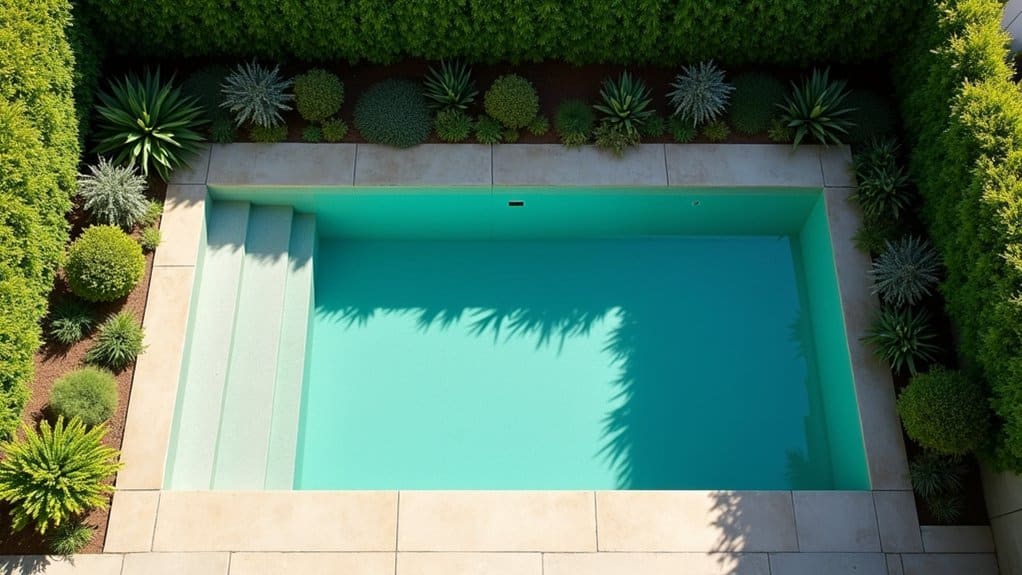
When your backyard measures just a few hundred square feet, a traditional pool simply won’t work, but a cocktail pool will.
A compact backyard pool maxes out at 14 feet long, fitting snugly into narrow lots while leaving room for patios and seating areas. You’ll gain a functional water feature without sacrificing your entire outdoor space.
Compact pools max out at 14 feet long, fitting narrow lots while preserving space for patios and seating.
The modern cocktail pool integrates seamlessly with outdoor kitchens and entertaining zones. Depths between 3 and 5 feet create safe, lounging-friendly environments where you can relax or socialize comfortably. Often referred to as spools, these pools offer a fusion of style and utility that appeals to homeowners seeking both aesthetics and function.
The modern cocktail pool integrates seamlessly with outdoor kitchens and entertaining zones, offering a refined balance of form and function. Depths between three and five feet create safe, lounging-friendly environments where you can relax or socialize comfortably, and when evaluating the cost to install cocktail pool, these shallower dimensions often translate into lower excavation and material expenses. Often referred to as spools, these pools provide a fusion of style and utility that appeals to homeowners seeking both aesthetic impact and practical design.
Consider these cocktail pool ideas for maximizing your space: built-in benches eliminate separate furniture needs, tanning ledges add luxury without expanding the footprint, and customizable shapes work around existing landscaping. You can also add waterfalls or spa sections to create personalized water features that enhance your relaxation experience. For added versatility, spools can be equipped with heaters and jets to provide year-round hydrotherapy even in smaller spaces. You’re not compromising, you’re optimizing every square foot for both beauty and purpose.
What Does a Cocktail Pool Actually Cost?
Sizing your cocktail pool to fit a compact yard is one challenge, budgeting for it is another. Most homeowners invest between $15,000 and $35,000 for cocktail pool designs, with the national average landing around $25,000. Small cocktail pool designs using DIY approaches can start at $5,000, while premium installations reach $85,000.
Your total investment breaks down into predictable categories:
- Labor costs account for 25% to 50% of your budget, including excavation at $100 to $300 per hour
- Permits and preparation range from $500 to $2,000, plus site leveling at $0.40 to $2.00 per square foot
- Monthly maintenance runs $80 to $150, lower than traditional pools due to reduced surface area
Material choices like fiberglass or vinyl affect both installation costs and long-term upkeep efficiency. Square and rectangular shapes are quicker and easier to install, making them more budget-friendly options for cost-conscious homeowners. Adding bonus features like water heaters, jets, or lighting can increase your total cost significantly beyond the base installation price. Annual maintenance costs typically range from $900 to $1,600, which remains more affordable than full-sized pools due to the smaller water volume and surface area.
Cocktail Pool Sizes That Work in Tight Spaces
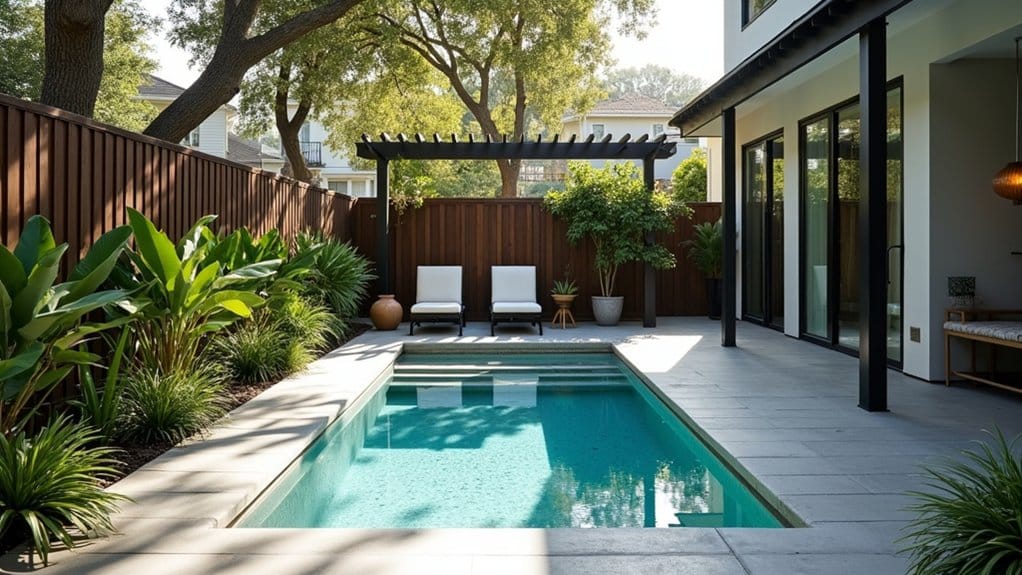
Finding the right cocktail pool dimensions starts with understanding what fits your available space. Most cocktail pools range from 8 to 14 feet in length and 6 to 8 feet in width, making them ideal for compact backyards. You’ll typically work with depths between 3 to 5 feet, shallow enough for safe lounging yet deep enough for invigorating dips.
Your pool’s footprint leaves room for patios, seating areas, and outdoor kitchens without overwhelming your yard. Rectangular and square shapes maximize space efficiency, though freeform designs can soften tight corners. You can choose above-ground, semi-inground, or fully recessed installations based on your property’s layout. The shallow depths mean these pools are not suitable for diving or cannonballs, so plan activities accordingly.
These pools comfortably accommodate fewer than 10 people, perfect for intimate gatherings. Despite their smaller scale, they support jets, heaters, and water features for complete functionality. You can even integrate spa or hot tub elements to create a multi-purpose retreat that combines swimming and hydrotherapy in one compact design. The compact size also means lower maintenance costs and reduced operational expenses compared to larger pool options.
Inground vs. Above-Ground Cocktail Pools: Which Fits Best?
How you position your cocktail pool, inground, above-ground, or semi-inground, shapes everything from your budget to your yard’s final aesthetic.
Inground pools integrate seamlessly into compact landscapes, offering lifetime durability and extensive customization including tanning ledges and built-in seating. You’ll invest $45,000 to $100,000+, but you’re gaining permanent value and refined spatial harmony. Many manufacturers like Leisure Pools back their fiberglass options with a Lifetime Structural Warranty. With proper maintenance, these pools can last 50-100 years, making them a true long-term investment.
Above-ground options cost $2,500 to $10,000, install quickly without excavation, and suit tight yards where portability matters. They’re rarely deeper than five feet and last 7-15 years.
Consider these deciding factors:
- Budget flexibility, above-ground saves upfront; inground reduces long-term repair costs
- Installation timeline, above-ground completes in days; inground requires permits and extended construction
- HOA restrictions, above-ground pools may face limitations in certain communities
Your choice determines how efficiently your small yard functions and flows.
Popular Cocktail Pool Shapes and Design Styles
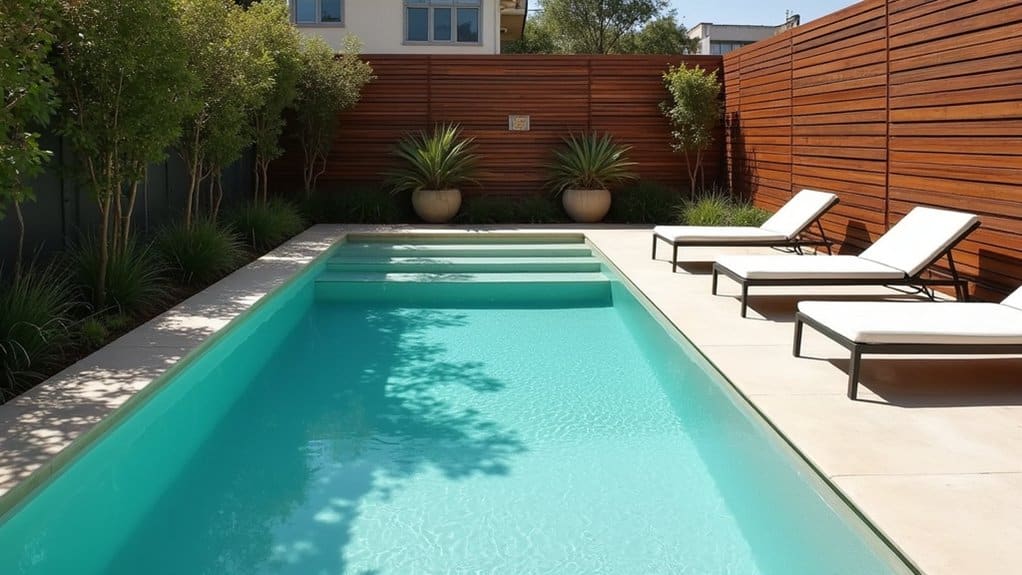
Once you’ve settled on your pool’s placement, the shape you choose directly impacts how your small yard functions and feels. Classic rectangles measuring 10-16 feet long by 6-8 feet wide deliver timeless appeal while fitting awkward spaces efficiently. If you’re working with an especially compact yard, circular designs up to 12×14 feet maximize usable water volume while creating intimate gathering spots.
Custom shapes like L-forms, kidney curves, or freeform designs let you tailor your pool to your yard’s unique contours. You’ll integrate built-in benches seamlessly while maintaining aesthetic flow. Modern styles feature in-deck placement, LED lighting, and swim jets for immersive experiences without wasting square footage. For entertaining, consider designs accommodating up to 12 people with colorful tile waterlines and adjacent fire pits or outdoor kitchens. The smaller footprint of cocktail pools allows you to incorporate additional outdoor features like pergolas, stone fireplaces, and dedicated grill areas that transform your yard into a complete entertainment destination. With a standard depth of 3-5 feet, these pools strike the perfect balance between a relaxing soak and a refreshing swim. Beyond relaxation, cocktail pools are also ideal for at-home fitness and low-impact workouts, making them a versatile addition to any small backyard.
Fiberglass, Concrete, or Vinyl: Choosing Your Material
Every material choice shapes your cocktail pool’s longevity, maintenance demands, and how efficiently it integrates with your compact outdoor space. what does a cocktail pool look like can greatly influence its overall aesthetic and functionality. With creative design elements, such as unique tiling and vibrant lighting, these pools can transform a small area into a private oasis. The integration of stylish water features and seating arrangements also adds to the charm and usability of the space.
Consider these three options for your small yard:
- Fiberglass, Factory-built shells install in 2-3 weeks, and the non-porous gelcoat requires 30% less chlorine while resisting algae growth naturally. The smooth surface is also fully saltwater-compatible, giving you flexibility in sanitation systems.
- Vinyl liner, Offers the lowest upfront cost with moderate design flexibility, though you’ll replace liners every 5-10 years.
- Concrete, Delivers unlimited customization but demands 3-5 months for installation and the highest maintenance costs, reaching $15,000-$27,000 over ten years.
For compact spaces prioritizing sustainable upkeep, fiberglass proves ideal. Its smooth surface minimizes chemical use, and quick installation reduces landscape disruption. You’ll preserve your yard’s functional aesthetics while gaining a durable, low-maintenance water feature.
Jets, Heaters, and Seating: Adding Spa Features
You can transform your cocktail pool into a year-round retreat by strategically placing swim jets that enable exercise without expanding your footprint. Compact heaters sized for 400-700 cubic foot volumes maintain comfortable temperatures through every season while pairing efficiently with your existing pool systems. Built-in bench seating maximizes lounging space along pool edges, letting you entertain guests without sacrificing swim area in your 8-14 foot design.
Jet Placement Options
Three key factors determine effective jet placement in cocktail pools: circulation efficiency, user comfort, and space conservation. You’ll want to position return jets at a slight downward angle, all pointing in the same clockwise or counterclockwise direction to create a gentle vortex effect. This unified approach pushes debris toward your skimmer while improving filtration.
For swim jets, install the center approximately 12 inches below the waterline, building them directly into the pool wall during construction.
Consider these space-maximizing placement strategies:
- Corner installations utilize otherwise unused areas while creating visual depth
- Wall-integrated swim jets eliminate equipment intrusion into your limited pool area
- Deck jets or laminars add vertical water features without consuming horizontal space
Strategic positioning transforms compact pools into functional retreats with spa-quality hydrotherapy.
Heater Selection Guide
Selecting the right heater comes down to matching your usage patterns with your yard’s spatial constraints. For tight equipment areas, compact gas models like the Jandy JXi deliver powerful heating without consuming precious square footage. If you’re hosting weekend gatherings, gas heaters provide rapid temperature boosts when you need them most.
Heat pumps offer superior efficiency for consistent use in mild climates. Models like the Raypak Crosswind measure just 16.5x39x26 inches while achieving COP ratings above 5.5. You’ll extract ambient air heat at lower operating costs, making them ideal for sustainable pool design.
Prioritize titanium heat exchangers if you’re running a saltwater system, they’ll resist corrosion and extend your equipment’s lifespan. Consider hybrid setups to balance quick heating with long-term energy savings.
Built-In Seating Styles
When you’re working with a compact pool footprint, built-in seating transforms unused water volume into functional relaxation zones. Wraparound seat walls maximize perimeter space while eliminating the need for separate patio furniture. You’ll gain both aesthetic clean lines and practical lounging areas that serve multiple purposes.
Consider these high-impact seating configurations:
- Curved seating areas with integrated spa jets provide therapeutic benefits without requiring a separate spa installation
- Submerged benches along pool walls create entertaining zones while maintaining swim space
- Wide integrated steps double as shallow lounging ledges for sunbathing
Seat walls also offer ideal mounting points for deck jets and mini waterfalls, adding visual movement without consuming additional square footage. You’re fundamentally stacking functions, seating, water features, and spa elements, into one efficient design element.
How to Landscape Around Your Cocktail Pool
Thoughtful landscaping transforms your cocktail pool area into a cohesive outdoor retreat without sacrificing precious square footage. You’ll want to select compact, non-invasive plants like columnar hopseed bush or clumping bamboo that provide privacy screens without aggressive roots threatening your pool’s plumbing. Integrating your deck or patio materials, whether natural stone, pavers, or tile, directly around the pool creates visual continuity that makes your small yard feel more expansive.
Space-Saving Plant Options
Compact yards demand strategic plant choices that maximize visual impact without stealing precious square footage from your cocktail pool area. You’ll want vertical growers that create privacy screens while maintaining a sleek footprint around your water feature.
Consider these space-efficient options:
- Bamboo Palm grows upright in containers, providing privacy without spreading roots that threaten pool plumbing.
- Clumping bamboo like bambusa varieties softens hardscape edges and absorbs noise while staying contained.
- Trellises with modular planters create living walls that use minimal floor space yet deliver lush greenery.
Ornamental grasses such as regal mist add vertical texture and movement without producing heavy litter that clogs your skimmer. These strategic selections let you maintain an open, airy atmosphere while still enjoying poolside greenery.
Deck and Patio Integration
Because cocktail pools occupy minimal square footage, your deck and patio design becomes critical for maximizing every inch of usable outdoor space. You can integrate a small plunge pool directly into your existing deck, cutting sections to create an in-ground feel without extensive excavation. Position your pool adjacent to current structures to minimize new construction while maintaining seamless flow.
Select composite decking for superior moisture resistance, or pair light gray wood with contrasting pool tiles for visual depth. Break your deck into zoned platforms featuring built-in benches and fire pits to define distinct relaxation areas. Link your pool directly to outdoor kitchens and patios for efficient entertaining zones. Use stone pathways and built-in planters to create natural shifts, transforming compact yards into cohesive, functional outdoor living spaces.
Frequently Asked Questions
How Long Does It Take to Install a Cocktail Pool?
You’ll find installation timelines vary dramatically based on your pool type. Prefab steel or modular cocktail pools get you swimming in just 1, 3 days with minimal disruption to your yard. Fiberglass shells install within three days after excavation. However, traditional in-ground cocktail pools require months, sometimes over a year, when you factor in permitting, excavation, curing, and finishing. Weather delays, material shortages, and add-ons like LED lighting can extend your timeline further.
Can Cocktail Pools Be Used Year-Round in Cold Climates?
Yes, you can use cocktail pools year-round in cold climates with the right heating system. You’ll need efficient heaters that maintain comfortable temperatures while managing energy consumption. Premium models feature insulated walls that retain heat during winter and keep water cooler in summer. Because you’re heating less water volume, you’ll spend less on energy costs than with conventional pools, making year-round enjoyment both practical and sustainable.
Do Cocktail Pools Increase Home Resale Value?
Yes, cocktail pools can increase your home’s resale value by 5% to 15%, particularly in warm climates where buyers expect water features. You’ll recover approximately 15-25% of your initial investment at sale. Their compact footprint actually works in your favor, smaller plunge pools often deliver higher ROI than full-size options. You’ll want to maintain yours well and consider energy-efficient upgrades to maximize your return when selling.
What Permits Are Required to Install a Cocktail Pool?
You’ll need a building permit before breaking ground on your cocktail pool in Georgia. Submit a detailed site plan showing property boundaries, pool placement, and barrier specifications. If you’re on a septic system, you’ll require environmental health approval. Your permit covers electrical and plumbing inspections, though licensed subcontractors must file affidavits beforehand. Expect multiple inspections, from site location through final barrier verification, before you’ll receive your certificate of occupancy.
How Much Maintenance Does a Cocktail Pool Require Weekly?
You’ll spend about 2-3 hours weekly maintaining your cocktail pool. Skim debris daily, brush walls and vacuum the floor, then empty skimmer baskets to keep circulation flowing. Test your water chemistry twice weekly, balancing pH between 7.0-7.5 and maintaining proper chlorine levels. Shock the pool weekly and backwash filters as needed. Run your pump 8-24 hours daily, the compact size actually reduces chemical use and energy demands compared to larger pools.