Converting pool to saltwater can cut your annual chemical costs by up to 80% while providing gentler water that’s easier on skin and hair. You’ll face upfront costs of $1,000, $2,500 for equipment and installation, plus you’ll need to clean your salt cell quarterly and replace it every three to seven years at $200, $700. Understanding the full maintenance schedule and hidden costs will help you decide if this investment fits your situation. Converting a pool to saltwater can cut your annual chemical costs by up to 80% while providing gentler water that’s easier on skin and hair, which is why many homeowners ask how much does it cost to switch a pool to salt water before committing. You’ll face upfront costs of $1,000, $2,500 for equipment and installation, along with ongoing maintenance like cleaning the salt cell quarterly and replacing it every three to seven years at $200, $700, so understanding the full schedule and hidden costs will help you decide if this investment fits your situation.
How Does a Saltwater Pool System Work?
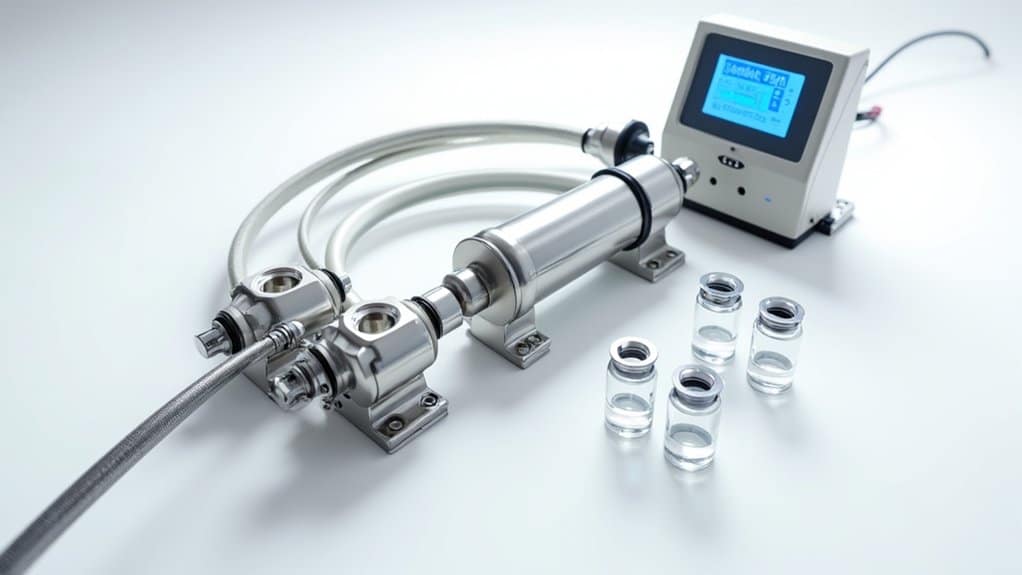
A saltwater pool system relies on a salt chlorine generator to produce chlorine through electrolysis rather than requiring manual addition of chlorine tablets or liquid. The salt cell, installed on your pool’s return line after the pump and filter, contains titanium plates coated with ruthenium or iridium. When electrical current passes through the saltwater, the electrolysis process breaks down sodium chloride into chlorine gas, hydrogen, and sodium hydroxide.
The chlorine gas dissolves into water, forming hypochlorous acid, the same sanitizing compound found in traditional chlorine products. Chlorine distribution occurs automatically as treated water flows through return jets into your pool. The system creates a continuous cycle where chlorine sanitizes the water, then converts back to salt, repeating the process without constant chemical additions. The hypochlorous acid circulates and sanitizes the pool water continuously, eliminating bacteria and algae as it moves throughout the system. The control board provides electricity to charge the cell and allows you to adjust chlorine output levels based on your pool’s needs. The control unit monitors both the salt cell performance and water composition to ensure optimal sanitization levels are maintained.
How to Convert Your Pool to Saltwater
Converting your pool to saltwater requires specific equipment, proper installation sequencing, and an honest assessment of your technical abilities. You’ll need a salt chlorinator system rated for your pool’s volume, pool-grade salt, and testing equipment to verify water chemistry throughout the process. Understanding each step, from equipment preparation to system activation, helps you decide whether to tackle this project yourself or hire a licensed professional. The system works by converting dissolved salt into chlorine through electrolysis, producing a steady, controlled level of sanitizer for your pool. To achieve the proper salinity level, you’ll need to add 500-600 pounds of pool-grade salt to your pool water.
Equipment You’ll Need
Essential testing equipment includes digital kits or test strips measuring salt levels, chlorine output, pH, and alkalinity. Don’t overlook safety gear, protective glasses and gloves protect you during installation and chemical handling. Installing an in-line anode is essential for saltwater pools to protect against the high total dissolved solids created by the salt. The heart of your conversion is the salt chlorine generator, which uses electrolysis to convert pool-grade salt into free chlorine that sanitizes your water.
Step-by-Step Installation Process
How straightforward is converting your existing pool to a saltwater system? The step-by-step installation process begins with testing and balancing your water chemistry, pH, alkalinity, and cyanuric acid levels must reach suitable ranges first. Since ideal chemical levels vary between different pools, consulting your installation manual or a pool expert helps identify your specific requirements.
Next, install your salt chlorine generator cell in the plumbing line after your filter. Position it before the return jets and guarantee proper electrical connections. Professional installation ensures safety and proper system function throughout the conversion process. You’ll also need to mount the chlorinator controller on a wall near your pool equipment pad for easy access and monitoring.
Calculate your salt requirements based on pool volume, typically targeting 2,500-3,500 ppm. Spread salt evenly across the surface, then run your pump for 24 hours to dissolve completely.
Once dissolved, calibrate and activate your system. Understanding chlorine vs saltwater pool differences helps you adjust settings correctly. Ongoing saltwater pool maintenance includes weekly chemistry testing and quarterly cell cleaning.
DIY Versus Professional Installation
Homeowners frequently face a critical decision when upgrading to saltwater: tackle the installation themselves or hire a professional. When weighing saltwater pool pros and cons, your installation choice significantly impacts long-term system performance.
DIY installation eliminates labor costs and gives you control over equipment selection. However, you’ll need competency with electrical connections and PVC plumbing. Improper cell placement or integration errors can cause leaks and system malfunctions.
Professional installation costs $500 to $1,500 for labor, with total conversion expenses ranging from $2,000 to $6,500. You’ll gain expertise in proper salt cell positioning, leak prevention, and often receive warranty coverage. Professionals also have access to advanced leak detection technology that may not be readily available to homeowners attempting DIY conversions.
Should I convert my pool to saltwater myself? Consider your technical skills honestly. Pool ownership considerations include whether you can troubleshoot problems independently or prefer professional support for ideal system reliability. A major benefit of successful conversion is that the system maintains steady chlorine levels automatically, reducing your ongoing maintenance burden regardless of who performs the installation. Keep in mind that you’ll need to budget for replacing the cell and control board every 3 to 7 years, which adds $1,200 to $2,000 to your long-term ownership costs.
How Much Does Saltwater Pool Conversion Cost?
Converting your traditional chlorine pool to a saltwater system typically costs between $500 and $2,500, with most homeowners paying around $1,000 for standard installations.
Saltwater pool conversions run $500, $2,500, with most homeowners spending around $1,000 for a standard installation.
Your pool size directly impacts expenses. A 10,000-gallon pool requires a smaller generator costing $700, $1,230, while a 30,000-gallon pool needs upgraded equipment running $1,430, $2,950. Aboveground pools typically fall in the $500, $1,500 range, whereas inground conversions cost $1,000, $2,500.
The salt chlorine generator represents your primary expense at $500, $2,000. You’ll also need salt, which runs $100, $750 depending on pool volume. Professional installation adds $500, $1,500 in labor costs.
If your existing pump or filter isn’t compatible, expect additional equipment upgrades of $1,000, $3,000. Budget $2,000, $6,500 for conversions requiring significant equipment replacement. Some older heaters, ladders, and stone decking may require upgrades to salt-compatible materials.
Saltwater vs. Chlorine Pools: Annual Cost Comparison
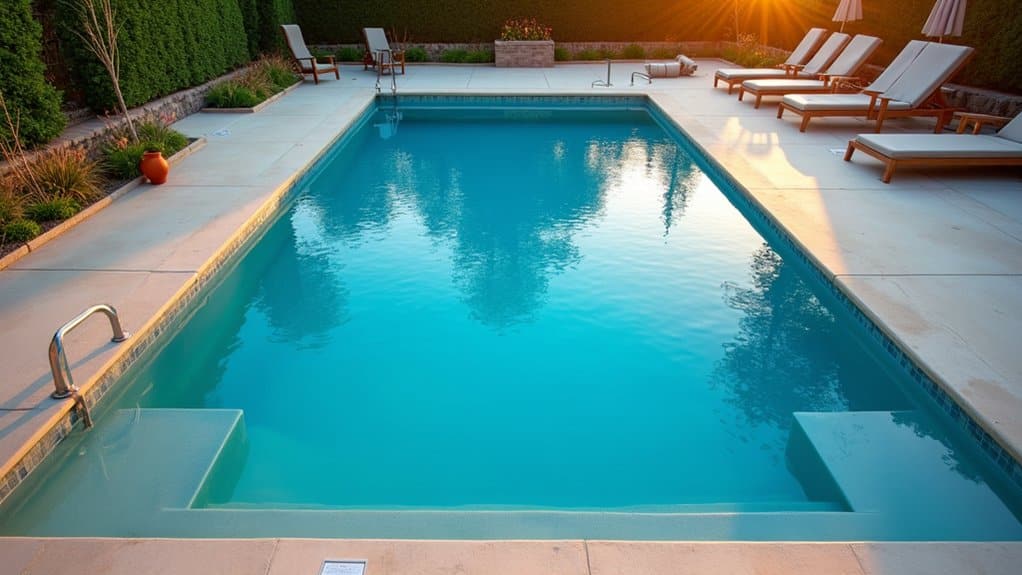
When you’re weighing saltwater against traditional chlorine pools, the annual operating costs tell a compelling story. Saltwater pools cost under $100 yearly for salt and chemicals when properly maintained, while chlorine pools demand $300 to $800 annually in chemical purchases alone.
Saltwater pools: Approximately $30 monthly or $400 yearly for total maintenance
Chlorine pools: $500 to $800 annually in maintenance chemicals
Electricity difference: Saltwater adds only $36 to $48 yearly
You’ll notice saltwater systems run continuously, but this minimal electricity increase doesn’t offset your chemical savings. The real advantage emerges over time, salt costs considerably less than chlorine tablets. Within 2 to 3 years, you’ll recoup your initial saltwater system investment through reduced annual expenses.
Why Pool Owners Switch to Saltwater
You’ll find that switching to saltwater dramatically cuts your annual chemical expenses while delivering noticeably softer water that won’t irritate your skin or eyes. The salt chlorine generator handles sanitization automatically, so you’re not constantly adding chemicals or battling fluctuating chlorine levels. This combination of cost savings, comfort, and reduced hands-on maintenance explains why more pool owners are making the conversion. You’ll find that switching to saltwater dramatically cuts your annual chemical expenses while delivering noticeably softer water that won’t irritate your skin or eyes, especially when using a salt water conversion kit for inground pool systems designed for automated operation. The salt chlorine generator handles sanitization automatically, so you’re not constantly adding chemicals or battling fluctuating chlorine levels, and this combination of cost savings, comfort, and reduced hands-on maintenance explains why more pool owners are making the conversion.
Lower Annual Chemical Costs
One of the most compelling reasons pool owners switch to saltwater systems is the significant reduction in annual chemical costs. Traditional chlorine pools require $600 to $1,200 yearly for tablets and liquid sanitizers, while salt systems dramatically cut these expenses.
Here’s what you’ll save with a saltwater conversion:
- Salt costs only $50 to $100 annually, compared to hundreds spent on chlorine products
- Sanitizer spending drops to 20% or less of traditional chlorine system costs
- Fewer supplemental chemicals needed since stable chlorine levels reduce chloramine buildup
Your salt generator produces chlorine at roughly $1 per pound through electrolysis, eliminating continuous store-bought chlorine purchases. Over 5 to 10 years, you’ll save thousands while maintaining consistent water quality with minimal manual chemical handling.
Gentler on Skin
Beyond cost savings, saltwater pools deliver measurable skin benefits that traditional chlorine systems can’t match. At 3,000 ppm salinity, ten times lower than ocean water, saltwater pools provide gentleness without harsh chemical exposure. Traditional chlorine strips your skin’s natural oils, while saltwater modifies cellular osmotic pressure and stimulates nerve receptors for improved comfort.
Research shows 15-minute salt water submersion enhances skin hydration compared to tap water. If you’re managing eczema, the magnesium content improves barrier function and reduces inflammation. Psoriasis sufferers benefit from mineral absorption during extended swims. For acne-prone skin, salt’s natural exfoliation cleans congested pores without aggressive drying agents.
You’ll notice reduced redness, roughness, and irritation after swimming. The sulphur content provides keratolytic effects, softening and removing dead skin cells naturally.
Simplified Pool Maintenance
While skin benefits make daily swims more comfortable, maintenance simplification drives most saltwater conversions. Your salt cell generator automatically produces chlorine from dissolved salt, eliminating manual chemical additions and reducing testing frequency.
The system continuously sanitizes your pool, which means you’ll spend less time balancing chemistry and more time swimming. Modern units monitor water conditions and adjust chlorine output automatically.
Key maintenance advantages include:
- Reduced chemical handling, No storing hazardous chlorine containers; salt bags last years in dry storage
- Lower algae growth, Consistent chlorine levels minimize scrubbing and vacuuming sessions
- Simplified monitoring, Automatic regulation decreases weekly testing requirements
You’ll still perform basic tasks like skimming debris and occasional vacuuming, but the overall workload drops considerably compared to traditional chlorine pool upkeep.
The Downsides of Saltwater Pool Conversion
Saltwater pools come with drawbacks you’ll need to factor into your decision before committing to conversion. Initial costs run steep, electrolytic chlorine generators cost $500 to $3,200, plus installation fees and pool salt. You’re looking at minimum several hundred dollars before your system even runs.
Salt creates galvanic corrosion on metal components. Your ladders, heaters, handrails, light fixtures, and diving board brackets will deteriorate faster than in traditional chlorinated pools. Stone decking and nearby furniture aren’t immune either.
Ongoing expenses add up quickly. Salt cells require replacement every 3 to 8 years at $200 to $700 each. You’ll need specialized technicians for repairs, and monthly inspections of O-rings and pump seals become essential. Some municipalities prohibit saltwater pools entirely due to environmental concerns, so check local ordinances before proceeding.
Saltwater Pool Maintenance: What to Test and When
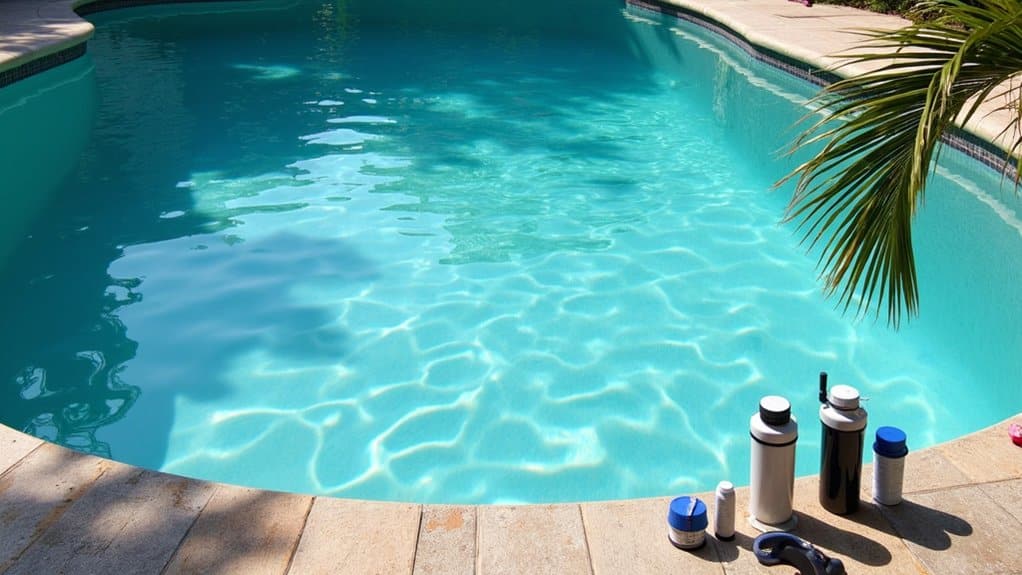
Converting to saltwater doesn’t eliminate pool maintenance, it shifts your testing priorities and schedules. You’ll need to monitor different parameters at varying intervals to keep your system running efficiently. A saltwater pool conversion kit can make this transition smoother, as it often comes with clear instructions and necessary components. Investing in high-quality equipment will help ensure your system remains effective and requires less frequent adjustments. Over time, many pool owners find that the benefits of a saltwater system outweigh the initial setup efforts.
Saltwater pools still need regular care, you’re just trading one maintenance routine for another.
Weekly testing requirements:
- Free chlorine levels (target 1-3 ppm)
- pH levels (maintain 7.2-7.6)
- Water circulation verification
Monthly, you’ll test salinity (2700-3400 ppm), alkalinity (80-120 ppm), calcium hardness (200-400 ppm), and cyanuric acid levels. Don’t rely solely on your generator’s salinity display, manually verify readings with test strips or a digital tester.
Every three months, inspect your salt cell for calcium buildup and scale deposits. Clean it with a high-pressure hose or diluted muriatic acid when necessary. If your pH runs high or water temperatures spike, check the cell more frequently to prevent performance issues.
When Should You Replace Your Salt Cell?
How long your salt cell lasts depends on several factors, but most units deliver between 10,000 and 15,000 hours of operation, typically three to seven years of service. Pool size, usage frequency, and continuous pump operation directly affect this lifespan.
Watch for these replacement indicators: decreased chlorine production despite system adjustments, persistent cloudy water or algae growth, and warning messages like “low salt” or “check cell” that continue after corrections. Inspect the cell physically for visible plate wear, calcium buildup, or scaling. If acid baths no longer restore performance, you’ve reached the end of its service life.
Don’t ignore these signs. A failing cell forces increased chemical adjustments, extra brushing and shocking, and strains your pumps and filters. Regular maintenance extends usability, but timely replacement prevents larger system problems.
Ready to Transform Your Backyard?
Your dream pool is closer than you think. At Schiller Pools, our experienced team brings over 40 years of expertise to every project, delivering stunning fiberglass pool installations and custom pool construction that turn ordinary backyards into extraordinary outdoor retreats. With flexible financing options and lifetime warranty backing, there has never been a better time to get started. Call (561) 475-5997 today for your free estimate.
Frequently Asked Questions
Can I Convert an Above-Ground Pool to Saltwater?
Yes, you can convert your above-ground pool to saltwater using a salt chlorine generator. If you’ve got a vinyl liner pool, you’re in good shape, no draining required. However, you’ll want to avoid steel frame pools since salt exposure causes corrosion within 3-6 years. Opt for resin-based frames for better longevity. You’ll need to balance your water chemistry first, then add pool-grade salt to reach 3000-3500 ppm.
Will Saltwater Damage My Pool Deck or Surrounding Landscaping?
Yes, saltwater can damage your pool deck and landscaping over time. Salt corrodes concrete, causes wood to swell and rot, and fades composite materials. You’ll notice whitening, cracks, and rough textures as early warning signs. To protect your surfaces, rinse your deck with fresh water after swimming, apply solvent-based acrylic sealers annually, and choose salt-resistant materials when possible. Regular maintenance prevents costly repairs and structural deterioration.
Is Saltwater Pool Water Safe for Pets to Drink?
No, saltwater pool water isn’t safe for your pets to drink. While saltwater pools contain about one-tenth the salt concentration of seawater, ingestion can still cause diarrhea, vomiting, and dehydration in dogs. Severe cases lead to seizures and kidney injury. You’ll want to provide constant access to fresh water near the pool, enforce 15-minute swimming breaks, and rinse your pet thoroughly after each swim to prevent complications.
Do Saltwater Pools Work in Colder Climates?
Yes, saltwater pools work in colder climates, but you’ll need to make adjustments. Salt cells reduce chlorine production below 60°F and shut down around 70°F, so you’ll supplement with liquid or granular chlorine during cold months. Proper winterization is essential, clean and store your salt cell indoors, drain equipment, and balance chemistry before shutdown. With appropriate maintenance and freeze protection, you can successfully operate a saltwater system in cold regions.
Can I Use My Existing Pool Pump With a Saltwater System?
Yes, you can typically use your existing pool pump with a saltwater system. Most variable speed pumps handle salt levels up to 5,000 ppm, well above the 3,000 ppm standard for pools. You’ll need to guarantee your pump’s flow rate meets the chlorinator’s requirements to activate its flow switch. Include your pump in the electrical bonding grid, and maintain proper water chemistry to prevent corrosion-related damage over time.