
To choose the best pool color for your backyard, you’ll want to ponder how it complements your deck materials, landscaping, and how you plan to utilize the space. Light blue and turquoise finishes create a tropical, inviting vibe, while sand tones blend seamlessly with natural surroundings. Dark colors deliver dramatic, resort-style elegance and can even warm your water by 5-10 degrees. Understanding each option’s unique benefits will help you create your perfect backyard retreat.
What Gives Pool Water Its Color

Have you ever wondered why some pools shimmer in brilliant turquoise while others glow with deep sapphire tones? The answer lies in light interaction between sunlight and your pool’s unique characteristics.
When sunlight enters your pool, water absorbs red and orange wavelengths first, naturally amplifying blues and greens, especially in deeper areas. Your pool’s finish plays a starring role in pool color selection, as darker finishes produce richer, more dramatic hues while lighter options create bright, transparent effects.
During pool color comparison, you’ll notice depth matters considerably. Deeper pools refract less light from the bottom, intensifying darker tones. Direct sunlight enhances vibrancy and clarity, while overcast conditions subdue your water’s appearance. Reflections from lush greenery or vibrant landscapes surrounding your pool can also alter how the water color appears throughout the day. Water features like fountains or waterfalls can make your pool appear more vivid and brighter by creating movement that shimmers light prisms across the surface. Mineral imbalances such as iron or copper in your water can also cause unexpected discoloration that affects your pool’s overall appearance. Understanding these dynamics helps you achieve the exact aesthetic you’re envisioning.
Light Blue and Turquoise Pool Colors for a Tropical Look
When you’re dreaming of a backyard that feels like an island escape, light blue and turquoise pool colors deliver that tropical ambiance effortlessly. These shades rank among the best pool color options for 2024, transforming ordinary spaces into paradise-like retreats.
Light blue creates a fresh, Mediterranean-inspired aesthetic that enhances clarity and spaciousness. Green turquoise evokes Caribbean lagoons, blending seamlessly with natural surroundings like stone decking and lush vegetation. This makes green turquoise particularly popular in rustic, tropical environments or pools integrated into gardens.
When choosing pool color for your backyard pool design, consider how depth affects perception, shallow areas appear brighter while deeper sections intensify the tone. Glass mosaic tiles in aqua catch sunlight beautifully, adding sparkle and movement. The blue light scatters more in water, making the pool look even more vibrant and inviting. The best swimming pool color choice connects your space with nature while reflecting current design trends that prioritize tranquil, inviting atmospheres. With nearly 300 million stock images available online, you can easily find visual inspiration for turquoise blue pool water to help guide your design decisions.
Sand and Neutral Pool Colors for a Natural Oasis

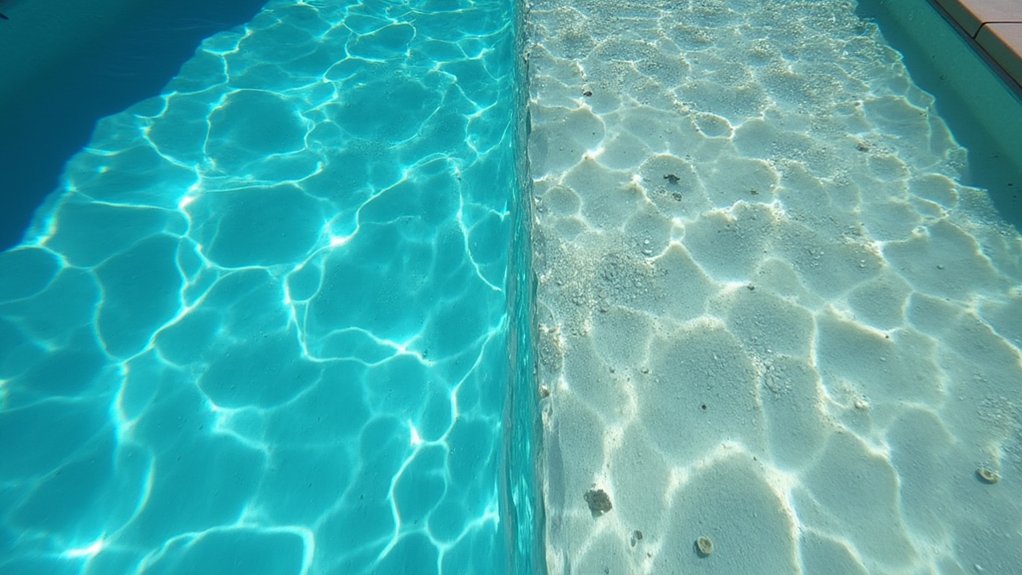
Though tropical blues dominate pool design conversations, sand and neutral pool colors offer an equally stunning alternative for homeowners seeking a natural oasis aesthetic. These warm tones, beige, tan, and light gray, blend seamlessly with desert landscapes, coastal settings, and earth-tone hardscaping.
You’ll appreciate how sandy finishes complement natural stone decking while creating water that shifts between soft greens and warm browns depending on sunlight. Options like Drift Sand promote relaxation with beach-inspired calm, while Diamond Sand adds a subtle shimmer for tropical flair. Keep in mind that the depth of your pool will also influence how these colors appear, with deeper areas displaying richer, darker tones.
Beyond aesthetics, neutral colors deliver practical benefits you’ll value. They reflect sunlight to keep water cooler, hide staining better than brighter alternatives, and make repairs less noticeable. To preserve your chosen shade’s beauty for years to come, maintaining proper water chemistry is essential since imbalanced pH or chlorine levels can cause premature fading. These versatile finishes also boost resale appeal, working beautifully with rock waterfalls, native plants, and modern architectural styles. Since neutral tones generally age best, you can feel confident that your sand-colored pool will maintain its timeless appeal for decades without looking dated.
Dark Pool Colors That Make a Bold Statement
Dark pool colors absorb sunlight to warm your water faster, reducing heater usage while extending your swim season into cooler months. Beyond the practical benefits, these dramatic finishes transform your backyard into a resort-style retreat with rich sapphire and emerald tones that catch every eye. You’ll achieve that sleek, mirror-like surface that’s dominating luxury pool design trends today. Dark finishes are more forgiving than light plaster, effectively hiding stains, discoloration, and minor imperfections that would otherwise be visible. Keep in mind that judging depth perception can be challenging in dark-colored pools, especially for children, so consider adding markers and lighting to indicate shallow and deep areas.
Heat Retention Benefits
Beyond their striking visual impact, dark pool colors offer a practical advantage that budget-conscious homeowners appreciate: natural heat retention. Dark surfaces absorb sunlight rather than reflecting it, capturing the sun’s infrared radiation to warm your water naturally. You’ll notice your pool heats faster on sunny days, with some owners reporting temperatures 5-10 degrees Fahrenheit warmer than lighter alternatives.
This warmth translates directly to savings. Your heater runs less frequently, reducing electricity costs, especially valuable in sunny climates where nature does the heavy lifting. Navy blue delivers similar warming benefits while maintaining enough visibility to spot algae growth early. This compromise is particularly useful since black algae detection becomes challenging with the darkest pool colors.
For maximum efficiency, pair your dark liner with a quality pool cover. You’ll retain that absorbed heat overnight, extending your swimming season without extending your energy bill. However, homeowners in desert climates should note that vinyl liners soften and expand under intense heat and UV exposure, leading to stretching and wrinkling over time. When selecting your dark liner, consider choosing a thick reinforced 60 mil PVC membrane for superior durability and temperature resistance that can last over 20 years with proper maintenance.
Creating Luxurious Ambiance
While energy savings matter, the real showstopper with dark pool colors is their ability to transform your backyard into a resort-worthy retreat. Deep finishes deliver high-end aesthetics that luxury-focused homeowners crave, creating the visual impression of private lagoons or sleek infinity pools.
You’ll notice water tones ranging from sapphire blue to emerald green, far richer than the pale blue common with white plaster. This depth creates striking contrast against surrounding greenery, making your outdoor space feel cohesive and intentional. These darker hues mimic natural bodies of water, giving your pool an organic, lake-like quality that blends seamlessly with the landscape.
Dark interiors also soften harsh sun reflections, reducing glare that can strain your eyes during peak daylight hours. The result? A sleek, mirror-like surface that’s as comfortable to lounge beside as it is beautiful. In competitive housing markets, this sophisticated look appeals to discerning buyers seeking modern pool design trends.
How Pool Color Affects Water Temperature
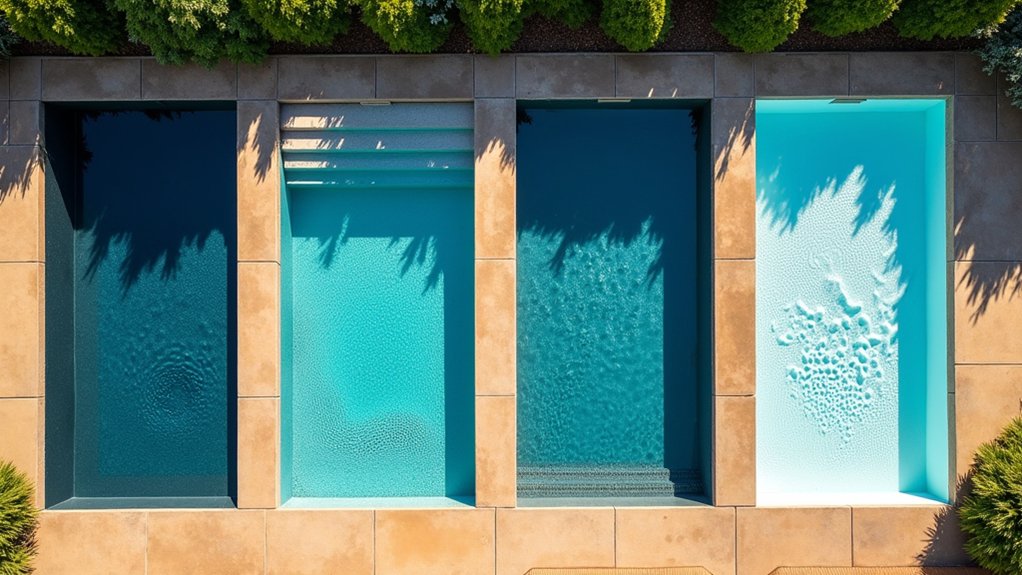
When you’re weighing pool color options, temperature impact deserves serious consideration alongside visual appeal. Dark hues like jet black, charcoal, and navy blue absorb more sunlight, potentially raising water temperature by a few degrees, some observations suggest 5-10 degrees warmer in ideal conditions. This natural heating effect enhances swimmer comfort during cooler months.
Conversely, lighter shades like white and pale blue reflect sunlight, keeping water cooler, perfect for hot climates where heat relief matters most. However, environmental factors considerably influence results. Peak sun exposure between 10 AM and 4 PM maximizes absorption, while cloud cover and seasonal changes diminish color’s thermal effect.
You’ll also want quality pool covers for consistent warmth retention. Dark colors may fade faster and hide algae growth, so balance temperature benefits against maintenance visibility when finalizing your selection.
Match Your Pool Color to Your Deck and Landscaping
Your pool’s color creates the strongest visual impact when it harmonizes with surrounding deck materials and landscaping elements. Start by pulling shades from your home’s exterior palette, professional painters can help identify compatible tones. Neutral options like gray, beige, or white work beautifully if exact matches aren’t available.
Consider your landscaping style when finalizing decisions. Earthy tones like brown, tan, and terra cotta blend seamlessly with lush greenery, mimicking natural pond aesthetics. Gray shades replicate slate or travertine for sleek, modern appeal around rectangular pools.
Don’t overlook multi-color integration. Contrasting coping, typically 12 inches wide, defines your pool’s edge while adding visual interest. Mixing materials like gray concrete with brick pavers creates bespoke character. Blue-gray accents echo river rock elements and enhance your water’s natural color for a cohesive outdoor retreat.
Best Pool Colors for Lap Swimming, Relaxation, and Entertaining
Your pool’s purpose shapes the ideal color choice, whether you’re training for endurance or hosting weekend gatherings. For lap swimming, darker tones like graphite grey and deep blue reduce surface glare, helping you maintain focus during intense workouts. When entertaining takes priority, shimmer finishes and vibrant hues like sapphire blue create eye-catching ambiance that elevates every poolside event.
Lap Swimming Visibility Needs
Lap swimmers benefit most from pool colors that enhance underwater visibility and lane perception. When you’re training or exercising, you’ll want a finish that helps you track your position and maintain proper form throughout each stroke.
Lighter pool colors typically offer the clearest sightlines, allowing you to see walls, lane markers, and depth changes with ease. Consider these key factors when selecting your pool’s finish:
- Contrast levels, Choose colors that create distinct boundaries between pool surfaces and water
- Light reflection, Opt for finishes that minimize glare during morning or afternoon sessions
- Depth perception, Select tones that help you gauge distance accurately
Your color choice directly impacts your swimming experience and workout effectiveness.
Ambiance for Entertaining
When you’re designing a pool for entertaining, color becomes your most powerful tool for setting the mood. Bright turquoise promotes energy and sociability, making it ideal if you host frequently. Vibrant aqua and teal strike the perfect balance between playfulness and relaxation, creating a cheerful, family-friendly atmosphere. Miami Blue captures coastal charm and resort-like ambiance your guests will love.
For sophisticated evening gatherings, darker hues transform your space entirely. Charcoal and midnight black add drama and elegance, especially stunning with nighttime lighting. Deep cobalt creates mystery while making your pool appear more inviting and impressive. Ebony blue with shimmer effects exudes luxury that elevates upscale entertaining.
Consider graphite grey with light blue highlights for sleek contemporary appeal that complements modern outdoor spaces beautifully.
Frequently Asked Questions
Does Pool Color Affect How Visible Dirt and Algae Are?
Yes, pool color directly affects how visible dirt and algae are. If you choose a lighter shade, you’ll spot debris, stains, and algae growth almost immediately, making maintenance easier but more frequent. Darker colors hide imperfections and camouflage algae, giving your pool a cleaner look longer, though problems can go undetected. Consider your lifestyle: do you prefer catching issues early or enjoying that seamless, lagoon-inspired aesthetic trending in luxury backyards?
Can I Change My Pool Color After Installation?
Yes, you can change your pool color after installation. Your options depend on your pool type, concrete pools allow resurfacing with tinted plaster, aggregate, or pebble finishes, while vinyl pools require full liner replacement. Fiberglass pools can be repainted or refinished with gelcoat. Costs range from $1,400 for basic painting to $15,000+ for premium aggregate finishes. It’s a great opportunity to refresh your backyard’s aesthetic and embrace current design trends.
How Does Pool Color Look at Night With Underwater Lighting?
Your pool color dramatically transforms under underwater lighting. Dark lagoon finishes absorb light, requiring more fixtures to achieve that moody, glowing effect, while white tile reflects brilliantly with fewer LEDs. Mid-blue lights create a balanced, universally appealing look, but you can also explore color-changing options that shift from calming aqua to vibrant purples. Strategic light placement highlights water movement and architectural details, turning your pool into a stunning nighttime focal point.
Will My Pool Color Fade Over Time From Sun Exposure?
Yes, your pool color will fade over time from sun exposure. UV rays break down the gelcoat or liner, causing gradual pigmentation loss and a duller appearance. You’ll notice this more in sunny climates where intense sunlight accelerates discoloration. To protect your investment, consider using pool covers, UV-protective coatings like ecoFINISH, and shade structures. Maintaining balanced water chemistry also prevents premature fading and keeps your pool looking vibrant longer.
Do Certain Pool Colors Increase Home Resale Value?
Yes, certain pool colors can influence your home’s resale value. Timeless shades like deep blue and aqua appeal to most buyers, while trendy or unconventional colors may narrow your market. You’ll want to choose a color that complements your home’s architecture and landscaping, creating a cohesive outdoor aesthetic. Since well-maintained, visually appealing pools can boost property value by up to 7%, selecting a universally attractive color maximizes your investment’s return.