
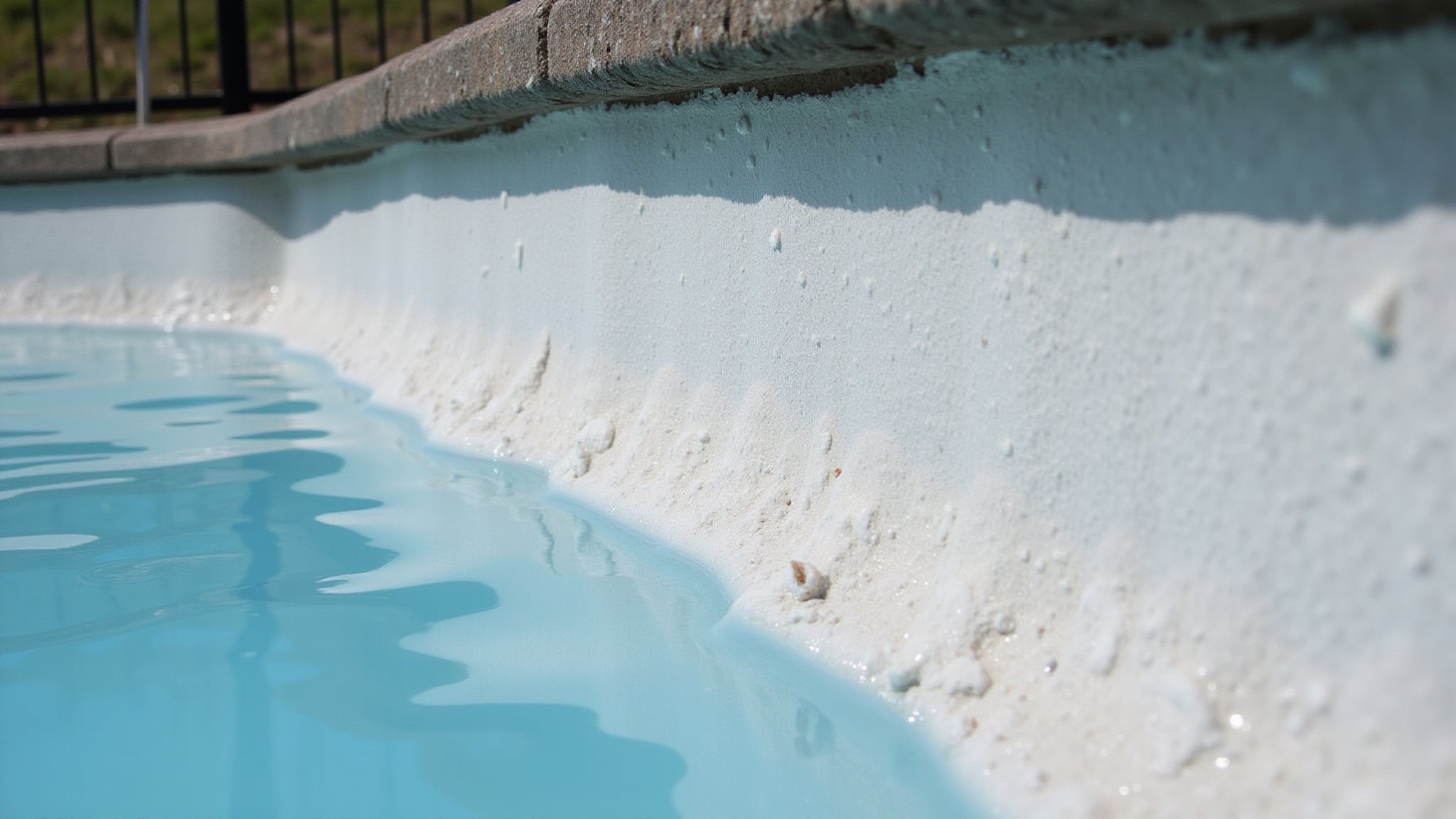
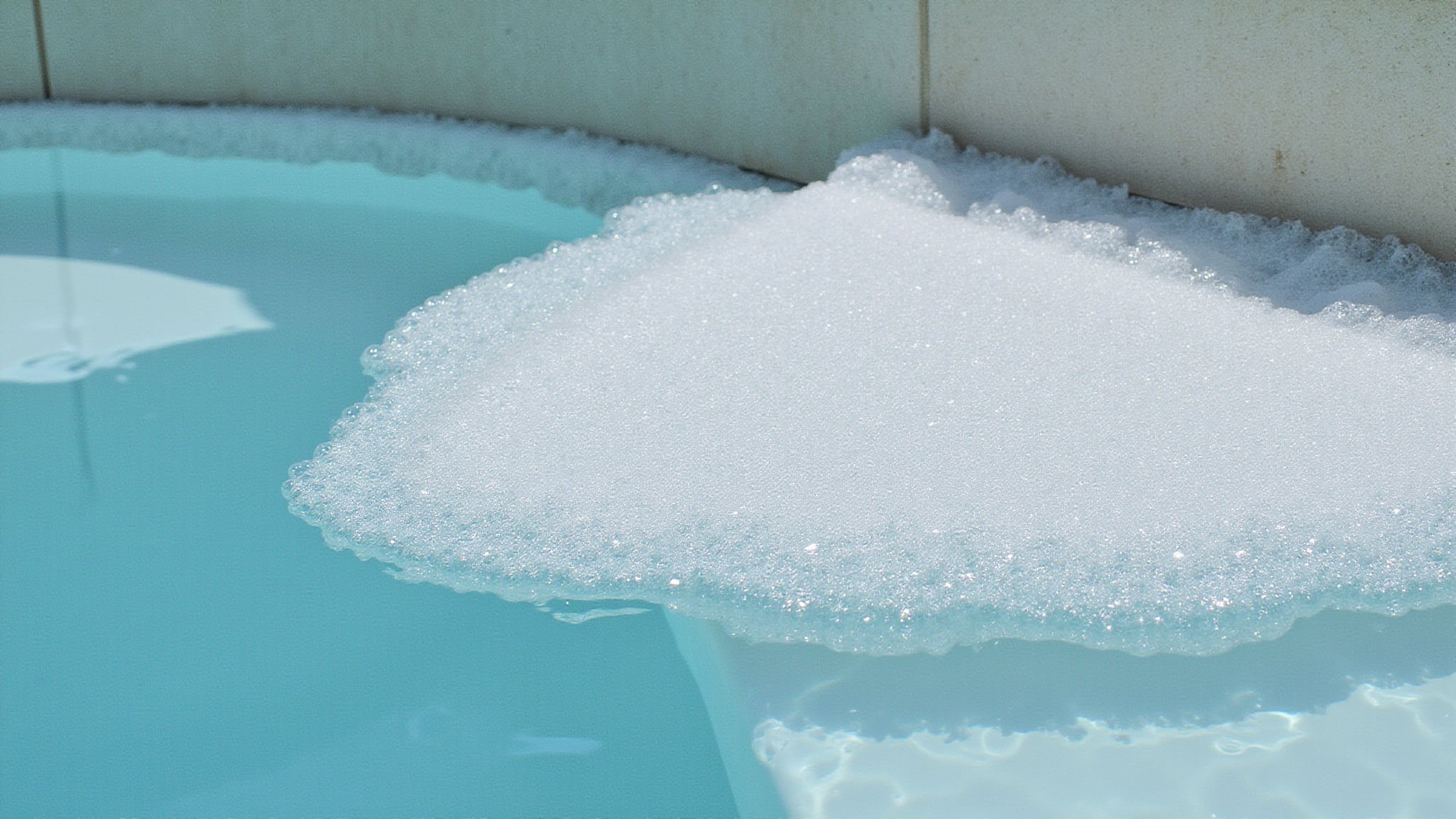
Pool flocculant is a chemical that uses positively charged ions to attract and bind fine, negatively charged particles floating in your water. These particles clump together into heavy masses that sink to the pool floor, where you’ll vacuum them directly to waste. You should use flocculant when your pool stays severely cloudy despite shock treatment and normal filtration, typically when visibility drops below three feet. Understanding your filter type and proper application timing makes all the difference.
Pool flocculant is a chemical that uses positively charged ions to attract and bind fine, negatively charged particles floating in your water. These particles clump together into heavy masses that sink to the pool floor, where you’ll vacuum them directly to waste. Knowing When to use flocculant is critical, as you should apply it when your pool remains severely cloudy despite shock treatment and normal filtration, typically when visibility drops below three feet. Understanding your filter type and proper application timing makes all the difference in achieving rapid, effective water clarity.
Pool Flocculant vs. Clarifier: What’s the Difference?
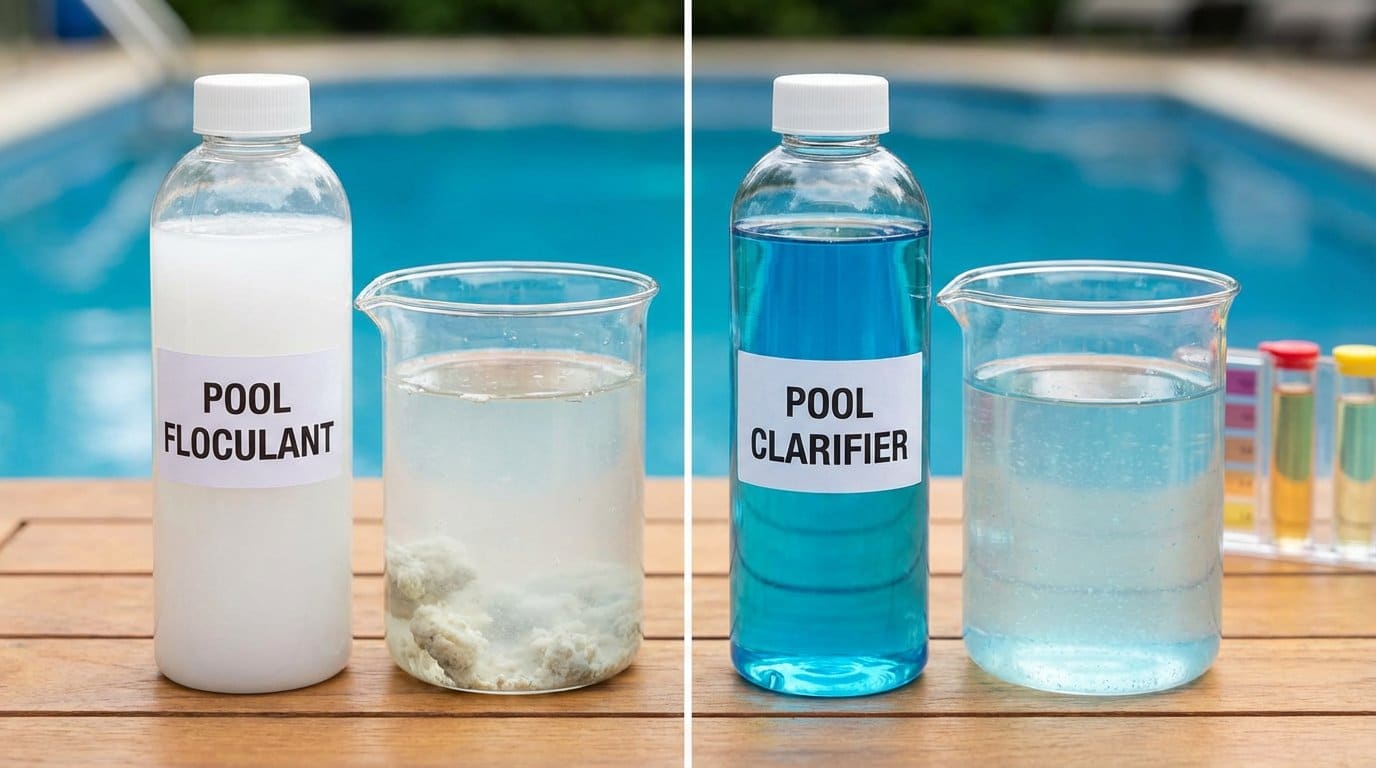
Clarity is the goal when treating a cloudy pool, but choosing between flocculant and clarifier depends on your situation. Both use positively charged ions to attract negatively charged debris, yet they work differently.
Pool flocculant coagulates fine particles into heavy clumps that sink to the bottom, requiring manual vacuuming to waste. It’s your go-to cloudy pool treatment for severe murkiness, clearing water within hours. Before applying flocculant, switch to recirculate mode to bypass the filter system entirely.
Pool clarifier forms smaller clusters that stay suspended, allowing your filter to capture them through normal circulation. This process takes days but demands less effort, just backwash or clean your filter afterward.
Choose flocculant for one-time severe problems like post-flood conditions. Opt for clarifier during routine maintenance or mild cloudiness. Your filter type also matters: flocculant works best with sand filters featuring waste settings. Keep in mind that flocculant cannot be used with cartridge filters, so verify your equipment before purchasing.
When Your Pool Actually Needs Flocculant Treatment
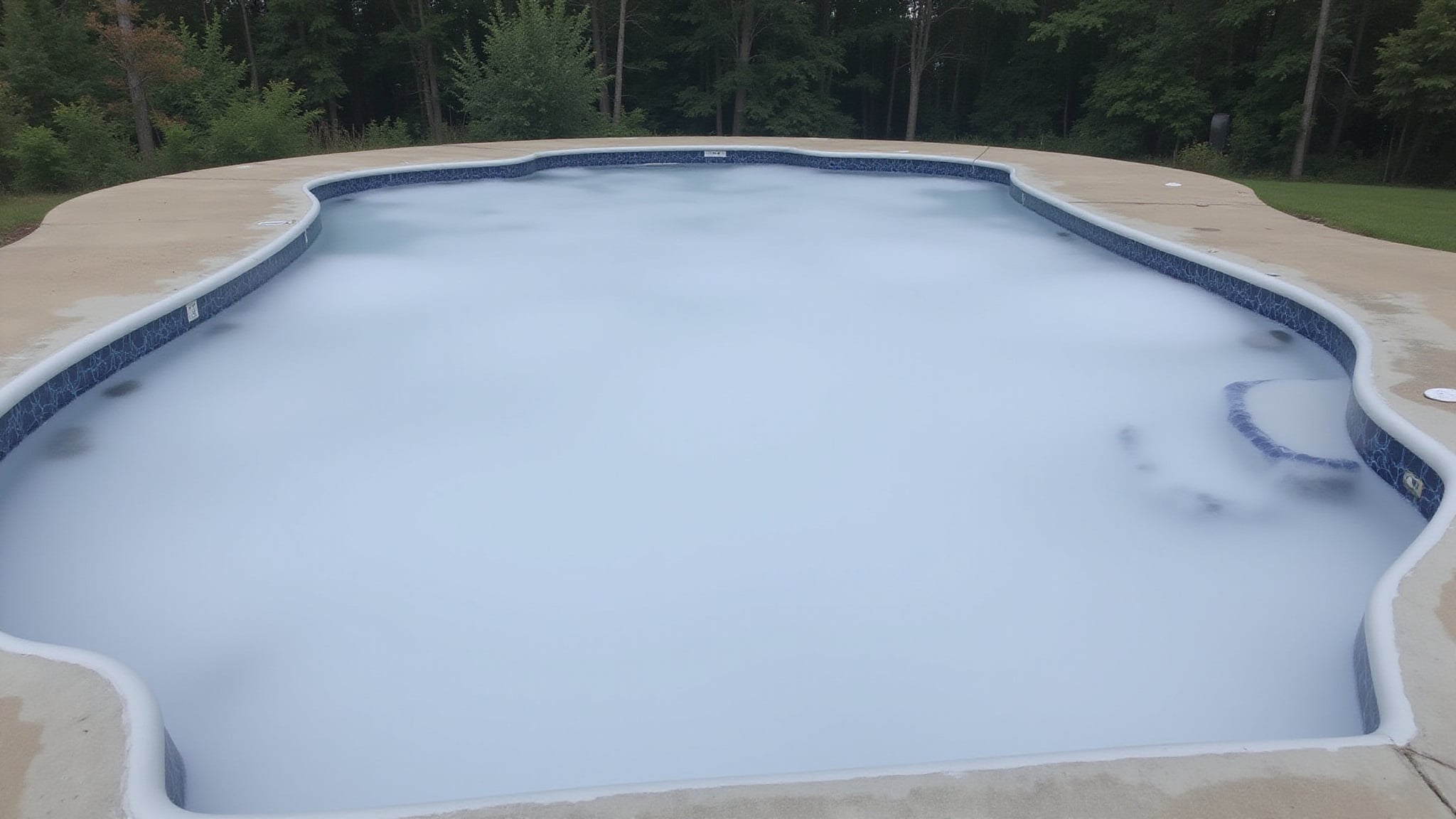
You’ll know your pool needs flocculant when the water remains severely cloudy with less than one foot of visibility despite running your filter continuously. This level of cloudiness often occurs after shock treatment, when dead algae breaks down into microscopic particles too fine for standard filters to capture. These fine particles carry a negative electrical charge, which prevents them from naturally clumping together and settling out of the water. If clarifiers and routine maintenance haven’t restored clarity within 24-48 hours, flocculant becomes your most effective solution for binding these stubborn particles together. Flocculant is also ideal for pools that have been inactive for extended periods and accumulated significant dirt and debris. Unlike clarifiers that work gradually through your filtration system, flocculants deliver near-immediate results by clumping particles into heavier masses that sink to the pool floor for removal.
Signs of Cloudy Water
How do you know when your pool actually needs flocculant treatment rather than simpler fixes? You’ll recognize the need for pool flocculant when standard pool chemicals and filtration fail to restore clarity. Flocculant for pools becomes necessary when fine particles remain suspended despite proper chemical balance and filter operation.
Watch for these specific indicators that floc for pool treatment is appropriate:
- Water stays cloudy after 24-48 hours of continuous filtration
- You can’t see the pool floor or your visibility drops below 3 feet
- Fine white particles persist despite balanced calcium levels
- Clarifiers haven’t improved water clarity within their recommended timeframe
- You notice a musty smell around the pool along with slippery surfaces on walls, suggesting algae presence
These signs confirm suspended particles are too small for your filter to capture, making flocculant your most effective solution. Before reaching for flocculant, run water quality tests to check if your free chlorine level falls within the ideal 1-3 ppm range, as improper chlorine balance is a common cause of cloudy water that may not require flocculant treatment. Keep in mind that cloudiness can also appear after heavy pool use or storms, which may temporarily overwhelm your filtration system.
After Shock Treatment
Shock treatment kills bacteria and algae effectively, but it often leaves behind a cloudy mess of dead contaminants that your filter can’t capture. These micro-particles remain suspended, creating persistent haze that standard filtration won’t resolve.
| Shock Type | Wait Time Before Flocculant |
|---|---|
| Chlorine-based | 24-48 hours |
| Non-chlorine | 15 minutes |
Before adding flocculant, run your pump continuously for 8-10 hours to circulate the shock treatment thoroughly. Then test your water, chlorine should read between 1-3 ppm and pH must sit below 7.6 for flocculant to bind particles effectively. Maintaining pH between 7.2 and 7.4 is also essential for your initial shock treatment to work properly before flocculant application. You should also ensure alkalinity levels between 80 and 120 ppm are maintained for optimal water balance before proceeding with flocculant.
You’ll need flocculant when cloudiness persists after a full 24-hour pump cycle despite proper chemical levels. The dead algae and organic debris simply overwhelm your filter’s capacity, requiring flocculant’s clumping action for removal. This cloudiness often develops because shock treatment breaks down inorganic chloramines along with organic matter, releasing particles too fine for standard filters to trap.
Why Your Filter Type Determines Which Flocculant Works
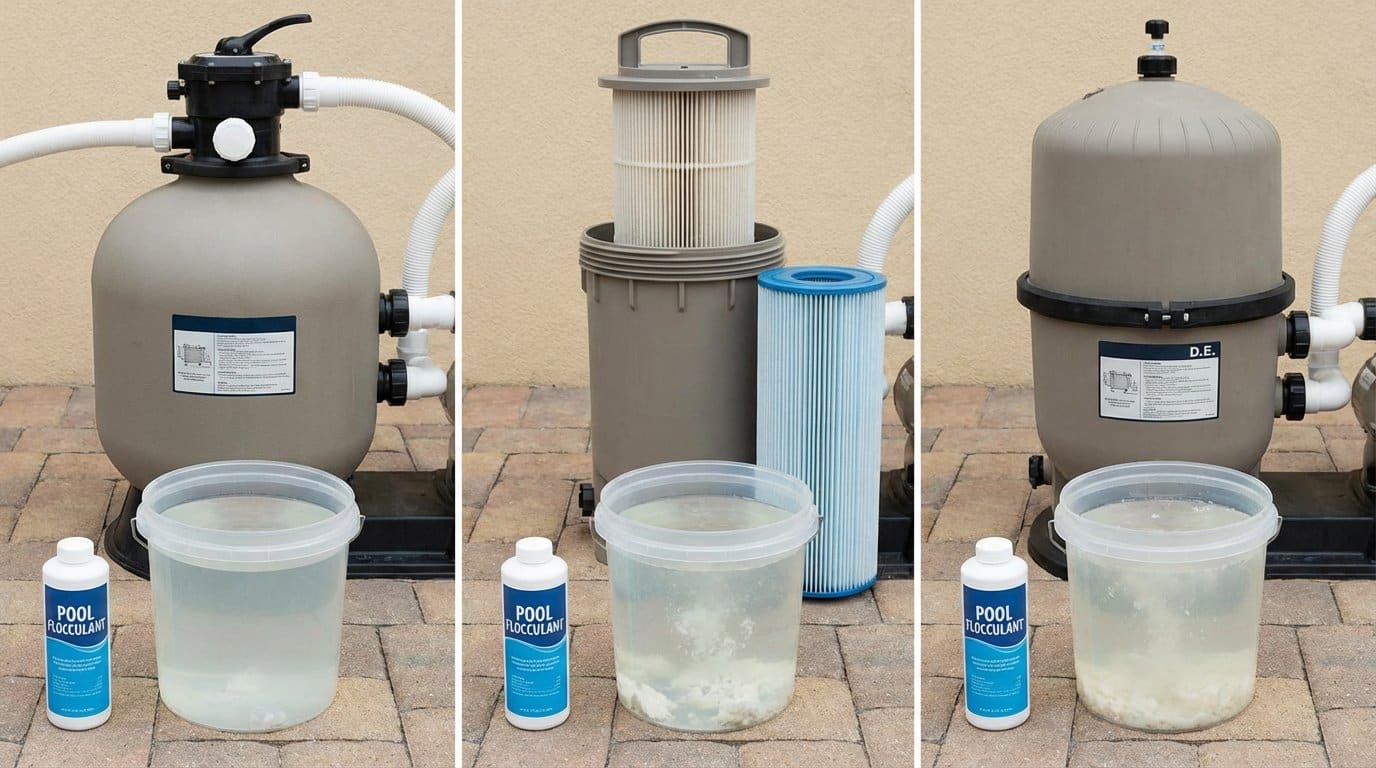
Because flocculant creates heavy clumps that sink to your pool floor rather than passing through filtration media, your filter type directly determines whether you can use this treatment safely.
Your filter type isn’t just a preference, it determines whether flocculant will solve your problem or create a new one.
Sand filters offer the best compatibility since they handle large particle clumps effectively and feature multiport valves for vacuuming to waste. Cartridge and DE filters risk severe clogging from flocculant residue, often requiring replacement. This chemical agent is available in liquid or powder form, allowing you to choose the application method that works best for your situation.
Filter-specific considerations:
- Sand filters work ideally with flocculants, improving filtration to 5 microns
- Cartridge filters clog quickly; clarifiers are your safer alternative
- DE filters can handle flocculants with precautions but generally perform better with clarifiers
- Universal products like Flovil and Poolife work across all filter types, using electrostatic attraction to regroup impurities for easier filtration
Match your flocculant choice to your equipment. Using incompatible products leads to flow reduction, damaged components, and extended downtime. If you don’t have a vacuum available, you can use a pool rake or skimmer net to gently drag along the bottom and scoop up the settled debris.
Liquid, Tablet, or Sachet: Which Type Should You Use?
When you’re facing cloudy pool water, selecting the right flocculant format directly impacts your treatment success. Liquid flocculants work quickly at 8 ounces per 10,000 gallons but require labor-intensive vacuuming, while tablets offer pH-insensitive performance for turbulent conditions. Granular sachets provide precise dosing at 1 pound per 5,000 gallons and suit still water best, so match your choice to your pool’s specific conditions. Conducting jar testing beforehand helps determine which flocculant format performs best with your specific water composition and contaminant levels.
Comparing Flocculant Formats
Choosing the right flocculant format depends on your pool’s current condition and your maintenance goals. Each format serves distinct purposes based on water clarity issues and pool size.
- Liquid flocculant works best for severely cloudy water recovery at 10 ml/m³, requiring filtration shutdown while flocs settle over 8 hours
- Tablets provide continuous dosing for medium to large pools (10-150 m³), dissolving in one filtration cycle when placed in your skimmer
- Sachets offer slow-release preventive treatment lasting 1-2 weeks, ideal for maintaining already-clear water in pools up to 50 m³
- All formats enhance sand filter performance and reduce sanitizer consumption
You’ll want liquid for immediate restoration, tablets for ongoing clarity in larger pools, and sachets for low-maintenance prevention in smaller installations.
Choosing Your Application Method
Once you’ve selected the right flocculant format for your situation, applying it correctly determines whether you’ll achieve crystal-clear water or create additional problems.
For liquid flocculant, dilute the specified amount in a bucket before pouring it evenly around your pool’s edges. Tablets require careful reading of manufacturer instructions, dissolve or place them according to your pool’s volume. Sachets should be torn open and distributed evenly, with dilution if packaging requires it.
Regardless of format, balance your pH between 7.0 and 7.6 before application. Run your pump for two hours to circulate the product thoroughly, then shut it off for 8-12 hours. This settling period allows particle clumps to drop to the floor. The next day, vacuum the debris directly to waste.
How to Apply Pool Flocculant Step by Step
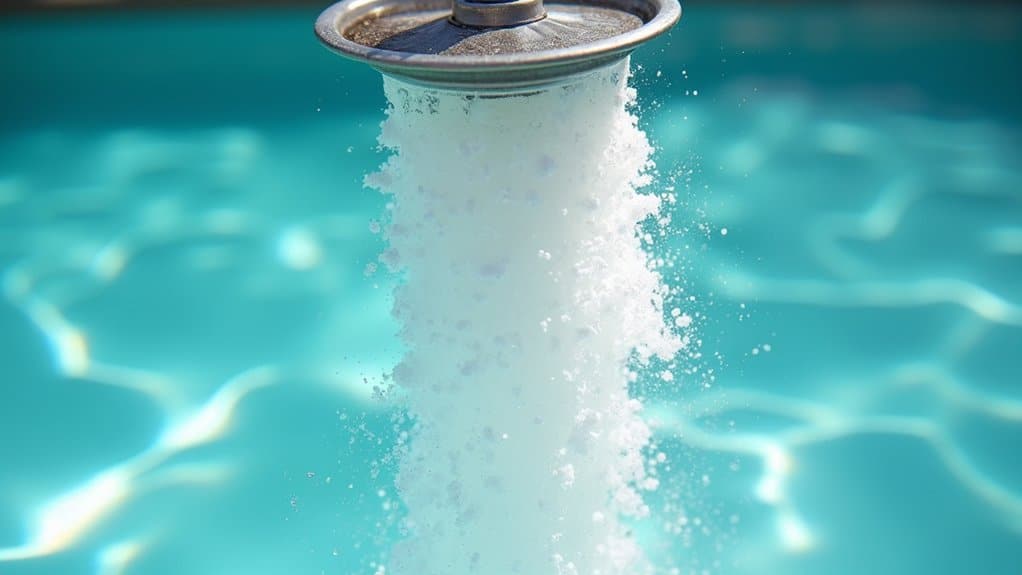
Before you add flocculant to your pool, you’ll need to complete several preparation steps. Raise your water level to normal and balance pH between 7.0-7.6 for ideal results. Set your filter to recirculate, never use the standard filter setting during this process.
Application Steps:
- Shake the flocculant well, then dilute it in a 5-gallon bucket following label-specified water ratios
- Pour the diluted mixture evenly around your pool’s edges
- Run your pump on recirculate for 2-4 hours to distribute the chemical thoroughly
- Turn off the pump and let particles settle undisturbed for 8-24 hours
After settling, vacuum slowly from the shallow to deep end with your filter set to waste. Backwash your filter afterward and refill lost water.
How Pool Flocculant Clears Cloudy Water
Pool flocculant works through a straightforward chemical process that targets the root of cloudy water. The positively charged compounds attract negatively charged particles like bacteria, algae spores, and fine debris suspended in your pool. These microscopic contaminants are too small for your filter to capture on their own.
Once you add flocculant, it binds these tiny particles into larger, heavier clumps. Within hours, these aggregates sink to your pool floor rather than floating invisibly throughout the water. You’ll see visible results in 8 to 16 hours, with the full clearing process taking 1 to 2 days.
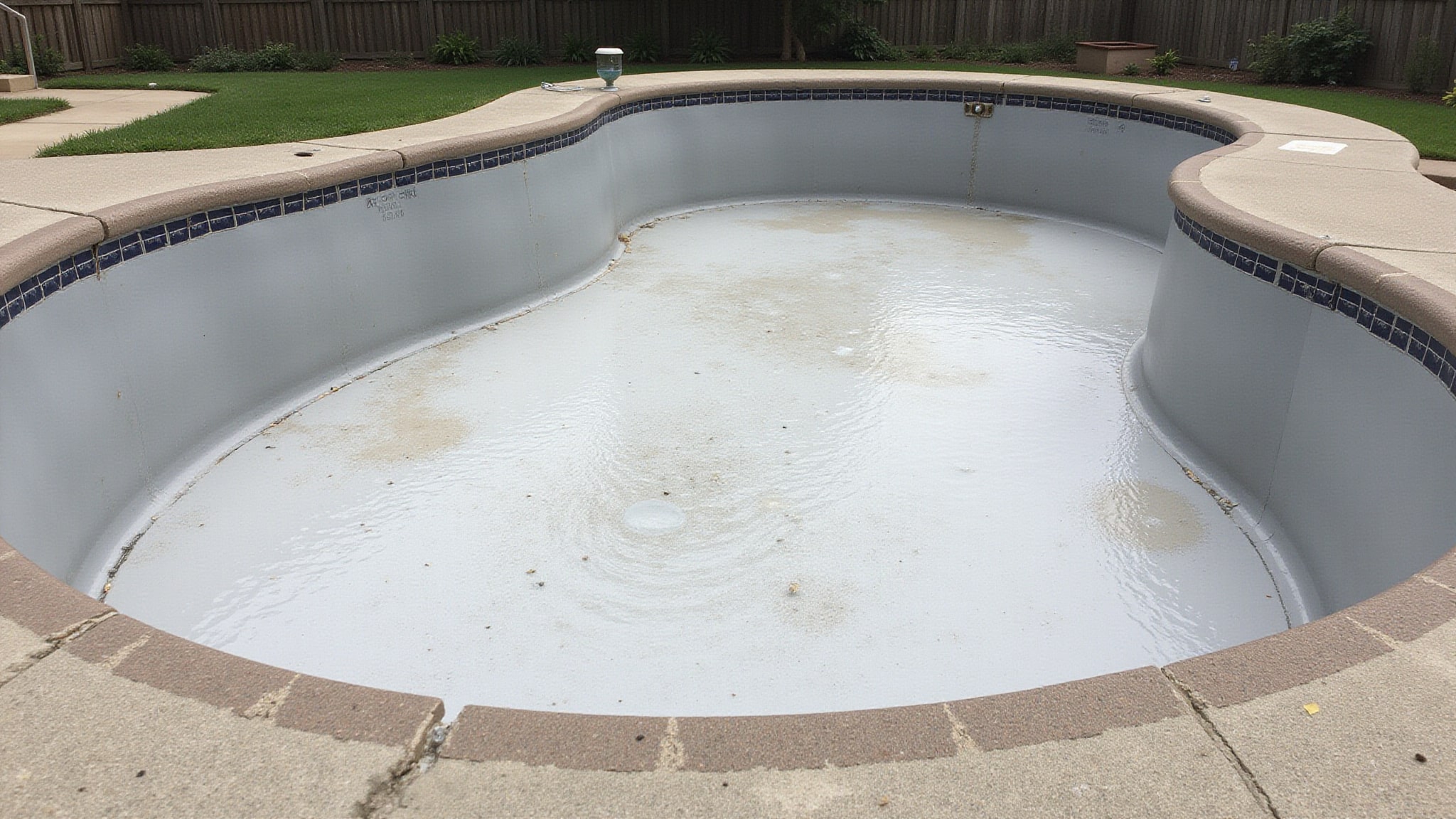
Unlike clarifiers that create filterable clusters, flocculant bypasses your filtration system entirely. You’ll vacuum the settled debris directly to waste, removing contaminants completely from your pool.
Frequently Asked Questions
Can You Swim in the Pool While Flocculant Is Still Working?
No, you shouldn’t swim while flocculant is actively working. When you enter the water during treatment, you’ll stir up settled debris and undo the entire flocculation process. You need to keep the pool off-limits for 8 to 12 hours while particles settle to the floor. Once you’ve completely vacuumed the settled material to waste and rebalanced your water chemistry, you can safely resume swimming.
How Long Does Pool Flocculant Take to Fully Settle Particles?
Pool flocculant typically takes 8-16 hours to fully settle particles, though you should allow up to 24-48 hours for complete flocculation in severe cases. You’ll need to keep your pump off during this time to maintain still water. For best results, circulate on recirculate for 2 hours after adding flocculant, then let everything settle undisturbed overnight before vacuuming to waste.
Is Pool Flocculant Safe for Saltwater Pools?
Yes, pool flocculant is completely safe for saltwater pools. It’s compatible with all pool types, including salt-based systems, and works effectively alongside chlorine, bromine, and saltwater sanitization methods. The flocculant won’t damage your salt cell or pool surfaces. After treatment, you’ll need to monitor your salt levels since vacuuming to waste removes water. Always rebalance your chemistry and test all levels before swimming.
Can You Use Too Much Flocculant in Your Pool?
Yes, you can definitely use too much flocculant in your pool. Overdosing causes particles to clump too aggressively, overwhelming your sand or cartridge filters and actually worsening cloudiness. Excess flocculant also disrupts your pool’s chemistry by inactivating chlorine against harmful pathogens like E. coli. To prevent overdose, always dilute properly, address the root cause of cloudiness first, and wait 24 hours before retreating if needed.
How Often Should You Use Flocculant for Pool Maintenance?
You should use flocculant only when needed rather than on a fixed schedule. For preventive maintenance, place a flocculating sock in your skimmer every 1-2 weeks, adjusting based on your pool’s size and water hardness. Reserve liquid flocculant for severe cloudiness that filtration can’t resolve. Don’t use it weekly, overuse clogs filters and worsens water clarity. Monitor your water condition and apply curatively when clarifiers and extended filtration fail.