

You’ll find five effective DIY solutions to protect your pool equipment: a classic wooden box cover with treated pine framing, modular vinyl privacy walls with brass grommets, a lean-to style shelter using PVC or treated lumber, lattice panel systems with diamond openings, and weather-resistant storage cabinets with stainless steel frames. Each option offers unique benefits in durability, accessibility, and style, while maintaining proper ventilation. These detailed plans will guide you through selecting and constructing the ideal protective cover.
Wooden Box Cover: A Classic Design Solution

Anyone seeking to protect their pool equipment can benefit from a wooden box cover, a time-tested solution that combines functionality with aesthetic appeal. You’ll need treated pine framing (90 x 45mm) to construct the primary framework, with solid 90 x 90mm uprights providing essential structural support around your pump equipment. Marine-grade plywood offers excellent durability as wall cladding for your cover structure. The structure features a Dulux Colorbond finish for enhanced protection and style.
For exterior finishing, you’ve got versatile slat style cladding options using either Merbau garden fence panels (1800 x 600mm) or Merbau slat screen panels for larger installations. Build your frame with 2-inch clearance beyond equipment dimensions, guaranteeing proper ventilation through 1-inch gaps along front and back panels. The inclusion of acoustic foam lining can significantly reduce equipment noise by up to 80%. Install concrete footings outside the pool slab for stability, and incorporate a hinged lid design for easy maintenance access. Custom finishing techniques on pressure-treated lumber will safeguard long-lasting protection against outdoor elements.
Vinyl Privacy Wall Enclosures
While wooden enclosures offer traditional appeal, vinyl privacy wall systems represent a modern, low-maintenance alternative for protecting pool equipment. You’ll find these permanent fencing structures available as stackable modular enclosures that you can install without professional help. Multiple color options including white, clay, and tan allow for customizable designs that complement any outdoor space. The durable vinyl screens feature brass grommets every 24 inches for secure installation. The panels come pre-routed for assembly, making onsite installation quick and straightforward.
| Feature | Standard | Premium |
|---|---|---|
| Panel Size | 4×8 feet | Custom to 50′ |
| Wind Rating | Basic | Triple Grommet |
| Privacy Level | Semi-Private | 100% Solid |
| Installation | DIY | Commercial Grade |
With heavy-duty PVC construction and metal-reinforced bottom rails, you’re getting commercial-grade durability that’s backed by a lifetime warranty. The pre-routed sections accommodate slopes up to 10 inches over 8 feet, while self-closing hinges and magnetic latches facilitate easy access. You can choose from multiple colors and privacy levels to match your specific screening needs.
Lean-To Style Protection

When designing lean-to style protection for pool equipment, you’ll find both PVC pipe and treated lumber construction methods offer practical solutions for DIY installation. Your low cost materials selection ranges from 3-inch PVC casings to 90x45mm treated pine framing, both providing durable foundations for weather resistant shed conversion projects.
Consider these key structural elements for your lean-to build:
- Use 90x90mm treated pine uprights concreted into ground for maximum stability
- Install pre-made Merbau panels for quick assembly and professional finish
- Apply Velcro strips or grommets with zip ties for removable fabric covers
- Paint PVC framework to match landscaping for better aesthetic integration
Measure your existing equipment pad carefully before construction, allowing extra material for fabric casings and seam allowances. This approach guarantees proper fit while maintaining easy access for routine maintenance.
Lattice Panel Screening Systems
Lattice panel screening systems offer a versatile solution for concealing pool equipment while maintaining essential airflow and accessibility. You’ll find pre-built panel assemblies in standard 4′ x 8′ dimensions, featuring durable plastic construction with 1.13″ x 1.13″ diamond openings that guarantee proper ventilation. The white picket aesthetic makes it an elegant choice that complements any outdoor setting.
When installing custom panel configurations, you can mount the panels horizontally or vertically using a lightweight PVC framework. The modular design lets you create removable sections for easy equipment access while meeting pool safety requirements for opening sizes. The weather-resistant plastic material won’t require painting or staining, and it’s immune to termite damage. You can improve the professional appearance with color-matched cap and divider molding, creating an attractive barrier that effectively screens your pool equipment while maintaining functionality.
Weather-Resistant Storage Cabinet Design
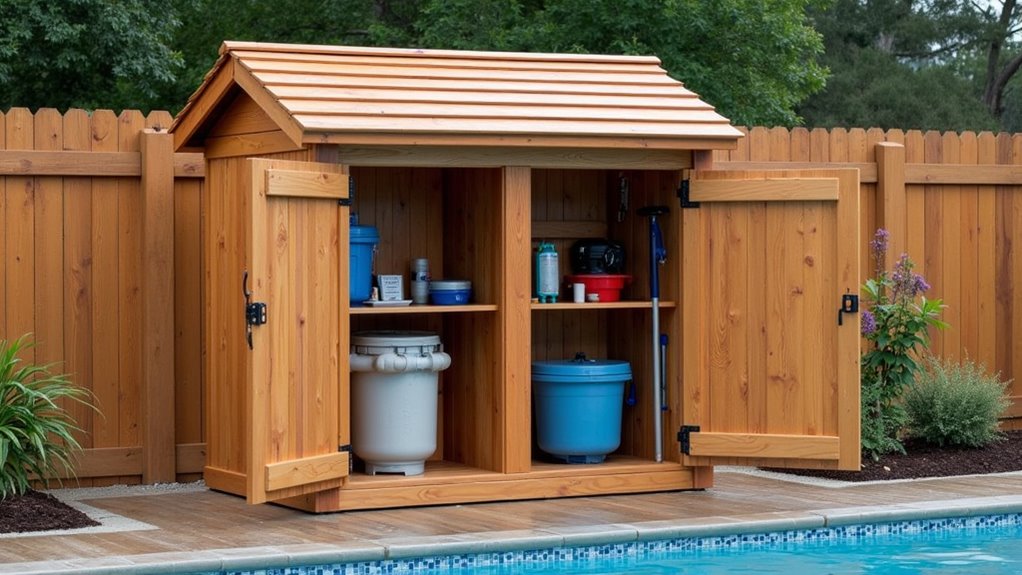
To safeguard your pool equipment against harsh outdoor elements, a purpose-built storage cabinet provides superior protection through strategic engineering and material choices. Your cabinet’s stainless steel frames mounted on concrete foundation pads create a sturdy base structure that withstands environmental challenges while protecting valuable equipment. Professional design services and consultations can help optimize your cabinet’s layout and features for maximum efficiency. The cabinet’s fir wood construction offers natural durability while maintaining an attractive appearance.
Gasket-sealed doors provide an additional barrier against moisture and contaminants. For maximum weather protection, incorporate these critical design elements:
- 12-gauge stainless steel construction with all-welded joints
- Sloped roof featuring 2¾” overhang for efficient water runoff
- Multi-layer powder coat finish with UV-resistant properties
- 3-point locking system with weather-sealed frames
The combination of heavy-gauge materials, strategic drainage features, and corrosion-resistant coatings guarantees your pool equipment remains protected year-round. Weather-resistant urethane finishes and integrated gasket systems further bolster the cabinet’s defensive capabilities against moisture and debris infiltration.
Frequently Asked Questions
How Long Does It Typically Take to Build a DIY Pool Equipment Cover?
You’ll need to plan for 1-2 full days to complete your pool equipment cover, though timing varies based on complexity and experience. Start by determining required materials and measurements, which typically takes 2-3 hours. Factoring in labor time, expect 4-6 hours for basic construction and 2-3 hours for finishing work. If you’re including features like hinged access or ventilation, add an extra half-day to your timeline.
What Tools Are Required for Cutting and Installing Plexiglass Panels?
You’ll need a table saw or jigsaw with a fine-tooth plastic blade for measuring and cutting plexiglass panels. For straight cuts, use a straight edge ruler and utility knife for scoring thinner sheets. When securing plexiglass panels, you’ll require magnetic clamps or double-sided tape, safety goggles, and a drill with appropriate bits. Don’t forget smoothing tools for finishing edges and a sturdy work surface for supporting the material during cutting operations.
Can Pool Equipment Covers Be Anchored to Concrete Pool Decks?
Yes, you can securely anchor pool equipment covers to concrete decks using removable anchoring systems. You’ll need to drill ¾” holes into your concrete base attachment points using a rotary hammer drill. Install brass concrete safety anchors by tamping them flush with the surface. For bolstered stability, consider using the anchor-in-pipe method. Remember to drill to a 2-¼” depth and maintain perpendicular alignment for proper installation.
Are Permits Required When Installing Permanent Pool Equipment Enclosures?
Yes, you’ll need permits for permanent pool equipment enclosures. Your local building codes typically require a building permit when constructing fixed structures around pool equipment. You’ll need to submit detailed plans showing equipment access needs, ventilation specifications, and structural details. Don’t skip this step, unpermitted enclosures can result in fines and removal orders. Check with your city’s building department, as requirements vary by jurisdiction.
What Is the Recommended Distance Between Equipment and Cover for Proper Ventilation?
You’ll need to maintain at least 12-18 inches of clearance between your pool equipment and its protective cover to guarantee appropriate air circulation. This spacing allows heat to dissipate effectively while minimizing condensation buildup. For high-powered equipment like heaters, consider increasing this gap to 24 inches. When installing covers, ascertain you’ve included ventilation openings on multiple sides and avoid completely enclosing the bottom to maintain proper airflow around your equipment.