
Your pool’s equipment operates as an integrated system centered around the pump, which uses centrifugal force to circulate water through filters, heaters, and chemical treatments. The process begins at your skimmers, where debris is caught before water flows to the pump’s strainer pot. From there, your filter removes microscopic particles while chemical systems maintain proper sanitization levels. Mastering these core components will help you maintain crystal-clear, swim-ready water all season long.
Understanding Your Pool’s Pump and Water Flow
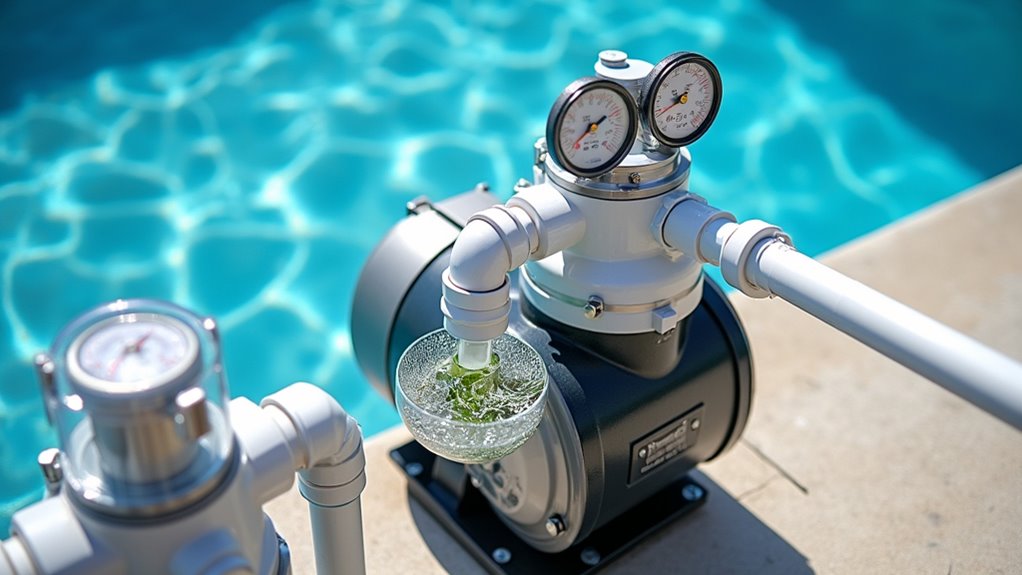
While a swimming pool may seem like a simple body of water, its heart lies in the sophisticated pump system that keeps water flowing continuously. Your pool’s pump operates through centrifugal force, using an electric motor to spin an impeller that creates powerful suction. This process draws water from your pool through skimmers and drains. Variable-speed pumps offer significant energy savings and programmable options compared to traditional single-speed models. The proper water level should be maintained at mid-skimmer height for optimal operation.
The water’s journey begins at the strainer pot, where a metal basket catches debris before it can damage the pump. From there, water moves through the filter system, heater, and sanitizing components before returning through wall jets. For ideal performance, pump maintenance should include regular basket cleaning and lid seal checks. You’ll also need to make seasonal adjustments, like proper winterization through drain plugs, to protect your equipment during off-peak months.
The Essential Role of Pool Filtration
Although swimming pools rely on multiple components to function properly, the filtration system serves as the primary defense against contamination and cloudiness. Your pool’s filter works in tandem with the pump to remove debris and contaminants, keeping your water crystal clear. You’ll find three main filter types available: cartridge, sand, and DE systems, each requiring specific filter media maintenance protocols. The cartridge filter design offers the fewest parts and simplest maintenance approach. The D.E. filter catches particles under 5 microns, making it the most efficient option for crystal-clear water.
A pool’s filtration system is its first line of defense, working continuously to keep water clean and swimmer-ready.
- You must monitor your filter’s pressure gauge daily, rising pressure indicates it’s time for cleaning
- You’ll need to establish a filter replacement frequency based on your specific system, typically every 2-3 years
- Your filter’s efficiency directly impacts water quality, don’t wait until problems arise to perform maintenance
The suction and pressure sides of your pool work together to create a complete circulation system. Guaranteeing your filtration system’s operation will ensure you’ll maintain proper water quality and extend your equipment’s lifespan through appropriate care and maintenance.
Heating Options for Your Swimming Pool
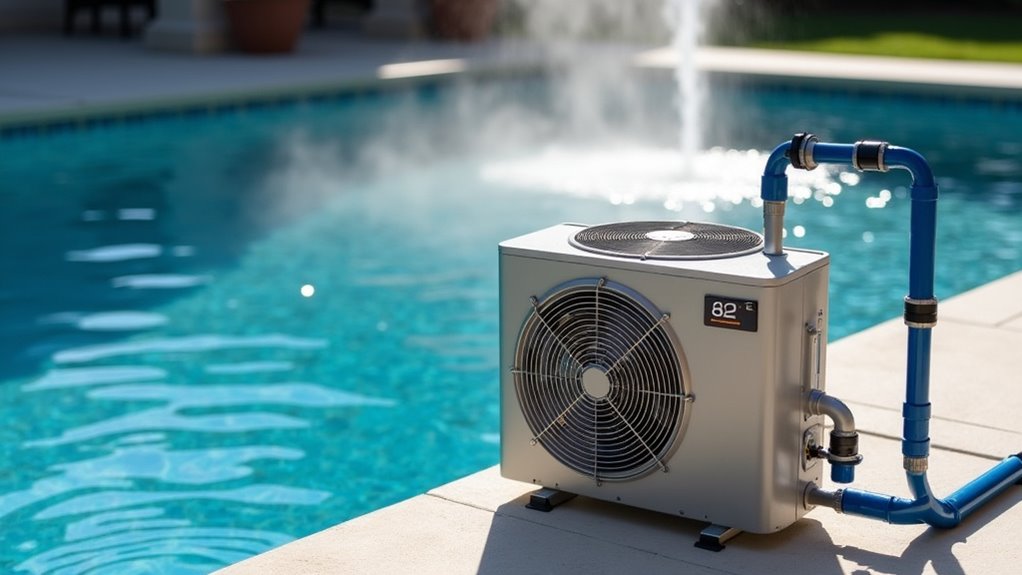
Beyond maintaining clean water through filtration, selecting the right heating system drastically impacts your pool’s usability and operating costs. When evaluating pool heater performance factors, you’ll find distinct advantages across four main types: gas, heat pump, solar, and electric resistance systems.
Gas heaters offer rapid heating but higher utility costs, while heat pumps provide energy efficiency through ambient air technology. Solar heating systems are more effective in warmer climates. Today’s leading brands like Pentair and Hayward offer advanced features for optimal performance. Solar systems deliver the lowest operating expenses but require ideal conditions and space. Electric resistance heaters work well for small pools but aren’t cost-effective for larger installations.
For maximum energy efficiency comparison, consider that heat pumps and solar systems typically offer the best long-term savings. Modern options like titanium heat exchangers can reduce energy consumption by up to 80% compared to conventional electric systems, making them an increasingly popular choice for cost-conscious pool owners.
Skimmers and Drains: The First Line of Defense
Since efficient water circulation forms the foundation of pool maintenance, your skimmers and drains serve as critical gatekeepers in the filtration system. These devices capture floating debris before it reaches your pump, utilizing a rectangular opening typically measuring 1’0″ x 6″ and a floating weir to regulate water flow. Mineral disinfectants and algaecides help maintain water quality by preventing algae growth and eliminating pathogens. Regular skimmer maintenance guarantees peak performance while minimizing debris intake that could damage expensive equipment.
- You’ll prevent costly repairs by regularly emptying the strainer basket
- You’re protecting your pump’s impeller by catching leaves and twigs before they enter the system
- You’re maintaining proper water levels through the skimmer’s automatic float adjustment
The standard skimmer system includes a basket, weir gate, and float valve that work together to maintain consistent water flow while trapping unwanted particles before they enter your filtration system.
Chemical Systems and Water Treatment Basics
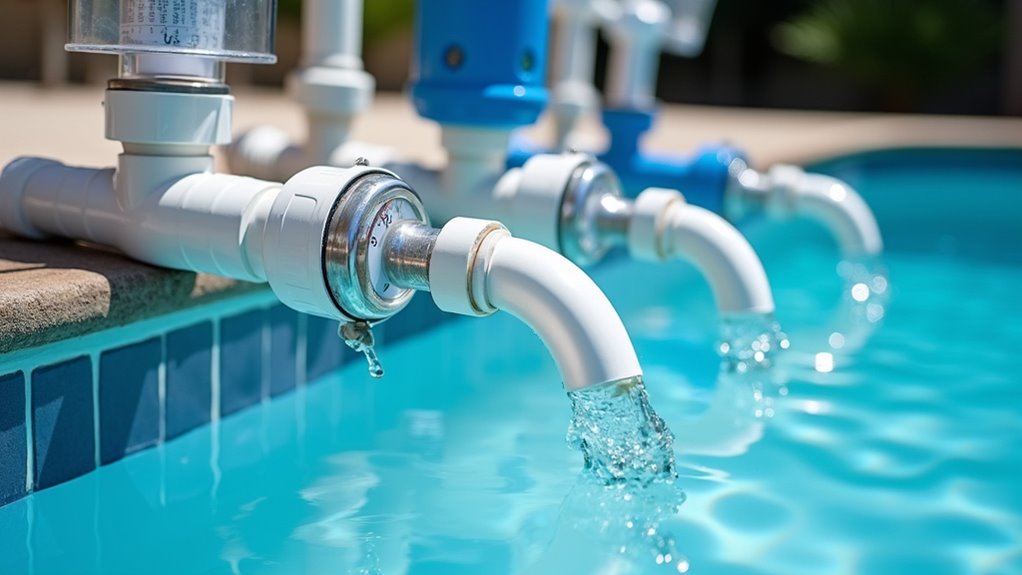
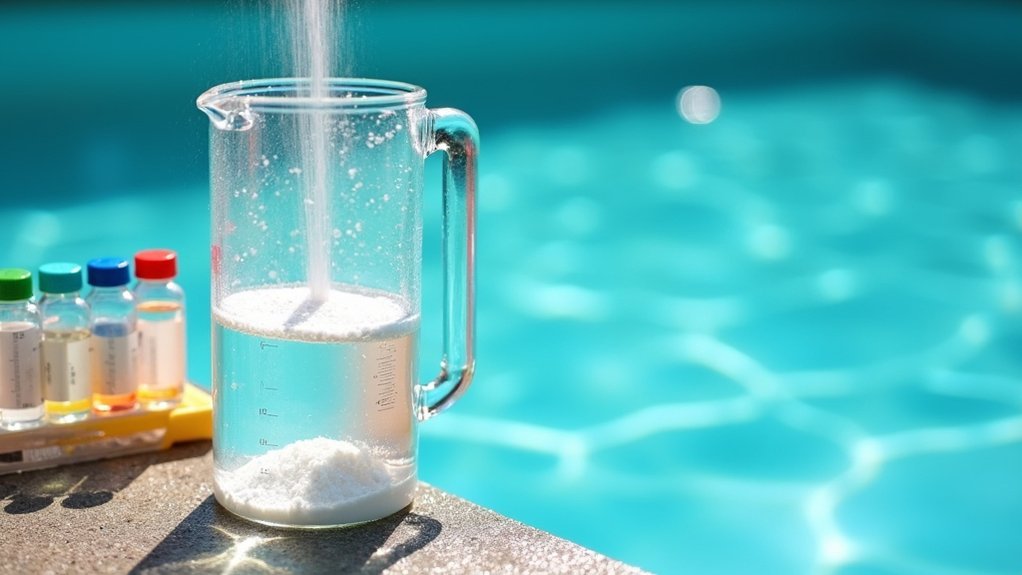
When maintaining a swimming pool, proper chemical treatment serves as the bedrock of water safety and clarity. You’ll need to maintain chlorine levels between 1-3 ppm as your primary sanitizer, while closely monitoring pH balance to prevent equipment damage and guarantee bather safety. Your pool’s chemical stabilization processes will vary depending on whether you’re using liquid chlorine or stabilized trichlor tablets. Fiberglass pool finishes naturally help maintain better water chemistry by resisting algae growth. Using test strips regularly helps prevent issues before they become serious problems. Regular testing should include monitoring calcium hardness levels to prevent scaling and corrosion issues.
For ongoing maintenance, you’ll find that salt chlorine generators offer an automated solution, converting pool salt to chlorine through electrolysis. Bear in mind that shock treatment timing becomes indispensable after heavy usage or rainstorms to eliminate contaminants. If you’re considering alternatives, bromine provides longer-lasting sanitization at 3-5 ppm, though it’s essential to recognize that bromamines, like chloramines, can reduce effectiveness over time.
Frequently Asked Questions
How Long Should I Run My Pool Equipment During Winter Months?
Run your pool equipment for 1 hour per 10 degrees of outside temperature during winter months. For example, if it’s 40 degrees, run your pump for 4 hours. However, when temperatures drop below 35°F, you’ll need to operate your equipment continuously to prevent freezing. If you’re using a variable speed pump for winterizing pool equipment, you can run it 24/7 at low speeds (600-800 rpm) for ideal pool equipment maintenance.
What Happens if My Pool Equipment Freezes in Cold Weather?
When your pool equipment freezes, you’ll likely face severe equipment damage as water expands inside components. Frozen pipes can crack, pumps may split, and heater headers often rupture, leading to costly repairs or full replacement. You’ll notice broken seals, cracked housings, and potentially destroyed internal mechanisms in filters and valves. Don’t restart frozen equipment until it’s fully thawed, as operation could cause catastrophic failure and further damage.
Can I Run My Pool Pump During a Thunderstorm?
You shouldn’t run your pool pump during a thunderstorm. While it’s fine to operate during regular rain, lightning strikes near pool equipment can cause severe damage to your pump’s electrical components and create dangerous conditions. Turn off your pool system when you preliminary hear thunder and wait at least 30 minutes after the last thunderclap before restarting. This protects both your equipment and prevents potential electrical hazards.
Why Does My Pool Equipment Make Unusual Noises After Backwashing?
Your pool equipment’s unusual noises after backwashing typically stem from air infiltration, cavitation, or debris. You’ll notice unusual vibrations when air enters through loose connections or worn seals. Unexpected water flow changes can cause cavitation, creating knocking sounds as bubbles collapse inside the pump. If you’re hearing grinding noises, debris might be trapped in your pump basket or impeller. Check your water levels and inspect seals to resolve these issues.
How Often Should I Replace My Pool Equipment’s Rubber Seals and Gaskets?
You’ll need to follow a regular maintenance schedule for your pool equipment’s seals and gaskets. Inspect o-rings every time you clean filters or replace cartridges, and plan for proper seal replacement every few seasons based on wear. Don’t wait for leaks, check your tank o-ring most frequently as it experiences the highest wear. Replace seals immediately if you notice tears, cracks, or difficulty securing filter tops.