
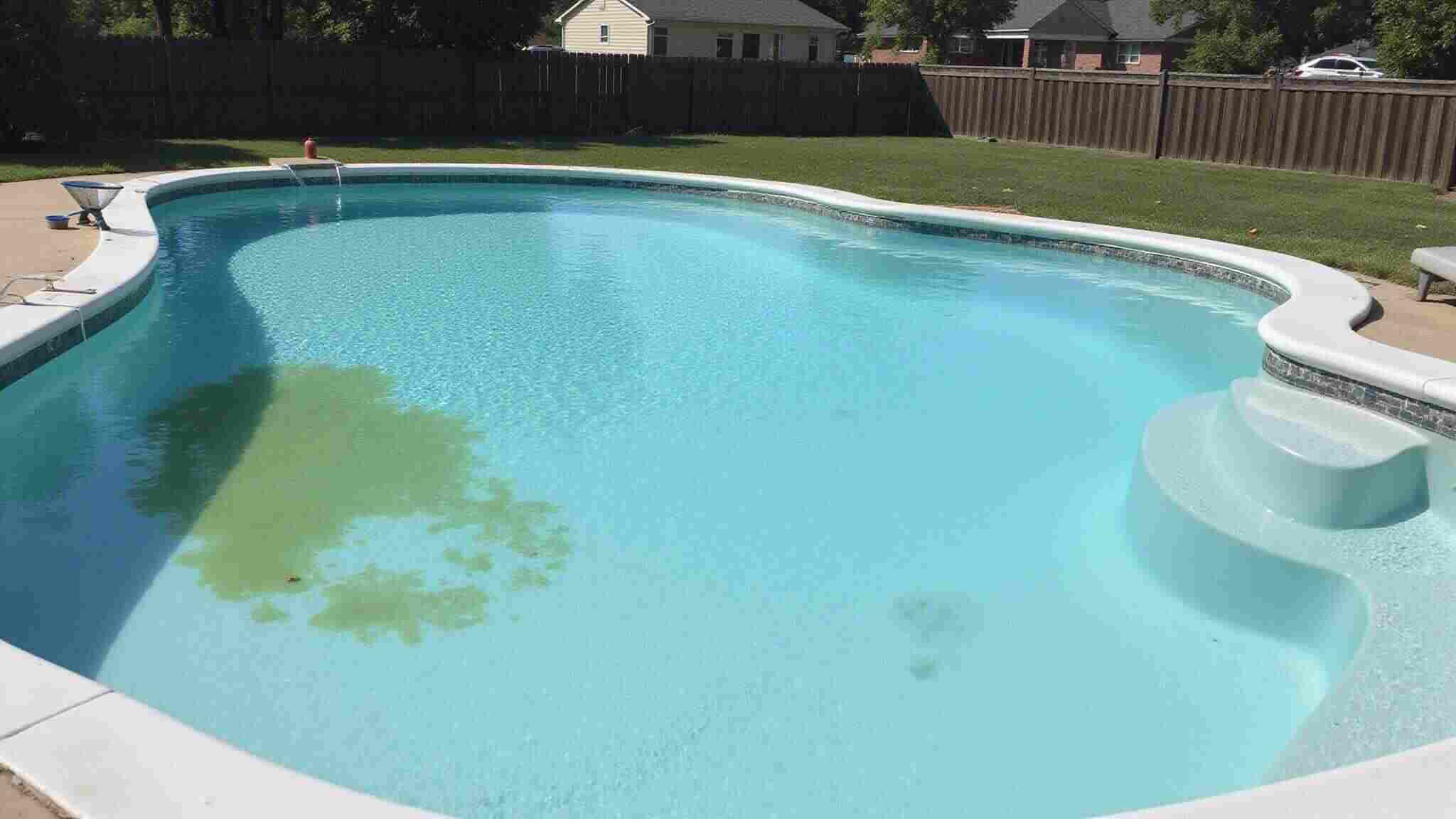
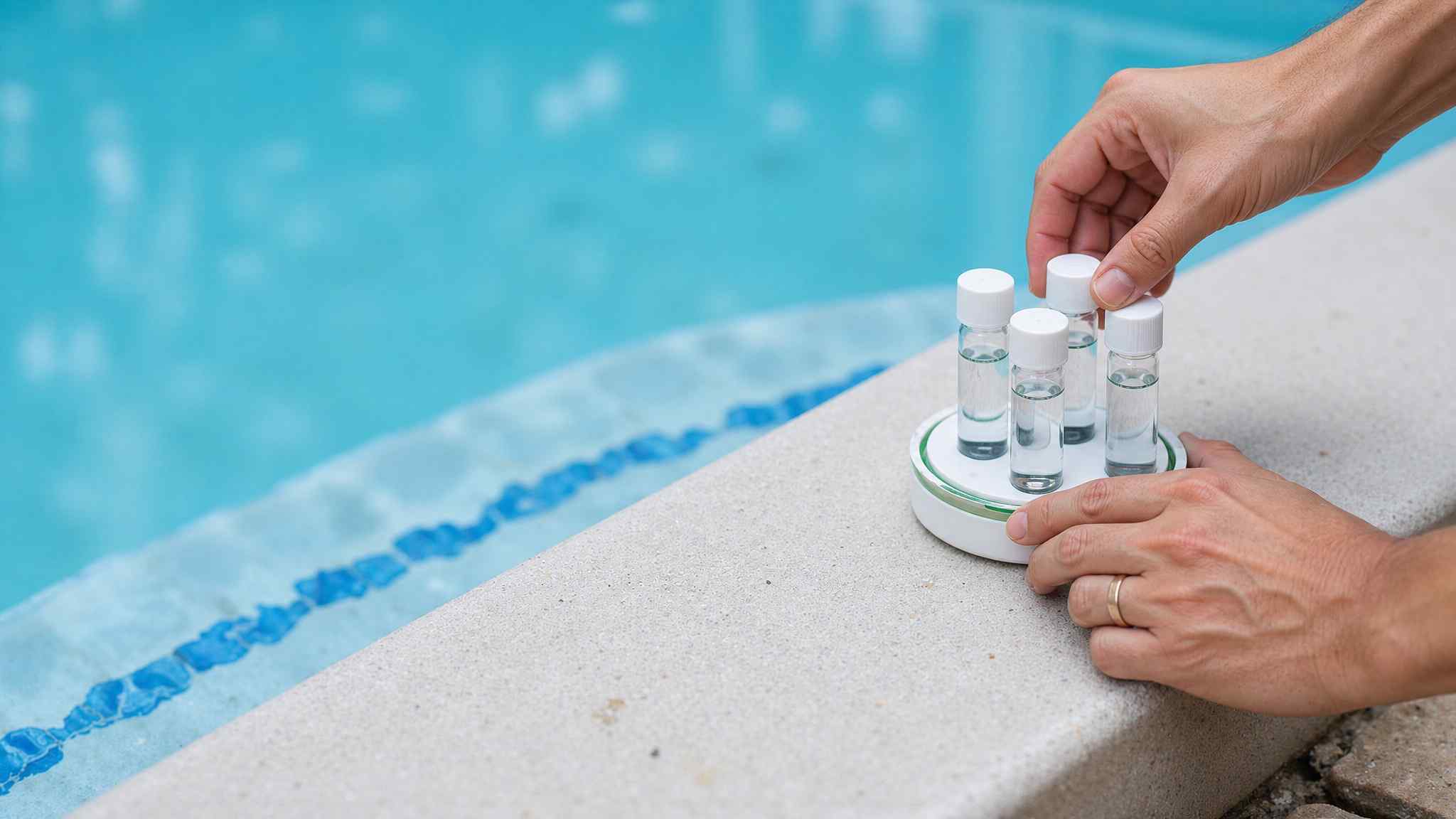
To reduce high pool alkalinity to a safe range, start by testing your total alkalinity and pH to establish a baseline. Then add diluted acid (muriatic acid or sodium bisulfate) in small, measured doses based on your pool’s volume and current readings. Always add acid to water, wear gloves and goggles, and pour slowly near a return jet with circulation running. Cap reductions at 20 ppm per day, and retest after 4, 6 hours. There’s more you’ll want to know below. Lower pool alkalinity without changing pH can help prevent scale buildup and improve overall water clarity. It is essential to monitor your pool chemistry regularly to ensure that both alkalinity and pH levels remain within the desired ranges.
Key Takeaways
- Test total alkalinity and pH first to establish a baseline, and stop adding alkalizing products during correction.
- Use muriatic acid or sodium bisulfate (dry acid) to lower alkalinity, diluting the acid before adding it.
- Dose conservatively based on pool volume and current readings, capping reductions at no more than 20 ppm per day.
- Add diluted acid slowly into the deep end or near a return jet with circulation running, wearing gloves and goggles.
- Retest after 4, 6 hours of mixing, repeat in small increments, and raise low pH afterward using aeration instead of alkalizers.
How Do You Reduce Alkalinity in a Pool
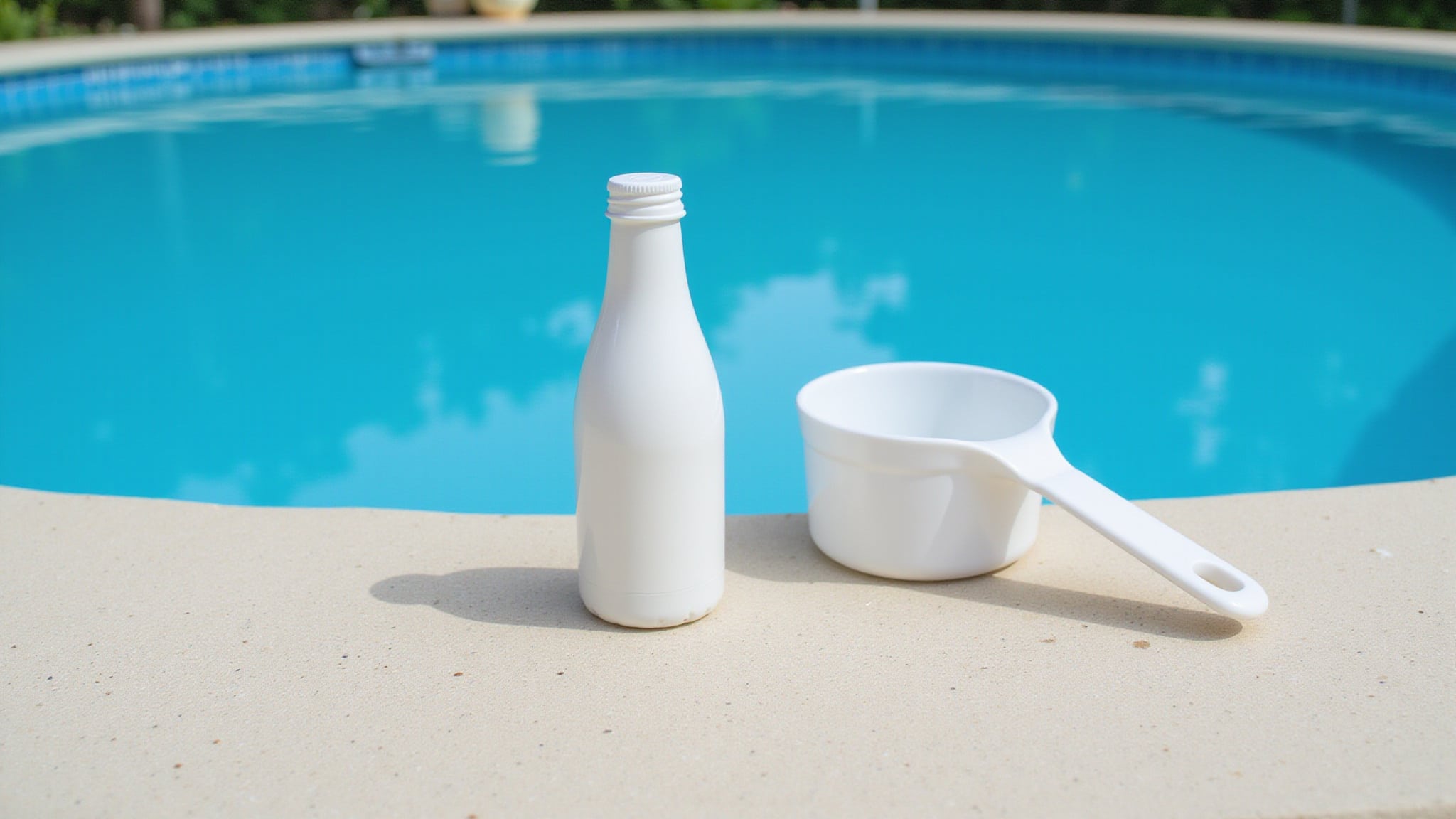
Lower alkalinity in a pool by adding acid, typically muriatic acid or sodium bisulfate, then verify the result by retesting. Start by testing your total alkalinity and pH so you know your baseline water chemistry, and stop adding any alkalizing products during correction. Add your acid in a measured dose based on pool volume and current readings, diluting it first when the guide calls for it. Pour muriatic acid slowly into the deep end or near a return jet with circulation running. Reduce alkalinity gradually, no more than 20 ppm per day, to avoid large pH swings. Retest after several hours of mixing, then repeat in small doses only if needed. Wear gloves and goggles throughout, and always add acid to water.
What Chemicals Lower Pool Alkalinity
Muriatic acid and sodium bisulfate lower pool alkalinity. Muriatic acid is the most common liquid choice, while sodium bisulfate serves as a dry acid alternative. Both lower alkalinity and pH simultaneously, so you’ll target alkalinity first, then restore pH through aeration. Always dilute acid before adding it, and retest between doses.
| Chemical | Form | Notes |
|---|---|---|
| Muriatic acid | Liquid | Most cited; dilute before adding |
| Sodium bisulfate | Dry granular | Handles easier; dry acid option |
| Aeration | Physical method | Raises pH without adding alkalinity |
Add acid in measured doses, keep reductions to no more than 20 ppm per day, and retest after circulation to confirm your progress.
How Much Acid Do You Need for Your Pool
You need enough acid to lower alkalinity gradually, based on your actual pool volume and current alkalinity reading. For a 10,000-gallon pool targeting a 10 ppm drop, Swim University cites 25.6 oz of full-strength muriatic acid, PoolOps suggests about 12 oz, and a video source lists 1.5 quarts. That’s a significant spread, which is exactly why you shouldn’t rely on a single figure. Start with a conservative dose, then retest before adding more.
Cap your reduction at no more than 20 ppm per day, following Orenda’s guidance, and use diluted acid. Add measured doses in small successive increments, retesting between additions rather than overshooting in one treatment.
How Do You Add Acid to Lower Alkalinity Safely
Add acid to lower alkalinity safely by wearing gloves and goggles, because muriatic acid causes serious burns and eye damage. Dilute the acid first, always adding acid to water, never water to acid, to prevent violent splashing. Measure your dose from a volume-based chart, and don’t overshoot, small successive doses beat one aggressive treatment. Pour the diluted acid slowly into the deep end or near a return jet with circulation running, so it disperses evenly. Keep it away from steps, lights, and liner seams, and avoid splashing. Some guides suggest letting the pool sit undisturbed 30, 60 minutes before restarting circulation. Retest both alkalinity and pH after 4, 6 hours of mixing. If levels stay high, repeat in small increments, limiting reduction to 20 ppm per day.
How Long Does It Take Alkalinity to Come Down
Alkalinity usually comes down over multiple dose and retest cycles, often taking more than a day if levels are high. Most guidance caps reduction at no more than 20 ppm per day, so you’re pacing the process, not rushing it. After you add a measured dose, let circulation mix it for several hours, often 4 to 6, before you retest. Once you’ve confirmed the drop, you repeat in small increments the next cycle if levels are still high.
If your alkalinity starts extremely elevated, expect multiple days of stepwise correction rather than a single fix. Each cycle follows the same rhythm: dose, circulate, retest, wait. Don’t compress the schedule to save time, because aggressive dosing triggers large pH swings. Steady, incremental reduction keeps both alkalinity and pH stable throughout.
Why Does pH Change When You Lower Alkalinity
pH changes when you lower alkalinity because the same acid reduces both at once. You can’t target one without affecting the other in the same dose. That’s why alkalinity stays your primary target during correction, not pH.
After alkalinity falls into your desired range, you’ll often find pH sitting too low. Don’t reach for more acid to fix it. Instead, restore pH through aeration, run fountains, waterfalls, bubblers, or angle return jets above the waterline. Aeration raises pH without adding back alkalinity, letting you separate the two parameters cleanly.
Retest both readings after several hours of mixing. If alkalinity remains high, repeat acid dosing in small increments, then aerate again to bring pH back up.
How Do You Keep Alkalinity From Rising Again
Keep alkalinity from rising again by cutting off the sources that pushed it high in the first place. Stop adding alkalinity increasers and other alkalizing products unless a test confirms you need them. If your source water is high in alkalinity, expect refills to nudge levels up, so retest after topping off and correct with small acid doses when needed. Keep pH in the 7.2, 7.6 range, since managing pH with aeration rather than alkalizers prevents alkalinity from climbing. Test total alkalinity and pH regularly, weekly is a practical baseline, and log your readings to catch upward trends early. When levels start creeping up, apply diluted acid in measured increments, never more than 20 ppm per day, then retest.
Conclusion
Bringing high pool alkalinity back to a safe range is very doable when you work slowly and let testing guide every step. Start with a baseline reading, then add diluted muriatic acid or sodium bisulfate in small, measured doses near a return jet with circulation running, always adding acid to water and wearing gloves and goggles. Keep each day’s reduction to no more than 20 ppm, retest after 4, 6 hours, and repeat the dose-circulate-retest cycle until you settle into the 80 to 120 ppm range. Because acid lowers pH along with alkalinity, restore pH afterward with aeration rather than more chemicals. Stay ahead of it by cutting off alkalizing inputs, retesting after rain or refills, and logging weekly readings, and you’ll keep your water safe, balanced, and comfortable all season.
Call Today and Build a Pool Made for Easy Care
From alkalinity balancing to overall water chemistry, quality pool construction makes maintenance simple. At Schiller Pools in Stuart, FL, our skilled team delivers dependable Pool Construction designed for long-term enjoyment and easy upkeep. Call +1 (561) 475-5997 today and start planning your dream pool.
Frequently Asked Questions
Can You Swim in the Pool While Lowering Alkalinity?
You shouldn’t swim while acid is actively mixing. After adding diluted muriatic acid, keep everyone out and let the pool sit undisturbed for 30, 60 minutes, then run circulation to distribute it. Wait until you’ve retested and confirmed alkalinity and pH are stable and within safe ranges, typically alkalinity at 80, 120 ppm and pH at 7.2, 7.6. Once readings check out, you’re clear to swim safely.
Does High Alkalinity Cause Cloudy Water or Scaling?
Yes, high alkalinity can contribute to both cloudy water and scaling. When your alkalinity runs too high, it tends to push pH upward, and elevated pH promotes scale formation on surfaces and equipment while clouding the water. To correct it, you’ll want to lower alkalinity gradually using acid, no more than 20 ppm per day, then retest. Once alkalinity’s in range, you can restore pH through aeration rather than adding more chemicals.
What Causes Pool Alkalinity to Become Too High?
High alkalinity usually builds up when you overuse alkalinity increasers or add too much baking soda. It also climbs when your source water’s already high in carbonates, or when you dose alkalizing chemicals without retesting first. If you’re adding pH increasers aggressively, you’ll push alkalinity up too. To stay safe, stop adding any alkalizing products during correction, and always retest before treating so you don’t overshoot and trigger scaling.
Can I Lower Alkalinity and Chlorine at the Same Time?
Focus on alkalinity first. Don’t try adjusting both together. When you add muriatic acid to lower alkalinity, both pH and alkalinity drop, so acid’s your primary tool. Chlorine isn’t managed through acid, so handle it separately. Add your measured, diluted acid slowly to the deep end, then retest after 4, 6 hours. Once alkalinity’s in range (80, 120 ppm), verify chlorine independently and dose it as a distinct step.
Does Rain or Refilling Affect My Pool’s Alkalinity?
Yes, both can shift your alkalinity. Rain typically dilutes your pool water, and since rainwater is usually low in alkalinity, heavy rainfall can lower your reading. Refilling has a similar effect: if your source water’s alkalinity sits below your current level, topping off drains it down. That’s why partial water replacement works as a correction method when levels run very high. Always retest after rain or refilling to confirm where you stand.