

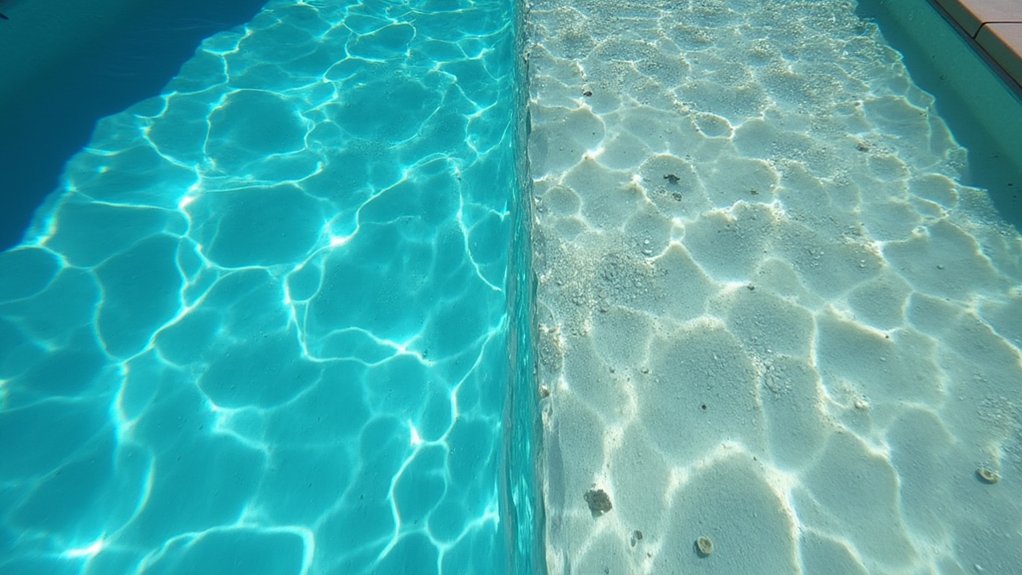
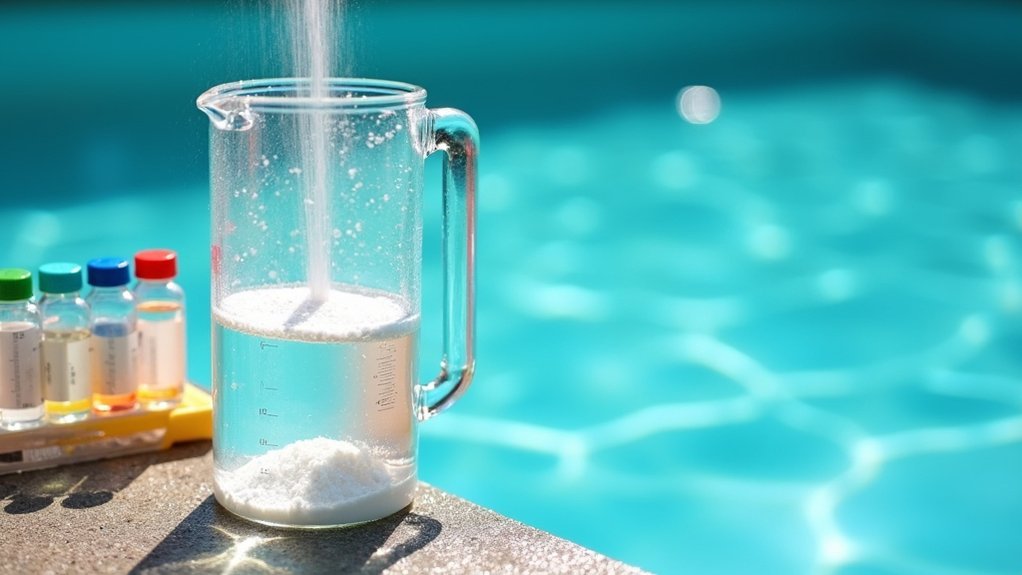
To shock your pool safely, you’ll need to wear nitrile gloves and safety goggles, then test your water to guarantee pH sits between 7.4, 7.6. Choose calcium hypochlorite for heavy contamination or potassium monopersulfate for routine oxidation. Dissolve the shock in a bucket of warm water before slowly pouring it around the pool’s perimeter with the pump running. Run circulation for at least 8 hours, and the specific wait times below will inform you when it’s safe to swim.
Wear Safety Gear Before Handling Pool Shock

Pool shock contains concentrated chemicals that can cause severe burns, respiratory irritation, and eye damage within seconds of exposure. You’ll need proper PPE before opening any container.
Pool shock chemicals can burn skin and damage eyes in seconds, never handle without proper protective equipment.
Start with chemical-resistant gloves made from nitrile or neoprene, latex deteriorates quickly with chlorine contact. Inspect them for thinning or cracks before each use. Replace gloves monthly or at first sign of wear to maintain effective protection.
Wear wraparound safety goggles for routine dosing. Switch to full-face shields when handling concentrated products or mixing acids. Store backup eyewear in protective cases to prevent heat warping.
Choose protective clothing with long sleeves made from chemical-resistant materials. Avoid absorbent fabrics that trap residue against your skin. For concentrated shock products, add a chemical-resistant apron. A respirator provides additional protection when working in enclosed spaces or handling powdered shock products.
Complete your setup with closed-toe, rubber-soled footwear and keep an emergency eye rinse accessible. Always read chemical labels prior to use to verify you have all required PPE for the specific product you’re handling.
Test and Balance Your Water Before Shocking
Before adding shock to your pool, you’ll need to verify that your water chemistry falls within ideal ranges for maximum sanitizer effectiveness. Test your pH level first, aiming for 7.4, 7.6, and check total alkalinity to guarantee it reads between 80, 120 ppm. You should also measure your current free chlorine concentration, which helps determine the correct shock dosage needed to achieve proper sanitation. Shocking unbalanced water can lead to cloudiness and significantly reduce the effectiveness of your shock treatment. For the most accurate readings with minimal risk of error, use pool test strips to check all levels before proceeding with your shock treatment.
Check pH and Alkalinity
Because shock treatment works best within a specific chemical range, you’ll need to test and balance your water before adding any oxidizer. Proper alkalinity levels directly impact pool shock safety and chlorine handling effectiveness.
Start by collecting a water sample 12-18 inches deep, away from skimmers, after running your pump for at least one hour. Use the R-0007, R-0008, and R-0009 reagent series to determine total alkalinity. Add thiosulfate first to neutralize residual chlorine, then count acid drops until the solution turns red. Multiply drops by 10 for your ppm reading. If your pool contains stabilizer, remember to subtract one-third of your cyanuric acid reading from total alkalinity to get accurate carbonate alkalinity levels.
Target alkalinity between 80-120 ppm before shocking. If levels fall below 80 ppm, add 1.5 pounds of sodium bicarbonate per 10,000 gallons to raise alkalinity 10 ppm. Run your pump six hours, then retest. When alkalinity is too high, use muriatic acid or sodium bisulfate to lower levels back into the target range before proceeding with shock treatment. You should test total alkalinity once a week unless pH levels have changed significantly.
Test Current Chlorine Levels
Everything you add to your pool during shock treatment depends on accurate chlorine measurements taken beforehand. Before shocking a pool, you’ll need to determine both free and total chlorine levels using test strips, reagent drop tests, or digital meters.
Collect your water sample from at least 18 inches below the surface to avoid surface chemistry variations that skew results. Free chlorine should measure between 1 and 3 ppm for ideal sanitization. According to legal regulations, free residual chlorine must remain between 0.50 and 2.00 mg/l to ensure pool safety and health.
When learning how to shock a pool properly, calculate combined chlorine by subtracting free chlorine from total chlorine. If combined chlorine exceeds free chlorine, shock application becomes essential. This calculation directly influences your dosage requirements. Remember that combined chlorine forms when free chlorine reacts with contaminants, making it less effective at sanitizing your pool water. Be aware that chlorine can interact with organic matter to form trihalomethanes, which are classified as probable human carcinogens and should be minimized through proper pool maintenance.
Test chlorine two to three times weekly during normal operation, and always retest after chemical additions to verify proper balance before proceeding with shock treatment.
Pick the Right Pool Shock for Your Situation
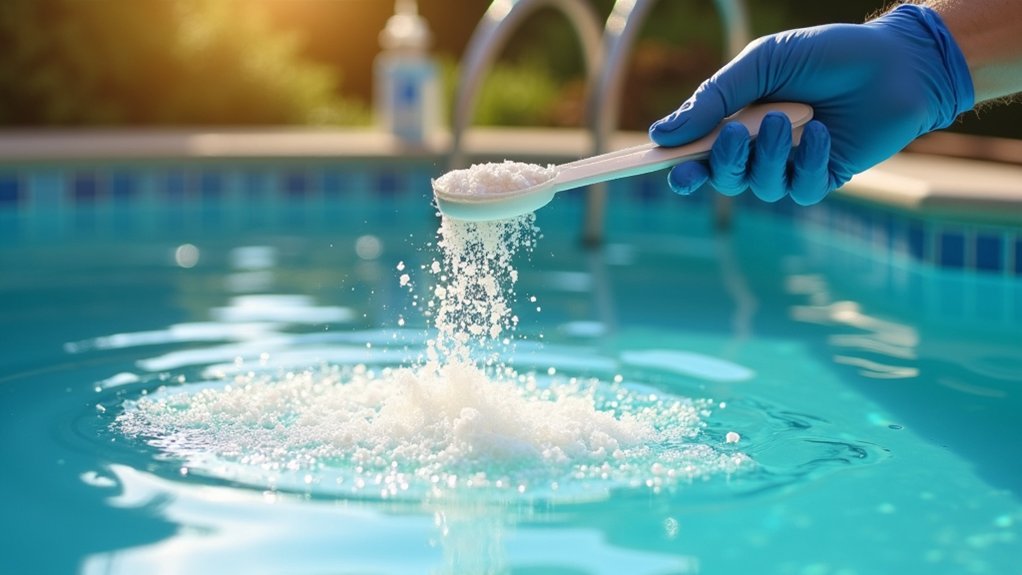
You’ll find pool shock in several formulations, each with distinct chemical properties that affect how they work in your water. Chlorine-based options like calcium hypochlorite and sodium dichlor deliver powerful sanitation, while non-chlorine alternatives like potassium monopersulfate focus on oxidation without adding to chlorine levels. Understanding whether a shock is stabilized or unstabilized also determines how long it remains active and whether it’ll raise your cyanuric acid levels. Of the chlorine-based options, calcium hypochlorite is the strongest and dissolves quickly for rapid sanitation.
Chlorine Versus Non-Chlorine
The choice between chlorine and non-chlorine shock determines both your treatment effectiveness and how quickly swimmers can return to the water. Chlorine-based options like cal-hypo, dichlor, and lithium hypochlorite kill algae and pathogenic bacteria effectively. You’ll need chlorine shock for severe algae blooms, requiring up to 30 ppm to eliminate growth completely.
Non-chlorine shock contains potassium monopersulfate, a powerful oxidizer that breaks down organic debris like sweat and sunscreen. It won’t kill algae or disinfect against bacteria, but it eliminates combined chlorine without adding cyanuric acid or calcium. This shock type has a neutral pH, which prevents the water chemistry fluctuations that chlorine-based products can cause.
Your best approach combines both types strategically. Use non-chlorine shock weekly for routine oxidation, swimmers can return in just 15 minutes. Reserve chlorine shock for bacterial contamination, algae problems, or after heavy swimmer loads. Apply chlorine shock in the evening to prevent UV breakdown.
Stabilized and Unstabilized Options
Beyond the chlorine versus non-chlorine decision, you’ll face another critical choice: stabilized or unstabilized shock.
Unstabilized shock lacks cyanuric acid, making it ideal for:
- Indoor pools without UV exposure concerns
- Nighttime outdoor shocking for maximum effectiveness
- Quick response to contamination, algae, or high chloramines
- Avoiding cyanuric acid buildup and chlorine lock
- Rapid sanitization after heavy bather loads
Stabilized shock contains cyanuric acid, protecting chlorine from UV degradation. It’s suited for outdoor pools needing sustained disinfection with fewer applications.
Critical safety warning: Never mix stabilized and unstabilized products, this creates hazardous reactions or explosions.
Note that unstabilized calcium hypochlorite raises pH (10.8, 11.8) and increases calcium hardness. Always test water post-treatment and wait until chlorine drops to 2.0, 4.0 ppm before swimming.
Mix and Apply Pool Shock the Right Way
Before adding shock to your pool, you’ll need to test your water chemistry and confirm that free chlorine reads lower than total chlorine, a clear indicator that shocking is necessary. Adjust your pH to 7.4, 7.6 and alkalinity to 100, 150 ppm before proceeding.
Wear safety goggles and rubber gloves when handling shock. Fill a bucket three-quarters full with warm water, then add shock in one-pound increments, stirring until completely dissolved. This prevents staining on vinyl liners and surface bleaching.
With your pump running, pour the dissolved solution slowly while walking the pool’s perimeter. Add near return jets for ideal distribution. Never pour shock directly into the skimmer, this damages equipment. Brush any settled granules to disperse them evenly across pool surfaces.
Run Your Pump for 8 Hours After Shocking
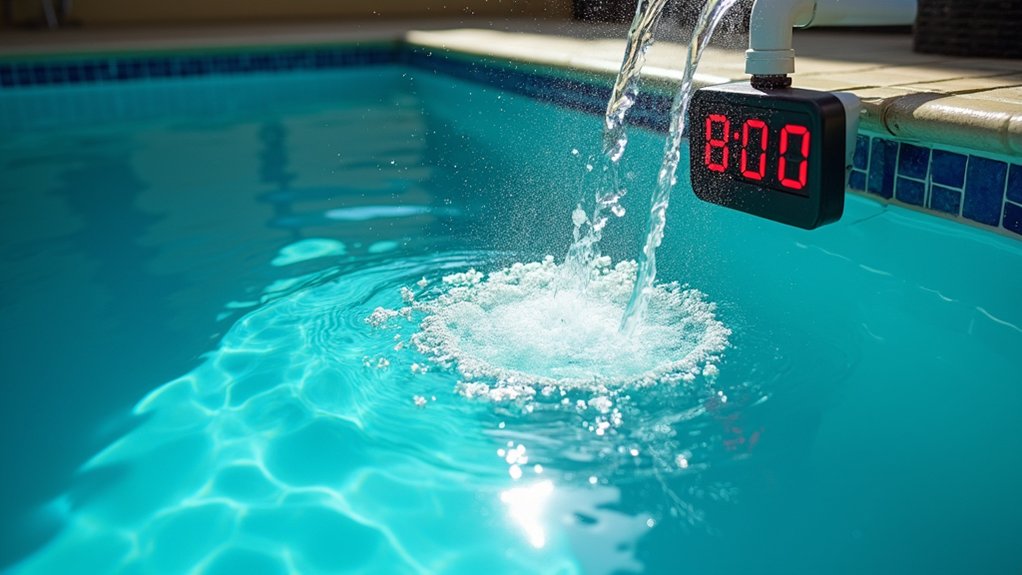
After you’ve dissolved and distributed the shock solution around your pool’s perimeter, you’ll need to keep your pump running continuously for at least 8 hours to guarantee proper circulation. This runtime verifies shock reaches every corner of your pool, eliminating bacteria, algae, and chloramines effectively.
Proper circulation prevents these critical issues:
- Uneven chemical distribution leaving dangerous dead zones
- Localized chlorine concentrations that damage vinyl liners
- Ineffective sanitation putting swimmers at risk
- Wasted product settling on pool floors
- Algae surviving in poorly circulated areas
Shock your pool at dusk and run the pump overnight. This protects unstabilized chlorine from UV degradation while maximizing killing power. After 6-8 hours, retest your water. You’re looking for free chlorine levels between 1-3 PPM before allowing swimmers back in.
When Can You Swim After Shocking Your Pool?
Once your pump has circulated the shock treatment for the recommended 8 hours, you’ll need to verify safe chlorine levels before anyone enters the water.
Chlorine-Based Shock Wait Times
Calcium hypochlorite requires 24 to 48 hours before swimming. Sodium dichlor needs 12 to 24 hours. Don’t enter the pool if chlorine levels exceed 5 ppm, this causes skin and eye irritation. Test until readings fall between 1-4 ppm.
Non-Chlorine Shock Wait Times
Potassium monopersulfate allows swimming after just 15-20 minutes. These oxidizing shocks dissolve quickly and don’t spike chlorine levels.
Testing Protocol
Always test before swimming. Verify free available chlorine reads 1-4 ppm and pH sits at or below 7.6. Sunny conditions break down chlorine faster, potentially shortening wait times. Follow your product’s label instructions, they override general estimates.
Frequently Asked Questions
How Often Should You Shock Your Pool During Swimming Season?
You should shock your pool once per week during peak swimming season. If you’re using your pool daily, stick to this weekly schedule. For infrequent use, you can extend to bi-weekly intervals. You’ll need to shock immediately after heavy swimmer loads, like pool parties, or following heavy rainfall. Don’t wait for your regular schedule if you notice cloudy water, strong chlorine odors, or visible algae, these conditions require prompt treatment.
Can You Shock a Pool During the Day Instead of at Night?
You can shock your pool during the day, but you’ll considerably reduce effectiveness. The sun’s UV rays rapidly degrade chlorine before it completes oxidation, forcing you to use more product for the same results. For ideal sanitation, you should shock during evening hours when UV interference stops. If you must shock during daytime due to storms or contamination, increase your dosage and retest chlorine levels before swimming.
What Happens if You Add Too Much Pool Shock?
If you add too much pool shock, you’ll create dangerously high chlorine levels that cause skin and eye irritation, respiratory problems, and potential chemical burns. You risk damaging your pool’s surfaces through corrosion and etching while accelerating wear on filters and equipment. The water becomes cloudy with a strong chlorine smell, and you can’t safely swim until levels drop. Always measure your pool’s volume and follow manufacturer dosing guidelines precisely.
Should You Shock Your Pool Before or After It Rains?
You should shock your pool after it rains, not before. Rain dilutes your chlorine levels and introduces pollutants, organic debris, and algae spores into the water. Wait until the rain stops, then shock in the evening to prevent sun from dissipating the chlorine. Run your pump for 10-24 hours afterward to guarantee proper circulation. Test your water first to confirm shocking’s necessary and determine the correct dosage.
Can You Mix Different Types of Pool Shock Together?
No, you shouldn’t mix different types of pool shock together. Combining stabilized chlorine (dichlor, trichlor) with unstabilized chlorine (calcium hypochlorite, liquid chlorine) creates dangerous chemical reactions, including fires, explosions, or toxic fumes. Even mixing shock with acids produces potentially fatal gases. You’ll want to use one shock type per treatment, store products separately in original containers, and never share measuring cups between different chemicals.