




You’ll need to upgrade your pool equipment to meet 2025’s stringent requirements, focusing on variable-speed pumps that cut energy use by 90% and smart automation systems for remote management. Essential components include AI-driven filtration systems, heat pumps compliant with new California regulations, and LED lighting that reduces power consumption by 80%. Integrate these with cloud-based monitoring platforms and ASTM-compliant safety features to futureproof your pool system. The following analysis breaks down each critical component in detail.
Essential Pool Pump Technology and Efficiency
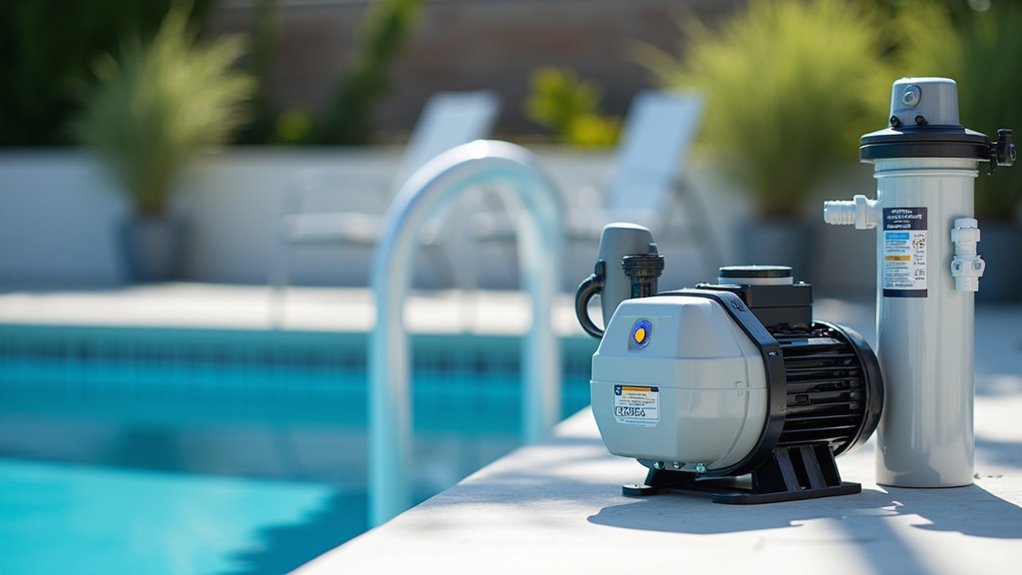
As pool technology continues to evolve, variable-speed pumps have emerged as the cornerstone of efficient pool operation. You’ll find these advanced systems deliver exemplary performance through real-time flow rate adjustments, maximizing variable speed adaptability while reducing energy consumption. The technology automatically matches pump output to your pool’s specific demands, extending pump lifespan deliberations through reduced wear and tear. Modern integration with systems like the Hayward OmniHub enables comprehensive monitoring and control of pump operations. These modern systems can achieve significant cost savings through reduced power usage while maintaining optimal performance levels.
Your investment in modern pump technology pays off through significant reductions in utility costs and amplified operational efficiency. The vertical pump designs are becoming increasingly popular due to their space-saving advantages. Smart features now allow you to monitor and control your pump remotely via mobile apps, with automated systems adjusting performance based on usage patterns. When selecting a pump, you’ll need to contemplate your pool’s size and specific requirements to guarantee the right configuration for ideal circulation and filtration.
Modern Filtration Systems and Performance Metrics
Three revolutionary advancements define today’s pool filtration domain: regenerative filter technology, smart monitoring systems, and sustainable alternatives. You’ll find these innovations dramatically reduce energy consumption while enhancing water quality. The regenerative filter technology, utilizing perlite-coated tubes, eliminates the need for frequent automated filter backwashing through its self-cleaning vibration mechanism. Voice-activated controls enable hands-free operation of filtration settings for enhanced convenience. These innovative systems work in harmony with LED lighting systems to create an efficient and aesthetically pleasing pool environment.
Smart monitoring systems now enable you to control filtration parameters via mobile apps, while AI-driven controls optimize performance metrics automatically. These systems integrate seamlessly with periodic filter maintenance schedules, ensuring peak efficiency. For eco-conscious pool owners, sustainable alternatives like saltwater chlorination and natural filtration systems offer reduced chemical dependency. When combined with variable-speed pumps, these modern filtration solutions deliver exceptional water clarity while minimizing operational costs and environmental impact.
New California Heating Regulations Explained
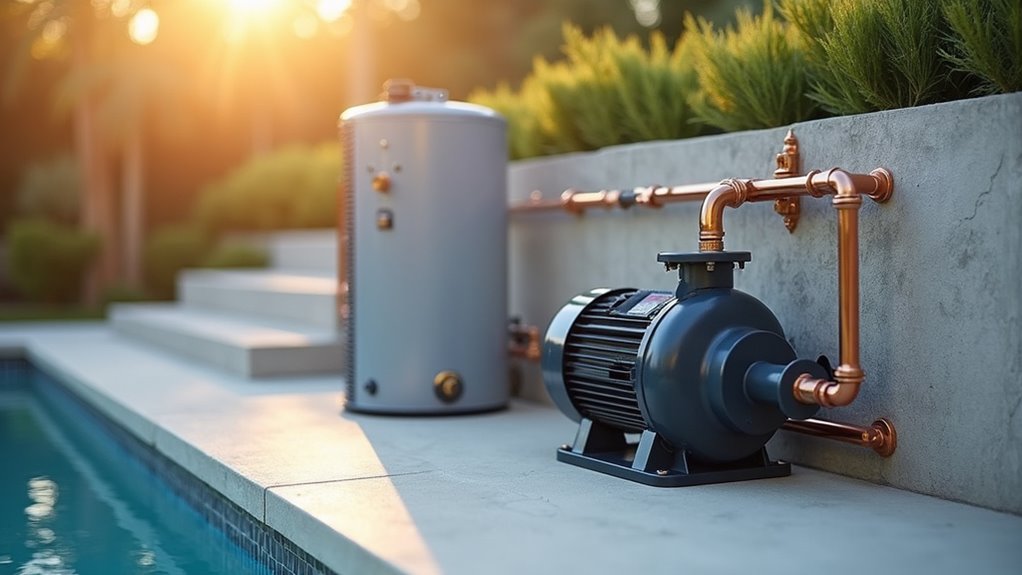
California’s landmark heating regulations roll out detailed changes that reshape residential and commercial HVAC requirements starting January 2026. You’ll need to comply with stringent heat pump installation requirements for both space and water heating in new construction, while commercial properties must upgrade rooftop units to heat pumps at end-of-life replacement. The shift represents a major change from California’s position as second highest gas adopter after Texas. These changes are expected to achieve 4 million metric tons in carbon emission reductions.
The regulations establish elevated heat pump performance ratings, including minimum SEER ratings of 15 for split cooling units under 45,000 BTU and 14.5 SEER for larger systems. Air-source heat pumps must achieve 8.8 HSPF heating efficiency. Smart thermostats with programmable settings are mandatory for all new central HVAC installations. You’ll need building permits for all HVAC modifications, with mandatory HERS testing and verification. Plan for potential equipment cost increases of $350-$1,500 to meet these new standards, which support California’s broader decarbonization goals.
Water Distribution and Flow Management
Proper water distribution and flow management serve as the foundation of any efficient pool system. Due to limited available data on specific pool equipment for 2025, you’ll want to consult with local pool professionals to understand the latest technological advancements in water distribution systems and flow management solutions.
Your pool’s water movement patterns play a pivotal role in maintaining proper circulation and chemical distribution. A network of carefully designed pipes and pumps works together to transport water throughout your pool system effectively. Just as in commercial buildings, the system requires pressure regulation to maintain optimal flow rates. Regular monitoring helps prevent water stagnation issues that could lead to biofilm growth and reduced water quality. While specific equipment recommendations aren’t currently available, working with certified technicians can help you identify the most effective configuration for your pool’s size and shape. They can also assist in optimizing backwash strategies to guarantee your filtration system operates at peak efficiency.
Consider scheduling a professional assessment to evaluate your current setup and identify potential upgrades that align with emerging industry standards and local regulations.
Equipment Maintenance Tools and Requirements
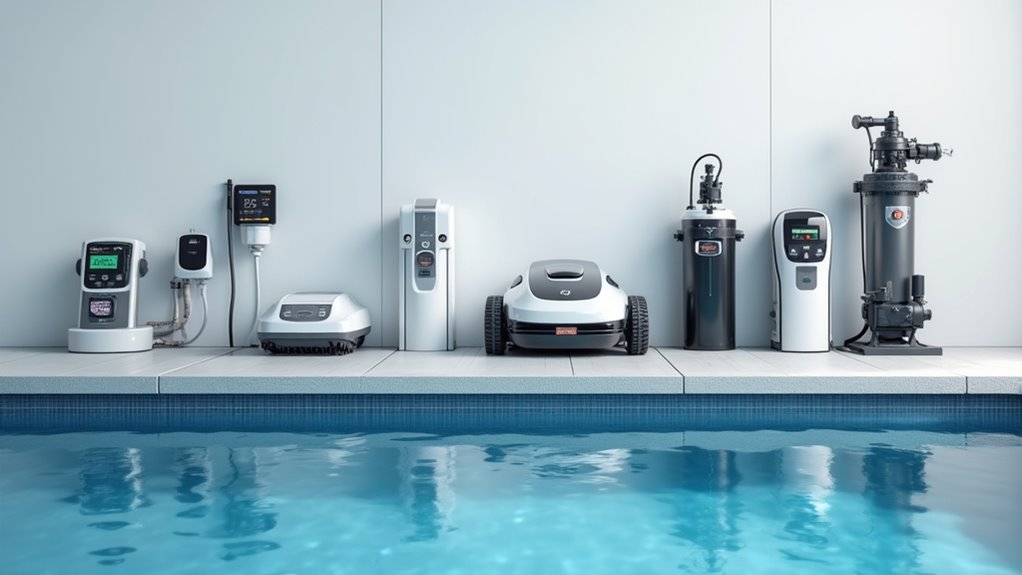
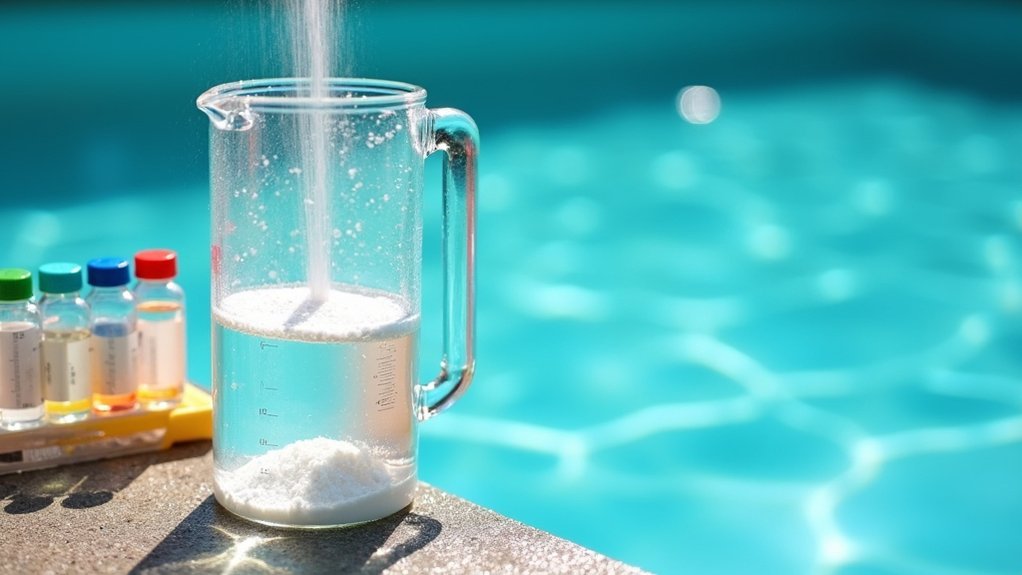
Maintaining your pool’s equipment requires a strategic combination of manual tools and testing equipment to guarantee peak performance and durability. Your maintenance arsenal should prioritize labor saving ergonomics while addressing seasonal storage requirements for ideal equipment longevity. The integration of smart technology controls allows for efficient remote monitoring and management of your pool maintenance equipment. Modern robotic vacuums provide autonomous cleaning capabilities while reducing manual maintenance requirements. Regular water testing with liquid test kits delivers highly accurate chemical readings for optimal pool maintenance.
Smart pool maintenance starts with the right tools and testing equipment, maximizing efficiency while preserving your investment for years to come.
- Select professional-grade telescopic poles made from fiberglass or aluminum, featuring secure locking mechanisms that adapt to diverse cleaning attachments for versatile maintenance tasks
- Invest in material-specific brushes, stainless steel for concrete/gunite and nylon for vinyl/fiberglass, with ergonomic handles to reduce physical strain
- Utilize deep-capacity leaf nets with varying mesh sizes to efficiently remove different types of debris before they compromise filtration systems
- Maintain thorough testing kits and chemical dispensers to ensure proper water balance, which directly impacts equipment lifespan and performance
Automation and Smart Control Solutions
Modern pool automation systems let you control essential functions remotely through smartphone apps while seamlessly integrating with your existing smart home infrastructure. You’ll enhance energy efficiency through automated scheduling features that optimize equipment operation during off-peak hours and adjust cycles seasonally. Your automated system can simultaneously manage up to 50 different pool components, from filtration and heating to chemical controllers and lighting, providing real-time monitoring and instant alerts when parameters fall outside ideal ranges.
Remote Pool System Control
Today’s advanced pool automation systems revolutionize how homeowners interact with their pool equipment through extensive remote control capabilities. You’ll gain thorough control through a unified mobile interface, allowing you to manage multiple pool functions from a customized home dashboard. The system’s integration capabilities extend beyond basic operations to create a fully connected pool environment.
- Monitor and adjust equipment settings including pumps, heaters, and lighting from anywhere using your smartphone
- Integrate your pool system with existing smart home platforms for seamless voice-activated control
- Receive instant alerts about water chemistry, equipment status, and potential maintenance needs
- Add and control new equipment or backyard features through the expandable automation platform
This technology transforms pool management into a streamlined, efficient process that puts complete control at your fingertips.
Energy Management Features
As pool technology continues to evolve, sophisticated energy management features have transformed traditional pool systems into highly efficient, cost-effective operations. You’ll benefit from variable speed pumps that cut energy consumption by up to 90% while smart scheduling systems optimize off-peak electricity usage, ensuring your equipment runs when rates are lowest.
AI-driven chemical management systems monitor water quality in real time, automatically adjusting pH and sanitizer levels for maximum effectiveness. These intelligent controls integrate with real-time grid monitoring to shift operations during ideal periods, particularly between 9 a.m. and 3 p.m. per California’s 2025 requirements. You’ll also enhance savings through LED lighting that uses 80% less energy and lasts 25 times longer than traditional bulbs, while predictive maintenance alerts prevent energy waste from underperforming equipment.
Integration With Smart Homes
Smart pool automation systems have revolutionized the way you interact with your pool equipment through seamless integration with existing home automation platforms. You’ll experience improved occupant convenience with voice commands via Alexa or Google Home, while coordinated aesthetic control syncs your pool lighting with outdoor home illumination networks.
Leading automation solutions offer comprehensive control through user-friendly mobile apps, allowing you to:
- Monitor and adjust water chemistry, temperature, and equipment status remotely
- Create one-touch macros for daily pool functions and cleaning cycles
- Receive real-time notifications about system changes and potential issues
- Program automated schedules for routine maintenance tasks
Systems like Hayward OmniPL and Jandy AquaLink RS integrate seamlessly with your smart home ecosystem, providing proactive monitoring capabilities and streamlined maintenance management for excellent pool performance.
Energy-Efficient Equipment Options
Modern variable-speed pumps can reduce your energy costs by up to 80% while operating at whisper-quiet levels below 45 decibels. You’ll optimize efficiency through smart control systems that automatically adjust equipment operation during off-peak hours and enable remote monitoring via smartphone apps. Integrating these technologies with solar heating solutions creates a thorough energy management strategy that substantially reduces both operational costs and environmental impact.
Variable-Speed Pump Benefits
Variable-speed pumps represent a revolutionary advancement in pool equipment technology, delivering up to 90% energy savings compared to traditional single-speed models. These operational efficiency advantages translate into annual savings of up to $1,500 while considerably extending motor lifespan optimization through reduced wear and tear.
- You’ll experience substantial cost reduction by running your pump only when needed, unlike older models that operate continuously at 100% capacity.
- Energy Star certification guarantees compliance with upcoming DOE regulations taking effect in 2025.
- Digital controls enable precise flow rate adjustments for specific tasks like running cleaners or water features.
- Extended filtration cycles at lower speeds deliver superior water quality while maintaining whisper-quiet operation.
These benefits make variable-speed pumps an essential upgrade for both existing pools and new installations.
Solar Heating Solutions
Three major advantages make solar heating solutions an increasingly popular choice for pool owners seeking energy-efficient alternatives. Foremost, you’ll see virtually no operating costs beyond basic filtration expenses. Second, these systems offer impressive temperature gains of 1-3°F daily under ideal conditions, potentially reaching 10-15°F increases within a few days. Third, the durable UV-protected components require minimal maintenance.
Key solar installation considerations include matching 50-100% of your pool’s surface area with collector panels. For a 400-square-foot pool, you’ll need 200-400 square feet of collectors. While upfront costs range from $2,500 to $7,000, the long-term savings offset initial investments. However, solar heating limitations exist; systems perform best in consistently sunny regions and heat more gradually than gas or electric alternatives.
Smart Control Systems
Beyond solar solutions, smart control systems represent the next frontier in pool efficiency enhancement. You’ll find these advanced automation hubs transform your pool management through seamless ecosystem connectivity, enabling comprehensive control over multiple functions from a single interface.
Key benefits of modern smart control systems include:
- Complete automation of chemical monitoring, filtration, and heating through AI-driven algorithms that optimize performance
- Voice assistant integration with systems like OmniHub, allowing hands-free control of pool functions and customizable themes
- Real-time water quality management that automatically adjusts chemical levels, reducing maintenance needs and promoting sustainability
- Energy-efficient operation through smart pump coordination and automated scheduling, helping you minimize utility costs while maintaining ideal pool conditions
These integrated systems serve as the backbone of modern pool management, streamlining operations while maximizing efficiency and user convenience.
Safety Components and Compliance Standards
Multiple layers of safety components and compliance standards form the foundation of modern pool facility protection. You’ll need to implement ASTM-compliant barriers, including mesh fencing with self-closing gates and safety covers anchored to support full adult weight. Preventive maintenance protocols guarantee these physical safeguards preserve their protective integrity.
Advanced detection systems combine surface wave technology with AI-powered cameras, requiring routine system audits to sustain ideal performance. You must strategically position emergency equipment and confirm proper integration with your facility’s management systems. Starting September 2025, your pool controls must meet new ANSI/PHTA/ICC-4 2025 standards and California Title 20 requirements for grid connectivity. Remember to verify that all equipment manufacturers provide certified systems compliant with updated state regulations for improved safety and remote operation capabilities.
Cost Analysis and Operating Expenses
Understanding your pool’s financial terrain requires careful consideration of both immediate and long-term expenses. When evaluating your investment, you’ll need to account for initial equipment costs, ongoing maintenance, and future pool equipment replacement expenses. Smart automation systems and energy-efficient components can offset operational costs despite higher upfront pricing.
- Pool surface resurfacing costs range from $6,000 to $15,000 every 8-15 years for gunite pools, making it a significant future expense to plan for
- Equipment installation splits between materials (67%) and labor (33%), with technician rates averaging $40-$80 per hour
- Variable-speed pumps and LED lighting systems deliver substantial energy savings over traditional components
- Smart automation systems require specialized installation but reduce chemical costs through precise monitoring and automated balancing
Frequently Asked Questions
How Long Should I Expect My Pool Equipment to Last Before Replacement?
You’ll find that the average pool equipment lifespan varies by component. You can expect your pool pump to last 8-12 years, with variable-speed models reaching up to 15 years. Your filter’s longevity depends on type: sand filters last 5-7 years, cartridge filters 2-3 years, and DE filters up to 10 years. Regular maintenance is essential; it’ll extend equipment life and help you avoid premature replacements. Heaters typically serve 7-12 years with proper care.
Can I Install Pool Equipment Myself to Save on Costs?
You can install basic pool equipment yourself if you have construction experience and the right tools, but consider the complexity carefully. DIY installation tips include ensuring proper site preparation, maintaining correct equipment spacing, and following local codes. While you’ll save on labor costs, professional installation pros include expertise with complex systems, warranty protection, and safety assurance. For advanced components like heaters or automated systems, it’s best to hire a certified installer.
What Backup Power Options Exist for Pool Systems During Outages?
You’ve got several reliable backup power options for your pool system during outages. Portable generators rated 2,500W-3,500W can handle both running and startup loads of typical pool pumps. Battery backup systems like the Bluetti AC180 work well for smaller equipment configurations. For a sustainable solution, consider solar generators that eliminate fuel costs. Modern hybrid systems can automatically switch between power sources, ensuring your pool equipment stays running when the grid goes down.
How Do Saltwater Systems Compare to Traditional Chlorine for Equipment Longevity?
You’ll find that traditional chlorine systems generally offer better equipment longevity than saltwater systems. While salt cells need replacement every 3-7 years, your chemical corrosion prevention efforts must be more aggressive with saltwater due to its naturally corrosive properties. Your equipment maintenance schedule will be more demanding with saltwater systems, as they’ll impact metal components, plumbing, and infrastructure more severely than traditional chlorine setups. Consider protective coatings and more frequent inspections with salt systems.
Will Insurance Rates Change With Different Types of Pool Heating Systems?
You’ll need to consult your insurance provider directly about how different pool heating systems impact your rates, as policies vary considerably by company and region. While your choice of heating system (gas, electric, solar) may affect rates due to energy efficiency concerns and safety considerations, most insurers focus more on basic pool safety features. Guarantee your heating system meets local installation regulations and obtain proper permits to preserve coverage eligibility.