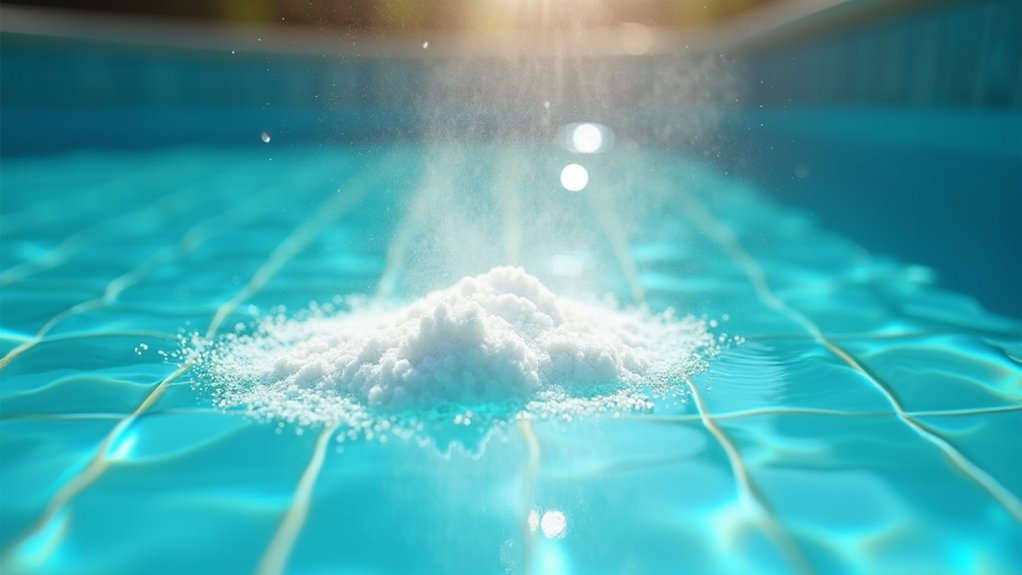

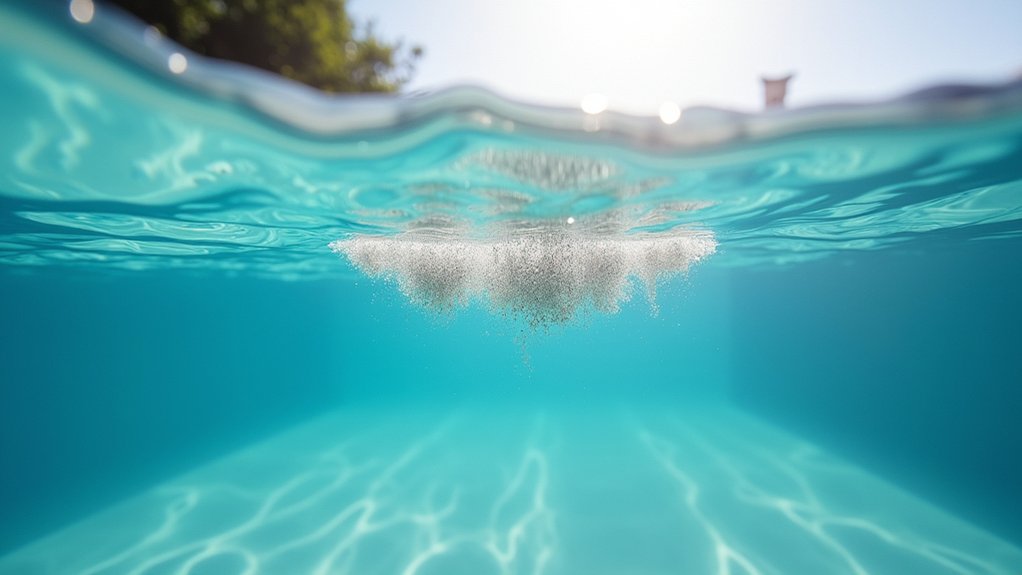
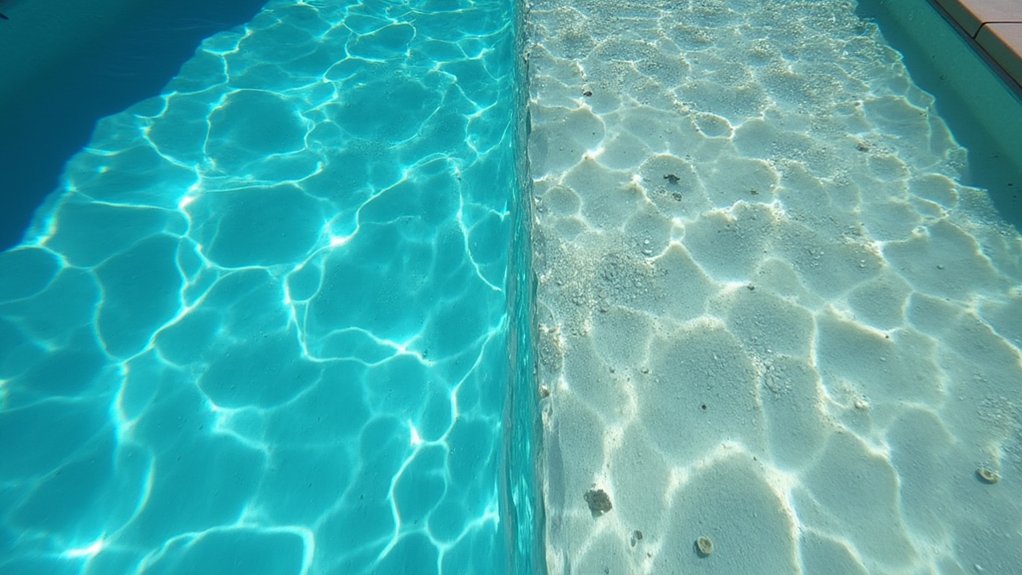
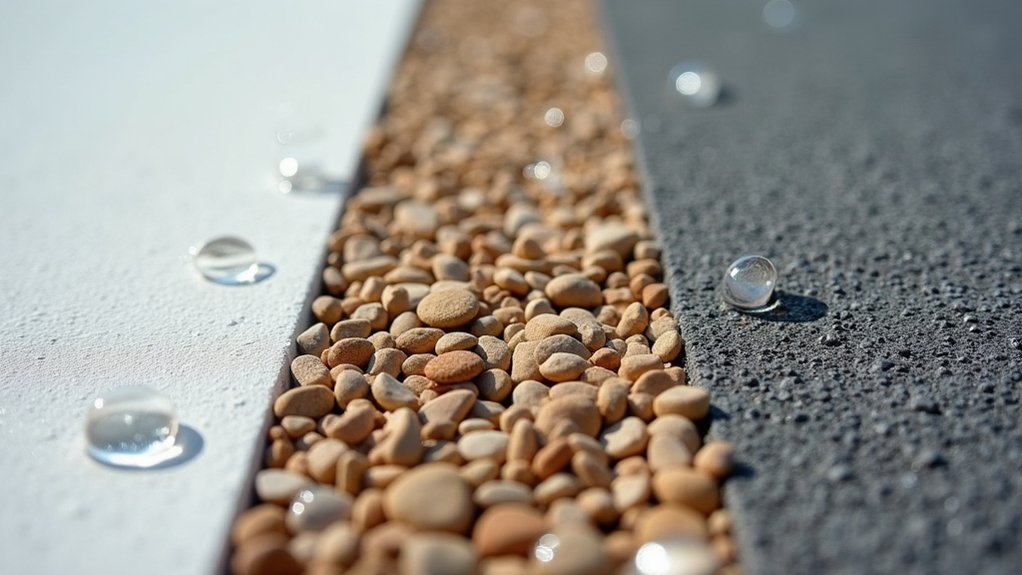
Several factors work together to determine your pool water’s final color appearance. Your pool interior finishes serve as the primary variable, directly affecting how light reflects and refracts through the water column. White pool plaster colors produce brighter, clearer tones, while dark finishes create deeper, richer hues.
Pool depth substantially impacts color intensity, deeper sections absorb more light, appearing darker than shallow areas. This mirrors the color variations observed in tropical oceans, where shallow waters appear light turquoise and deeper areas display rich navy tones. Your pool surface colors interact with sunlight exposure; direct sun brightens and clarifies water, while shaded conditions produce subdued tones.
Environmental factors also contribute. Surrounding greenery casts reflective tints, and hardscape materials influence perceived water color. Water features like fountains and waterfalls can make your pool appear more vivid and brighter by creating dynamic light movement across the surface. Don’t overlook water chemistry, imbalanced pH, metal oxidation, or algae growth can shift your water’s appearance toward green, brown, or even purple tones. Purple discoloration specifically results from chlorine reacting with manganese or magnesium present in your pool water.
Light vs. Dark Pool Finishes: Climate and Heat Factors
Beyond water chemistry and environmental reflections, your pool finish color directly impacts thermal performance, a critical factor when selecting between light and dark surfaces.
Dark gunite pool colors absorb more solar radiation, converting sunlight into heat energy that warms your water by 1-2 degrees. Light pool plaster colors reflect sunlight, minimizing heat absorption, ideal for hot climates like North Texas. Darker marcite pool colors suit cooler regions or shaded properties where heat retention extends your swimming season.
| Factor | Light Finishes | Dark Finishes |
|---|---|---|
| Heat Absorption | Minimal | Maximum |
| Best Climate | Hot/Sunny | Cool/Shaded |
| Energy Costs | Higher heating needs | Reduced heater reliance |
Water depth and sun exposure ultimately influence temperature variance more than finish color alone. Dark finishes also offer a practical advantage since they don’t show dirt and debris as easily as lighter colored surfaces, potentially reducing how often your pool appears to need cleaning. Light-bottom pools provide enhanced visibility and safety, making them an excellent choice for families with children or frequent swimmers.
White Plaster and Color Quartz for Budget Pools
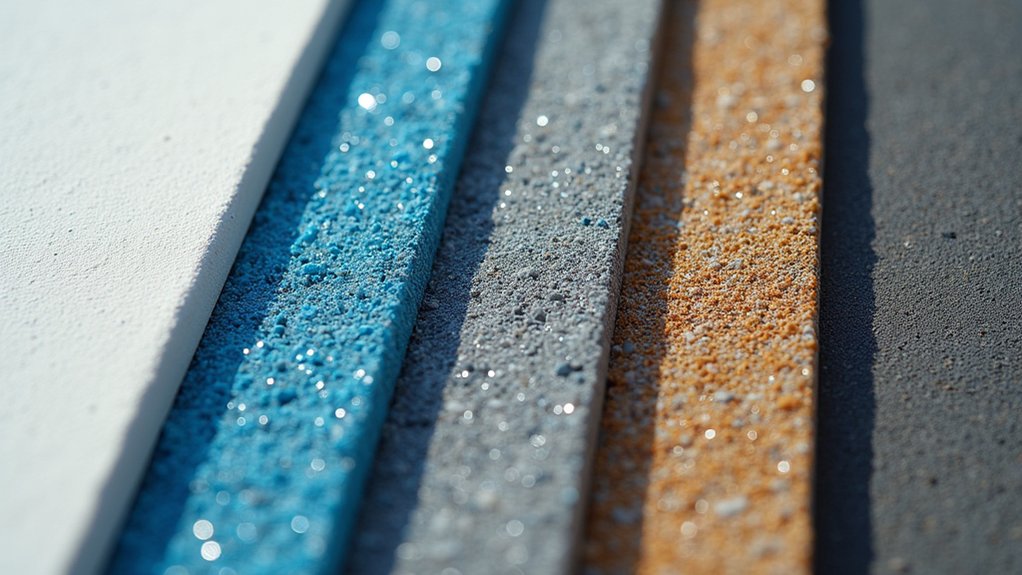
White plaster remains the industry’s baseline finish for budget-conscious pool installations, combining white cement with crushed marble aggregate to produce the smoothest surface texture available. You’ll achieve that classic light blue water appearance, though you’re accepting trade-offs in durability and stain resistance. At $3-6 per square foot, it’s your most economical entry point, but expect refinishing every 5-10 years. The smooth surface is ideal for families with children who prioritize comfort during extended swimming sessions. However, standard plaster is susceptible to damage from imbalanced pool chemistry, making regular water testing essential for longevity. Traditional marcite finishes are also vulnerable to etching and mottling over time, particularly when water chemistry fluctuates.
When exploring pool plaster colors, color quartz delivers superior value for budget pools. This finish blends crushed quartz stone with plaster pool colors and mineral pigments, hitting $5-9 per square foot. You’re getting 12-18 years of lifespan, better chemical resistance, and reduced crazing compared to standard plaster. Unlike pebble tec colors that prioritize texture, color quartz maintains comfort underfoot while offering enhanced slip resistance and consistent color retention.
Quartz Pool Finishes That Last 15+ Years
When you’re seeking durability that outperforms standard plaster’s 5-10 year lifespan, colored ceramic quartz aggregates deliver 12-18 years of service with proper maintenance protocols. Quartz material rates ten times harder than marble on the Mohs scale, giving you exceptional resistance to physical wear, chemical degradation, and UV-induced fading. The quartz aggregate combined with polymer-modified cement creates a surface with slip-resistant properties that ensure secure footing for swimmers. You’ll pay a premium upfront, but the extended service life and reduced resurfacing frequency offset initial costs over your pool’s operational timeline. As an aggregate finish, quartz provides a more elevated appearance than traditional plaster while maintaining the smooth, comfortable texture that modern advancements have made possible.
Colored Ceramic Aggregate Benefits
Colored ceramic aggregate finishes represent a significant advancement in pool surface technology, delivering exceptional longevity that exceeds 15 years even in harsh climatic conditions. You’ll benefit from ceramic coated quartz crystals that maintain color intensity despite intense UV exposure, unlike cement-based pigments that fade and chalk over time.
These aggregates feature permanently bonded colored ceramic pigments creating a tough exterior resistant to staining, etching, and discoloration from pool chemicals. When you experience pH fluctuations or mineral-rich water, ceramic quartz crystals won’t degrade like traditional plaster bonds. The mineral blending in these premium finishes actually turns hard water into an aesthetic advantage, preventing unsightly buildup while maintaining appearance.
ColorScapes and QuartzScapes blends deliver uniform color distribution with superior visual consistency. You’re getting 35+ years of proven performance data showing sustained appearance with fewer warranty claims. The ceramic coating guarantees your investment maintains its vibrant aesthetic without the maintenance headaches of conventional finishes. Standard aggregate finishes made from crushed stones like quartz and granite offer extended durability of 10-12 years, making ceramic-coated options an even more impressive upgrade for long-term pool ownership. Unlike classic white plaster that shows trowel marks more easily, ceramic aggregate provides a more refined and consistent surface texture throughout your pool.
Extended Durability Over Plaster
Although standard plaster finishes typically require refinishing every 7-10 years due to chemical sensitivity and surface degradation, quartz aggregate finishes consistently deliver 10-15 years of service life, with properly maintained installations often reaching the 15-20 year threshold.
You’ll benefit from quartz crystals mixed with cement, a composition ten times harder than marble. This hardness provides superior resistance to wear, UV exposure, chemical imbalances, and impact damage. Your finish won’t succumb to staining, scaling, or etching that plagues traditional plaster surfaces. As the sophisticated blend of cement and quartz particles, this finish combines innovation with elegance for your aquatic oasis.
Professional installation proves critical for maximizing longevity. Proper surface preparation and expert application guarantee ideal adhesion, preventing premature cracks and chipping. You should select high-quality quartz products with manufacturer warranties to protect your investment. In coastal environments with salt air exposure, well-maintained quartz installations routinely achieve 12-25 years of service. The experience and track record of the installation crew significantly influences how long your quartz finish will ultimately last.
Pebble Finishes for Blues, Greens, and Teals
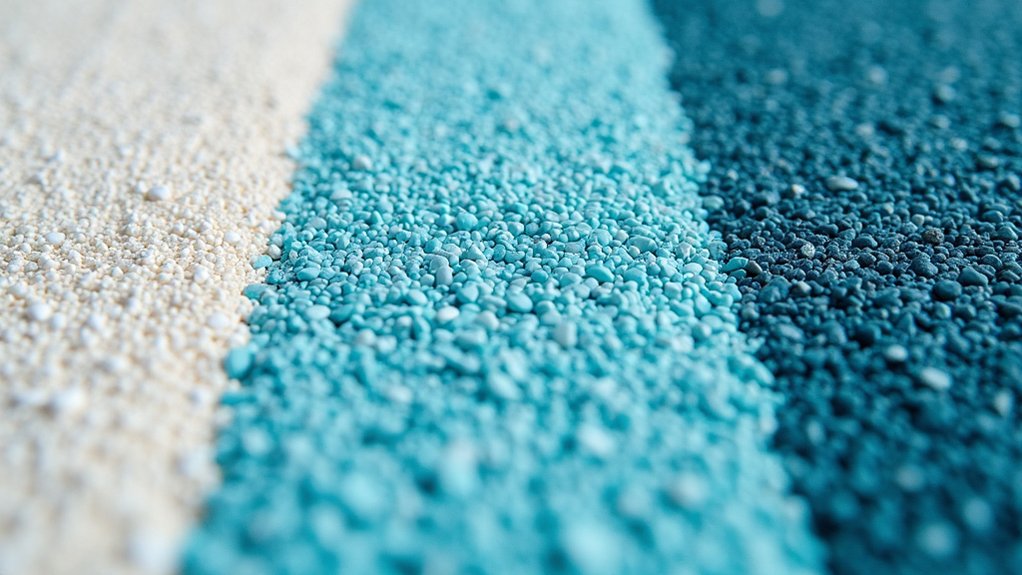
When you’re selecting pebble finishes for blue, green, or teal water colors, you’ll encounter three primary texture categories: polished pebble, aggregate pebble, and mini pebble varieties. Each texture affects how light interacts with the pool surface, influencing the final water color you’ll see once the pool is filled. Your choice between options like Emerald Sea for medium blue or Sahara Beach for green depends on matching the aggregate’s stone composition to your desired aesthetic outcome.
Polished Pebble Water Colors
How does a polished pebble finish achieve those stunning blue, green, and teal water colors you’re after? The proprietary cement binder combines pebbles, glass, and iridescent seashell to create depth and brilliance. You’ll find Tahoe Blue and Midnight Blue deliver deep ocean tones, while Sky Blue and Blue Lagoon produce lighter, icy hues.
For greens, Emerald Bay yields true emerald water, and Tropical Breeze incorporates quartz for softer variations. Turtle Bay bridges the gap with teal-green results.
Teal options like Aqua Azul, Turquoise, and Gulf Shores generate coastal-inspired clarity. Adding Shimmering Sea introduces abalone and mother-of-pearl sparkle, while Pebble Radiance glass at 20% concentration intensifies vibrancy. The buff-polished surface maintains non-slip properties without sacrificing that velvety texture you’re seeking underfoot.
Aggregate Pebble Varieties
Aggregate pebble finishes deliver exceptional color depth through their combination of natural stone, cement binders, and size variations across the PebbleTec product line. You’ll find that imported pebbles in blue tones create vibrant water colors mimicking ocean aesthetics, while green aggregates complement surrounding landscaping with organic appearances. Teal varieties combine stone aggregates for brilliant sparkle effects.
Your finish selection affects both aesthetics and longevity:
- PebbleTec Original, Uses largest pebbles for maximum stain resistance and 12-20 year lifespan
- PebbleSheen, Features smaller aggregates delivering refined textures with enhanced durability
- PebbleFina, Offers smoothest finish with exceptional color retention for teal applications
Each cement-based mix incorporates fade-resistant pigments maintaining vibrancy over time. You’ll achieve non-slip traction while benefiting from chemical-free discoloration resistance across all color categories.
Mini Pebble Textures
Mini pebble textures deliver refined aggregate finishes that produce stunning blues, greens, and teals through carefully selected stone combinations and pigmented cement binders. PebbleTec Aqua Blue blends white, gold, grey, and dark brown pebbles to achieve light-to-medium blue water coloration. StoneScapes Mini Aqua Blue pairs aqua-pigmented white Portland cement with natural black, gold, and white quartz aggregates for medium blue tones.
You’ll find smaller pebble sizes create smoother surfaces than standard aggregate finishes. Washed and tumbled stones guarantee comfortable foot traffic while maintaining visual depth. The non-porous surface resists staining and requires minimal maintenance compared to traditional plaster.
For green and teal effects, ceramic-coated quartz options like Maui Gem provide vibrant coloration. Expect 20-25 years of durability, double plaster’s lifespan, with fade-resistant pigments maintaining color integrity throughout.
Shimmer Pool Finishes for Depth and Sparkle
Several shimmer technologies now dominate the premium pool finish market, each delivering distinct light-reflective properties that transform your pool’s visual depth. Glass bead finishes incorporate smooth, reflective beads that shift color based on sun position throughout the day. Triple-sided mirror aggregates create dazzling highlights visible beneath the water’s surface, adding dimension to your finish.
Transform your pool into a living canvas where light dances and colors shift with the sun’s movement.
Advanced gelcoat formulations now feature built-in sparkle technology, eliminating the need for additional aggregates while providing inherent shine across your entire pool surface.
Key shimmer finish categories include:
- Polished quartz blends, troweled smoother for refined texture with subtle sparkle
- Glass bead compositions, maximum light reflection with dynamic color shifts
- Specialty shimmer colors, proprietary formulations designed for lasting visual impact
You’ll achieve ideal results by matching shimmer intensity to your desired aesthetic outcome.
How Long Each Pool Finish Lasts
Each pool finish delivers a distinct service life based on its material composition and aggregate density. Standard plaster finishes typically last 5-12 years, with well-maintained residential pools reaching 7-10 years before showing pitting or staining. You’ll need to budget for replastering sooner with heavy commercial use.
Pebble aggregate finishes outperform standard plaster greatly, spanning 15-25 years under ideal conditions. Their resistance to chemical imbalances and staining makes them a durable long-term investment. Quartz aggregate falls mid-range at 10-18 years, offering improved wear resistance over traditional plaster.
Your gunite pool’s plaster coating requires resurfacing every 7-15 years, depending on water chemistry maintenance and visible deterioration. Factors like UV exposure, usage frequency, and chemical balance directly impact longevity. Quality materials combined with consistent maintenance push any finish toward its upper service limits.
How to View Pool Color Samples Accurately
Accurate color evaluation requires controlled lighting conditions that eliminate metamerism, the phenomenon where colors appear different under varying light sources. You’ll want to conduct all comparisons in natural daylight, preferably northern light, while removing sunglasses that distort perception. Hold comparators at eye level and avoid dark backgrounds like foliage during assessment.
Metamerism makes colors appear different under varying light sources, always evaluate in natural daylight for accurate results.
For precise sample collection, follow these protocols:
- Collect water samples at elbow depth (approximately 18 inches) away from return lines
- Compare developed color intensity against printed standards within 10-30 seconds post-reaction
- Utilize photometric devices or digital testers like colorimeters to bypass naked-eye subjectivity
When visual matching proves insufficient, digital tools offer superior accuracy. Photometers measure transmitted light electronically, remaining unaffected by ambient conditions. This technology proves especially valuable for individuals with colorblindness.
Frequently Asked Questions
Can I Change My Pool’s Plaster Color Without Completely Refinishing the Surface?
Yes, you can adjust your pool’s plaster color without a full refinish. You’ll want to use tintable repair products like E-Z Patch 1 F.S., available in NPT PlasterScapes colors. Darken the mix with Black Cement Dye or lighten it with Titanium Dioxide White Cement Colorant. Always test your dry mix on a wet surface first for accurate color matching. For whitened surfaces, sanding or polishing removes porous layers, restoring the original dense finish.
Do Pebble Finishes Feel Rough on Bare Feet Compared to Plaster?
Yes, traditional pebble finishes feel rougher on bare feet than plaster. You’ll notice original pebble aggregates create a textured, sand-like sensation that can be tough on skin and may snag swimsuits. However, you’ve got smoother alternatives, mini pebble and micro pebble variants use smaller aggregates to achieve near-plaster smoothness. The trade-off? Pebble’s texture delivers superior slip resistance and wet traction, which you won’t get from plaster’s smooth surface.
Will Pool Chemicals Fade or Alter My Chosen Finish Color Over Time?
Yes, pool chemicals can fade or alter your finish color over time. Chlorine and oxidizers bleach organic pigments, causing color loss, especially in dyed marcite plasters with darker shades. You’ll notice white spots, chalky deposits, and hue shifts when cheaper organic pigments break down. Pebble finishes resist fading better than standard marcite, while their variated colors camouflage chemical-induced discoloration. Maintaining balanced water chemistry and using inorganic pigment-based finishes considerably extends your color’s longevity.
Can Different Finish Types Be Combined in the Same Pool?
Yes, you can combine different finish types within a single pool project. You’ll need to coordinate with your installation team since pebble finishes require separate visits from plaster crews due to differing application techniques. Pre-blended systems help maintain batch consistency across materials. Keep in mind that quality control becomes more challenging without unified formulations, and you’ll want to safeguard color coordination between aggregate types for seamless shifts throughout your pool’s interior.
How Does Water Depth Affect the Appearance of Lighter Versus Darker Finishes?
Water depth markedly intensifies both lighter and darker finishes, but in different ways. You’ll notice lighter finishes appear nearly transparent in shallow areas while producing vibrant tropical blues in deeper sections due to increased light absorption. Darker finishes create increasingly saturated, dramatic blue-black tones as depth increases. The deeper your pool, the more pronounced these color effects become, giving you greater visual depth and dimensional variation throughout the water column.