
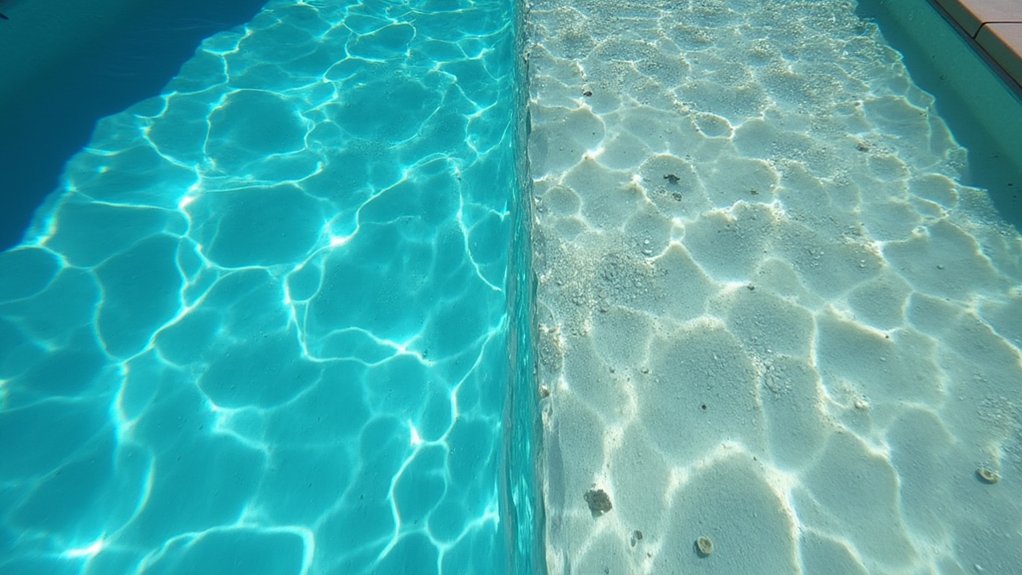
You’ll encounter two main types of pool cracks: surface-level and structural. Surface cracks appear as shallow spider-web patterns less than 1/8 inch wide in the plaster layer, often due to improper curing or environmental factors. Structural cracks penetrate deeper into the concrete shell, showing pronounced vertical or horizontal patterns with potential rust staining. While surface cracks rarely cause leaks, structural damage requires immediate professional assessment. Understanding these distinctions will help you make informed maintenance decisions.
Understanding Surface vs. Structural Pool Cracks
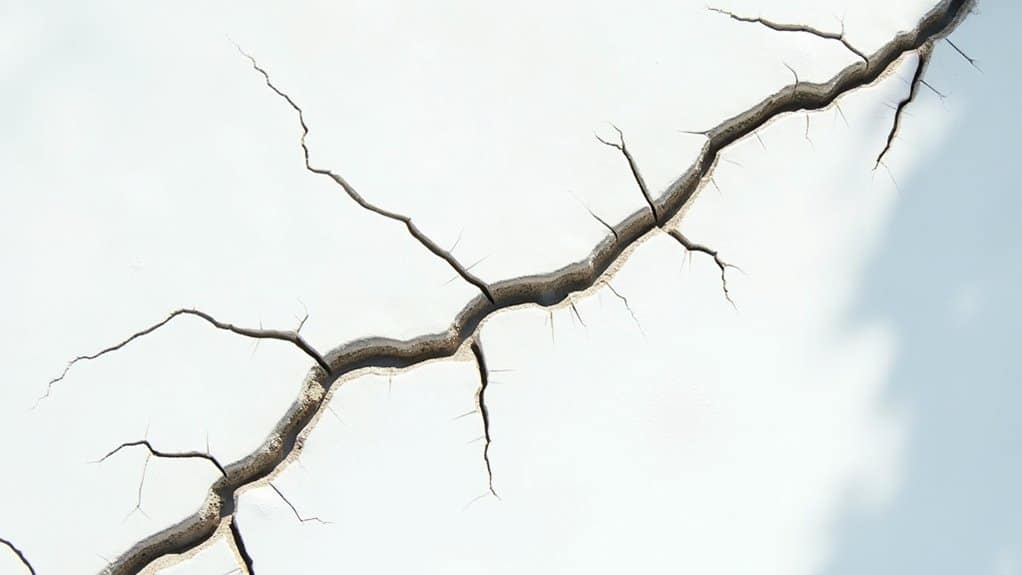
When examining pool cracks, it is crucial to distinguish between surface-level imperfections and structural damage, as these two types require vastly different approaches to repair. You’ll find surface cracks displaying spider-web patterns limited to the plaster durability layer, typically resulting from improper concrete curing process or environmental factors. These shallow imperfections don’t penetrate the pool shell and rarely cause leaks. Most in-ground pools have 6 to 8 inches of concrete shell thickness that helps prevent serious damage. In contrast, structural cracks extend deep into the concrete shell, often reaching the reinforcement bars. You can identify them by their more pronounced appearance, vertical or horizontal orientation, and potential rust staining. Surface cracks are generally considered normal and do not require immediate attention. Structural cracks are particularly concerning when they appear in the bond beam area, which is the reinforced top section of the pool wall. If you notice consistent water loss or cracks that mirror through multiple layers of your pool’s construction, you’re likely dealing with structural issues that demand immediate professional assessment.
Identifying Hairline and Spider Crack Patterns
You’ll notice hairline cracks appearing as shallow fractures less than 1/8 inch wide, often forming distinctive spider web patterns across your pool’s surface. These surface-level imperfections become more visible on light-colored finishes and may darken over time due to algae accumulation in the tiny fissures. While these cracks might seem minor, they could indicate poor construction practices during the pool’s installation. When these cracks intersect and branch out in multiple directions, they often reveal structural compromise beneath the surface. If the damage requires professional attention, repairs typically cost $100-$300 for basic hairline repairs. To effectively track crack progression, you should mark crack boundaries with waterproof indicators and photograph the patterns regularly, allowing you to monitor any concerning changes in width or direction.
Visual Signs of Cracks
Identifying different types of pool cracks starts with recognizing their distinct visual patterns and characteristics. You’ll notice surface-level issues through shallow hairline fractures that appear as faint lines across your pool’s plaster. These often develop into spider-web patterns, creating interconnected networks of fine cracks that branch outward from central points. Regular dye test inspections can help pinpoint active leaks in suspected crack areas. Poor soil conditions can accelerate the formation and spread of these visible patterns.
Watch for plaster discoloration patterns and visual texture changes around crack formations. Dark patches or rust-colored stains may indicate deeper structural concerns, while pop-off areas where plaster pieces detach expose the underlying concrete. Pay particular attention to wall cracks running vertically or horizontally, floor patterns extending across the pool bottom, and corner junction fractures where walls meet. These visual indicators help determine whether you’re dealing with superficial surface imperfections or more serious structural issues.
Monitoring Growth Over Time
To effectively track pool crack progression, establishing a systematic monitoring approach is essential for distinguishing between minor surface issues and developing structural problems. You’ll need to conduct regular visual inspections, marking crack edges with waterproof markers to precisely track their expansion patterns.
When monitoring crack progression, focus on identifying both hairline and spider crack formations. Hairline cracks typically appear as single lines that may branch out, while spider cracks create web-like patterns across pool surfaces. Pay special attention to cracks wider than 1/8 inch, as these often signal structural concerns rather than cosmetic issues. Since poor construction methods can lead to severe structural damage, watching for rapid crack development is crucial during the first year after installation. Track the length, width, and depth of cracks over time, documenting any changes in their patterns. Recall that rapid expansion or multiplication of cracks within short periods requires immediate professional evaluation.
Key Warning Signs of Serious Pool Damage
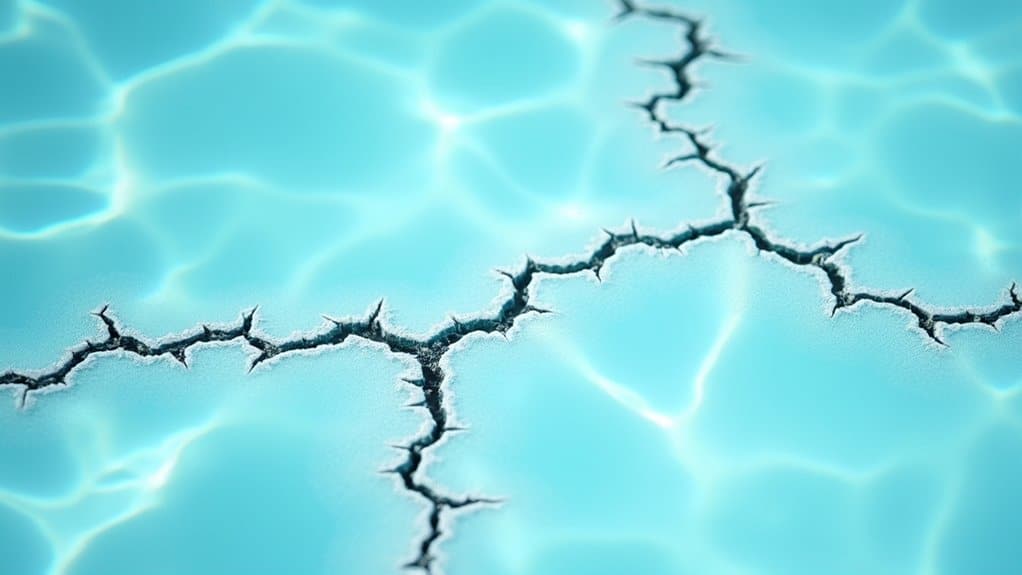
You’ll need to monitor your pool’s water level daily, as unexplained drops can signal serious structural issues beyond normal evaporation. Watch for rust-colored stains and white mineral deposits around fittings and returns, which often indicate corroding metal components or chemical imbalances affecting the pool’s structure. Keep an eye on the ground surrounding your pool, as settling soil, expanding gaps, or emerging sinkholes point to potentially dangerous foundation problems that require immediate professional assessment. Pay close attention to any rough surface texture developing on your pool’s finish, as this is often an early indicator of widespread deterioration that will worsen if left untreated. Persistent cloudiness in the water could indicate that your pool has filtration problems, which may contribute to structural damage if not addressed promptly.
Visible Water Level Changes
The most revealing indicator of serious pool damage manifests through abnormal water level changes. If you’re losing more than ½ inch of water daily, you’re likely dealing with a structural issue rather than natural evaporation. This excessive water loss additionally impacts your pool’s chemical balance but also leads to equipment malfunction indicators like pump strain and decreased water pressure. Regular inspection of your filter pressure gauge can help identify circulation problems early on. Look for unexplained wet spots around your pool area as they often indicate hidden leaks.
To distinguish between evaporation and leaks, conduct a simple bucket test. Place a water-filled bucket on your pool steps and mark both water levels. After 24 hours, compare the levels with your pump off. If your pool’s water level drops more than the bucket’s, you’ve confirmed a leak. Watch for consistent water level drops even after adding water, as this pattern signals potentially serious structural or plumbing damage. The humid South Carolina climate can significantly affect evaporation rates, making it crucial to account for seasonal variations when monitoring water levels.
Rust and Mineral Deposits
While early detection of rust stains and mineral deposits can prevent costly structural damage, these warning signs often appear subtly initially. You’ll notice reddish-brown concrete staining around metal fixtures, starting as small penny-sized spots before expanding over time. Equipment corrosion typically manifests where water meets metal components, particularly in areas with poor circulation.
Watch for white calcium deposits forming at the waterline and between tiles; these indicate chemical imbalances that need immediate attention. If you spot rust marks on exterior walls or eggshell-like cracks, you’re likely dealing with corroding steel reinforcement within the concrete structure. Don’t ignore cloudy water conditions or surface etching, as these signal mineral concentration issues. Regular testing for iron levels and maintaining calcium between 200-400ppm will help prevent these destructive conditions from developing.
Shifting Ground Patterns
Beyond rust and mineral concerns, shifting ground patterns represent one of the most serious threats to pool structural integrity. When you notice uneven soil shifts around your pool’s perimeter, you’re likely witnessing early signs of structural destabilization. Watch for sudden changes in previously level surfaces and irregular ground settling patterns that create visible elevation differences between adjacent sections.
Pay close attention to how your pool deck interacts with the surrounding soil. If you spot gaps developing between the deck and pool shell, or observe misaligned deck sections, you’re seeing evidence of significant ground movement. Water seepage between tiles, unexplained wet spots, and bubbling water near the structure also indicate serious foundation issues. These warning signs often relate to clay soil expansion or drought-induced soil shrinkage, requiring immediate professional assessment.
Environmental Factors Contributing to Pool Cracks
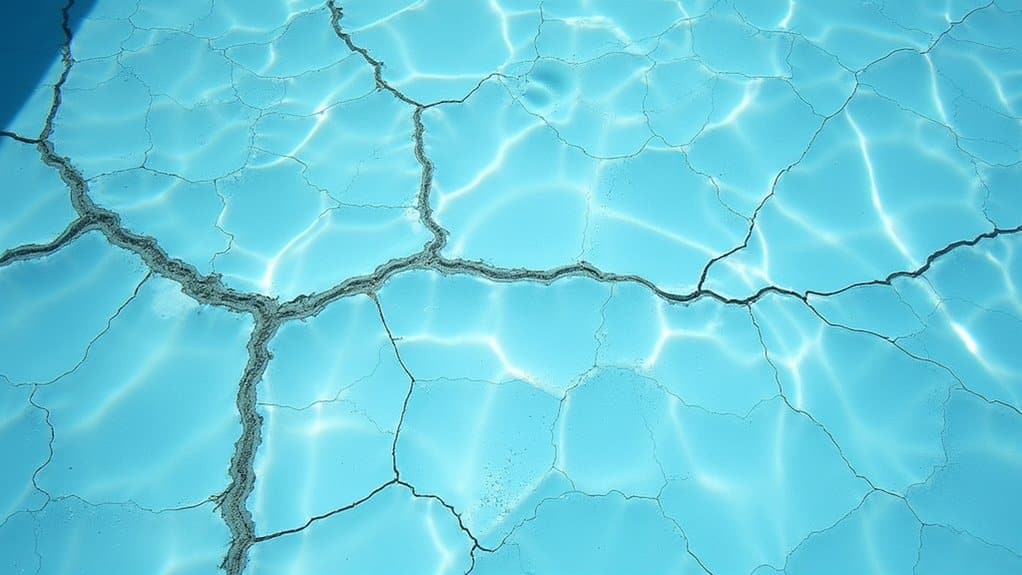
Environmental factors pose significant threats to pool structural integrity, often working in combination to accelerate deterioration and crack formation. You’ll need to monitor water chemistry imbalances closely, as high alkalinity and low calcium hardness can weaken your pool’s surface materials. Extreme weather fluctuations create thermal stress through expansion and contraction cycles, particularly damaging during freeze-thaw periods.
Your pool’s vulnerability increases when multiple environmental factors converge. Heavy rains and flooding can saturate surrounding soil, while drought conditions cause ground shifting. If you’re near saltwater, you’ll face additional challenges from salt air exposure, which speeds up concrete deterioration. Chemical treatments, when improperly balanced, work counter to your pool’s structural materials, especially when combined with temperature variations and moisture changes in the surrounding soil.
Maintenance Tips for Preventing Crack Formation
Proper maintenance stands as your primary defense against pool crack formation, requiring a systematic approach to prevention rather than costly repairs. Start by focusing on material selection during construction, ensuring you’re using appropriate concrete grades and reinforcement materials suited to your local conditions. You’ll need to implement consistent water chemistry management protocols to prevent structural deterioration from chemical imbalances.
Monitor soil moisture levels around your pool regularly, as fluctuations can lead to ground movement and subsequent cracking. Don’t overlook the importance of proper drainage systems and maintaining consistent water levels to prevent hydrostatic pressure buildup. When you’re scheduling maintenance, time your pool draining operations carefully, avoiding periods after heavy rainfall when soil conditions are unstable. Remember, prevention through systematic maintenance costs considerably less than major structural repairs.
Essential Pool Crack Detection Methods
A thorough crack detection strategy combines multiple testing methods to guarantee accurate diagnosis of pool structural issues. You’ll want to start with thermal imaging to identify temperature variations of 4°F or greater, though be aware of thermal imaging limitations from shadows and underground utilities that can cause false readings.
Follow up with dye staining procedures, positioning test bottles 12-18 inches from suspected areas after turning off all circulation systems. For quantifiable results, implement the bucket test by monitoring water loss over 24 hours against evaporation rates. Bolster your visual inspection using goggles and pool tools to examine common crack zones like tile lines and structural joints. When needed, professional pressure testing offers 95% accuracy within two hours, allowing for immediate repair with waterproof epoxy.
Soil Conditions and Their Impact on Pool Structure
While soil conditions directly influence pool structural integrity, understanding your property’s soil composition becomes critical before breaking ground on any installation project. You’ll encounter distinct subsurface soil challenges depending on your terrain type. Expansive clay soils create stress through constant swelling and shrinking, while sandy soils lack adequate structural support and can liquefy under pressure. Loamy soil offers the ideal foundation with its balanced mixture of sand, clay, and rock particles.
Your pool’s structural integrity issues often stem from lateral earth pressure and groundwater complications. You’ll need proper drainage management and specific wall design considerations based on soil pressure calculations. If you’re dealing with high water tables, maintaining appropriate pool water levels becomes essential to counteract external hydrostatic pressure and prevent shell tilting or uneven settling.
When Pool Cracks Require Professional Attention
Understanding when to seek professional help for pool cracks can save you significant time and money in the long run. You’ll need a licensed contractor evaluation when cracks show persistent movement, widening, or repeated repair failures. The pool repair process requires specialized expertise for structural issues that go beyond surface-level damage.
| Warning Sign | Required Action |
|---|---|
| Widening cracks | Professional monitoring |
| Failed DIY repairs | Structural assessment |
| Deep fractures | Expert stabilization |
| Active movement | Immediate intervention |
Don’t attempt DIY repairs when you notice large cracks affecting structural integrity or delamination issues. Professional contractors use specialized tools like steel staples and epoxy injection techniques to create permanent solutions. They’ll assess the root cause of the problem, ensuring repairs meet safety standards and prevent future complications. Their access to industrial-grade materials and advanced techniques provides long-lasting results you can’t achieve with DIY methods.
Frequently Asked Questions
How Much Does It Typically Cost to Repair Different Types of Pool Cracks?
You’ll find the average cost of minor crack repairs ranges from $75-200 per linear foot, with basic concrete fixes starting at $100. For major repairs, you’re looking at a typical cost range of $700-2,500, depending on the crack’s severity and pool material. You’ll pay more for concrete repairs ($10,000-20,000 for full resurfacing) compared to vinyl ($2,000-7,500) or fiberglass ($6,500-15,000) pools due to labor intensity and material costs.
Can Pool Cracks Be Safely Repaired During Winter Months?
You can repair minor pool cracks during winter, but seasonal weather conditions greatly reduce your options and effectiveness. You’ll need to guarantee proper crack preparation by completely drying the area and maintaining temperatures above freezing during application and curing. While you can apply temporary sealants to prevent further damage, it’s best to wait for warmer weather to perform permanent repairs that require ideal bonding conditions.
Are Certain Pool Shapes More Prone to Developing Cracks Than Others?
Yes, certain pool shapes are more vulnerable to cracking. You’ll find that pools with sharp angles and complex geometry experience higher stress concentrations at corners and joints. Rectangular and L-shaped pools are particularly susceptible, especially in expansive soil conditions where ground movement occurs. To minimize crack risk, you’ll want to ponder freeform or kidney-shaped designs that distribute structural loads more evenly and follow natural stress patterns through curved shifts.
How Long Do Professional Pool Crack Repairs Usually Last?
Professional pool crack repairs typically last 15-30 years when properly executed, though repair longevity varies based on several factors. You’ll find that structural repairs with proper gunite reconstruction can last 50+ years, while injection foam repairs provide 10-20 years of performance. Seasonal factors like freeze-thaw cycles can impact durability, but with proper water chemistry maintenance and professional-grade materials, you can expect your repair to remain effective well beyond its warranty period.
What Chemicals or Treatments Should Be Avoided When Dealing With Pool Cracks?
You’ll need to avoid acid-based cleaners and concentrated chlorine stabilizers when treating pool cracks, as these can worsen damage and compromise repairs. Don’t use standard concrete patching products or regular construction adhesives, as they’ll fail in pool environments. Keep pH levels balanced, avoid shocking the pool immediately after repairs. Steer clear of generic epoxies and non-marine grade sealants that aren’t specifically designed for underwater use.