Fiberglass pools outperform vinyl and concrete in UV degradation because their gel coat contains UV-blocking additives that reflect harmful rays before they reach structural layers. The vinyl ester resin backbone maintains chemical stability even after 1,000+ hours of sun exposure, with no measurable degradation beyond that threshold. You won’t see the fading, chalking, or brittleness that destroys vinyl liners and concrete surfaces within years. The sections below break down exactly how this protection works.
Why UV Resistance Matters for Pool Longevity

When you invest in a fiberglass pool, UV resistance becomes a critical factor determining your pool’s lifespan and long-term value. Without ideal UV protection, pool surfaces experience accelerated degradation, including fading, chalking, and structural brittleness that compromises integrity over time.
UV rays break down unprotected materials at the molecular level. Vinyl liners crack and become brittle, while concrete coatings fade and deteriorate under prolonged sunlight exposure. Even vinyl pool liners with UV inhibitors mixed into the PVC experience degradation over time, though at a slower rate than untreated materials. These failures lead to costly repairs and shortened service life.
Fiberglass pools with superior UV shielding capabilities resist these damaging effects. UV-stabilized resins and protective gelcoat layers prevent surface breakdown, maintaining structural integrity for decades. The smooth, non-porous gel coat surface also makes fiberglass pools resistant to algae growth and simplifies cleaning routines. This protection directly translates to reduced maintenance costs, preserved aesthetics, and extended operational lifespan, making UV resistance essential for maximizing your pool investment. Additionally, using pool covers provides shields from sun damage while also reducing water evaporation.
How Gel Coat Creates a Permanent UV Shield
Your fiberglass pool’s gelcoat incorporates UV-blocking additives, specifically UV-stabilized resins and reflective compounds, that prevent the chemical breakdown responsible for fading and chalking. These specialized additives actively reflect harmful UV rays while the resin matrix absorbs and dissipates residual radiation before it reaches the structural fiberglass layers beneath. The gelcoat’s non-porous surface further enhances protection by eliminating microscopic entry points where UV damage typically initiates in porous materials like concrete. This engineered to resist fading finish maintains its vibrant color despite constant exposure to sunlight and pool chemicals. Without adequate UV protection, pool surfaces develop rough textures that harbor bacteria and algae, creating ongoing maintenance challenges. The gelcoat’s seamless construction also improves water circulation throughout the pool, contributing to more efficient chemical distribution and reduced surface stress from turbulent flow patterns.
UV-Blocking Additive Technology
Fiberglass pool manufacturers integrate UV-blocking additives directly into gelcoat formulations to create a permanent shield against solar degradation. These additional additive formulations combine polymer-based UV stabilizers with chemical-resistant compounds, delivering dual-action protection at the molecular level.
You’ll find that tailored UV inhibitor blends work by reflecting harmful rays and preventing the chemical breakdown that causes fading and chalking. The additives become embedded within the gelcoat matrix during manufacturing, ensuring they won’t wash away or degrade over time. This embedded protection is critical because gel coats can deteriorate over time, potentially compromising the entire UV-shielding system if not properly maintained.
A clear UV protection coat layered over the base gelcoat provides supplementary ray shielding. This multi-layer approach maintains color vibrancy and surface integrity for years. The result is a non-degradable barrier that resists brittleness, discoloration, and structural compromise from constant sun exposure. The underlying vinylester layer further enhances this protection by providing resistance to osmosis and chemical damage that could otherwise compromise the UV-shielding system.
Non-Porous Surface Protection
Your pool’s sealed finish maintains its protective properties because UV rays can’t establish degradation pathways through the material. This molecular density guarantees the underlying resin and fiberglass reinforcement remain shielded from solar damage throughout the pool’s operational lifespan.
Why Vinyl Ester Resin Won’t Degrade in Sunlight
When you choose a fiberglass pool with vinyl ester resin, you’re getting a material engineered for chemical stability under UV exposure, its end-capped double bonds reduce ester group density by 35, 50% compared to standard polyester, minimizing oxidative photodegradation. The superior resin composition features methyl-protected ester bonds and low crosslink density, which together resist the hydrolysis and surface chemistry changes that typically cause composite failure. Vinyl ester resin delivers higher corrosion resistance and impact resistance, making it an ideal choice for manufacturing GRP products exposed to demanding conditions. The resin’s longer molecular chain compared to polyester also contributes to better impact absorption and reduced delamination risk over time. Your pool’s long-term sun resistance comes from UV-stabilized vinyl ester variants that maintain tensile properties through extended outdoor exposure while the gel coat handles direct UV filtration. To preserve these properties before installation, manufacturers recommend that polyester resin be stored in a cool, dry place with containers tightly sealed, as unopened containers maintain a shelf life of 6-12 months.
Chemical Stability Under UV
Most polymer matrices deteriorate rapidly under prolonged UV exposure, but vinyl ester resin demonstrates a unique self-protecting mechanism that limits degradation to surface layers.
When UV radiation contacts your pool’s vinyl ester surface, oxidative photodegradation triggers carbonyl compound formation, measurable at 1727 cm⁻¹ absorption peaks. This matrix morphology evolution creates a protective chemical barrier that prevents deeper penetration. Surface chemistry changes stabilize after 1000 hours, with no measurable modulus or hardness changes occurring beyond this threshold.
UV stabilizer incorporation enhances the resin’s inherent resistance. You’ll see minimal tensile property changes during the first 1000 hours, with stress-strain curves maintaining yielding and plastic deformation characteristics. The vinyl ester’s lower water absorption eliminates chemical pathways through which UV radiation typically penetrates and degrades conventional polyester materials. The epoxy groups in the structure provide enhanced chemical bonding that contributes to this superior resistance against environmental degradation. Proper storage practices, including keeping resin away from direct sunlight, ensure optimal curing properties are maintained before application.
Superior Resin Composition
Vinyl ester resin’s molecular architecture explains why fiberglass pools maintain structural integrity across 15-30 years of continuous sun exposure. The molecular structure advantages stem from methacrylate end groups that deliver superior UV stability compared to standard polyester formulations. You’ll find that the acrylate backbone resists photo-oxidation while higher crosslink density prevents chain scission from UV rays.
When you examine degradation metrics, vinyl ester limits carbonyl peak increases, slowing oxidative photodegradation considerably. After 1000 hours of UV exposure, surface hardening indicates protective layer formation rather than deterioration. While tensile strain drops 40% after 4000 hours, the material retains usability, outperforming non-stabilized alternatives.
As a cost effective UV performer, vinyl ester combines epoxy-level chemical resistance with practical processability, making it the specification choice for sun-exposed aquatic applications. The resin’s lower viscosity and better wetting properties also ensure complete fiber saturation during manufacturing, eliminating weak spots where UV damage could initiate.
Long-Term Sun Resistance
Because vinyl ester resin contains methacrylate-terminated molecular chains, it resists photodegradation mechanisms that break down standard polyester formulations within 5-10 years of continuous sun exposure. Your pool’s controlled chemical composition prevents UV-induced chain scission that causes yellowing and structural weakening.
| Property | Vinyl Ester Performance |
|---|---|
| UV Lifespan | 20+ years without degradation |
| Color Retention | Maintains vibrancy long-term |
| Surface Integrity | No blistering or cracking |
Manufacturers integrate customized UV additives into the resin matrix, creating molecular-level protection against photolytic damage. This formulation delivers higher elongation properties that absorb UV-related thermal stress without surface failure. The three-layer laminate construction distributes UV exposure across multiple protective barriers, ensuring decades of structural stability in high-irradiance environments where standard pool materials deteriorate rapidly. This high chemical and UV resistance makes vinyl ester resin the superior choice for pools exposed to intense sunlight year-round. Unlike polyester resin, which is prone to water absorption leading to osmosis blisters, vinyl ester resin’s exceptional water resistance further protects the pool structure from UV-accelerated moisture damage.
How UV Radiation Destroys Vinyl Liners in Years
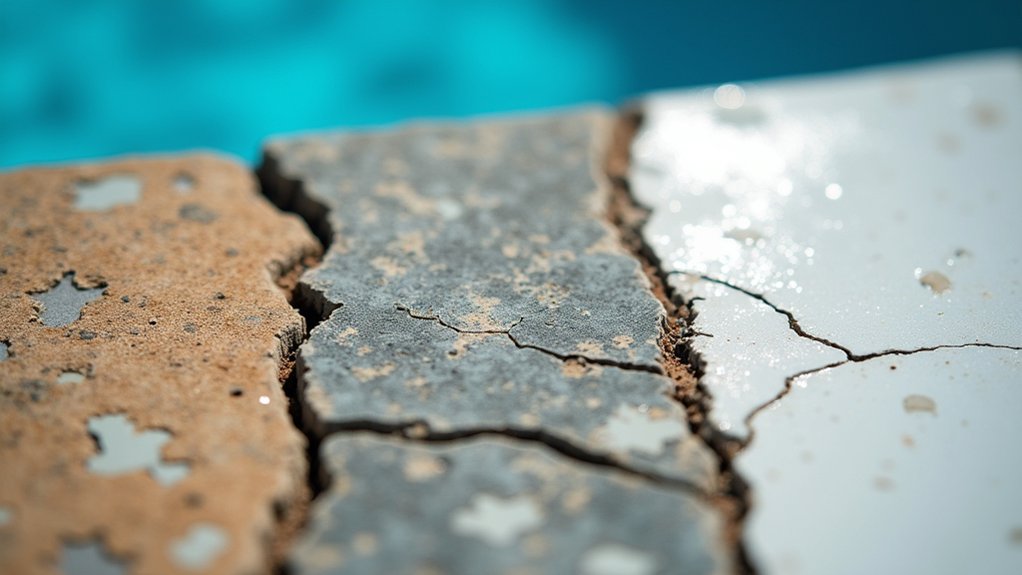
Sunlight acts as a relentless chemical weapon against vinyl pool liners, breaking molecular bonds through a process called photodegradation. UV radiation strips plasticizers from the vinyl matrix, reducing flexibility by measurable percentages annually. You’ll notice waterline vulnerability first, this zone receives direct UV exposure plus amplified radiation reflected off the water surface, doubling the degradation rate.
Pigment deterioration manifests as fading, particularly on darker-colored liners where color breakdown becomes visible within 2-3 seasons. This fading isn’t merely cosmetic; it signals structural compromise at the molecular level. Southern pool owners experience 1-3 years shorter liner lifespans compared to northern regions due to intensified UV exposure.
High chlorine levels compound UV damage, accelerating brittleness. Small cracks form at the waterline, eventually propagating into tears and leaks requiring full liner replacement.
Why Concrete Pools Crack and Fade Under Sun Exposure
Concrete pools inevitably suffer structural degradation under prolonged UV exposure, though the damage mechanism differs fundamentally from vinyl breakdown. UV rays break down polymer chains and protective binders in cured concrete, reducing structural integrity and turning surfaces to fine dust over time.
Curing time impacts your pool’s long-term durability considerably. Direct sunlight evaporates water prematurely from fresh concrete, preventing proper strengthening and causing shrinkage cracks. You’ll need 28-30 days of protected curing to achieve ideal strength.
Environmental chemical effects compound UV damage. Pool chemicals like chlorine react with weakened concrete, accelerating surface flaking. Water penetration causes 85% of spalling cases, while hydrostatic pressure forces moisture into UV-damaged pores. Surface finishes require resurfacing every 10-15 years, though concrete shells last 25-50 years.
Fiberglass vs. Vinyl in Sun Belt Climates
How do fiberglass and vinyl pools compare when subjected to the relentless UV bombardment characteristic of Sun Belt climates? You’ll find fiberglass maintains superior pool structure integrity through its vinyl ester resin composition, which remains chemically inert under intense solar exposure. The shell density design of fiberglass distributes stress evenly, preventing warping that vinyl experiences.
| Specification | Fiberglass | Vinyl |
|---|---|---|
| UV Resistance | Chemically inert gelcoat | Deteriorates, fades above waterline |
| Replacement Cycle | Decades without refinishing | Every 5-9 years |
| Material Thickness | Multi-layer shell construction | 20-30 mils, tear-prone |
Vinyl liners accelerate deterioration in Sun Belt regions, with corners drying out and seams collecting algae. You won’t face these issues with fiberglass’s non-porous, UV-resistant surface that requires minimal intervention throughout its lifespan.
How Fiberglass Pools Keep Their Color for 25+ Years
Your fiberglass pool’s UV-resistant gelcoat technology blocks harmful rays while maintaining its glossy finish, with modern formulations delivering 10-20% better UV protection than older versions and premium options lasting 15-20 years before requiring attention. The non-porous surface prevents algae penetration and chemical absorption, which means you’ll achieve easier water balance and reduced color degradation over the pool’s 25-50+ year lifespan. You’ll spend just $500-1,000 annually on maintenance, significantly less than other pool types, while routine cleaning and balanced chemistry keep your gelcoat vibrant for decades.
UV-Resistant Gelcoat Technology
The gelcoat layer on a fiberglass pool isn’t just a cosmetic finish, it’s an engineered composite specifically formulated to resist UV degradation for decades. ISO/NPG technology, developed by CCP Composites, delivers superior resistance to bleaching and color fade compared to conventional pool gelcoats. This formulation contains specialized additives that reflect harmful UV rays, preventing the chemical breakdown that causes fading.
Beneath the gelcoat, vinylester resin provides adhesive bonding that enhances UV and chemical resistance, delivering 10+ year durability versus 3-5 years for epoxy alternatives. Advanced formulations like AQUAGUARD®X and POLYCOR® Shimmer® set industry benchmarks for UV stability, ensuring aesthetic enhancement that lasts. You’ll benefit from a surface that resists chalking, cracking, and dulling, maintaining color integrity for 25+ years while reducing refinishing requirements considerably.
Non-Porous Surface Benefits
Because fiberglass pools feature a non-porous gelcoat surface, they maintain their original color for 25+ years without the degradation that plagues concrete and vinyl alternatives. This sealed finish prevents algae attachment, resists chemical staining, and repels mineral buildup that discolors porous materials over time.
You’ll experience superior cosmetic endurance through the gelcoat’s ability to block UV-accelerated deterioration. Unlike concrete, which requires acid washing to remove embedded stains, fiberglass surfaces stay vibrant with basic weekly care. The smooth finish prevents debris from lodging in microscopic voids, eliminating the scrubbing that wears down other pool types.
Your low maintenance requirements translate to measurable savings: up to 90% less chlorine usage and considerably reduced cleaning frequency. The non-absorbent surface sustains stable water chemistry while preserving structural integrity against environmental exposure.
Minimal Maintenance Required
While concrete pools demand resurfacing every 10-15 years and vinyl liners require replacement within 6-12 years, fiberglass gelcoat maintains original color vibrancy for 25+ years with minimal intervention. Your annual maintenance costs range $500-1,000, considerably lower than concrete’s recurring resurfacing expenses.
Low effort maintenance protocols preserve gelcoat integrity through:
- Balanced water chemistry, Prevents chemical-induced color degradation
- Pool covers, Reduce UV exposure, extending color life beyond 25 years
- Routine surface cleaning, Requires minimal time compared to porous concrete
- Timely inspections, Professional assessments catch early fading signs before major intervention becomes necessary
Modern gelcoat advancements extend lifespan by 10-20% over older formulations. Premium finishes carry 15+ year guarantees against substantial color changes, with refinishing typically unnecessary until 20-30 years post-installation.
Chemical and Resurfacing Costs Fiberglass Eliminates
Fiberglass pools deliver measurable cost reductions in chemical usage and surface maintenance that concrete alternatives simply can’t match. You’ll experience reduced chemical usage of approximately 70% compared to concrete pools, translating to annual chemical costs averaging just $175. The non-porous gelcoat surface actively resists algae and bacteria colonization, requiring fewer sanitizers, shocks, and algaecides weekly.
Your eliminated resurfacing needs represent significant long-term savings. Concrete pools demand acid washing every 3-6 years and eventual replastering due to porous surface degradation. Fiberglass gelcoat provides a permanent smooth finish requiring no renewal. You won’t face liner replacements or structural resurfacing costs.
Total annual maintenance averages $375 for fiberglass, including $200 for electricity and basic upkeep. Professional weekly services run $60-$75 during swimming season, reflecting the reduced labor these surfaces demand.
When Vinyl and Concrete Pools Need UV-Related Replacement
- Plaster and marcite finishes require resurfacing every 10-15 years
- UV rays break down surface bonds, causing progressive fading and weakening
- High-UV climates like Perth accelerate deterioration rates profoundly
- Unpatched cracks compound annually under continued UV exposure
Photodegradation affects both materials through chemical bond breakdown, creating brittleness, cracking, and structural compromise that demands scheduled replacement cycles you’ll budget for repeatedly.
Maintaining Your Fiberglass Pool’s UV Protection
Proper maintenance directly determines how long your fiberglass pool’s gel coat retains its UV-resistant properties. Proper chemical testing requires weekly monitoring of pH levels between 7.2 and 7.6, chlorine concentrations, and total alkalinity at 80-120 ppm. These precise parameters prevent gel coat degradation that accelerates UV damage.
Protective coatings application using products like polyFIBRO creates a non-porous UV barrier when applied at 65°F-85°F with humidity below 50%. You’ll need reapplication every few years to maintain effectiveness.
Additional protection includes installing pool covers to block UV rays during non-use periods and adding shade structures to reduce direct sunlight exposure. Brush surfaces twice weekly with soft nylon brushes, and inspect routinely for chips or cracks. Prompt repairs prevent UV penetration into compromised areas.
Frequently Asked Questions
Can I Add Aftermarket UV Protection Products to Enhance My Fiberglass Pool’s Resistance?
You don’t need add-on protective coatings for your fiberglass pool’s UV resistance. The factory-applied gelcoat provides inherent protection that outperforms vinyl’s 7-10 year UV lifespan, lasting 25-35 years with only minimal cosmetic fading. Applying untested aftermarket products risks voiding your manufacturer’s warranty on pre-engineered surfaces. Instead, focus on regular gel coat maintenance through proper water chemistry, this preserves your pool’s non-porous surface integrity without supplemental UV products.
Does Saltwater Affect a Fiberglass Pool’s Uv-Resistant Gel Coat Over Time?
Saltwater can affect your fiberglass pool’s UV-resistant gelcoat, but properly formulated surfaces withstand typical saltwater concentration levels (2,500, 3,500 ppm) without significant degradation. Saltwater exposure duration matters, prolonged contact with imbalanced chemistry accelerates wear. You’ll maintain ideal protection by keeping pH at 7.2, 7.6 and calcium hardness between 200, 400 ppm. Your vinyl ester resin barrier resists chemical absorption, ensuring the gelcoat’s UV inhibitors remain effective throughout your pool’s 25+ year lifespan.
How Does Shade From Trees or Structures Impact Fiberglass Pool UV Protection Needs?
Shade from trees or structures considerably reduces your fiberglass pool’s UV protection demands. When you optimize your pool location and pool orientation to maximize natural shade coverage, you’ll decrease direct UV exposure by measurable margins. This supplemental protection extends gelcoat integrity beyond the standard 25-35 year lifespan, slows fading rates, and minimizes maintenance interventions. Your shaded fiberglass pool experiences less heat-induced UV breakdown, particularly beneficial in hot climates where degradation accelerates.
Will Pressure Washing Damage the Uv-Resistant Gel Coat on Fiberglass Pools?
Yes, pressure washing will damage your UV-resistant gelcoat. High-pressure water creates microscopic cracks in the 25, 30 mil protective layer, compromising its smooth surface and UV-blocking properties. These cracks accelerate algae growth and staining, ultimately requiring a costly gelcoat restoration process. Instead, maintain your pool cleaning schedule using soft-bristled brushes, fiberglass-safe cleaners, and nylon tools. Keep pH at 7.2, 7.4 and calcium under 120 ppm to preserve your gelcoat’s integrity.
Do Darker Colored Fiberglass Pools Experience More UV Degradation Than Lighter Ones?
Yes, darker colored fiberglass pools do experience more UV degradation than lighter ones. Higher pigment concentration in dark shades absorbs more ultraviolet radiation, accelerating molecular breakdown. However, modern manufacturing techniques have substantially improved fade resistance across all colors. You’ll find that quality gelcoats with UV-stable additives maintain vibrancy regardless of shade. The AquaGuard X Color System specifically resists UV degradation, keeping darker pools looking vibrant under intense sunlight for years.