You’ll want to keep your heated pool between 78°F and 86°F for the best balance of comfort and energy efficiency. Each degree you raise the temperature increases your heating costs by 10, 30%, so precision matters. Competitive swimmers perform best at 77, 82°F, while recreational users prefer 83, 88°F. Never exceed 95°F, as this creates serious health risks and equipment strain. The sections below break down exact temperatures for every user type and activity. You’ll want to keep your heated pool between 78°F and 86°F for the best balance of comfort and energy efficiency, a range often considered among the best pool temperatures for most users. Each degree you raise the temperature increases your heating costs by 10, 30%, so precision matters. Competitive swimmers perform best at 77, 82°F, while recreational users prefer 83, 88°F, and you should never exceed 95°F, as this creates serious health risks and equipment strain. You’ll want to keep your heated pool between 78°F and 86°F for the best balance of comfort and energy efficiency, a range widely recognized as providing comfortable water temperatures for swimmers across different activity levels. Each degree you raise the temperature increases your heating costs by 10, 30%, so precision matters. Competitive swimmers perform best at 77, 82°F, while recreational users prefer 83, 88°F, and you should never exceed 95°F, as this creates serious health risks and equipment strain.
Every Degree of Pool Temperature Costs More Than You Think
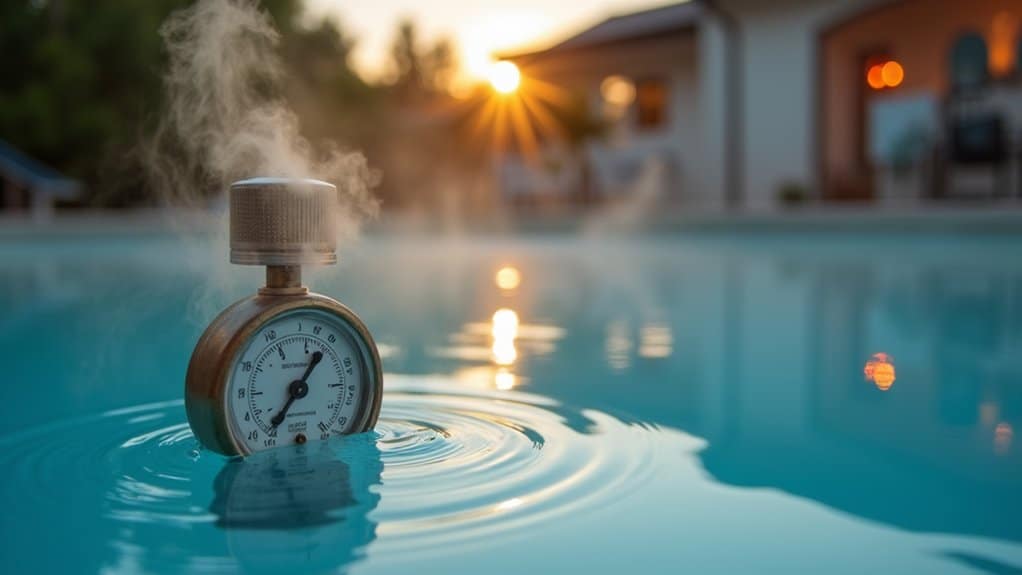
When you raise your pool temperature by even a single degree, you’re committing to measurably higher energy costs across every heating cycle. A 400,000 BTU gas heater consumes 4 therms hourly at approximately $7.00 per hour, heating water at just 2°F per hour. Each degree above the recommended heated pool temp compounds your expenses proportionally.
Your pool heat temperature directly impacts operational efficiency. Heat pumps operate at 300%, 700% efficiency, costing $120, $200 monthly, while electric resistance heaters consume 50, 150 kWh daily at $5, $15. Larger pools demand 80,000, 120,000 BTUs for 20,000 gallons.
To maintain an energy efficient pool temperature, install a pool cover to minimize heat loss. This single measure reduces overnight temperature drops and protects your equipment investment. Setting your pool temperature a few degrees lower than your typical preference is another effective strategy for reducing monthly heating expenses.
Keep Pool Air 2, 4°F Warmer Than the Water
Although maintaining proper water temperature remains essential, controlling the air temperature surrounding your pool proves equally critical for energy efficiency and swimmer comfort. ASHRAE guidelines recommend keeping air 2, 4°F above your heated pool temperature, with a maximum threshold of 86°F. Always consult dehumidifier manufacturers for accurate moisture load calculations specific to your facility.
Air temperature should stay 2, 4°F warmer than your pool water, it’s the sweet spot for comfort and efficiency.
This approach delivers measurable benefits:
- Evaporation control reduces water loss since temperature differentials drive evaporation rates exponentially
- Dehumidifier workload decreases when you maintain proper air temperature above water levels
- Swimmer comfort improves by preventing evaporative chilling on wet skin
- Operating costs drop through minimized moisture load and reduced heating demands
Bodies lose heat 25 times faster in water than air. You’ll protect swimmers from post-swim chilling while maximizing your system’s efficiency. Using a pool cover when not in use can significantly reduce evaporation and further minimize water loss. For therapeutic pools, maintaining warmer air temperatures also helps decrease muscle spasticity for clients transitioning out of the water.
The 78, 86°F Range Works for Most Heated Pools
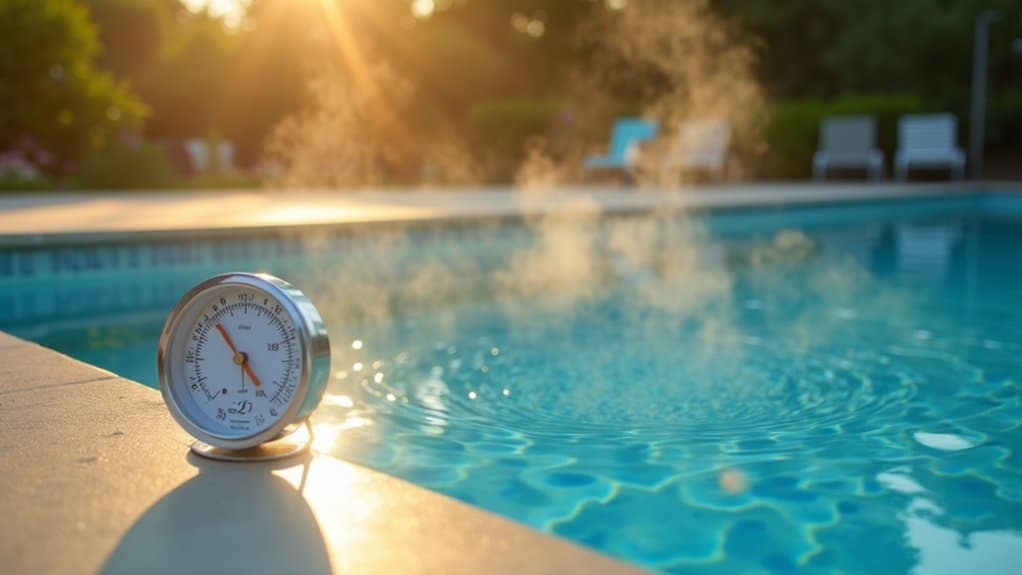
The air temperature differential matters, but your actual water temperature determines both swimmer comfort and operating costs.
The average heated pool temperature falls within 78, 86°F, meeting World Health Organization safety standards for moderate physical activity. Your best temp for heated pool operation depends on your primary use case. The average heated pool temperature falls within 78, 86°F, aligning closely with average pool temperatures and meeting World Health Organization safety standards for moderate physical activity. Your best temp for heated pool operation ultimately depends on your primary use case.
| Use Type | Temperature Range | Key Consideration |
|---|---|---|
| Lap Swimming | 78, 80°F | Prevents overheating |
| Family Recreation | 82, 84°F | Balances comfort and cost |
| Therapeutic/Elderly | 84, 88°F | Supports joint mobility |
You’ll find that each degree you raise your pool heater temperature increases energy consumption proportionally. For fitness swimming, maintain the lower range to support proper thermoregulation. For vulnerable populations, including children and seniors, warmer settings guarantee safety and comfort during extended water exposure. The American Academy of Pediatrics and the Red Cross recommend pool temperatures of at least 84°F for swimming lessons to keep young swimmers comfortable and prevent breathing issues from cold water. Water that’s too cold can cause muscle stiffness and discomfort, reducing enjoyment and deterring regular pool use. Using a pool cover can help maintain your desired temperature while minimizing evaporation and reducing overall heating costs.
Competitive Pools Stay Cool at 77, 82°F
Competitive swimming demands stricter temperature control than recreational pools, with governing bodies like FINA and USA Swimming mandating a 77, 82°F (25, 28°C) range for official events. This narrow window prevents overheating during intense training while maintaining ideal muscle function. Warmer water is less dense, creating less friction as swimmers move through it. However, excessively warm water can lead to dehydration and muscle cramps during prolonged training sessions.
Competitive pools run cooler than recreational ones, 77, 82°F keeps athletes performing at their peak without overheating.
You’ll find these standards apply across multiple disciplines:
- Olympic pools maintain 25, 28°C (77, 82°F) for all swimming events
- FINA regulations specify 77, 82°F for swimming, diving, and water polo
- Synchronized swimming requires precisely 81°F (27°C)
- USA Swimming recommends 82°F or lower for competitive training
Cooler water in this range reduces bacterial growth and keeps chemical treatment effective. Water above 82°F actually slows swimmers down and promotes algae proliferation. For open water competitions, events cannot begin in water below 60.8 degrees Fahrenheit unless special precautions are in place. You should take temperature readings at multiple locations, averaging 6, 10 measurements twice daily for accuracy.
Recreational Pools Run Warmer at 83, 88°F
Recreational swimmers need warmer water than competitive athletes, with most facility operators maintaining temperatures between 83, 88°F for casual use. The World Health Organization specifies 78, 86°F as the safe and comfortable range for recreational swimming, while multi-purpose facilities typically hold temperatures at 83, 86°F to accommodate various activities.
You’ll find that families and casual swimmers prefer 80, 85°F for an enjoyable experience. Temperatures between 82, 84°F work well for relaxation without generating excessive heat. However, you should note that water above 82°F feels bath-like, which reduces the invigorating sensation some swimmers prefer. For senior swimmers, a warmer pool temperature of 80°F to 84°F is ideal for comfort and safety.
To maintain efficiency at these warmer settings, you’ll want to use pool covers to minimize heat loss. Each degree above 80°F increases your heating costs proportionally, so balancing comfort with energy conservation remains essential. Installing windbreaks like hedges and fencing around your pool area can also significantly reduce heat loss from wind exposure. When the pool won’t be used for several days, lowering or turning off the heater saves energy and money despite the common myth that reheating costs more.
Therapy and Swim School Pools Need 88, 92°F
Therapy and swim school pools require temperatures between 88, 92°F because warm water relaxes muscles, reduces joint stiffness, and supports healing for patients recovering from surgery or managing conditions like arthritis. You’ll need to maintain infant and pediatric pools at 90, 92°F since young children chill quickly and benefit from the buoyancy that warmer water provides. These heightened temperatures stimulate blood flow and decrease joint pain, but you must monitor energy consumption closely since heat loss increases substantially at higher settings. Warmer water also decreases spasticity in neurologic clients with conditions such as multiple sclerosis, cerebral palsy, and stroke.
Warm Water Aids Healing
Pools designed for rehabilitation and swim instruction operate within a narrow 88, 92°F range that serves a specific physiological purpose. Warm water promotes vasodilation, increases circulation, and reduces muscle spindle activity. You’ll notice decreased spasticity and improved joint mobility during therapy sessions.
Therapeutic benefits of warm water immersion:
- Reduces pain and stiffness in arthritis patients by up to 40%
- Relaxes muscles for post-surgical and injury recovery
- Minimizes muscle tone and guarding in neurologic conditions
- Enhances flexibility for individuals with spinal cord injuries
For orthopedic recovery, you should maintain 92, 94°F to support early range of motion. Neurologic patients with stroke or cerebral palsy benefit from 90, 92°F, which prevents overheating while managing tone. Don’t exceed 95°F, higher temperatures risk fatigue and hypotension in vulnerable populations.
Infant Pool Temperature Needs
Because infants lose body heat substantially faster than adults due to their higher surface area-to-mass ratio, you’ll need to maintain stricter temperature controls in pools designed for young children. The American Red Cross mandates water temperatures of at least 89.6°F (32°C) for infant and preschool aquatics sessions lasting 20-30 minutes.
| Age Group | Required Temperature | Session Duration |
|---|---|---|
| Under 6 months | 86-90°F | 10-15 minutes |
| 6 months-1 year | 86-92°F | 15-20 minutes |
| Preschool | ≥89.6°F | 20-30 minutes |
You should maintain swim school pools at 90-91°F while keeping room air temperatures equally warm. Always test water with a reliable thermometer before infant entry and monitor children for shivering, cramps, or blue lips indicating thermal distress.
Blood Flow and Joints
While infants require heightened water temperatures to prevent rapid heat loss, adults seeking therapeutic benefits from warm water immersion need similar temperature ranges for entirely different physiological reasons. Warm water between 88, 92°F triggers vasodilation, enhancing circulation to muscles and joints while easing movement restrictions.
Key Therapeutic Benefits at 88, 92°F:
- Hydrostatic pressure combined with warmth improves venous return and reduces swelling
- Enhanced blood flow at 92°F decreases pain and stiffness in arthritic joints
- Moist heat penetration soothes inflammation and loosens stiff connective tissue
- Improved circulation revitalizes joint mobility for fibromyalgia and osteoarthritis patients
You’ll find this temperature range optimizes comfort without triggering thermal fatigue. The CDC’s MAHC guidelines recommend staying at or below 88°F for vigorous activity, but therapeutic sessions benefit from the upper range.
Never Heat Your Pool Above 95°F
Keeping your pool water below 95°F isn’t just a recommendation, it’s a critical safety threshold that protects swimmers from serious health risks. Exceeding this temperature causes dehydration, heat exhaustion, and compromises cardiovascular stability. The World Health Organization establishes 95°F as the absolute maximum for pool water, and professional standards reinforce this limit across the industry.
You won’t gain additional therapeutic benefits by pushing temperatures higher. Hydrotherapy pools achieve ideal muscle relaxation, joint mobility, and circulation improvements between 90°F and 95°F. Water above this range doesn’t accelerate healing or enhance pain relief.
Excessive heat also strains your equipment, accelerates algae and bacteria growth, and increases chemical demand. You’ll face higher energy costs, more frequent shock treatments, and intensified maintenance protocols. Stay within established guidelines to maintain safety, efficiency, and water quality.
How to Pick One Temperature for Mixed-Use Pools
Mixed-use pools face a fundamental temperature conflict: competitive swimmers perform best at 77-82°F, while recreational users and vulnerable populations prefer 84-90°F. You’ll need to establish a compromise that serves your primary user base without compromising safety or efficiency.
Finding the sweet spot between competitive and recreational pool temperatures requires balancing athlete performance with comfort for vulnerable swimmers.
For mixed-use facilities, target 80-82°F as your operational range. This temperature remains invigorating for athletes while accommodating children and seniors.
To implement effective temperature management:
- Form a governing board with stakeholder input to establish agreed-upon temperature parameters
- Take readings at 6-10 pool locations twice daily and average results for accuracy
- Program heating systems based on your facility’s primary use designation
- Maintain air temperature 2-4°F above water temperature (maximum 86°F) to minimize evaporation
This approach balances comfort, chemical stability, and energy costs effectively.
Lower Your Pool Temperature Without Losing Comfort
When outdoor temperatures climb, your heated pool can quickly exceed comfortable swimming ranges, creating an uncomfortable environment that drives up chemical consumption and accelerates equipment wear. You’ll need effective cooling strategies that maintain ideal conditions without compromising energy efficiency.
Install reversible heat pumps that transfer excess heat from pool water to outside air. These systems integrate with existing equipment for precise temperature regulation. Alternatively, operate fountains or dedicated aerators during nighttime hours when ambient temperatures drop, achieving up to four degrees Fahrenheit reduction through evaporative cooling.
Remove pool covers at night to expose water to cooler air, then replace them during peak sun hours. Position shade sails strategically to reduce direct solar heat gain. These combined approaches maintain comfortable temperatures while protecting equipment longevity and chemical balance.
5 Signs Your Pool Temperature Needs Adjusting
If swimmers frequently complain about water being too cold or too warm, your pool temperature likely needs adjustment to maintain the ideal 78°F to 85°F range recommended for comfort and safety. Unexpectedly rising energy bills often indicate your heating system is working harder than necessary, typically caused by temperature settings that are too high or fluctuating inconsistently throughout the day. You should monitor both swimmer feedback and utility costs regularly to identify when temperature adjustments can improve comfort while reducing energy waste.
Swimmers Complaining About Comfort
Because pool temperature directly impacts swimmer safety and satisfaction, persistent comfort complaints serve as reliable indicators that your heating system requires adjustment.
You’ll notice distinct complaint patterns based on user demographics and activities:
- Children and instructional programs, Young swimmers require temperatures above 84°F, with infants needing 89.6°F+ for sessions lasting 20-30 minutes per Red Cross guidelines.
- Senior and arthritis users, These groups report discomfort below 85°F and prefer 84-90°F for joint relief and therapeutic benefits.
- Recreational swimmers, General users experience chill sensations below 82°F, while temperatures above 82°F feel uncomfortably warm.
- Activity-specific needs, Fitness swimmers tolerate 78-84°F, but low-intensity exercises like water walking demand 86-88°F.
Track complaint frequency and correlate it with your thermostat readings to identify ideal adjustment points.
Rising Energy Bills Unexpectedly
A sudden spike in your monthly utility statement often signals that your pool’s heating system is compensating for uncontrolled heat losses. When your heater runs 16+ hours daily to maintain 82°F, you’re consuming 50-150 kWh per day, translating to $5-15 in daily operating costs. This extended runtime indicates your system is fighting against evaporation, which accounts for the largest share of thermal losses.
You should monitor your energy consumption patterns closely. Electric pool heaters drawing 5,000-7,000 watts per hour can represent 40% of your total pool energy bills. If you’re maintaining water at 82°F, you’re losing approximately 6,046,875 BTU daily through evaporation alone. Consider that heat pumps should typically consume only 5-6 kWh daily for residential pools, significantly higher figures warrant immediate temperature assessment and loss mitigation strategies.
Ready to Transform Your Backyard?
Your dream pool is closer than you think. At Schiller Pools, our experienced team brings over 40 years of expertise to every project, delivering stunning fiberglass pool installations and custom pool construction that turn ordinary backyards into extraordinary outdoor retreats. With flexible financing options and lifetime warranty backing, there has never been a better time to get started. Call (561) 475-5997 today for your free estimate.
Frequently Asked Questions
How Does Pool Water Temperature Affect Chemical Balance and Chlorine Effectiveness?
Pool water temperature directly impacts your chemical balance and chlorine effectiveness. When you heat your pool, chlorine dissipates faster, and bacteria multiply more quickly, increasing your sanitizer demand. Warmer water also raises pH levels, reducing chlorine’s killing power. You’ll need to test water twice weekly during heated periods and maintain pH between 7.2, 7.6 for ideal sanitization. Cold water slows chemical reactions but shifts LSI toward corrosiveness, requiring calcium and alkalinity adjustments.
What Humidity Level Should Indoor Heated Pools Maintain for Comfort?
You should maintain indoor pool humidity between 50-60% relative humidity, with 50-55% being ideal for patron comfort and air quality. ASHRAE recommends this range as your standard. Don’t let humidity exceed 60%, as this promotes bacteria growth, causes discomfort, and increases condensation risk on surfaces. Keeping levels below 50% isn’t advisable either, you’ll face higher energy costs from increased evaporation and swimmers feeling uncomfortably cold.
Do Solar Pool Covers Reduce Heating Costs at Recommended Temperatures?
Yes, solar pool covers markedly reduce your heating costs at recommended temperatures. You’ll save 30-50% on energy expenditure compared to running electric or gas heaters alone. The U.S. Department of Energy identifies covers as the single most effective method for cutting pool heating costs. By preventing up to 95% of evaporation, your pool’s primary heat loss mechanism, you’ll maintain recommended temperatures while achieving annual savings between $3,000 and $14,000.
How Long Does It Take to Heat a Pool One Degree?
You can expect to heat your pool by one degree in approximately 30 minutes to 2 hours, depending on your heater type. Gas heaters work fastest, raising temperature 1-2°F per hour. Electric heat pumps operate more slowly at 0.5-1°F per hour but offer better energy efficiency. Solar heaters add 2-4°F per sunny day. You’ll achieve ideal results by monitoring your system’s output and ensuring proper equipment maintenance.
Can Heat Pumps Maintain Therapeutic Temperatures in Cold Climates Efficiently?
Yes, you can maintain therapeutic temperatures in cold climates with the right heat pump. Arctic models operate down to -4°F and deliver up to 104°F water even in 20°F conditions. However, you’ll experience reduced efficiency, output drops from 110,000 BTU at 80°F ambient to 60,000-70,000 BTU at 50°F. Standard units shut down below 45-55°F, so you’ll need cold-climate-rated equipment with active defrost for reliable year-round therapeutic heating.