You can keep your pool warm without a heater by targeting evaporation, which steals up to 70% of your heat. Cover the surface with a bubble or liquid solar cover to trap warmth and block escaping moisture, this alone keeps water 10, 15°F warmer. Float solar rings, time your pump for peak sun, and block wind with dense hedges. Want to soak up even more free heat? There’s plenty more worth exploring below.
Key Takeaways
- Cover your pool with a bubble solar cover to trap solar heat and keep water 10, 15°F warmer.
- Apply a liquid solar cover to reduce evaporation by up to 40% without removing it before swimming.
- Block wind using fencing, temporary screens, or dense evergreens like arborvitae to slow evaporation-driven heat loss.
- Use solar rings or heating balls for passive daytime warming and nighttime insulation.
- Absorb more solar heat with dark pool finishes, dark decks, or a DIY black hose solar heater.
Why Your Pool Loses Heat So Fast
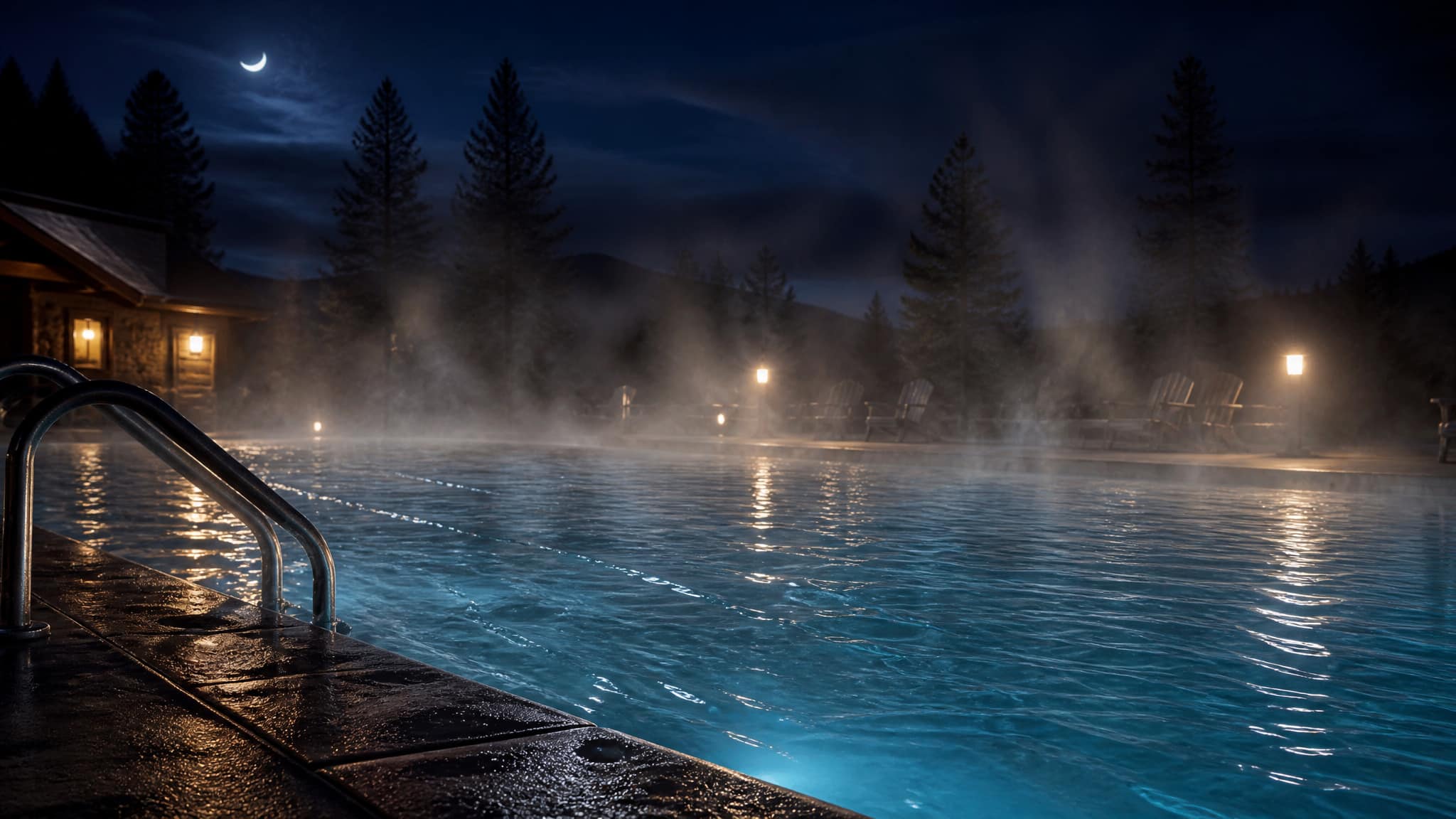
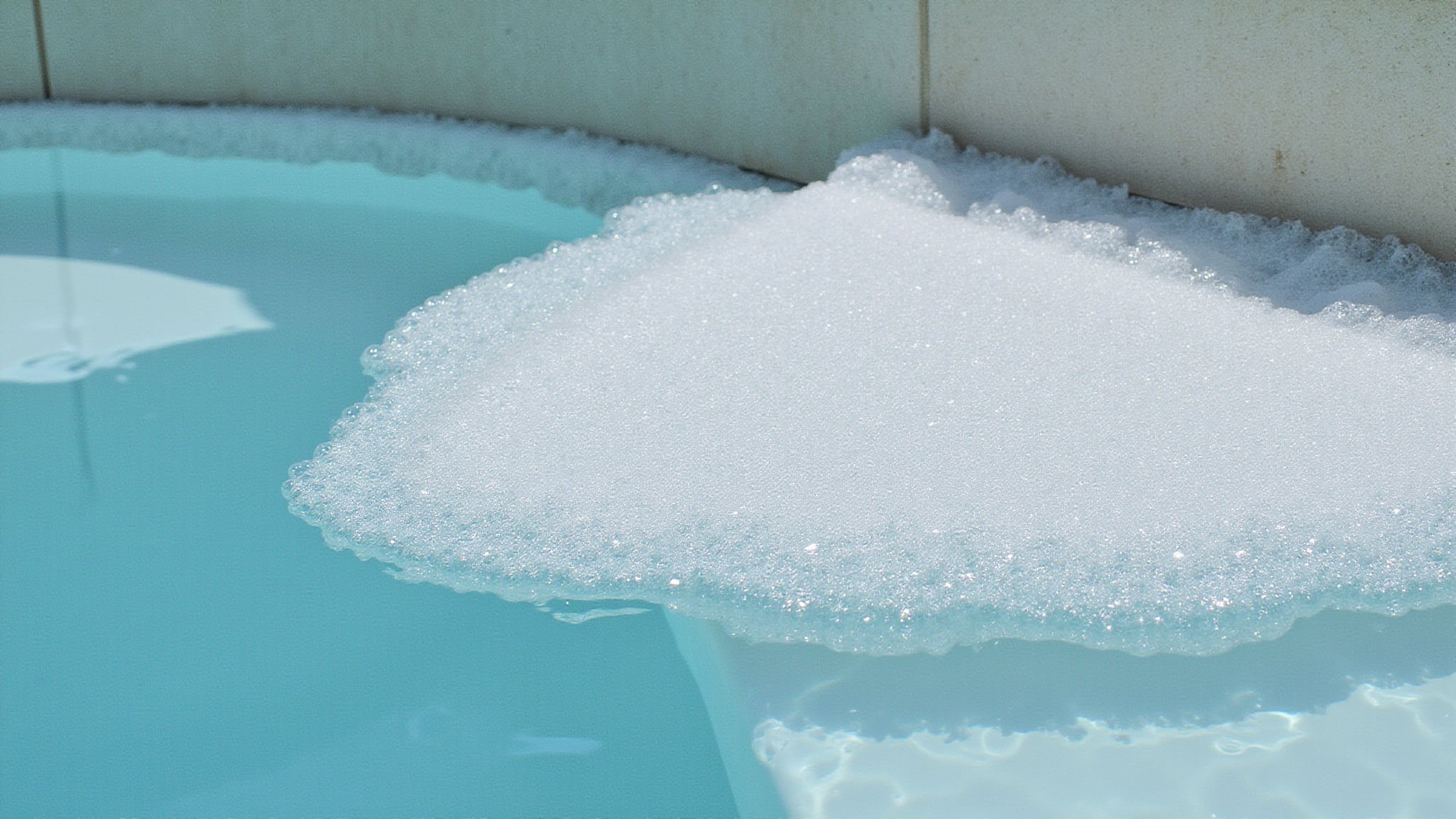
Your pool loses heat so fast because of evaporation, which drives up to 70% of your pool’s heat loss. As water molecules escape from the surface, they carry thermal energy with them, cooling everything below. Wind accelerates this process, stripping heat and speeding surface cooling with every gust. Uncovered pools lose warmth fastest overnight, when air temperatures drop and evaporation continues unchecked.
Understanding these mechanics helps you warm your pool naturally and save on pool heating costs. If you’re aiming to reduce reliance on energy-hungry equipment, the best pool heating tips start with minimizing evaporation and blocking wind. Once you know where the heat’s going, you can target each loss point efficiently and eco-consciously.
Cover Your Pool to Trap Overnight Heat
Since evaporation drives up to 70% of your pool’s heat loss, covering the surface overnight is your most effective defense. A bubble-style solar cover traps solar heat and blocks evaporation, keeping water temperatures 10, 15°F higher than an uncovered pool. If handling a full blanket isn’t practical, a liquid solar cover forms an invisible, swimmer-safe surface layer that cuts evaporation by up to 40% and lasts 1, 2 weeks per application.
Bubble Solar Covers
Bubble solar covers trap solar radiation while sealing the pool surface against escaping moisture, interrupting the evaporation that quietly drains up to 70% of your water’s heat. If you want to keep pool warm without heater dependency, this is one of the most effective passive tools available. The air-filled bubbles act as insulation, holding warmth captured during daylight and maintaining water temperatures 10, 15°F higher than uncovered pools. Lay the cover across the surface whenever the pool sits unused, especially overnight when heat loss peaks. To heat pool without heater systems, position the bubble side down so it contacts the water directly, maximizing heat transfer and minimizing evaporative cooling around the clock.
Liquid Cover Options
Liquid solar covers offer a low-effort alternative that traps overnight heat without any physical sheeting to roll out. These products create an invisible molecular layer across your pool’s surface, reducing evaporation by up to 40%. Since evaporation drives roughly 70% of pool heat loss, you’re targeting the primary culprit with minimal effort. Just apply the liquid directly to the water, and it self-distributes across the surface. One application typically lasts one to two weeks and stays safe for swimmers, so you won’t need to remove anything before diving in. It’s an eco-conscious choice that conserves both water and thermal energy, letting you retain warmth overnight while skipping the physical labor entirely.
Try Liquid Solar Covers for Easy Coverage
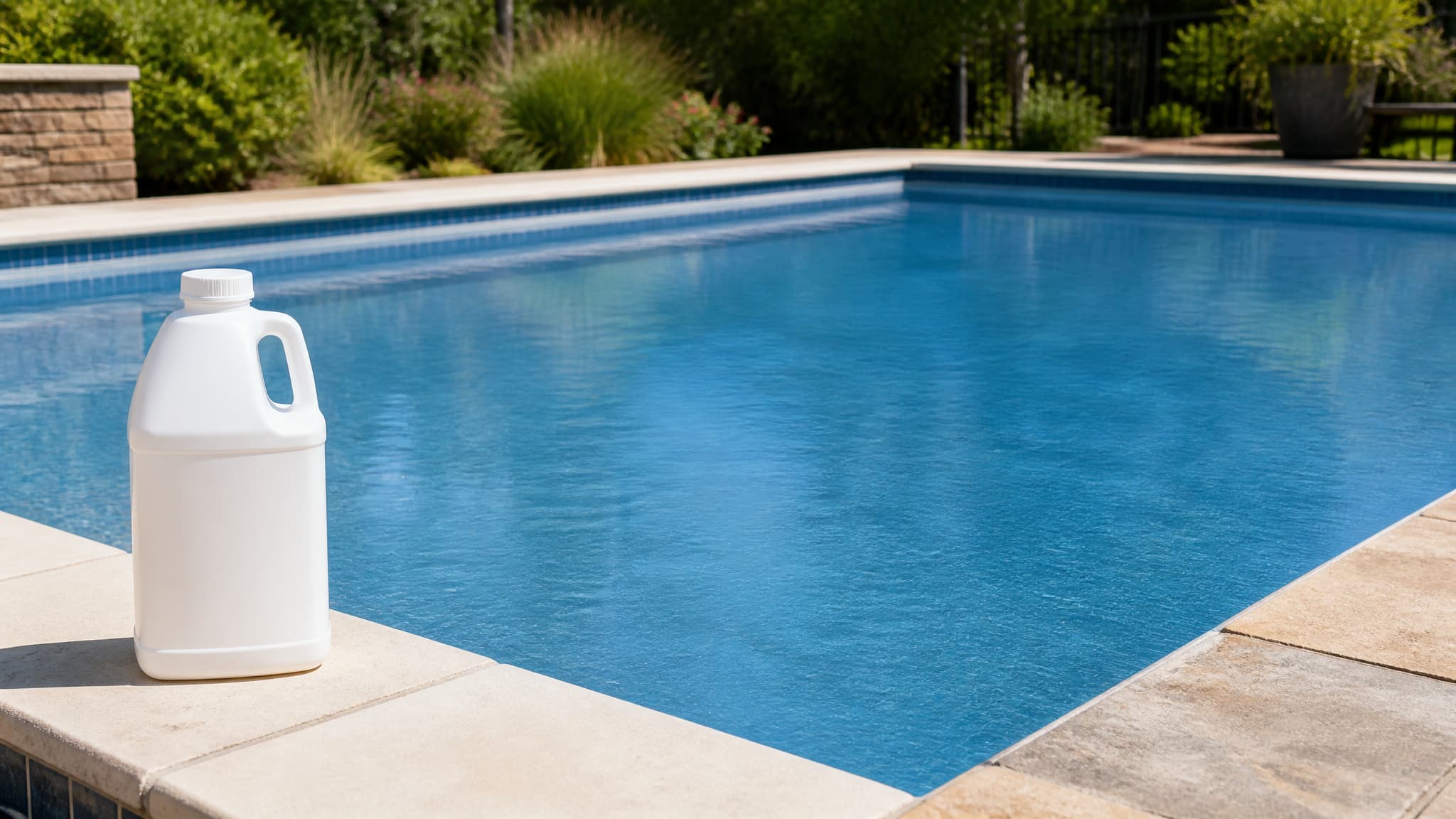
Liquid solar covers offer a low-effort alternative for pool owners who’d rather skip the hassle of hauling a bulky blanket on and off the water. These formulas create an invisible molecular layer across the pool’s surface, reducing evaporation by up to 40%. Since evaporation drives roughly 70% of a pool’s heat loss, curbing it directly conserves thermal energy and water. You’ll simply pour or dispense the product according to the label, and it’ll self-distribute across the surface. One application typically lasts one to two weeks, and it stays safe for swimmers throughout. Because there’s no physical barrier to remove, you can swim anytime without disruption. It’s an efficient, resource-conscious option that quietly cuts heat loss while minimizing both maintenance and unnecessary water waste.
Float Solar Rings and Heating Balls
Solar rings are floating discs that capture solar energy and transfer it directly to your pool water, raising temperatures by 5, 10°F on sunny days. At night, both solar rings and heating balls provide insulation that helps retain the heat you’ve gained during daylight hours. You’ll find setup effortless, simply place the rings on the surface, or pour heating balls in and let them spread out on their own.
How Solar Rings Work
Solar rings work by capturing sunlight and transferring that energy directly into the water, raising temperatures by 5, 10°F on sunny days. Floating on your pool’s surface, each disc absorbs solar radiation and conducts it downward, warming the surface layer where heat loss typically occurs. Because they float independently, you can arrange them to cover as much surface area as you need, scaling coverage to your pool’s dimensions. Unlike full solar blankets, these rings are lightweight and easy to handle, so you’ll spend less effort deploying and removing them. When you’re ready to swim, simply slide them aside or lift them out. This modular design makes solar rings an efficient, eco-conscious heating solution that harnesses free solar energy without electricity, fuel, or ongoing operational costs.
Nighttime Insulation Benefits
Nighttime insulation preserves the warmth your pool gained during daylight hours by fighting evaporation, your pool’s biggest enemy after dark. Both solar rings and heating balls work overnight to fight it. Since evaporation drives up to 70% of your pool’s heat loss, insulating the surface after dark preserves the warmth you’ve gained during daylight hours. Leave your solar rings floating overnight to trap accumulated heat and block the water-to-air transfer that cools your pool. Heating balls perform the same function on a smaller scale. Pour them across the surface, and they’ll spread out to form an insulating layer that reduces evaporative loss while you sleep. Both options save energy by minimizing your reliance on active heating systems. You’ll wake up to warmer water and lower environmental impact, retaining heat naturally without electricity or fuel.
Easy Setup Tips
Setting up both devices is easy because they float freely on the surface, so you won’t need tools, plumbing, or professional installation to get them working. Solar rings are the simplest to deploy. Just place the floating discs across your pool’s surface, where they’ll absorb solar energy and transfer it directly to the water, raising temperatures 5, 10°F on sunny days. When you’re ready to swim, lift them out individually; they’re far easier to handle than a full solar blanket.
Heating balls require even less effort. Pour them onto the water, and they’ll spread out to cover the surface evenly. They reduce evaporation while letting sunlight penetrate to warm the water, then insulate overnight.
Both options work passively, cutting heat loss without electricity, making them low-impact, eco-conscious solutions for temperature regulation.
Time Your Pool Pump for Peak Sun
Run your pool pump during peak sun hours, typically 10am to 4pm, to capture the most solar energy. Your pool’s surface water absorbs the most solar energy during these hours, but that warmth stays trapped at the top unless you circulate it. Running your pump during these hours pulls sun-warmed surface water and distributes it throughout the pool, mixing it with cooler deeper layers. This prevents cold spots and raises the overall temperature efficiently. You’ll maximize passive solar gain without drawing extra energy for heating, keeping your setup eco-conscious.
Clean your filter regularly to maintain strong water flow. A clogged filter reduces circulation efficiency and undercuts your heating gains. Keep the recirculation pump running steadily on sunny days for the best results. By timing circulation to match peak sunlight, you’re harnessing free thermal energy and evenly warming every part of your pool.
Block the Wind Around Your Pool
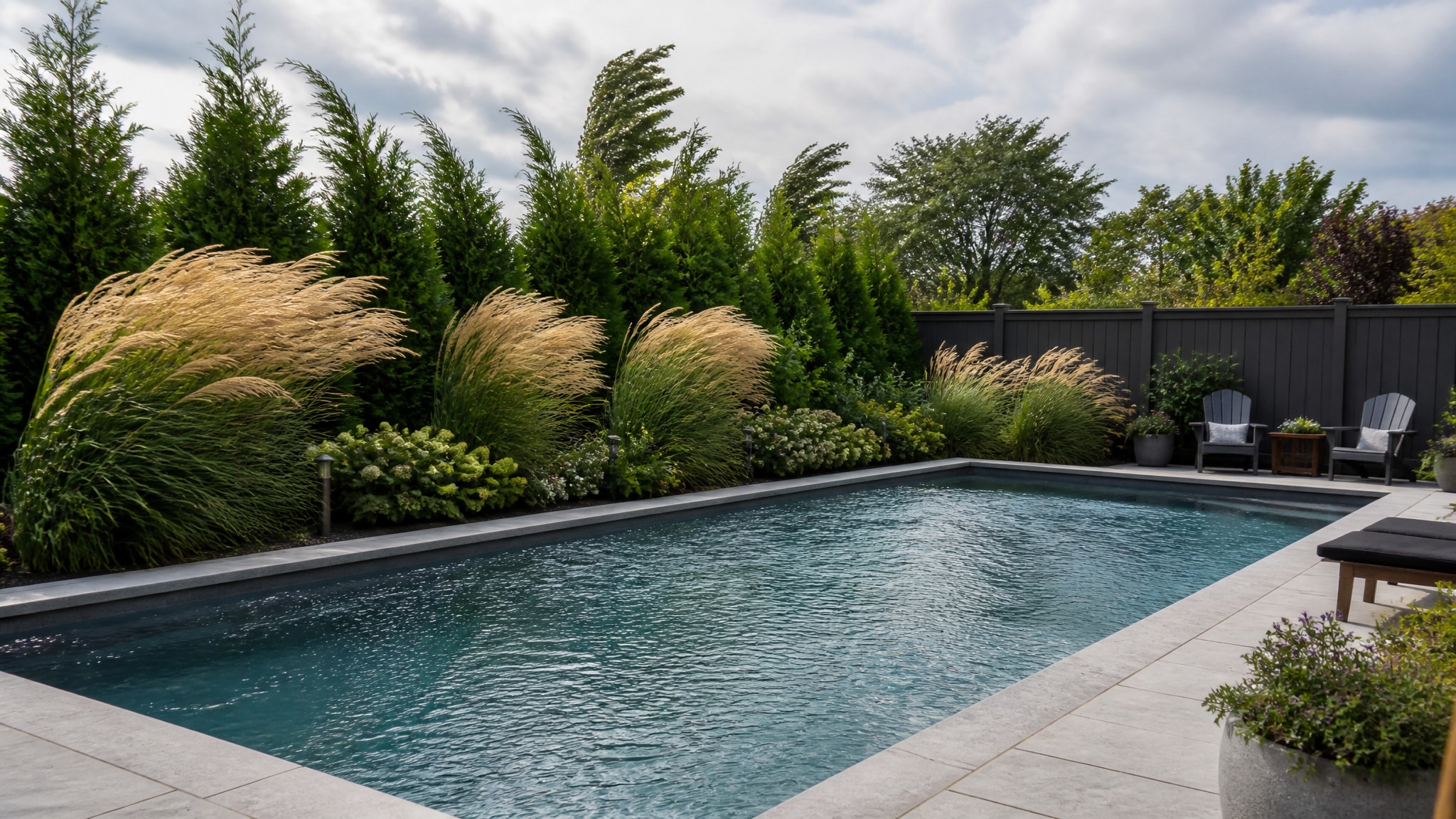
Wind accelerates evaporation and rapidly cools your pool’s surface water, undermining every heat-retention strategy you’ve put in place. To counter this, position barriers like fencing, temporary screens, or dense vegetation on the prevailing wind side, where they’ll interrupt airflow most effectively. Dense shrubs and ornamental grasses make excellent natural windbreaks, blocking gusts while adding an eco-friendly, low-maintenance layer to your pool landscape.
Why Wind Cools Water
Wind cools water because it accelerates evaporation, and that’s where most of your heat disappears. When wind moves across the water, it strips away warm surface molecules and speeds their conversion into vapor. Since evaporation drives up to 70% of your pool’s heat loss, even a light breeze can drain temperature fast. Every gust removes the sun-warmed top layer and replaces it with cooler air, forcing continuous surface cooling.
You’ll notice this effect most on breezy days, when your pool feels colder despite bright sunshine. The faster air moves, the quicker evaporation occurs, and the more thermal energy you lose. By understanding this mechanism, you can target the real culprit, airflow, and protect the heat you’re working hard to retain.
Strategic Barrier Placement
Strategic barrier placement means physically blocking the wind before it reaches your water. Start by identifying your prevailing wind direction, then position barriers on that windward side for maximum effect. You’ve got several eco-friendly options: install fencing, plant dense shrubs, or set up temporary screens around the pool perimeter. Ornamental grasses and thick hedges interrupt wind flow naturally while adding habitat value to your landscape. These living barriers absorb and redirect airflow, cutting the surface cooling that steals your pool’s warmth. By reducing wind exposure, you’ll notably lower heat loss from both evaporation and convective cooling. Place your barriers strategically, and you’ll retain more solar-gained heat without spending a watt on mechanical heating.
Best Windbreak Plants
The best windbreak plants combine year-round coverage with tight branching structures, since dense foliage disrupts airflow most effectively. Position these on the windward side, where prevailing winds hit your pool hardest. Dense evergreens and ornamental grasses interrupt wind flow, reducing evaporation and surface cooling that strip heat from your water.
Consider these proven windbreak options:
- Arborvitae, fast-growing evergreens forming solid, dense screens with consistent year-round coverage.
- Boxwood hedges, compact, tightly-branched shrubs ideal for lower barriers near the pool’s edge.
- Ornamental grasses, clumping varieties that flex without breaking, deflecting gusts efficiently.
- Bamboo, rapid vertical growth creating tall, dense living walls for maximum wind interruption.
Space plantings closely, layering heights to block airflow across your entire pool perimeter.
Paint It Dark to Soak Up More Sun
Painting your pool a dark color helps it soak up more sun, because color determines how much solar radiation a surface absorbs. Dark-colored surfaces absorb markedly more solar heat than light finishes, converting sunlight into usable warmth. If you’re renovating, consider a dark blue, black, or gray finish to maximize passive absorption. This heating works continuously whenever sunlight hits the water, requiring no energy input.
Extend the strategy beyond the pool itself. Dark decks, dark concrete, or heat-absorbing materials like stone around the perimeter capture and store solar energy, then redirect it toward the water. These surfaces act as thermal reservoirs, releasing warmth gradually. By choosing darker finishes inside and out, you’ll harness free solar heat efficiently, reducing your reliance on conventional heating systems entirely.
Build a DIY Black Hose Solar Heater
Building a DIY black hose solar heater starts with a black garden hose that warms water as it flows through dark tubing before returning it to your pool. This DIY system harnesses passive solar energy for a low-cost heating boost. Here’s how you set it up:
- Get a 100-foot, 3/4-inch black garden hose, which absorbs maximum solar radiation.
- Snake the hose around your pool deck in a sunny, exposed area for excellent heat capture.
- Connect the hose to your pool pump so water draws through the heated coil.
- Return the warmed water directly to the pool for continuous circulation.
Run this setup during peak sunlight hours, and you’ll capture free thermal energy while cutting reliance on conventional heaters.
Enclose Your Pool to Lock In Warmth
Enclosing your pool locks in the heat you’ve already gained. Building an enclosure around the pool area traps warm air and creates a buffer against heat loss. It also shields the water from wind, which accelerates evaporation and rapidly cools the surface. Since evaporation drives up to 70% of a pool’s heat loss, cutting wind exposure delivers substantial energy savings without any powered heating.
Position your enclosure to block the prevailing wind side for maximum effectiveness. Pair it with dense shrubs or ornamental grasses on the windward edge to interrupt airflow further. For inground pools, install rigid panel insulation around the base, preventing heat from escaping into the surrounding ground.
Insulate the Ground to Stop Heat Escape
Insulating the ground stops heat from escaping through the soil beneath your inground pool. Soil conducts heat away from your pool walls and floor continuously, undermining every gain you’ve made from surface strategies. Installing rigid panel insulation around the base of your inground pool blocks this thermal transfer, keeping warmth where you want it.
Here’s how to insulate effectively:
- Excavate around accessible pool walls to expose the base.
- Attach rigid foam panels tightly against the exterior surface.
- Seal seams to prevent thermal bridging and moisture intrusion.
- Backfill carefully to hold panels firmly in place.
This passive, energy-free barrier reduces ground heat loss *substantially*, cutting your reliance on active heating and conserving resources.
Conclusion: Warming Your Pool Without a Heater
There are several ways to keep a pool comfortable without running a heater, and they work best combined. A solar cover holds in heat and cuts evaporation, solar rings and a dark surface absorb the sun’s warmth, and windbreaks reduce heat loss. These methods are cheap to run and easier on the environment, though they depend on sunshine and will not match a heater in cold weather. Stacked together, they can add several degrees and stretch your swim season for free.
Save on Pool Heating With a Smart Fiberglass Design
The smooth surface of a quality fiberglass pool naturally retains more heat than traditional pool options, saving energy year-round. At Schiller Pools in West Palm Beach, FL, our experienced team provides trusted Fiberglass Pool Installation with expert craftsmanship and 40+ years of Florida experience. Call +1 (561) 475-5997 today and get your free estimate.
Frequently Asked Questions
How Many Degrees Can These Methods Realistically Raise My Pool Temperature?
Combined, passive methods like a solar cover, solar rings, and a dark finish can often raise water temperature by several degrees, sometimes 5 to 10 in good sun. Results depend on your climate, sunshine, and how consistently you use them. A solar cover alone makes the biggest single difference by holding in heat overnight.
Are Dark Pool Finishes Safe and Do They Affect Water Quality?
Dark finishes are safe and widely used, and they help absorb sunlight to warm the water. They do not harm water quality on their own, though warmer water can encourage algae if the chemistry is not maintained. Keeping the water balanced and sanitized handles that, so a dark finish is a sound way to gain some free heat.
How Much Money Can These Solar Methods Save Compared to Traditional Heaters?
Since passive solar methods use no fuel or electricity, they can save a lot over a gas or electric heater, cutting or eliminating heating bills during sunny stretches. The upfront cost of covers or rings is modest and pays back quickly. The exact savings depend on how much you would otherwise run a heater.
Which No-Heater Method Works Best in Cold or Cloudy Climates?
In cooler or cloudier conditions, a solar cover is the most reliable, because it reduces heat loss and evaporation even with limited sun. Windbreaks also help by cutting the chill from breezes. Sun-dependent methods like solar rings do less in cloudy weather, so retaining heat matters more than gathering it there.
Can I Heat My Pool This Way During Winter Months?
Passive methods have limits in true winter, since they rely on sunlight and heat retention rather than generating heat. In mild climates they can extend the season, but in cold winters they will not keep a pool swimmable on their own. For reliable winter warmth, a heater is usually needed, with a cover to boost its efficiency.